Matthew 26:30
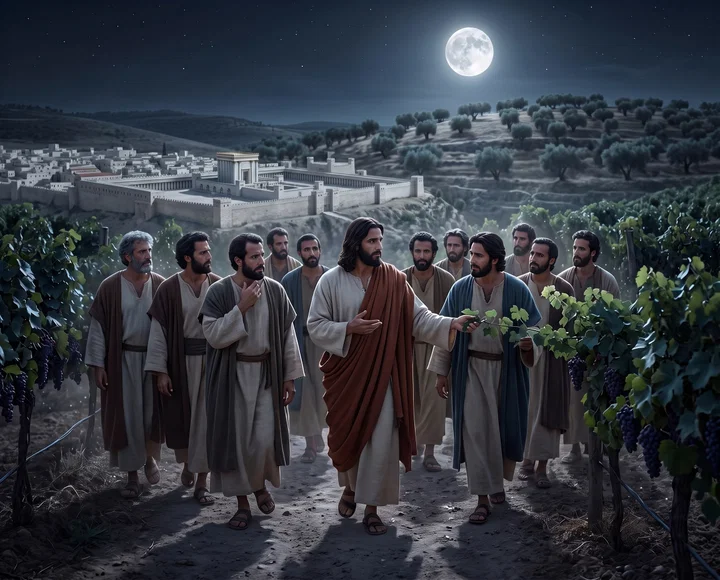
And when they had sung an hymn, they went out into the mount of Olives.
Translations
American King James Version, King James Version
And when they had sung an hymn, they went out into the mount of Olives.
KJV Cambridge Paragraph Bible, American Standard Version
And when they had sung a hymn, they went out into the mount of Olives.
And when they had sung a hymn, they went out to the mount of Olives.
And when they had sung a hymn, they went out unto the mount of Olives.
And having sung a hymn, they went forth to the mount of the Olives;
And having sung a hymn, they went out to the mount of Olives.
And, having sung praise, they went forth unto the Mount of Olives.
Berean Standard Bible, Majority Standard Bible
And when they had sung a hymn, they went out to the Mount of Olives.
When they had sung a hymn, they went out to the Mount of Olives.
And after a song of praise to God, they went out to the Mountain of Olives.
And when they had sung a Psalme, they went out into the mount of Oliues.
Douay-Rheims (Challoner revision)
And a hymn being said, they went out unto mount Olivet.
Pictures
Cross-references
- Mark 14:26
And when they had sung an hymn, they went out into the mount of Olives.
Records the hymn sung before they went out to the Mount of Olives.
- Psalms 118
O give thanks unto the LORD; for he is good: because his mercy endureth for ever.
The psalm was part of the Passover hymn Jesus and his disciples sang.
- Matthew 26:36
Then cometh Jesus with them unto a place called Gethsemane, and saith unto the disciples, Sit ye here, while I go and pray yonder.
Jesus arrives at Gethsemane, where his agony begins.
- Psalms 113
Praise ye the LORD. Praise, O ye servants of the LORD, praise the name of the LORD.
This psalm was part of the Hallel sung at Passover, including the hymn Jesus sang.
- Psalms 115
Not unto us, O LORD, not unto us, but unto thy name give glory, for thy mercy, and for thy truth’s sake.
This psalm was part of the Hallel sung at Passover.
- Psalms 116
I love the LORD, because he hath heard my voice and my supplications.
The psalm is identified as part of the Hallel sung at Passover.
- Psalms 114
When Israel went out of Egypt, the house of Jacob from a people of strange language;
This psalm was part of the Passover Hallel Jesus sang.
- Psalms 117
O praise the LORD, all ye nations: praise him, all ye people.
This psalm was part of the Hallel sung at Passover.
- John 13:1-30
Now before the feast of the passover, when Jesus knew that his hour was come that he should depart out of this world unto the Father, having loved his own which were in the world, he loved them unto the end.
A parallel account of events at the supper, including Judas’s departure.
- Ephesians 5:19
Speaking to yourselves in psalms and hymns and spiritual songs, singing and making melody in your heart to the Lord;
Both texts describe singing hymns to the Lord.
- Acts 16:25
And at midnight Paul and Silas prayed, and sang praises unto God: and the prisoners heard them.
Paul and Silas sang praises to God while imprisoned, as Jesus sang before suffering.
- John 18:1
When Jesus had spoken these words, he went forth with his disciples over the brook Cedron, where was a garden, into the which he entered, and his disciples.
same crossing of Cedron to garden
- Matthew 26:39
And he went a little further, and fell on his face, and prayed, saying, O my Father, if it be possible, let this cup pass from me: nevertheless not as I will, but as thou wilt.
He sang though the bitter cup lay before Him.
- Luke 22:7-38
Then came the day of unleavened bread, when the passover must be killed.
A parallel account of the supper and its setting.
- John 14:31
But that the world may know that I love the Father; and as the Father gave me commandment, even so I do. Arise, let us go hence.
Jesus calls the disciples to go, as Matthew describes them doing.
- Matthew 26:47
And while he yet spake, lo, Judas, one of the twelve, came, and with him a great multitude with swords and staves, from the chief priests and elders of the people.
The passage recalls Jesus’ betrayal.
- Psalms 118:14
The LORD is my strength and song, and is become my salvation.
The hymn praised God as strength, song, and salvation.
- Matthew 26:38
Then saith he unto them, My soul is exceeding sorrowful, even unto death: tarry ye here, and watch with me.
sorrow beginning after arrival
- 1 Corinthians 11:23-25
For I have received of the Lord that which also I delivered unto you, That the Lord Jesus the same night in which he was betrayed took bread:
Describes the supper observed before the hymn.
Commentary
Each commentary is drawn from primary sources: the writings of Ellen G. White and Adventist pioneers and periodicals. Each commentary is separate. Its own words are not a quotation; follow the references to read the source passages.
Ellen G. White
7 sources
After the Passover supper Jesus sang a hymn together with His disciples and then went out with them to the Mount of Olives to the garden of Gethsemane.LSEGW 257.4COS 113.2Ms 43, 1909, par. 8 That garden was a place where He often went to pray.COS 113.2 This was in their last hours together before they separated.LSEGW 257.4 As He walked with them He talked with them and taught them, speaking comfort and assurance to His sorrowful and troubled disciples concerning His coming suffering and death.LSEGW 257.4COS 113.2 They did not give way to loud grief, but as they neared the garden He became strangely silent.LSEGW 257.4COS 113.2
Their praise of God before the agony in Gethsemane and the events leading to Calvary shows courage and fortitude in the face of coming affliction.LSEGW 257.4 Shortly before Gethsemane He sang songs of praise with unfaltering confidence in His Sonship with God, while afterward His voice was filled with human anguish as He faced the suffering ahead.Ms 42, 1897, par. 18–22 The verse belongs to the account of Christ's sufferings, including His agony in the garden, betrayal, trial, and crucifixion.Ms 43, 1909, par. 812MR 14.1–2Lt 14, 1889, par. 2–9 That larger account of betrayal, trial, and crucifixion shows how doubt and bitterness can open human hearts to a destructive spirit.12MR 14.1–2 Those surrounding events also show how hostility and bitterness can turn people against God's messengers.Lt 14, 1889, par. 2–9 His singing of a fitting hymn gives an example by which singing can turn people from discouraging or improper speech toward a better spirit.Lt 211, 1901, par. 2
Sources
Pioneers and periodicals
42 sources
After the bread and the cup of the Lord's Supper they sang a hymn and went out from the upper room to the Mount of Olives and Gethsemane.CO 45.3–5RH Jul 21, 1868ST May 18, 1904ST Jan 15, 1885ST Oct 13, 1898 The hymn was the Passover psalm of praise, the Hallel of Psalms 113-118.RH Apr 14, 1903ST May 18, 1904 It was the only recorded time Jesus sang, and the last hymn the disciples sang with Him on the night before His death.STST Jan 7, 1889 Singing therefore fittingly closes the communion memorial, followed by quiet departure in remembrance of His suffering and death.CO 42.7–43.1ST Jun 18, 1885RH Sep 20, 1864CO 58.2 Sung with full knowledge of betrayal and the cross, it gives believers the example of praise bringing cheer and courage in sorrow and trial.RH Nov 10, 1904ST Aug 21, 1893ST Jan 7, 1889RH Feb 19, 1914
Passover Setting and Sequence
After the bread and wine of the Lord's Supper and the sacred exercises of the Passover supper, the meeting was closed by singing a hymn and then going out to the Mount of Olives and to Gethsemane.CO 45.3–5RH Jul 21, 1868ST May 18, 1904ST Sep 3, 1912 This was the close of the last supper with the disciples before arrest and death, belonging to the final events leading to the cross.ST May 18, 1904ST Sep 3, 1912 The departure came after the conversation and instruction and the final words to the disciples, marking the transition from the meal and discussion in the room to leaving it.ST Oct 5, 1882ST Jan 10, 1900
It came next after the warning that the prince of the world was coming yet had nothing in Him, with the call to arise and go, in obedience to the Father's commandment out of love for the Father.ST Jan 10, 1900ST Jan 10, 1900 On the way the instruction recorded in John 14-16 was given and the prayer recorded in John 17 was prayed, and this movement from the upper room toward Gethsemane sets the context for the words about scattering and Peter's denial.ST May 18, 1904 It belongs to the last Passover feast before Christ's death, arrest and crucifixion, whose institution of the breaking of bread was on Thursday evening, the day before the Sabbath, a day made memorable above every other by His giving His life in love for humanity.RH Feb 13, 1872RH Feb 3, 1852 The last supper had just been celebrated as the sun had sunk to rest behind the hills of Judea, and He went out with His little band into the cooling freshness of the evening hour.ST Oct 13, 1898
The course led from an upper chamber in Jerusalem out of the city, down the walk, along the streets, across the brook Cedron, to the olive garden of Gethsemane at the foot of the Mount of Olives.ST Jan 15, 1885 That garden was the quiet place of retreat where He had so often enjoyed the communion with the Father His soul craved, where floods of light from heaven had so often filled His soul and strengthened Him for the conflicts of His ministry.ST Oct 13, 1898 The disciples also entered but tarried behind, and there in stillness and darkness His struggle began.ST Jan 15, 1885 The lamb eaten at that Passover meal was a type of Christ the true Passover, with Christ present instituting a memorial to keep His sacrifice in remembrance and to show His death until He comes.ST Jun 9, 1898
Only unleavened bread was used, because no leaven was permitted in Jewish homes during Passover week. The wine was unfermented, since fermented drink was treated as leaven and excluded during Passover, and as an observant Jew He would not have drunk it or celebrated in a home where fermented things remained, with the hymn and departure to the Mount of Olives coming at the close of this Passover meal.ST Jun 18, 1885 If the Passover was kept at the proper time, Pentecost that year fell on the Sabbath.ST Apr 15, 1889 At that same supper feet-washing was also instituted, as a memorial of His humble life, and in the sequence described the foot-washing preceded the eating of the supper, since the disciples were still at the table during the betrayal inquiry.ST Mar 27, 1901ST Jun 15, 1904RH Dec 23, 1858
Judas the traitor was pointed out, received the sop, and left the company forever, so he did not join the solemn hymn, and only the disciples who remained sang with Jesus in that last hymn sung with Him.ST Jun 15, 1904STRH Dec 23, 1858 His covetousness, which is idolatry, led him to perdition, as it will everyone who yields to it.ST Jun 15, 1904 After sharing the Passover and sweet communion with His disciples, Jesus sang a hymn and went out to face suffering and crucifixion, carrying out His Father's will through bitter agony, depressed by the thoughts of the bitter cup He must soon drink.ST Jan 10, 1900ST Oct 13, 1898
The Hymn Identified
The hymn was a psalm, for "hymn" means "psalm" in the margin, and it was the Hallel, the psalm of praise consisting of Psalms 113-118 sung at Passover and some other Hebrew feasts.RH Apr 14, 1903 It was the usual Passover song, including Psalm 118, sung at the close of the last Passover supper before going out to the Mount of Olives.RH Apr 14, 1903ST May 18, 1904 This singing was the first hymn of the Christian church, beginning its continuing use of the Psalms in worship.RH Oct 20, 1859RH Aug 12, 1858 It is linked with the enduring worshipful power of David's psalms, which are still sung in the church.RH Oct 20, 1859RH Aug 12, 1858
Jesus sang with His disciples, and He may have led them with a voice calm and strong.ST Jun 18, 1885RH Feb 19, 1914RH Jun 10, 1915 After the bread was broken and the wine was poured out as a blessed sign and symbol of better life to cheer believers in earthly strife, they sang a sweet and plaintive solemn hymn with deep-toned voices that echoed around the sleeping city and Olivet under the paschal moon.ST Jun 18, 1885RH Nov 10, 1904 They went up the steep of Olivet singing as they went, leaving the upper chamber for suffering with song.RH Nov 10, 1904RH Feb 19, 1914 Their singing came from the heart, without an organ, and was not music intended to impress the human ear.RH Apr 24, 1856
The words sung are not recorded, but its theme was Christ's redeeming love.ST Jun 18, 1885 It was made up of expressions from Psalms 113-118, psalms sung at Passover, including praise for God's strength, salvation, goodness and enduring mercy.ST Aug 21, 1893ST Jan 7, 1889 The singing soothed their troubled hearts.ST Jun 18, 1885 It was the only recorded time Jesus sang, on the night before His death, just before betrayal and the agony of Gethsemane and the darkness of the cross with full knowledge of what lay ahead.STST Jan 7, 1889 It was the last hymn the disciples sang with Him.STST Jan 7, 1889
Communion Ordinance Pattern
The account that includes the singing of a hymn and going out shows the form in which the communion ordinance was delivered to the church, and that form is the pattern for celebrating it.CO 42.7–43.1 Singing a hymn fittingly closed the memorial supper instituted by Jesus, after which he and his disciples went out, presenting sacred song as part of Christian worship.CO 42.7–43.1ST Jun 18, 1885
After commemorating his suffering and death, singing a hymn and then going out is recalled as the pattern for closing the communion service.RH Sep 20, 1864CO 58.2 In that service the hymn of praise to Christ is followed by a quiet departure, with worshipers remembering his suffering and death with sorrow for sin and gladness for his love and the forgiveness found through his blood.CO 58.2
At the Passover meal before leaving for the Mount of Olives, the Passover lamb eaten was a type of Christ the true Passover, and with Christ present a memorial was instituted to keep his sacrifice in remembrance and to show his death until he comes.ST Jun 9, 1898 That day belonged to the account of the day of Christ's crucifixion, which was the day before the Sabbath and included the institution of the Lord's Supper and the events leading to his death, and it was more memorable than any other day in his history because he showed his love for humanity by giving his life.RH Feb 13, 1872 The day itself was not set apart for sacred observance; the Lord's Supper, rather than the date on which it occurred, is its memorial.ST Jun 9, 1898RH Feb 13, 1872
The closing hymn of the last supper with his disciples, sung just before going out, came immediately after Christ said he would not drink henceforth of the fruit of the vine until he drinks it new with them in his Father's kingdom, and since that supper Christ has not tasted of the fruit of the vine.ST Jun 9, 1914
Doctrinal and Legal Witness
Matthew 26:26-30 records the institution of the Lord's Supper as the making of the new covenant.ST Jun 6, 1878 In that institution the cup means that Christ's blood is the blood of the new covenant, testament meaning the same as covenant, shed for many for the remission of sins.ST Jun 6, 1878 The disciples present were Jews acting as representatives of the whole Christian church, and as such they entered into the new covenant with the Lord.ST Jun 6, 1878 God thereby set forth Christ as Saviour of the world, proposing remission of sins to all who would receive him and his offering on the conditions set before them in his divine teaching for three years and a half.ST Jun 6, 1878 The disciples accepted that arrangement by partaking of the emblems.ST Jun 6, 1878
Christ instituted the communion with both bread and cup for all who partake, so that each individual in partaking is to drink as well as to eat, and withholding the wine from the people while priests alone drink violates his institution.RH May 5, 1874 The Passover kept in the days of Jesus, with the Passover table spread as then, forms a great memorial service from which striking gospel lessons are drawn, giving unanswerable proof that Jesus is the true Messiah, the only Saviour of Jew and Gentile.RH Jun 10, 1915 The account that includes the singing of the hymn and going out belongs with the account of Jesus' prayer in the garden, which shows submission to God's will.RH Dec 16, 1873
The singing and going out to the Mount of Olives occurred on the night of his arrest and condemnation.ST Aug 13, 1902 That arrest and condemnation was not lawful punishment but men lawlessly taking the law into their own hands, like the putting to death of Stephen on a false charge of blasphemy.ST Aug 13, 1902 Roman law did not permit the death penalty for offenses against God.ST Aug 13, 1902 God did not interfere to have it done then, because he will attend to punishment in his own appointed day when he judges the world in righteousness.ST Aug 13, 1902
Example for Worship and Trial
Jesus sang a song of praise with his disciples just before going out to be betrayed and to enter Gethsemane and the suffering of the cross.ST Oct 19, 1915ST Aug 21, 1893RH Feb 18, 1902 He sang with full knowledge of what lay ahead, with the bitter cup of wrath before him, as the mighty Victim on the way to sacrifice, with a sorrow piercing his heart that no earthly sadness can equal and no one else can fully know.RH Nov 10, 1904ST Aug 21, 1893ST Jan 7, 1889 It was the only recorded time he sang, on the night before his death, just before his betrayal, just before the agony of Gethsemane, just before the darkness of the cross.ST Aug 21, 1893ST Jan 7, 1889 The hymn was made up of expressions from Psalms 113-118 sung at Passover, praise for God's strength and song and salvation, confession of his goodness and enduring mercy.ST Aug 21, 1893ST Jan 7, 1889 Yet he sang in faith in his Father's wisdom and goodness, who is too wise to err and too good to prove unkind, and his example teaches that offering praise glorifies God, that greater praise brings greater blessings, and that it is good to sing praises even on the edge of suffering.ST Aug 21, 1893ST Jan 7, 1889
By cheering the dark path he trod with song he gave believers an example of praise in suffering.RH Nov 10, 1904 That example rebukes their faint and feeble songs and calls them to stronger faith and glad service until they sing the song of heaven.RH Nov 10, 1904 It points forward to when the redeemed sing the chorus of peace with no discordant notes and heaven's arches ring with the joyous refrain.RH Nov 10, 1904RH Feb 19, 1914
His singing in that moment shows that song can bring cheer and courage even in sorrow, loneliness and trial.ST Oct 19, 1915RH Feb 18, 1902 It brought inspiration and brightness into a dark scene, so that the hour before Gethsemane would have been darker without it.RH Feb 18, 1902 It teaches keeping in tune and not getting the pitch too high when things go wrong, following his example of leading his disciples in a song of praise just before his suffering, before leaving the upper chamber.RH Feb 19, 1914
The singing of a hymn with his disciples was part of religious devotion, and their last act before parting and before his agony and their separation was a song of thankful praise.RH Feb 13, 1879 Praise belongs alongside prayer, and recalling God's mighty acts helps prepare people for trouble and duty.RH Feb 13, 1879 After sharing Passover and sweet communion and receiving a blessing, his going out to face suffering and crucifixion and to carry out his Father's will through bitter agony teaches believers on their ordinary return to their homes to remain watchful, prayerful and mindful of God's will rather than becoming careless or discouraged.
Sources