Psalms 149:3
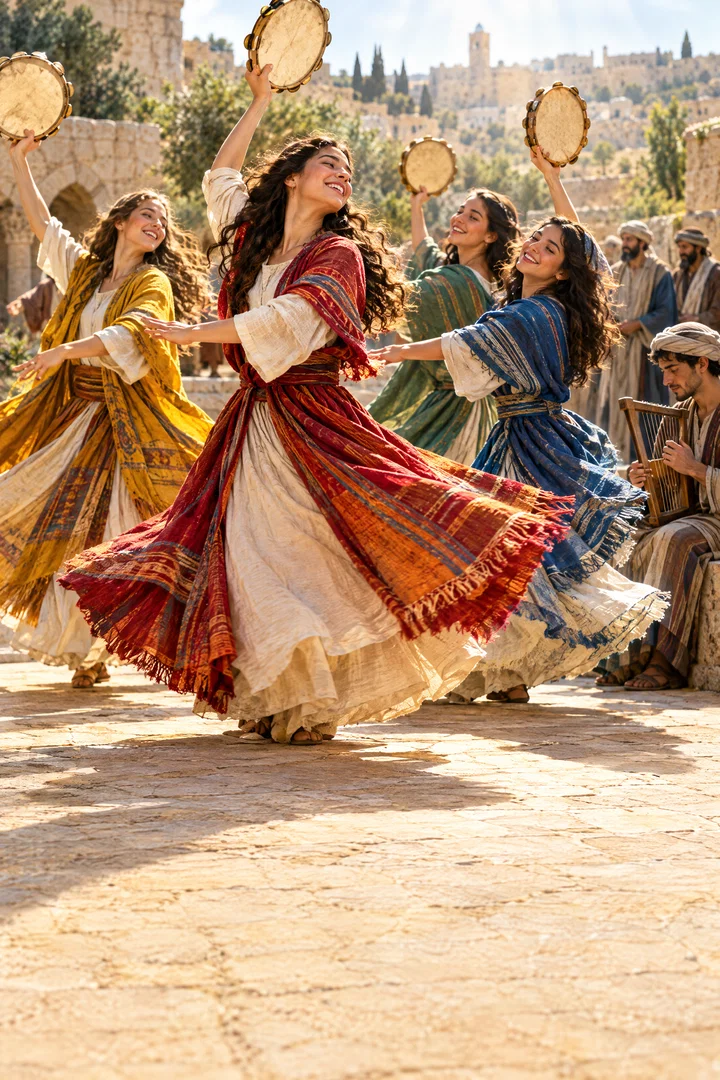
Let them praise his name in the dance: let them sing praises unto him with the timbrel and harp.
Translations
Let them praise his name in the dance: let them sing praises to him with the tambourine and harp.
King James Version, Revised Version
Let them praise his name in the dance: let them sing praises unto him with the timbrel and harp.
Let them praise his name in the dance:
Let them sing praises unto him with the timbrel and harp.Let them praise his name in the dance: let them sing praises to him with the timbrel and harp:
Let them praise his name in the dance:
Let them sing praises unto him with timbrel and harp.They praise His name in a dance, With timbrel and harp sing praise to Him.
Let them praise his name in the dance; let them sing psalms unto him with the tambour and harp.
Let them praise his Name in the dance, with timbrel and lyre, Let them make music to him.
Berean Standard Bible, Majority Standard Bible
Let them praise His name with dancing,
and make music to Him with tambourine and harp.Let them praise his name in the dance!
Let them sing praises to him with tambourine and harp!Let them give praise to his name in the dance: let them make melody to him with instruments of brass and corded instruments of music.
Let them prayse his Name with the flute: let them sing prayses vnto him with the timbrell and harpe.
Douay-Rheims (Challoner revision)
Let them praise his name in choir: let them sing to him with the timbrel and the psaltery.
Pictures
Cross-references
- Psalms 150:4
Praise him with the timbrel and dance: praise him with stringed instruments and organs.
Cited alongside Psalm 149:3 for the word “dance”.
- 2 Samuel 6:14
And David danced before the LORD with all his might; and David was girded with a linen ephod.
David dances before the Lord in worship.
- Psalms 150:6
Let every thing that hath breath praise the LORD. Praise ye the LORD.
Calls every living creature to praise the Lord.
- Exodus 15:20
And Miriam the prophetess, the sister of Aaron, took a timbrel in her hand; and all the women went out after her with timbrels and with dances.
Miriam and the women dance after deliverance at the sea.
- Psalms 147:7
Sing unto the LORD with thanksgiving; sing praise upon the harp unto our God:
Calls for thankful song and harp praise to God.
- 2 Samuel 6:21
And David said unto Michal, It was before the LORD, which chose me before thy father, and before all his house, to appoint me ruler over the people of the LORD, over Israel: therefore will I play before the LORD.
David says he will dance before the LORD in worship.
- Ephesians 5:19
Speaking to yourselves in psalms and hymns and spiritual songs, singing and making melody in your heart to the Lord;
Both call believers to sing praises to the Lord.
- Jeremiah 31:13
Then shall the virgin rejoice in the dance, both young men and old together: for I will turn their mourning into joy, and will comfort them, and make them rejoice from their sorrow.
Dance expresses joy in contrast to mourning.
- Lamentations 5:15
The joy of our heart is ceased; our dance is turned into mourning.
Dance and joy give way to mourning.
- Revelation 5:8
And when he had taken the book, the four beasts and four and twenty elders fell down before the Lamb, having every one of them harps, and golden vials full of odours, which are the prayers of saints.
cited together to show all servants are saints
Commentary
Each commentary is drawn from primary sources: the writings of Ellen G. White and Adventist pioneers and periodicals. Each commentary is separate. Its own words are not a quotation; follow the references to read the source passages.
Pioneers and periodicals
7 sources
Psalm 149 belongs to a group of psalms associated with the Jews' return from Babylonian captivity and the joy, sorrow, and anxiety of the returning exiles.RH Sep 7, 1916 The word translated dance represents a Hebrew word that can refer to a musical instrument with a merry sound, of which this verse is one of at least two scriptural instances.ST Sep 15, 1909 The verse calls God's people to praise His name with dancing and music, with joyful song on instruments including the timbrel and harp.RH Sep 7, 1916RH Sep 16, 1915ST Sep 28, 1904 This praise with dance and musical instruments is part of the saints' rejoicing in God.
The dancing it commends is religious worship, as in David's time, to be directed to God's glory rather than personal amusement or worldly approval.RH Sep 16, 1915 It is to be practiced in the proper place and season, with moderation and proper conduct.RH Sep 16, 1915 By calling for praise through dance and song with timbrel and harp, the verse shows that the psalms were meant not only to be read and studied but also sung.ST Sep 28, 1904 This praise belongs to all His saints, both those who are alive when the Lord comes and those who have been resurrected. The psalm shows that God's people on the earth are saints, with the name saint belonging to all living servants of God who yield themselves to the will of God, not to a special class made by kings and emperors or by pope and cardinals through a slow and difficult process reaching over centuries.ST Nov 3, 1898
In the context of the promise of authority over the nations, the verse's praise points to persecuted saints sharing Christ's eternal triumph over sin and oppression. It describes the overcomers executing judgment with Christ at the close of sin's reign.ST Dec 10, 1902 It shows the executive phase of judgment, distinct from the investigative judgment of the thousand years.ST Feb 13, 1896 It describes the final triumph of the saints with Christ over the wicked nations at the end of the thousand years, when final judgment is executed.ST Feb 13, 1896
Sources