Psalms 81:3
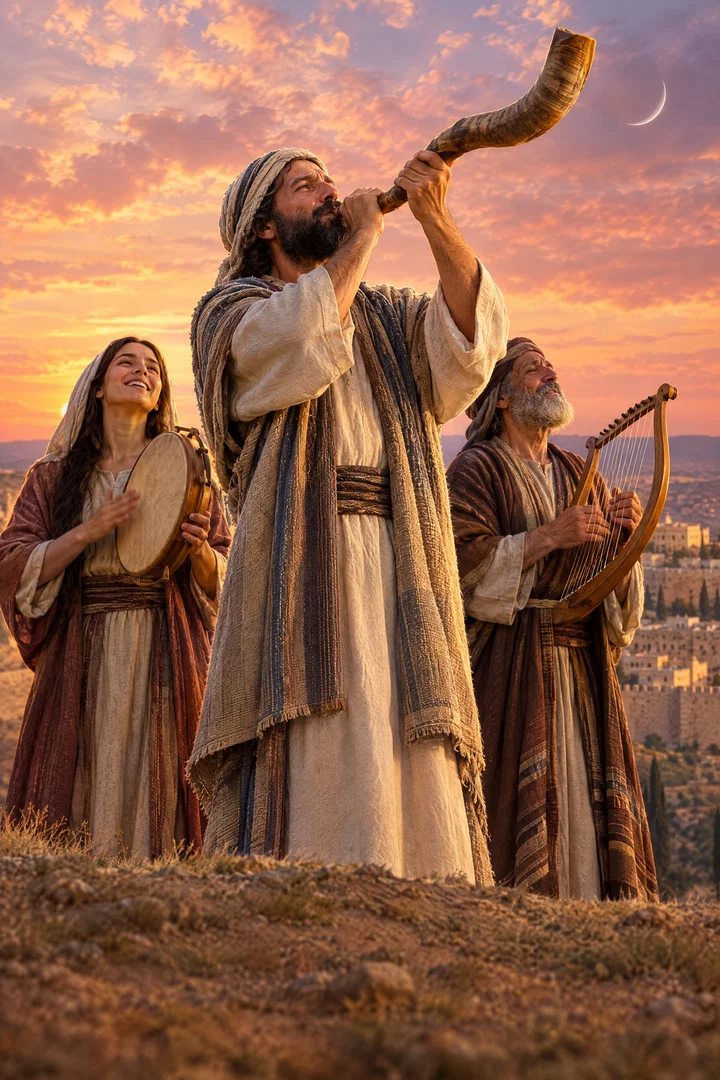
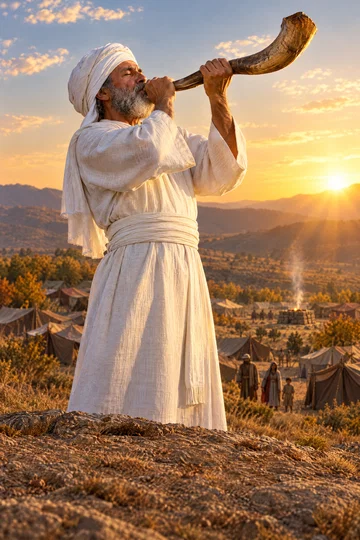
Blow up the trumpet in the new moon, in the time appointed, on our solemn feast day.
Translations
American King James Version, King James Version
Blow up the trumpet in the new moon, in the time appointed, on our solemn feast day.
Blow up the trumpet in the new moon,
In the time appointed, on our solemn feast day.Blow the trumpet in the new moon, in the time appointed, on our solemn feast day.
Blow up the trumpet in the new moon, at the full moon, on our solemn feast day.
Blow the trumpet at the new moon,
At the full moon, on our feast-day.Blow in the month a trumpet, In the new moon, at the day of our festival,
Blow the trumpet at the new moon, at the set time, on our feast day:
Blow, at the new moon, the horn, At the full moon, for the day of our sacred festival:
Berean Standard Bible, Majority Standard Bible
Sound the ram’s horn at the New Moon,
and at the full moon on the day of our Feast.Blow the trumpet at the New Moon,
at the full moon, on our feast day.Let the horn be sounded in the time of the new moon, at the full moon, on our holy feast-day:
Blowe the trumpet in the newe moone, euen in the time appointed, at our feast day.
Douay-Rheims (Challoner revision)
Blow up the trumpet on the new moon, on the noted day of your solemnity.
Pictures
Cross-references
- Numbers 10:10
Also in the day of your gladness, and in your solemn days, and in the beginnings of your months, ye shall blow with the trumpets over your burnt offerings, and over the sacrifices of your peace offerings; that they may be to you for a memorial before your God: I am the LORD your God.
Both texts call for trumpet blasts at new moons and appointed feasts.
- Numbers 28:11
And in the beginnings of your months ye shall offer a burnt offering unto the LORD; two young bullocks, and one ram, seven lambs of the first year without spot;
Prescribes offerings for the first day of each month.
- Colossians 2:16
Let no man therefore judge you in meat, or in drink, or in respect of an holyday, or of the new moon, or of the sabbath days:
Psalm identifies the new moon as a ceremonial observance.
- Leviticus 23:24
Speak unto the children of Israel, saying, In the seventh month, in the first day of the month, shall ye have a sabbath, a memorial of blowing of trumpets, an holy convocation.
Sets the seventh-month trumpet memorial before the Day of Atonement.
- 1 Samuel 20:5
And David said unto Jonathan, Behold, to morrow is the new moon, and I should not fail to sit with the king at meat: but let me go, that I may hide myself in the field unto the third day at even.
David refers to the monthly new moon observance.
- 1 Samuel 20:24
So David hid himself in the field: and when the new moon was come, the king sat him down to eat meat.
The new moon meal is observed.
- 1 Samuel 20:27
And it came to pass on the morrow, which was the second day of the month, that David’s place was empty: and Saul said unto Jonathan his son, Wherefore cometh not the son of Jesse to meat, neither yesterday, nor to day?
The new moon meal is noted on the following day.
Commentary
Each commentary is drawn from primary sources: the writings of Ellen G. White and Adventist pioneers and periodicals. Each commentary is separate. Its own words are not a quotation; follow the references to read the source passages.
Ellen G. White
3 sources
The trumpet was to be blown at the new moon, in the appointed time, upon the solemn feast day.Lt 34, 1894, par. 40–49 Taken with the verses around it, the command sets forth God's law as a statute for Israel, a law of the God of Jacob.Lt 34, 1894, par. 40–49
The psalm reveals the reason Israel was scattered abroad, that the people forgot God.CT 457.2Ms 96, 1899, par. 21–22 Their history stands as a demonstration of what follows forgetting Him and disobeying Him.Ms 96, 1899, par. 21–22 The churches in the land today are forgetting Him in that same way.CT 457.2
Sources
Pioneers and periodicals
9 sources
Psalm 81 belongs with the psalms associated with the return of the Jews from Babylonian captivity in mingled joy, sorrow, and anxiety, and with the building and dedication of the second temple and its triumphs.RH Sep 7, 1916 There is a time appointed by God for blowing the trumpet on the solemn feast day.SMV 14.7 The new moon is the beginning of the month, observed as a solemn feast day when Israel gathered for worship.
Each new moon, the first day of the month, was marked by blowing a trumpet and rejoicing as part of the appointed feasts.RH Jan 14, 1862 Singing was commanded in this setting as a statute for Israel and a law of the God of Jacob.RH Apr 3, 1879 The shofar blown at the new moon and appointed feast warned of the day of memorial and the judgment of Yom Kippur.GSAM 91.1 It sounded each morning from the first through the tenth day of the seventh month to announce the approach of the Day of Atonement and call the people to prepare for its judgment.GSAM 91.1LDT 35.2
As the seventh month began the shofar summoned Israel toward the Day of Atonement to review past actions before God's judgment.LDT 36.1–2 It also marked the new year as a reminder of creation and the Creator's sovereignty.LDT 36.1–2 The commanded blowing of the trumpet at the new moon belonged to a ceremonial law of ordinances outside the Ten Commandments.ST Jul 29, 1875RH Apr 29, 1873 The Ten Commandments say nothing about new moons, proving a separate ceremonial new-moon law existed.ST Jul 29, 1875RH Apr 29, 1873
Therefore the new moon in Colossians 2:16 belongs to that ceremonial handwriting of ordinances.ST Jul 29, 1875RH Apr 29, 1873 It belongs to the system of meats, drinks, festivals, new moons, and sabbath days that was blotted out and nailed to the cross, not to the Decalogue or the seventh-day Sabbath.ST Jul 29, 1875RH Apr 29, 1873
Sources