DAI-NIPPON, or Niphon, is “the great kingdom of the rising sun.” The Japanese say, “Japan of yesterday is not Japan of to-day.” Certainly it is not great in area, but it is acting a great part in the history of the far East.
To get a picture of Japan, let us consider it a range of mountains, with four large peaks and hundreds of little ones appearing above the waters of the Pacific. Fuji-san, Mt. Fuji, is the sacred mountain of Japan, an object of worship. The beautiful little islands and the low ranges of mountains clothed with luxuriant green, present a pleasing picture to the eye; but all is not beautiful, and all is not good, for the curse of sin rests heavily upon the people.
Over thirty societies are at work in Japan, but only little has been done. Climb with me to the top of a neighboring peak, and you will see the tile roofs of homes that contain a million souls without Christ,—people that go each day to the temples to make an offering, to bump their heads on the stones, and to offer their prayers to Buddha, or perhaps to an idol of wood or stone.
If our brethren in the more favored America could only realize the needs of these dark lands, the greatness of the work, and the shortness of time, they would double their efforts to finish the work. WALTER L. FOSTER.
As a Japanese Journalist Saw It
A Japanese newspaper man sought an interview with one of our colporteurs because our brother, by his loyalty to his convictions under trial, had been pointed out to him as a “fanatic.” From a translation of the interview we quote:—
“I readily saw that he was well acquainted with his Bible. The margins of the leaves were marked full of references and notes. His knowledge of the Bible extended to minute particulars, and he knew exactly where to turn for whatever he wished to find. It all seemed as easy for him as a turn of the hand. He believes very firmly that the destruction of the world is at hand. After this God will create a new earth.”
“Certainly,” he said, “I am a Protestant. The Sabbath, which is the seventh day, was made by the Creator for man. But men have made a counterfeit sabbath, without God’s authority.”
“I asked him this question: ‘All Protestants keep Sunday; are you not Catholic?’ ‘No,’ he replied; ‘I believe the same Protestantism that was proclaimed by Martin Luther.’”
“These Christians believe implicitly every word of the Bible, and are trying to fulfil it in every particular. I love their sincerity; and while they thus adhere to their profession, theirs is a true faith. Those who criticize other religionists as fanatics are themselves unreasonably severe. Such persons are ever ready to apply the term fanatics to a minority. But a persecuted minority always become more firm and earnest.”
“While I was talking with Mr. Seino in the tea-house by the riverside, many people crowded around to listen. There were workmen, clerks, jinrikisha men, nurses with babies on their backs, horse drivers, men and women, like a wall, surrounding us. The river was flowing full from the melting snows. The surrounding mountains and hills were taking on the fresh appearance of spring, as the sunshine gradually warmed the earth. Under such circumstances, I talked with this earnest young man. All this reminded me of John the Baptist, clothed in camel’s hair, eating locusts and wild honey, and preaching to the people: ‘Prepare ye the way of the Lord, make his paths straight.’ It reminded me also of how Jesus, after being baptized by John, preached to the crowds that gathered around him.”
“Mr. Seino explained to me that he believes in the authority of the Old Testament, and does not doubt any prophecy or miracle recorded in the Bible. He believes that the destruction of this world is very near, as prophesied by Daniel. Mr. Seino opened his satchel, and presented his books and papers, and I bought a copy of his paper, Owari no Fukuin (The Gospel for the Last Days), and then said good-by, promising to see him again. These people are going to proclaim their message in our city. How are you going to welcome them? What shall I myself do with the message they bring?”
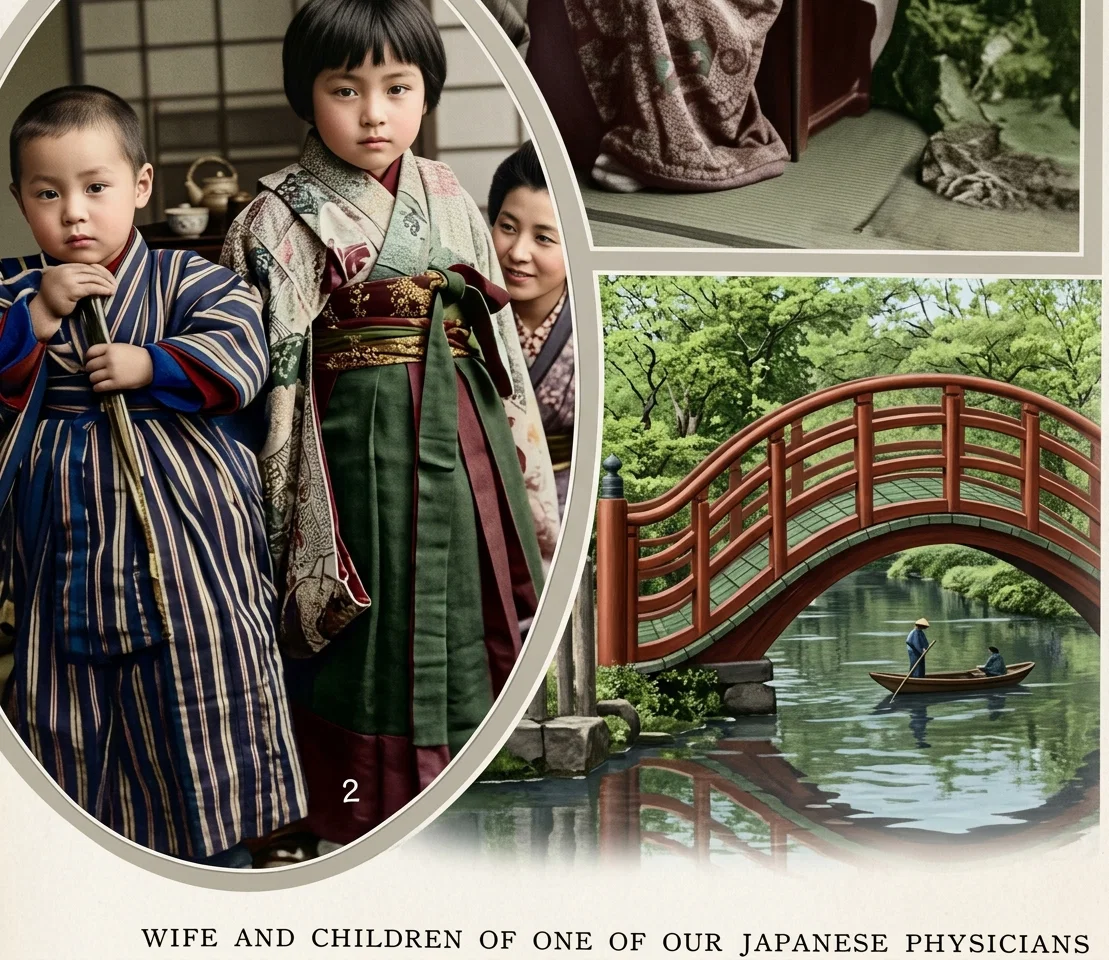
WIFE AND CHILDREN OF ONE OF OUR JAPANESE PHYSICIANS
In Korea
By W. R. Smith
KOREA has a territory of about ninety thousand square miles, with a population of fifteen million. It has a spoken and a written language of its own. About half the men are able to read and write. The women are mostly illiterate, there being no general educational system in Korea.
But the Korean people have sterling qualities which will place them — when they are educated and protected — alongside any people that live in the world.
While the Korean realizes that his nation is perhaps the weakest of all the nations, he regards himself as a man among men. He will tell you that the Korean student, when put with Japanese and Chinese students, excels them. He is proud of his intellect. Agricultural methods are primitive, but the people are anxious to learn.
Our work in Korea began about five years ago, when two Koreans visiting Japan had their attention drawn to our teaching, one of them returning to Korea, and beginning to preach what he had learned from the Word of God. We have at the present time about fourteen companies of believers, numbering upward of five hundred. I would not wish to give the impression that all are fully established, but those who are not intelligent in the faith we are seeking to instruct and lead into the full light of truth. W. R. SMITH.
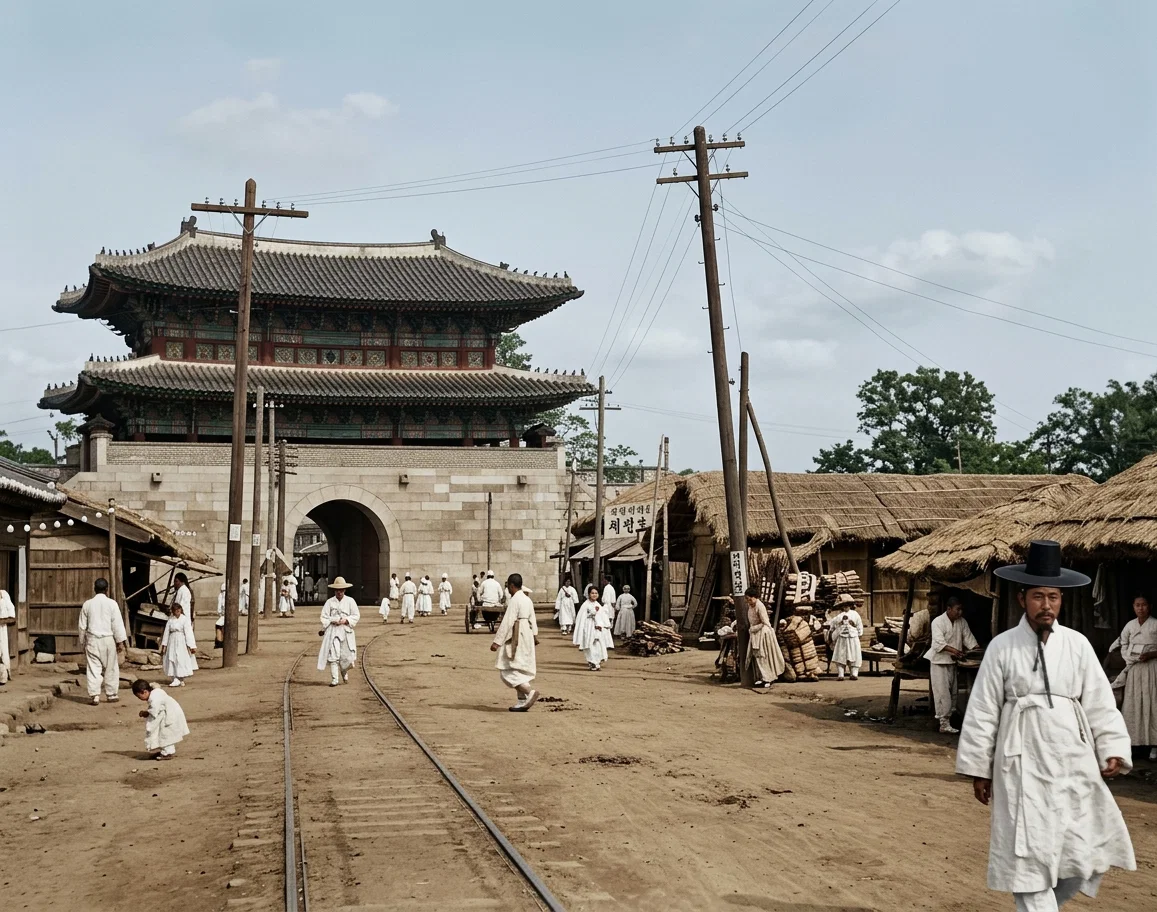
WEST GATE OF SEOUL, KOREA
J. L. SHAW
By J. L. Shaw
India
India, called the “Land of Desire,” the “Cradle of False Religions,” is the most stupendous fortress and citadel of ancient errors and idolatry in the world, the home of the Hindu, the Mohammedan, the Animist, the Parsee, and the Jain, and the birthplace of Buddhism.
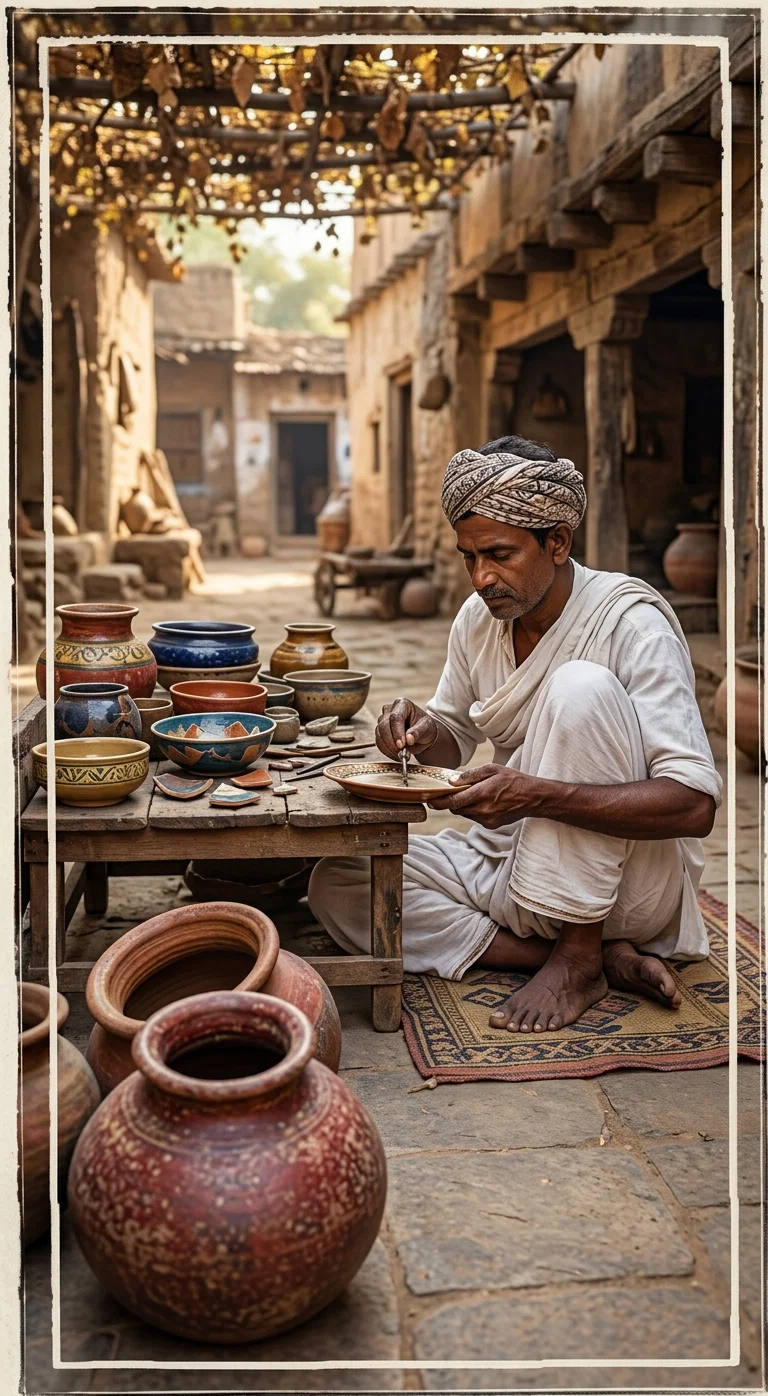
THE DISH MENDER
Yet two hundred years of Christian missions in this dark land are bearing fruit. India, with other Eastern lands, is awakening from her millenniums of slumber. At least some are learning of the true God and salvation through a risen Saviour, and Indians once shrouded in darkness, are following the golden beams of light streaming from the uplifted cross. Though comparatively small in area, being no larger than that portion of the United States east of the Missouri River, her population forms one fifth of the human race.
There she lies in her need, shut away from the larger world,—a land of nations, nation after nation, of differing languages, customs, and habits, crowded each in its narrow confines, presenting a spectacle of painful poverty, woeful need, and awful darkness, rightly called the “Gibraltar of Heathenism.”
Notwithstanding many difficulties, our work has not entered India without a purpose, and at least some encouraging results are apparent. From three languages, in which work was begun a few years ago, we have reached out to eight. Four years ago there was one organized church in the field; now there are six, representing four different nationalities. We have workers among the English, Bengali, Hindustani, Burmese, Tamil, Mahrati, and Santali peoples.
Five of these tongues are called leading languages, and comprise anywhere from fifteen to eighty millions each; yet they are but five of the more than a score of languages which number their people by the million. Besides these, there are more than one hundred other languages and dialects, among which not even an entrance has been made.
The hour of India’s awakening has come. It is our hour of opportunity.
J. L. SHAW
In the Villages
By Della Burroway
I WISH to relate an experience I had in treating a sick child, and the blessing of God that attended my work. I am not a trained nurse, but God has seen fit to place me here, and has given me some wonderful experiences in treating the sick. This child was so very ill that I despaired of its life. It was tossing from one side of the bed to the other, apparently unconscious.
CALCUTTA MEDICAL TREATMENT-ROOMS
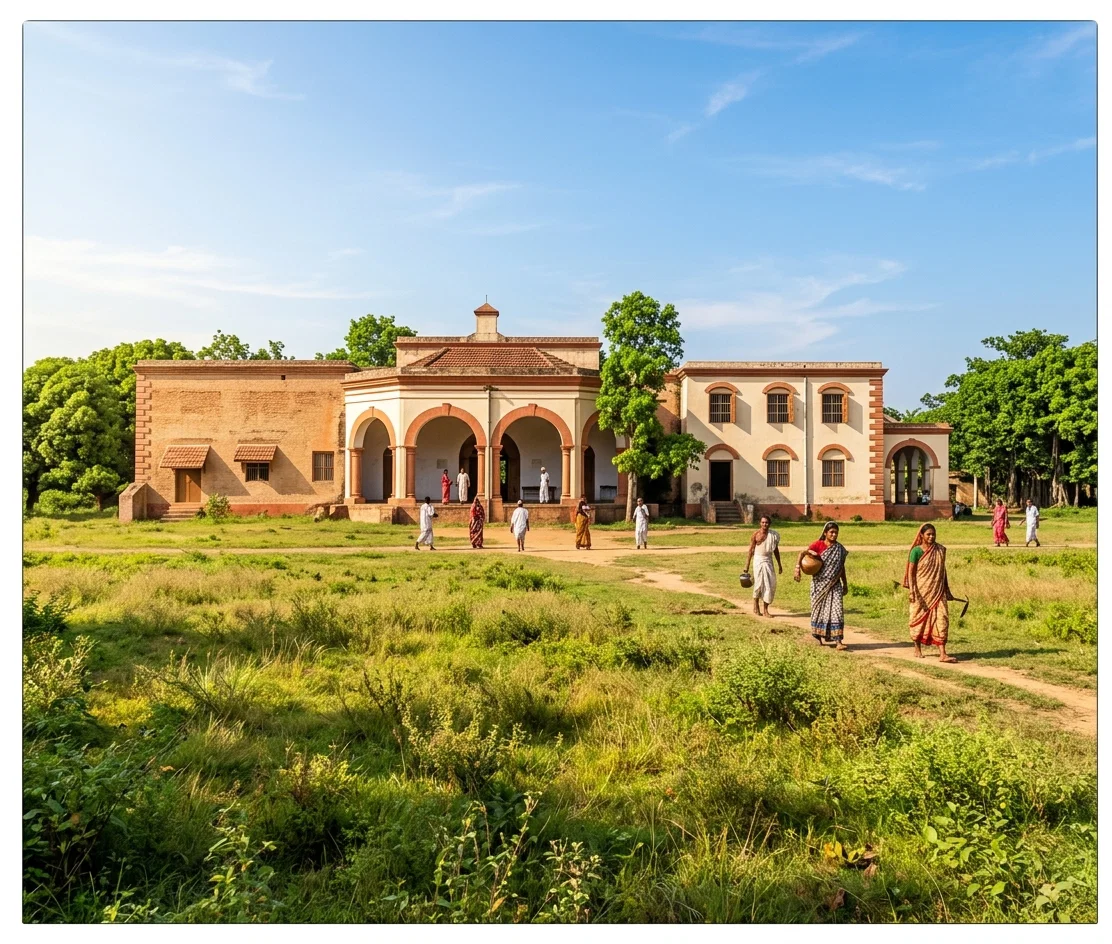
KARMATAR MISSION, IN BENGAL
We were four miles from home, with a bath-tub, fomentation cloths, and very little experience for such a case. I ordered hot water, and we put the little one in a full bath. While the child was in the bath, suddenly a storm came up, and the temperature fell perhaps twenty degrees.
We had nothing to wrap the child in when we took it from the bath but a few old rags that would scarcely cover the body. I knew that if the child took cold and died, the entire village would censure us for giving the bath. As I11held that little one in the tub, I realized my utter helplessness, and I prayed as I had never prayed before. I clung to the promise, “Ask, and it shall be given you.” In a few minutes the child fell asleep in the tub. We carefully took it out and covered it with the rags, then sat down to watch. Again it began to toss, but I clung to the promise; and as I left the house, I told the parents that I thought the child would rest that night, and it did. From that very hour it began to mend.
Della Burroway.
Karmatar, West Bengal.
New School Among the Garhwals of the Hills
By G. A. Burgess
The place is about twenty-five miles from the railway terminus, reached by ekka and pony. It is in the heart of the mountains, about seven thousand feet high. On every side are forests of pine trees, making the air fragrant with their odor.
There are villages all around, and the people seem most happy that we came among them. Scarcely a day passes but some one brings us in an offering of some kind from his poverty. They will not take a penny for anything they bring. I am sure the Lord keeps a record of it all, and will repay them.
They say they do not want merely a school to teach their young men, to fit them for government positions, but they want one to dispel the darkness from their minds—“an asmani [heavenly] school,” as they call it.
G. A. Burgess.
Burmese Snap-Shots
By H. H. Votaw
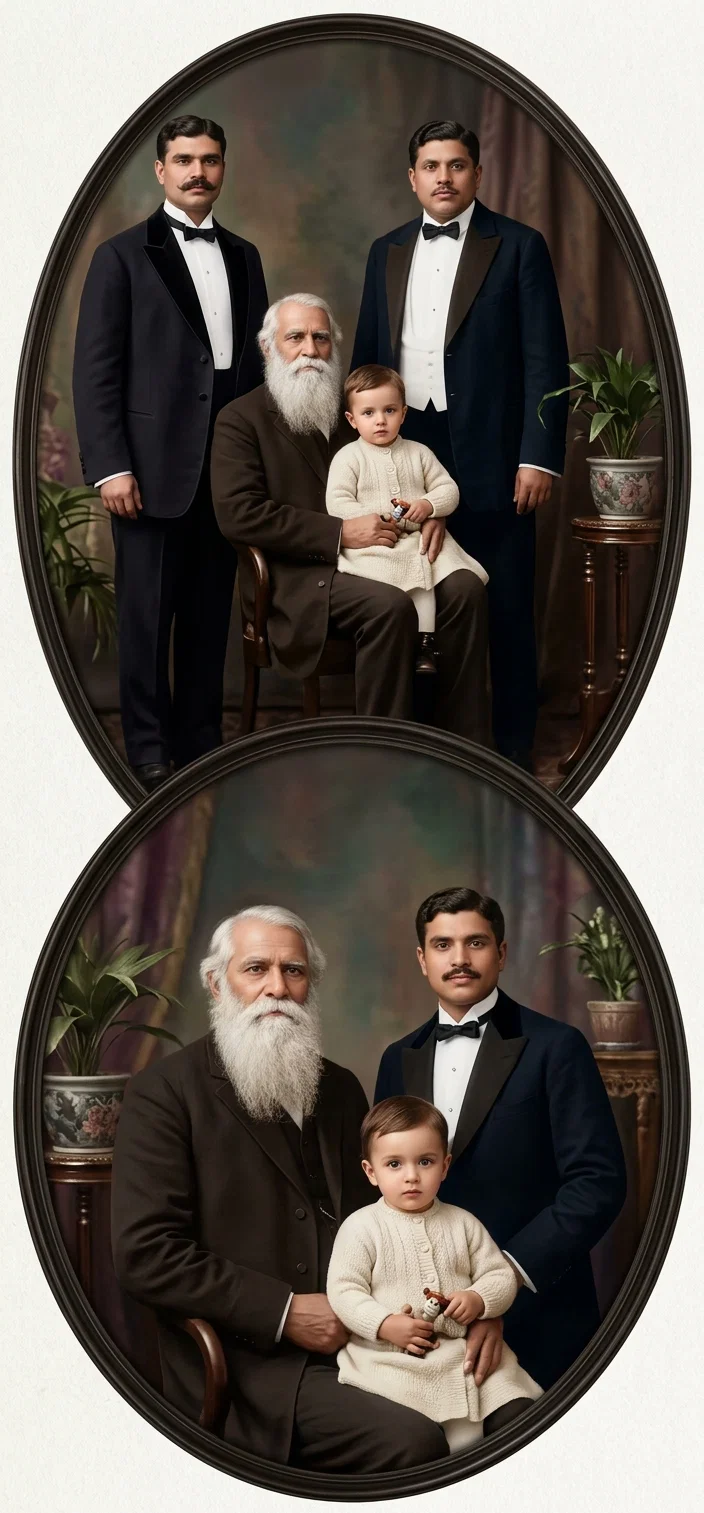
FOUR GENERATIONS: A BENGALI FAMILY GROUP OF BELIEVERS
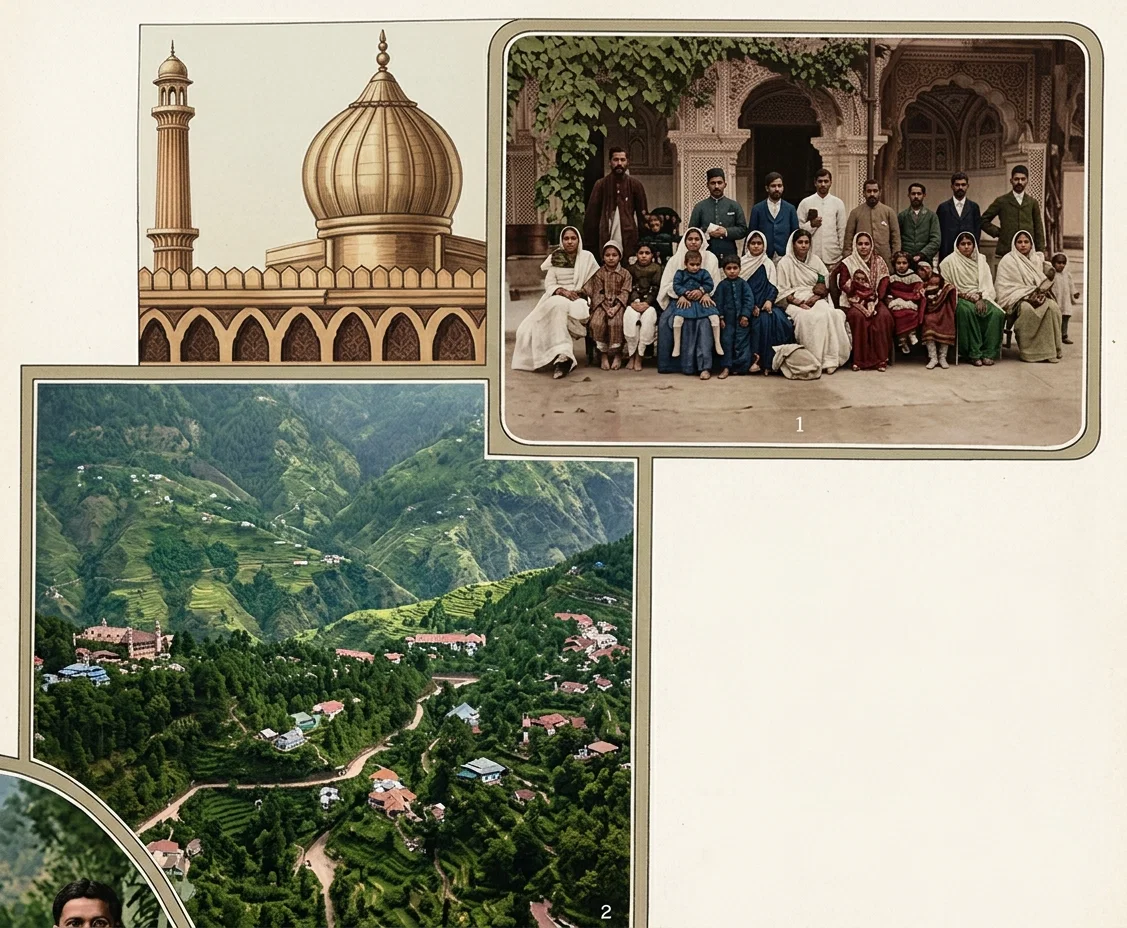
A FRIDAY PRAYER CONGREGATION BEFORE MOHAMMEDAN
MOSQUE, DELHI
RANGOON, the metropolis and chief port of Burma, is one of the most progressive and cosmopolitan cities in the East. Representatives of nearly every nation of both Europe and Asia may be seen here every day, each arrayed in the costume peculiar to his own country. A perfect babel of voices is to be heard. However, the novelty of it all soon passes, and we are oppressed, almost to discouragement, by the knowledge that they are ignorant of the message which is so dear to us,—unwarned concerning the most momentous event of the ages.
Some of the most prominent Buddhists of Upper Burma have besought us to start a school for their youth, where manual training shall be given. The people who are calling for us are willing to help to the best of their ability in a financial way. They have promised to work in every way they can to make the school a success.
Wherever we turn our eyes, we see evidences that the harvest of the earth is ripe. All about us are those things which indicate that God is leaving the nations without excuse, and is preparing the honest in heart to receive this great message speedily. We stand face to face with the deep-rooted belief of the people of all religions that a Redeemer is about to appear. The Hindu is expecting a god to appear in the flesh; the Buddhist tells us that it is almost time for another incarnation of the Buddha, and the Moslem is sure that Isa Messi, Jesus the Messiah, shall soon return to correct the evils now practised by mankind.
All India is aquiver to-day, on tiptoe with expectancy and anxiety. Do you not agree that this message of the soon coming of our Lord in power and glory is the message that is needed?
Rangoon.H. H. VOTAW.
GROUP OF HINDUSTANI BELIEVERS, NORTH INDIA
MUSSOORIE, HILL STATION IN THE HIMALAYAS, WHERE OUR MOUNTAIN SANITARIUM IS LOCATED
Volunteer for Tibet
By J. C. Little
We have been much interested in Tibet, and in the manner in which it seems to be opening up for the gospel. We have talked of it in our home, and when the time comes for our people and message to enter there, you may call on us to go.
This work in the Orient looms up before us as a tremendous problem. Three hundred millions are stretching their hands across the gulf of heathenism, and we are so few we are almost powerless to help them.
It is as if one man should be put into a ten-thousand-acre field of wheat with a little hand-sickle, and be told that there were only a few days in which to get it reaped, and that what he does not get done must be lost in the snows of winter. People here are going down by thousands into Christless graves, and we must stand by and see them die without God and without Christ, and eternally lost to the world to come. I do not know what we can do to make the appeal strong enough to our home people, that they may see it as it appeals to us here on the field. J. C. LITTLE.
Darjeeling, near Tibetan border.
“To the church of God in Riga,—
By J. T. Boertcher
From the Baltic to the Pacific
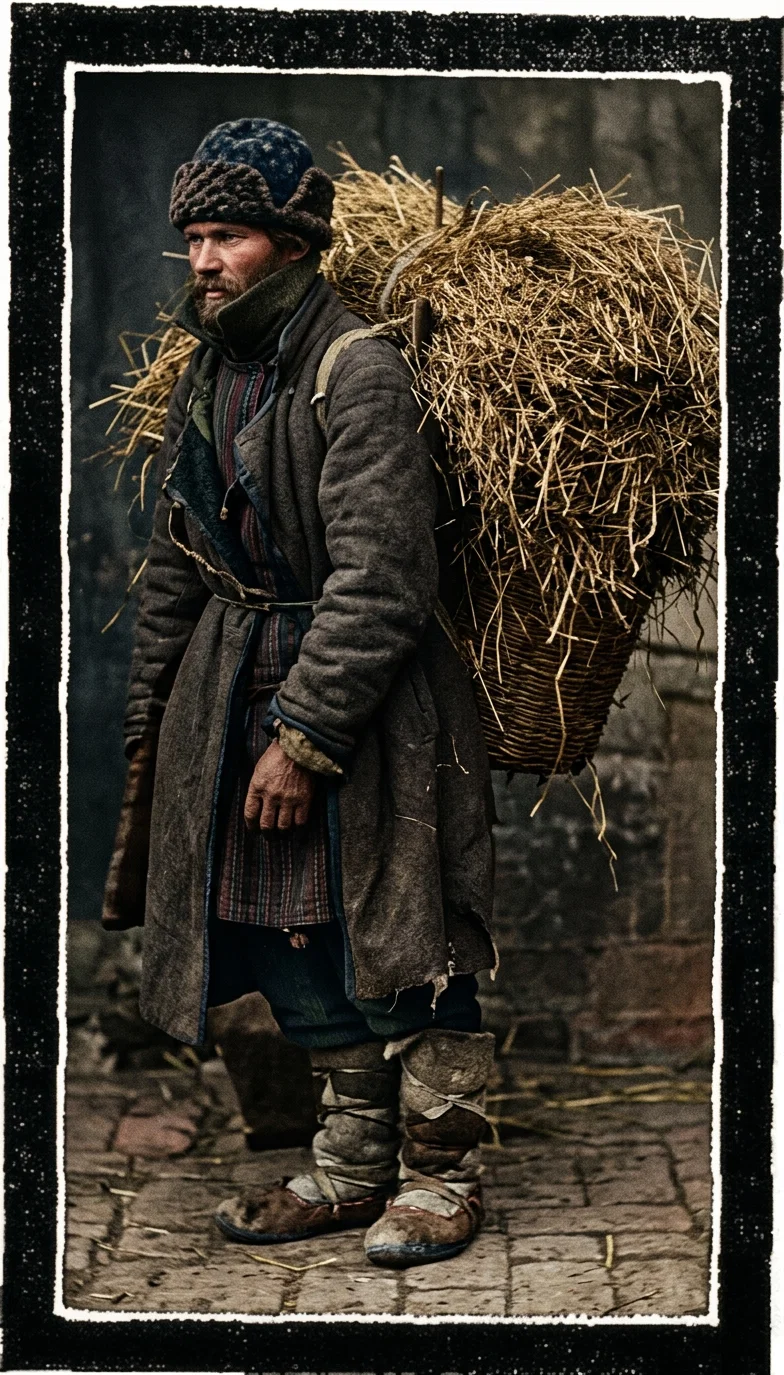
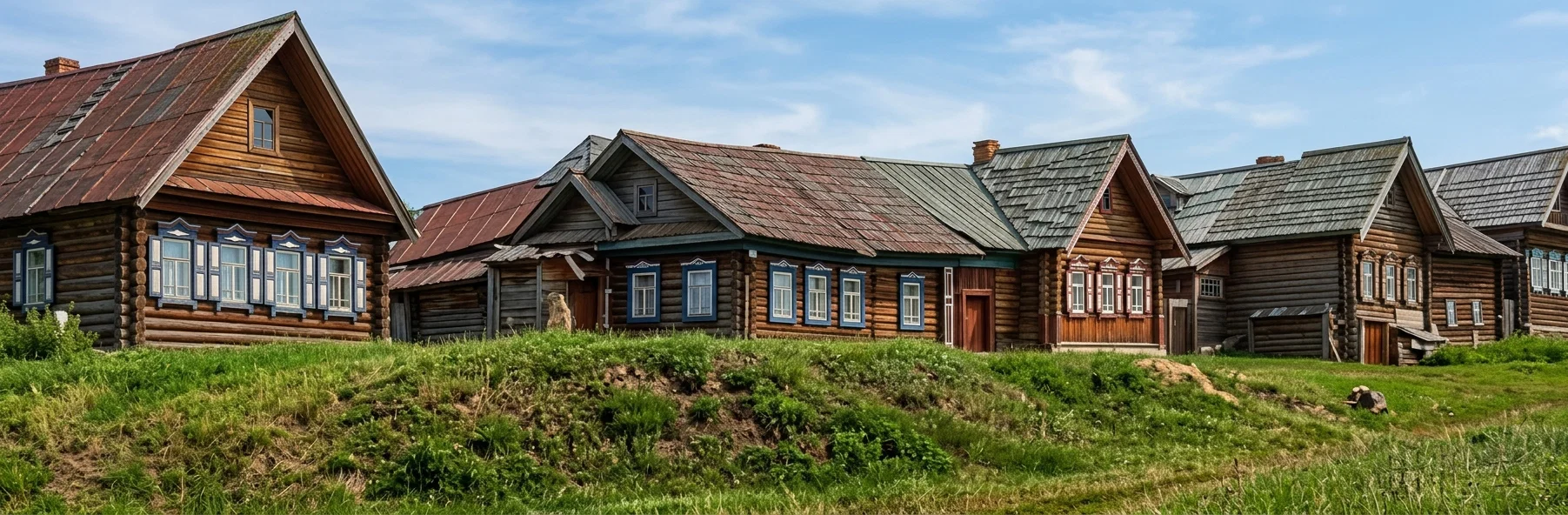
THE Russian Union Conference territory embraces one sixth of the earth’s surface, with almost every race of people in the world represented. The most prominent peoples are the Great Russians, Little Russians, White Russians, Polanders, Lithuanians, Germans, Armenians, Kalmucks, and Cossacks.
Our conference and publishing headquarters is in Riga, of the Baltic provinces. Our work has been largely carried on in the cities. Since the organization of our union conference, in 1907, we have seen wonderful results from our missionary efforts. Churches have been organized or companies of believers formed in many leading centers, north and south, and from the Baltic to Siberia.
Siberia
During the last few years many people have been emigrating to Siberia, and among these quite a number of our people. These have spread the truth until calls are coming from many parts of that great country. We have now organized a Siberian Mission. Elder K. Reifschneider, formerly of Russia, came from Hungary, and settled in the city of Omsk. Last winter he traveled two thousand miles, mostly in sledges. One man who had heard of this advent message came from Tobolsk, went south to Turkestan, and from there back to Omsk, to find the truth, and to-day he and his family are rejoicing in the same. As far east as the city of Harbin, Manchuria, our work has gained a foothold, so that we are occupying China from the west.
Here is a message sent us by these Harbin believers:—
“To the church of God in Riga,—
“We greet you in the name of our Lord Jesus Christ, and beg of you most earnestly to help us in the upbuilding of our faith, for we desire to build our house on the rock; therefore we earnestly petition you to send us a brother who can help us and work for the Master here among us.”
“The grace of God be with you all. Amen.”
Brother Reifschneider asks for ten workers to come to his aid. Siberia is a wonderful missionary field.
Turkestan, Central Asia
The government has built a railway going south from Samaria to Tashkend, and westward to the Caspian Sea, a distance of two thousand five hundred miles. It has opened the country to settlers. Two thirds of the land is level, and the climate very dry. The people raise sheep, goats, and horses, but not many cattle. On account of the warm climate the people live in tents of haircloth.
Great varieties of fruit and many kinds of grain grow here. The silk and carpet industries flourish. Some of our people have moved into the very heart of this country. This field needs five or six workers at once; but we have neither the men nor the means. We need help in establishing our Russian school for the training of missionary workers. There is no country in the world where ministers, doctors, teachers, nurses, Bible workers, and canvassers are more appreciated than in Russia.
Riga.
J. T. BOERTCHER.
In the Mountains of Ararat
H. J. LOEBSACK, superintendent of our work in the Caucasus, describes the primitive simplicity of some of the dwellers among the mountains of Ararat:—
“From Kars we take the train to Nachitschewan. This name means, ‘We have rested here for the first time.’ According to local tradition, this city was built by Noah, and in a churchyard here they show us Noah’s tomb.
“From this place we go high up among the mountains, a distance of sixty miles, to the Molokan colony of Basartschai. We can reach this place only three months in the year, snow and water making traveling an impossibility the rest of the time. About fifty men had gathered to give us a reception upon the streets of this village. The women and children were clothed as for a festival, and stood upon the flat roofs of the houses. The manner in which we were entertained reminded us of the way Abraham received his guests. Indeed, when evening came, they asked the privilege of taking off our shoes, and every meal-time we were invited to another family. We spent ten days here, teaching and preaching. We told them how the Lord is gathering out a people from all nations, and is making them one people, a people waiting for the coming of the Lord.
“Sabbath morning at seven o’clock we began worship with the singing of psalms, and the service continued until twelve o’clock. We have to-day eighty-six believers in this place. I can never forget how thankful these people were for the light that was brought to them.”