In presenting the needs of this great field, I would point to a few of the populous islands.
Java: Look at Java, with its teeming millions, one of the most densely populated countries on the globe. From Java alone, thirty-two million souls cry, in their dire need for help. Perhaps no missionary field in the world has been so strangely neglected as this one. Here missionary societies have done little. The people have been left to grope on in darkness, with scarcely a human hand stretched out to help. In this great island we have but begun.
Neglected Millions: Dark Borneo, with its numerous tribes of heathen people, the millions in the Celebes, Moluccas, Bali, and tens of thousands of souls in other smaller islands, all must hear the message that gladdens our hearts. The darkness is deplorable. Wrecked upon the rocks of idolatry, superstition, or base Mohammedanism, these millions cry for help.27
From Sumatra come cheering words. A few years ago an interest sprang up in the hearts of a few Battak boys of Sumatra, and four or five attended school in Singapore. One returned to his home, and commenced to tell his people what he had learned. This field in Battakland is closed to any English-speaking missionary carrying this message. But these native sons can not be stopped. A letter just received states that the “whole country has been aroused,” and that as many as forty letters have come to our workers, inquiring about the truth, and about coming to school. The workers speak of this as the “Macedonian call from that country,” and they say the people there are “literally waiting for the truth.”
Fiji Sends Help: Our training-school in Fiji is filling up with earnest young men who are preparing for missionary work in the Polynesian islands and New Guinea. One excellent young native from Fiji has already gone to give his life to New Guinea. The Solomon Islands and the New Hebrides should shortly be entered, and we hope to use native brethren from Fiji as missionaries in these fields. J. E. FULTON.
Sydney, Australia.
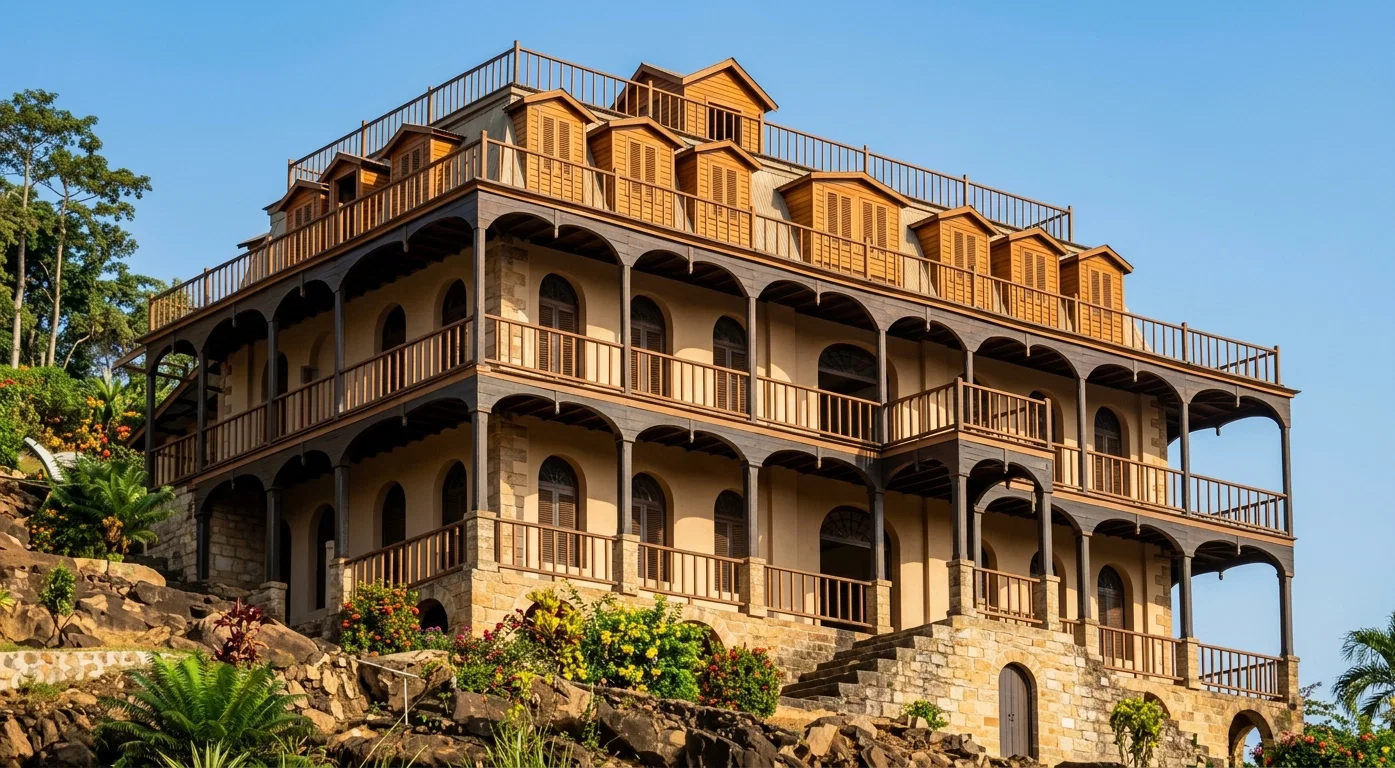
REAR VIEW, JAVA HEALTH RETREAT
MISSION PRINTING-OFFICE, AVONDALE SCHOOL
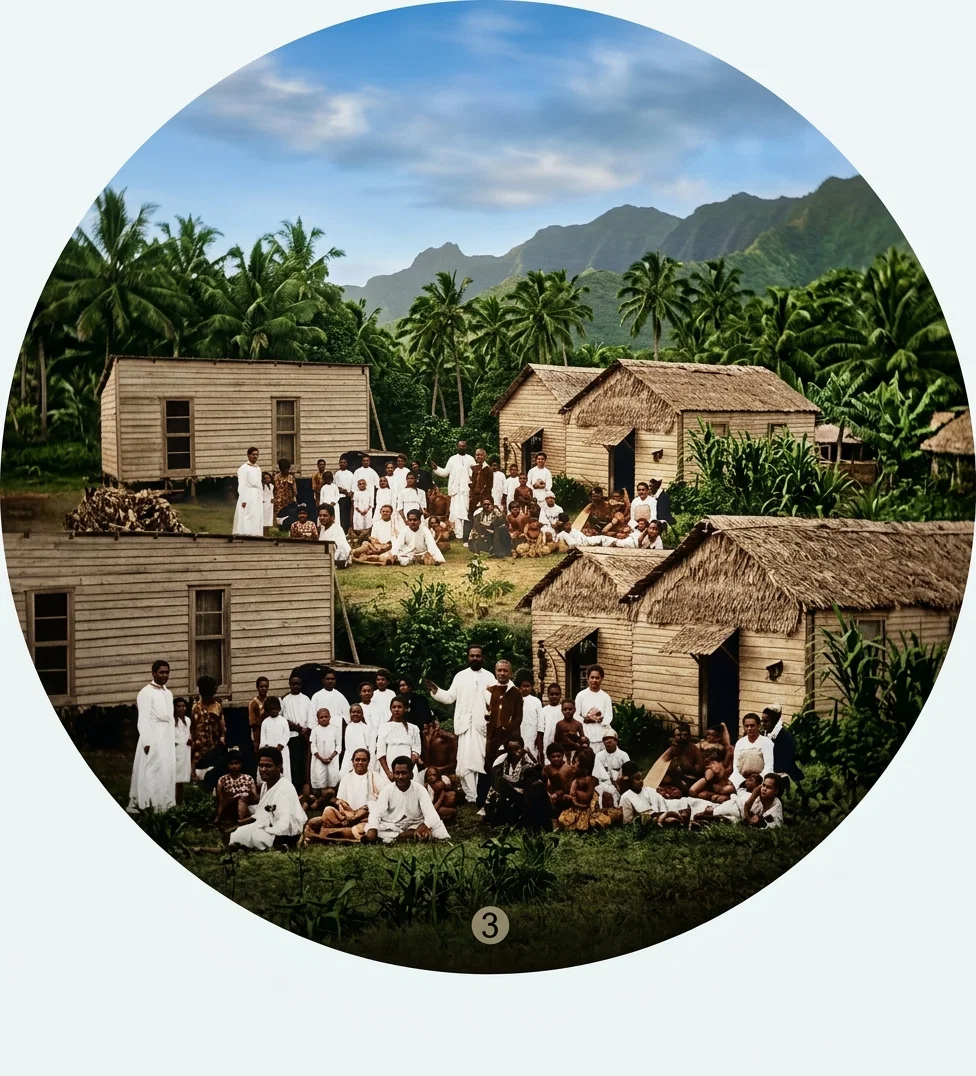
MISSION STATION, RAROTONGA, SOUTH PACIFIC
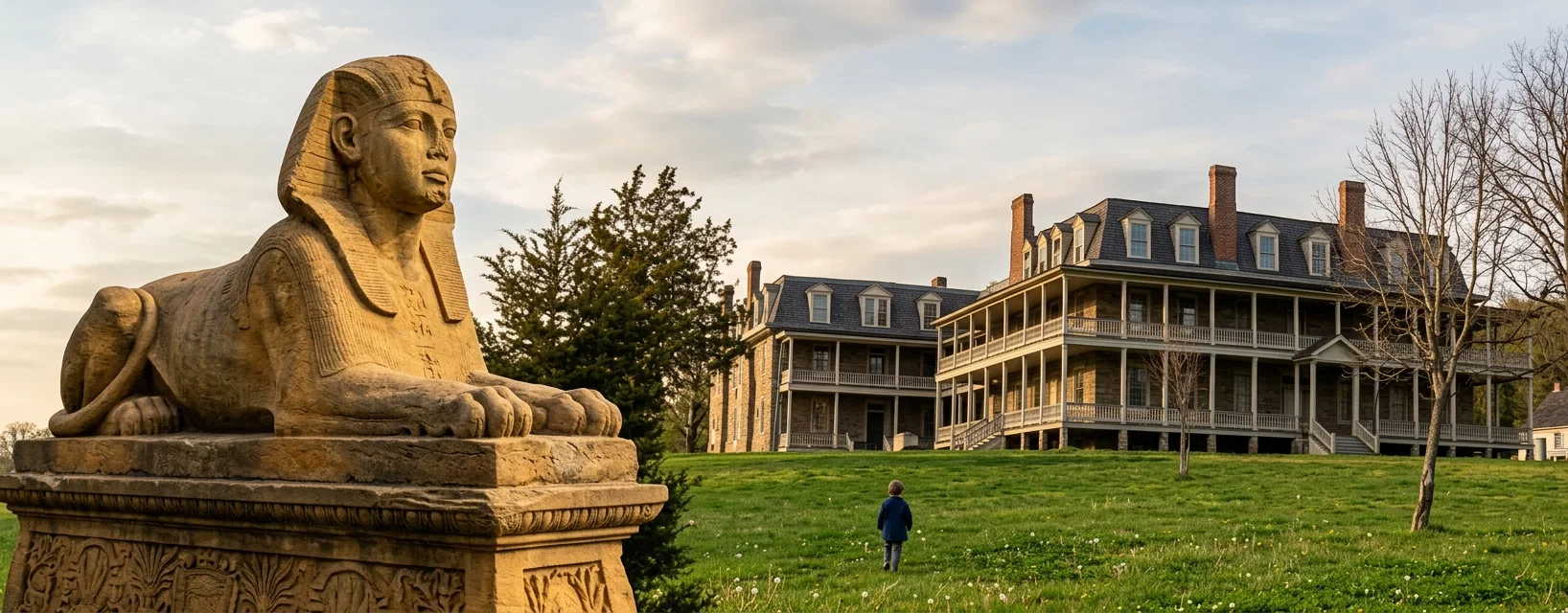
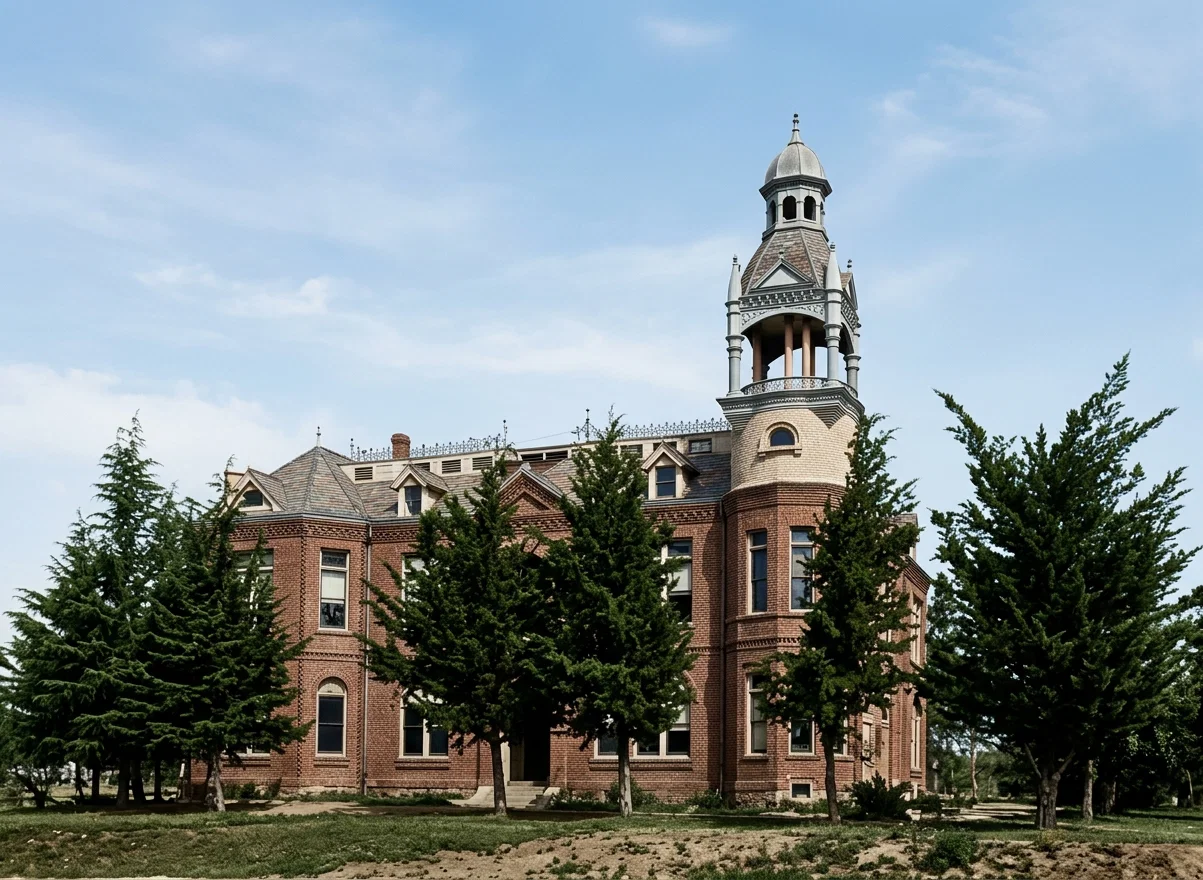
GIRLS' DORMITORY, AVONDALE SCHOOL FOR MISSIONARIES, COORANBONG, NEW SOUTH WALES
The Java Health Retreat
By Ethelbert Thorpe
WE spend three or four hours a day treating the sick who come to us, binding up their terrible sores, etc. We go many miles to the surrounding villages to treat the afflicted. The Lord works in a marvelous way in their restoration. A small hospital will be a necessity in the near future. The desperate need of these helpless millions presses upon our hearts.
The population of the Dutch East Indies has been estimated at about seventy millions, half of whom inhabit Java, and Madura, a large island adjoining Java. Think of it, brethren and sisters: thirty and one-half millions on these two islands to hear the message, the very last message that will ever be sent to this sin-cursed earth. In Java only eight per cent of the people (Javanese) have ability to read or write. The two millions of souls on Madura are in even much worse condition. Only the living preacher, aided by the Holy Spirit, can give this message. But God has ways and means that we know not of. Mohammedanism reigns. Human souls are falling into Christless graves. The cry is sounding, “Come over and help us.”
“The fields are white to harvest. Weep,
O tardy workers! as ye reap,
For wasted hours that might have won
Rich harvest ere the set of sun.
“We hear his footsteps on the way!
O work while it is called to-day!
Constrained by love, endued with
power,
O children, in this last, last hour!”
ETHELBERT THORPE.
Rarotonga and Cook Islands
By F. E. Lyndon
OUR Rarotongan paper, the Tuatua-Mou (Truth) is doing an excellent work. On the day of the steamer's arrival, I had quite an interesting time. The natives flocked around me for their papers, as bees do after honey. They say, Tuatua-Mou meitaki (very good). Every mail from the other islands brings me letters inquiring after our literature. Our books are being sold in other islands by native colporteurs.
We find much to do in the treatment of the sick and in dressing sores. My experience in the slums of Chicago, eleven years ago, is now proving very helpful to me in treating some of these cases. F. E. LYNDON.
Rarotonga.
New Guinea, East Indies
By S. W. Carr
THE other day we were invited to attend a native feast. As we neared the village, the sound of about sixty performers beating their drums reminded us of an engine ascending a steep grade. The time kept was perfect, and the beating was accompanied by corresponding movements of the legs and bodies of the performers. The drum-beaters are men only, arranged in rows three and four deep. There were about three hundred present at the feast.
As we viewed this company, we looked in faith to the time when they would hear and understand the message for these days, and could also see some of our future students, church-members, and workers assembled, not for worldly amusement, but in council to plan for the proclamation of this last message to all in this great land. May the Lord hasten the time is our prayer.
We have been able to give helpful treatments to some of the natives, as dysentery is raging at present; and in this way we are getting into close touch with them. S. W. CARR.
Sogeri Plateau.
The School Is the Ally of the Mission
By Frederick Griggs
As gospel workers forge their way into the heart of heathen lands, they must depend in an increasing measure upon the school as their strong ally. Effective missionary service requires keen minds as well as pure hearts, and men and women should be as definitely educated for such service as for any other calling in life.
To a people believing that the time has come for the last gospel message to go to all the world, the question of the education of their children and youth for service in forwarding the cause of truth is naturally a matter of paramount importance; for it is the youth, most largely, who must brave the unusual environments and endure the hardships of frontier mission life.
Seventh-day Adventists believe in a Christian education that educates the mind, hand, and heart for useful manhood and valiant Christian service. They have over six hundred schools of all grades, from the primary through the college courses. The enrolment in these schools is over sixteen thousand, for which nearly eleven hundred teachers are employed. From these students are continually taken recruits, strong young men and women, who are ready to go forth in missionary service wherever the providence of the Lord may call.
The value of thorough preparation for missionary service is strikingly shown in the marvelous work of Judson, Livingstone Paton, Williams, Moffat, and a host of other noble men and women, who, in the strength of their youth, planted the banners of the cross in the darkest and most remote corners of the earth. These men and women were trained for their work; they were either college bred or had pursued such courses of study and manual work as eminently qualified them for the severest tasks which man can undertake.
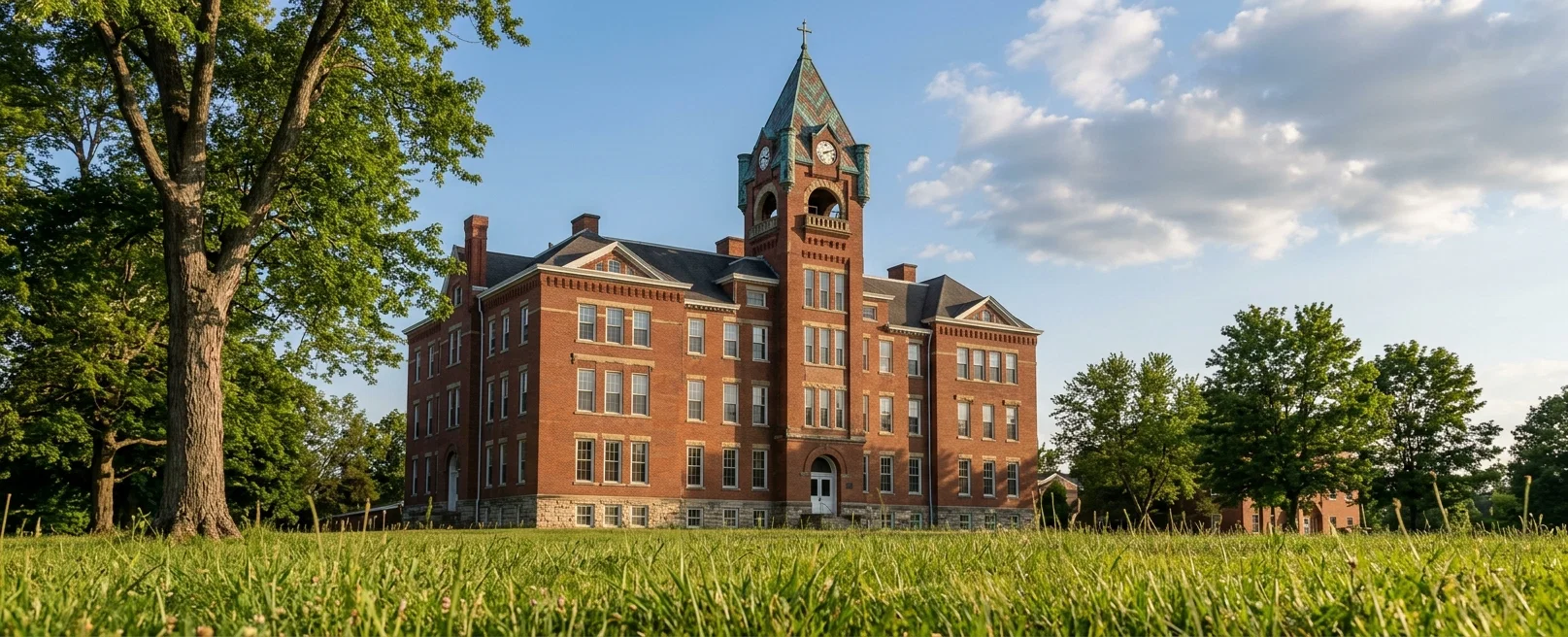
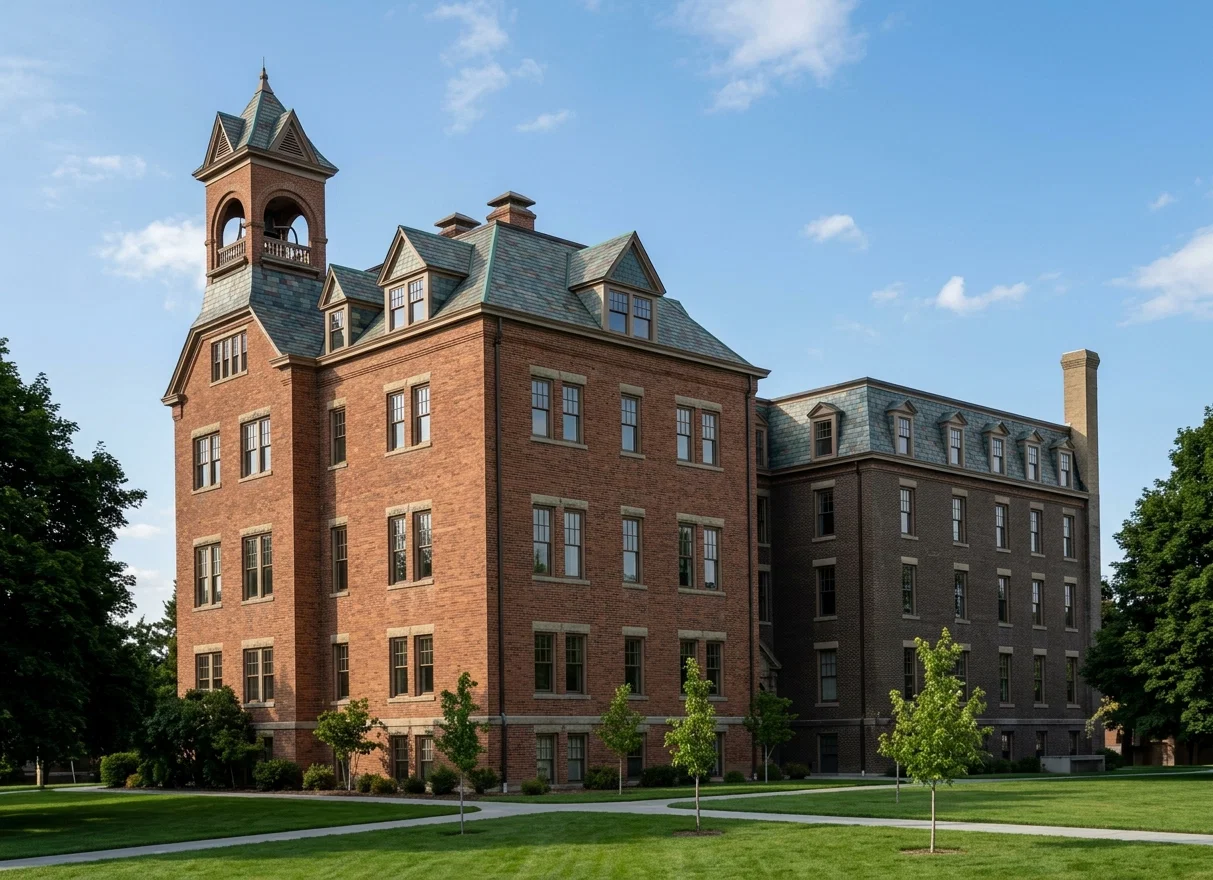
MT. VERNON COLLEGE, OHIO
For this trying gospel service, more than a strong mind is needed. That mind must be supported by a healthy, vigorous body; and any education aiming to equip for such service falls short if it does not give proper heed to the development of all the physical powers. It is incumbent also in the preparation of the missionary to teach him to be skilful with tools, and in the treatment of disease. The larger his abilities in these directions, the better; for he will have abundant opportunities to put to good use all the knowledge and experience he can acquire.
But the educational factors in mission work lie not alone in the home lands in the preparation of men and women for foreign service. The mission field itself is fruitful educational ground. For example, one of our missionaries in the interior of Africa writes:—
A Letter From Africa
“The providence of God has been urging us forward in a remarkable way. We have not been able to answer the calls for several more out-schools, though we are now building the fifth one. The four already running have an attendance of almost two hundred pupils. In them we have eight native teachers and assistants. We have eight out-schools in all.
“The smallpox was very bad among the natives last July. Our native teachers were attending a teachers’ institute at the central station. We called for a volunteer teacher to go to some villages four miles away. He must go into quarantine and run the risk of getting the smallpox himself. Six persons had already died in those villages. We held out the good opportunity of teaching the message before others die. One teacher volunteered, and we are starting the school.
TRAINING-SCHOOL, FREETOWN, SIERRA LEONE, WEST AFRICA
“These out-schools are built of poles and grass, and do not cost any money. The seats are made of short poles laid on crotches set in the ground. The floor is natural earth, the door and window are open spaces in the grass wall. The furniture is a small blackboard, some old slates, one native Bible for the teacher, and native primers, costing six cents each, for the pupils. The wages of the teacher is four shillings (one dollar) a month, and29his food, which costs about fifty cents a month. Don’t you think we can well afford to multiply such schools, which cost so little? But as we multiply schools, you must provide more white teachers to oversee the schools.
“You rightfully ask, ‘What fruits come from these out-schools? Do the people accept the message?’ Even if we do not see them receiving the truth at once, we should multiply schools. In these out-schools are many children who never saw a white man nor a Bible, nor ever heard the name of Jesus. But some do accept the message. At our last baptismal service seventeen were baptized. Six months before, the chief of those villages was baptized. Others who were too old or too young to walk seventy-five miles for baptism are still waiting. Among those last baptized was the son of the chief of several villages where we have another out-school. We have baptized forty-eight since coming here. Forty to fifty are receiving instruction, in preparation for baptism. We seldom baptize any until they have been taught one year or more.”
This report serves but as an illustration of the missionary value of educational effort, not only in Africa, but in all lands of missionary endeavor, though of course the character of the work varies in different lands according to the needs and conditions of the people.
FREDERICK GRIGGS,
Secretary Educational Department.
Avondale School, Australia
From School to Field
At our recent World’s General Conference, in Washington, representatives of some of our schools in other lands spoke of the missionary interest among their students. We summarize several reports:—
Avondale School, Australia
C. W. Irwin: Five years ago we had but two or three from our school in the island mission fields. To-day nearly thirty of our students are out among the sixty millions in our mission territory.
Watford School, England
H. C. Lacey: Our students are interested in missions. Twenty-three of the present enrolment have expressed their determination to give themselves to the foreign fields if called of God.
Friedensau, Germany
O. Luepke: The success of our school has been largely the result of the missionary work in the field. Out of six hundred fifty students, we have sent out three hundred fifty as missionaries [in European and foreign fields].
Canton Girls’ School
Ida Thompson: The Bethel Girls’ School is a boarding-school with day pupils. We enrol upwards of sixty girls and women, with twenty-five boarders. Here we plan to develop teachers and Bible women. This school was opened five years ago. This year we are using one young lady from the school as a teacher. One woman who learned to read her Bible, and found her Saviour in the school, offered her services free as a Bible woman this year. She is a capable, unusually active woman, and has already done much good. A woman of sixty, learning how Anna, the prophetess, received Jesus in the temple, exclaimed: “O Miss! I want to be Anna in Bethel Girls’ School.” She had found her place.
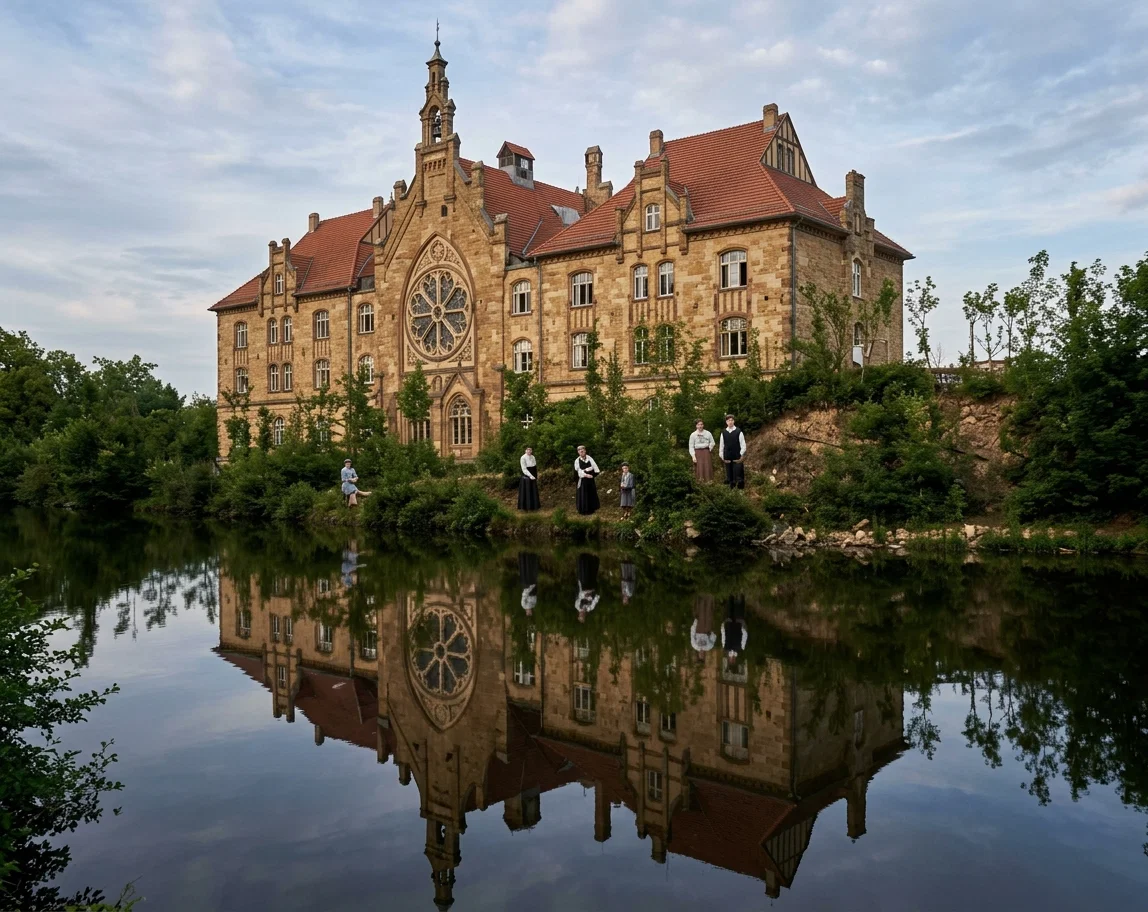
MISSIONARY COLLEGE,
FRIEDENSAU, GERMANY
WALLA WALLA COLLEGE, COLLEGE PLACE, WASH.
An Educational Revolution
By A. C. Selmon, M. D.
PREVIOUS to August, 1901, education in China consisted in storing the mind with the old Confucian classics. On this date an imperial decree was issued abolishing the old-style curriculum, and directing that thereafter there be examinations in Western arts and sciences. It was further decreed that schools and colleges be established throughout the empire. It was a revolution indeed.
By this one decree an educational system was abolished that had been in vogue for millenniums, and several millions of China’s brightest young men, with their faces toward the dead past, executed a “Right about, face!” and are now looking toward a living future.
We have seen workmen tumbling the idols out of a temple, and in their places putting in tables, chairs, and other necessary appliances for a modern school. Formerly, female education was a thing unthought of. There were no schools for girls outside of mission schools.
FERNANDO ACADEMY, SOUTHERN CALIFORNIA
It is for such a time as this, and in the face of such conditions as these, that we are called upon to devote every energy to the work for China’s millions.
Honan. A. C. SELMON, M. D.
There Are No Foreign Lands
By T. Whittle
T. WHITTLE
Go forth, ye gospel sowers, go,
And, broadcast o'er the land,
Beside all waters quickly sow
With an unsparing hand.
Let not thy work be bounded by
Thy country's narrow line;
Lift up thine eyes, thou shalt descry
The world's broad vintage thine.
There are no foreign lands; behold!
All lands have equal claim;
For sin, and death, and woe untold,
Are everywhere the same.
On yonder shores across the main,
Wherever man is found
Held fast by error's cruel chain,
Behold thy brethren bound.
ROUND THE GULF AND CARIBBEAN
To Evangelize Thirty Millions
ROUND the wide circle of the Gulf and the Caribbean, are over four thousand Adventist believers, joining heart and soul with us in the effort to carry the advent message to every creature. The vast majority of these are in the English-speaking islands of the West Indies, but the message of the coming of the Lord is being raised in Cuba, Porto Rico, Haiti, and Santo Domingo; in Mexico, Honduras, Costa Rica, Panama; and just a first effort has been made in Colombian and Venezuelan territory. Nicaragua and San Salvador, populous Spanish-speaking republics, are next to be entered. The publishing headquarters for this region are in Mexico City and at Panama. Our West Indian Training School is located in Jamaica. From this long-neglected region, just beyond our own borders, where thirty millions dwell, the calls come constantly for men and means.
Our Opportunity in Mexico
By G. W. Reaser
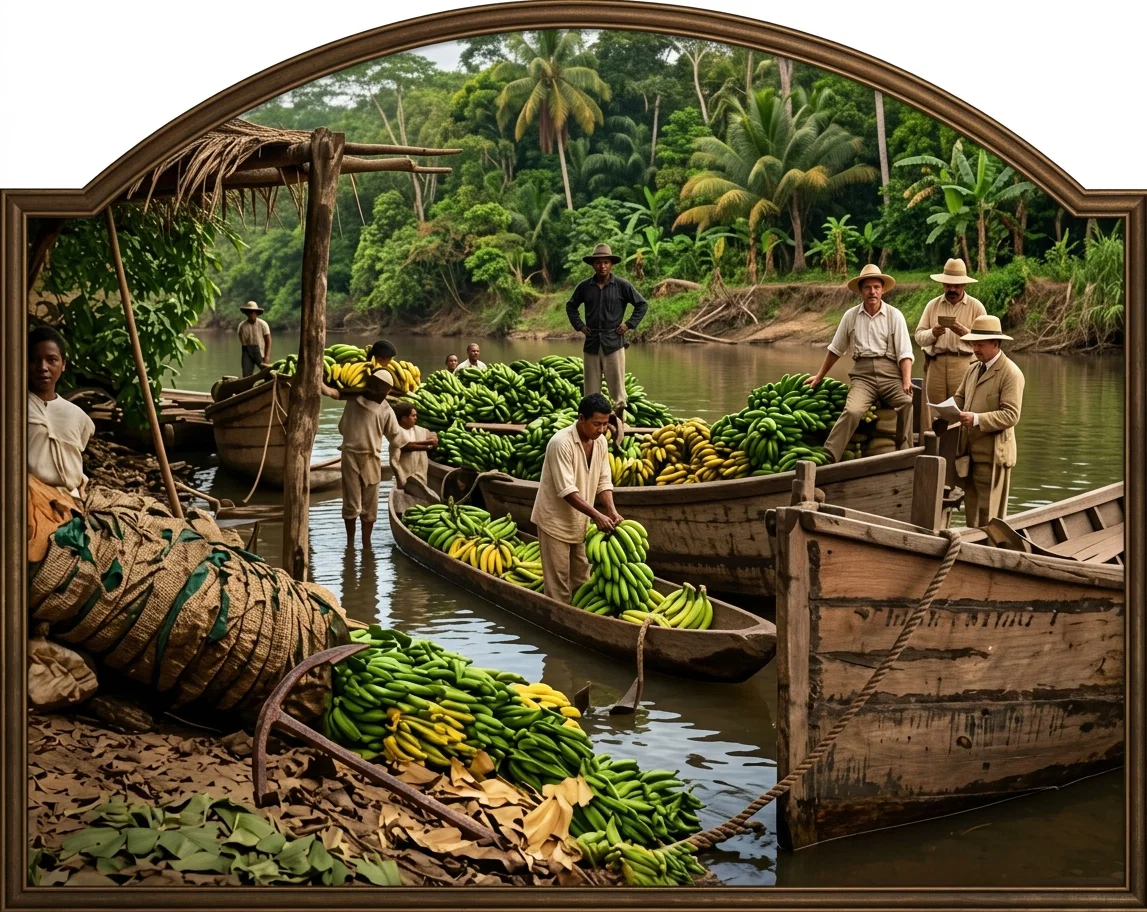
BANANA BOATS WAITING FOR STEAMER, HONDURAS
A FULL century prior to the first English settlement in the United States, the Spanish adventurer, Cortez, conquered Mexico, unfurling the emblem of Spain and the banner of Roman Catholicism for the first time upon American soil. The Spanish Inquisition soon followed, for the punishment of heretics and for the conversion of the “stubborn.” The terrible autos-da-fé claimed their victims down to the year 1821, or thirty-one years after they were suppressed in the Old World.
Every lover of liberty and all Protestants have occasion for special gratitude that Providence has placed President Diaz at the head of the republic of Mexico. Winning the highest office in the republic, he proclaimed civil and religious liberty for all, and, at four-score years, still administers his government as a liberal and progressive reformer. Never were the conditions so favorable for the spread of the religion of Jesus Christ as now.
Doubtless the paramount need of our Mexico Mission is a training-school for the development of workers. For this we are pleading. In addition to our dispensary work already begun, a small health institution, modestly equipped, would be a light center for the gospel of health in the land.
The chief human agency in our work up to the present has been our Mexican paper, El Mensajero de la Verdad, issued from our publishing house in Mexico City. Through this monthly paper the seeds of truth have been scattered in many parts of the republic, and fruit is appearing.
PANAMA PRINTING HOUSE AND CHAPEL
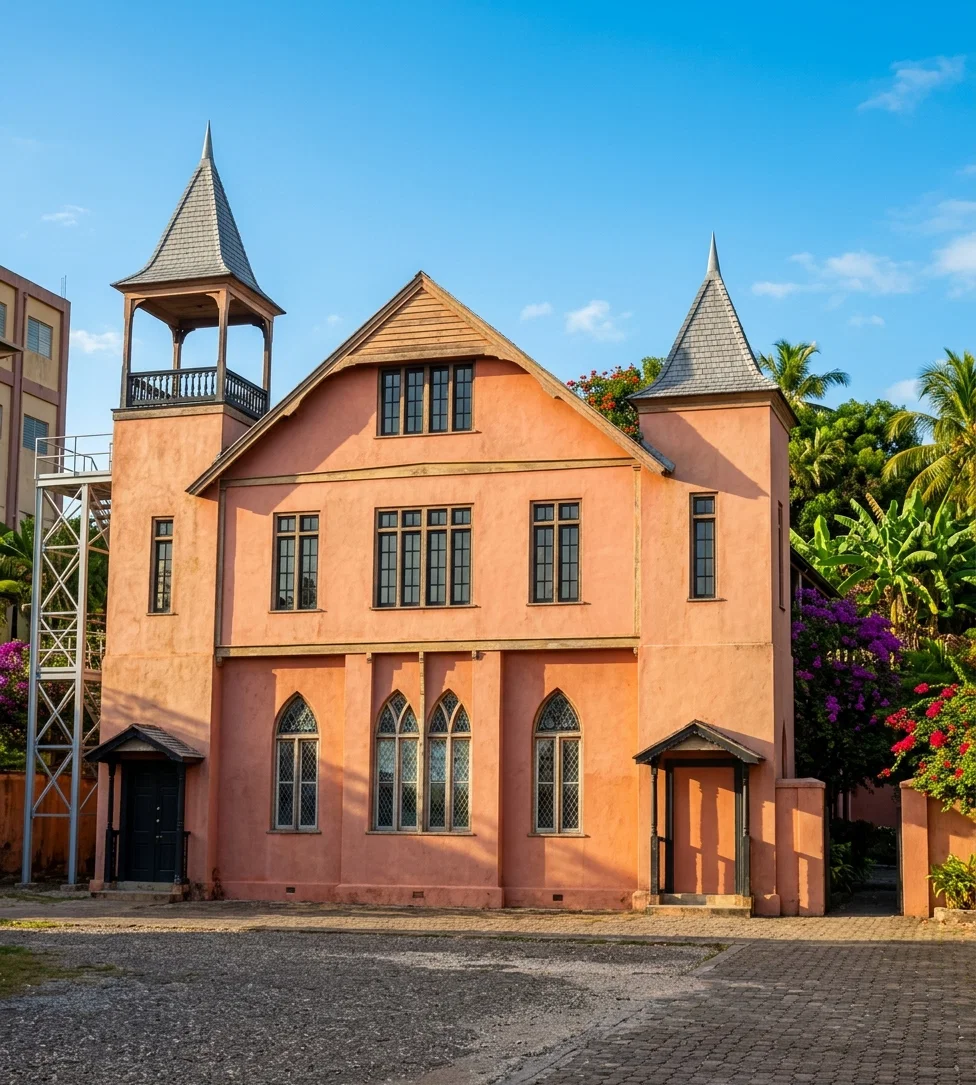
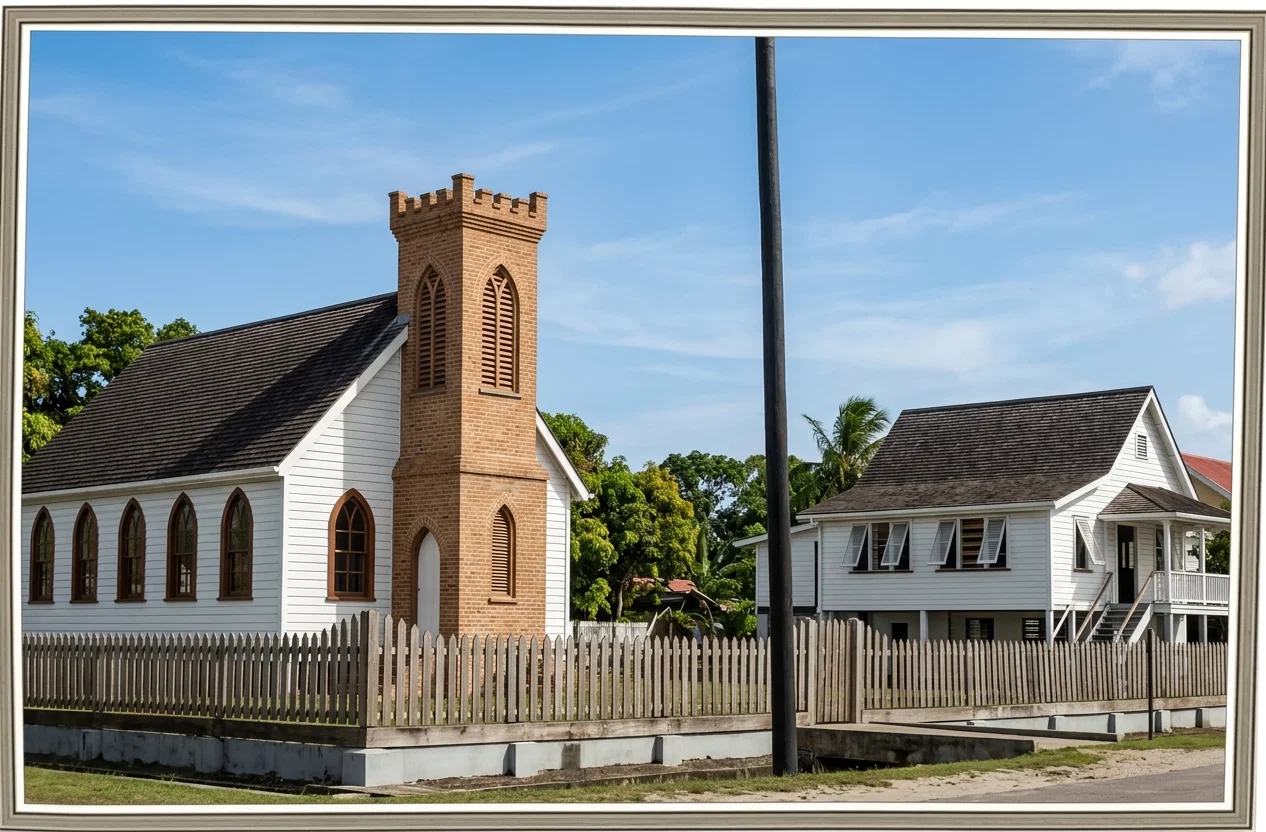
CHURCH AND MISSION HOUSE, GEORGETOWN, BRITISH GUIANA
One of the most encouraging features of our work during the last year has been the success of our evangelistic book canvassers. About the middle of July, 1908, four young men from California, acting upon the invitation of our Mission Board, arrived in Mexico City, and, after a brief time spent in memorizing the canvass in the Spanish language, began work in the capital among a strange people who spoke a strange tongue. One of them soon fell ill, and laid down his life on the altar of service. The success of the other three has been little short of marvelous. And this in the city of Mexico, where it was considered impossible to sell large books.
One difficulty that confronts us is that there are about one hundred eighty dialects in common use by the various tribes of primitive Mexicans. In some cities at least three separate dialects are spoken, each of the three tribes occupying a separate portion of the city.
Notwithstanding all obstacles, our workers and believers in Mexico are inspired with courage for the future.
G. W. Reaser.
Mexico City.
Up the Orinoco
By B. Connerly
WHILE on a pioneering trip up the Orinoco, in Venezuela, with our Spanish literature, I visited several Indian villages. As Spanish is spoken in some of them, I could converse with the people. They are, as a rule, very poor, and their homes are the rudest that can be imagined. They sleep in hammocks, and cook their food on camp-fires. They use neither table nor dishes. About their houses are to be found a burro, two or three goats, two or three pigs, a chicken or two, six or eight monkeys, four or five parrots, and at least a dozen dogs.
The first native convert that I met31asked me at once to what denomination I belonged. When I told him, he said, "O, I am so glad! I want to know what you are like. You must come to my house." He said he and his wife were anxious to know concerning the truths we are teaching.
I found many persons with whom the Spirit of the Lord is working. I readily sold all the books that I had with me, and took subscriptions for our paper, El Centinela, in all the towns, and distributed many tracts. "The harvest truly is great, but the laborers are few."
B. CONNERLY.
Seekers After God in a Mexican Village
By G. W. Caviness
FOUR or five hours from the railway, on the back of a little burro, brought me to the village of Mexquitic, where a company of people had been calling for instruction.
The leader of the company is the secretary of the civil court; but in this out-of-the-way place I found that the secretary was dressed like the peons of the country, with cotton trousers and shirt, sandals for the feet, and a large, wide-brimmed, tall-crowned hat. He received me in his office, and afterward took me to the brother’s house where the meetings were to be held.
The house was nothing but a hut made of adobe, or sun-dried bricks, the walls being four or five feet high, and roofed with poles covered with the leaves of the maguey plant. There were no windows in the house, and only one door, but the roof was sufficiently open to supply the needed ventilation and light.
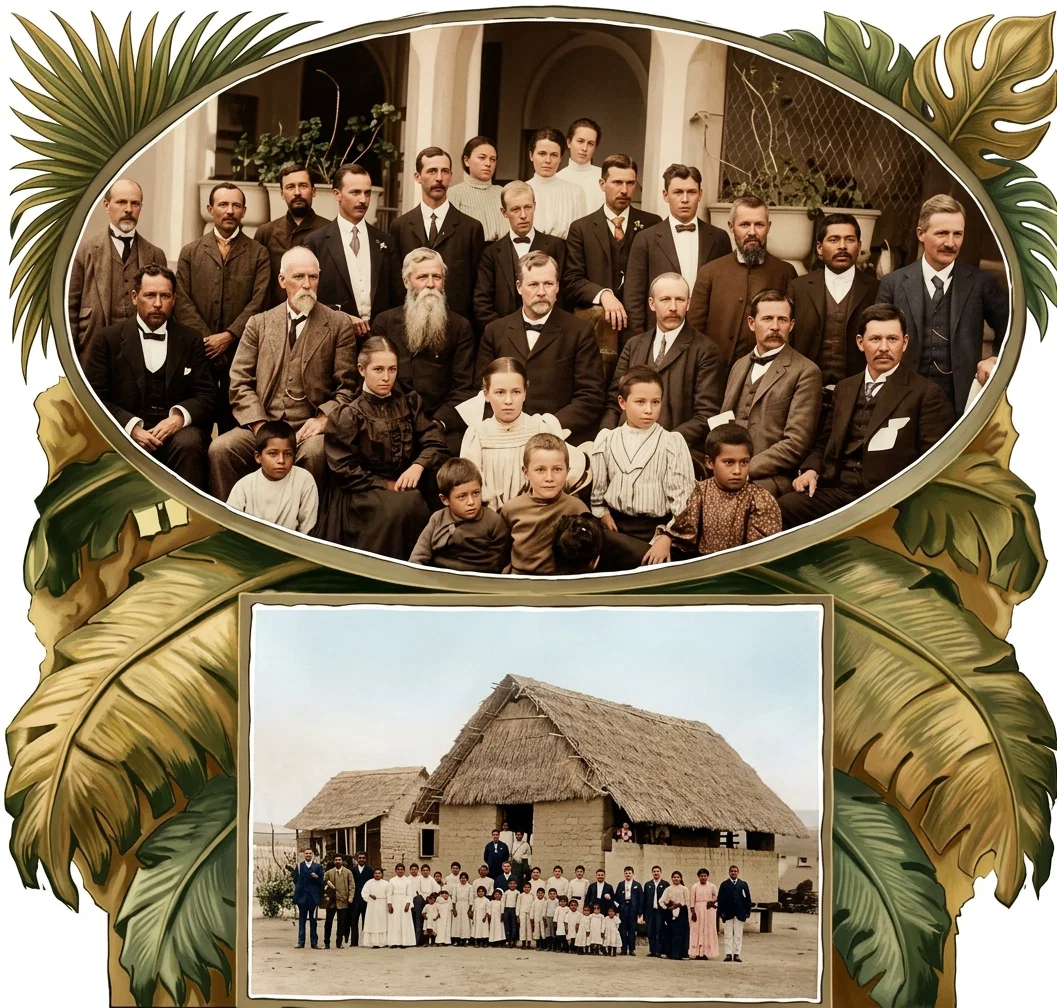
GROUP OF WORKERS AT COLPORTEUR'S INSTITUTE, MEXICO CITY
INDIAN SCHOOL AND MISSION, TAPACROOMA, DEMERARA
For breakfast they gave me some bread, with cinnamon tea; for dinner tortillas (corn cakes) and beans, with eggs. At night they spread on the floor, which was nothing but the naked earth, some skins and two or three blankets that I took with me, and so made a bed, where I lay down for the night.
Nevertheless, it gave me real pleasure to preach to these simple-minded people. They seemed to understand and drink in the truth and rejoice in it. I never enjoyed preaching to any people more than to these intelligent seekers after the way of God in this remote Mexican village. The long-neglected land of Mexico is wide open for the
gospel worker. We urge our appeal for help to bring light to those that sit in darkness. G. W. CAVINESS.