The Rapid Increase of the Tobacco Habit, and Its Effect Upon the Rising Generation
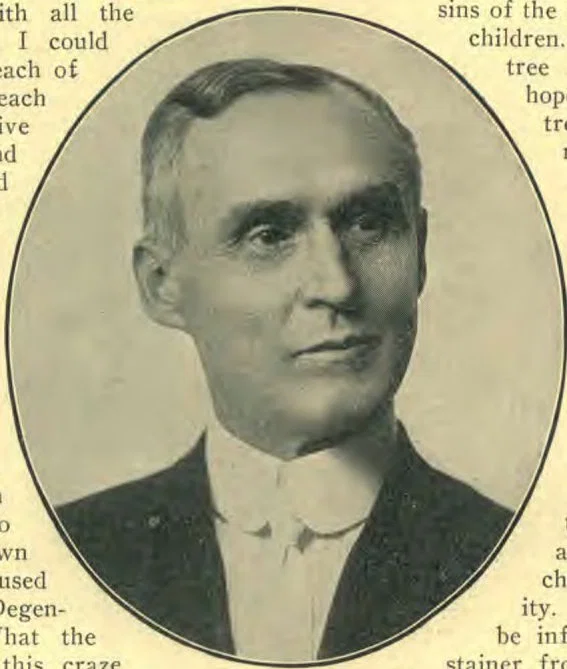
By D. H. Kress
D. H. Kress, M. D.
D. H. Kress
[Dr. Kress’s extended experience as physician and as superintendent of sanitariums in England, Australia, and America, has given him unusual opportunities for observing the effect of tobacco upon the human body.]
THE amount spent in the United States alone for tobacco annually would enable me to provide thirty thousand families each year with all the necessities of life. In addition I could grant an allowance of $5,000 to each of ten thousand other families. To each of ten thousand others I could give $10,000. To each of one thousand other heads of families I could make a Christmas present of $50,000. To each of another thousand I could give $100,000; and, besides, to each of five hundred of my best friends I could make an annual allowance of $1,000,000. After doing all this, I would still have left each year $20,000,000 to bestow on charitable institutions, and at least $10,000,000 to keep the wolf from the door.
Four hundred years ago the use of tobacco was unknown in civilized lands. To-day it is used by men, women, and children. Degeneracy has been the result. What the coming generations will be, if this craze continues to increase as it has in the past, does not present a picture pleasing to contemplate.
Tobacco was early considered a cure for indigestion and dyspepsia. While it removed the unpleasant symptoms associated with dyspepsia, by producing a state of partial anesthesia, or deadening the nerves, it did not cure the dyspeptic, but tended to aggravate the existing condition. When the influence of the nicotine had worn off, naturally the symptoms were found to be worse, and another smoke was demanded. To remain comfortable the dyspeptic discovered it was needful for him to remain under the influence of the nicotine all the time. In this manner the tobacco habit was created and perpetuated, not merely among dyspeptics but among others who desired to feel well, although they were ill.
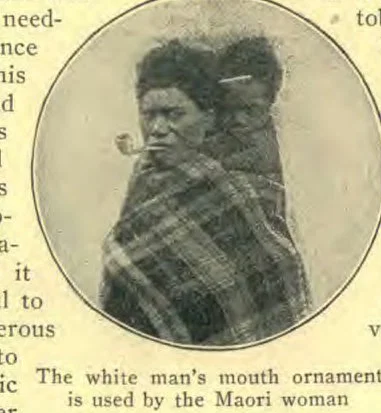
The white man's mouth ornament is used by the Maori woman
Efforts were made in various countries to suppress the habit as it became more prevalent. James I of England pronounced it “a custom loathsome to the eye, hateful to the nose, harmful to the brain, and dangerous to the lungs,” and urged his people to abandon its use. For years the Catholic Church would not permit its use by her adherents. To-day it is used by priests and kings, by rich and poor, by men and women, by boys and girls. A habit so universal can not but make its impress upon the race.
There are in the United States thirteen millions of children of school age who are physically and mentally defective. The real remedy does not lie in the removal of adenoids, and the patching up of decayed teeth, but in reforms in the future propagators of the race. The sins of the parents have been visited upon the children. It is impossible for a corrupt tree to bring forth good fruit. The hope of the future lies in making the tree good in order that its fruits may be good also. The injurious effects of tobacco on growing life are well understood. For this reason, tobacco in many lands is forbidden the youth. It retards the normal growth and development of tissue. The boy who smokes before he reaches the age of twenty or twenty-two—that is, before he has his growth—will be an inferior man to the one he would have been if he had not used tobacco. Mentally, intellectually, and morally he will be an inferior man. He will lack in chest development and lung capacity. Other things being equal, he will be inferior in every respect to the abstainer from tobacco.
Nicotine, the poison found in tobacco, when taken into the system lessens tissue changes. The worn-out material that should be eliminated and replaced by new and better materials is retained. Normal growth of muscle, nerve, and brain is therefore arrested. Athletes who wish to excel find they must abstain from the use of tobacco altogether, because it weakens and injures that vital organ, the heart. Accountants who are addicted to the use of cigarettes or tobacco in any form, are not as accurate as are the abstainers. Anything that the user of tobacco can do well, he could have done better had he never used it.
The boy, therefore, who wishes to make the most of himself, can not afford to weaken his body and mind by the use of cigarettes. An instructive experiment took place in the United States Naval Academy at Annapolis some years ago. The new superintendent found, on entering upon the duties of his office, that there was a rule against smoking, which was ignored and violated by the students. Believing that a law not enforced was demoralizing, he asked the government for a commission of scientific men to make a careful examination for the purpose of ascertaining whether the rule had adequate grounds for existence. Several of the smokers were put through tests for ascertaining their21muscle strength, heart strength, and capacity for study. The same number of non-smokers were subjected to the same tests. The average of the results was greatly in favor of the non-smokers. Tobacco was then withheld from the smokers for a time, and they were tested again. It was found that the muscle strength, the heart strength, and the capacity for study were all increased. As a result of this, the rule against smoking among the younger men of the school was enforced, and remains in force to-day.
Every teacher, and all who have to do with boys, should know these facts, and by precept and example teach them. Our national life is at stake; for the boys of to-day will be the men of to-morrow. Many boys would not use tobacco if they only knew these facts. They begin to use it because they consider it manly. They are taught by example more than by precept.
Tobacco is bad for both old and young. The school board of Chicago, in a medical examination of pupils before allowing them to take part in certain athletic sports, discovered that a large number of the boys were in a physical condition that made violent exercise of any kind dangerous. Twenty-one out of one hundred were found totally unfit to participate in the sport, and all but three suffered from some form of heart-disease. The verdict was that almost to a man they were cigarette smokers.
At the time of the Boer War in Africa, out of nearly twelve thousand men in the Manchester district, England, who considered themselves fit to fight for their country, and appeared for examination, eight thousand were at once rejected; and out of the entire twelve thousand only twelve hundred passed all the tests required by the physicians. The chief cause of their disability proved to be smoking, as boys and young men.
In Germany heart-disease has increased three hundred per cent during the last twenty years. One half of the young men between the ages of eighteen and twenty-one are said to be unfit to bear arms. Beer and tobacco are considered to be the chief causes of this degeneracy.
In America out of sixty-seven applicants who appeared for examination to enter the medical department of the army during the Spanish War, forty-three were rejected, having what the doctors pronounced “tobacco heart.”
This means much when we consider that in these classifications we have represented not the weaklings or degenerates, but the choicest young men these countries could produce.
In recent years there has been a decided increase in the number of sudden deaths from heart failure. There is no doubt that this increase is partially due to the free use of tobacco. Nicotine strikes a direct blow at the heart. It weakens the heart’s action, and in time brings about degenerative changes in its structure and also in the walls of the blood-vessels. The hypertension and arteriosclerosis indicative of degenerative changes, are usually found among users of tobacco.
Flies Die in a Tobacco Show-Case
Tobacco is a deadly poison. Gardeners and keepers of greenhouses destroy grubs and noxious insects with fumes of tobacco. Flies confined in a show-case with cigarettes will die in a few minutes, so deadly does the atmosphere become. Birds and frogs and other small animals die when exposed to the fumes of tobacco in a confined space. Cheese mites, bees, and other insects may be quickly killed by directing upon them a stream of tobacco smoke from an ordinary pipe.
Not only insects, but infants who have but a slight hold on life, and are compelled to inhale the nicotine which is expelled from the lungs and skin of a tobacco-using father, are often seriously injured if not killed by such exposure. Wives who are compelled to sleep in ill-ventilated rooms with tobacco-using husbands also become sickly, as great injury is sustained by the inhalation of tobacco fumes.
In the cigar factories of Vienna, where women are largely employed as workers, the rate of mortality among breast-fed children is eighty-nine per cent when the mother returns to her work soon after confinement, while the average rate of infantile mortality of breast-fed children of the mothers who were not tobacco workers is found to be only thirty-nine per cent.
The evils resulting from the use of tobacco should be determined, not by its effect upon the strong, who are hard to kill, but by its influence upon the weak.
Tobacco shortens life. While occasionally a tobacco user lives to old age, tobacco using and usefulness in old age are rarely associated. It is one thing to really live in old age, and quite another thing to exist merely as an object of charity.
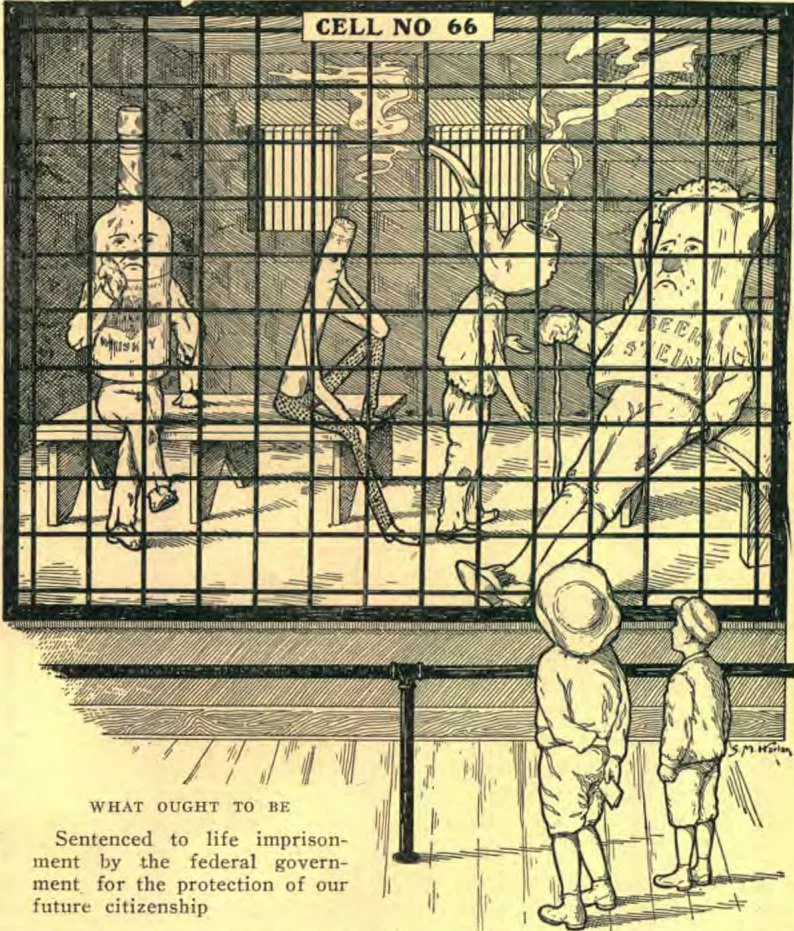
WHAT OUGHT TO BE
Sentenced to life imprisonment by the federal government, for the protection of our future citizenship.
Tobacco destroys the mind. Young men who use tobacco seldom attain to superior scholarship in school, and are unreliable in business. It is said that for a period of fifty years no tobacco user has ever stood at the head of his class in Harvard University, although five out of every six use the weed.
Dr. Solly, of St. Thomas Hospital, England, says: “I have had a large experience in brain disease, and am satisfied that smoking is a most noxious habit. I know of no other cause or agent that so tends to bring on functional diseases, and through these in the end to produce organic diseases of the brain.”
Much has been said in regard to the cigarette. Its chief danger lies, perhaps, in its apparent innocence. As in drinking, many who would not begin with whisky are enticed by beer and wine, because they are milder drinks, so the cigarette, because it is much milder than the pipe, encourages the young and even women to smoke.
That the manufacture and sale of the cigarette should be prohibited by law is now generally recognized.
Government Prosecutes Manufacturers of Cocaine-Laced Soft Drinks
The government has successfully prosecuted the manufacturers of at least eight soft drinks containing cocaine, one of the most dangerous habit-forming drugs. So deleterious are these medicated drinks that insurance companies are considering the status of soft-drink habitués as future risks.
Evils of the Cigarette
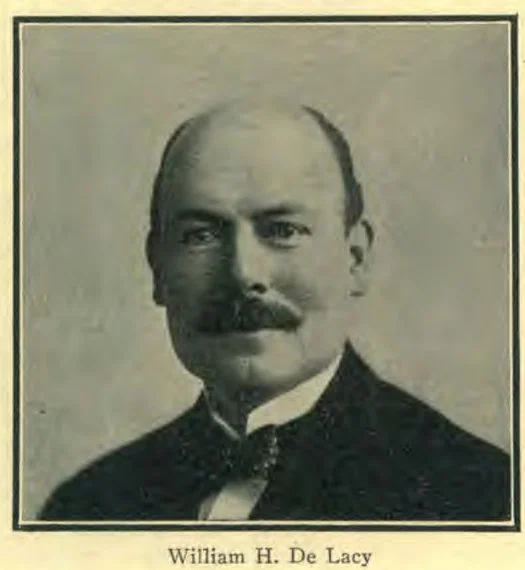
By William H. De Lacy
William H. De Lacy
JUDGE OF THE JUVENILE COURT, WASHINGTON, D. C.
William H. De Lacy
I HAVE seen neither boy nor man stand before me with those cigarette stains upon his fingers who amounted to scarcely anything at all.”
Thus have I spoken to many individuals of some sixteen thousand men and boys who have had occasion to come into my presence in the juvenile court at Washington, D. C.
“And,” I add, “there is something about this cigarette habit that weakens and unnerves the boy. It destroys his memory, impairs his other cognitive faculties, robs him of his power of attention, saps his will-power, and deprives him of his initiative; he becomes tremulous and timid, and fears to do the thing he would.”
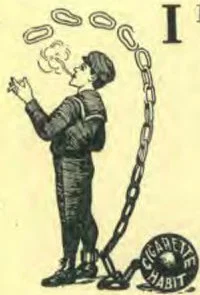
Forging the chain link by link
Often this filthy and disgusting habit has so fastened itself upon the impressionable boy nature that it can not be shaken off. What base slavery! What bonds of vice that meanwhile slowly and surely eat like canker into the physical being of its victim.
Many boys by repeated effort of the will do persevere and break the habit. Many other boys, alas! fail; but none need have commenced to use the cigarette. The beginning or the first indulgence in the vice, was undoubtedly a volitional act that could have been refrained from.
There is nothing necessary in the use of the cigarette. Alexander led his warriors, without cigarettes or other tobacco, from Macedonia to Persia. Hannibal caused his troops to scale the rocky fastnesses of the Alps without the aid of tobacco. Rome, the city state, extended her authority over the then known world until her eagles claimed respect from the Pillars of Hercules to the Euphrates, from the British Isles to the Sahara Desert, and neither the cigarette nor tobacco in any other form ever appeared at the banquets of her victorious cohorts. Christopher Columbus braved the dangers of the unknown seas without this narcotic.
Judge Lindsey, of the Denver Juvenile Court, writes: “I do not know of any habit that is more responsible for the troubles of these boys than the vile cigarette habit.” And to the same effect spoke Judge Greiger, of the Springfield, Ohio, Juvenile Court, during a recent visit to Washington.
Many physicians with whom I have consulted in the matter have assured me of the deleterious effect of tobacco upon the growing boy, and all have regarded the cigarette as the most pernicious form of tobacco using. Do college professors, and college men, and those other users of cigarettes who are in a position to influence boys, ever think of their responsibility for the bad example they give? How can advice to refrain from the cigarette be heeded when it comes from one who is himself a user of the cigarette?
It is not at all unusual for probation officers to report to me that boys find it difficult to stop smoking cigarettes. “Landlord says boy smokes cigarettes. Out until midnight. Just growing up for jail and penitentiary,” reads one such report.
I recall a case of a boy fifteen years of age charged with larceny from a jeweler. He was of a good family, tall for his age, with large features, that would have been handsome but for the listless, weak look that overspread his countenance. Excessive use of cigarettes had so dulled his memory that he had to refer to his broken-hearted father in order to make reply to the most ordinary questions by the judge about his personal history.
Another white boy, thirteen years of age, was in attendance at one of the ungraded schools of the district. One day he came to school with a package of cigarettes. At the beginning of the session, a little Italian boy informed the teacher about the cigarettes, whereupon the teacher relieved the boy of the package. At the close of the session, the teacher was surprised to receive from this boy a demand for the return of his cigarettes; and, when he was refused, he fell into a violent rage, seized a chair, and raised it to strike the teacher.
The teacher, a plucky young woman, caught him about the shoulders, forced him into a chair, and held him there until he regained, somewhat, his composure. She then sent for an officer. The officer testified that, upon his arrival at the school, he found the boy outside the school with a brick in his hand, threatening to throw it through the school window.
While under arrest, he said that he would get even with the Italian boy who told the teacher about the cigarettes. When asked about this remark by the judge, he claimed, in justification, that the boy had no business to tell on him. But when the action of the boy was shown to have been in his own interest, he took a different view of his schoolmate’s act, and said he was ready to forgive him.
When interrogated as to where he procured the cigarettes, he replied that he had begged them from a colored man. He was unable to say how long he had been smoking cigarettes, for the reason that he did not know just when he began to use them. The boy had so terrified not only his fellow pupils but the teachers, that the school authorities requested that he be not returned to the school.
As far back as Feb. 7, 1891, Congress passed an act prohibiting the sale of tobacco to minors under the age of sixteen years in the District of Columbia, punishing with a fine of not less than two dollars nor more than ten dollars, or imprisonment for not less than five days nor more than twenty days, any person who should sell, give, or furnish any cigar, cigarette, or tobacco in any of its forms to any minor under sixteen years of age. It is regretted that Congress did not pass a law forbidding minors themselves to smoke or use tobacco in any form.
The trustees of the public school prohibit the smoking of cigarettes or other tobacco by the pupils. Superintendent Stuart tells me this rule against smoking is strictly enforced. All probationers in care of the juvenile court are required to refrain from the use of tobacco in any form, and especially from using the cigarette, which, it is made plain to them, is most harmful in its effects. Boys, eschew the cigarette.
I've turned my back for life on liquor and tobacco
Women Smoking in Hotels Alarms Writer
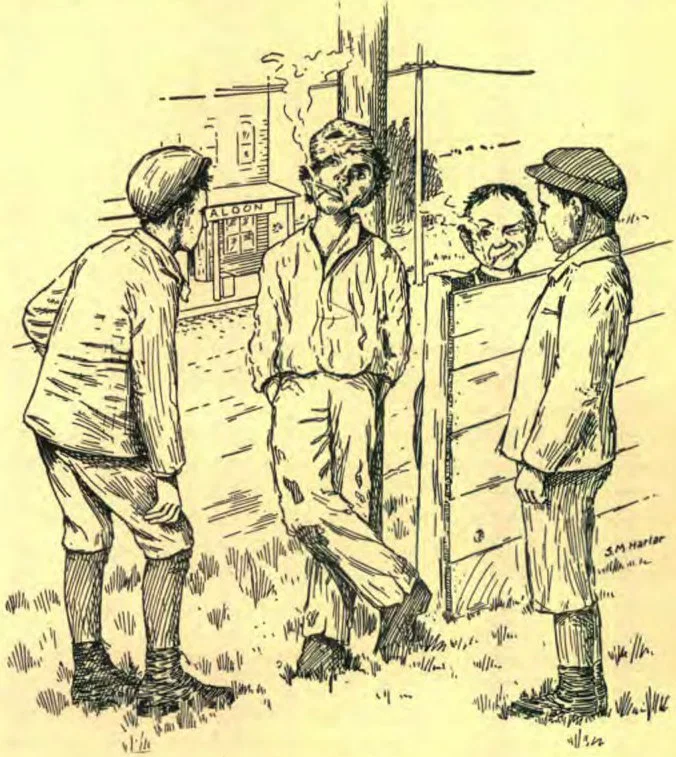
CIGARETTE BOYS
From such come many of our drunkards, criminals, and paupers
HOTELS in some of the large cities are now opening their lobbies, hallways, and apartments to women smokers, and, strange to say, there are women in every city ready to take advantage of such conditions. Surely the world is bent on destroying itself through wicked and unnecessary indulgences. When women openly enlist on the side of such evils, the outlook seems appalling. It means, at least, that those who stand and work for right principles, for strict temperance, must redouble their efforts, else sudden destruction will overtake the nation.
The Secretary’s Pipe
His Majesty Ernest Augustus, king of Hanover, could not endure the scent of tobacco, and his private secretary, General Von During, was hard put to it to indulge himself and yet not offend the king. This, according to Harper’s Weekly, was his method of fumigating:—
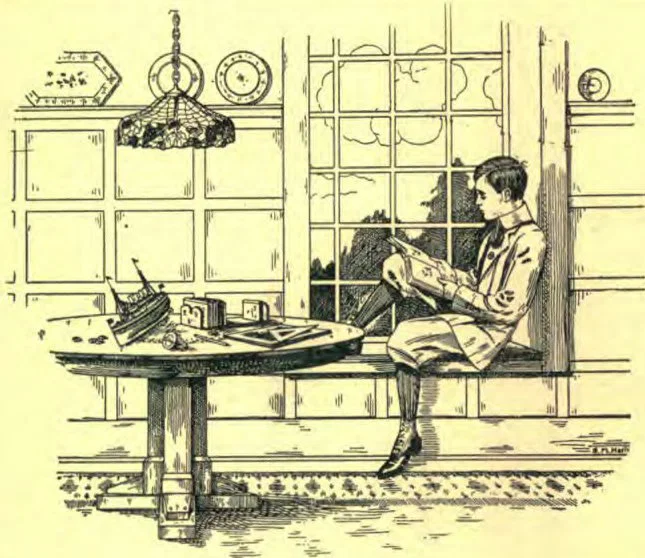
AN ANTI-CIGARETTE BOY
From such come our men who “do things”
Half past nine was the general’s hour of morning attendance. Five minutes before the time, four servants stood in the passage leading to the anteroom. One held an old horse soldier’s cloak with a slit behind; one held a red-hot shovel with a long handle like a warming pan; one held a decanter of water and a glass and a bottle containing a colored liquid; and one was there to hold the papers, and to take the pipe the general smoked down the passage to the very last moment. Number one then covered the old secretary’s shoulders with the threadbare and stained cloak, which had gone through the Peninsular War and which was now buckled tight about the neck. Number two poured some incense into the hot shovel and inserted it between the general’s legs through the slit in the cloak behind. The process was continued for a minute or two till the old man was nearly stifled. Then number three, from the decanter in his hand, poured out a glass of water, of which the general took a hearty gulp, rinsed his mouth, and spat the water out on the carpeted floor; then he threw off his cloak, seized his papers and letters from number four, and rushed steaming into the king’s presence as the various clocks struck the half-hour.
Used Tobacco Fifty Years
By F. I. Richardson
Among those who attended a course of lectures I was giving on health and temperance a number of years ago, was a man about fifty years of age, who said that tobacco was placed in his mouth while a baby, even before he had teeth; so of course he could not remember when he began its use. When seventeen years of age he was suddenly afflicted with partial paralysis of the right side. When I became acquainted with him, he was in a condition to excite the sympathy of all who saw him. He could walk only with the aid of a long stick grasped with both hands. He had convulsions, cramping very much, his under jaw being drawn so far to one side that it seemed impossible for it ever to return to its place. His mind was also becoming affected, and it was difficult for him properly to control his tongue when talking.
On the way home from one of the lectures, he said to his wife, “Mary, I have decided to quit using tobacco.”
She replied: “John, you know you can’t. When you are out of tobacco, you have those terrible convulsions.”
He said, “It doesn’t make any difference, Mary, I am going to quit using tobacco; and that is settled.” And he did.
The lectures closed, and I left the town. Three years passed, and I was again in that neighborhood. Passing through a section one day where most of the trees had been cut down, and hearing some one chopping near by, I went over to see who it was. Imagine my surprise to find that it was the paralytic. I called out to him:—
“Well, well. Mr. Brown, is it possible you are out here chopping?”
“Yes, sir; and it is a good deal more of me than there was three years ago, too,” he replied. “I can handle my tongue now as well as you can yours. I am so far recovered from my lameness that I can get around and do a good bit of work. And I never had but one convulsion since I quit the use of tobacco. The miserable stuff had nearly ruined me physically and mentally. I praise God daily for deliverance from the deadly evil, and from the bondage of slavery.”
If this man who had used the poisonous weed almost from his birth until fifty years of age, could discontinue its use, there is none that can not do the same; for “My grace is sufficient,” says He who is always ready to lend a helping hand.
F. I. RICHARDSON.
The Harmfulness of the Cigarette
FREDERICK S. DENNIS, M. D., professor of clinical surgery, Cornell University Medical School, says:—
The tendency to beer drinking is greatly strengthened by cigarette smoking, because this habit becomes almost constant, causing a dryness of the throat and fauces and hence irritating the throat. Immoderate cigarette smoking destroys to a certain extent the conductivity of the motor nerves, and likewise affects the motor tracts of the cord. The cigarette smoker forms a habit which unfits him for performing mechanical work in which great delicacy of manipulation is necessary. This form of smoking is universally prohibited among athletes during the period of training. By inhalation the nicotine becomes volatile, engenders a gas which acts as a poison, and prevents the capillary system from performing its normal function, which in time affects growth. The action on the heart is deleterious, and gives rise to the smoker’s heart, which is incapable of strain in any great physical emergency. Not only the heart, but all other organs sooner or later become affected, so that digestive and respiratory functions are impaired.
Tobacco Poison Compared to Rattlesnake Venom
“THERE is more poison in a box of cigars than in the bite of a rattlesnake,” says the American Book Company.