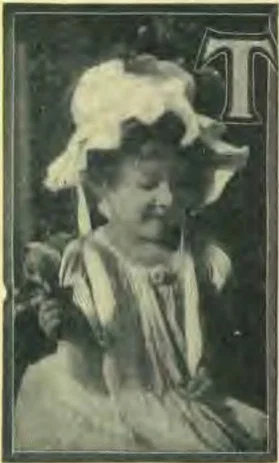
WRITER AND LECTURER ON PRISON AND TEMPERANCE REFORM
THERE are no more enchanting children than the Irish children, and no happier homes or better fathers and mothers than those to be found in Ireland. But the children have one enemy. No doubt you can guess my meaning, so I may as well begin by quoting what I once heard a little boy say: “Drink is the children’s worst enemy.” Another boy, however, when he was asked what he knew about pins, said that they had saved hundreds of lives, and when the puzzled teacher asked how, he said, “By people not swallowing them.” In this sense we may also say that strong drink has saved hundreds of lives. The public house, as we call it, or the saloon, as you call it, has just one good side to it, and that is the outside. So I want to show why it is such a terrible enemy, and also how we are trying to conquer it. We might indeed run a race, and see whether the old or the new country will be the quicker in this task.
It seems as if nothing could be stronger than a mother’s love. Gladly she suffers pain; she would bear anything herself rather than let her little ones suffer. A mother’s love does not change, except to increase, whether her children are well or ill, good or naughty, beautiful or ugly, big or little, healthy or deformed—to her love they are always beautiful, and her unceasing care is a joy, and her labors a delight. Yet there is something stronger, something which can, alas! drown even a mother’s love.
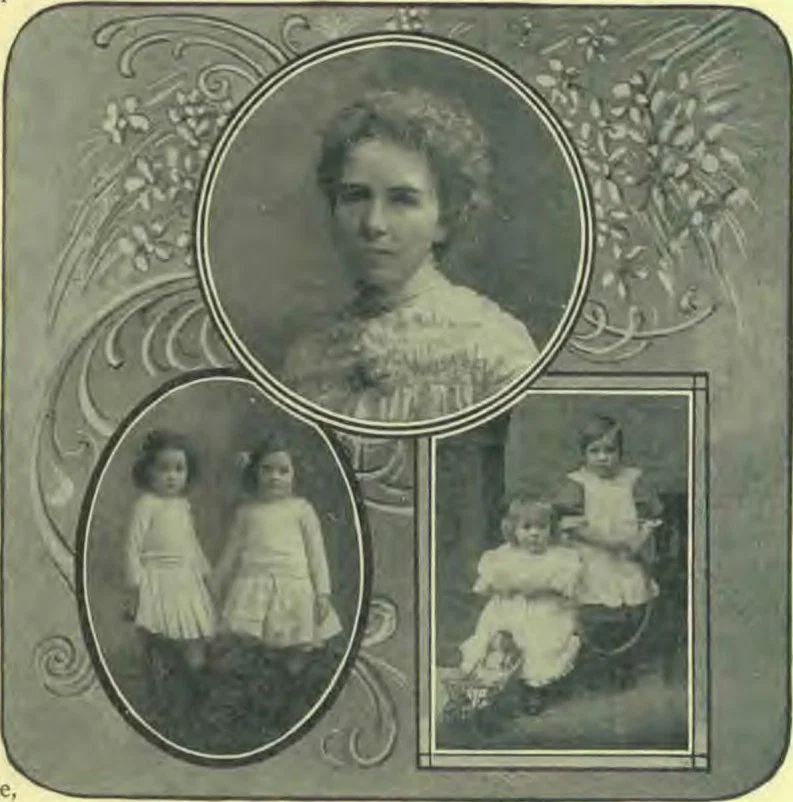
Miss Barrett and some of the children in her "Children's Home"
A few days ago two darling little children came into my care, so winning that it seemed as if no one could help loving them. Yet their own mother had deserted them—forsaken even the helpless baby, who could only coo and hold out clinging arms. Time after time this mother had taken the blankets off her children’s beds, the clothes off their backs, and left them to shiver and starve on cold, wintry days, just because her selfish craving for strong drink was stronger than even her mother-love. Sadder still, I was shocked one day to hear passionate screams from a mere baby, unable to speak, whom nothing would pacify. An older brother, crying and refusing all food, solved the mystery by pointing to and asking for the “black bottle.” These two mites had been literally poisoned by a wicked relative, who herself drank, and had shared her porter, the black bottle, with these little ones. It was weeks before they could or would take milk and ordinary food as they should; but by degrees this unnatural craving wore away, they could sleep quietly at last, and they grew stronger, though the elder boy will never be large or as healthy as other children.
In a Dublin children’s hospital, a boy of eight has been treated for delirium tremens, while three children under ten years of age, of one family, were all drunkards. They were poisoned; for doctors now all agree that alcohol in any form is literally poison to a growing child; it is bad enough for an adult, but ten times worse for a child; it injures him physically and morally. A child who is given strong drink even in small quantities does not develop normally; indeed, he may be so injured as not to grow up at all. A leading physician, the late Sir Michael Foster, said that even in the smallest quantities, it is always harmful to the young. Children of
five and six years have actually been treated in hospitals for diseased livers, caused by strong drink. Their brain, their nerves, their muscles get no fair play under such conditions. Another doctor writes:—
Ever so small a quantity hinders one from working so quickly, so well, and with so little fatigue as one might otherwise. One can not resist infection so stoutly, can not battle with disease so ably, can not convalesce so completely.
One can not exaggerate, then, the great importance of not allowing the young to acquire a habit that is so dangerous, so stupid, so costly, so senseless and wicked, and that may some day make itself so tyrannical a master. But the only way to avoid this danger is by becoming and remaining a total abstainer. No total abstainer ever yet became a drunkard; but hundreds of moderate drinkers have insensibly crossed the line, and found out their danger, often, alas! too late. If the taste for drink is acquired while young, the habit almost always grows. It must be remembered, too, that a whole gallon of ale does not contain as much nourishment as a lump of sugar.
We must give up the thought that “a little does not harm.” We do not want to go as near to danger as possible, but to keep as far away from it as we can. That should be our guiding principle. If danger is unavoidable, face it like men; but just to run into difficulties and into temptation to show off our skill is to court disaster. While one or two may escape safely, many will discover their danger too late, and will be hurled over the brink. If you think yourself safe, are you going to guide others into peril? Will you not rather avoid danger for their sake, if not for your own? Fifty thousand people drink themselves to death in a single year in England.
Indulgence in drink leads into strange paths; for it destroys conscience; it enslaves the will, and changes human beings into demons. This is not mere rhetoric. No facts are more clear than those showing the relation between crime and drink. In one Scotch town it was found that three fourths of the total committals to prison were for offenses committed when the person charged was under the influence of drink; in another, *eighty-eight5per cent were actually drunk when arrested. Three quarters of the more violent crimes in England are due to drink, and ninety per cent* of those committed against children and discovered by the Society for the Prevention of Cruelty to Children. This is especially true in large towns, such as Manchester and Dublin. In Europe generally drink is the direct cause of sixty-five per cent of all the crime committed; of how much more it is the indirect cause, it is impossible to say. Even among prisoners under twenty years of age, it was found in France that more than half were already addicted to drink. At a famous French hospital, the Salpêtrière, sixty per cent of those under treatment for nervous diseases are alcoholic patients. Crime is increasing among juvenile adults, that is, among those from sixteen to twenty years old, in almost every country in the world, in spite of improving education. This is markedly the case in France, where there is actually a public house to every eighty-seven inhabitants. The exceptions are found only in those countries (such as New Zealand, Canada, and, may we not now say, some of the States?) where the most rigid control is exercised over the consumption of drink. In New Zealand the convictions for drunkenness have fallen off half in a decade, and the arrests for drunkenness numbered only eight per thousand in the last year of which I have a record.
It is no mere fanatic’s statement, therefore, but has the support of the most carefully compiled statistical facts, to say that a sober nation, and a sober nation only, can be healthy or moral. To say that only such a nation can be prosperous is to state a now well-recognized fact. Brewing and distilling may make a few men wealthy, but they employ so little labor in proportion to the capital that, regarded merely as industries, they are of little use to the community.
The Best Means of Combating the Evil
Undoubtedly one of the best ways of combating this dread enemy is by giving scientific and accurate instruction to the young. The temperance teaching now so generally given in public schools especially when accompanied by simple experiments showing the injurious results on seeds or growing plants of giving even the smallest quantity of alcohol, must prove of the greatest value. There are many persons now living, who never remember hearing a single word spoken against alcohol when they were young. Happily, few could now say such a thing.
Surely we can well go without this enemy, and so follow the noble example set by the Swedish royal house, and also, I believe, by our own. It has been said on good authority that Queen Mary is a total abstainer, and has brought up her children in the same way. If this were true of all homes, what a glorious transformation we should soon see! Children would be happy. Money now wasted on poison, would be set free to buy food, clothes, and better houses; and that would mean more work for shoemakers, tailors, and builders, and more prosperity for all; and how many more happy homes! Is there anything you and I can do—or, rather, is there anything we would not do—in order to hasten that happy day?
“Every time would have its song
If the heart were right;
Seeing love, all tender, strong,
Fills the day and night;
For the great love everywhere
Over all doth glow.”
Christendom's Sacrifice
By Robert Hare
Robert Hare
WITHIN our Christian land there dwells,
Enshrined by legal right,
A Moloch dark and strangely rude,
That casts a withering blight
Upon the manhood of our state,
And o'er its boyhood life.
It claims a ceaseless sacrifice,
And calls through all the strife:
“Wanted: a hundred thousand boys
To sacrifice each year,
The blue-eyed, honest, trusting kind,
The treasures home holds dear.
Wanted—to sacrifice for gain,
A nation's life and joys.
To manufacture drunkards from—
A hundred thousand boys.
“Your boy will do; his sunny eyes
Will lose their luster bright;
His manly feet will learn to walk
In shaded paths of night.
I'll touch his lips with liquid fire,
And set his heart aflame
With all the heritage I boast—
Dishonor's tarnished name.
“Your boy will do, that one you love,
The dearest of all on earth,
O'er whom you've watched so tenderly
Since his far-off hour of birth.
His trusting heart will serve our end;
His spirit, free and brave,
Will lose its manhood, and at last
He'll fill a drunkard's grave.”
Say, fathers, shall it, must it be
Your boys, the true and brave?
Say, will you let your sons go down
To fill a drunkard's grave?
O mothers, will you let this blight
O'ercloud your sweetest joys,
While Moloch claims for sacrifice
Your hundred thousand boys?
Great Spirit of the Eternal God,
Inspire our hearts to-day,
And for our weakness give us strength
To drive this curse away.
Consume this crimson-handed power,
This Moloch that destroys—
And save to God and fatherland
Our hundred thousand boys.
Drive the Traitor Back
The following earnest appeal for the destruction of the liquor traffic is by Rev. Walter Walsh, of Dundee, Scotland. He says:—
The brave days of old produced no grander figure than that of Cato, the Roman senator, who flourished about two hundred years before the birth of Christ. He was one of those who strove to keep the Roman people from those paths of luxury which ultimately ruined them, and urged them to preserve the simple habits which had made them great. Some time before his death, Cato was sent to Africa to settle a dispute, and for the first time beheld the rising city of Carthage. He was much impressed by its powerful situation and great prosperity, and saw that it was likely to become a formidable rival to the supremacy of Rome. Returning to his own country, he confessed his fears to the Romans, and declared his belief that Rome would never be safe so long as Carthage was permitted to live and prosper. Henceforth, whenever he spoke in the senate—no matter on what subject—Cato invariably concluded with the words, “Delenda est Carthago!” Was he speaking on finance? Carthage must be destroyed! Was the subject art or literature? Carthage must be destroyed! Did he treat of corn, ships, roads, treaties, or civil progress? Carthage must be destroyed!
For that unshaking word of thine, stern Cato, we thank thee. You spoke better than you knew. The empire of alcohol can not be tolerated in the same world with the human race: the war is to death; the word is kill, or be killed; the game is for dominion. There are some who speak of entering into treaty relations with the rival power of alcohol—of regulating it, controlling it, municipalizing it, taking tribute from it, and what not; but Cato the Just can not away with any of those measures. He sees that alcohol refuses to be bound by treaty; invariably gets the best of every bargain; can not be regulated or held by bond; will be master, not servant; will have all, or nothing; which bursts all bonds of reason and morals. The drink traffic can not be regulated. It must be destroyed. We can not rest till we have driven this arch-traitor from the earth back to the father of lies, whence it came. The drink traffic must be DESTROYED!
Despair Across the Waters
The leader of the French co-operative movement gives the following graphic picture of the drink-saturated provinces of Normandy and Brittany:—
I said to those who know the country best: “Tell me about alcoholism. Is anything being done to stay its advance?” They raised their arms to heaven, and replied in stricken tones: “The plague advances steadily. It has gone so far that one can hardly speak of it. The children are gangrened with it. The youth furnish a continually increasing number of imbeciles and criminals. In some places a half, in others two thirds, of the conscripts can not be accepted because of physical weaknesses. Those who enter the army sound are dragged down by their comrades. One can not imagine a more dreadful sight than that of these young soldiers at the railway station coming home when their service is over. No jolly songs—only contracted, sinister faces, the dull brutality of condemned souls! Go to the wharves. It is even worse there. The laborer hardly eats now. He never changes his clothes. He rarely washes himself. He has neither money nor time for these things. He only drinks.” “But,” I asked, after hearing these things, “why don’t you cry out to the nation?” “What’s the use? No one listens, and besides, it’s too late. There is no possible help for us now.”
The editor of a Belgium paper says:—
Belgium would be the richest and happiest country in the world if the 200,000 saloons whose existence we shamefully allow, were not poisoning us with their alluring drugs, filling our prisons, poorhouses, and hospitals.
At Messina and Reggio 60,000 were suddenly wounded by the cataclysm; in Belgium 200,000 are wounded every year by alcohol. Messina was built upon a subterranean volcano; but we have 200,000 craters which daily discharge poison and death upon our people.
From every country comes a similar wail. Our own joins in the dirge. And yet not a nation dares to strike directly at the traffic that is responsible for the appalling conditions. Action, wise and just, is the need of the hour.
What the Societies Seeking to Protect Children Say
In our country there are nearly four hundred societies for the prevention of cruelty to children. The pioneer of these is the New York Society. During the thirty years of its existence this society has rescued and cared for 160,977 children. The present superintendent, Mr. Thomas D. Walsh, says, in response to our letter of inquiry, that at least “ninety per cent of our neglect cases result either directly or indirectly from parental intemperance; indeed, much of the misery among the children the society seeks to save is directly traceable to the drink evil.”
Mr. M. J. White, secretary of the second oldest society of its kind in the world, the California Society for the Prevention of Cruelty to Children, says: “I believe that of every hundred cases reported ninety-seven can be traced directly or indirectly to the use of liquor, and I am indeed convinced that I could find even a higher percentage.”
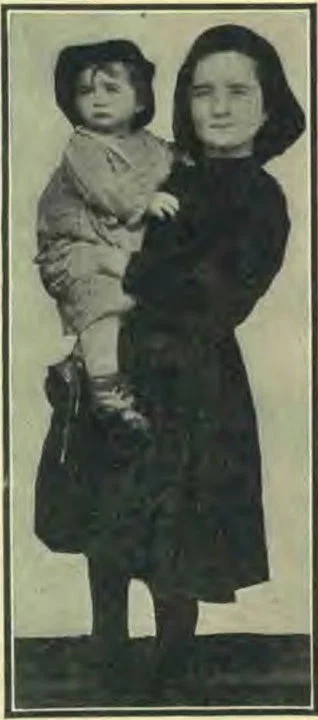
Two wards of a society for the prevention of cruelty to children. Parents drank
The president of this society, Edwin W. Newhall, says that “the intemperate use of liquor by parents is probably the greatest menace to the welfare of our little folks.” He further states that drink has been a prominent feature in every case that he has investigated. From 150 to 190 complaints are received and investigated monthly by this society of which Mr. Newhall is president.
The records of the society show that during 1909 one hundred eighty cases were taken to the juvenile courts in which the cause of complaint was intemperance on the part of the mother.
“The dependent minors taken into court,” says Mr. White, “as a rule live in an environment of drunkenness, immorality, degradation, and neglect, which stunts the body and deadens the soul.”
Hon. Thomas D. Flynn, of New Orleans, says: “I think I may say with safety that not less than eighty per cent of the cases of juvenile delinquency with which we have to deal are traceable to conditions for which the use of intoxicants is responsible.”
Miss Rosa M. Barrett, president of the Irish Women’s Christian Temperance Union, and a well-known writer on prison reform, says that “in Manchester, Liverpool, and Dublin, for example, ninety per cent of the offenses recorded by the Society for Prevention of Cruelty to Children, and in Derbyshire nearly all, are due to drink. Elsewhere the authorities say that two thirds would be a moderate estimate. Apart, therefore, from drink, children might hope to lead a fairly happy life, and our country would be freed from one of the saddest, most humiliating sides of our national condition.”
Hon. W. W. Morrow, judge of the United States Circuit Court, in a decision in 1908, said that “the moment a child is born, it owes allegiance to the government of the country of its birth, and is entitled to the protection of that government.” When a parent, therefore, neglects to perform his duty or disregards his obligations, the government has a right, according to this decision, to step in and take possession of the child. If the parents forfeit to the government their right to a child because of conditions which directly result from their drinking habits, what right has the government to license the traffic that makes the parents incapable of caring for their offspring? If every child at the moment of its birth becomes a ward of the government, why, then should not the government be held equally responsible with the parents in supplying conditions that make for the well-being of the child? What right, I ask again, has the government to legalize conditions that will in time cause the parent to forfeit his claim upon the child?
Something is manifestly wrong in the government’s attitude to this question.
We believe that if the federal government would once turn its eyes from the American dollar, and fasten them upon the American boy and the American girl, the liquor traffic would be quickly outlawed; for it is evident to all honest thinking men and women that this traffic is the greatest known menace to our present and our future citizenship.
Rum's World Exposition
By F. Frederick Bliss
Come, all the world, and view the show
Composed of rum-made human woe;
But steel your hearts and shield your eyes
'Gainst horror's sights and sorrow's cries.
Ten million breaking hearts are here;
A tear-made ocean stagnates there.
Here surge the rising tides of grief,
Unmitigate, without relief.
Here crumble walls of myriad homes
Whence nevermore a joy sound comes.
Here worlds of smiles to weeping turn;
Here worlds of hope to ashes burn.
A hundred million brides that were,
Love's dying embers sad bestir.
Unnumbered rum-robbed children cry
For home and love and lullaby.
A million anterooms of hell—
Areek with blood, astench with smell.
Weeds choke the grain in nameless fields
Where once were thrift and golden yields.
Tramp, tramp, sad millions to the grave,
With few to help,— but One to save.
F. Frederick Bliss.
Optical and Other Illusions
By F. D. C.
The full moon appears larger when near the horizon than when overhead in the zenith. It is nearly four thousand miles farther away, so should appear smaller, and astronomical measurements give a smaller diameter; but since it appears nearer when just above the horizon because of intervening objects, the mind sees it larger. This is what physicists call an optical illusion. In certain drawings, the farthermost of several figures seems the tallest, but by actual measurement the first or nearest figure is found to exceed in height the farthermost one. This is another optical illusion. The light circle here represented seems larger than the dark one, but the two have the same diameter. Here also the eye deceives us.
In other cases, as well, our sensations may prove unreliable. If a very cold hand is plunged into a vessel of cold water, the water seems to be quite warm, whereas if the hand is very warm when put in, the water seems quite cold. Again, on a cold morning, if a person steps out of bed onto a woolen rug, then onto a piece of oilcloth, the oilcloth seems much colder than the rug, merely because the former, being a better conductor of heat, draws the heat away from the body more rapidly than does the latter.
These illusions are well known, and are accepted universally as physical illusions. There are other sensations known to the scientist to be mere illusions, which are still regarded by some persons as reliable sensations. Such are some of the sensations accompanying the use of alcohol.
Does Alcohol Quicken Brain Action?
For example, some think that alcohol quickens brain action. But very careful experiments to determine the real effect of alcohol on brain action have been performed by scientists and medical men of every civilized nation; and all these have demonstrated the fact that alcohol even in very small doses interferes with the highest use of the brain. One series of experiments was tried upon expert compositors. It was found that the actual loss of working power caused by the small dose of alcohol was nearly nine per cent. However, “the men believed throughout the experiment that they were doing better and quicker work when taking alcohol than when abstaining, although the actual facts were the reverse.”
In the Swedish army a series of important experiments in target practise were made upon a number of picked soldiers and non-commissioned officers. “When alcohol had been given, the result was thirty per cent fewer hits in quick fire, although the men always thought they were shooting faster, whereas actually they shot much more slowly.” When slow aiming was allowed, the difference was even greater, and, as before, against and not in favor of alcohol.
Another investigator studied the duration of the effect of alcohol in light doses, and found that the result lasted all the following day, causing a dulling of mental labor, although the subject was under the impression that his work was as good as usual.
Quality and speed must both have a place in good mental work. The rapid talker is not necessarily the best thinker. The manufacturers of the fountain pen say that when the pen flows too freely, it is a sign that the pen is nearly empty; so the loosened tongue of the imbiber indicates an empty brain, at least one whose higher and more complex processes have been partially paralyzed. To himself the free talker seems more “brilliant,” because he can use words so freely; but it is a sad illusion. Alcohol removes the balance-wheel, as it were, that gives the tongue a steady, dignified, thoughtful action. This allows it to rattle along as it will. Soon “this so-called stage of stimulation develops into noisiness and emotional excitement as the cerebral control becomes increasingly paralyzed,” says Sir Victor Horsley. The next change is the commencement of narcosis; and dulness and heaviness succeed.
Dr. Kraepelin, of the Heidelberg University,
has made extensive experiments to determine the effect of alcohol upon brain action. He found that while the simple, automatic actions of the brain, such as reading aloud, were at first quickened by a small dose of alcohol, even these were rendered less trustworthy and accurate. He also found that processes involving no more complex actions than adding figures rapidly, or of performing problems in mental arithmetic, were hindered by even small doses of alcohol. The result of these experiments came as a surprise to Dr. Kraepelin himself, who had hitherto shared the popular belief that small doses of alcohol quickened the activity of his mind. But when he came to measure with his unerring instruments the exact time occupied, he found to his astonishment that more time was required to perform these operations than when he did not use alcohol, though it seemed to him that the brain was acting more rapidly. Similar experiments were tried upon others, the same results being gained in every instance. And, singularly enough, each one felt, when under the influence of alcohol, that he was doing better and more rapid work, though the tabulated results showed the reverse to be true. Such is ever the delusive effect of alcohol; and the delusion is as real as in those incidents mentioned at the beginning of this article.
This effect is not peculiar to alcohol. “The ordinary anesthetics used in surgery, as chloroform and ether,” says Sir Victor Horsley, “make the patient feel that he possesses great muscular strength, and feels himself to be making powerful efforts, which in reality are not in any way superhuman.”
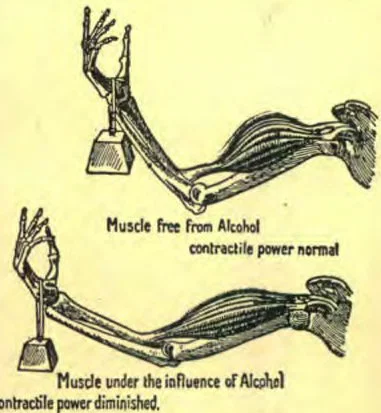
Muscle free from Alcohol
contractile power normal
Muscle under the influence of Alcohol
contractile power diminished.
A man for a time feels warmer in winter after taking a glass of liquor; but a multiplicity of experiments have proved that he only feels warmer, that he is actually colder, and would succumb to severe exposure more quickly than if he had not taken alcohol. This illusory feeling of warmth is no more indicative of an increase of bodily heat than is blushing. The alcohol causes a slight paralysis of the nerves controlling the action of the blood-vessels of the body; and as a result, these dilate, and allow more blood to come to the surface of the body, where it is cooled. The feeling of warmth is due merely to the fact that the skin is made warmer by the increased flow of blood, and the nerves of the skin carry the sensation of warmth to the brain. So well-known is the fact now that alcohol lowers the temperature of the body that lumbermen, explorers, and others who are exposed to extreme cold, regard this narcotic as a deadly foe. Chloroform and ether produce a like effect in lowering bodily temperature.
Another illusion of the alcoholic devotee is that intoxicants do not hurt him physically; and this in face of the fact that his reddened face, coarsened features, unkempt appearance, unsteady gait, and dull eye, all betoken a bodily decay that is a recognized inevitable result of the use of alcohol. The seven diseases that account for more than half of our deaths all find far more victims8proportionately among the intemperate than among abstainers. Tuberculosis ranks first in its death-destroying power, and alcohol is responsible for more than one half of these deaths. The statistics of five New England cities show that eighty per cent of all cases of pneumonia occurred in persons who used spirits.
Adapted from cartoon in Brooklyn Daily Eagle
The reason the drunkard is content with his characteristic environment is also due to the delusive and illusive effect of alcohol, which “deadens the power of estimating adverse and disagreeable conditions.” It also annihilates normal parental feelings. Ex-Governor Hanley, of Indiana, says that “in seventy-five per cent of all the cases of child desertion passing through the executive office of the State of Indiana in the four years ending Jan. 11, 1909, parental affection was alienated and the desertion caused through the evil influences and effects of the American saloon.” The cries of hungry children, the pleadings of an abused and neglected wife, the punishment by civil power, the scorn and abuse of neighbors, do not penetrate the consciousness. Alcohol makes the brain impervious to all higher sensibilities. In its final stages of wreckage it seems that nothing but the Spirit of God can penetrate the deadened alcoholic brain, and awaken it to its physical and moral responsibilities. And rarely is this Restorer given an opportunity to exert its healing power upon the unfortunate wreck of a human being.
Our Part
More than half a century ago Wendell Phillips said that the person “who sets on two feet a startling fact and bids it travel from Maine to Georgia, is just as certain that in the end he will change the government as if, to destroy the capitol, he had placed gunpowder under the senate chamber.”
Wendell Phillips knew the influence of a right thought. He helped to start the antislavery idea on its journey, and he watched it make its way to the capital of the country, and finally annihilate slavery.
In recent years well-known scientists and medical experts have given to the world an invaluable amount of scientific data to be used in the campaign against alcoholic slavery. Perhaps nothing has done more to give prestige and potency everywhere to the work of the anti-alcoholists than this scientific data. Let us all, then, do what we can to give these important facts feet, and wings, if need be, that they may quickly make their way from one end of the earth to the other, exploding all false theories of the benefits of alcohol as medicine, beverage, or brain quickener. F. D. C.