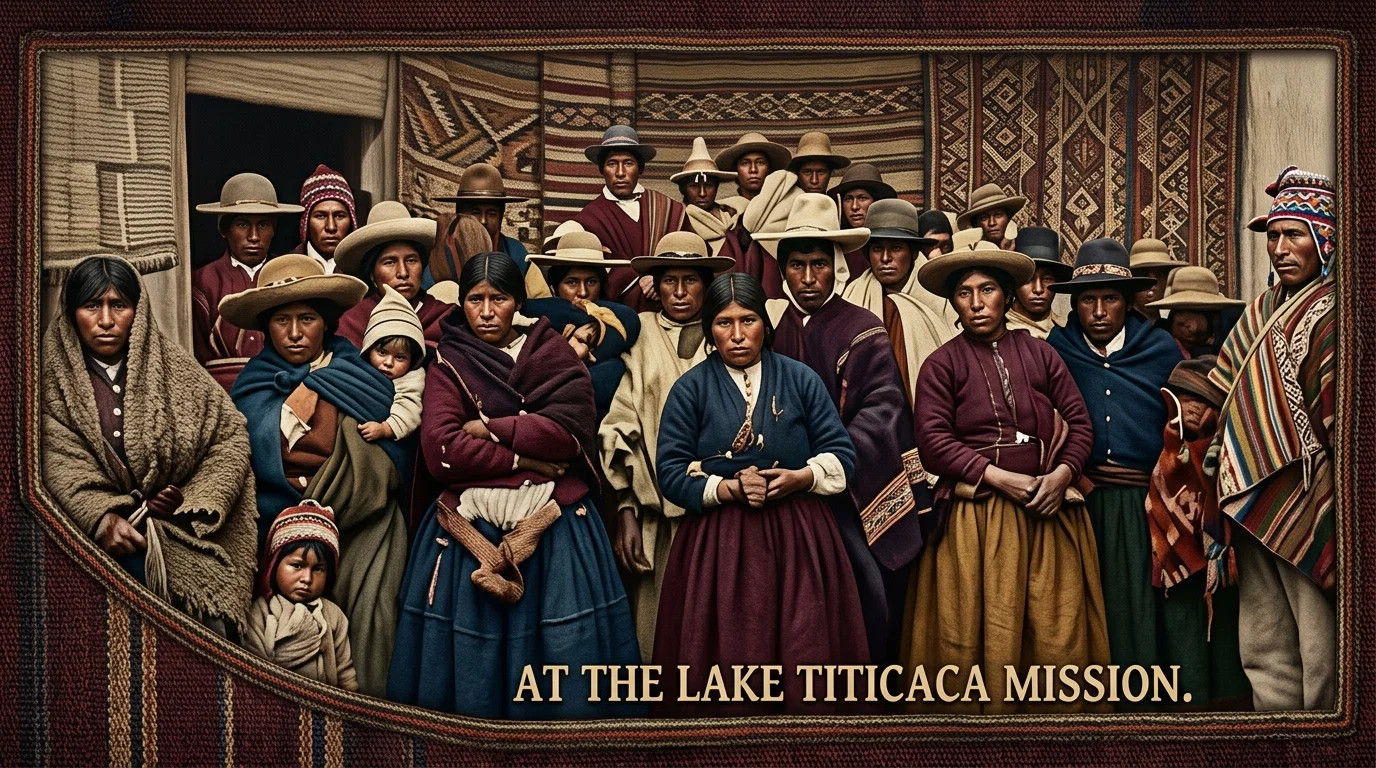
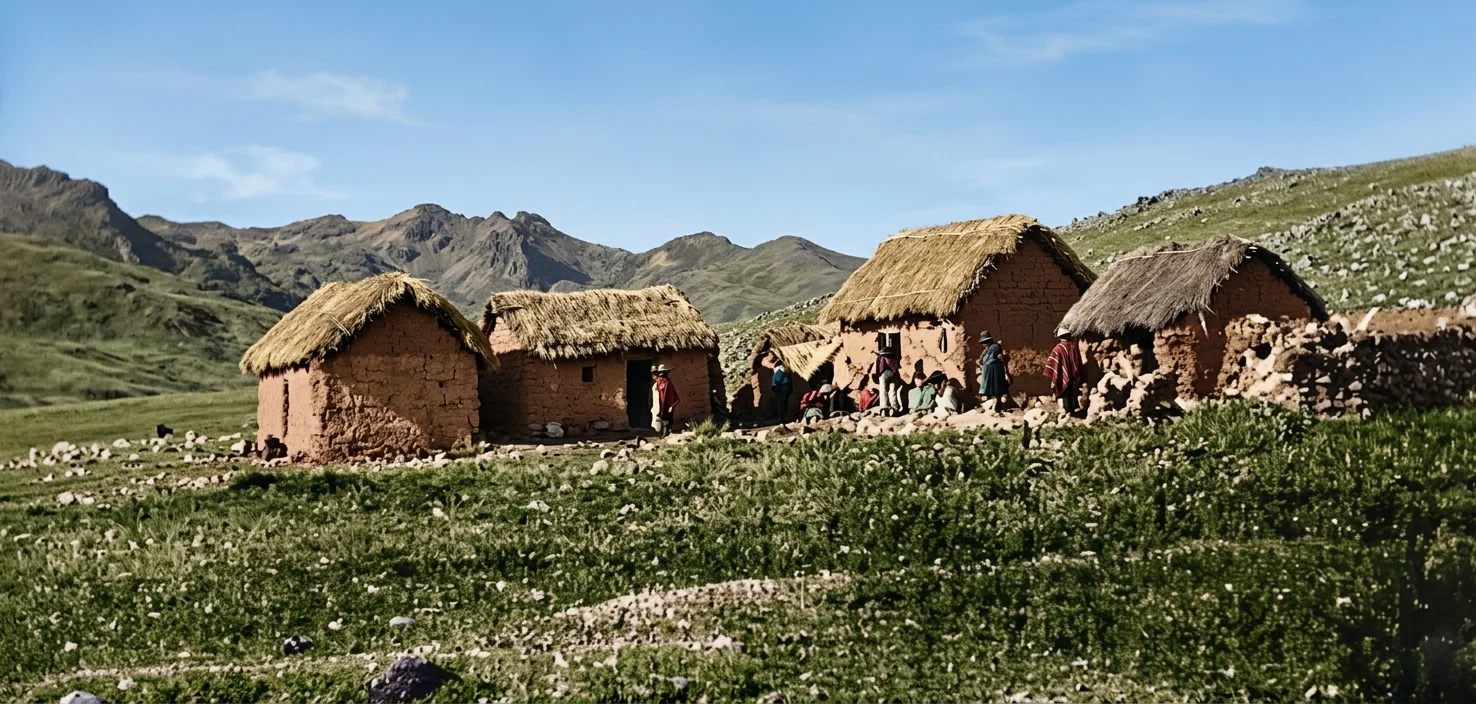
INDIAN HOUSES IN HIGH MOUNTAINS OF PERU, 14,000 FEET ABOVE SEA, WHERE MISSIONARIES "STAHL" AND CLUFF WERE CALLED TO PERFORM OPERATION ON SICK BOY.
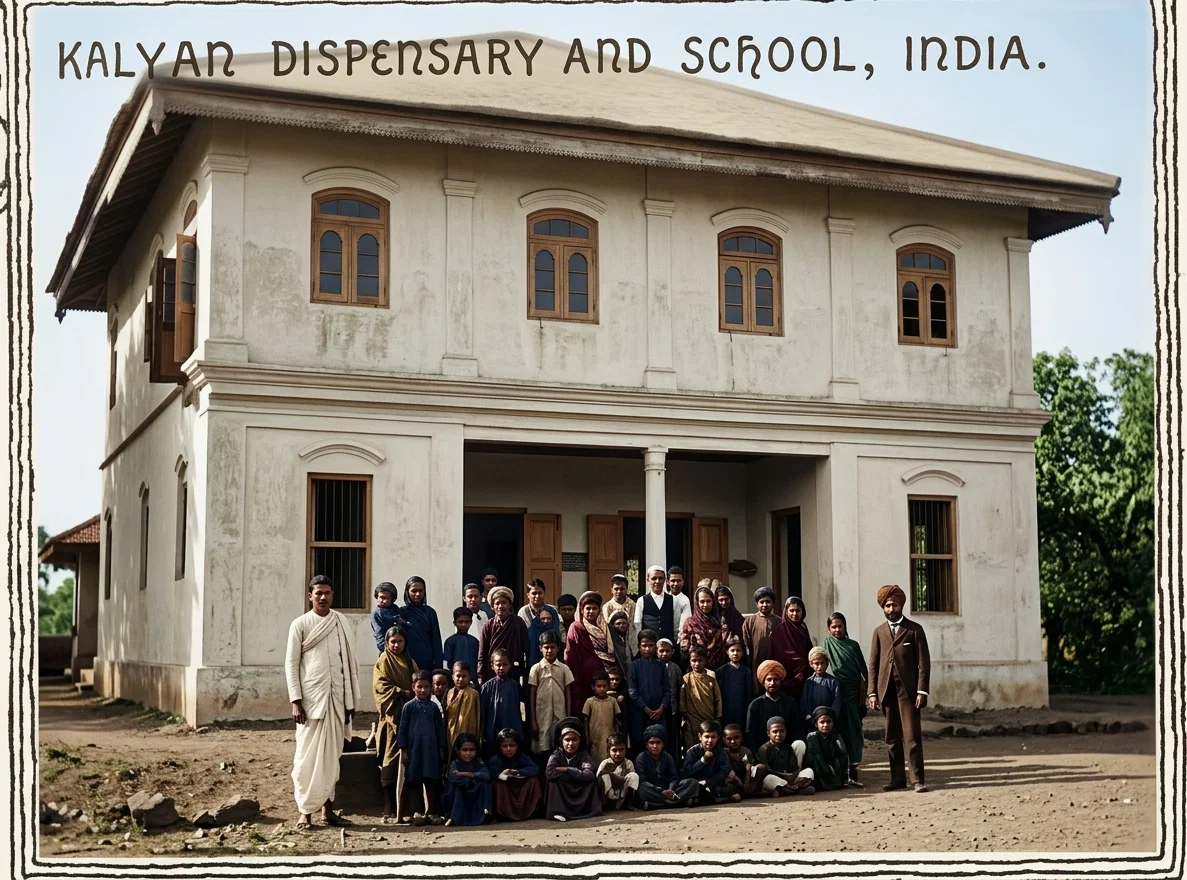
KALYAN BAPTIST PRIMARY AND SCHOOL, INDIA.
On the Bombay Side of India
By MRS. M. D. WOOD.
A YEAR ago found us seeking a place for a medical dispensary in Kalyan, one hour's ride by train northeast of the great city of Bombay. The year has had its hard places, but, thanks be to God, it has also had its victories. The Great Physician has ever been near for consultation. The workers have labored hard and faithfully. The people have gathered and listened daily to our messages, and have had faith in our constant prayers.
And what have the people received? A woman traveling to her home town found immediate help and a home during her sudden illness on the way. To be taken off a train ill and to be told there was a place of refuge near brought great joy and comfort to this woman. She found friends at the Kalyan dispensary.
A poor man suffering from hiccup for three days, during which he could neither eat nor sleep, was carried to Kalyan on a cot, a distance of six miles, that he might find relief. He returned to his village in a short time, perfectly well and with some knowledge of the true way.
A poor old woman one day at noon while eating her coarse bread, gaped and dislocated her jaw. She was seven miles away, but they quickly got her to Kalyan, and in a few moments her mouth was closed, she was given nourishment, and soon fell asleep. She, in her darkness and heathenism, cried out, “The great God is here.”
A poor old woman with a broken leg was carried to another hospital not far away. She was left to native servants, and after three days her leg was set. The fifth day she cried and begged to have the splint removed. Her son, weary with her cries, brought his mother to the mission dispensary. When the splint was removed, we found she had a compound fracture, and the wound was filled with maggots. Do you wonder she could not sleep? After three weeks she left us for her home, walking with a cane, and thanking the God of the Christians for her life.
Surgical operations have been performed on many eyes, and those who had not seen the light of day for years, cry for joy as they behold the faces of loved ones again. Such treatments to these poor souls are miracles indeed, and speak louder than all our words, be they ever so faithful, kind, and true.
These instances are but a few from among nearly 1,200 for the year 1913. Hundreds have, after receiving medical help, unburdened their aching hearts and troubled minds, and we have had glimpses of the wrongs of womanhood and the cruelties to children which are beyond description. All this makes us cry out, Come, Lord Jesus, come quickly.
MRS. M. D. WOOD.
Kalyan, Bombay.
Under Demon Possession
By J. J. WESTRUP
How awfully the evil one works in this poor world! There come to our dispensary nearly every day those whose bodies are swollen with fits of anger. Being devil worshipers, they seem fully taken possession of in these fits of temper, and the evil one gets complete control. How good to be able to help them!
We here can see plainly how terrible is the power of the evil one when the grace of God is fully rejected. A power from beneath seems to fill these soldiers and robbers and many others.
But, thank God, through the preaching of the gospel of his grace, the forgiveness of sins is at once attended with joy, hope, and courage. The truth of God develops a man, and those who have been gloomy, dirty, mind-dwarfed, and cruel become cheerful, clean, intelligent, and tender-hearted. We constantly see these marked changes. J. J. WESTRUP.
Honan, China.
The Missionary Nurse in Brazil
In connection with evangelistic tent effort in the Brazilian interior, Miss Louise V. Wurts has been doing the work of a missionary nurse. One interesting experience she thus narrates:—
“A little Negro boy of seven years had been paralyzed by a fall. The eliminative organs of the body had ceased to work, and in a little while he would have died from auto-intoxication. For eleven days he had been suffering.
“We went to work on the poor little fellow with massage and fomentations. I prayed in Portuguese, although I had been here only three months. But God heard that prayer. Quickly the little boy began to respond to the treatments. In three weeks the lad was carried to the tent on the night devoted to health and temperance, and walked up on the platform, where we demonstrated what rational methods of treatment will do under the blessing of God.”
“The neighbors, who had looked in at the windows when we were treating the boy with hot and cold water, had said to the mother, after we had gone away, ‘He will die with that treatment.’ But she had replied, ‘He will die without it.’ ‘Now,’ the mother says, ‘they have nothing to say.’
“The Lord is blessing the evangelistic services. Twenty candidates were baptized yesterday, as truly converted and as stanch people as one ever saw.”
Medical Itinerating in the Punjab
By V. L. Mann, M. D.
OUR society having been called to establish work in a new part of the Punjab, northwestern India, it was decided to make an itinerating medical tour throughout the district. It is a region which government irrigation service has recently turned from a desert into a garden. The people are of splendid physique. School and hospital facilities, however, have not kept pace with the immigration which has been started by the new conditions. The railway has been only a few years in operation.
I was aided on the trip by an Indian medical student in training. We used an oxcart for carrying a tent and equipment, while we ourselves traveled by tonga, a two-wheeled vehicle drawn by a pony. Our journey took us thirty miles across country from one railway to another. In some parts of the territory a white man was a curiosity. We treated 1,500 patients on the tour. Of all these, none had ever before seen a European doctor. Some came for assistance who had been sick for fifteen years. Imagine the condition of some of these patients. In a word, we found such long-neglected cases as the physician comes across in the village population of India.
We pitched our tent in four different places, and received patients from long distances. Some came as far as thirty miles, hearing that there was help for them. Cataract, inflammatory conditions of the eye, digestive troubles, nervous disorders, and diseases of women are very common. Naturally, with so brief a stop, we gave little attention to acute disorders.
NEW SOMNA DISPENSARY, KOREA.
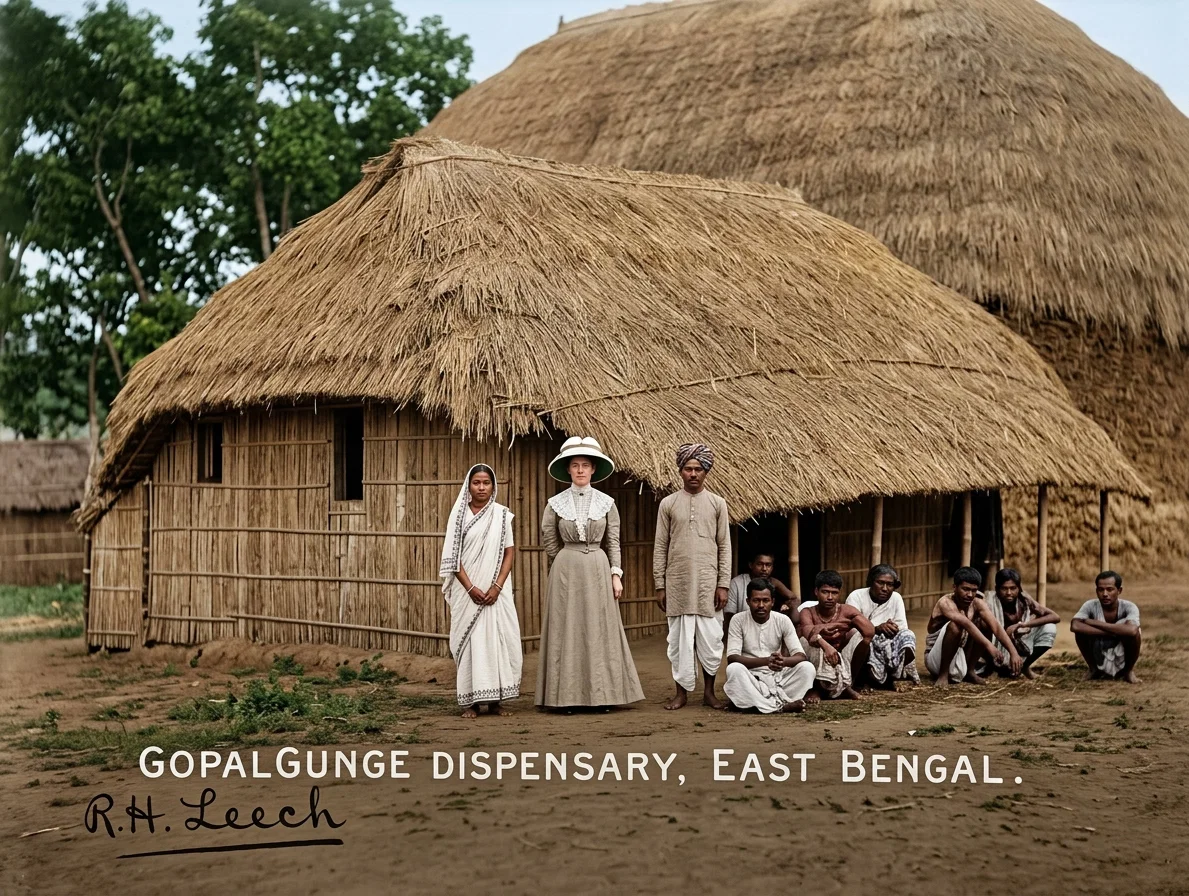
GOPAL GUNGE DISPENSARY, EAST BENGAL.
One tent location was by a non-Christian village of fifty or sixty families. These people asked for admission as Christians into our ranks. This is in the center of one of the sections of India where what are called “mass movements” have been experienced, whole villages turning toward Christianity together. But such must first be instructed and understand what conversion means. This attitude, however, makes many open doors.
We had to depend upon each village to supply the oxcart to move us on to the next place. Once we met with rather a cold reception. The villagers said they would not furnish an oxcart to move us, neither would they furnish us or our horses food to eat. Some of our party were disposed to move on, but on counseling over the matter, it was decided to try it out. Therefore we pitched the tent, and depended upon God for the results. At this place we treated 400 patients; and when they saw what our mission to them was, we and our helpers got all we wanted to eat, and everything we asked for. We surely gained the confidence of the people in that village. Thus the medical work is an entering wedge to the hearts of the people.
It was a highly interesting trip, and we feel that anything we can do for the Punjab will yield good returns in souls saved for the kingdom, and that with the thrift of this new country, good financial support may be secured for the native work.
V. L. MANN, M. D.,
Medical Secretary Indian Mission.Lucknow.
“Please, Sir, Won’t You Come?”
By Wm. O. Cluff
ROUND about La Paz (Bolivia) our work is done mostly in the homes of the Indians rather than in the city dispensary. Last month we visited about four hundred Indian mud huts, and found one hundred and sixty cases to care for. This month the number will be almost doubled. Nearly every day finds Mrs. Cluff and me out in the villages on the outskirts of La Paz, giving treatments and medicine where necessary. These poor people do not know the first principles of caring for themselves. We find many who have been lying on mud floors for as long as a year, with diseases that with proper care should have been of short duration.
“Please, sir, won’t you come with me, and make my mamma well?” was the cry of a little boy who stopped us the other day. He led us over a high mountain, by a path very difficult for the mules to travel. Far over in a hut we found an Indian woman lying on the floor, scarcely able to move. She had been lying there with rheumatic fever for five months. After a few days’ treatment she was able to go about her work.
Thus we find opportunities for service on every side. We feel that God is indeed opening up the way for us to reach the hearts of these poor people with the saving truths of the gospel. Who will furnish the means needed to carry the gospel to these Indians in the high mountains of Bolivia and Peru?
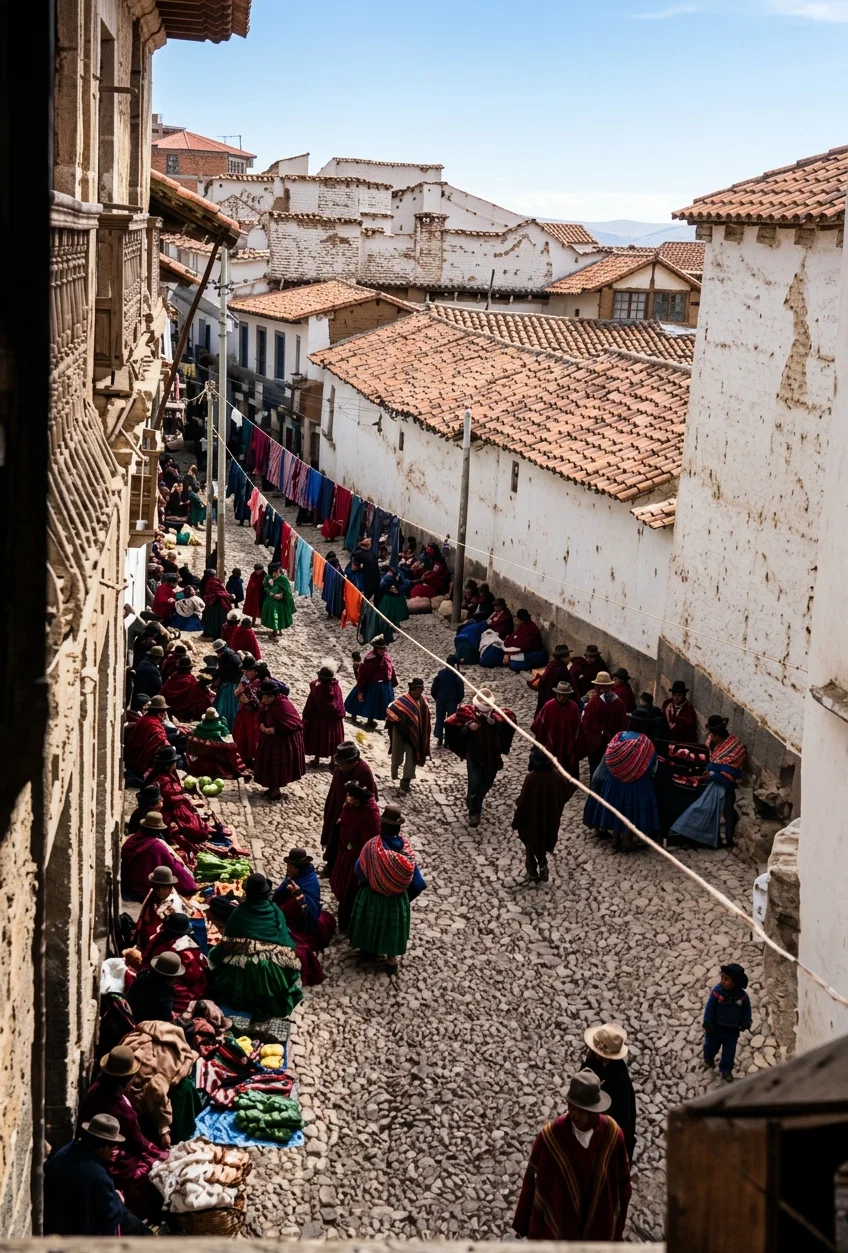
STREET SCENE, LA PAZ, FROM BALCONY OF MISSION HOME
“If thou forbear to deliver them that are drawn unto death, and those that are ready to be slain; if thou sayest, Behold, we knew it not; doth not he that pondereth the heart consider it? and he that keepeth thy soul, doth not he know it? and shall not he render to every man according to his works?” Wm. O. Cluff.
La Paz.
A Heathen Mother’s Effort
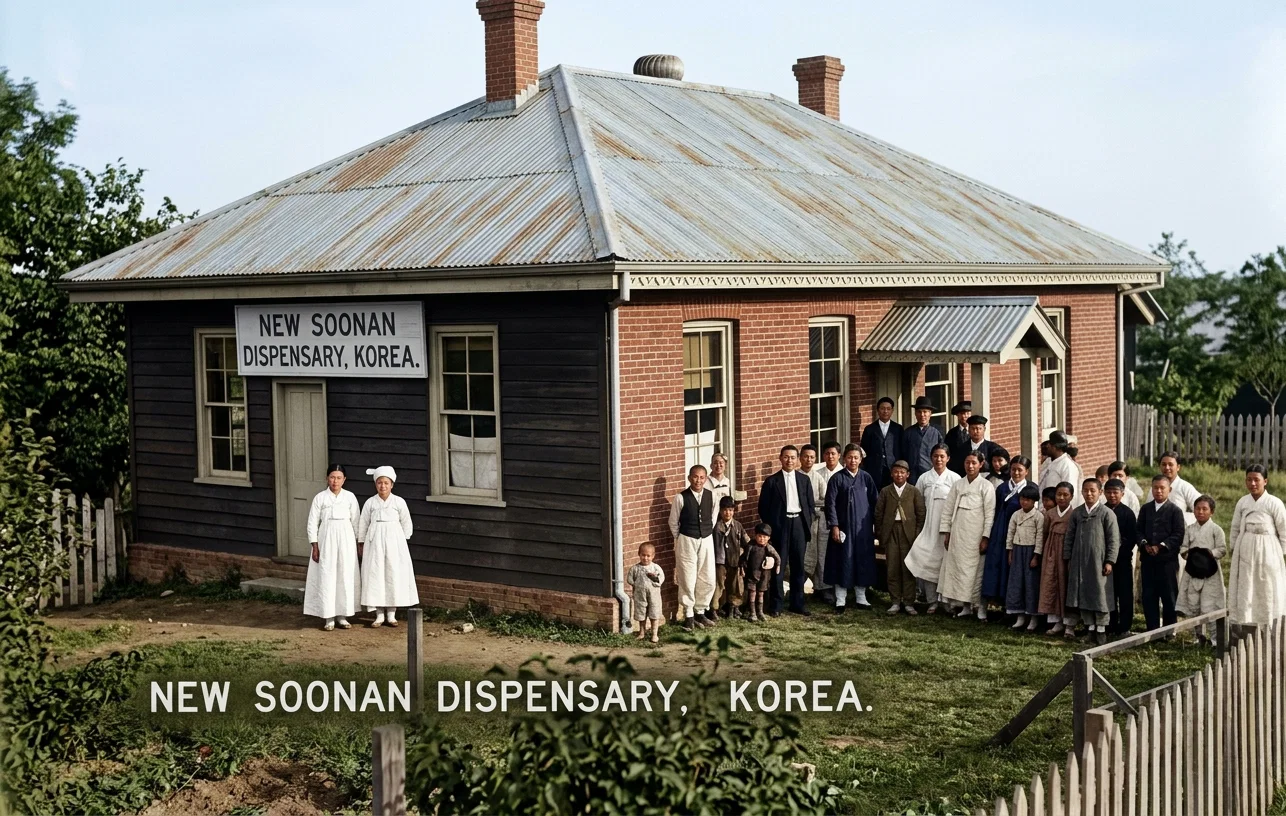
“ABOUT a week ago,” wrote Dr. Russell, of the Soonan (Korea) dispensary, “a woman brought an all but dying man to us, and said, ‘I am not a believer, but this my son is dying, and I hoped that by bringing him here he might believe on Jesus and be saved.’ He lived but two days, but in that time he gave his heart to God, and passed away in peace.” Poor soul! she knew that there was no hope in the heathen worship, and her mother heart longed to have her son in the hands of those who could teach him the light of Christian truth, of which she had heard but the faintest rumor herself. May this mother, too, find the way.
The Lighthouse Keeper’s Joy
“SOME one asked a lighthouse keeper at Narragansett, Long Island, if he did not sometimes get lonely at his work. His eyes fairly danced as he answered, ‘No, indeed! I never get lonesome since I saved my man.’”
NEW FIELDS ENTERED
Opening a New Mission
ONE brief extract will present a picture of the opening of a new industrial station in Southern Rhodesia, near Victoria. T. J. Gibson gives us also a sketch of the “camp,” evidently the beginning of the mission operations. Our American Sabbath schools gave a portion of one Sabbath’s offering for the purchase of the new farm for this Glendale Mission, as it is called. Brother Gibson says:—
“We brought five boys with us from the Selukwe Mission, and our family of native helpers now numbers sixteen. Five of these are prepared to go out as teachers or evangelists as soon as they can be spared from work upon the land. Each Sabbath we visit the native villages, holding services. We have a round which it takes four weeks to complete, holding from two to five meetings each Sabbath. By this means we reach from six hundred to eight hundred persons during the month, and the circle will widen as we get more native evangelists in training. These are kept constantly in actual service while they carry on their school work, and the purpose of soul-winning service is kept ever before them in their studies. We have good meetings in the kraal of the nearest native chief, and the people gather in from other kraals. They say they have received the missionary, and now they desire to learn of Jesus.”
Manchuria Opened
No sooner had missionaries B. Peterson and O. J. Grundset and their wives settled into the language-school work at Shanghai, preliminary to going on to Manchuria, than the Lord gave them a helper and teacher of the Manchu dialect fresh from Manchuria. This man had become acquainted with the Sabbath and advent truths through the brethren of our Russian church in Harbin, Russian Manchuria. Accepting heartily the faith of the soon-coming Saviour, he made his way to Shanghai to enter our Mandarin training school, to prepare himself for evangelistic work.
And now a word comes from C. L. Butterfield, of Korea, illustrating the kindly rivalry among the missions in opening work in new territory:— “Without waiting for the China Mission to occupy Manchurian territory, we have now sent our first worker into that field. He is working only for Koreans, however, many of whom have gone over from this country. Some time ago some of our members moved to Manchuria. A little later Brother W. R. Smith, of Wonsan, visited them. It was then decided to begin work there at once.”
On to Tanganyika
EN route from Nyasaland, British Central Africa, to the Tanganyika plateau, to plant a mission in new territory southeast of Lake Tanganyika, Elder J. C. Rogers sends us a photograph of his little touring camp, and writes:—
“We travel with native carriers only, as we must pass through sleeping sickness districts where the risk is too great for donkeys. We have with us two young men and their wives from our old Malamulo station, Nyasaland, and two boys of a superior tribe who have been with us since they were ten years of age. So Mrs. Rogers and I have friendly faces with us, though we may not see a white face for a year or two. We often sleep under a spreading tree without the tent, if the camping place is reached late in the evening. Folding beds, some blankets, and mosquito nets to hang over a handy branch to cover the beds, make us very comfortable in the dry season.
“As we walk along these rolling highlands, the scenes of Livingstone’s last labors, I cannot doubt that the Lord will guide us also in the way to the right place for the new mission.”
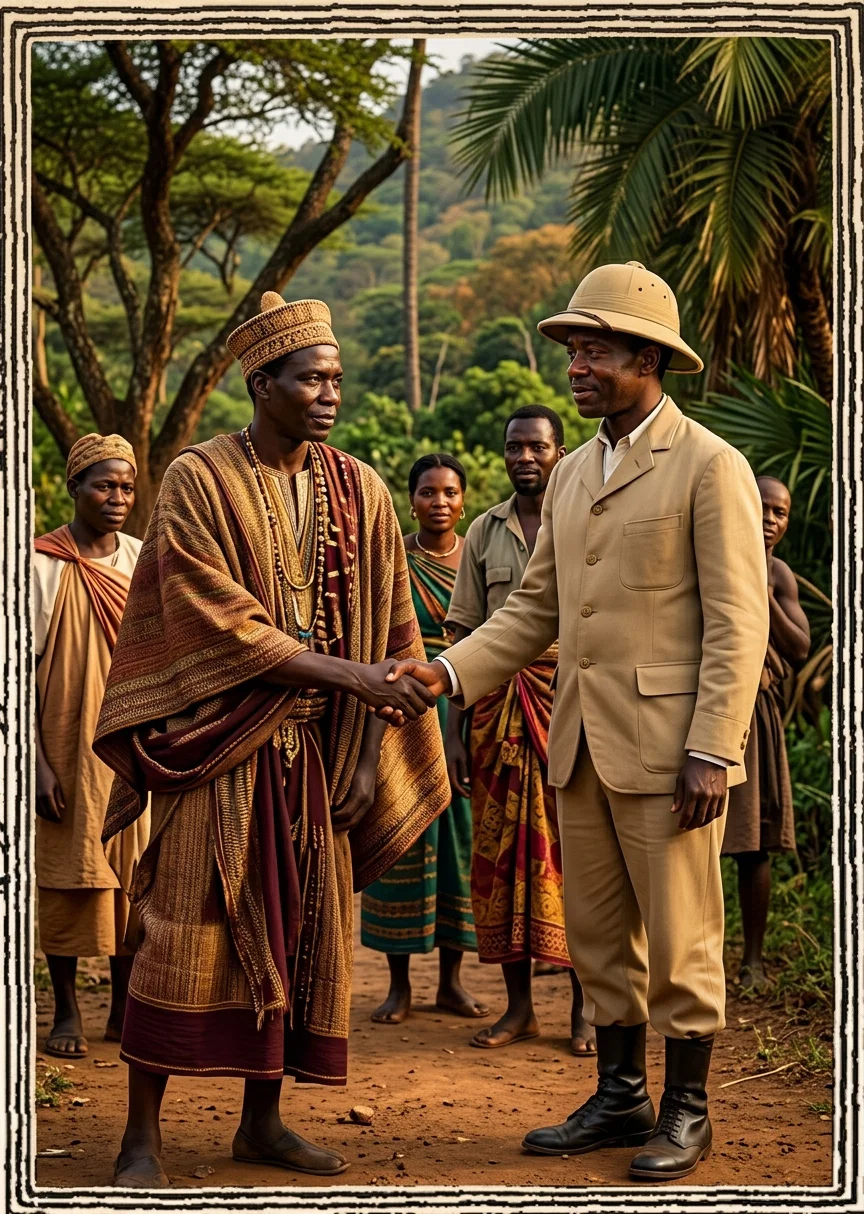
D. C. BABCOCK MEETING A PARAMOUNT CHIEF
Among the Laplanders
By J. C. Raft
THE Lapps belong to the Mongolian race. They inhabit the northern part of the Scandinavian peninsula, called Lapland. They number some thirty thousand altogether, about two thousand being in Russian territory, in the government of Archangel.
These people are short of stature. They are of brownish complexion, with high cheek bones, dark eyes, and black and tangled hair. Their language is related to that of the Finns.
We have recently opened a mission among these people. Brother Jens J. Hokland, a young Norwegian, has been stationed in the Lapp town of Karasjok, in Finnmarken, situated sixty-nine degrees north latitude. In a recent letter our brother says: “Now I am living among them [the Lapps]. Hence I have the very best opportunity to learn their difficult language, and I believe that by the help of God I shall succeed. Knowing the interest of our brethren and sisters in this people, and especially God’s interest in them, I am very well satisfied to be here, and hope in time to learn that which I shall need in the future. From now on I shall feel most at home among these people, whom I have learned to pity. I can see plainly that it is time this tribe should hear the message of Christ’s coming.”
MISSIONARY HOGLAND, AMONG THE LAPLANDERS
As an evidence of the Lord’s care for his servants, we relate the following incident: Last summer Brother Hokland was on a colporteur tour in Northland. One day he had to pass over a mountain which was very difficult to cross. In order to be more secure our young brother removed his shoes and stockings, to go barefooted. Fearing, he was reminded to pray. There, clinging to the rocks, he asked God to keep him. Then, trusting in God, he went on his way and got over safely.9
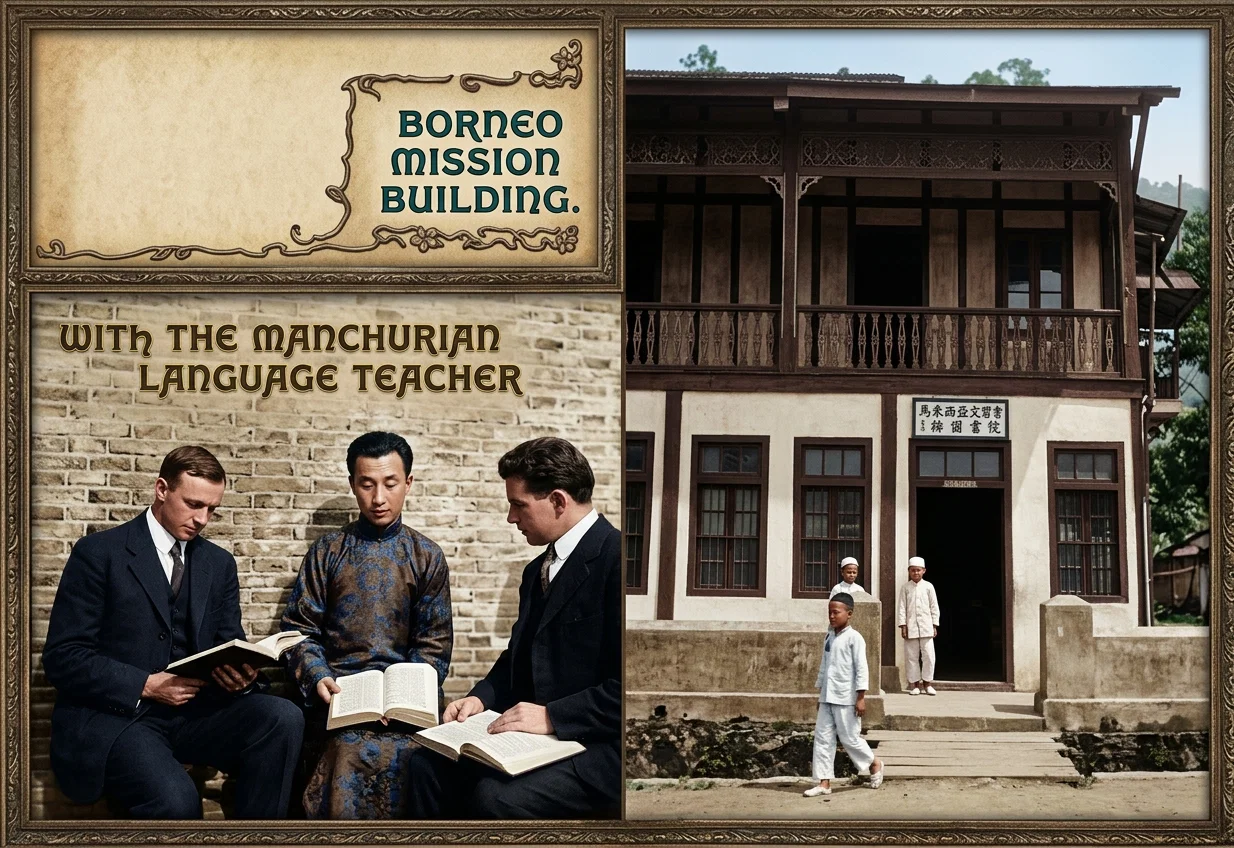
BORNEO MISSION BUILDING.
WITH THE MANCHURIAN LANGUAGE TEACHER.
SABBATH SCHOOL CLASS, BORNEO.
Below, on the other side of the mountain, a man and his wife were watching the young man make his way down; and the first question this man asked Brother Hokland was, “What has become of your companion?” When our brother told them that he had been all alone on the way, they were greatly surprised, and the man said, “Is that so? It really seemed to me that there were two of you when you came crossing the mountain.”
Brother Hokland adds that he was reminded of the word of the Lord in Ps. 34:7: “The angel of the Lord encampeth round about them that fear him, and delivereth them.” J. C. RAFT.
Copenhagen.
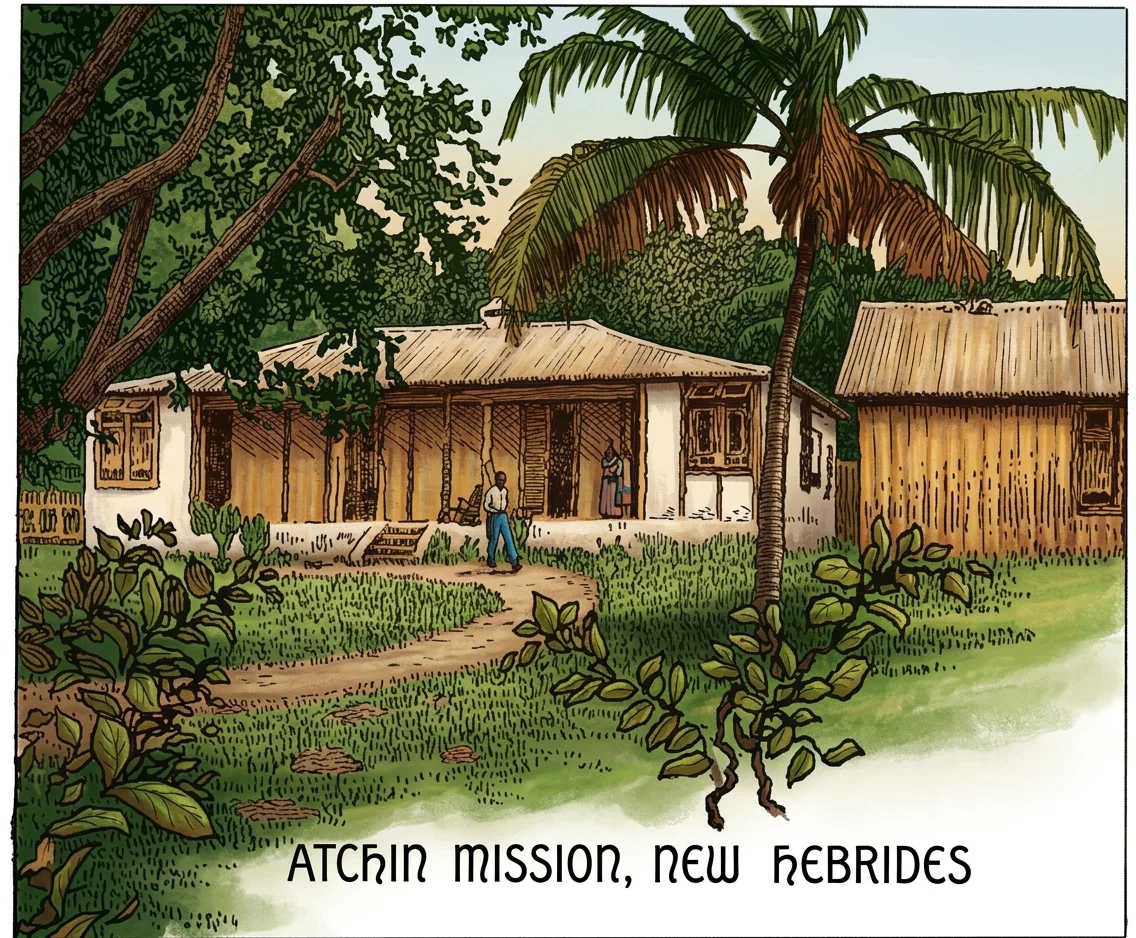
ATCHIN MISSION, NEW HEBRIDES
In Nigeria
By D. C. BABCOCK
At a general meeting held in Sierra Leone it was arranged for two foreign and four West African workers to enter Nigeria.
Landing at Lagos, I made a trip into the interior to search for a location, while the other workers secured materials and at once began preparation for a building, making doors, windows, etc.
I went northward as far as Jebba, on the Niger River, about six hundred miles above its mouth, passing first through the country of the Yoruba, who are an agricultural people with vast fields of cotton, corn, and yams. Above the eighth degree north latitude the fertile fields change into vast grazing lands. Here the Fulahs, a people of altogether different type, herd their sheep, cattle, and goats. Reaching the western slope of the Niger again, the country changes into market gardens, and hundreds of people come out of Jebba each morning, trading in yams, onions, fowls, and eggs for the towns on the river.
One is astonished to see the large towns. There are twenty-five towns, I find, with from ten thousand to one hundred and eighty thousand population. While there are many dialects and languages, yet there are but three prevailing tongues,—the Yoruba, the Fulah, and the Hausa.
We are entering this region of eighteen million souls with courage, believing that the Lord will give us a harvest for the coming King. D. C. BABCOCK.
Nigeria, West Africa.
Starting School on Atchin
By Myrtle S. Parker
[Since this report was sent us, an uprising of the wild islanders has occurred. The white trader and his people were compelled to flee, and our missionaries were warned by friendly natives to leave. But they barricaded themselves in the mission house, and the storm passed by. Now the people are more friendly than ever, and the missionaries are treating their sick, and barriers are breaking.]
FOR four months we worked and prayed and wept that these people would desire to come and learn. A school to them meant joining “the worship,” and they were afraid. But after all was ready, we invited them to come, assuring them that they need not belong to “the worship” unless they wished to by their own free choice.
We taught a few of the young men to sing “Precious Name” and “Hark, ’Tis the Shepherd’s Voice I Hear.” They learned a few letters and small words, and an interest was created.
At the opening of the school eight came. Now the average attendance is thirteen. Our hearts are full to overflowing as we see them listening to the story of Jesus. We said nothing to them about clothes, as we did not wish to exclude any. It was gratifying to see four wearing a loin cloth; one wears only a vest, another a shirt, the others a ball and string about the waist. We expect they will have small Gospels in English for their reading books, and this will bring them under the influence of the Spirit of God. Already we can see a change coming over these heathen boys. The breaking of their customs and superstitions will be a miracle of grace.
The other day, as a boy accompanied us to a near-by village, and was telling us about the wooden images dedicated to the spirits of the dead, which we saw, we asked the boy why his people did not worship the God who made heaven and earth. Narli replied, “Missi, we know savvey talk belong God. S’pose we savvey,—we talk along him.” [He was saying that wisdom (savvey) belongs to God. But they were ignorant. When they got wisdom, then they would talk to God.] We have hopes for this little boy and others.
MYRTLE S. PARKER,
Atchin, New Hebrides.
In North Borneo
By R. P. MONTGOMERY
WE arrived in North Borneo in June, 1913, and immediately began preaching the gospel, finding first openings among the Chinese. On January 1 we baptized seven of that nationality. One of these had formerly been a heathen fisherman, worshiping his ancestors and idols. Now he loves to study the Word of God, and to tell the gospel message to his fellow fishermen. Two young Chinese men are starting a school where they can gather in the heathen children and teach them about Jesus.
Borneo has an advantage over the other islands of the East Indies as a missionary field, in that Mohammedanism has not obtained a foothold here.
R. P. MONTGOMERY.
In Patagonia
By A. G. Nelson
WE find Punta Arenas a thriving little city of seventeen thousand, made up of a cosmopolitan population. It is an important wool shipping point and coaling station. Being the distributing point in the far south, nearly all the vessels stop here on their way through Magellan Strait.
We never had a worker located here permanently before, though several years ago some of our books were sold in the Falkland Islands and in Punta Arenas by one of the pioneer colporteur band. On our way down from Buenos Aires we passed the Falklands, which are included in the territory of our southern mission field, along with the island of Tierra del Fuego.
As we seek to hold up the light of the closing message in these antarctic regions, we desire to be remembered in the prayers of all God's children.
A. G. NELSON.
Punta Arenas, Chile.
Publishing the Message
By N. Z. TOWN
DURING the ten years ending in 1912 our publishing houses have reported sales to the value of $10,122,500. The value of the sales for the year 1912 was $1,836,527. This represents a truly world-wide distribution of the pages proclaiming the message of the Lord’s soon coming.
These publications are issued from thirty-seven publishing houses and branches, located in twenty different countries, in seventy-five different languages, in the form of approximately 350 bound books, 300 pamphlets, 1,100 tracts, 125 periodicals.
Six hundred and eighty-four persons are employed in our publishing houses, and over 2,100 colporteurs are engaged in the distribution of this literature in different parts of the earth. Their reports come in from Europe, Asia, Africa, South America, and the islands of the sea.