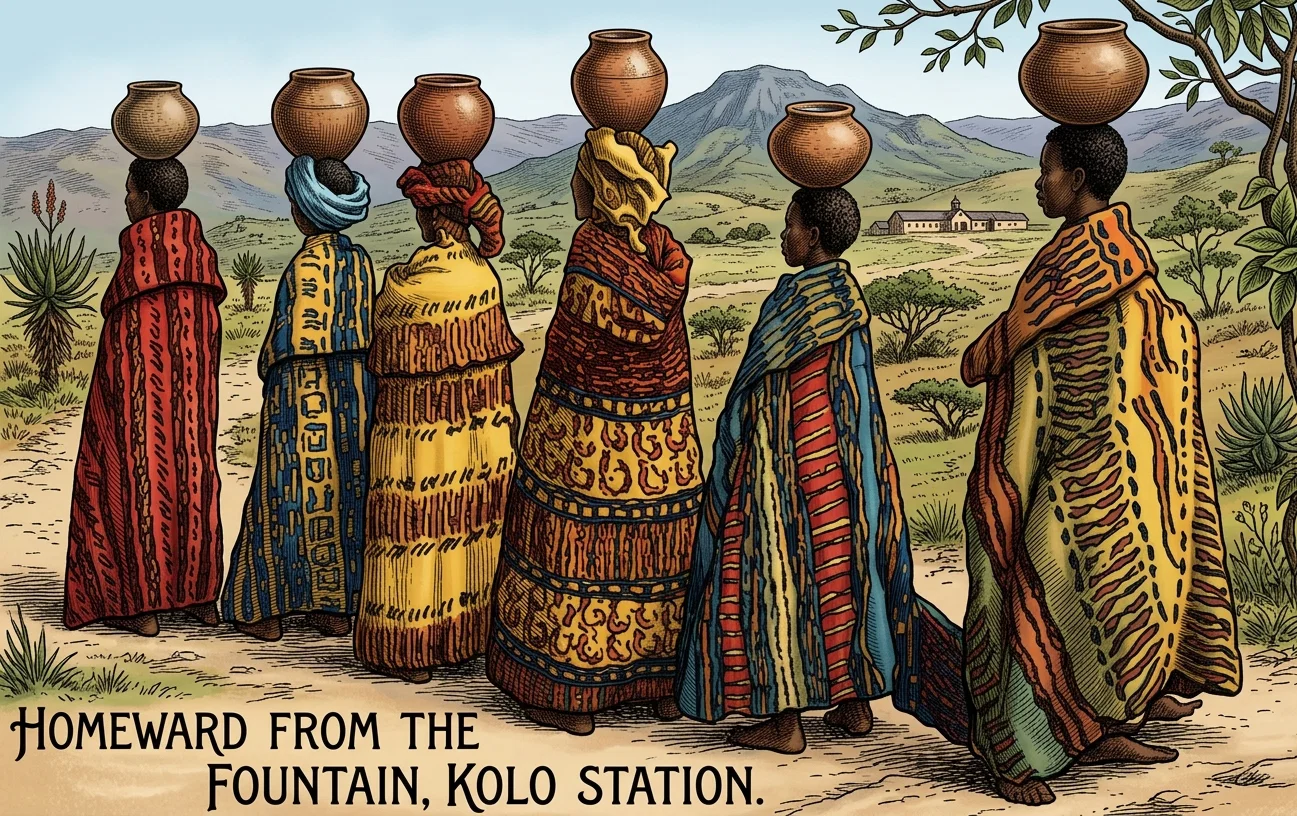
A BLESSING indeed in a dry and thirsty land is a fountain of living water. Just back of our Kolo Mission, in Basutoland, rises a high mountain, on the side of which bubbles up a spring of water. Our South African Sabbath schools made a special donation to develop this spring, and to provide the means for piping the water down to the mission house. The result is a complete success. Such clear, cool, pure water is not found everywhere, and the Basuto women have asked permission to come to the station to get the water for their household use. Every morning one may see a line of native women coming with their water jars upon their heads for this cool, refreshing drink. Having filled their pots, which we presume would hold four or five gallons, they gracefully lift the load to their heads, and off they go, with apparently no fear that the jars may topple off. All the Basutos wear bright-colored blankets, and this morning scene is a pleasant one indeed.
HOMEWARD. FROM THE FOUNTAIN, KOLO STATION.
As we watch this water spring from the pipes, quenching the thirst of man and beast, and watering the thirsty land, it reminds us of the water of life which is flowing so freely for all today, and which every thirsty soul may have for the taking. This little scene at Kolo is but a parable of what we are endeavoring to do with our mission stations in Africa. In our South African Union Conference we have twelve stations and seventy outschools, with, according to the last report, 2,275 pupils under instruction. Thus by the grace of God many are having the opportunity to drink of the water of life. From every portion of our mission field we hear the call for extension and enlargement in order that yet more may be done. The South African field appreciates the help that comes to us from North America and Europe, and we thank the Lord and the givers for it.
W. B. WHITE,
President S. African Union Conf.Cape Town.
Prospecting in West Africa
By E. W. MYERS.
It was known by the villagers of Matump that the white missionaries were coming to their town to consider the location of a mission there. Consequently they had prepared a reception for us.
We were met at the river by the son of the chief, who speaks English. He escorted us to the chief's house, in front of which we met almost the entire population of the town, dancing to the music of a native drum.
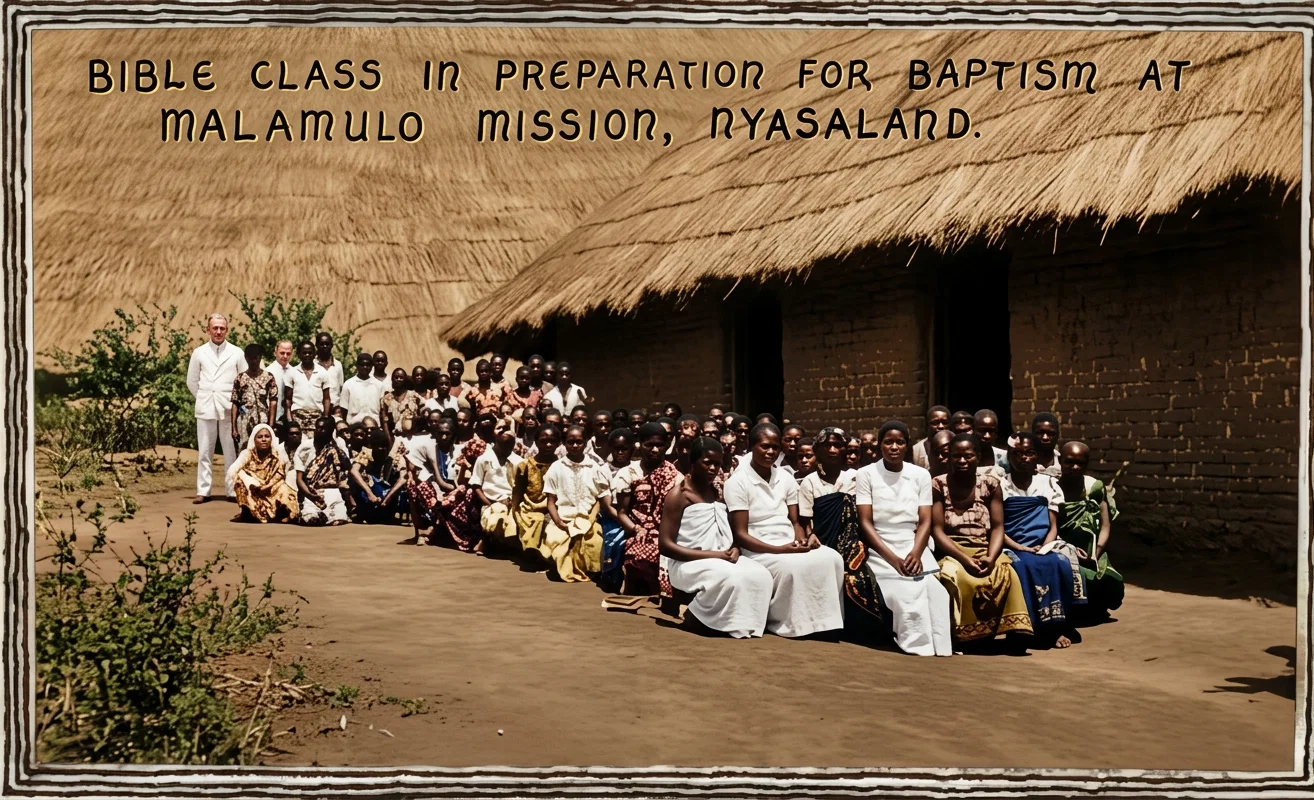
BIBLE CLASS IN PREPARATION FOR BAPTISM AT MALAMULO MISSION, NYASALAND.
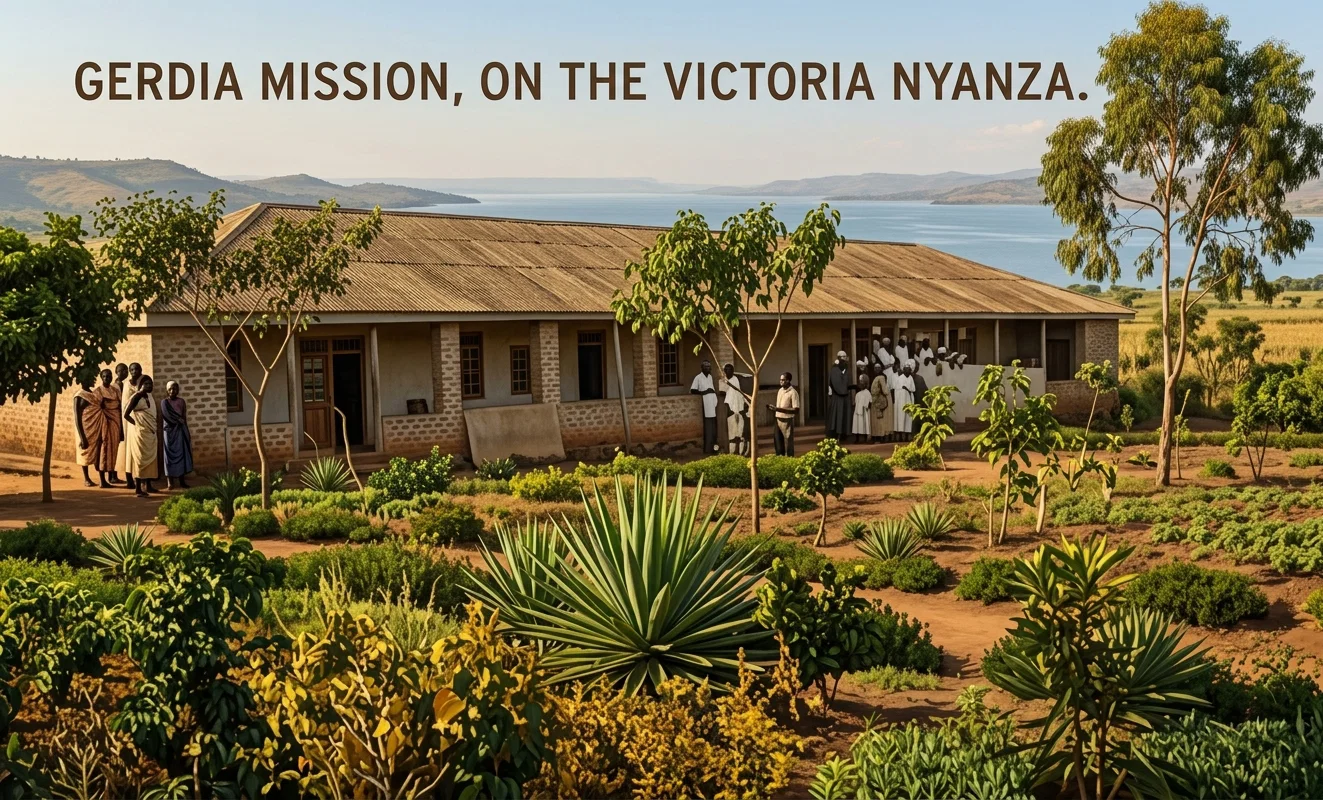
GERDIA MISSION, ON THE VICTORIA NYANZA.
The chief could not come out of his house to meet us, as he had not yet been crowned, so we went in to see him. Everything19was arranged with the chief and his people for us to establish our school there, and then we were escorted to the barry (city hall) to rest, while the dance was continued in our honor. The sad part of it all was that the dancers became intoxicated, and got English rum; for the traders have preceded the missionaries to the heathen people in Sierra Leone.
We hope for better times in this little town, for the people are all looking forward to the time when the missionary will be there to live, and to help them learn better things and better ways. Even the children seemed to forget their first dread of a white man, and came around us, trying to make us understand their strange tongue.
We, too, are anxious for the time when we can get out to our new station, for it is a real pleasure to do something for these people who are so anxious to learn.
E. W. MYERS.
Waterloo, West Africa.
Central African Volunteers
By E. KOTZ.
FRIEDENSTAL, in the south Pare Mountains, was our first station in German East Africa. We have just had a good meeting, at which eighteen converts were baptized, making a total of one hundred and thirty-three for the year. Recalling but a few years past when there were none but heathen in these villages, we can only thank God that now over two hundred and fifty persons are rejoicing in "the blessed hope."
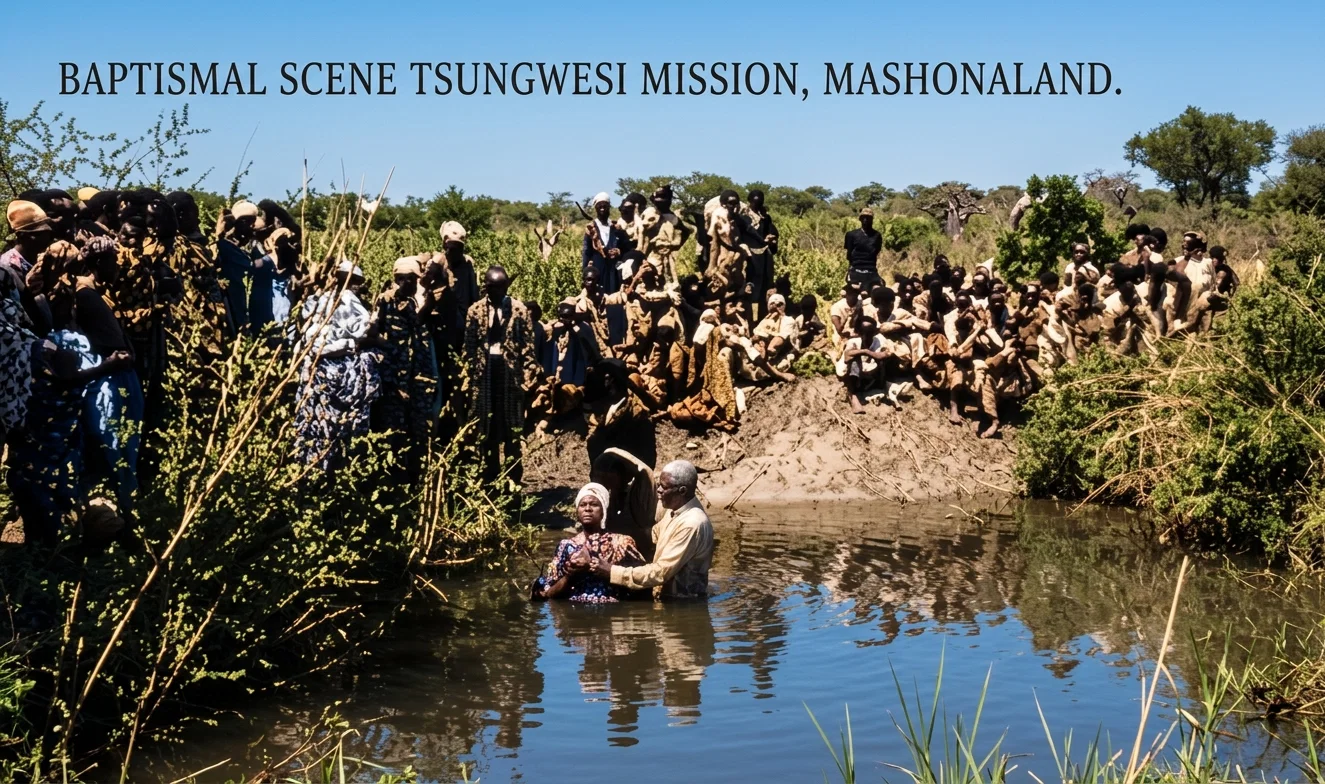
BAPTISMAL SCENE “TSUNGUESI” MISSION, MASHONALAND
The fruits of the Spirit appear in these lives. In a consecration service at the close of our recent conference, the annual offering for missions was taken up, $115 being given, nearly half this coming from the natives.
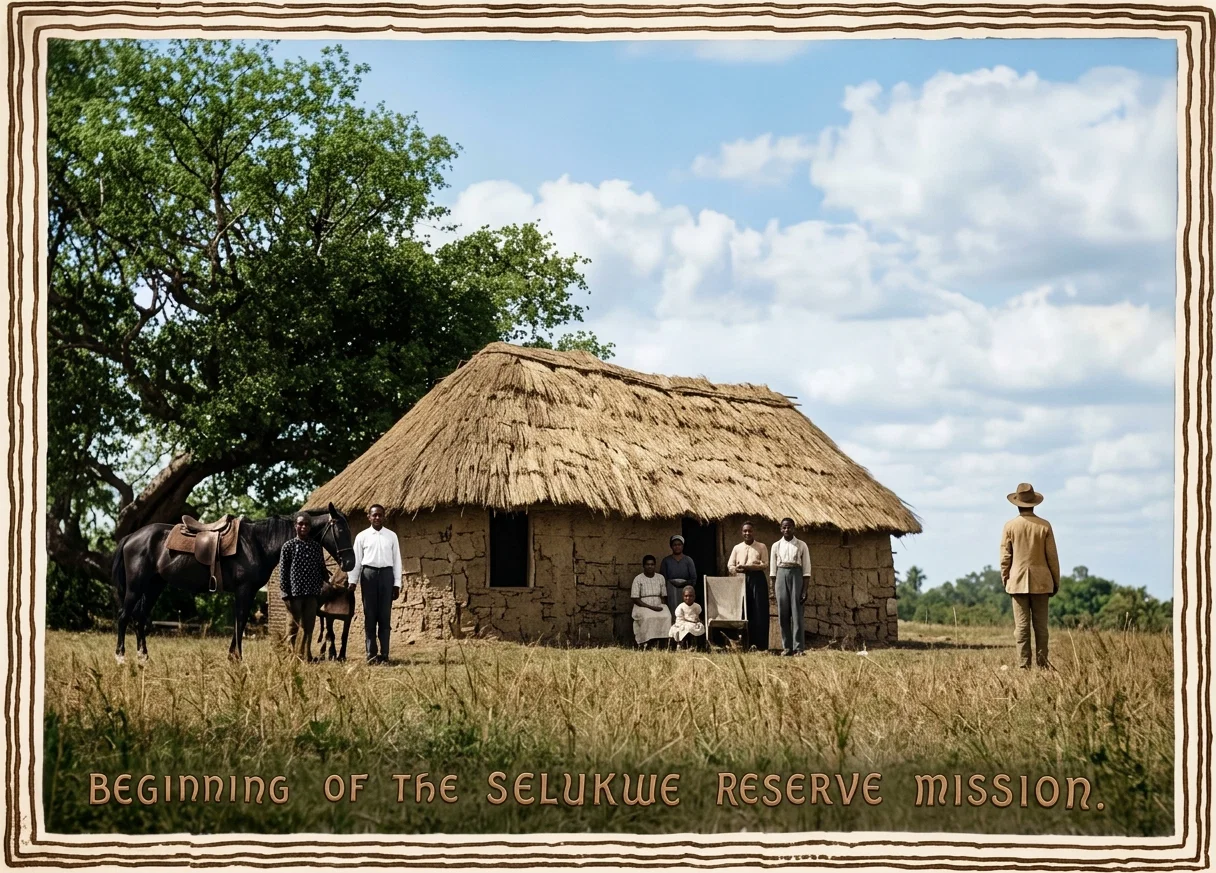
BEGINNING OF THE SELUKWE RESERVE MISSION
Twenty-two young people offered themselves for mission work among the tribes of the lake region, where our new Victoria Nyanza Mission is operating. The Pare Mountain man is very much attached to his soil, and it indicates true devotion when he volunteers to leave his home to carry the light to those still in darkness. When I asked the wives how many would be willing to leave their plots of ground and their houses to go with their husbands into regions beyond, there were lifted up many dark hands alongside all the white hands of our women missionaries. This is the power of the gospel putting the true spirit into the hearts of these new converts. E. KOTZ.
Friedenstal, Pare Mountains.
Running Away to School
By D. C. BABCOCK
As I travel through the Sierra Leone hinterland, I find almost everywhere a desire on the part of the people for us to establish schools. They know about our industrial school work at Waterloo, and like it. A young man, son of a chief, ran away from his father. He was heir to the chieftaincy. Learning of our school, he walked one hundred and fifty miles and asked for admittance. After some talk, we decided to receive him. We did not know who he was. He went into training, learning a trade. At the same time we taught him the Bible, and in about six or seven months he seemed to be rooted and grounded in the truth.
When the Duke of Connaught visited Sierra Leone among the chiefs who came in from the interior was Bia-Kafri. I happened to be on the same train with the district commissioner, and fell into conversation with him. He said, “Did you ever meet Bia-Kafri?” I said, “No.” “That man,” he said, “is probably the most loyal chief the English government has.”
A few days after this conversation, notice came to me that Chief Bia-Kafri was coming to visit me. I asked the young man Tura, at our school, if he knew Chief Bia-Kafri. He said, “Yes; he is my father.” I inquired concerning the custom when a chief makes a visit, and Tura told me. He said he knew his father was coming that day.
In a short time I noticed a large delegation some distance away, among them the chief. I walked down to meet him and his people, giving the customary greeting. After we had talked over our school work, we showed him a picture of his son working in the factory. Before he left, he said, “I want you to come to my village and open work there. I am greatly pleased with the work you have done with my son here.”
His son has returned to his tribe. He married in the Christian religion, and is living in his native village among his people. D. C. BABCOCK.
Freetown, Sierra Leone.
Fighting the Fever
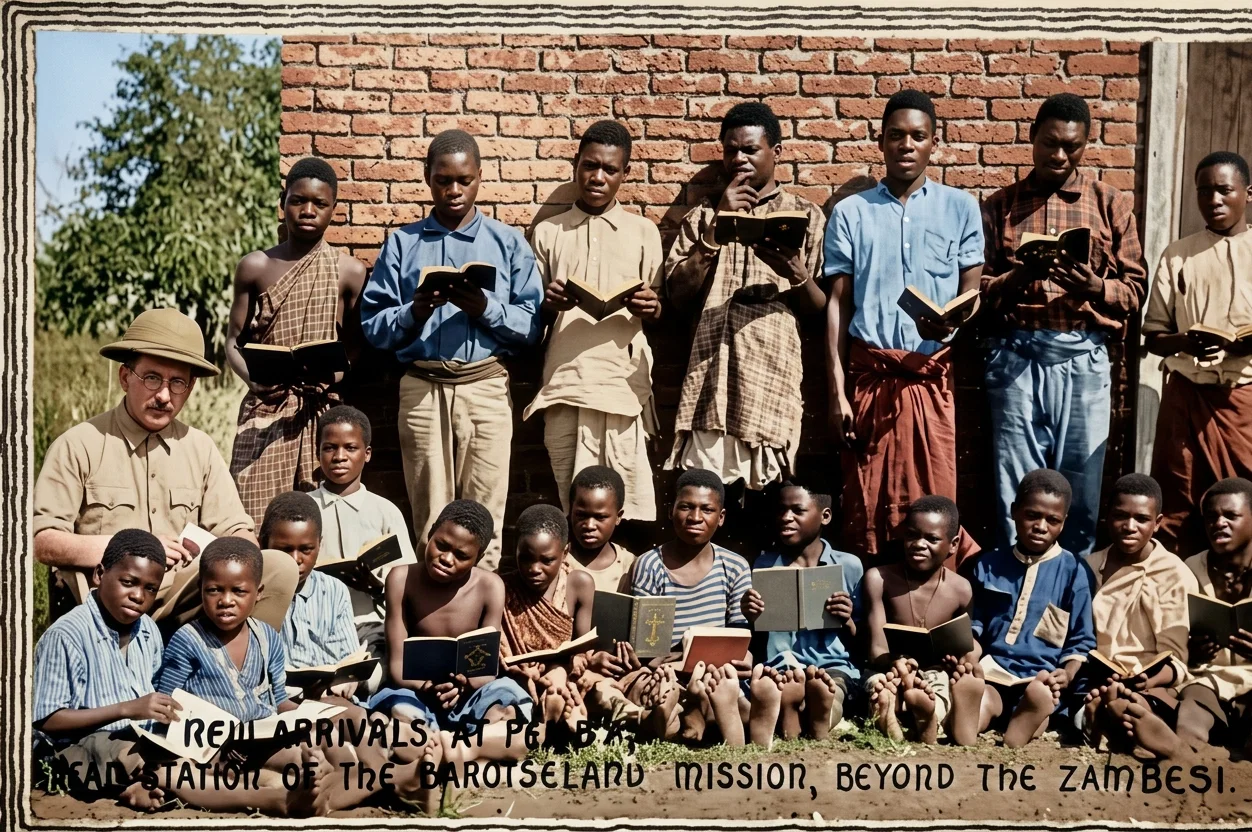
ONE great foe of the missionary in the African interior is the fever which lies in wait every rainy season. The last season brought much sickness to some of our stations. We thank God the season passed with the life of every worker spared. The correspondence shows how the workers in the various stations battle against this difficulty and endeavor to hold to the work. The Barotseland Mission superintendent, Brother W. H. Anderson, and his wife, have been ordered a furlough, both having suffered severely. In one of the first letters written after recovering, by the mercy of the Lord, from a siege with the deadly blackwater fever, Mrs. Anderson wrote from Pemba, the mission headquarters beyond the Zambesi:—
“We are still on the mission. It is hard to make myself go down country and leave Mr. Anderson when he is not at all well. But help has come now, and soon we must leave for our change. Mr. Anderson has just been out for three weeks, preaching, and visiting the outschools. He left them all well filled. It is good to see the work building up again. Two years ago it was torn and mangled, and it has meant much hard work to get it established again. The mission has been passing through the most trying experience of its existence. Now20that the work is going on smoothly again and the schools are full, we long to be able to stay and enjoy the experience that always comes when the sunshine dispels the clouds.”
“We have never left the mission when it has made us feel so sad as at this time. It is the idea that we are compelled to leave. I hope the brethren will be pleased to let us come back again. It may be thought unadvisable, as I have had so much fever, but I am willing to try it again. I believe it will not be so bad if I can go away and get these malaria germs out of my system. I hope some day the fever will be killed out of this region north of the Zambesi, as it is in Southern Rhodesia. But when will that be? And how will the gospel be preached till then if we do not go right on just the same?”
“Our fruit orchard is beginning to do well. Our herds are growing and enlarging. The children that we have almost given our very lives for are here. In fact, all that we hold dear in this world is here. The things that cost us the greatest sacrifice are always the dearest to us. It makes our hearts heavy when we think about leaving. But we feel that we can say, ‘Thy will be done.’ It takes much of the grace of God sometimes to say this and really mean it, but this is the way we wish to feel.”
On the Victoria Nyanza
By R. Stein
WE have seen the hand of the Lord opening the way to reach a people to whom access was very difficult. In the Victoria Nyanza there are many islands which are more or less inhabited. To visit all these and erect schools on them would have been next to impossible. The government is now depopulating these islands and taking the people over to the mainland, in order to remove them from the territory where sleeping sickness and other diseases are raging.
One of these homeless sultans with his people came here to the district of Iramba. Two hundred of their children now attend our school, and on the Sabbath the people come to hear the Word of God in their own tongue. Ten of our pupils who have learned to read and write now gather regularly for Bible study, and we are praying that these may all decide to follow their Lord fully. R. STEIN.
Iramba, German East Africa.
Faithful Amid Persecution
By H. C. OLMSTEAD
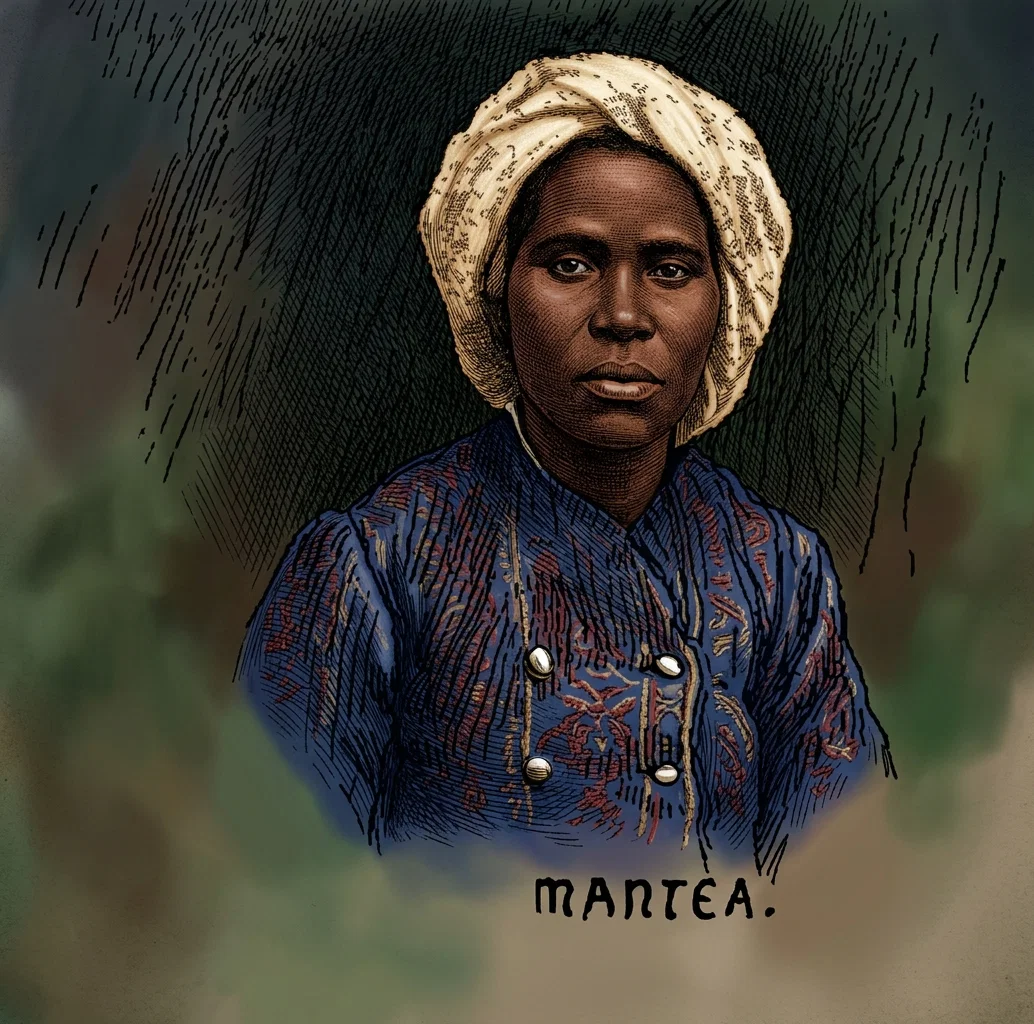
A NATIVE heathen woman, Mantea by name, after attending our meetings for some months, gave herself to God and began to walk in the light of his Word. One Sabbath her husband demanded that she grind Kafir corn for making joala (native beer). Mantea replied, “This is the Sabbath, so I cannot grind today.” Failing to force her to work by beating her with a heavy strap, he ordered her to take her clothes and return to the home of her parents, which she did. There she was severely criticized by her heathen relatives for not obeying her husband. In a few days he came and took her home, commanding her to attend no more of our meetings. But she continued to come in spite of frequent beatings.
NEW ARRIVALS AT THE BAROTSE MISSION, BEYOND THE ZAMBESI
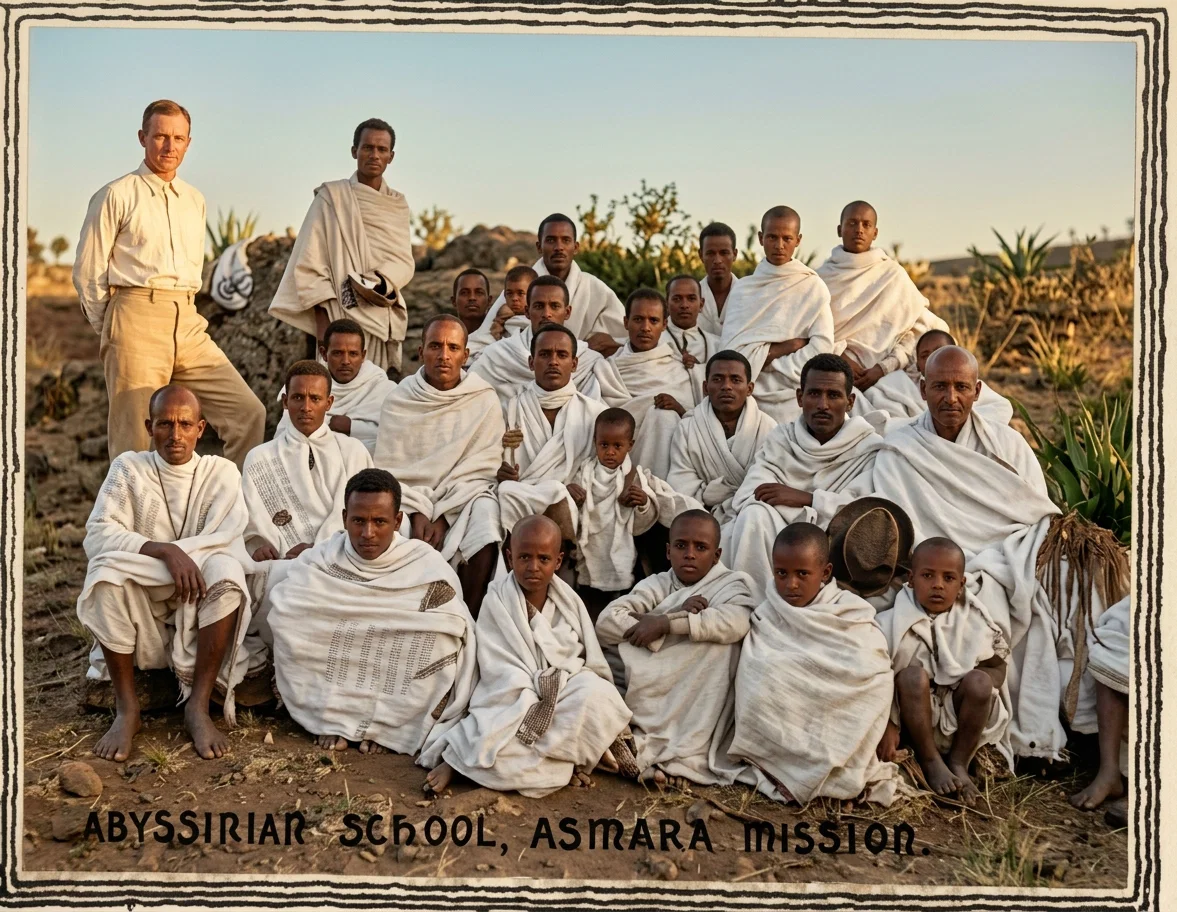
ABYSSINIAN SCHOOL, ASHMARA MISSION.
We tried to persuade her husband, who is a petty chief, to be less cruel, but to no avail. He only demanded that we reprove Mantea and forbid her to come to our meetings.
One Sabbath he came in a rage, and pulling her out, in full view of all he kicked and beat her, and took her home. After that he guarded her for a time, but failed to force her to work on the Sabbath, as he was always trying to do. Six days she worked hard, but on the Sabbath she rested. Often he commanded her to leave him, but she wisely remained, doing her daily duties, and seeking God in the fields, as prayer was forbidden in her house. Finally, one morning he threw her clothes out in the rain and forced her to go.
AT THE TYPEWRITER, TEACHERS PREPARING LESSONS.
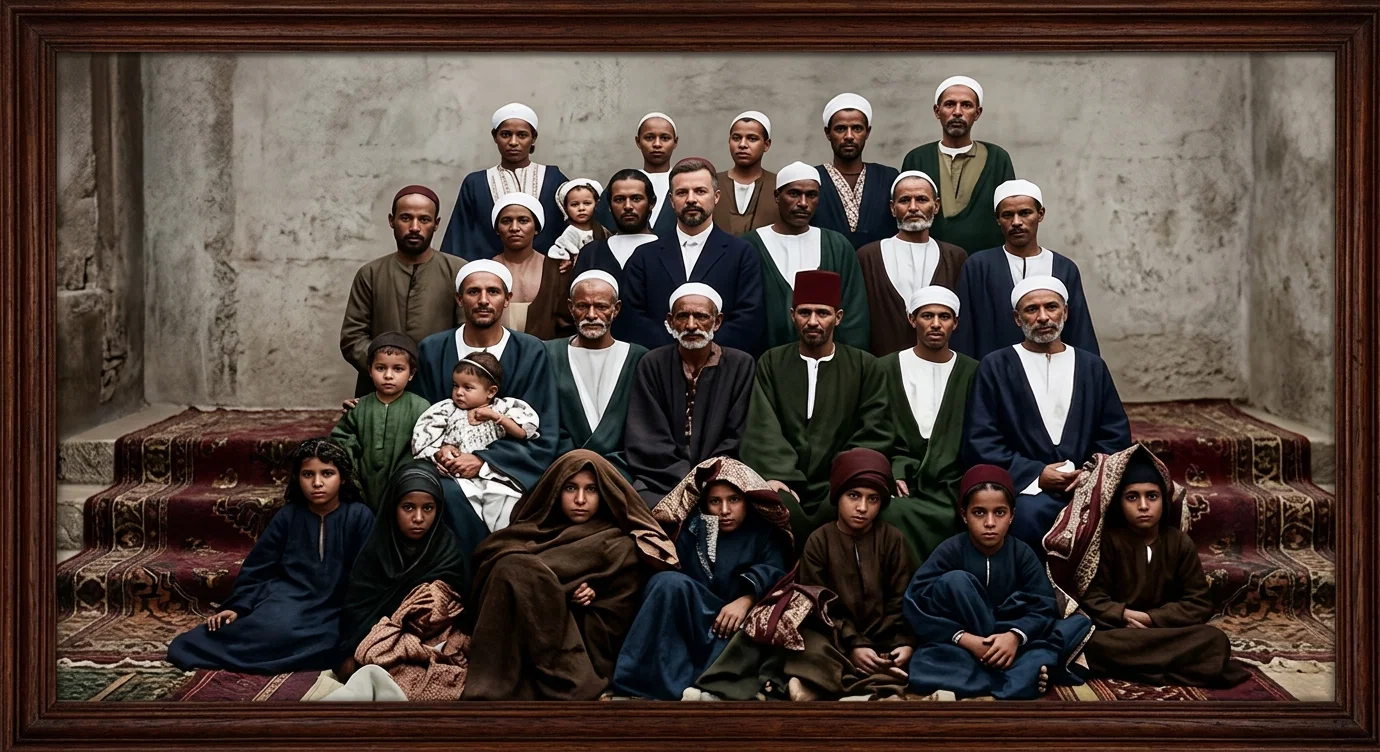
COMPANY BAPTIZED AT BENI ADI, EGYPT.
Mantea knew it would make trouble for us if she came to the mission, so she hid in the mountains for a time. After a little she came to us, asking what she should do. We told her of a family living twenty-six miles away, and at three o’clock in the morning she started. Here she obtained work, and while she greatly missed her little daughter, whom she had to leave at home, she was happy in her freedom.
Her husband, thinking she would go to her parents, went there after a few days to compel her to return. Not finding her, he notified the native police, and they began the search for her. He even went on two or three trips by train, and at last, after three months, he found her. But she refused to return with him, and as she was then in the Free State he could not compel her to do so. However, one night with two accomplices he took her from her little outside room and brought her to Basutoland.
After this, for two months Mantea did not attend meetings. She said, “I am testing my husband, to see what he will be like now.” Then she began to come regularly again.
MANTEA:
A short time ago her husband called me to talk with him about Mantea. In conclusion he said: “I want you to know that it is all right now. Mantea may attend your meetings and do what she likes. I’ll not stand in her way any more.” Thus, after enduring persecution for over two years, she is free to serve God as she desires.
This same man’s son, a bright boy of nineteen, with Mantea and others, is now in the baptismal class. Truly God’s power to convert and keep his trusting children is the same as in the days of Daniel or the apostles.
H. C. OLMSTEAD.
Emmanuel Mission, Basutoland.
Putting the Best Meaning on Others' Acts
“You will never regret putting the best meaning on the acts of others; nor will you be sorry for stopping your ears to gossip and being generous to your enemies.”
SOME OF THE MISSION FLEET
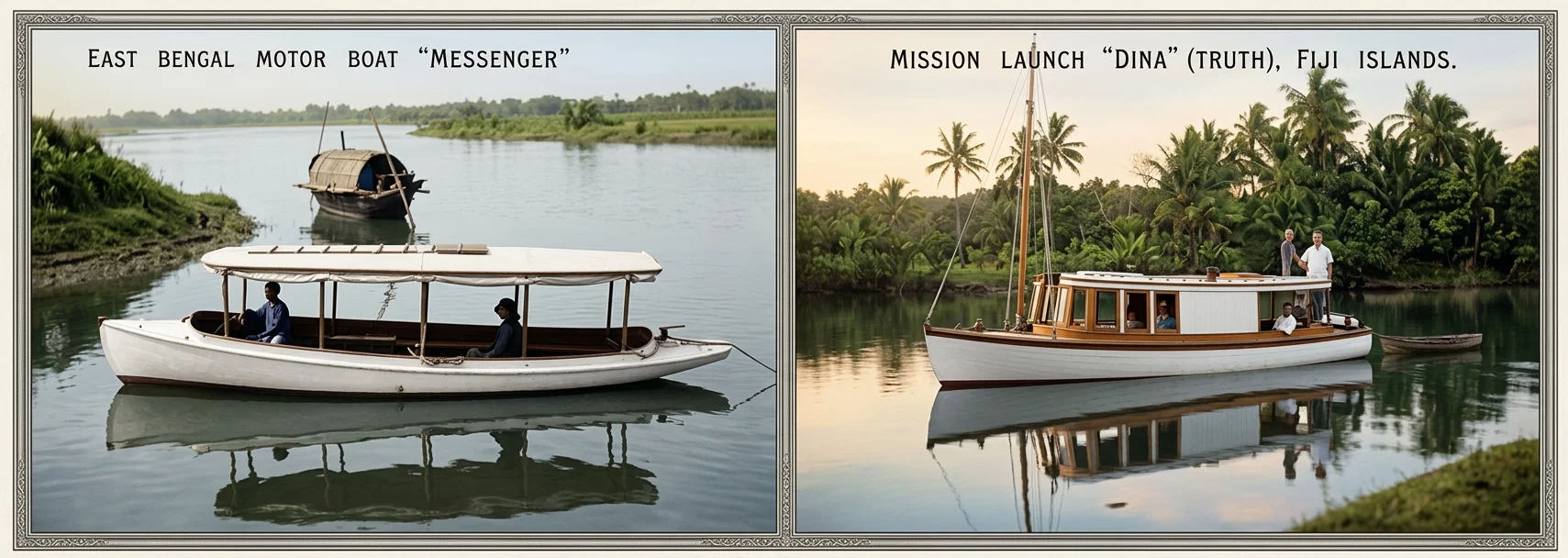
EAST BENGAL MOTOR BOAT "MESSENGER." MISSION LAUNCH "DINA" (TRUTH) FIJI ISLANDS.
The Missionary Afloat
IN the discussion of the missionary campaign at a European conference the “missionary army” had often been spoken of. Then a good brother, skipper of a missionary launch doing service in the harbor of Rotterdam, rose up, saying: “I have heard a great deal about the missionary army; is it not time some one said something about the missionary navy?” He was invited to tell of his part in spreading the good news among those who “go down to the sea in ships.”
We have not at hand a picture of the Rotterdam boat, but we reproduce the photographs of a few others, representing what our good brother called the missionary navy.
In New York Harbor
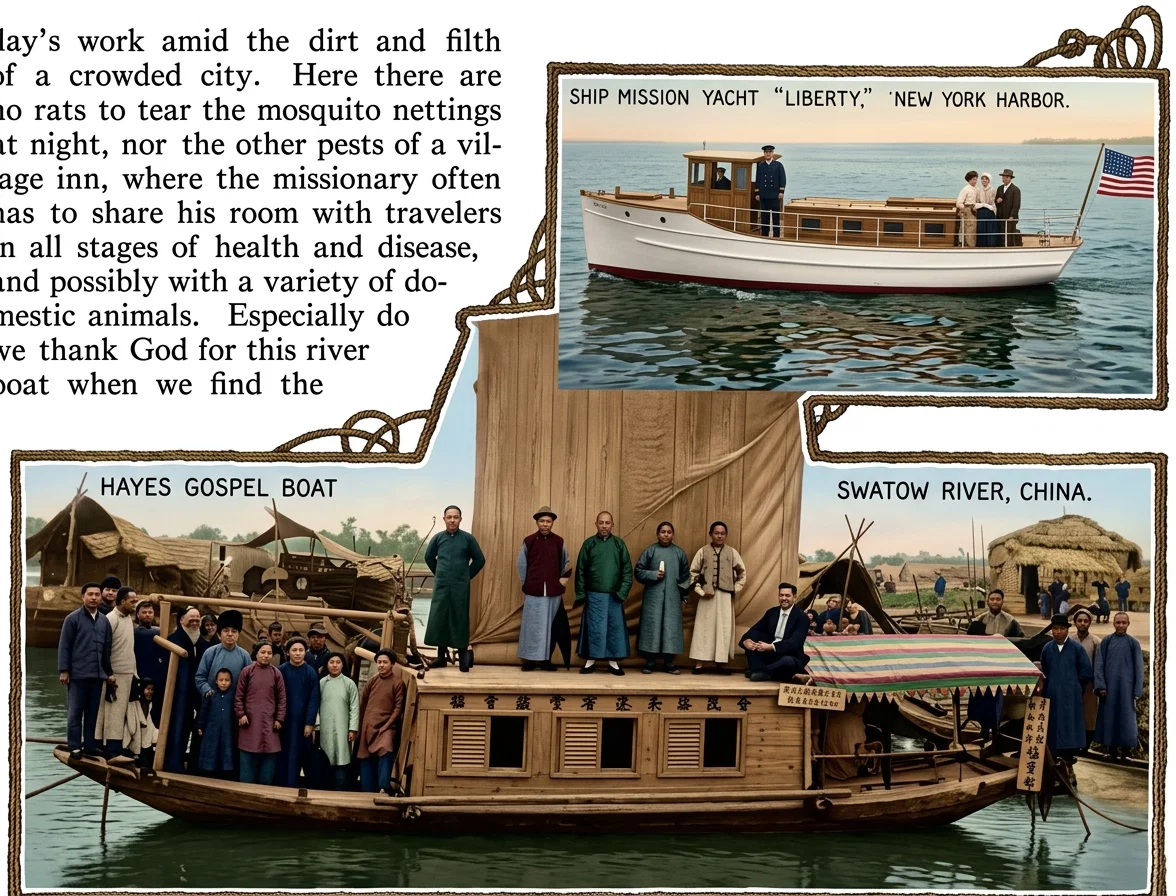
Daily the ships of all nations are found discharging and taking on cargo in the port of New York. For its work among the seamen afloat, our Greater New York Conference has provided the trim little yacht “Liberty,” and Capt. J. L. Johnson, whose heart is in the work of selling and distributing books and tracts and periodicals in the various languages among the sailors, is skipper and missionary evangelist. “I meet your people and their publications in nearly every great port of the world,” said one sea captain as he purchased yet further publications for study on the voyage.
Mission Launch “Dina,” Fiji Islands
Our Fiji superintendent, A. G. Stewart, writes us that the word Dina means “truth” in the Fijian tongue. “Dina” is the principal boat of our Fiji Mission, we believe, though one or two others have also been in service among those islands. The workers must go to and fro from island to island, and oftentimes have had to breast stormy seas in the little craft.
On the Rivers of East Bengal
The many-mouthed Ganges pours its flood of waters into the ocean in Bengal and East Bengal. The whole country is a veritable network of rivers and connecting streams and canals. Brother W. R. French, of the Bengal Mission, sends a picture of the motor boat “Messenger.” Its name in the Bengali language is “Barta Ba, Hica,” meaning message bearer, or messenger. “For five months in the year,” Brother French tells us, “this section of Bengal is flooded, and even at other seasons the only means of transportation is by boat.” So along these waterways the “Message Bearer” takes the living messengers in search for souls among the jungle villages of East Bengal.
On the Victoria Nyanza
Two mission schooners are operated by four missions on the great Victoria Nyanza, Central Africa, and are proving to be useful heralds of the truth.
On the Rivers of the Swatow District
By W. F. Hills.
THERE are eleven large rivers in the Swatow district, and lining these rivers on both sides are scores of cities and hundreds of villages. With our “Hayes Gospel Boat”—a gift to our mission during the last year—we are able to travel for weeks along these watercourses, visiting new places every day. We have at present opened chapels in sixteen stations, and the work is spreading.
Unless the reader has traveled in the interior of a country like China, he may not appreciate how thankful one is for this good, clean home on the cool river after a day’s work amid the dirt and filth of a crowded city. Here there are no rats to tear the mosquito nettings at night, nor the other pests of a village inn, where the missionary often has to share his room with travelers in all stages of health and disease, and possibly with a variety of domestic animals. Especially do we thank God for this river boat when we find the dreaded plague raging in the community.
SHIP MISSION YACHT “LIBERTY,” NEW YORK HARBOR; HAYES GOSPEL BOAT; SWATOW RIVER, CHINA
Multitudes of people must be reached with the gospel message along these watercourses, and we are to seek for the Lord’s lost sheep in the byways as well as the highways.
W. F. HILLS.
Swatow, China.
Solomon Islands
JUST as we go to press comes the word from missionary G. F. Jones, en route to the Solomon Islands, South Pacific, saying that the Australian branch of our society, which sends him out, has given him a seven-ton missionary boat, with auxiliary power. It may be the first home he and his wife will have among wild islanders. “Where we are going,” he says, “there is neither town, house, nor even room for a stranger. The natives are hostile, and the climate equally so, to the European.”
Books Studied on an Australian Voyage
FROM New York Captain Johnson lent three large books to an outgoing Australian ship, requesting the captain to put them on a returning vessel. Six months later, the chief officer on the boat bringing them said that he and the ship’s master sat up night after night studying the books and the Bible.