Your ShelfYour Projects

Review and Herald, Harvest Ingathering Number

The Missionary Movement of 1913
Earlier text: Seed Sowing in Shan-Tung Province, China

INDIA AND BURMA

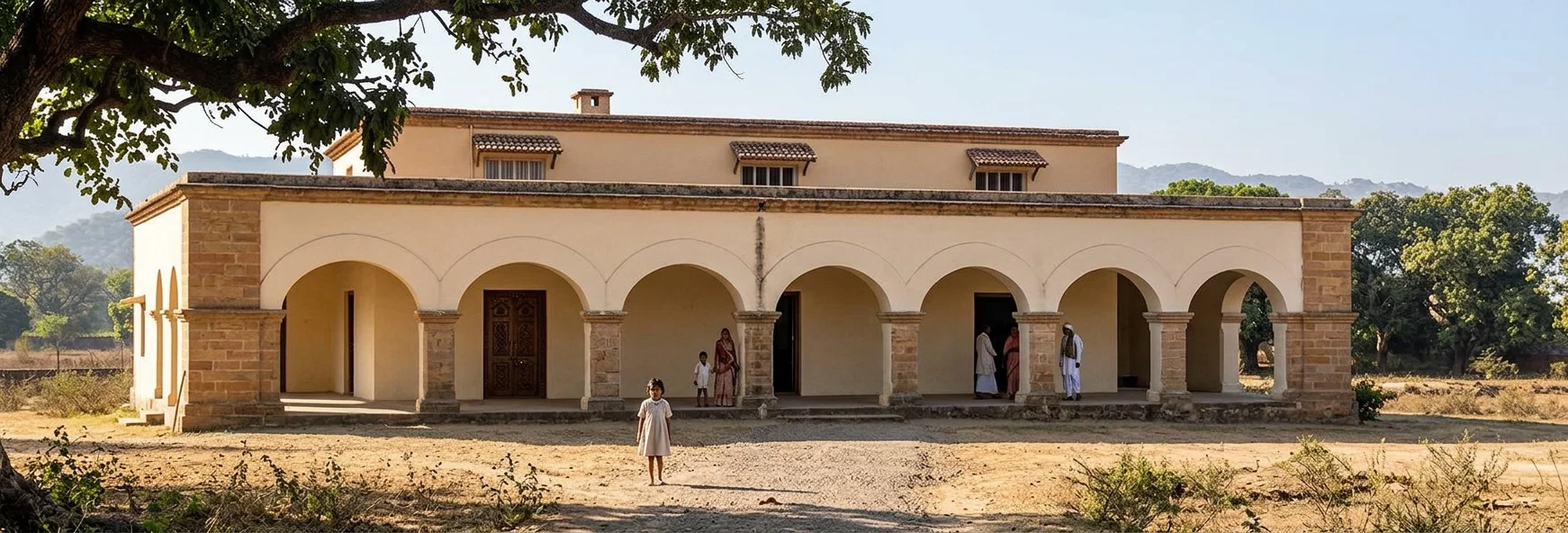
MISSION BUNGALOW, NAJIBABAD, NORTH INDIA.

Then and Now

[Expressing his joy for a new mission home at the Meiktila Industrial School, Burma, their superintendent dropped into verse. He will not thank us for printing his words, which were not designed for publication, but nevertheless we feel we should pass on the thanks to all who have helped. The unstudied verse tells a good story of conditions to be found in the mission field.]
MISSION BUNGALOW, RAJIBABAD, NORTH INDIA.
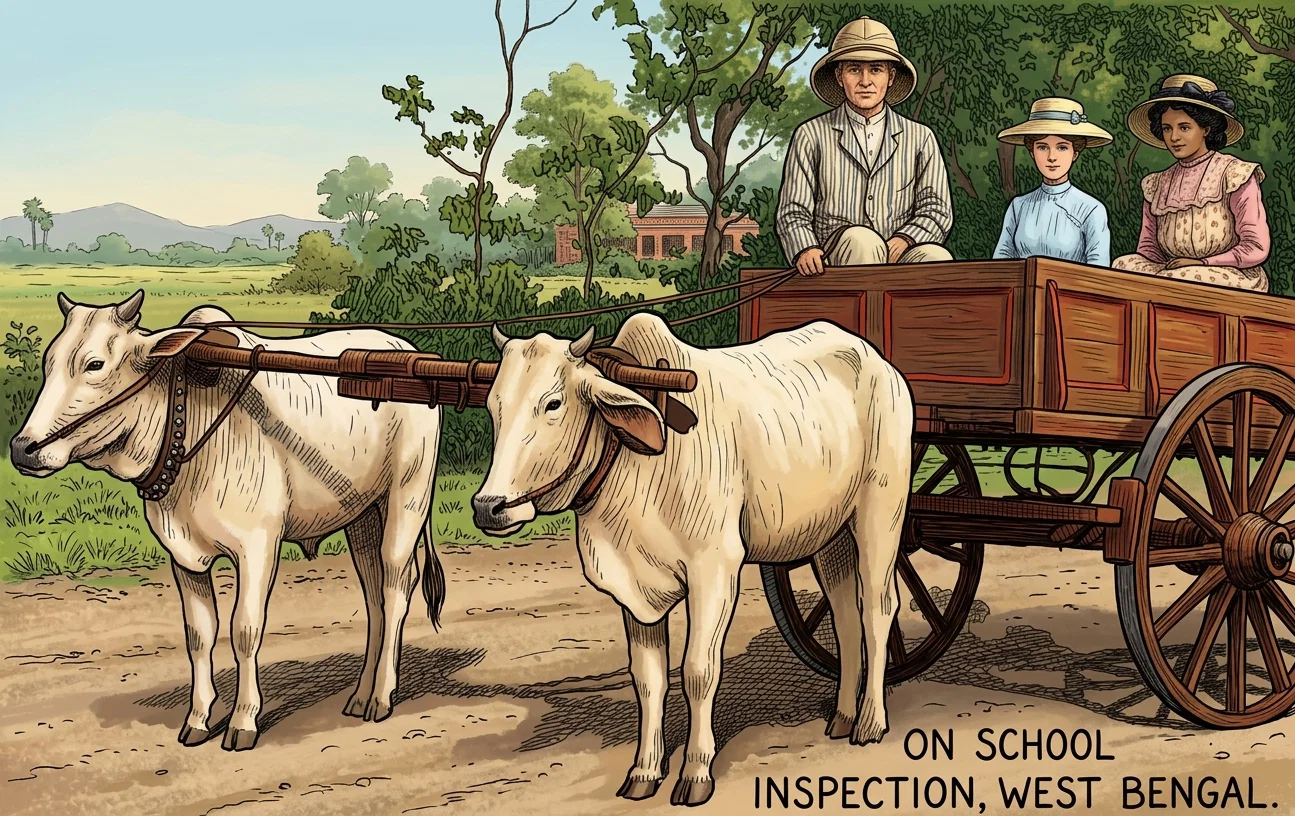
ON SCHOOL INSPECTION, WEST BENGAL.
MISSION BUNGALOW, RAJIBABAD, NORTH INDIA. ON SCHOOL INSPECTION, WEST BENGAL.
THEN we occupied a dwelling scarce affording room for beds, And a burnished metal roofing drew the sun above our heads, Where the wind blew on occasions, but instead of freshening breeze, Sickening odors made us long for cleanly homes beyond the seas. But the times have changed, and now we have a mission bungalow, Roof of tile, the heat defying, where the steady breezes blow With invigorating coolness and an unimpeded sweep, In the day inspiring action, in the darkness granting sleep. So our hearts are full to bursting since He granted our request, And we thank the liberal givers to the missionary chest.
We were living — no, existing — in a house set up on posts, Just beneath it stagnant water, where mosquitoes came in hosts, Where the deadly fever took us, and we tossed with burning heat, When we could but lay the patient at the Great Physician's feet. But the Lord, who loves his children, set us up on higher ground, With the lake and woods and meadows showing beauty all around. Here mosquitoes are exceptions; no offending odors here; And we bask in pure, disease-destroying light and atmosphere. Do you think we have to pause awhile and rack our memories lest We forget the kind suppliers of the missionary chest?
'Twas the all-wise, loving Sender and his loved One who was sent, Who evolved the blessed method which is now so permanent, That the worker on the foreign shore who bravely toils and hopes Should depend upon home-keepers who as bravely “hold the ropes.” So the soldier on the firing line is not alone at work, For he knows a thousand hearts at home are never known to shirk. The eternal weight of glory that awaits us weighs enough; We shall share, and share alike, with those who're “staying by the stuff.” So we count no joy so great as sharing mansions of the blest With the loving ones who now supply the missionary chest.
R. B. THURBER. Meiktila, Burma.
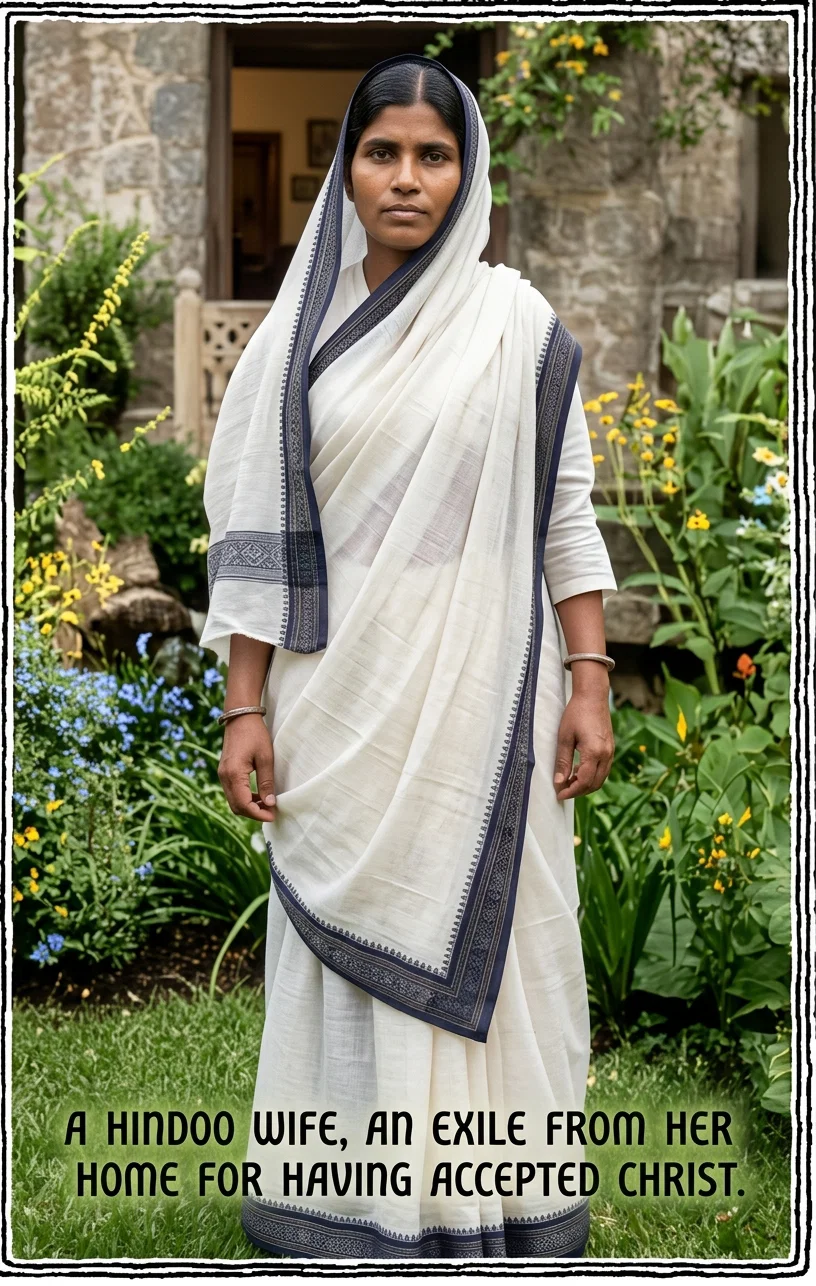
A HINDOO WIFE, AN EXILE FROM HER COUNTRY FOR HAVING ACCEPTED CHRISTIANITY.

He Chose the God That Could See Him

A CHILD in Burma was permitted by his parents to go to a mission school because they wished him to learn to read. By and by they found he was losing faith in the idols. This made them feel very sad. So the father took the lad to one of the gayest of the temples and showed him the idol, covered with gold and silver ornaments, surrounded with flowers and candles and fragrant incense.
“Here,” said the father, “is a god you can see; but the Christians cannot show you their God.”
“Yes,” said the child, “we can see your god, but he cannot see us. We cannot see the Christian’s God, but he sees us all the time.”
Was not this child wise in choosing the God from whom even the thoughts of the heart cannot be hid?

A Buddhist Convert’s Victory

THERE was a woman attending the studies every day who was a Buddhist. She was about fifty years of age, but could not read a word. She gave excellent attention while the others read; and I observed that when we reviewed each day’s lesson this woman was able to answer the questions more readily than many who could read.
At last some asked for baptism. Among them was Mah An. I told her our position in regard to the use of tobacco, and explained that our bodies are to be the temple of the Holy Ghost. Her struggle was hard, for she had used the weed almost all her life. But she took her stand for Jesus, saying she would give up the defiling habit for the sake of the One who had done so much for her.
Some time elapsed, and her brother said to me: “Mah An is so different from what she used to be. Before, she always met visitors with cigars and betel nut. Now she takes the Bible and says to them, ‘I can’t read; will you please read some from this book to me?’ So she is able to do some missionary work. While they read, she explains it to them.”
Does not such an experience make mission work pay the laborer?
H. H. VOTAW.
Rangoon, Burma.

In the Jungle Villages of West Bengal

WE have opened mission and dispensary work at Jagadishpur, a little station right in the jungles, on a branch of the East Indian Railway. The country round about is thickly dotted with villages, set in among the jungles, with footpaths leading to them. We secured a small bungalow, but already our work has outgrown it. The dispensary work is carried on in a room eight by nine feet. In this little room 1,125 patients have been treated within five months.
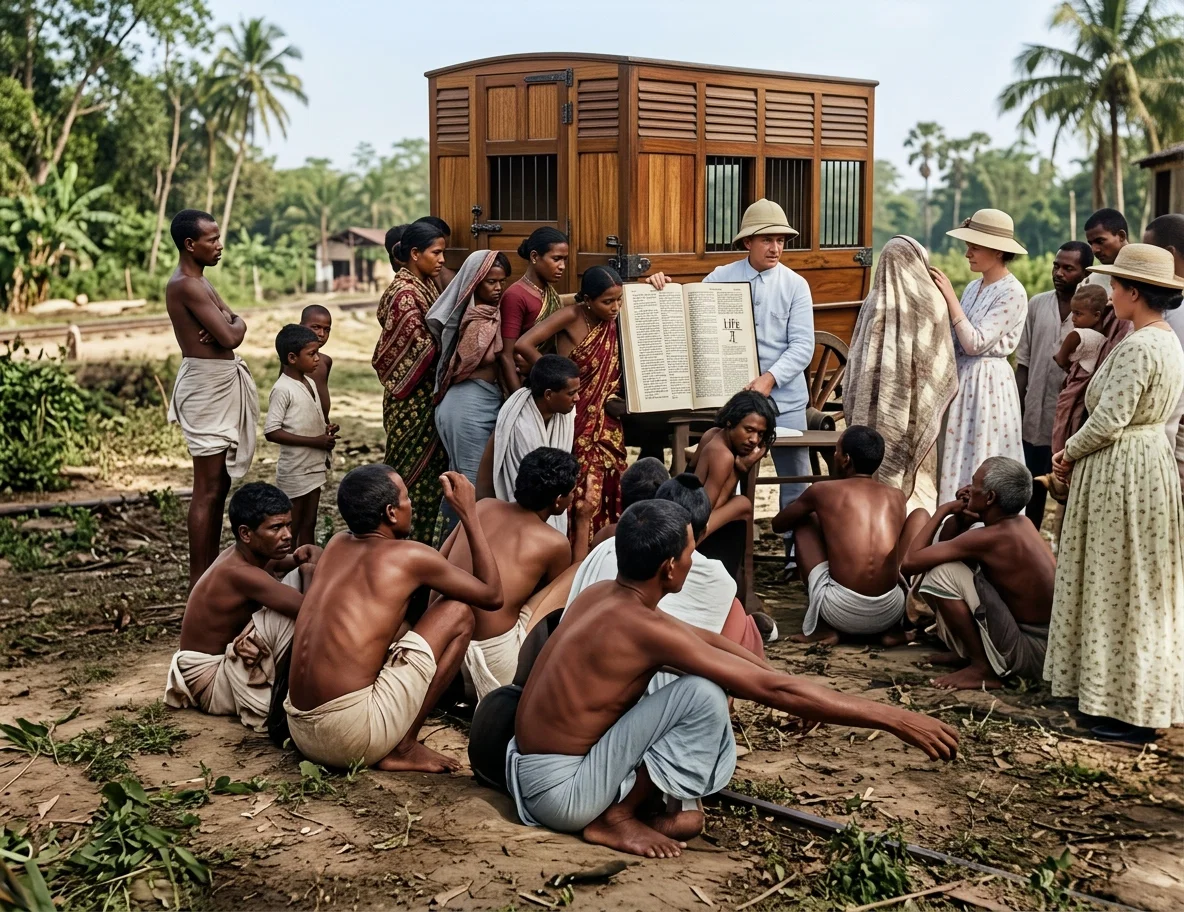
AMONG THE JUNGLE VILLAGES OF WEST BENGAL
One feature of the work here is the dispensary cart, in which we travel among the villages. We have a box stocked with medical supplies that we take on all our trips, whether we go to inspect a school or to give a Bible lesson. In this way we reach many who are too timid to come to the dispensary. Wherever we go in the cart, the people come running from the villages, begging us to visit some sick person. By the time we have prescribed for the patient, there is usually a large crowd waiting for us at the cart. After treating fifteen or twenty more, and giving a Bible lesson, we pass on.
Recently we were called to attend the wife of an Indian rajah (a prince) who was here for a change. On our first visit we were informed that the rajah and his wife were orthodox Hindus, which meant that every ceremony must be observed. After a few visits, however, we were told that we need not announce our arrival, but could come and go as we liked. The women were also allowed to call on us, and we held a lantern lecture with the women of the zenana.
MR. AND MRS. R. H. LEECH. West Bengal.

“A Disappointment”

WHILE visiting our stations and out-stations in East Bengal, we stopped over Sabbath with a company of believers. Upon hearing that we were in those parts, two men came from a distance on foot to meet us, bearing a message from their villagers. They arrived just at the close of Sabbath school; so we sat down again to visit and talk with them. Like all faithful messengers, they could not rest until they had borne their message. One man began: “We have come a long distance as representatives of our villagers. In our village there are Christians, Mohammedans, and Hindus. We have heard of your teaching, and believe it is the true gospel, and a number of us are anxious to hear further concerning this teaching of Jesus. We have heard through your paper that he is coming soon. Do send us some one to teach us more concerning this end-of-the-world teaching.
“We have united and erected a school building,” he continued, “and furnished it with maps, benches, chairs, and tables. We want our children educated in the true religion. Now our prayer is that you will send us a man who can instruct both us and our children in the common education and also in this gospel.”
When they had delivered their message, they sat eagerly waiting for a reply. I first told them that the distance was forbidding, but they at once rose to the situation; so I had to tell them plainly that there was no money in our treasury this year with which to take up new work. “But when can you come to us?” they pressed me.
Then I had to tell them that I could make them no promises. You should have seen the look of disappointment on their faces when I told them this. They returned to their homes with heavy hearts, bearing their message of disappointment, and we went on our way with sad hearts, praying God to send men and means for the work. W. R. FRENCH. Calcutta, India.

The Urgency of Preaching the Gospel

“Ah, my friends,” wrote the Rev. F. B. Meyer, “listen to the roar of the Niagara of human souls pouring moment after moment into the unseen without God and without hope. Remember that each one is as sensitive to joy and sorrow, to hope and fear, as you are yourself; remember that you have that which they need as urgently as the starving need bread, and then consider if you cannot sympathize in the vehemence of the apostle’s passionate desire to carry them the gospel: ‘Necessity is laid upon me; yea, woe is unto me, if I preach not the gospel! For if I do this thing willingly, I have a reward!’”

Matabele Children

Almost as soon as a baby is born, it is tied to its mother’s back with a large goatskin, and in this sort of hammock it sits, with its little feet sticking out on each side of the mother. As she walks, the baby’s head bobs about so that you wonder its little neck is not broken. When it cries, the mother knocks her elbows against it as if the little one were a sort of drum, and soon it goes to sleep again.
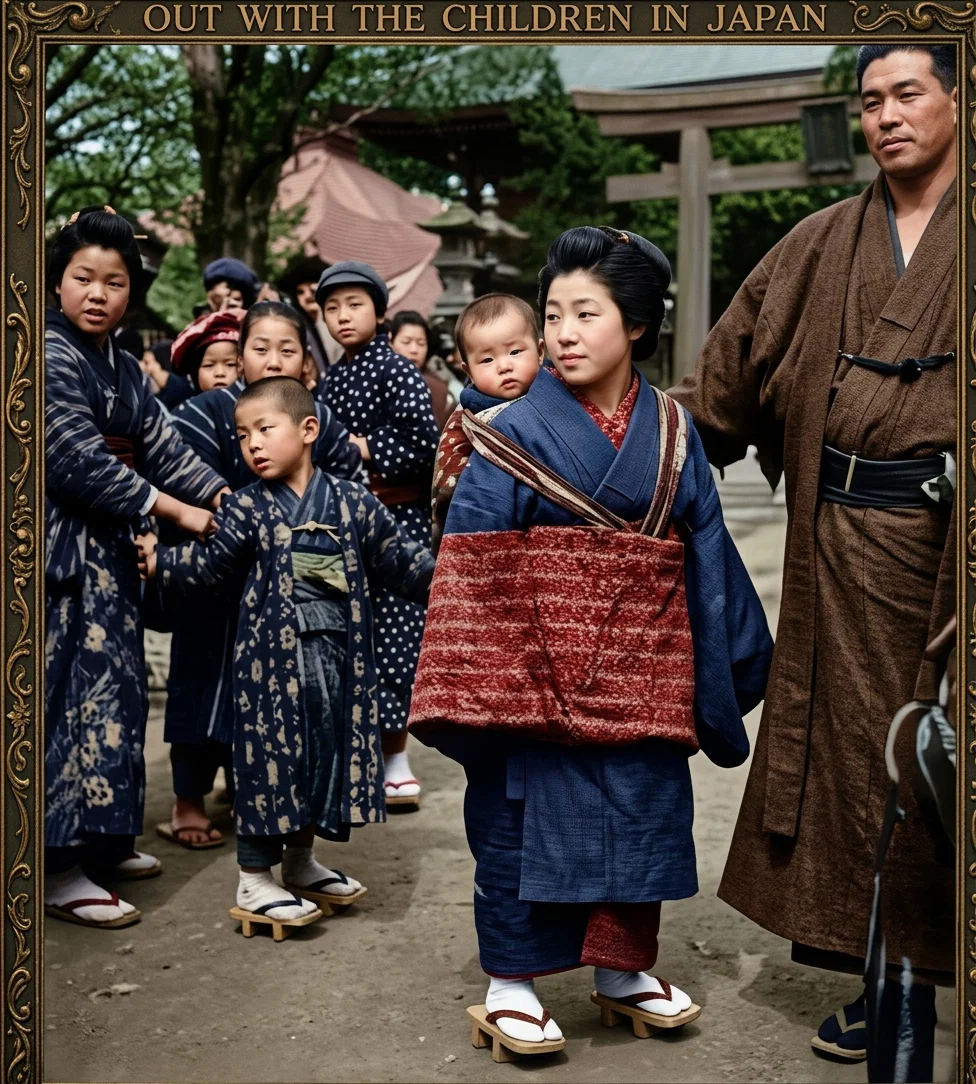
OUT WITH THE CHILDREN IN JAPAN.
A HOME GROUP WHOSE PEDDIES GO TO MISSIONS.
For clothes, its soft black skin is rubbed with fat till it shines, and a string of beads is put around its waist, and often strings around its wrists and ankles. When the babies get old enough to run about, the little girls wear a tiny skirt tied around the waist, and the little boys a small apron made of skin. They romp and play just like all boys and girls.
By the time the boys are seven years old, they are sent to herd the cattle or goats. The natives have no garden fences, so the flocks must be watched to keep them out of the grain.
The girls are taught to carry small gourds full of water on their heads without holding them or spilling the water. Early in the morning you may see the little tots running along by their mothers to the spring, and returning with their gourds of water carefully balanced on their heads.
When they come to hear of Jesus, they sit and listen quietly to the story of the one who said, “Suffer little children to come unto me, and forbid them not.”
ELSIE G. GIBSON.
Glendale Mission, Rhodesia, Africa.

A Tamil Boy

It is Sabbath morning. The sun has just risen in a cloudless sky. The morning stillness is broken only by the strains of music coming through the trees from the boys’ quarters, and I recognize these words,— “Yennium, yennium, Sondeitta asirvadeum.” (Even me, even me, Let some drops now fall on me.)
Soon it is time for Sabbath school, and on entering the church we find the little building filled with worshipers. They are scantily clothed, and are sitting in straight rows on the floor, with bowed heads. As the superintendent kneels in prayer, they all kneel with him, and all join heartily in the opening song and prayer.
My attention is especially attracted by the youth who acts as secretary, and I inquire about him. “O, that is our boy David!” the superintendent replies. “Three years he is baptized. It was in this way. He had been coming to our school and Sabbath services, and one day he said, ‘Now I know this is the very truth, and it is necessary to me to be baptized, as the Bible tells.’ But his father forbade him, and opposed him in all ways. The next Sabbath a number were to be baptized, and David went to the tank with much desire in his heart. When all the others were finished, he left his father quickly and ran out into the water, and his father not saying anything, they baptized him. David’s determination that day led his father to search the Word of God more carefully, and today the father is a member of our church.”
MRS. V. E. PEUGH.
South India.

With the Little Ones of Islam

How you would love these tiny, innocent toddlers, with all their quaint little ways!
It is an important moment for the Mohammedan baby when “Miss Sahib” arrives. From the vantage point of his mother’s arms he is the first to see the white topee (sun hat) come round that mysterious purdah that shuts away the outer world. Forthwith a chubby hand is eagerly outstretched; for he must be, of course, the very first to shake hands with Miss Sahib, and a very serious performance it is to our young Moslem friend. First he gives the right hand, then the little play-thing must be moved from one hand to the other, and the left hand is produced, for it seems to be a point of etiquette with Mohammedan babies to shake hands with both hands. Then generally he finishes this serious business with a solemn native salaam, which consists of respectfully raising the hand two or three times to the forehead. When this part of the program has been completed, his bright eyes are fixed expectantly for the next interesting move, which is the showing of the Bible picture. It is a happy moment to have these little ones form a circle round one, their little hands eagerly patting the picture roll in their anxiety to see it.
I have a beautiful picture of the holy child Jesus, and there is no sight more touching than to see this group of little ones standing round with bent heads, solemnly salaaming the baby Jesus, their Saviour. Yes, their Saviour, too; and they are learning to love him in their little unconscious baby way. O, the pity of it! that these tender little hearts should ever grow hard, that this baby love should be quenched, because there are no funds to send those who could help them. Yet Jesus has said, “Suffer the little children to come unto me.” These are the little lambs that Jesus said were not of this fold, yet surely they, too, must be brought, that there may be “one fold and one Shepherd.”
VERA CHILTON.
Lucknow, India.
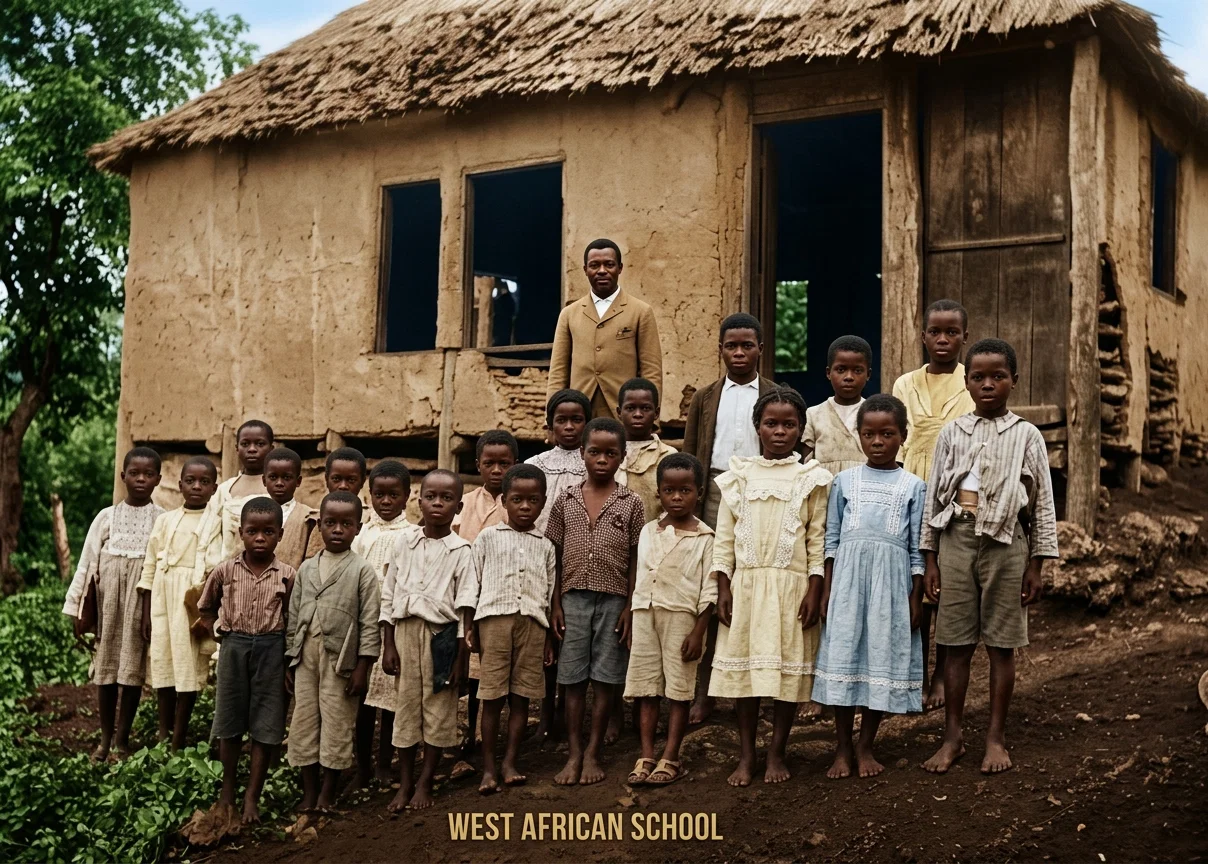
WEST AFRICAN SCHOOL
WEST AFRICAN SCHOOL
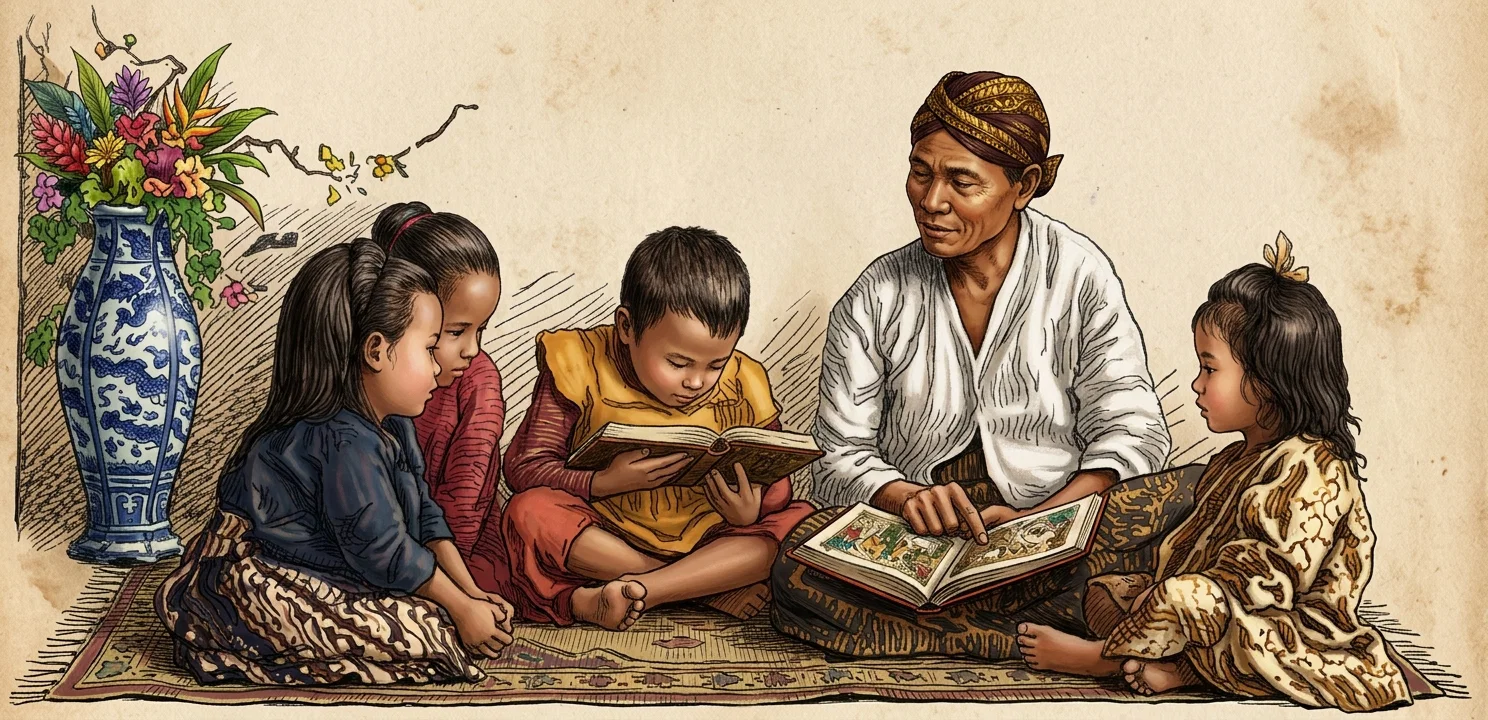
BETSY READING THE "OLD, OLD STORY" (IN JAVA, EAST INDIES).

Bobsy’s Strange Pet

Bobsy, four years old, is the youngest member of the Singapore missionary society. Each week he hands in a report of tracts and papers given away, and gives the pennies he has earned for the missionary fund.
Bobsy lives with an aunt, for his mother is dead. While his brothers and sisters are away at school, he helps at home, his willing little feet saving auntie many extra steps.
BOBSY'S STRANGE PET.
But I must tell you of a strange pet that he has. In the back yard of their home several gray monkeys live, and with them is an orang-outang, or ape. The ape is the age of Bobsy. They are great friends.
When the children give it a bucket of water, some soap, and a cloth, the ape will wet the cloth and rub soap over it, and wash it, often dipping it into the water and wringing it out.
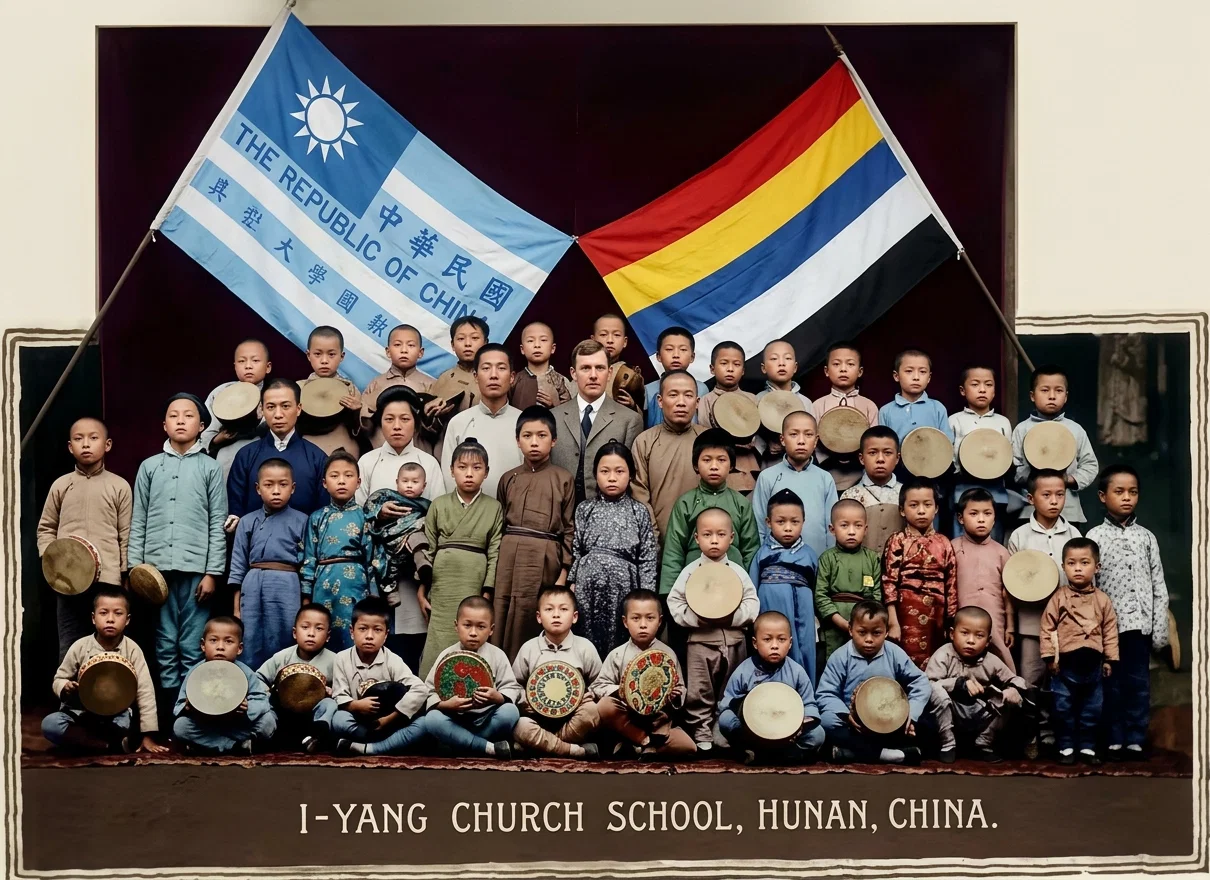
I-YANG CHURCH SCHOOL, HUNAN, CHINA.
Some times when Bobsy and the ape are out for a walk, it will get away from him and climb the trees for fruit. Then one of the older boys must come and call it down.
The ape does not mind what Bobsy says, as he is so small, but it obeys the older children.
MRS. JOSEPHINE SHARP.

The Children Crying in the Night

I HEAR the children crying in the night, The little children: “God of stars and sun, We do not like the darkness; send down light From where there is so much to where there’s none; Fireflies and flowers we love, and all things bright, But in our hearts it’s dark; dear God, send light!
“A little Child, we’ve heard, thou once didst send, Light to the heart of all the world to be; And so we think, dear God, thou didst intend Some light for little children such as we. For what a child can bring a child can take; Then give us light, dear God, for that Child’s sake.
“And if it be there is no light to spare,— Dear God, forgive if what we ask is wrong, We’re only heathen children,—is it fair That others should have all the light so long? We would not wish that they should have our night, But when will our turn come to have the light?” — Selected.

Child Life in the Hinterland of West Africa
The children in the West African interior do not have the advantages that the little boys and girls in America have, but they appreciate the love of their parents and friends just as much as any one does.
At first they are very shy, and will run every time we approach them. It takes time and patience to win them. They have good reason for being afraid of the white man, for their parents tell them that if they are not good they will give them to the white man, just as you have heard other parents tell their children if they are not good the “black man” will get them.
FILIPINO BOY AND ROYAL HAY,
LUZON, PHILIPPINES.
FILIPINO BOY AND ROYAL HAY, LUZON, PHILIPPINES.
Not many of the children have a chance to go to school, but must work when very young. We often see a very small girl carrying a big pail of water on her head, or beating rice in a mortar, for these are the duties of women and girls. The boys help in the field, and build houses of mud.
After a hard day’s work or play, we like to get into our soft beds and go right to sleep; but this is not the privilege of the little black boys and girls. They have only a mat to spread out on the dirt floor, with no soft pillow nor warm covers. If they get cold, they must get up and build a fire to keep warm.
I have never seen the children here play any games, but they seem to enjoy running about, chasing one another here and there. I know they are having a good time, for they laugh a great deal. They do not know what dolls and toys are.
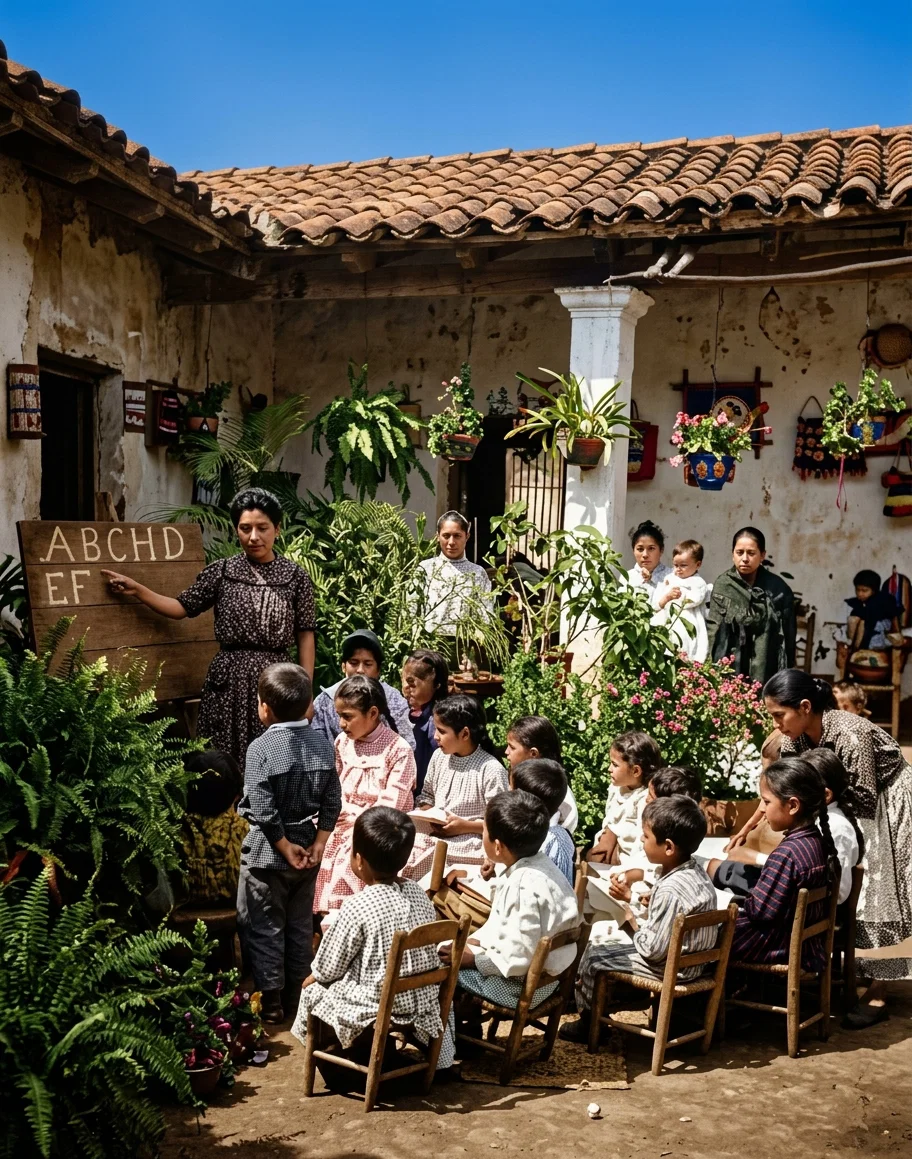
LITTLE FOLKS STUDYING ABC IN MEXICO.
COPYRIGHT BY UNDERWOOD & UNDERWOOD
LITTLE FOLKS STUDYING ABC IN MEXICO. COPYRIGHT BY UNDERWOOD & UNDERWOOD
MRS. E. W. MYERS. Waterloo, West Africa.

Interest in Missions

“I CANNOT get interested in missions,” exclaimed a petulant young lady. “No, dear,” said her aunt, “you can hardly expect to. It is just like getting interest in a bank: you must put in a little something first.”

The Word Taking Root

WE who are teaching these heathen youth, watch with deepest interest for the first signs of the yielding of the heart to God. In a writing lesson the other day I asked the class to write down what answer they would give to God in the day of judgment when he asks them why they had not followed his Word. Here are translations of three replies:—
Karia wrote: “I meant to follow — another time, thought I. No, I am waiting only a little, until my heart has been well instructed, so that I can follow the Lord and not again turn to sinning.”
Senzia excused himself as follows: “It is concerning this that I have such great pain in my heart, because the devil goes about me always like a lion to kill me. But God has great strength.”
Semwambi wrote: “In these days I have had great agony in my heart because I would follow the Lord. Yes, now I think in my heart that I will follow him now.”
In this heathenism the people are made miserable with fear of their gods, and it is with a struggle that they lay hold by faith of the grace that is in Christ Jesus.
MAX KUNZE.
German East Africa.

The “Bible Classes” in the Nyasa Mission
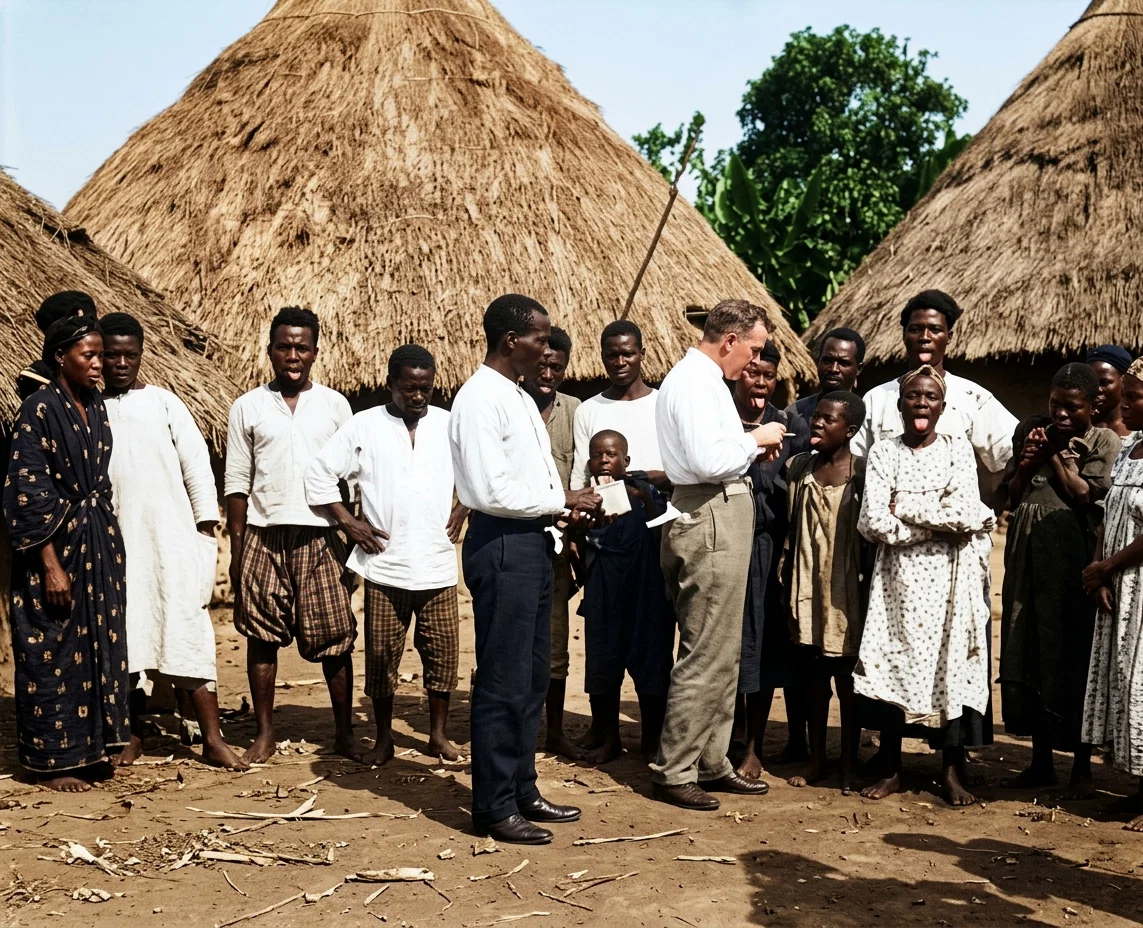
IN all our village schools the Bible is taught every day. Every Sabbath the villagers are assembled in the schoolhouse, and a simple Bible lesson is taught them. The teachers also go out to the near-by villages and tell the people about the love of Jesus—chikondi chache cha Yesu.
The result of all this Bible teaching is that little companies of those who believe in Jesus and desire baptism are formed at these schools. We call these small companies our “Bible classes.” It certainly is inspiring to stand before a class of over one hundred earnest young people at our head station, Malamulo, knowing that all these were ignorant of Bible principles but a short time ago.
The school at Ndeka, also, is especially good because so many of the women are in the class. This is the result of the work done by the wife of the native teacher, who is a fine woman, and has been teaching the women’s class in the day school. I wish that more of our village women would work for their friends.
The total membership of these Bible classes is 499. The Holy Spirit is working with our teachers, and helping them to win souls for Jesus. C. ROBINSON.
Malamulo, Nyasa, British Central Africa.
A NUMBER OF VILLAGERS HELPING OUR SISTERS TO CONVERT THE COLORED HEATHEN AND NEGROES
Continue reading: Fountains of Living Water