In January, 1909, Elder J. N. Anderson and family and Miss Ida Thompson, who had pioneered our way in China (aside from good Brother LaRue’s earlier ship work at Hongkong), sailed for America and the General Conference. “It seemed that the work would be greatly crippled,” wrote E. H. Wilbur of this loss; but Brother Wilbur moved from Kongmoon to Canton, the work was redistributed, and it has been, he says, a year of progress. From his report we gather these facts:—
It has been the “banner year” for literature sales in this province. Four colporteurs gave their entire time to it, besides what several evangelists did. Previous to 1909 we had entered but seven districts, or counties, with the publications. This year we added ten new counties.
CANTON SCHOOLS
Miss Amanda Vanscoy took charge of the Bethel Girls’ School, which has had about thirty boarding and forty day pupils. With the East Gate day-school for girls, the total enrolment has been over one hundred. Of eighteen new members added to our Canton church this year, ten were from these schools.
The boys’ school had an enrolment of sixteen, mostly boarders. Through lack of means the school building was given up, and the school transferred to our old chapel, where the crowded condition has compelled us to refuse earnest applicants. Through the untiring efforts of Brother Cheung, there has been greater interest in spiritual things than ever before. Three students were baptized during the year, and two give promise of making good workers. A building adjoining our chapel has been rented, and is being repaired, to give us more room.
MEDICAL WORK
Dr. Law Keem has worked away at Fatshan (a city near Canton) for over four years, with no proper facilities. This summer (1909) a rented store building on a business street has been20fitted up for dispensary and treatment-rooms, with several rooms for patients and helpers. A number of Chinese physicians attended the dedication in November, and took appreciative part. The equipment is not completed, for lack of means, but from twenty-five to thirty patients receive attention each dispensary day. The doctor’s dispensary assistant is a God-fearing young man who united with our Canton church two years ago.
LO, THESE FROM SINIM
Our only organized church is in Canton, with fifty-three members. More Chinese brethren are paying tithe than ever before. Two or three other church organizations should be formed in the province another year. Four new Sabbath-schools have been formed, and this year, for the first time, we have had our lesson quarterlies printed in Chinese.
A man in an adjoining province writes that he believes the truth, and appeals with Scripture quotations for me to come at once and teach his people. I sent him publications, but could send no one to him. People appeal to come to our schools, offering to pay their board and asking only to learn the truth; but we have not the room. “My wife and I would like to go to your mission in Canton, to study the Bible and learn to work in God’s cause,” writes a man nearly a hundred miles up the North River. But we are obliged to say, No. More workers and more facilities are sorely needed.
THE HAKKA AND HOKKLO DISTRICT
This district stretches east about two hundred miles from Canton and northeastward to the Fukien province. Five Hakka young men came to Canton in 1905 to study the Bible with Brethren J. N. Anderson and E. W. Wilbur. Four we believe are working for the mission to-day. Brother J. P. Anderson, who is working in the Hakka dialect, writes:—
This year I moved to Wai Chow Fu, a city up the East River, one hundred fifty miles from Canton, among the Hakkas. The Lord has blessed me very much. Our three canvassers have done well. We have opened two chapels and a boys’ school.
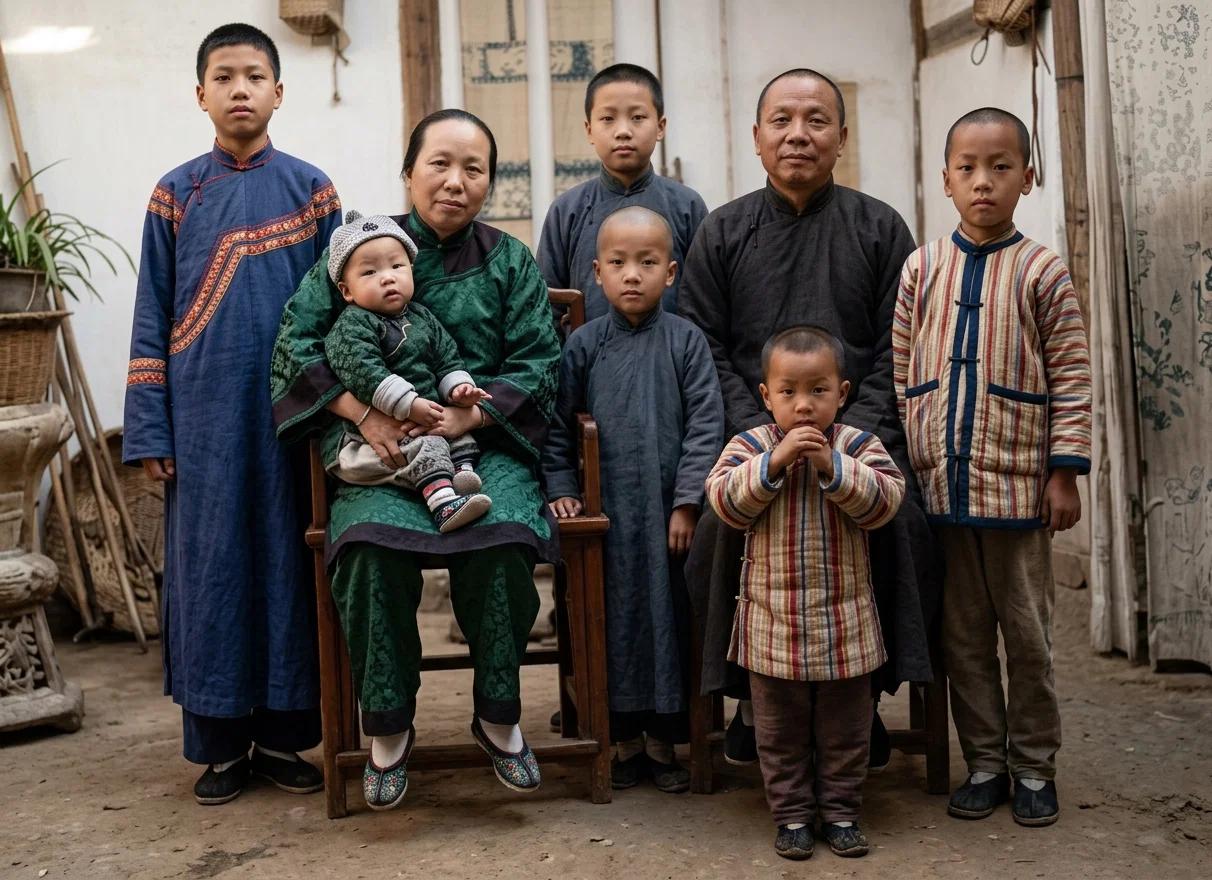
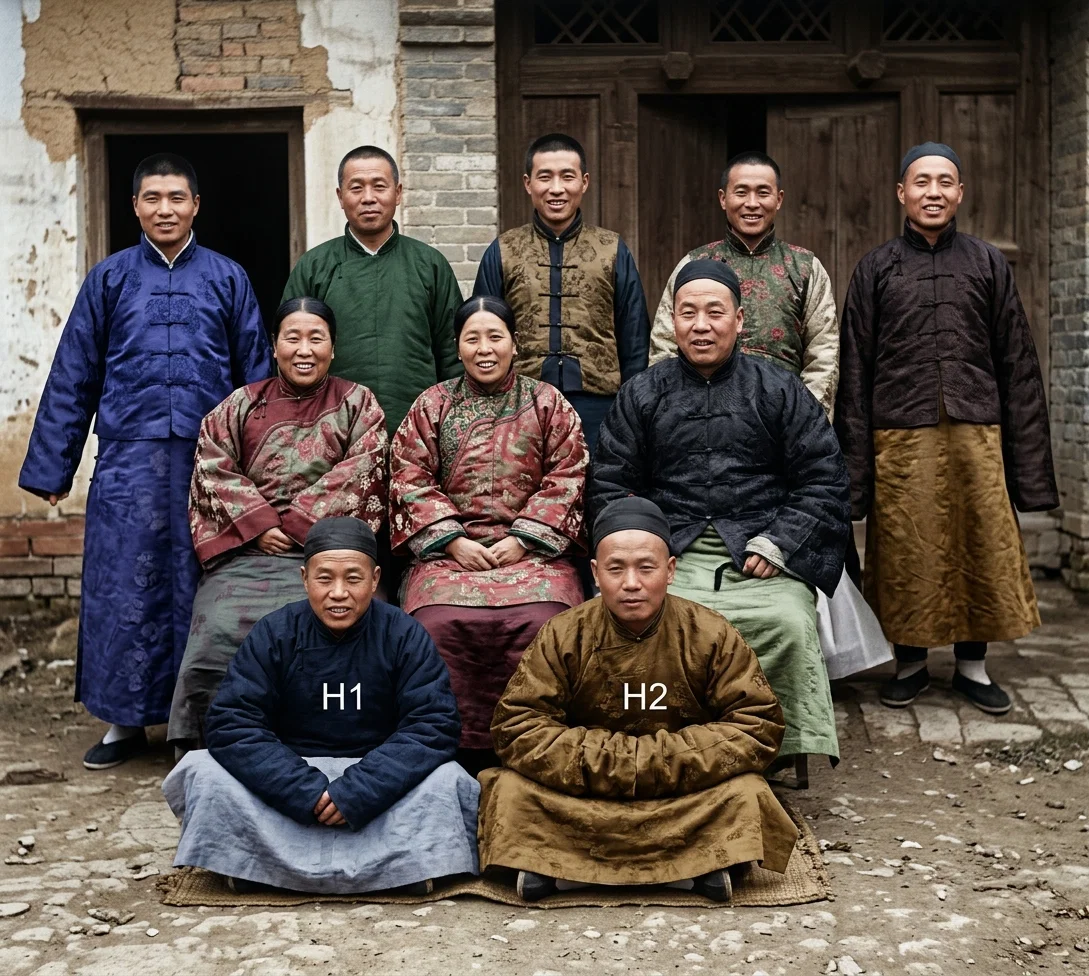
BROTHER HUNG, OUR NATIVE WORKER IN CHOW CHOW FU, NEAR SWATOW, AND HIS FAMILY
I have also looked after the work at Moi Lung, among the Hokklo people. At first a group of violent men, Catholics, made us much trouble at Moi Lung. The evangelist thought it very difficult work. I remember telling him to do his best, and that we would pray God for deliverance from these evil men, for such they truly were. I would not have been surprised at any time had they assaulted me personally. Later I visited the place again, and found that two of these men had been imprisoned by the district magistrate, and that21nearly all the others had died of the plague. The interested ones could now quietly meet for Bible study. I think four will soon be ready for baptism. They have given up idols, and thrown away that which is more dear to a Chinaman than his god—the tobacco pipe. As we see these heathen take their stand for the truth, we feel fully repaid for all our labor.
Photo by B. L. Anderson
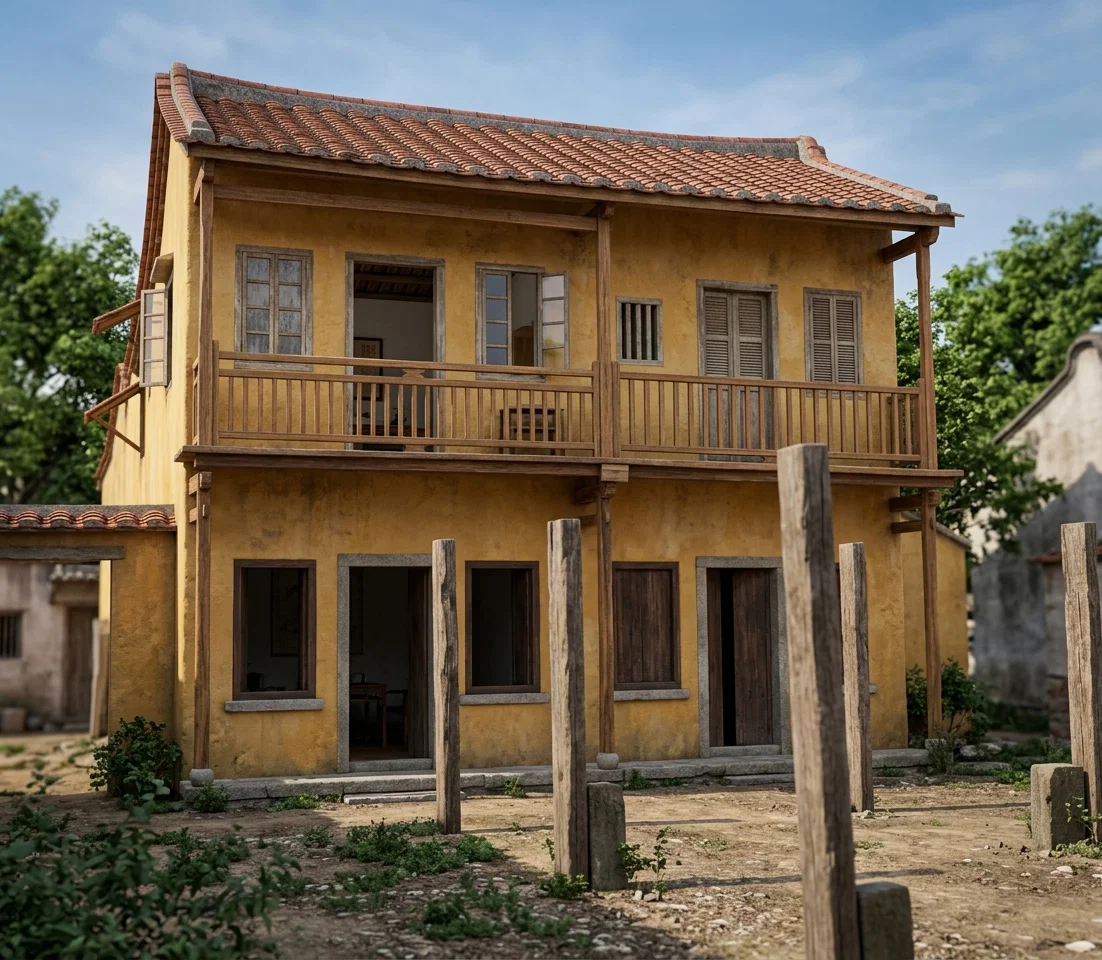
KULANGSU CHAPEL AND BOYS’ SCHOOL
As other help is expected here, it is decided to build a house that foreigners can live in. No suitable place can be rented. I am negotiating for a piece of land, which will cost two hundred dollars, and about one thousand dollars will be needed to put up a building that two families can occupy. These people number ten million souls. I am convinced the Lord has many precious jewels among them.
SWATOW DISTRICT
The work here was developed from Amoy, in the Fukien province. Swatow is northeast of Hongkong. Elder W. C. Hankins says of it:—
Elder N. P. Keh and Brother Hung have been carrying on the work in the Swatow district. A man named Wong became interested, and walked twenty miles every Friday to meetings at Chow Chow Fu, returning again on Sunday, thus losing three days out of seven. Through his efforts quite an interest has sprung up in his place, and about eight persons are reported as keeping the Sabbath. The whole region for a number of miles back of Swatow is agitated over the Sabbath question.
Fukien Province
(Population, 22,000,000)
Elder W. C. Hankins, of Amoy, superintendent of the Southern Mission Field, says:—
STATIONS AND WORKERS
We have five stations in this province; viz., Chin Chew, Tang Oa, Do Gang, Amoy, and Kulangsu, with an average attendance, at Sabbath services, of about one hundred. Thirty-three of these have been baptized. Six were baptized this year.
We have five Chinese evangelists, two colporteurs, two school-teachers, and two Bible women. The stations are within a radius of about one hundred miles, and can be reached by steam-launches, sailboats, and rowboats, as there are many waterways through this section.
Photo by B. L. Anderson
Two of these stations, Amoy and Tang Oa, have been opened this year. Besides these regular stations, the truth has entered the cities of Chiang Chew, Chioh Be, Hui Oa, Oa Hai, and the island of Kim Mng, as well as many other cities and villages where our colporteurs and evangelists have sold literature.22
SCHOOL WORK
Elder B. L. Anderson opened a boarding-school for boys in our chapel at Kulangsu during the latter part of the year. Nine boys entered, all but one children of our own people. It is a small beginning, but we look for great results from this training-school.
A day-school for girls has been opened in our Amoy chapel by Mrs. B. L. Anderson, with a well-educated young lady, a member of our Kulangsu church, as teacher. There are about fifteen girls enrolled, most of whom come from heathen families.
Provinces of Honan and Anhwei
(Honan, 35,000,000; Anhwei, 23,000,000)
Our first work in central China was in Honan. From this province, our work this year spread into the adjoining province of Anhwei.
CHEO CHIA K’O STATION
Of the work in this station, Elder F. A. Allum writes:—
We have employed three canvassers during the year, and these with our evangelists, have sold 23,959 tracts, papers, and Bible portions. This was over half a million pages distributed by the canvassers of the Cheo Chia K’o station in this province and the province of Anhwei.
God has blessed our efforts, and seventeen precious souls have been baptized. Seven of these are located at Anhwei, and the remaining ten in Cheo Chia K’o. This is the result of the loyal and consecrated efforts of our native workers. We praise the Lord because we have native evangelists who are as true as steel to the message.
We had the privilege of seeing our language teacher give his heart to the Lord, and of his own accord he began to pay tithe. The teacher class is the hardest class of all to reach, and we feel greatly encouraged at seeing this man decide for Christ. One of the best evidences we have of his true conversion is the testimony of his own wife. Two or three weeks ago a little son was born into the family, and his thoughtful kindness and attention to her at that time caused her to tell her neighbors, “Surely my husband is a different man since he became a Christian; he is so good to me.” And then she told them of the many things he did for her that the ordinary Chinese husband would not think of doing for his wife. The change in her husband has made her anxious to learn the gospel, and now she is learning to read.
EVANGELIST HAN, WITH ANHWEI BELIEVERS
Two Bible schools have been held at Cheo Chia K’o, and one general meeting. At the meeting there were over 120 adults from Hsiao Iao (Elder J. J. Westrup’s station) and Cheo Chia K’o districts. Eleven attended from Ing Shang Hsien, province of Anhwei. The meeting was certainly the best that we have ever held, both foreigners and Chinese receiving rich blessings from the Lord. Dr. H. W. Miller was here several days. Following the meeting, we conducted a three-weeks’ Bible school, and over sixty remained throughout. The classes for the men were conducted by Elder Westrup and myself, the classes for the women by Miss Pauline Schilberg and my wife. We have two boarding-schools connected with our Cheo Chia K’o station, one for boys and young men, with an attendance of twelve, and another for girls and women, also with an attendance of twelve. These boys and girls are mostly children of Sabbath-keepers, and the women are wives of evangelists and colporteurs.
HSIAO IAO STATION
This station, about twenty miles westward from Cheo Chia K’o, is in charge of Elder Westrup. There is a church company, and school work has been23done for the children. Elder Westrup says:—
When people who have merely heard the name—Seventh-day Adventist Church—come from a distance of thirty-five miles, walking in the mud, and for miles wading in water above their knees (in the rainy season), it is certainly a fulfilment of the view given us by the spirit of prophecy, of people “standing in perplexity, and pale with anxiety, earnestly inquiring, What is truth?” When people come every Sabbath, some from a distance of two to seven miles, and return the same day, having only a little dry bread with them to eat, women walking on their crippled feet, which pain them at every step—and regularly, not spasmodically—this certainly is evidence that they desire the bread of life. Last summer I received letters from a place eighty-four miles west of us, petitioning us to come there to teach Bible truth, and in another place, 127 miles west, are also inquirers.
Recently I was over in Chang-sha, province of Hunan, to visit Elder and Sister P. J. Laird. We baptized some precious souls and organized a church. It rejoiced my heart to see how God has blessed these workers, who have been preaching the truth amid opposition, and ministering to the sick. We prayed and wept and praised God together.
Province of Hunan
(Population, 26,000,000)
This was the last province of China to open to gospel effort. In Chang-sha, the capital of Hunan, Elder Laird and wife (Dr. Emma Perrine-Laird) have conducted a combined medical and evangelistic mission station, in limited quarters, with a Chinese teacher and two colporteur-evangelists as helpers. Through this colporteur work from Chang-sha, a company of believers has begun to form in Hankow, the “Chicago” of China, in the neighboring province of Hu-peh. Of the Hunan work Brother Laird says:—
THE MISSIONARY'S DAILY ROUND
As the bamboo catch-water cup, whirling round and round on a Hunan undershot water-wheel, — descending empty hundreds of times daily, and as often being swished up again, filled with the crystal stream to pour out upon the thirsty land, — so also the labors of the workers in Hunan. It is the daily round of compassionating the sick, the constant telling of the message of a Saviour from all sin, given to all sorts and conditions of men. It is living Chinese, eating Chinese food, talking Chinese, sleeping among Chinese, in fact, almost everything but dreaming in Chinese.
The prefectural cities, Yochow, Chang-sha, Hengchow, and Yungchow; the country-towns, Siangyin, Iyang, Taoyuan, Liuyang, Pinchiang, Liling, Siangtan, Hengshan, Leiyang, and Kiyang, as well as numerous intermediate and smaller places, have been visited, though not all during 1909. In Hankow, beyond our province, more than ten thousand of our tracts and papers have been scattered.
I have recently returned from nearly a month's trip to and from Hengchow. The inquirers bravely trudged through sleet, rain, and slush, for the privilege of hearing the truth of the soon-coming Saviour. They willingly came twice daily, and after three, and even four hours' meeting, were quite ready to ask other intelligent questions on the Bible lesson given. About a dozen men and women decided to keep all of God's commandments. Calling at Hengshan on our way home, we greatly enjoyed a night meeting with a few other earnest inquirers after truth. We also made calls at Siangtan, where there are a number of Sabbath believers.
FIRST CHURCH ORGANIZED
Two days before Thanksgiving day, Elder J. J. Westrup, in the teeth of a gale, baptized four precious souls at Chang-sha. There were others, also, but they were unwilling to break with their evil habits, and could not go forward, for there can be no compromise with evil, even in China. Next day a little church was organized.
Hunan has but this one tiny church of only six church-members, no schools or Seventh-day Adventist text-books, no proper treatment-rooms, and no permanent headquarters. Means of travel are very slow, making it difficult indeed to meet with and instruct the widely scattered groups of inquirers at the above-mentioned places. Twenty-six millions24of Hunanese are waiting to be warned of the end of the world in this generation. Were we to look at the lack of facilities only, our hearts might well fail. But, no; our God is able! And joined to his promises we praise him for the prayers and self-denying zeal of our people in all lands, as we see them pouring their men and means into China. [As we go to press, reports continue of uprisings in the province of Hunan, and especially in Chang-sha, its capital city. Our workers escaped safely to Hankow.]
Japan, the Sunrise Kingdom
But one foreign worker was added to the staff of the Japan Mission during 1909, Miss Etta Cornish, a nurse and Bible worker. The little force of Japanese laborers shows greater increase. Elder F. W. Field, the superintendent of the mission, writes:—
NEW WORKERS
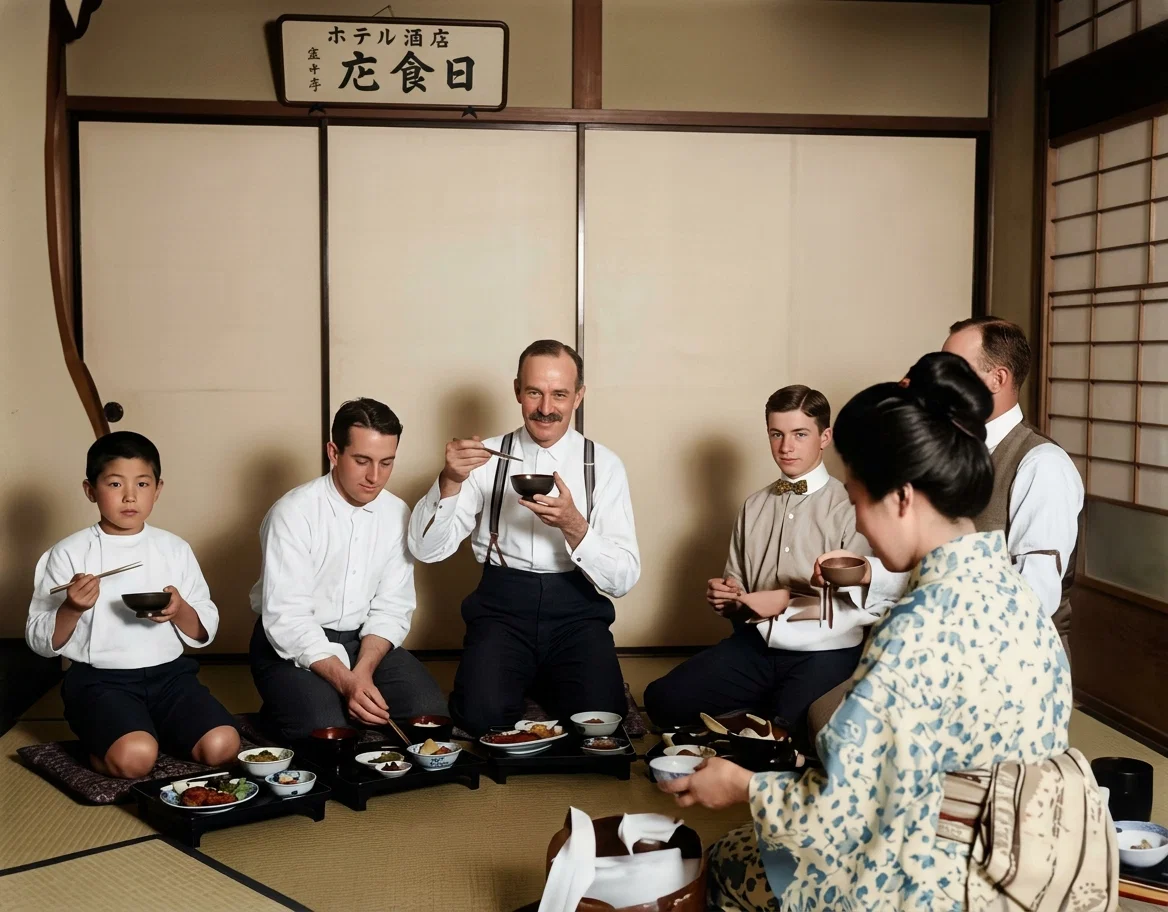
W. D. BURDEN AND FAMILY (JAPAN) TAKING DINNER AT A HOTEL
In the autumn of 1908 we opened our first real training-school for workers, in Tokyo. When the course closed in February, this year (1909), nine or ten new workers went out to devote their time to the spread of the message. In November, 1909, the school for workers was resumed, with about twenty students aiming at a quick preparation for the field. We have few facilities for making a school; but with the blessing of the Lord and the earnest spirit among students and teachers, we expect success.
EVANGELISTIC AND MEDICAL EFFORT
The baptisms for the year numbered forty-nine. Early in the year a new company was brought out at a place not far north of Tokyo. Later others were added, and finally eleven were baptized and organized into a church. During the summer a course of tent-meetings was held at Wakamatsu, and a most encouraging interest was awakened in this city of about forty thousand inhabitants. As a result thus far, eight have been baptized, and twenty more are especially interested. A number have also been added to the churches in Tokyo and Kobe.
In our medical missionary work we have apparently taken a backward step, but not truly so. Our Kobe foreign sanitarium was closed the latter part of February. This was in harmony with the plans for establishing a permanent institution in connection with the center of the work at Tokyo. We have not been able to go ahead very far with these plans for lack of means. But in the meantime the sanitarium workers are enjoying the much-needed opportunity of studying the language. The Eisei-in, our Japanese sanitarium at Kobe, under Dr. Noma, has enjoyed a very prosperous year in every way.
YOUNG PEOPLE’S SOCIETIES
Active young people’s societies at Kobe and Tokyo were reported for the first time in 1909, organized after the return of Elders Field and H. Kuniya from the Washington General Conference. A somewhat novel campaign is reported by the Tokyo society:—
It is a campaign to induce people to leave off the harmful tobacco habit.25
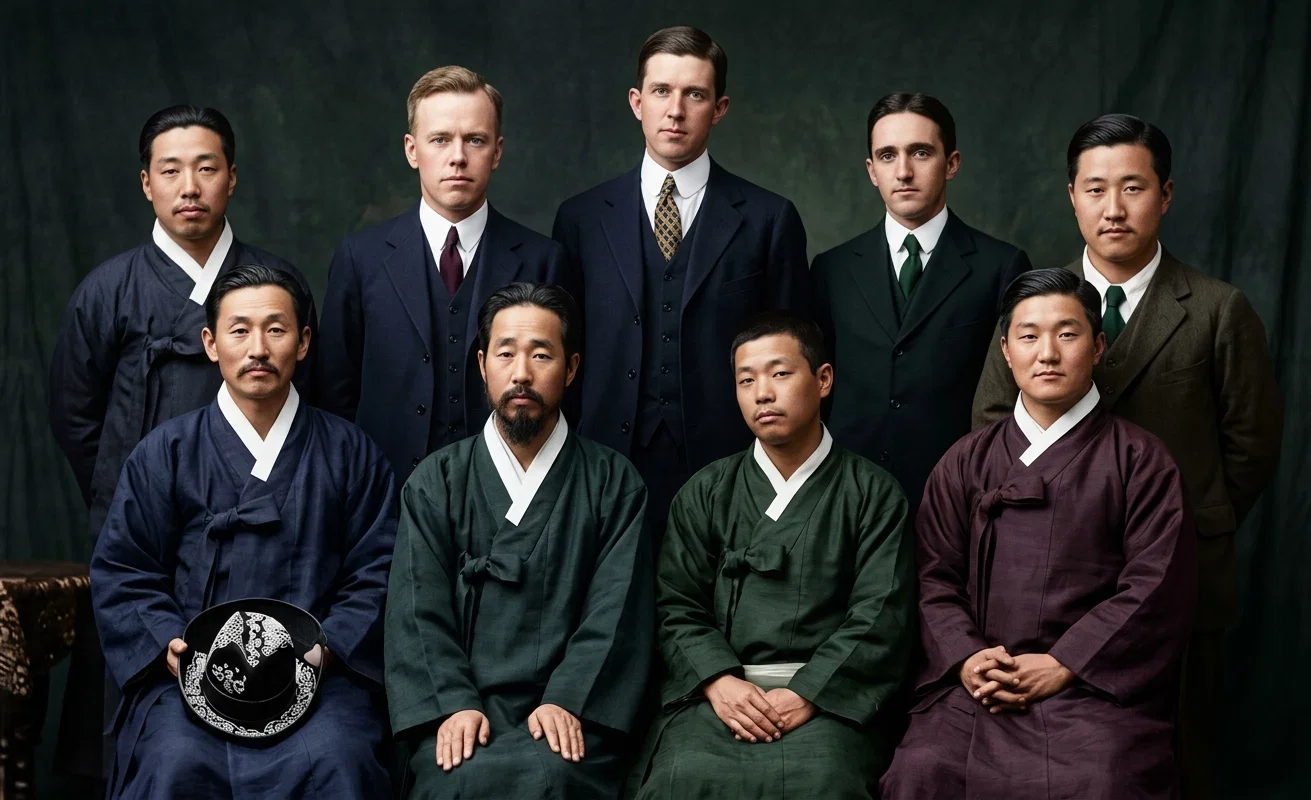
A KOREAN WORKERS GROUP
Back row from left: Kong Ku Myong, C. L. Butterfield (superintendent), H. A. Oberg, R. C. Wangerin, Kim Ku Hyok. Front row: Kim Won, Kim Hyo Sep, Kim Na Chun, Ne Keun Ok.
Passing a house one day, Brother Kuniya saw a man smoking his pipe—a very common sight in Japan. Approaching, he accosted the man about as follows: “If you saw a neighbor’s house on fire, you would raise an alarm, wouldn’t you?” “Certainly I would,” the man replied. Then pleasantly referring to the smoke he saw issuing from the man’s lips, Brother Kuniya said he had stopped to give him warning. Then followed a talk on the evil effects of tobacco, with the result that the man was persuaded to stop the practise; and as a pledge of his sincerity he was asked to surrender his pipe, which he did. This experience encouraged others to undertake the same kind of work. At this writing the society’s collection consists of twelve pipes, six pouches, one tin box containing tobacco, and two packages of cigarettes.
PRINTING THE MESSAGE
A year ago we published a special number of our missionary paper, the Owari No Fukuin (Gospel for the Last Days), and about five thousand copies were used. We expect this year to use twice as many. We have not developed much new literature this year, as the workers in our little printing-office have been kept busy supplying the literature already produced. However, some new work has been begun. Our canvassers are gaining a valuable experience, and we believe that this branch of our work can soon be made self-supporting.
Korea, the “Land of the Morning Calm”
THIS is the first year of the organized Korean Mission, the work having previously been under the oversight of the Japan Mission. Elder C. L. Butterfield, the superintendent, says:—
In February, 1909, an institute was held for our native workers. During the institute the leading worker stirred up a revolution that for a time seemed to threaten the existence of our church in Korea. After much prayer and study, he was dismissed from the work. The other workers took their stand for the organization, and our people all lined up with us.
Two further workers’ meetings, of three days each, were held later in the season, and these were times of great blessing from God. Unity was brought in as never before. In September the26mission headquarters was moved from Soonan to Seoul, the capital, a city of two hundred thousand inhabitants, where suitable property was rented.
BLESSINGS OF MEDICAL WORK
Dr. Riley Russell and wife have had their hands full of work at the little Soonan dispensary. As soon as he arrived, the doctor was so beset by those needing help that it was with great difficulty that the necessary time for sleep and language study could be secured. He says:—
During the past year we have had 5,712 patients, and many interesting experiences. One man carried his mother to us on his back to have her treated. A woman brought her child (eight years old) on her back 200 li (70 miles). But as yet we have no place to treat such patients or give them lodging. We do what we can, and God has blessed our feeble efforts to a remarkable degree. A short time ago a man came for me to go to his home 40 li (15 miles) distant to see a sick person. I was away, and he waited two days for me. I rode a little Korean pony, and when about half way there, the pony plunged into a mud-hole, and the mud came almost over the saddle, leaving me stranded. We pulled the pony out, and at last I reached the place and saw my patient. A large company of the most influential people of the village gathered about, and I lost no time in distributing tracts and talking to them about the true God. Truly the medical work may be the means of reaching hearts, and our earnest desire is that we may never miss an opportunity to point souls to Christ.
Of other developments in this newly organized mission, Elder Butterfield says:—
SCHOOL WORK
A boys’ school was conducted at Soonan, Dr. Russell having oversight, while two Korean brethren acted as teachers. The attendance has reached thirty. Many more students wished to come, but we could not give them work. This must be made a good industrial school, for there are many bright young men who would come if they only had some means of paying their way. A dormitory was built, mostly by student labor, which accommodates twenty students. We have about twenty acres of land in connection with this school, and hope to get five acres more. The students are willing and anxious to work, although it is against custom for a student to work in this country.
Photo by H. A. Oberg
A girls’ school has been conducted at Chinnampo. Miss Scharffenberg went from Seoul to assist in the opening, and reported seventeen students the first week, with a very earnest Christian spirit. Besides these two schools for advanced students, we have eight church-schools, with an enrolment of 110.
BEGINNING A PRINTING PLANT
In the spring we received a small printing-press from the Japan Mission. It was with some misgivings that we entered upon this work, as we had had very little experience in it. But God has wonderfully blessed our efforts, and we have been able to print the following: 8,000 copies of “The Way of Salvation;” 5,000 each of the “Sinner’s Need of Christ” and “Jesus Is Soon Coming;” a 1,000 edition each of “Bell’s Bible Lessons,” Nos. 1 and 2; 13 studies from “Helps to Bible Study;” and “Sabbath-school Lessons on 1 John.” Besides these, Sabbath-school and church record books and a week-of-prayer reading have been printed.
INTO NEW REGIONS
One man who had but recently commenced to keep the Sabbath moved to another part. He took a supply of tracts, and not long after wrote that as the result of reading these tracts about twenty were keeping the Sabbath, and that they wanted some one to come and27teach them. Another man has taken hold of the truth who, fifteen years ago, bought a Bible, and having read it through, saw the Sabbath; but because the other denominations did not keep the Sabbath, he would not be a Christian. When he met one of our workers, however, he became a Christian, and is a firm believer in the message.
On the return of Elder W. R. Smith and wife from America, in October, 1909, they moved from Soonan to Won-san on the east coast, to begin a new work. As no suitable house could be obtained, they bought a piece of land, and built a wood-shed in which to camp while putting up a house. The winter came on, however, stopping building operations, and they have had to winter in the shed. “We can keep fairly comfortable,” he wrote, “by keeping a roaring fire.”
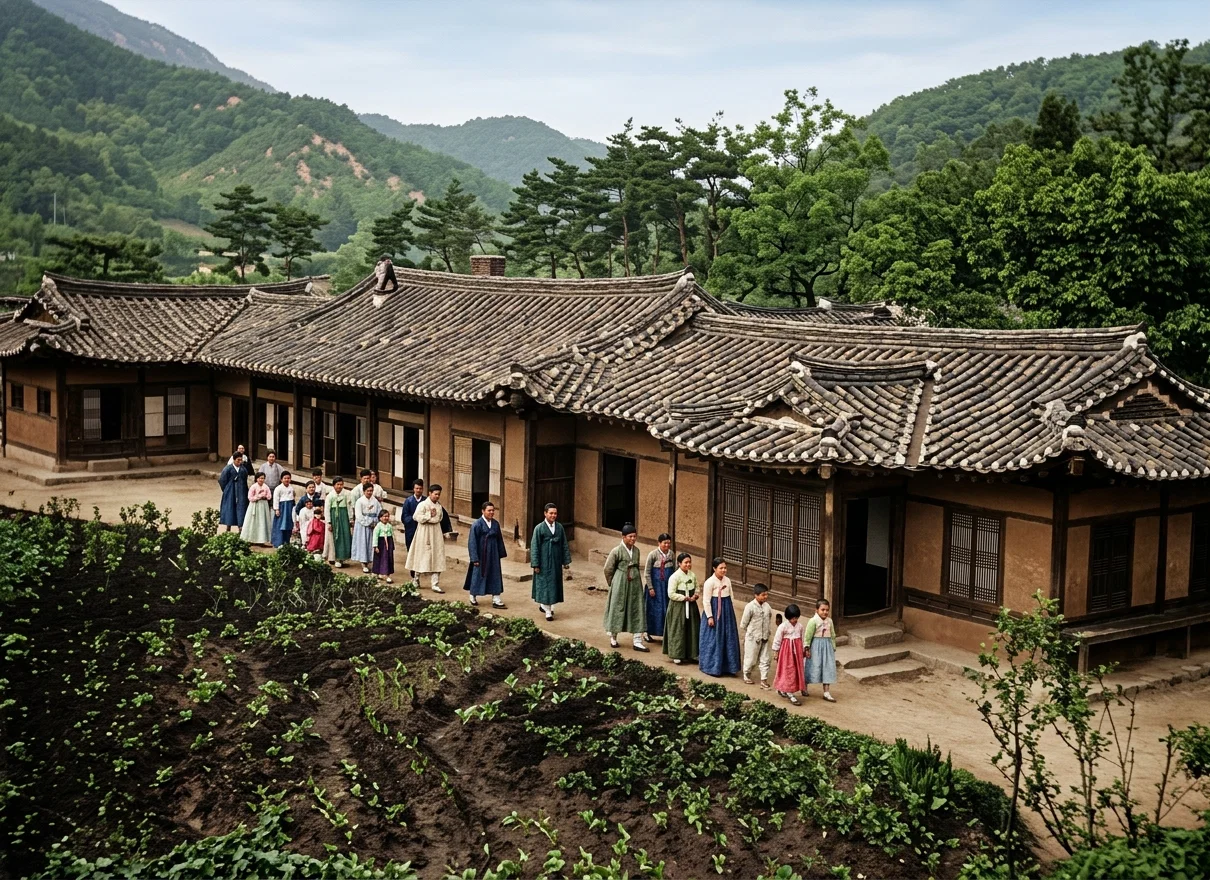
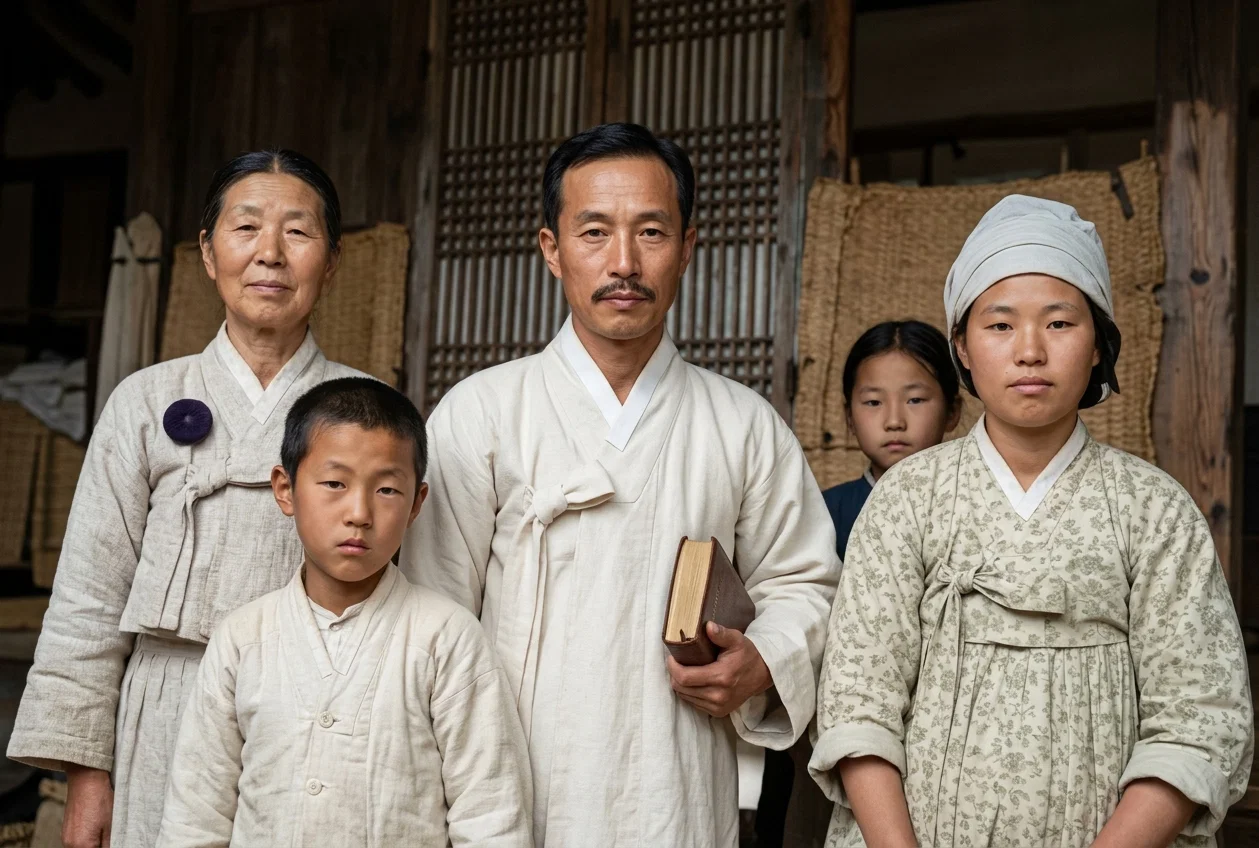
EVANGELIST LE PONG SEUNG AND FAMILY, KOREA
THE YEAR’S SUMMARY
During the year two new stations have been opened; three new workers have arrived in the field; four native workers have been added; about one hundred persons have begun the observance of the Sabbath; nineteen have been baptized; $629.98 has been received in tithes and offerings; over 60,000 pages of literature have been given away; about fifty dollars’ worth of literature has been sold; 5,172 patients have received treatment; and our schools have increased in number and size. Calls come to us like this: “Come at once and teach us the way of truth. If you do not come, souls will be lost.” To many of these we can only say: “Study your Bibles and pray much. We will send you help as soon as possible, but there is no one who can go now.”