1 Chronicles 13:10
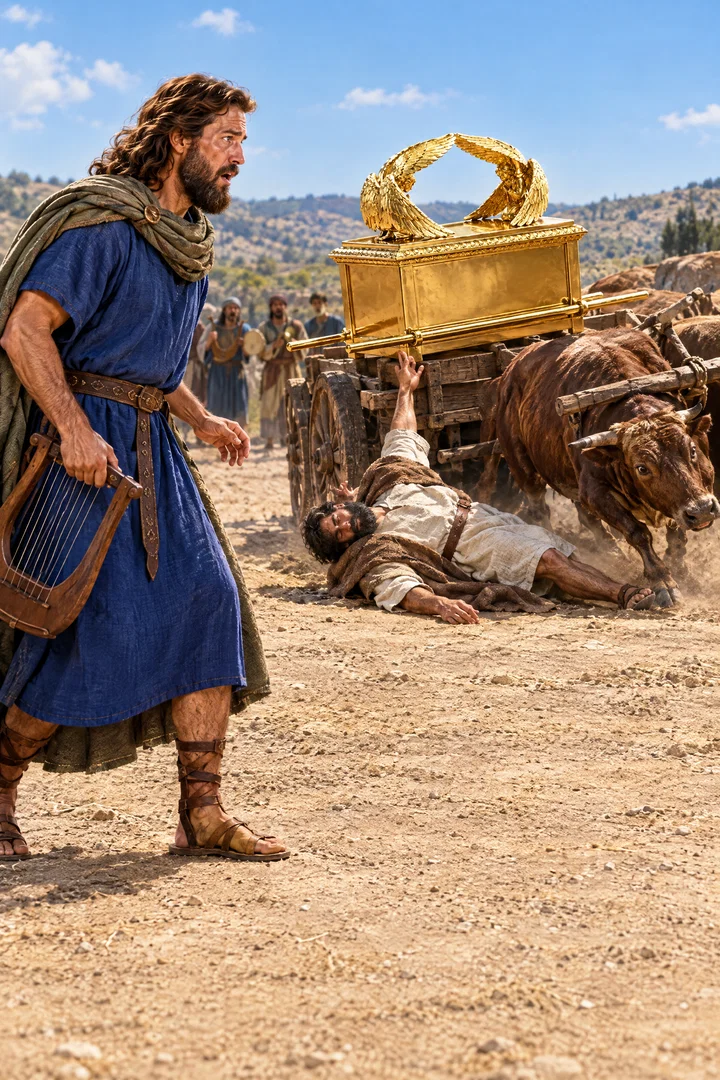
And the anger of the LORD was kindled against Uzza, and he smote him, because he put his hand to the ark: and there he died before God.
Translations
American King James Version, King James Version, Webster Bible
And the anger of the LORD was kindled against Uzza, and he smote him, because he put his hand to the ark: and there he died before God.
And the anger of the Lord was kindled against Uzza, and he smote him, because he put his hand to the ark: and there he died before God.
And the anger of the LORD was kindled against Uzza, and he smote him, because he put forth his hand to the ark: and there he died before God.
And the anger of Jehovah was kindled against Uzza, and he smote him, because he put forth his hand to the ark; and there he died before God.
and the anger of Jehovah is kindled against Uzza, and He smiteth him, because that he hath put forth his hand on the ark, and he dieth there before God.
And the anger of Jehovah was kindled against Uzza, and he smote him, because he had put forth his hand to the ark; and there he died before God.
Then was kindled the anger of Yahweh against Uzza, and he smote him, because he thrust forth his hand unto the ark,—and he died there, before God.
Berean Standard Bible, Majority Standard Bible
And the anger of the LORD burned against Uzzah, and He struck him down because he had put his hand on the ark. So he died there before God.
The LORD’s anger burned against Uzza, and he struck him because he put his hand on the ark; and he died there before God.
And the wrath of the Lord, burning against Uzza, sent destruction on him because he had put his hand on the ark, and death came to him there before God.
But the wrath of the Lord was kindled against Vzza, and he smote him, because he layed his hande vpon the Arke: so he dyed there before God.
Douay-Rheims (Challoner revision)
And the Lord was angry with Oza, and struck him, because he had touched the ark; and he died there before the Lord.
Pictures
Cross-references
- 2 Samuel 6:6-7
And when they came to Nachon’s threshingfloor, Uzzah put forth his hand to the ark of God, and took hold of it; for the oxen shook it.
Uzzah touches the ark and is struck dead.
- Numbers 4:15
And when Aaron and his sons have made an end of covering the sanctuary, and all the vessels of the sanctuary, as the camp is to set forward; after that, the sons of Kohath shall come to bear it: but they shall not touch any holy thing, lest they die. These things are the burden of the sons of Kohath in the tabernacle of the congregation.
God forbids touching the ark and warns that violators will die.
- 1 Chronicles 15:13
For because ye did it not at the first, the LORD our God made a breach upon us, for that we sought him not after the due order.
David explains that the breach came from failing to seek God according to the proper order.
- Numbers 7:9
But unto the sons of Kohath he gave none: because the service of the sanctuary belonging unto them was that they should bear upon their shoulders.
The Kohathites were instructed to carry the sacred objects on their shoulders.
- Exodus 25:14-15
And thou shalt put the staves into the rings by the sides of the ark, that the ark may be borne with them.
God specifies that the ark is to be carried by its staves.
- 1 Chronicles 15:15
And the children of the Levites bare the ark of God upon their shoulders with the staves thereon, as Moses commanded according to the word of the LORD.
The Levites carry the ark as Moses commanded, unlike Uzza’s fatal handling.
- 1 Samuel 6:7-12
Now therefore make a new cart, and take two milch kine, on which there hath come no yoke, and tie the kine to the cart, and bring their calves home from them:
The Philistines return the ark on a new cart, a precedent David followed.
- 2 Samuel 6:3
And they set the ark of God upon a new cart, and brought it out of the house of Abinadab that was in Gibeah: and Uzzah and Ahio, the sons of Abinadab, drave the new cart.
The ark is placed on a cart and brought out.
- Numbers 4:20
But they shall not go in to see when the holy things are covered, lest they die.
Both warn that approaching the holy objects brings death.
- 1 Chronicles 15:2
Then David said, None ought to carry the ark of God but the Levites: for them hath the LORD chosen to carry the ark of God, and to minister unto him for ever.
David says the Levites alone should carry the ark.
- Numbers 4:5-6
And when the camp setteth forward, Aaron shall come, and his sons, and they shall take down the covering vail, and cover the ark of testimony with it:
Gives directions for covering the ark before it is moved.
- 2 Samuel 6:2
And David arose, and went with all the people that were with him from Baale of Judah, to bring up from thence the ark of God, whose name is called by the name of the LORD of hosts that dwelleth between the cherubims.
Describes David’s effort to bring the ark from Kirjath-jearim.
- 1 Samuel 6:19-20
And he smote the men of Beth-shemesh, because they had looked into the ark of the LORD, even he smote of the people fifty thousand and threescore and ten men: and the people lamented, because the LORD had smitten many of the people with a great slaughter.
Both passages show people punished for treating the ark improperly.
- Numbers 3:31
And their charge shall be the ark, and the table, and the candlestick, and the altars, and the vessels of the sanctuary wherewith they minister, and the hanging, and all the service thereof.
Assigns the Kohathites to carry the ark and other sacred objects.
- 1 Chronicles 15:26
And it came to pass, when God helped the Levites that bare the ark of the covenant of the LORD, that they offered seven bullocks and seven rams.
God helps the Levites as they carry the ark correctly.
- Deuteronomy 10:1-5
At that time the LORD said unto me, Hew thee two tables of stone like unto the first, and come up unto me into the mount, and make thee an ark of wood.
The ark contained the law.
- Leviticus 10:1-3
And Nadab and Abihu, the sons of Aaron, took either of them his censer, and put fire therein, and put incense thereon, and offered strange fire before the LORD, which he commanded them not.
Both accounts show the judgment that follows disregarding God’s commands.
- Psalms 24:7-10
Lift up your heads, O ye gates; and be ye lift up, ye everlasting doors; and the King of glory shall come in.
The song celebrates the King of glory entering as the ark arrives in Jerusalem.
Commentary
Each commentary is drawn from primary sources: the writings of Ellen G. White and Adventist pioneers and periodicals. Each commentary is separate. Its own words are not a quotation; follow the references to read the source passages.
Ellen G. White
1 source
Uzza was struck dead for laying his hand upon the ark while it was being carried up to Jerusalem.8T 283.3–4 The ark was the symbol of God's presence among His people.8T 283.3–4 To lay a hand upon it was a presumptuous act in violation of what God had declared sacred.8T 283.3–4
Sources
Pioneers and periodicals
19 sources
The anger of the Lord struck Uzza dead for putting his hand to the ark when the oxen stumbled on the rough road removing it from the house of Abinadab toward Jerusalem, which halted the removal so the ark was taken to the house of Obed-edom where it remained three months.RH Mar 3, 1910RH Jan 6, 1853ST Mar 31, 1898 God had commanded that the ark containing his holy law be carried on the shoulders of the Kohathite Levites by its staves, and that no one touch a holy object lest they die.ST Mar 21, 1906RH Sep 5, 1871ST Jun 22, 1882 Israel had copied the Philistines in putting the ark on a cart, which did not authorize them when Levites were available to carry it, and had the command been obeyed Uzza would not have needed to reach for it.RH Nov 3, 1904RH Sep 7, 1869ST Jun 22, 1882 His death punished disobedience that began earlier in substituting a human invention for God's command, and good purpose, sincere motives, widespread agreement, and energetic celebration did not excuse it, for God is particular and requires his instructions to be followed exactly.RH Aug 10, 1916ST Jun 18, 1896ST Mar 21, 1906RH Sep 7, 1869ST Mar 19, 1885 God made an example of Uzza in mercy to prevent others from changing the prescribed order and to teach holiness and reverence, and David afterward recognized the due order, repented, and had the sanctified priests and Levites carry it on their shoulders so it was brought safely with rejoicing.RH Nov 3, 1904ST Jun 18, 1896RH Sep 7, 1869ST Mar 31, 1898ST Aug 28, 1898
Ark Carried Contrary to Order
The verse belongs to the removal of the ark from the house of Abinadab toward Jerusalem, when the oxen stumbled and jolted it on the rough road and Uzza reached out to steady it and was struck dead.RH Mar 3, 1910ST Mar 31, 1898ST Mar 19, 1885 That death halted the removal, and the ark was then taken to the house of Obed-edom where it remained three months.RH Mar 3, 1910RH Jan 6, 1853 The ark contained God's holy law, and touching it was forbidden.ST Mar 31, 1898ST Aug 28, 1898
God had commanded that the ark be carried on the shoulders of the Kohathite Levites and chosen men by its staves.RH Sep 5, 1871ST Jun 22, 1882ST Mar 31, 1898 No one was to touch a holy object lest they die, and only certain priests were permitted to touch it.ST Mar 21, 1906ST Mar 31, 1898 Uzza died before God for touching the ark contrary to that command, and the seeming smallness of the act did not make the command less binding.ST Mar 21, 1906RH Sep 5, 1871
Israel had put the ark on a cart, copying the Philistines' method, instead of carrying it by its staves as God had commanded.RH Nov 3, 1904RH Sep 7, 1869ST Jun 22, 1882 The Philistines' earlier use of a cart did not authorize Israel once Levites were available to carry it, for their ignorance was excused while Israel knew God's instructions and was responsible to seek them.RH Nov 3, 1904RH Sep 7, 1869ST Jun 22, 1882 Had that command been obeyed, Uzza would not have needed to reach for the ark when it shook.RH Sep 5, 1871ST Jun 22, 1882
David afterward recognized that the ark had not been moved according to due order and repented.RH Nov 3, 1904ST Jun 18, 1896 He called for the people to sanctify themselves and for the priests and Levites to carry it on their shoulders.RH Nov 3, 1904RH Jun 5, 1900RH Sep 7, 1869 When the prescribed order was then obeyed, God helped them and the ark was brought safely with solemnity and rejoicing.ST Jun 18, 1896RH Sep 7, 1869
Exact Obedience God Requires
Uzza's death was punishment not for a momentary lapse but for disobedience to God's directions about the ark.RH Sep 7, 1869 The sin began earlier when Israel substituted a new cart, a human invention, for God's command about carrying it, and touching it with unconsecrated hands was the next step in that transgression.ST Jul 2, 1896 Though he seemed to have a good reason when the oxen jolted it, putting his hand to the holy object disobeyed God's laws concerning it despite the warning that touching it meant death.RH Sep 7, 1869ST Mar 19, 1885 The act is described in the marginal reading as rashness.ST Mar 19, 1885
A good purpose did not excuse the disobedience, and God required His instructions for moving the ark to be followed exactly.ST Jun 18, 1896 Sincere motives, widespread agreement, and energetic celebration did not make the breach acceptable, for the decision to carry the ark as the Philistines had done disregarded earlier directions given through Moses that the Levites were to carry it on their shoulders, not on a cart.RH Aug 10, 1916ST Jun 18, 1896 Human reason and consensus cannot replace prophetic instruction, which remains binding even after the prophet has died.RH Aug 10, 1916 Good intentions did not make touching the ark acceptable when the first disobedience had already put it at risk of shaking, and the stated penalty for violating the command was carried out.RH Sep 5, 1871 Even an intent to keep it from falling did not excuse disobedience, and for that Uzzah forfeited his life.RH Sep 16, 1915 Human inventions and traditions must not replace God's commands.ST Jul 2, 1896
Ignorance does not excuse transgression, and people remain accountable for violating God's command.ST God is particular about obedience to His word, and a seemingly small act did not make the command that no one touch a holy object lest they die less binding.ST Mar 21, 1906 Service to God that is incomplete or not carried out as He requires is unacceptable, as shown in the failed attempt to bring the ark without following the appointed order and the later call for the people to sanctify themselves before moving it.RH Jun 5, 1900
God made an example of Uzzah to prevent others from changing the prescribed order, and this was an act of mercy showing that He means what He commands.RH Sep 7, 1869 The ark held God's holy law, and the people had been plainly instructed that only certain priests could touch it and that it must be carried on the shoulders of chosen men by its staves, so their choice to transport it on a cart disregarded those instructions and Uzzah's attempt to steady it when it shook on the rough road did not excuse touching it.ST Mar 31, 1898 The verse illustrates the seriousness of treating what is holy without reverence and the requirement of obedience and reverence toward what is holy.ST Aug 28, 1898ST Mar 19, 1885 In this God gave a solemn lesson about holiness when Uzza died while the ark was being brought toward Jerusalem.ST Apr 19, 1910
Doctrinal Warning and Application
Breaking a command that rests only on the will of God is still sinful disobedience, as shown when Uzza died before God for laying his hand on the ark though the prohibition had no other basis than divine appointment.RH Feb 4, 1873 Such disobedience requires expiation or atonement in order to be forgiven, and obedience to commands of this positive kind that grow out of redemption is duty and a measure of righteousness.RH Feb 4, 1873 Therefore the fact that Sabbath keeping was treated as duty and righteousness and had atonement made over it does not prove that the Sabbath belongs to moral or primary law.RH Feb 4, 1873
The ark contained God's law, and Uzza's death after reaching out to steady it teaches that human force and human law must not be used to prop up or enforce God's authority and worship.ST Mar 29, 1899 God's law is not weak and does not need human laws to support it, for it stands by its own divine strength.ST Mar 29, 1899 Oppressive laws can drive people away from God, whereas love is the appointed means to win them to Him.ST Mar 29, 1899
Sources