1 Chronicles 13:9
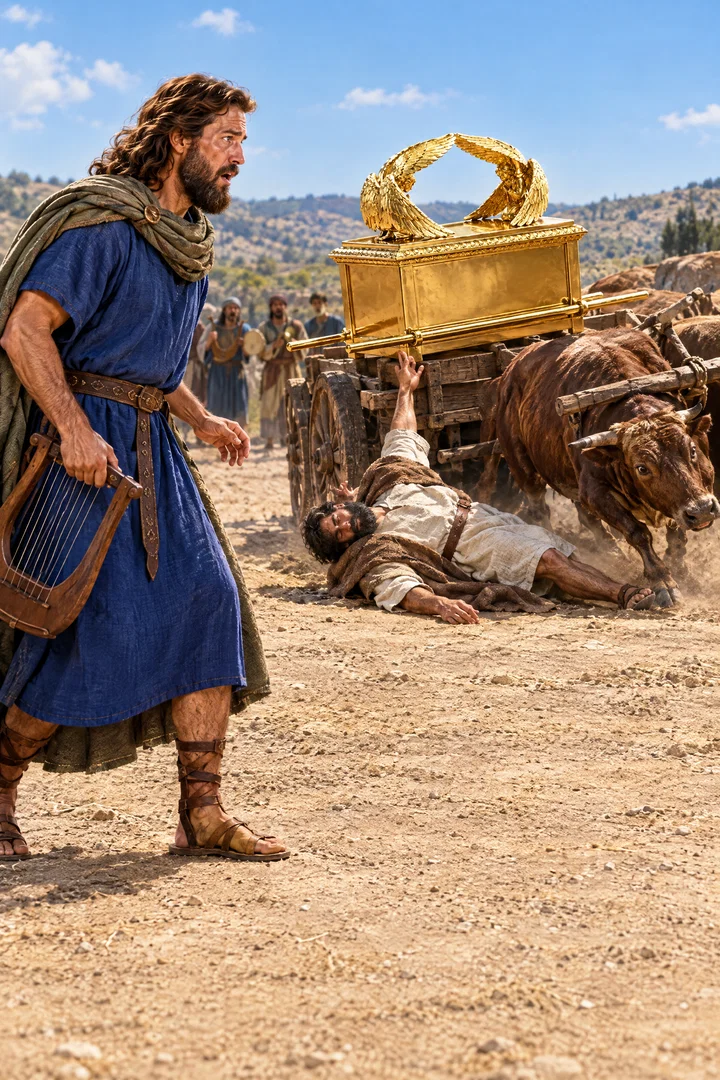
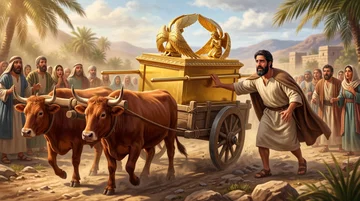
And when they came unto the threshingfloor of Chidon, Uzza put forth his hand to hold the ark; for the oxen stumbled.
Translations
And when they came to the threshing floor of Chidon, Uzza put forth his hand to hold the ark; for the oxen stumbled.
King James Version, KJV Cambridge Paragraph Bible
And when they came unto the threshingfloor of Chidon, Uzza put forth his hand to hold the ark; for the oxen stumbled.
And when they came to the threshing-floor of Chidon, Uzza put forth his hand to hold the ark; for the oxen stumbled.
Revised Version, American Standard Version
And when they came unto the threshing-floor of Chidon, Uzza put forth his hand to hold the ark; for the oxen stumbled.
And they come in unto the threshing-floor of Chidon, and Uzza putteth forth his hand to seize the ark, for the oxen were released,
And when they came to the threshing-floor of Chidon, Uzza put forth his hand to hold the ark; for the oxen had stumbled.
And, when they came as far as the threshing-floor of Chidon, Uzza thrust forth his hand, to seize the ark, for the oxen were restive.
Berean Standard Bible, Majority Standard Bible
When they came to the threshing floor of Chidon, Uzzah reached out and took hold of the ark, because the oxen had stumbled.
When they came to Chidon’s threshing floor, Uzza put out his hand to hold the ark, for the oxen stumbled.
And when they came to the grain-floor of Chidon, Uzza put out his hand to keep the ark in its place, for the oxen were slipping.
And when they came vnto the thresshing floore of Chidon, Vzza put forth his hand to holde the Arke, for the oxen did shake it.
Douay-Rheims (Challoner revision)
And when they came to the floor of Chidon, Oza put forth his hand, to hold up the ark: for the ox being wanton had made it lean a little on one side.
Pictures
Cross-references
- 2 Samuel 6:6-7
And when they came to Nachon’s threshingfloor, Uzzah put forth his hand to the ark of God, and took hold of it; for the oxen shook it.
Uzzah reaches for the ark as the oxen shake it and is struck down.
- Numbers 4:15
And when Aaron and his sons have made an end of covering the sanctuary, and all the vessels of the sanctuary, as the camp is to set forward; after that, the sons of Kohath shall come to bear it: but they shall not touch any holy thing, lest they die. These things are the burden of the sons of Kohath in the tabernacle of the congregation.
The ark was not to be touched, explaining the seriousness of Uzzah’s act.
- 1 Chronicles 15:13-15
For because ye did it not at the first, the LORD our God made a breach upon us, for that we sought him not after the due order.
David says the breach came from neglecting due order, then has the Levites carry the ark as commanded.
- Numbers 7:9
But unto the sons of Kohath he gave none: because the service of the sanctuary belonging unto them was that they should bear upon their shoulders.
The Kohathites were assigned to carry the sacred objects on their shoulders, not by cart.
- Exodus 25:14
And thou shalt put the staves into the rings by the sides of the ark, that the ark may be borne with them.
The ark was to be carried using its staves.
- 1 Chronicles 15:15
And the children of the Levites bare the ark of God upon their shoulders with the staves thereon, as Moses commanded according to the word of the LORD.
The Levites carry the ark on their shoulders as Moses commanded.
- 1 Samuel 6:7-12
Now therefore make a new cart, and take two milch kine, on which there hath come no yoke, and tie the kine to the cart, and bring their calves home from them:
The Philistines sent the ark on a cart, a precedent David later imitated.
- 2 Samuel 6:3
And they set the ark of God upon a new cart, and brought it out of the house of Abinadab that was in Gibeah: and Uzzah and Ahio, the sons of Abinadab, drave the new cart.
Both describe the ark being carried on a new cart.
- Numbers 4:5-6
And when the camp setteth forward, Aaron shall come, and his sons, and they shall take down the covering vail, and cover the ark of testimony with it:
Gives directions for covering the ark before it is moved.
- 1 Chronicles 15:2
Then David said, None ought to carry the ark of God but the Levites: for them hath the LORD chosen to carry the ark of God, and to minister unto him for ever.
David says only the Levites should carry the ark.
- Exodus 25:16
And thou shalt put into the ark the testimony which I shall give thee.
The ark held the testimony given by God.
- 1 Chronicles 13:5
So David gathered all Israel together, from Shihor of Egypt even unto the entering of Hemath, to bring the ark of God from Kirjath-jearim.
Israel gathers to bring the ark from Kirjath-jearim.
- 1 Chronicles 15:12
And said unto them, Ye are the chief of the fathers of the Levites: sanctify yourselves, both ye and your brethren, that ye may bring up the ark of the LORD God of Israel unto the place that I have prepared for it.
The Levites were told to sanctify themselves before carrying the ark.
- Numbers 4:20
But they shall not go in to see when the holy things are covered, lest they die.
Unauthorized approach to holy things brings death.
- Psalms 132:6-8
Lo, we heard of it at Ephratah: we found it in the fields of the wood.
David seeks a dwelling for the ark and brings it toward Jerusalem.
- 1 Samuel 6:19
And he smote the men of Beth-shemesh, because they had looked into the ark of the LORD, even he smote of the people fifty thousand and threescore and ten men: and the people lamented, because the LORD had smitten many of the people with a great slaughter.
Both texts recount divine judgment connected with irreverence toward the ark.
- Leviticus 10:1-3
And Nadab and Abihu, the sons of Aaron, took either of them his censer, and put fire therein, and put incense thereon, and offered strange fire before the LORD, which he commanded them not.
Disobedience in handling holy things brings judgment, underscoring God’s holiness.
- Psalms 24:7-10
Lift up your heads, O ye gates; and be ye lift up, ye everlasting doors; and the King of glory shall come in.
The passage identifies the song sung as the ark enters Jerusalem.
Commentary
Each commentary is drawn from primary sources: the writings of Ellen G. White and Adventist pioneers and periodicals. Each commentary is separate. Its own words are not a quotation; follow the references to read the source passages.
Ellen G. White
1 source
The procession reached the threshingfloor of Chidon when the oxen stumbled, and Uzzah put forth his hand to steady the ark.8T 283.3–4 That ark was the symbol of God's presence, so to lay hold of it presumptuously was a grave violation of what God had declared sacred.8T 283.3–4 For that act he was struck dead, as the next verse records.8T 283.3–4
Sources
Pioneers and periodicals
19 sources
On the way from the house of Abinadab toward Jerusalem, at Chidon's threshingfloor the oxen stumbled and Uzza put out his hand to hold and steady the ark.RH Sep 16, 1915RH Mar 3, 1910 The ark was being carried on a cart in imitation of the Philistines, contrary to God's order through Moses that the Kohathite Levites bear it on their shoulders with staves and not touch it.RH Nov 3, 1904RH Aug 10, 1916ST Jun 18, 1896 His touch was followed by his death, which stopped the removal, made David afraid to bring the ark home, and left it three months at Obed-edom until David later brought it to Jerusalem on the priests' shoulders according to due order.RH Nov 3, 1904ST May 12, 1909RH Jan 6, 1853 Good purpose, worship, and apparent good reason did not make the method right, for God requires His instructions to be followed exactly, and ignorance did not excuse Israel when His known order had been disregarded.RH Nov 3, 1904RH Aug 10, 1916ST Jun 18, 1896RH Sep 16, 1915ST Uzza's immediate death shows the seriousness of irreverence toward what is holy and that service offered without full obedience according to God's order is not accepted, while putting the ark on the cart put it in danger and prepared the way for the further disobedience of touching it.RH Sep 5, 1871RH Jun 5, 1900RH Sep 7, 1869ST Jun 22, 1882ST Mar 31, 1898
Journey and Interruption
At Chidon's threshing floor on the way toward Jerusalem, when the oxen stumbled Uzza put forth his hand to hold and steady the ark.RH Sep 16, 1915RH Mar 3, 1910 The stumbling put the ark's safety in immediate danger, and his reaching out was to steady it at that moment.RH Sep 16, 1915RH Mar 3, 1910
The ark was then being transported on a cart, in imitation of the Philistines' exceptional method.RH Nov 3, 1904RH Aug 10, 1916RH Sep 7, 1869 That was contrary to God's order given through Moses that the Kohathite Levites should bear it on their shoulders with staves or poles, and that it should not be touched except as permitted.RH Nov 3, 1904ST Jun 18, 1896RH Sep 5, 1871RH Sep 7, 1869ST Jun 22, 1882 The cart itself put the ark in danger and created the occasion for the further disobedience of touching it.RH Sep 5, 1871ST Jun 22, 1882
Uzza's touching was followed by his death, which interrupted the removal from the house of Abinadab toward Jerusalem.RH Nov 3, 1904RH Jan 6, 1853RH Jun 5, 1900 The interruption made David afraid to bring the ark home to himself, and led him to leave it for three months at Obed-edom before later bringing it to Jerusalem.RH Nov 3, 1904RH Jan 6, 1853 After repentance David brought it on the priests' shoulders, acknowledging and seeking the Lord according to due order.RH Nov 3, 1904 The bringing of the ark to Jerusalem belonged to the account connected with David's plans concerning the house of God.ST May 12, 1909
Reverence and Exact Obedience
The steadying hand at Chidon's threshing floor when the oxen stumbled did not make the method right, though the purpose in moving the ark was good and the act was joined with agreement and worship and seemed well-intentioned and respectful.RH Aug 10, 1916ST Jun 18, 1896RH Sep 16, 1915ST Mar 21, 1906ST Jun 22, 1882 Only priests were permitted to touch the sacred ark, which the Kohathite Levites were appointed to bear on their shoulders with staves or poles and not to touch except as permitted, so the cart transport contrary to the direction given through Moses was itself disobedience.ST Jun 18, 1896RH Sep 16, 1915RH Sep 5, 1871ST Jun 22, 1882 Good motive, good purpose, and apparent good reason do not excuse disobedience, for God requires His instructions to be followed exactly.ST Jun 18, 1896RH Sep 16, 1915ST Mar 21, 1906RH Sep 5, 1871ST Jun 22, 1882
Ignorance did not excuse the transgression, since Israel was responsible to follow God's known order for the ark.RH Nov 3, 1904ST The Philistines were excused because they did not know better, but Israel knew and therefore was held accountable when David followed their example of the cart.RH Nov 3, 1904 The cart put the ark in danger and created the occasion for further disobedience, so that one departure from revealed instruction prepared the way for another.RH Sep 5, 1871ST Jun 22, 1882 Replacing God's command for carrying the ark with the human invention of a new cart was the first transgression, and touching it with unconsecrated hands was the next step.ST Jun 22, 1882ST Jul 2, 1896 Prophetic instruction remains binding after the prophet's death, and human judgment is unsafe when it disregards that instruction.RH Aug 10, 1916
The immediate death for violating the law concerning the ark and touching a holy thing containing God's law shows the seriousness of disregarding God's clear commands and their stated penalties.RH Sep 7, 1869ST Mar 31, 1898ST Aug 28, 1898ST Mar 19, 1885 It shows the seriousness of irreverence and rashness toward what is holy and conveys a grave lesson about God's holiness.ST Mar 31, 1898ST Aug 28, 1898ST Mar 19, 1885ST Apr 19, 1910 The judgment preserved the proper order of worship and guarded others from the same disobedience, and it shows that service offered without full obedience according to God's order is not accepted.RH Jun 5, 1900RH Sep 7, 1869 Human inventions and traditions can set people on a path of disobedience and make void God's commandments.ST Jul 2, 1896 The reaching hand also teaches that human beings must not try to support or enforce God's law by human power, for God's law does not need human laws to uphold it.ST Mar 29, 1899
Sources