1 Kings 22:13
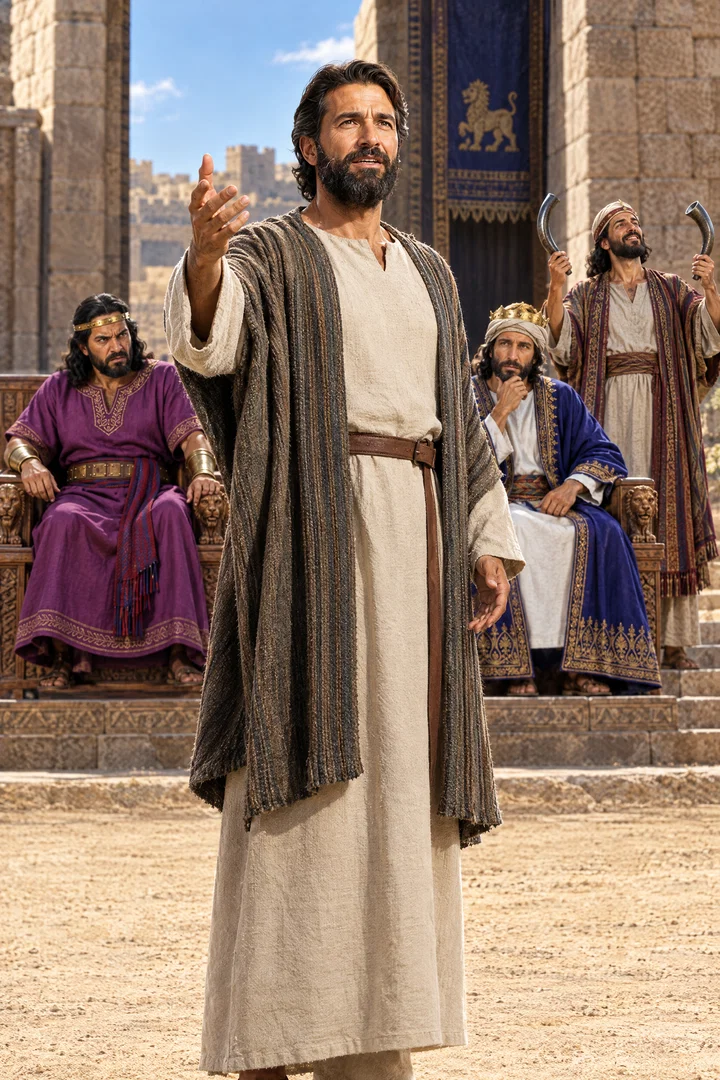
And the messenger that was gone to call Micaiah spake unto him, saying, Behold now, the words of the prophets declare good unto the king with one mouth: let thy word, I pray thee, be like the word of one of them, and speak that which is good.
Translations
And the messenger that was gone to call Micaiah spoke to him, saying, Behold now, the words of the prophets declare good to the king with one mouth: let your word, I pray you, be like the word of one of them, and speak that which is good.
King James Version, KJV Cambridge Paragraph Bible
And the messenger that was gone to call Micaiah spake unto him, saying, Behold now, the words of the prophets declare good unto the king with one mouth: let thy word, I pray thee, be like the word of one of them, and speak that which is good.
And the messenger that went to call Micaiah, spoke to him, saying, Behold now, the words of the prophets declare good to the king with one mouth: let thy word, I pray thee, be like the word of one of them, and speak that which is good.
Revised Version, American Standard Version
And the messenger that went to call Micaiah spake unto him, saying, Behold now, the words of the prophets declare good unto the king with one mouth: let thy word, I pray thee, be like the word of one of them, and speak thou good.
And the messenger who hath gone to call Micaiah hath spoken unto him, saying, 'Lo, I pray thee, the words of the prophets, with one mouth, [are] good towards the king; let it be, I pray thee, thy word as the word of one of them — and thou hast spoken good.'
And the messenger that went to call Micah spoke to him saying, Behold now, the words of the prophets [ declare] good to the king with one assent: let thy word, I pray thee, be like the word of one of them, and speak good.
Now, the messenger who went to call Micaiah, spake unto him, saying, Behold, I pray thee, the words of the prophets, with one mouth, are good, as touching the king, let thy word, I pray thee, be as the word of one of them, so wilt thou speak that which is good.
Berean Standard Bible, Majority Standard Bible
Then the messenger who had gone to call Micaiah instructed him, “ Behold now, with one accord the words of the prophets are favorable to the king. So please let your words be like theirs, and speak favorably.”
The messenger who went to call Micaiah spoke to him, saying, “ See now, the prophets declare good to the king with one mouth. Please let your word be like the word of one of them, and speak good.”
Now the servant who had gone to get Micaiah said to him, See now, all the prophets with one voice are saying good things to the king; so let your words be like theirs and say good things.
And the messenger that was gone to call Michaiah spake vnto him, saying, Beholde now, the wordes of the prophets declare good vnto the King with one accorde: let thy word therefore, I pray thee, be like the worde of one of them, and speake thou good.
Douay-Rheims (Challoner revision)
And the messenger, that went to call Micheas, spoke to him, saying: Behold the words of the prophets with one month declare good things to the king: let thy word therefore be like to theirs, and speak that which is good.
Pictures
Cross-references
- 1 Kings 22:8
And the king of Israel said unto Jehoshaphat, There is yet one man, Micaiah the son of Imlah, by whom we may enquire of the LORD: but I hate him; for he doth not prophesy good concerning me, but evil. And Jehoshaphat said, Let not the king say so.
Ahab hates Micaiah for prophesying evil about him.
- 1 Kings 22:27
And say, Thus saith the king, Put this fellow in the prison, and feed him with bread of affliction and with water of affliction, until I come in peace.
Ahab imprisons Micaiah for refusing to echo the flattering prophets.
- 1 Kings 22:17
And he said, I saw all Israel scattered upon the hills, as sheep that have not a shepherd: and the LORD said, These have no master: let them return every man to his house in peace.
Micaiah’s vision warns that Israel will be scattered after the battle.
- 2 Chronicles 18:12-13
And the messenger that went to call Micaiah spake to him, saying, Behold, the words of the prophets declare good to the king with one assent; let thy word therefore, I pray thee, be like one of theirs, and speak thou good.
The messenger urges agreeable words, but Micaiah resolves to speak what God says.
- Ezekiel 13:22
Because with lies ye have made the heart of the righteous sad, whom I have not made sad; and strengthened the hands of the wicked, that he should not return from his wicked way, by promising him life:
Lying promises of life strengthen the wicked instead of turning them back.
- 1 Kings 22:6
Then the king of Israel gathered the prophets together, about four hundred men, and said unto them, Shall I go against Ramoth-gilead to battle, or shall I forbear? And they said, Go up; for the Lord shall deliver it into the hand of the king.
The gathered prophets all predict victory.
- 1 Kings 22:34-38
And a certain man drew a bow at a venture, and smote the king of Israel between the joints of the harness: wherefore he said unto the driver of his chariot, Turn thine hand, and carry me out of the host; for I am wounded.
Ahab dies in battle, fulfilling Micaiah’s warning.
- Jeremiah 6:14
They have healed also the hurt of the daughter of my people slightly, saying, Peace, peace; when there is no peace.
False prophets promise peace when judgment is near.
- Psalms 12:2
They speak vanity every one with his neighbour: with flattering lips and with a double heart do they speak.
The psalm condemns flattering speech and contrasts it with faithful truth-telling.
Commentary
Each commentary is drawn from primary sources: the writings of Ellen G. White and Adventist pioneers and periodicals. Each commentary is separate. Its own words are not a quotation; follow the references to read the source passages.
Ellen G. White
2 sources
The king's prophets spoke with one mouth, all declaring favorably toward the king and promising Ahab success.RH Dec 25, 1913Lt 19, 1875, par. 9–10 The messenger sent to call Micaiah pressed him to agree with those prophets and to speak what is good like the word of one of them.RH Dec 25, 1913Lt 19, 1875, par. 9–10 Ahab stood opposed to Micaiah because Micaiah prophesied evil against him rather than good.Lt 19, 1875, par. 9–10
Micaiah refused to join the favorable chorus and instead warned that Israel would be scattered.RH Dec 25, 1913 The unanimous message of success did not change the truth of what God had revealed.RH Dec 25, 1913 The battle that followed ended in Ahab's death, fulfilling Micaiah's warning.RH Dec 25, 1913
Sources
Pioneers and periodicals
17 sources
The messenger was pressing Micaiah to join the other prophets in speaking with one mouth a favorable promise of success that would please the king rather than telling the truth.RH Jun 26, 1855PGGC 82.1–83.1RH Jul 28, 1868 Micaiah would not shape his answer to win favor but faithfully declared what the Lord had shown and given him.RH Jun 26, 1855RH Sep 9, 1862 The unanimous, persuasive assurance of victory was flattering and falsely certain, and the battle proved Micaiah alone right when Ahab fell and Israel was scattered.RH Dec 25, 1913PGGC 82.1–83.1RH Jul 28, 1868ST Nov 22, 1899 For that faithfulness he was hated as one who always foretold what the king called evil, and was made to suffer imprisonment and hardship.RH Jun 26, 1855RH Sep 9, 1862RH Sep 5, 1865 Ahab was exceedingly wicked, yet God faithfully warned him and gave him time to reform before suffering him to follow his own way and giving him over to a lying spirit to go up and fall at Ramoth-gilead, showing divine justice and long-suffering toward the disobedient and impenitent.RH Jan 8, 1861
Words and Historical Setting
The messenger sent to fetch Micaiah pressed him to make his word match the unanimous favorable words of the other prophets, to promise the king success in battle and to speak what was good in the sense of what the king wanted to hear rather than the truth.RH Jun 26, 1855PGGC 82.1–83.1RH Jul 28, 1868ST Mar 24, 1881RH Jul 13, 1911 Those prophets spoke with one mouth a flattering assurance of certain victory, and their agreement and persuasiveness did not prove them right.PGGC 82.1–83.1RH Jul 28, 1868ST Dec 16, 1889 The pressure came from the danger of opposing so many at once, since standing apart might cost favor or provoke the king, yet faithfulness required declaring what the Lord had shown rather than echoing pleasing words whether true or not.RH Jun 26, 1855RH Jul 28, 1868ST Dec 16, 1889 Prophets drawn into worldly political counsel, especially about war, gave unreliable advice because their judgment was warped and the Lord did not prompt their words, while their reassuring good stood in contrast to God's warnings of coming judgment.PGGC 82.1–83.1RH Jul 13, 1911ST Dec 16, 1889 Micaiah would not tailor his answer to please the king but faithfully declared what he had been given, even though he was hated for it and put in prison.RH Jun 26, 1855PGGC 82.1–83.1RH Jul 28, 1868
His first apparently favorable reply was derisive rather than a false promise of success, and the king himself recognized it as unfavorable.ST Mar 24, 1881 The verse belongs to the history of the two separate kingdoms of Judah and Israel for about eighty years, from the revolt of the ten tribes to the death of Jehoshaphat, covering the reigns of several kings of both Judah and Israel.RH May 25, 1916 The king pressed by the prophets was Ahab of Israel, contemporary of Jehoshaphat of Judah and of Elijah the Tishbite, the seventh king of Israel and second ruler of the third Israelitish dynasty, who reigned twenty-two years early in the ninth century before Christ.RH Nov 7, 1912 More is recorded of him than of any other ancient monarch, and all recorded of him as man and king was written for the learning and profit of men and kings of after generations, showing divine solicitude toward him.RH Nov 7, 1912 He enjoyed more than average opportunities as man and prince, ruling when Judah and Israel attained the acme of power and prosperity, and from a civil viewpoint he was a successful ruler, a clever statesman, a skilled general, and eminently patriotic toward his people and country, but he was a moral coward who signally failed where he should have been strongest.RH Nov 7, 1912 His subjects were devoted to a monotheistic religion and a semitheocratic civil regime, but he wickedly sold himself to the worship of a plurality of heathen deities and later enforced their worship upon his people.RH Nov 7, 1912
The occasion was Jehoshaphat's alliance with Ahab, an alliance that was a fearful mistake, undertaken after about twenty years of prosperous and pious reign following his father Asa.ST May 13, 1908ST Jul 13, 1904 Jehoshaphat allied with the wicked Ahab and Jezebel of Israel, sealing it by joining his son Jehoram in marriage to their daughter Athaliah, and went with Ahab to recapture Ramoth-gilead east of Jordan, long held by enemies and a standing menace to Israel and Judah.ST Jul 13, 1904 The campaign was Ahab's war with Syria in which he was killed three years after Benhadad's earlier campaigns against Israel.ST Sep 10, 1885 Micaiah foretold disaster to the expedition and warned that Israel would be scattered, but his counsel was not heeded.RH Dec 25, 1913ST Jul 13, 1904 The allies were defeated, Ahab was killed, and Jehoshaphat barely escaped with his life, and because the Syrians did not follow up their victory Jehoshaphat returned to Jerusalem in peace, so that the battle ended in Ahab's death and fulfilled the warning.RH Dec 25, 1913ST Jul 13, 1904
True and False Prophecy
The messenger pressed Micaiah to echo the favorable message the other prophets were already giving the king with one mouth.PGGC 82.1–83.1RH Jul 28, 1868 That unanimous good news was flattery that told the king what he wanted to hear and falsely presented victory as certain.PGGC 82.1–83.1RH Jul 28, 1868 Their agreement seemed persuasive, and standing against it risked losing favor and provoking the king, yet their unanimity did not prove them right.PGGC 82.1–83.1RH Jul 28, 1868 Micaiah's refusal to join them stands as a noble example of declaring God's counsel despite pressure from the majority.RH Jul 28, 1868
Prophets drawn into worldly political counsel, especially about war, could give unreliable advice because their judgment was warped and the Lord did not prompt their words.RH Jul 13, 1911 Micaiah's contrary counsel exposed that danger when the many promised the king success in battle.RH Jul 13, 1911 Urged to agree with them and speak favorably to the king, he would not tailor his answer to please the king.RH Jun 26, 1855RH Sep 9, 1862 He faithfully declared only what the Lord had shown him and given him to deliver.RH Jun 26, 1855RH Sep 9, 1862
The reassuring good spoken with one voice to please the king contrasts with God's warnings of coming judgment.ST Dec 16, 1889 The favorable promise of success did not change the truth, for Micaiah warned that Israel would be scattered.RH Dec 25, 1913 His counsel was rejected because it contradicted the popular message.ST Nov 22, 1899 The outcome proved him alone right and the others wrong, when the battle ended in Ahab's death and so fulfilled the warning.RH Dec 25, 1913ST Nov 22, 1899
For that faithfulness Micaiah was hated because he consistently prophesied what the king called evil.RH Jun 26, 1855RH Sep 5, 1865 His fidelity to God brought imprisonment and hardship.RH Jun 26, 1855RH Sep 9, 1862 Truthful prophecy may be unpopular, and those who speak it may be condemned as troublemakers.RH Sep 5, 1865
Divine Justice and Faithfulness
The lying spirit that persuaded Ahab to go up to Ramoth-gilead that he might fall in battle does not show that God is unjust.RH Jan 8, 1861 Ahab was a very wicked king who caused Israel to depart from the Lord and did evil above all before him.RH Jan 8, 1861 God faithfully warned him by His servants and gave him time to reform, but he continued doing what displeased the Lord.RH Jan 8, 1861 Finally God suffered him to follow his own way, gave him over to the control of a lying spirit, and decided that he should fall in battle at Ramoth-gilead.RH Jan 8, 1861 God has a right to punish the disobedient and impenitent, and the case of Ahab is a striking illustration of God's justice and long-suffering.RH Jan 8, 1861
The messenger urged Micaiah to agree with the other prophets and tell the king what he wanted to hear, because their unanimous assurances seemed persuasive and opposing them might cost favor or provoke the king.RH Jul 28, 1868 Their agreement did not prove they were right, and Micaiah's response is a noble example of faithfulness in declaring God's counsel despite pressure from the majority.RH Jul 28, 1868 Truthful prophecy may be unpopular, for Micaiah instead became hated because he consistently prophesied what the king considered evil, and those who speak it may be condemned as troublemakers.RH Sep 5, 1865 Like Micaiah, a true friend speaks truth even when it displeases the hearer, rather than echoing favorable words whether true or not.RH Aug 4, 1868
The verse belongs to the campaign in which Jehoshaphat, after about twenty years of prosperous and pious reign following his father Asa, allied with the wicked Ahab and Jezebel of Israel, joining his son Jehoram in marriage to their daughter Athaliah, and went with Ahab to recapture Ramoth-gilead east of Jordan, long held by enemies and a standing menace to Israel and Judah.ST Jul 13, 1904 The Lord's prophet Micaiah foretold disaster to the expedition, but his counsel was not heeded, the allies were defeated, Ahab was killed, and Jehoshaphat barely escaped with his life, and because the Syrians did not follow up their victory Jehoshaphat returned to Jerusalem in peace.ST Jul 13, 1904 Judah was safe as long as she obeyed God and trusted His defense, and no political reason justifies alliance with the world or compromise with error, which can only result in evil.ST Jul 13, 1904
Sources