1 Samuel 24:19
For if a man find his enemy, will he let him go well away? wherefore the LORD reward thee good for that thou hast done unto me this day.
Translations
For if a man find his enemy, will he let him go well away? why the LORD reward you good for that you have done to me this day.
King James Version, Revised Version
For if a man find his enemy, will he let him go well away? wherefore the LORD reward thee good for that thou hast done unto me this day.
For if a man find his enemy, will he let him go well away? wherefore the Lord reward thee good for that thou hast done unto me this day.
For if a man findeth his enemy, will he let him go away well? wherefore the LORD reward thee with good, for what thou hast done to me this day.
For if a man find his enemy, will he let him go well away? wherefore Jehovah reward thee good for that which thou hast done unto me this day.
and that a man doth find his enemy, and hath sent him away in a good manner; and Jehovah doth repay thee good for that which thou didst to me this day.
For if a man find his enemy, will he let him go well away? wherefore Jehovah reward thee good for that thou hast done to me this day.
Yet, when a man findeth his enemy, will he let him get easily away? Yahweh, then, give thee, good, reward for what, this day, thou hast done unto me.
Berean Standard Bible, Majority Standard Bible
When a man finds his enemy, does he let him go away unharmed? May the LORD reward you with good for what you have done for me this day.
For if a man finds his enemy, will he let him go away unharmed? Therefore may the LORD reward you good for that which you have done to me today.
If a man comes across his hater, will he let him get away safe? so may you be rewarded by the Lord for what you have done for me today.
And thou hast shewed this day, that thou hast dealt well with me: forasmuch as when the Lord had closed me in thine hands, thou killedst me not.
Douay-Rheims (Challoner revision)
For who when he hath found his enemy, will let him go well away? But the Lord reward thee for this good turn, for what thou hast done to me this day.
Pictures
Cross-references
- 1 Samuel 24:11
Moreover, my father, see, yea, see the skirt of thy robe in my hand: for in that I cut off the skirt of thy robe, and killed thee not, know thou and see that there is neither evil nor transgression in mine hand, and I have not sinned against thee; yet thou huntest my soul to take it.
David’s restraint toward Saul prompts Saul to acknowledge his mercy.
- 1 Samuel 24:6
And he said unto his men, The LORD forbid that I should do this thing unto my master, the LORD’s anointed, to stretch forth mine hand against him, seeing he is the anointed of the LORD.
David refuses to harm the Lord's anointed
- Romans 12:19
Dearly beloved, avenge not yourselves, but rather give place unto wrath: for it is written, Vengeance is mine; I will repay, saith the Lord.
David left judgment to the Lord instead of killing Saul
- Romans 12:20-21
Therefore if thine enemy hunger, feed him; if he thirst, give him drink: for in so doing thou shalt heap coals of fire on his head.
David returning good for evil illustrates the principle
- 1 Samuel 26:21
Then said Saul, I have sinned: return, my son David: for I will no more do thee harm, because my soul was precious in thine eyes this day: behold, I have played the fool, and have erred exceedingly.
second sparing moving Saul to confess
- 2 Samuel 16:9-12
Then said Abishai the son of Zeruiah unto the king, Why should this dead dog curse my lord the king? let me go over, I pray thee, and take off his head.
David refuses retaliation and hopes the LORD will repay cursing with good.
- Matthew 5:44
But I say unto you, Love your enemies, bless them that curse you, do good to them that hate you, and pray for them which despitefully use you, and persecute you;
David sparing Saul illustrates loving enemies
- 1 Samuel 24:14
After whom is the king of Israel come out? after whom dost thou pursue? after a dead dog, after a flea.
shares flea image for Saul hunting David
Commentary
Each commentary is drawn from primary sources: the writings of Ellen G. White and Adventist pioneers and periodicals. Each commentary is separate. Its own words are not a quotation; follow the references to read the source passages.
Ellen G. White
3 sources
The encounter recorded in 1 Samuel 24:1-22 sets a shepherd lad holding God's promise of the throne against an established monarch bent on holding fast his power.ED 254.2–3 David stood utterly helpless in himself, yet by trusting God's word he withstood the power of the whole world.ED 254.2–3 His course witnesses to the power of God's word prevailing over all human power and policy enlisted in support of evil.ED 254.2–3
Saul's own question admits the facts, that he was David's enemy, that David found him with the opportunity to kill him, and that David let him go unharmed.PP 660.1PP 662.1–2 No one who finds his enemy would ordinarily let him go safely away.PP 660.1PP 662.1–2 Saul therefore confessed that David had repaid his evil with good that day.PP 660.1PP 662.1–2 For that goodness he asked the Lord to reward David with good.PP 660.1PP 662.1–2
Sources
Pioneers and periodicals
14 sources
Saul lay asleep and wholly in David's power in the cave at En-gedi while hunting him with three thousand chosen men, and though urged to kill him David cut off only the skirt of his coat, so that Saul admitted no man ordinarily lets a found enemy go safely away and asked the Lord to reward David good for that day.RH Mar 23, 1916ST Apr 11, 1911ST Jul 24, 1884ST Jun 15, 1904RH Dec 6, 1906 His words confess that David had rewarded him good whereas he had rewarded David evil, that David was more righteous and bore him no malice, and that David was wholly innocent and would surely be king with the kingdom established in his hand.ST Sep 20, 1883RH May 3, 1870ST Jul 24, 1884 David's restraint proved he had neither evil nor transgression in his hand and had not sinned against Saul, but remained loyal and honoring to the king as the Lord's anointed even while Saul sought his life.ST Sep 20, 1883ST Apr 9, 1912ST Jun 15, 1904 It displays his mercy, magnanimity and noble character in returning good for evil and saving the life of his bitterest enemy.RH Mar 23, 1916RH Sep 26, 1871ST Apr 11, 1911 It teaches refusal to retaliate against a personal persecutor or take vengeance, but to leave judgment and reward to God, for patient endurance and overcoming evil with good and a pacific soft answer turn away wrath.ST Feb 17, 1904ST Apr 9, 1912ST Apr 7, 1909ST Jul 24, 1884ST Jun 15, 1904
The Cave Encounter
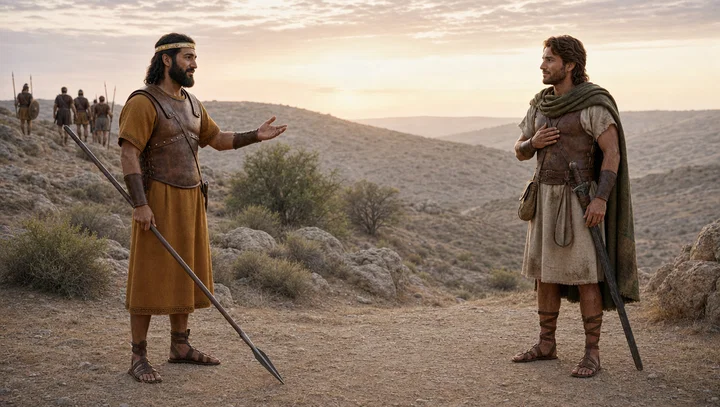
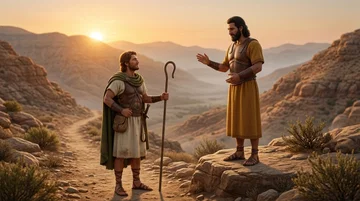
David found Saul asleep and wholly in his power in a cave among the rocks of En-gedi, where David had fled for his life into the fastnesses of the mountains while Saul was seeking his life with three thousand chosen men.ST Jul 24, 1884ST Jun 15, 1904RH Dec 6, 1906 Though urged by his men to kill his cruel enemy and seeing a promise that Saul was delivered into his hands, David would not lay hands on the Lord's anointed.ST Jul 24, 1884ST Jun 15, 1904 He cut off only the skirt of Saul's coat, a fold from his mantle, and even for that his tender conscience smote him.ST Jul 24, 1884ST Jun 15, 1904
Saul's words admit that no man ordinarily lets his found enemy go safely away, recognize David's sparing of him as exceptional, and ask the Lord to reward David good for the good deed done that day.RH Mar 23, 1916ST Apr 11, 1911ST Feb 17, 1904ST Jul 24, 1884 His confession declares that David rewarded him good whereas he had rewarded David evil, that David was more righteous and superior in righteousness and bore him no malice.RH May 3, 1870ST Jul 24, 1884ST Jun 15, 1904 It was made with weeping and heartfelt conviction that David was wholly innocent of wrong and had never done injustice, and that David would surely be king with the kingdom of Israel established in his hand.ST Sep 20, 1883RH May 3, 1870ST Jul 24, 1884ST Jun 15, 1904
David's restraint proved he had neither evil nor transgression in his hand and had not sinned against Saul.ST Sep 20, 1883ST Jun 15, 1904 He remained loyal and honoring to the king in word and act and motive, committing his cause into God's hands and never lifting his hand against him though Saul sought to slay him.ST Sep 20, 1883ST Apr 9, 1912 He guarded Saul as the Lord's anointed even though the anointing oil was on his own head.ST Jun 15, 1904ST Apr 22, 1903
The encounter belongs to years when Saul, an apostate king still holding the throne, learned David of another family and tribe was likely his successor and pursued him far and near year after year to take his life, hunting him like a flea or a partridge and like a wild beast.ST Jun 15, 1904ST Apr 22, 1903 David spared him not only once here but twice, yet very soon Saul was again hunting him with three thousand men.RH May 3, 1870RH Sep 26, 1871 After Saul threw away his life in battle with the Philistines David was soon anointed and crowned king over a part of Israel at Hebron.ST Apr 22, 1903
Character and Lessons
The verse displays mercy, magnanimity and noble character in returning good for evil by sparing an enemy when there was opportunity to harm him, and Saul recognized the treatment as exceptional and asked the Lord to reward the good deed done that day.RH Mar 23, 1916ST Apr 11, 1911 It proves the disposition was not cruel, for David saved the life of his bitterest enemy, and did so not only once here but twice, with a practical Christian conduct so powerful that it moved even Saul's heart to confess that he had sinned, would do no more harm, had played the fool and had erred exceedingly.RH Sep 26, 1871 In refusing to harm his persecutor even when Saul was wholly in his power, David remained brave, determined, cool, tender and kind.RH Dec 6, 1906 His wise restraint in sparing his enemy instead of harming him was true wisdom.RH Dec 4, 1913
The verse also shows a noble, generous trait and right feeling in Saul amid a career stained with envy, jealousy and crime, for which reason his history calls for pity more than hatred.ST Feb 19, 1885 In blessing David and desiring that the Lord reward him good for sparing him, Saul showed generosity that, if cultivated while evil traits were eradicated, might have won him the favor of God and man.ST Feb 19, 1885 Instead he persisted in self-will, lack of faith, self-love, envy, jealousy and cruelty, forgetting God and neglecting his people to sustain his own dignity and vanity until ruin overtook him.ST Feb 19, 1885 His confession that David had rewarded him good while his own course toward David was evil came from clear evidence of David's innocence and upright intent, felt as more than a formal acknowledgment, moving him to tears and to declare with heartfelt conviction that David would surely be king and the kingdom of Israel would be established in his hand.RH May 3, 1870 That confession proves the blinding power of envy, because even such evidence and sincere feeling did not cure him, and in a very short time he was again hunting David with three thousand chosen men.RH May 3, 1870
The verse teaches refusal to retaliate against a personal persecutor and refusal to take vengeance, leaving judgment and reward to God.ST Feb 17, 1904ST Apr 7, 1909 It shows David sparing Saul though Saul sought to slay him, never lifting his hand against him but remaining loyal and committing his cause into God's hands.ST Apr 9, 1912 It is safe to commit one's cause into God's hands.ST Apr 9, 1912
The verse means that patient endurance under persecution and overcoming evil with good turns away wrath.ST Jul 24, 1884 David had his cruel enemy completely in his power and was urged by his men and by the promise to kill him, but he would not lay hands on the Lord's anointed and cut off only the skirt of his coat, and even for that his tender conscience smote him.ST Jul 24, 1884 That act convinced Saul that David bore him no malice, and Saul acknowledged that David was superior to him in righteousness because David had returned good for evil and let him go safely away, praying that the Lord would reward David good for sparing him.ST Jul 24, 1884ST Jun 15, 1904 Among the rocks of En-gedi, where David was fleeing for his life from Saul and his army of three thousand chosen men, David guarded Saul as the anointed of the Lord even though the anointing oil was on his own head and even while hunted like a wild beast.ST Jun 15, 1904 Finding Saul asleep in a cave, he cut off only a fold from his mantle instead of taking vengeance when others bade him kill, then calling after Saul held up the skirt of the robe as proof that there was neither evil nor transgression in his hand and that he had not sinned against him.ST Jun 15, 1904 That pacific argument, that soft answer, made Saul lift up his voice and weep and declare that David was more righteous than he, because David had rewarded him good whereas he had rewarded David evil, and the same power of a soft answer holds as good today as in the days of David and Saul.ST Jun 15, 1904
David's holding steadily to his purpose through disheartening experiences with Saul displays the sterling qualities of heart that led God, who looks on the heart, to choose him as king.RH Dec 6, 1906 Those qualities stood him in good stead for forty years in bringing a disorganized confederation of tribes into a strong, united kingdom.RH Dec 6, 1906 His life is thus a lesson in forming a worthy purpose and clinging to it with unfaltering grip as a missionary must hold his mission.RH Dec 6, 1906 That wise restraint stands on the same level as Noah at the flood, Abraham in Canaan, Moses in Egypt, John the Baptist at the annunciation, Paul before the Roman tribunal, and Elijah in opposing Jezebel.RH Dec 4, 1913
Sources