1 Timothy 2:5
For there is one God, and one mediator between God and men, the man Christ Jesus;
Translations
American King James Version, King James Version, KJV Cambridge Paragraph Bible, Webster Bible
For there is one God, and one mediator between God and men, the man Christ Jesus;
Revised Version, American Standard Version
For there is one God, one mediator also between God and men, himself man, Christ Jesus,
for one [is] God, one also [is] mediator of God and of men, the man Christ Jesus,
For God is one, and [ the] mediator of God and men one, [ the] man Christ Jesus,
For there is, one, God, one, mediator also, between God and men,—a man—Christ Jesus:
Berean Standard Bible, Majority Standard Bible
For there is one God, and there is one mediator between God and men, the man Christ Jesus,
For there is one God and one mediator between God and men, the man Christ Jesus,
For there is one God and one peacemaker between God and men, the man Christ Jesus,
For there is one God, and one Mediatour betweene God and man, which is the man Christ Iesus,
Douay-Rheims (Challoner revision)
For there is one God, and one mediator of God and men, the man Christ Jesus:
Pictures
Cross-references 20 of 147
- Hebrews 7:25
Wherefore he is able also to save them to the uttermost that come unto God by him, seeing he ever liveth to make intercession for them.
Christ mediates for those who come to God through him.
- 1 John 2:1
My little children, these things write I unto you, that ye sin not. And if any man sin, we have an advocate with the Father, Jesus Christ the righteous:
Christ is the righteous advocate with the Father.
- Hebrews 9:15
And for this cause he is the mediator of the new testament, that by means of death, for the redemption of the transgressions that were under the first testament, they which are called might receive the promise of eternal inheritance.
Christ mediates the new covenant through his death, redeeming transgressions.
- Hebrews 8:1-2
Now of the things which we have spoken this is the sum: We have such an high priest, who is set on the right hand of the throne of the Majesty in the heavens;
Christ ministers as High Priest and mediator in the heavenly sanctuary.
- Hebrews 4:15
For we have not an high priest which can not be touched with the feeling of our infirmities; but was in all points tempted like as we are, yet without sin.
Christ shares human weakness and temptation, yet remains sinless.
- Hebrews 2:17
Wherefore in all things it behoved him to be made like unto his brethren, that he might be a merciful and faithful high priest in things pertaining to God, to make reconciliation for the sins of the people.
Christ became like his human brothers to reconcile them to God.
- Hebrews 9:24
For Christ is not entered into the holy places made with hands, which are the figures of the true; but into heaven itself, now to appear in the presence of God for us:
Christ appears in heaven before God on humanity’s behalf.
- John 1:14
And the Word was made flesh, and dwelt among us, ( and we beheld his glory, the glory as of the only begotten of the Father,) full of grace and truth.
The Word became flesh, joining divinity and humanity in Christ the mediator.
- John 14:6
Jesus saith unto him, I am the way, the truth, and the life: no man cometh unto the Father, but by me.
Jesus is the only way to the Father.
- Acts 4:12
Neither is there salvation in any other: for there is none other name under heaven given among men, whereby we must be saved.
Both affirm that salvation is found in Christ alone.
- John 3:16
For God so loved the world, that he gave his only begotten Son, that whosoever believeth in him should not perish, but have everlasting life.
God gives his Son so believers may have everlasting life.
- 2 Corinthians 5:19
To wit, that God was in Christ, reconciling the world unto himself, not imputing their trespasses unto them; and hath committed unto us the word of reconciliation.
God reconciles the world to himself in Christ.
- Romans 3:25-26
Whom God hath set forth to be a propitiation through faith in his blood, to declare his righteousness for the remission of sins that are past, through the forbearance of God;
Christ’s blood atones for sin, enabling God to justify believers while remaining just.
- John 1:1-3
In the beginning was the Word, and the Word was with God, and the Word was God.
The Word is God and creator, balancing Christ’s divinity with his humanity.
- Romans 8:34
Who is he that condemneth? It is Christ that died, yea rather, that is risen again, who is even at the right hand of God, who also maketh intercession for us.
The risen Christ intercedes for humanity at God’s right hand.
- Galatians 4:4
But when the fulness of the time was come, God sent forth his Son, made of a woman, made under the law,
Christ, God’s Son, was born of a woman and made under the law.
- Hebrews 8:6
But now hath he obtained a more excellent ministry, by how much also he is the mediator of a better covenant, which was established upon better promises.
Christ is the mediator of the better covenant.
- Philippians 2:6-7
Who, being in the form of God, thought it not robbery to be equal with God:
Christ, equal with God, took human form and humbled himself.
- Hebrews 10:10-14
By the which will we are sanctified through the offering of the body of Jesus Christ once for all.
Christ’s once-for-all offering accomplishes what repeated sacrifices could not.
- John 1:29
The next day John seeth Jesus coming unto him, and saith, Behold the Lamb of God, which taketh away the sin of the world.
Jesus is the Lamb whose sacrifice takes away the world’s sin.
Commentary part 1 of 3
Each commentary is drawn from primary sources: the writings of Ellen G. White and Adventist pioneers and periodicals. Each commentary is separate. Its own words are not a quotation; follow the references to read the source passages.
Ellen G. White
147 sources
There is one God and one go-between joining God and the human race, the man Christ Jesus, given in God's desire for all people to be saved and to know the truth.Ms 190, 1901, par. 2Ms 20, 1895, par. 5 He is able to stand between because he is both truly God and truly man, the divine Word who clothed his divinity with humanity and links the finite to the Infinite.RH Mar 2, 1916STB 15.38T 178.3RH Apr 5, 1906RH Apr 5, 1906 He alone is Mediator, Advocate and High Priest, so no pope, priest, saint, ceremony or good work can pardon sin or take his place, and every sinner may come directly to God through him.ST Jun 28, 1899ST Jun 7, 1883ST Jun 28, 1899GC 55.1–3ST Jun 28, 1899 On the cross he offered himself as the only atoning sacrifice and willing ransom for all, bearing the curse and death sentence to uphold the law while opening the way back to obedience and forgiveness for all who believe and obey.GC88 261.3ST Jun 28, 1899LC1 11.11SP 45.1ST Apr 8, 1875 Risen and ascended, he now ministers in heaven by his own blood, pleading his merits and presenting prayer to the Father, until his mediation ends and those who rejected salvation are left without an intercessor.8T 179.1STB 16.2EW 239.4AA 230.24SP 269.1
Words and Immediate Context
There is one God and one mediator between God and humanity, Christ Jesus.Ms 190, 1901, par. 2Ms 20, 1895, par. 5 This stands joined to God's desire for all people to be saved and to come to the knowledge of the truth.Ms 190, 1901, par. 2Ms 20, 1895, par. 5 Because of this, no human agent is to stand between a person and God, and each church member is to study the Scriptures for himself.Ms 190, 1901, par. 2
The word man marks Christ Jesus in true humanity as the one who stands between God and humanity.8T 267.4MH 420.5Ms 56, 1904, par. 6–8 As the Man, he will acknowledge before the Father his faithful workers who bore witness to him in a sinful world, and what is now known only in part and remains mysterious will then be understood clearly when the conflict is ended.8T 267.4MH 420.5 As the man he alone is judge, so people are not to measure one another's characters but to measure themselves by Scripture and answer to God.Ms 56, 1904, par. 6–8
The wider instruction of 1 Timothy 2:1-12 is apostolic direction to be read together with the charge to preach the Word with all long-suffering and doctrine.Ms 46, 1898, par. 22–25 It guides how believers are to labor together with God to convince and not to condemn.Ms 46, 1898, par. 22–25 That labor uplifts Christ with simplicity, patience, forbearance, and love, and his mediatorship concerns the relation between humanity and its Creator.Ms 46, 1898, par. 22–252SP 5.1–2
Divine Human Person
The Mediator is both divine and human. He is the divine Word present with God from the beginning and himself God, the promised child and ruler called the mighty God and Prince of Peace, the Lamb who takes away the world's sin, who became flesh and dwelt among humanity revealing glory, grace and truth.RH Mar 2, 1916 He truly took human nature in the profound mystery of condescension and love, born of Mary and descended from David, yet without canceling his divinity as the eternal Son one with the Father and mediator of the covenant from everlasting for people of every nation who accept him.RH Apr 5, 1906RH Apr 5, 1906 He clothed his divinity with humanity to stand as Mediator, remaining the Son of the Infinite God and the Son of God while becoming humanity's Elder Brother who receives instruction from the Father, a divine-human Saviour and Saviour.Ms 158, 1902, par. 262MR 316.2–317.1Ms 105, 1902, par. 28–29
By uniting divinity with humanity he makes mediation possible, joining the created to the Uncreated and the finite to the Infinite.STB 15.38T 178.3MYP 253.3–254.1 With his human arm he encircles the human race and the children of Adam in a firm embrace, and with his divine arm he grasps the throne of the Infinite and of Divinity, linking earth with heaven.ST Sep 14, 1882Ms 165, 1904, par. 20Lt 121, 1897, par. 3–4 As consecrated high priest he pours out his soul to the Father in petition broad as the earth and reaching to high heaven, and throwing oneself into his arms gives communion and light and the Holy Spirit needed to work with real power and blessing and grace rather than human strength.ST Sep 14, 1882Ms 165, 1904, par. 20 He associated himself with the human race and lived in moral power obedient to the law within the sphere of his humanity, encouraging members of the human family to obey the Word rather than seek to be raised above humanity.Lt 121, 1897, par. 3–4
His complete humanity and perfect divinity provide the ground of reconciliation, reaching from sinners to God and bringing redemption and forgiveness through his blood while he stands as Advocate bearing the marks of crucifixion.10MR 177.1Lt 35, 1894, par. 9–10 Only he could act, for no fallen human being could intercede or satisfy the claims of justice, and no sinless angel, being created and subject to law, could ransom humanity.Ms 125, 1901, par. 68–71ST Jan 29, 1880ST Sep 13, 1877 Sinless, undefiled, divine and equal with God and of sufficient worth, he alone could meet the law's demands, atone for sin and restore humanity, giving his life willingly though under no obligation and having power to take it up again.2SP 2.1–10.2ST Sep 13, 1877
He took human nature to reach humanity, to experience temptation so he can help those who are tempted, standing between wrath and guilty sinners as the only sufficient ransom.1SP 45.2–46.1 He understands human suffering and sympathizes with those who suffer, becoming human to sympathize and to unite divinity with humanity so victory over sin and hope of everlasting life are possible where no angel could do the work, opening communication with God and pardon upon confession.Lt 35, 1894, par. 9–10Ms 32, 1889, par. 6–9 He understands human needs because he was tempted in every way yet remained without sin, bore the guilt of the whole world with inexpressible anguish, gave Satan every opportunity to try all his arts upon him in humanity, and in the death struggle relied only upon his heavenly Father by faith.Ms 125, 1901, par. 68–71Lt 262, 1903, par. 6
Through taking humanity he makes it possible for human beings to partake of the divine nature, giving power to become sons of God to all who receive him, and those who come to him and receive his words eat his flesh and drink his blood in departing from iniquity as all-sufficient Lamb who takes away sin.Ms 158, 1902, par. 2614MR 196.1–2 God's purposes are carried out through the Son and given effect by the Holy Spirit.7MR 343.1 As Mediator he makes known to people what the Father reveals to him while possessing the attributes of God, and he is priest and king of his church and guides his people, to be depended on, trusted, and brought failings to for wise help and instruction.Ms 22, 1905, par. 1–314MR 196.1–2
As Mediator he lived in human nature with pure divine character, kept and honored the law in a world of transgression, and proved to unfallen worlds, to the heavenly universe, to Satan and to fallen humanity that people can keep the law through his grace, giving his own divine nature and image to every repentant believing soul.Ms 20, 1898, par. 7 By this mediation he restores the original mind lost in Eden through temptation, so obedience is realized to be for present and eternal good because disobedience is contrary to the nature given in Eden.Lt 121, 1897, par. 3–4 Through his mediatorial work he saves fallen people and opens their way back to allegiance while also preserving the purity and loyalty of beings in unfallen worlds.MYP 253.3–254.1 He represents the Father as the connecting link and great teacher of mankind, and in the plan of education after the fall men and women are ordained to represent him.ED 33.2ST Nov 2, 1915
He united divinity and humanity and came as Savior of every sinner who accepts his sacrifice, his humble life of rejection, persecution and shameful death being the sacrifice made on humanity's behalf.Ms 103, 1909, par. 5 By taking human nature and combining humanity with divinity he stood in Adam's place and could reach the human race while remaining joined to the Infinite.10MR 65.2–4
Fall and Reconciliation
Sin cut off direct communication between humanity and its Maker, leaving earth separated from heaven by a gulf across which there could be no communion.LC1 120.2–121.12RED 16.2–17.1SC 19.2–20.1 In the apostasy man alienated himself from God, and guilty sinners in their own merit and sinful condition cannot approach the Father in that state.RH May 31, 1870ST Sep 13, 1877SC 19.2–20.1 Without mediation they would be consumed, and the guilt-burdened sinner fears his sin has cut him off from God and left him forsaken of heaven.RH May 31, 1870SC 19.2–20.1 Yet the case is not hopeless when they sin, because Christ is the one mediator and great High Priest who pleads for people, and they present their case to the Father through him as Jesus Christ the righteous, their advocate.RH May 31, 18702T 591.1–2 Accepting him is not humiliation but the first step toward true exaltation and readiness for life with the angels in God's kingdom.2T 591.1–2
The Father entrusted the case of fallen humanity to the Son, who undertook redemption as mediator and acted in God's stead toward humanity after the fall.ST Apr 8, 1875ST Jan 22, 18809MR 237.1–2 Because he began that work, God restrained the full execution of the death sentence and delayed its infliction, restraining divine indignation and opening a door of hope and life amid death.LC1 120.2–121.12RED 16.2–17.1 Christ took upon himself the wrath that justice required for humanity's guilt, becoming its refuge in whom the guilty though deserving death can be safe by faith.LC1 120.2–121.12RED 16.2–17.1 Adam and Eve were thus given a period of probation in which they and their descendants could return to allegiance to God, with every provision made for another trial and with life and immortality purchased for all who return to loyalty in obedience and harmony with God.Lt 22, 1900, par. 79MR 237.1–2 In the fullness of time he was revealed in human form and became humanity's head by taking human nature without its sinfulness, after sin had entered through apostasy and man had brought death on himself by yielding to temptation.Lt 22, 1900, par. 79MR 237.1–2
Through him alone fallen people have access to God, and God communicates with them through him alone, also through him and angels.LC1 120.2–121.12RED 16.2–17.1PP 67.2 By faith the guilty find safety and refuge in him, the helpless soul depending on him alone.LC1 120.2–121.12RED 16.2–17.1 The separation caused by Adam's transgression is overcome, for his voluntary sacrifice reopened communication broken by that transgression between God and the sinner.1RED 10.2LC1 10.2 His atonement alone spans the separation and makes blessing and salvation from heaven possible.PP 67.2 The Jewish sacrifices, priesthood and symbols pointed to his death and mediatorial work and kept before the people the separation sin had caused, but they had no saving power or meaning apart from him and could not secure salvation by themselves.1RED 10.2LC1 10.2ST Sep 13, 1877
His mediatorial work redeems from the law's curse those who accept the offer of mercy in obedience, bearing their guilt and providing atonement.ST Apr 8, 1875ST Jan 22, 1880 As divine mediator and substitute he bore the curse that should fall on humanity, bringing people back to obedience and vindicating the binding claims, holiness and unchanging nature of the Father's law.ST Apr 8, 1875ST Jan 22, 1880ST Aug 7, 1879 Freely giving himself as the reality foreshadowed by every sacrificial offering, as a spotless living sacrifice he bore the world's sin and the law's curse.ST Dec 9, 1897 His separation from the Father, the punishment for transgression, upheld God's justice and showed that God's law cannot change, settling the controversy over its unchanging character.ST Dec 9, 1897
His mission on earth was not to set up a temporal kingdom emulating the pomp and display of the world.4RED 15.12SP 130.3–131.1 It was to establish the reign of peace and love.4RED 15.12SP 130.3–131.1 Through his mediatorial agency men are brought to the Father.4RED 15.12SP 130.3–131.1
Only Mediator Against Rivals
Jesus Christ himself is the one mediator between God and humanity, and he is also Advocate, High Priest, and Intercessor.ST Jun 28, 1899ST Jun 28, 1899ST Jun 28, 1899 No human virtue or intercession is needed for his work, and no dead prophet or buried saint stands between sinners and God.ST Jun 28, 1899ST Jun 28, 1899 As the Father's representative he represents the Father to the world and represents his chosen people before God, having represented humanity and lived as its substitute and surety by obeying where Adam failed.ST Jun 28, 1899ST Jun 28, 1899 His obedience is counted as righteousness for his people, giving them a position from which during probation they may return to loyalty by keeping God's law, and by offering himself on the cross he made the only sacrifice that can atone for sin and now intercedes in the heavenly most holy place, so that prayer and confession are to be offered to him and he saves completely those who come to him in faith.ST Jun 28, 1899ST Jun 28, 1899 His mediation rests on his self-giving love and his death as the propitiation for sin, and no priest or religious teacher can take his place as advocate or intercessor, reveal the Father as he does, or pardon sin, while those who believe in him receive everlasting life.ST Jun 28, 1899
No pope, priest, prelate, or confessor can take his place, and each person must believe in Christ and come to him as a repentant sinner to receive pardon, peace, and his imputed righteousness.ST Jun 7, 1883GC 55.1–3GC88 55.1EW 186.14SP 58.1 Forgiveness of sins and eternal salvation are received through trust in Christ and are found by trusting in him and in the Son of God, not by approaching God through the pope, priests, or prelates, and no one needs a pope in order to approach God.GC 55.1–3GC88 55.14SP 58.1 The claim that the pope is an earthly mediator who stands in God's place turns people away from Christ and places trust in fallible human beings.GC88 55.1 The way to God rests not on human works but on the merits of Christ's blood, for salvation comes through faith in the crucified Redeemer whose blood atones for sin.ST Jun 7, 1883EW 186.1 Works such as penance, pilgrimages, or gifts cannot atone for sin or secure God's favor, and saints, good works, images, ceremonies, and church ceremonies cannot atone for sin or reconcile the soul with God.GC 55.1–3GC 219.3–221.1 Christ alone is the divine Mediator through whom people receive salvation, his sacrifice appeases God's wrath, his blood cleanses from sin, his cross bears the curse, and his death atones, so that salvation rests on God's free grace and Christ's merits, not human works, while repentance includes turning to God after breaking his holy law and sincere faith seeks divine help to resist evil and is shown by energetic obedience, with sanctification as faith's renewing work transforming the soul into Christ's image.ST Jun 7, 1883GC 219.3–221.1
No mortal person is appointed to intercede for sinners or receive confession of sins in Christ's place, for Christ alone is the sufficient Mediator, Priest, and sole Priest by his one sufficient sacrifice.Ms 55, 1890, par. 10–119MR 184.3–185.1 Each sinner may come directly to Jesus without any human mediator and without going to Christ through any person, and he accepts those who believe in him and cleanses them from moral defilement.Ms 55, 1890, par. 10–119MR 184.3–185.1Lt 95, 1899, par. 27 Through Jesus people may come to God directly with the confidence of children, so no human mediator is needed. No human being is to interpose or stand between his fellow men and God, and through Christ himself believers learn the work he has given them to do for others.Lt 95, 1899, par. 27Ms 28, 1902, par. 519MR 158.4–159.2 Even the most talented men are not infallible but make mistakes and will continue to make mistakes if they do not walk in humble faith before God, so the only safety is in humbling the heart daily before God and so laboring that it is plainly seen that the work bears the signature of heaven, with a human leader likewise required to humble himself daily before God.Ms 28, 1902, par. 519MR 158.4–159.2
During papal supremacy faithful witnesses held to this truth and preserved their faith in Christ as the only mediator.GC 61.1GC88 61.14SP 66.1 The Waldenses and Waldensians held faith in Christ as the only mediator and contended for cleansing from all sin by his merits alone, though their faith still needed to grow and their beliefs were partly influenced by Roman customs.GC88 61.1Ms 62, 1886, par. 74 They showed their belief by praying to Jesus rather than to the Virgin Mary, and their example led other students to ask questions and grasp the truth about Jesus.4MR 51.1–53.1 Addressing prayer to the Saviour rather than to the Virgin Mary expresses this truth.Ms 22b, 1895 [Copy 2], par. 24–27
There is one God and one Mediator between God and man, Jesus Christ the Son of the Infinite God, and this truth must be borne to other countries and nations and to all classes and proclaimed throughout every church in the land so that Christians no longer put man where God should be.Ms 40, 1891, par. 78 Putting man where God should be is idolatry, being worshipers of idols instead of the living God, and such idolatry exists in churches, while means should instead be employed to save souls from death, which places jewels in the crown of Jesus Christ and stars in the believer's own crown in the kingdom of heaven.Ms 40, 1891, par. 78 Human beings are not mediators capable of granting spiritual blessing or salvation, for salvation and eternal life depend on the merits of the crucified and risen Savior.5MR 153.3 Those seeking grace, strength, and power in their spiritual conflict are to reject false supports and human teachings and look to God through Christ, and they will not look in vain.9MR 277.2 Access to God is through the one chosen Mediator, his only begotten Son Jesus Christ, who was sinless and without guile, and human position or authority gives no favor with God.9MR 161.3 Jesus, the blessed and only Potentate, does not work with people who exalt self and lack consecration, humility, personal piety, connection with God, and glorifying of Jesus, for those who lack these cannot be one with Christ or have him working with them, and people must depend on him rather than exalt themselves.Ms 6, 1890, par. 16–1821MR 454.3–455.1
This truth is life-giving and belongs to Christianity in its purity.Ms 17, 1906, par. 1 God provided the United States as an asylum where his people could worship him according to conscience, and there this doctrine of Jesus Christ alone as Mediator between God and people has been freely taught as part of the freedom of gospel privileges that its civil institutions were designed to represent.Ms 17, 1906, par. 1
Sacrifice Ransom and Intercession
On the cross he offered himself as the only sacrifice that can atone for sin, opening a way to God that guilty sinners could never open by their own merit.ST Jun 28, 1899LC1 11.12SP 10.3–11.11RED 11.1ST Sep 13, 1877 The Jewish sacrifices and priesthood only represented his death and mediating work and could save no one by themselves, but continued until his perfect offering took their place.LC1 11.12SP 10.3–11.11RED 11.1ST Sep 13, 1877 Sinless, undefiled, perfect, and of infinite value as the Majesty of Heaven equal with God, he far exceeds the earthly symbolic priesthood in dignity and glory.LC1 11.12SP 10.3–11.11RED 11.1ST Sep 13, 1877 His voluntary, infinite offering met the demand of the divine law, a mystery angels cannot fully comprehend.LC1 11.12SP 10.3–11.11RED 11.1ST Sep 13, 1877
He offered his life as the ransom and took the sentence of death upon himself so that pardon and favor and access to life could be received.1SP 45.11SP 45.2–46.12SP 2.1–10.2GC88 173.1 He bore the sins of the world and the curse of the law, standing between the wrath of the Father and sinners, alone of sufficient worth because sinless, divine, and equal with God.1SP 45.11SP 45.2–46.12SP 2.1–10.2 Unlike fallen humans and unlike created angels under obligation, he gave his life willingly though under no obligation, having power to take it up again.1SP 45.2–46.12SP 2.1–10.2 His voluntary death was the crowning sacrifice of his mission, set apart as an offering for the sins of the world like the Passover lamb he fulfilled.2SP 2.1–10.22SP 385.2–386.2 By conquering death and taking up his life again in divine power he paid the full ransom, and that paid ransom enables each person to overcome Satan in Christ the Conqueror's name, ends Satan's triumph over men, proves his power broken, and fixes that he must die and his kingdom end.1SP 45.1ST Nov 8, 18832SP 385.2–386.2
After resurrection and ascension he carries on mediation in heaven in the sanctuary, having entered by his own blood to minister for sinners and for his disciples.4SP 269.1GC 430.2–3RH Apr 20, 1911GC88 430.2–33SP 346.2 All the sacrifices of the former dispensation centered in him, and after his ascension they ceased to provide access to God because their work as types and shadows had ended.AA 230.24SP 269.1GC 430.2–3GC88 430.2–3 Its benefits come by faith as people follow him in his work of atonement, and rejecting him as true sacrifice and Mediator leaves people without pardon or communion with God.AA 230.24SP 269.1GC 430.2–3GC88 430.2–3 This heavenly mediation was a joyful, central theme of preaching at Antioch alongside his earthly ministry, teachings, healings, agony, betrayal, trial, execution, forbearance, pity, resurrection and ascension, with prayers addressed to God through him, so identifying his followers with Christ that they were first called Christians.AA 230.2RH Apr 20, 19113SP 346.2
He stands between God and guilty people as Advocate, High Priest, and Intercessor, as officiating high priest in the Father's presence pictured as a slain Lamb pouring out his blood.ST Jun 28, 1899Ms 67, 1910, par. 27–304T 395.2 He pleads his righteousness, merits, blood, perfect obedience, and sacrifice, presenting believers' prayers mingled with his merit and spotless righteousness like fragrant incense.Ms 67, 1910, par. 27–304T 395.2ST Aug 13, 1902CT 241.2 He thereby secures acceptance for those who believe and trust in his merits, so that those who confess, repent, and accept him receive forgiveness, his righteousness, and divine help, and stand before the Father justified, clothed in his righteousness rather than their sin-stained garments.8T 179.1STB 16.2Ms 67, 1910, par. 27–30ST Aug 13, 1902 He prays for his fellow workers so that many are saved, and knows whether requests would prove blessing or curse.8T 179.14T 395.2
As the God-man and connecting link uniting divinity with humanity he makes this mediation possible: prayer goes through him to God and blessing comes through him to people.8T 178.2STB 15.3STB 15.28T 178.3 He brings people near to God, brings God's blessings to people, and promises to hear and answer petitions offered in faith and trust through his merits.8T 178.2STB 15.28T 178.3ST Aug 13, 1902 He covers defects and sins with his spotless righteousness, so believers are accepted, stand justified, and are loved as Christ is loved, and his atonement is fully satisfactory.ST Aug 13, 1902 In him, because a ransom has been paid, mercy, tenderness, and forgiveness blend with equity and justice.ST Aug 13, 1902
While he ministers in the heavenly sanctuary he stands between guilty people and God and intercedes for them, but when his mediation ends no mediator remains for those who have rejected salvation.EW 239.4ExVEGW 58.3 The saints then stand before God without an intercessor because their cases have already been decided and the restraint is removed.EW 239.4ExVEGW 58.3 People must therefore prepare beforehand by purifying their souls through obedience to the truth and gaining victory over sin.EW 239.4ExVEGW 58.3 For once the final declaration fixing each person's condition has gone forth, no one can become holy or ready in the time of trouble and plagues.EW 239.4ExVEGW 58.3
As man he ascended to heaven as humanity's substitute and surety and lives to intercede, preparing a place for those who love him and appointed to judge the world in righteousness.RH Mar 12, 1901Ms 16, 1890, par. 5 He will return in power and glory to receive his people, and his work is directed toward their salvation.Ms 16, 1890, par. 5Ms 178, 1905, par. 7 Through his mediation he protects those who accept him as a sure refuge for every tried and tempted person, and only through him can people enter heaven by his final judgment, his experience of humanity's warfare fitting him to judge.RH Mar 12, 1901Ms 16, 1890, par. 5 He is the ground of Christian hope, entered within the veil as forerunner, the Rock that holds the anchor and the foundation on which faith rests.Ms 16, 1890, par. 5Ms 178, 1905, par. 7
His mediation was already offered before the Flood, but because they had no faith his intercessions did not save them from judgment when their probation ended.10MR 331.2RH Apr 23, 1901 At Sinai the people in guilt and lost condition asked Moses to mediate and to speak with them lest they die and be consumed, because they did not understand that Christ was their appointed Mediator through whom alone sinners can approach.RH Apr 22, 190210MR 330.2–331.110MR 331.2 They had little understanding of this way to God and of pardon and justification by faith, and though their sacrifices represented the coming Messiah through whom sins are pardoned, many had lost this truth entirely.RH Apr 22, 190210MR 331.2 Yet when Moses returned to make atonement after the golden calf, the one to whom he spoke was the Lord Jesus Christ, already pledged as propitiation for the sins of the world, whose atoning sacrifice taking human sin upon himself made pardon possible and without which forgiving Adam would have let sin continue unchecked.RH Apr 23, 1901Ms 166, 1898, par. 9–15
Salvation for All People
The one mediator gave himself as ransom for all, and that mediation and ransom are offered to all without any unalterable decree fixing who can be saved.GC88 261.3GC 262.1–2GC 260.2–261.3 God desires all to be saved, Christ died to save every person whom God values greatly, and he paid the ransom price for the whole world so that all may be saved through him by believing, obeying, receiving and living.GC88 261.3GC 260.2–261.3Ms 41, 1897, par. 28–30 The Spirit enables everyone to accept the means of salvation, yet those who perish do so by willfully refusing adoption and the gift of life.GC88 261.3ST Jul 25, 1911GC 260.2–261.3 No one can provide a ransom for another person, for each person is responsible to accept its benefit for himself.10MR 30.2 If all would leave rebellion and apostasy he would gather a church embracing the whole human family, and he will present all who believe on him to God as loyal subjects, defend his chosen followers against Satan's powers, subdue all their enemies and make them conquerors and more than conquerors.Ms 41, 1897, par. 28–30
Salvation and acceptance with God come only through Christ as substitute and surety received by faith.ST Jul 25, 1911ST Jun 7, 1883ST Dec 19, 1892 No merit in character, no human works, no joyful feelings, no saints, ceremonies or power to keep the law can secure acceptance with God or prove anyone chosen.ST Jul 25, 1911ST Jun 7, 1883GC 219.3–221.1 His blood atones for sin and restores the sin-stricken soul, and his imputed righteousness clothes those who trust his merits and come to him as repentant sinners to receive pardon and peace.ST Jun 7, 1883ST Dec 19, 1892GC 219.3–221.1 Sincere faith seeks divine help to resist evil and is shown by energetic obedience, for sanctification is faith's renewing work transforming the soul into his image.ST Jun 7, 1883 Salvation rests on God's free grace and Christ's merits alone, for he alone took away sin and redeemed sinners, overcame, and gives peace, bidding sinners look to him and his wounded hands; he is the bread of life for hungry souls to be lifted up with self hidden, believed according to the gospel taught by Paul rather than letters and decretals of popes.ST Aug 16, 1883ST Jan 11, 1905GC 219.3–221.1
Through Christ God fully forgives every sin without setting aside justice, holiness or truth, and this is the sinner's only hope open to all.Lt 12, 1892, par. 2–4Ms 38, 1904, par. 94–95 Forgiveness proclaimed from Calvary is fully effective, and the channel of divine mercy remains open to everyone, even the greatest criminal.Lt 12, 1892, par. 2–4Lt 85, 1886, par. 3 After the law condemns the transgressor and cannot save, Christ gives himself as the world's Sin-bearer and pardons the sins of those who confess them and accept him as Saviour.17MR 114.2–115.2 The penitent and contrite receive full and free pardon by sincere faith in Christ and in the blood he shed, which alone brings remission, and his name gives them access to the throne of grace.Lt 12, 1892, par. 2–4Ms 38, 1904, par. 94–95
Prayer is to be offered in his name, and petitions have value only as offered in his name.Ms 49, 1903, par. 118RED 4.1 By his atoning sacrifice he bridged the gulf that sin made and bound those who believe in him to himself and to his Father.Ms 49, 1903, par. 11 He is the only name given under heaven whereby people must be saved, and prayer is addressed to God through him as mediator for fallen humanity.Ms 49, 1903, par. 118RED 4.1
The crucified and risen Savior is the foundation of Christian hope, providing the atonement and ransom on which people must depend since they cannot earn God's favor by their own merits.ST Jan 11, 1905 Salvation is entrusted to Christ the mediator, and believers are safe only as they hold firmly to him as unfailing Guide.ST Jan 11, 190521MR 19.2 The helpless soul must depend on him and come to God through him and him alone, for as Lamb of God who takes away the sin of the world he is all-sufficient.14MR 196.1–24MR 330.4 People are therefore to depend on him, trust him, bring him their failings and receive instruction from his words, coming to him and receiving his words as eating his flesh and drinking his blood and becoming partakers of the divine nature, while those who bear his name depart from iniquity.14MR 196.1–2
Every person has equal worth before God, for property and social rank do not matter when the heart is corrupt.Ms 66, 1890, par. 1 God alone owns and rules every human soul, so no master has any title to human flesh and souls no matter how much was paid, and no man has a right to hold another as property or rank slaves as cattle.1T 358.1 Christ died for the whole human family whether white or black, proving the colored race are God's property whose Maker alone is their master, and he presents his merits before the Father on behalf of every people without distinction based on skin color, so every person may claim the merits of the crucified and risen Saviour.1T 358.1Ms 17, 1909, par. 15 God made every person a free moral agent, and slavery does away with this by seizing a power over a fellow man that God never granted and that belongs to God alone.1T 358.1 The slave-master who chains down body and soul and keeps people in degradation like brutes assumes God's responsibility over the slave and will be called to account for the power exercised and for the sins, ignorance and vice of the slave, receiving retribution when God's slumbering wrath awakes and is poured out without mixture of mercy, while love for God is shown through tender sympathy and love for one's neighbor.1T 358.1Ms 66, 1890, par. 1
Prayer Confession and Life
Through the one mediation finite human beings who are dust and ashes may come into the presence of God and be admitted into the audience chamber of the Most High in prayer.SA 25.1ApM 23.2–24.1 Through that mediation they may draw near to him and receive renewal in true holiness and strength against temptation.SA 25.1ApM 23.2–24.1 Heaven's help is available through Christ Jesus, and those who look to God through him for grace and power and ask are not left without assistance.Ms 38, 1887, par. 4 Faith looks beyond present burdens and cares and sees Jesus at God's right hand as Mediator, giving confidence that present perplexities will be made plain in the hereafter.GW 259.3
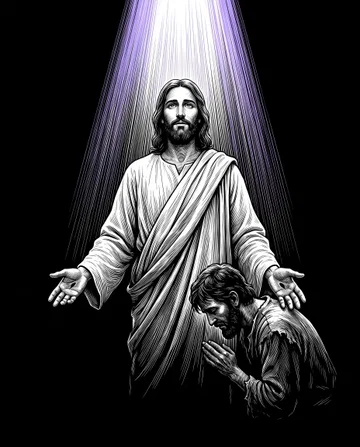
Private sins are to be confessed to Christ the Redeemer and not disclosed to another person unless the Holy Spirit specially moves it, for he does not exploit humiliating confessions.CH 403.5–404.1GW 216.3–217.1 Jesus Christ the righteous is the one Mediator and Intercessor and righteous Advocate to whom sins are to be confessed rather than taking the burden and weight of woe to any human being, and every sinner in contrition of soul is to go directly to Jesus alone and tell him all sins.ST Aug 16, 1910RH Mar 21, 1912 Every sin against God is to be confessed to him through Christ, and forgiveness is sought from God through him and not from a priest, for sins can be forgiven only by God.5T 639.1GW 216.3–217.1SC 37.3 When a person wrongs a friend or neighbor the wrong must be acknowledged to him and freely forgiven by him, and then forgiveness from God must still be sought through Christ, because the one wounded belongs to God as Creator and Redeemer and to injure him is sin against God himself.5T 639.1SC 37.3 Christ as great High Priest and Mediator was sinless yet tempted in all points as people are, is touched with sympathy for human weakness and understands their weaknesses, and is able to cleanse from every stain of sin and wrongdoing.5T 639.1SC 37.3 His advocacy as propitiation for the sins of the whole world gives hope of forgiveness and cleansing so that a sinner need not despair, yet it does not excuse continued sin or make sin less heinous because others have sinned, but calls the sinner to cease from sin in his strength.ST Aug 16, 1910RH Mar 21, 1912
No human agent is to stand between believers and God, and no human being stands between believers and Christ to whom they must go through any person, but they come to him directly.Ms 190, 1901, par. 2Lt 95, 1899, par. 27 Each church member is to study the Scriptures personally in connection with the call for all to be saved and to know the truth.Ms 190, 1901, par. 2 Through Christ himself they learn the work he has given them to do for others.Lt 95, 1899, par. 27
Christ is the medium of prayer and blessing between God and humanity, so that prayer goes from people to God and blessing comes from God to people, and by uniting divinity with humanity he makes this mediation possible.STB 15.38T 178.3 By divine appointment God placed at his altar an Advocate clothed in human nature whose office work is to introduce believers to God as his sons and daughters, interceding for those who have received him and by virtue of his own merits giving them power to become members of the royal family and children of the heavenly King.Lt 22, 1898, par. 3–6 In his name petitions ascend to the Father with efficiency and lay open all the treasures of grace for appropriation to enjoy and communicate to others that joy may be full, for he promises his personal intercession by employing his name and places the whole virtue of his righteousness on the side of the suppliant, pleading for man while man in need of divine help pleads for himself before God by the power of the influence of the one who gave his life for the world.Lt 22, 1898, par. 3–6 As appreciation of his merits is acknowledged fragrance is given to intercessions, and approaching God through those merits believers are clothed with his priestly vestments and placed close by his side, encircled with his human arm while with his divine arm he grasps the throne of the Infinite, putting his merits as sweet incense in a censer in their hands to encourage petitions with promise to hear and answer.Lt 22, 1898, par. 3–6 The Father demonstrates his infinite love for Christ who paid the ransom by his blood by receiving and welcoming Christ's friends as his friends, being satisfied with the atonement made and glorified by the incarnation, life, death and mediation of his Son.Lt 22, 1898, par. 3–6
Through him people are to cooperate with Christ and be co-laborers with God in seeking and in the salvation of their own souls, and then make earnest and persevering and untiring efforts to save others who are near death and ready to perish.STB 15.38T 178.3Lt 22, 1898, par. 3–6 Recognizing Christ as the link between God and humanity should turn believers from dissension and selfish ambition and from selfishly seeking to be first toward responsibility for perishing souls and deep earnest efforts to uplift the fallen.3MR 340.4Lt 61, 1898, par. 13–14 This link is missing in every church in America and in Australia and must be found through prayer in the name of Jesus Christ of Nazareth, for when it is found men sense their responsibility and leave no time for dissension, since God is Father and his law represents his character.Lt 61, 1898, par. 13–14 God places great value on each human soul and Christ died to save every person, and God has put into operation every conceivable plan to lead all to see what souls are worth and desires every effort to save perishing souls, sending out evangelists and missionaries and causing religious periodicals to be circulated and bringing in the press to help reach souls in darkness.Lt 123a, 1898, par. 8
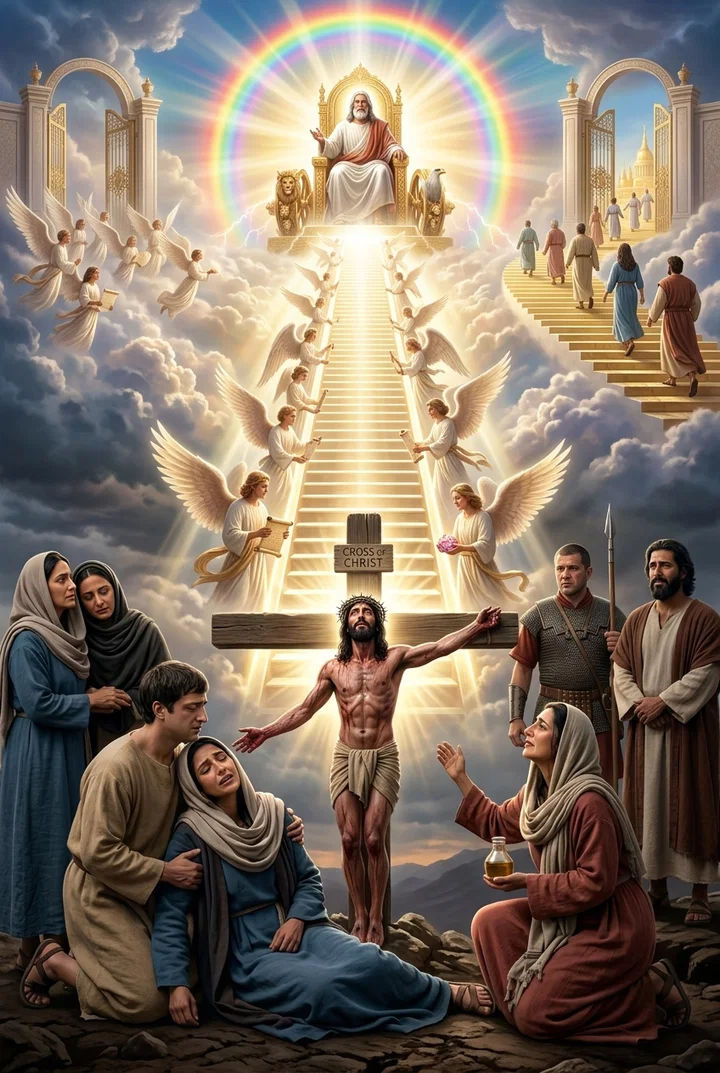
In the apostasy man alienated himself from God and earth was cut off from heaven, leaving a gulf across which there could be no communion and leaving the guilt-burdened sinner fearing his sin had cut him off from God and forsaken him of heaven.SC 19.2–20.1 Jacob's ladder revealed the way a sinner is restored to communion with God, for the ladder represented Jesus, and through Christ earth is again linked with heaven, for with his own merits he has bridged the gulf which sin had made, connecting fallen man in weakness and helplessness with the source of infinite power so that ministering angels can hold communion with man.SC 19.2–20.1 God does not appear in person to teach people the way of life, because disobedient humanity cannot endure a direct vision of his glory.4RED 92.3–93.1ST Mar 15, 1877 People come to the Father only through the Son as Mediator, and in seeing and hearing Christ they see and hear the Father.4RED 92.3–93.1ST Mar 15, 1877
Sources