Hebrews 4:15
For we have not an high priest which can not be touched with the feeling of our infirmities; but was in all points tempted like as we are, yet without sin.
Translations
For we have not an high priest which cannot be touched with the feeling of our infirmities; but was in all points tempted like as we are, yet without sin.
For we have not an high priest which can not be touched with the feeling of our infirmities; but was in all points tempted like as we are, yet without sin.
For we have not a high priest which cannot be touched with the feeling of our infirmities; but was in all points tempted like as we are, yet without sin.
For we have not a high priest who cannot be touched with the feeling of our infirmities; but who was in all points tempted as we are, yet without sin.
Revised Version, American Standard Version
For we have not a high priest that cannot be touched with the feeling of our infirmities; but one that hath been in all points tempted like as we are, yet without sin.
for we have not a chief priest unable to sympathise with our infirmities, but [one] tempted in all things in like manner — apart from sin;
For we have not a high priest not able to sympathise with our infirmities, but tempted in all things in like manner, sin apart.
For we have not a high-priest unable to have fellow-feeling with our weaknesses, but one tested in all respects, by way of likeness, apart from sin.
Berean Standard Bible, Majority Standard Bible
For we do not have a high priest who is unable to sympathize with our weaknesses, but we have one who was tempted in every way that we are, yet was without sin.
For we don’ t have a high priest who can’ t be touched with the feeling of our infirmities, but one who has been in all points tempted like we are, yet without sin.
For we have not a high priest who is not able to be touched by the feelings of our feeble flesh; but we have one who has been tested in all points as we ourselves are tested, but without sin.
For we haue not an hie Priest, which can not be touched with the feeling of our infirmities, but was in all things tempted in like sort, yet without sinne.
Douay-Rheims (Challoner revision)
For we have not a high priest, who can not have compassion on our infirmities: but one tempted in all things like as we are, without sin.
Pictures








Cross-references 20 of 147
- Hebrews 2:18
For in that he himself hath suffered being tempted, he is able to succour them that are tempted.
Christ suffered when tempted and can help those who are tempted.
- Matthew 4:1-11
Then was Jesus led up of the Spirit into the wilderness to be tempted of the devil.
Christ faced Satan’s temptations and remained sinless.
- Hebrews 7:25
Wherefore he is able also to save them to the uttermost that come unto God by him, seeing he ever liveth to make intercession for them.
Christ appears as High Priest to plead for his people.
- Hebrews 2:17
Wherefore in all things it behoved him to be made like unto his brethren, that he might be a merciful and faithful high priest in things pertaining to God, to make reconciliation for the sins of the people.
Christ was made like his brethren to become a merciful and faithful High Priest.
- Romans 8:3
For what the law could not do, in that it was weak through the flesh, God sending his own Son in the likeness of sinful flesh, and for sin, condemned sin in the flesh:
Christ shared human flesh and condemned sin in it.
- 1 Peter 2:22
Who did no sin, neither was guile found in his mouth:
Christ is sinless, the example believers are called to follow.
- Philippians 2:7-8
But made himself of no reputation, and took upon him the form of a servant, and was made in the likeness of men:
Christ took human form, humbled himself, and became obedient unto death.
- 1 Corinthians 10:13
There hath no temptation taken you but such as is common to man: but God is faithful, who will not suffer you to be tempted above that ye are able; but will with the temptation also make a way to escape, that ye may be able to bear it.
God is faithful and provides help to endure temptation.
- Genesis 3:1-6
Now the serpent was more subtil than any beast of the field which the LORD God had made. And he said unto the woman, Yea, hath God said, Ye shall not eat of every tree of the garden?
Adam yielded to temptation where Christ endured temptation without sin.
- Hebrews 2:10
For it became him, for whom are all things, and by whom are all things, in bringing many sons unto glory, to make the captain of their salvation perfect through sufferings.
Christ is made perfect through suffering as captain of salvation.
- 2 Corinthians 5:21
For he hath made him to be sin for us, who knew no sin; that we might be made the righteousness of God in him.
Both texts affirm Christ’s sinlessness, though he bore sin for others.
- Hebrews 5:7-8
Who in the days of his flesh, when he had offered up prayers and supplications with strong crying and tears unto him that was able to save him from death, and was heard in that he feared;
Christ prayed earnestly and learned obedience through suffering.
- 1 John 2:1
My little children, these things write I unto you, that ye sin not. And if any man sin, we have an advocate with the Father, Jesus Christ the righteous:
Christ is the righteous Advocate for those who sin.
- Isaiah 53:3
He is despised and rejected of men; a man of sorrows, and acquainted with grief: and we hid as it were our faces from him; he was despised, and we esteemed him not.
Christ is described as acquainted with grief and bearing human sorrows.
- John 1:14
And the Word was made flesh, and dwelt among us, ( and we beheld his glory, the glory as of the only begotten of the Father,) full of grace and truth.
The Word became flesh and shared human nature.
- Matthew 26:36-39
Then cometh Jesus with them unto a place called Gethsemane, and saith unto the disciples, Sit ye here, while I go and pray yonder.
Christ experiences sorrow and anguish, yet submits to the Father’s will.
- Isaiah 53:4
Surely he hath borne our griefs, and carried our sorrows: yet we did esteem him stricken, smitten of God, and afflicted.
Jesus bore human griefs.
- Hebrews 5:2
Who can have compassion on the ignorant, and on them that are out of the way; for that he himself also is compassed with infirmity.
A high priest shares human weakness and shows compassion to those who stray.
- Luke 22:44
And being in an agony he prayed more earnestly: and his sweat was as it were great drops of blood falling down to the ground.
His agony and bloody sweat show Christ’s real human suffering.
- Hebrews 8:1-2
Now of the things which we have spoken this is the sum: We have such an high priest, who is set on the right hand of the throne of the Majesty in the heavens;
Christ ministers as High Priest in the heavenly sanctuary.
Commentary part 1 of 3
Each commentary is drawn from primary sources: the writings of Ellen G. White and Adventist pioneers and periodicals. Each commentary is separate. Its own words are not a quotation; follow the references to read the source passages.
Ellen G. White
261 sources
He is a High Priest who was tempted in every way as human beings are yet remained completely without sin in thought, word and deed.MH 424.4Lt 76, 1900, par. 14–16Ms 17, 1906, par. 20–22 He could sympathize from experience because He clothed divinity with fallen humanity and shared its hunger, weariness, sorrow and infirmity while facing stronger temptations than any person will meet.Ms 87, 1902, par. 43–46Ms 15, 1897, par. 162RED 30.1–32.1ST Feb 22, 1883ST Jun 9, 1898 His testing was real, for as a free moral agent He could have yielded at the risk of failure and eternal loss.Ms 29, 1899, par. 10–11DA 117.1–3ST May 27, 1908 Having passed over the ground where Adam failed and overcome where Adam fell, He undid that failure and proved obedience possible for fallen people in His strength.ED 78.3–4ST Oct 3, 1895DA 22.2ST Nov 24, 1887ST Feb 22, 1883 Because He Himself suffered when tempted He is able to succor those who are tempted, so believers may come boldly to the throne of grace and overcome as He overcame.Ms 17, 1906, par. 20–22Ms 87, 1902, par. 43–46LC1 135.2–136.1Ms 80, 1903, par. 13Lt 12, 1892, par. 9–12
Wilderness Testing and Setting
After baptism He went into the wilderness before beginning public ministry and fasted forty days and forty nights, meeting Satan in personal conflict while faint and hungry with strength reduced by want of food.ST Feb 18, 1913Ms 113, 1902, par. 3–5ST Dec 3, 1902ST Apr 4, 1900 He entered the contest under the circumstances the foe required and endured what human beings must endure, so His struggle demonstrates that people may overcome because heaven's powers are ready to help in every emergency.Ms 113, 1902, par. 1–2Ms 113, 1902, par. 3–5ST Dec 3, 1902 His testing was at disadvantage, unlike Adam who was tested with temptation removed as far as possible and every need supplied.ST Apr 4, 1900 Unlike Moses, who was specially sustained by God and did not suffer hunger, He felt the force of human weakness and suffering without such sustaining.ST Feb 18, 1913
His tempter was Satan, once a covering cherub loyal beside Him in the heavenly courts who rebelled and was cast out with his followers to set up a kingdom on earth.8T 209.1ST Apr 4, 1900 Satan and his angels exulted at the chance to besiege Him, bringing the whole confederacy of evil, evil men and evil angels united, to war against Him.ST Feb 20, 1893 They deemed victory certain because He had taken humanity and clothed Himself with it to stand as man's substitute.ST May 30, 1911ST Feb 20, 1893 At every step He was assailed with temptations fiercer and more subtle than those that assail men, in proportion as His pure and exalted character exceeded defiled human character, with issues at stake beyond human comprehension.8T 209.1ST May 30, 1911ST Feb 20, 1893
He was tempted not only by Satan in the wilderness but all through life from childhood to manhood, under every form and under most trying circumstances.2RED 26.1–2Ms 16, 1890, par. 85–87 This included hunger, peril, opposition during the years of ministry, commercial deception, and agony on the cross, with Satan trying every means to ensnare Him.8T 209.1DA 71.35T 425.4 No other person would be called to face temptation so intensely, and the strength He endured in resisting exceeded what people will be called to endure.DA 71.3STPW91 36.2–35T 425.4 Yet He remained steadfast in loyalty, completely pure and unseparated from God, maintaining spotless purity untainted by surrounding corruption.2RED 26.1–2Ms 16, 1890, par. 85–87
He faced the same great points on which humanity is tempted, especially appetite, love of the world, and desire for display leading to presumption.ST Mar 12, 1912ST May 27, 1897Ms 53, 1901, par. 3 These are the three leading allurements exploiting human hereditary weakness, which as second Adam He met on humanity's behalf.ST Mar 12, 1912ST May 27, 1897 On appetite He endured keen pangs during a fast of nearly six weeks and won the victory without using His power to satisfy appetite.CTBH 205.1–2CTBH 192.1 By overcoming through divine power on the ground human beings must travel He worked out a righteous character because people cannot achieve this by themselves, and prepared the way for them to overcome every form of temptation, even reaching those brought low by gluttony or drunkenness.CTBH 205.1–2ST Mar 12, 1912CTBH 192.1ST May 27, 18979T 190.1–2
He met every temptation with God's word and did not answer the tempter with railing accusations or follow deceptive arguments.9T 68.3–69.1RH Aug 6, 1908 When provoked to stir feelings and speech He answered It is written, giving Satan no word to exploit and keeping silent rather than losing standing on the enemy's ground.6MR 334.1–3Lt 208, 1902, par. 45 His resistance in the same way every tempted person may resist exposed the enemy's methods and showed the weapons believers must use.6MR 334.1–39T 68.3–69.1 Whoever holds wholly to the Word and remains unshaken will see Satan leave and angels minister as they did to Him, with comfort and victory in bearing witness.6MR 334.1–3Lt 39, 1887, par. 23–24Ms 1, 1892, par. 2–3
Tempted Yet Without Sin
He was tempted in every way as human beings are, yet remained completely without sin in thought and word and deed, never yielding even in the slightest degree.MH 424.4Lt 76, 1900, par. 14–16Ms 17, 1906, par. 20–22Ms 87, 1902, par. 43–46LC1 135.2–136.1 He never gave Satan advantage or ground for triumph, with not a thought or feeling responding to temptation and nothing that the prince of darkness could claim as his own.13MR 18.1–19.3ST Dec 10, 1902RH Feb 20, 1913 Because He shared human nature and suffered when tempted, He understands weakness with sympathy and stands as compassionate great High Priest, able to help those who are tempted and to make reconciliation for sin and bring salvation.MH 424.4Lt 76, 1900, par. 14–16Ms 17, 1906, par. 20–22LC1 135.2–136.1ST Feb 18, 1913 In the wilderness He endured forty days without food and faced a powerful adversary, unlike Moses who was specially sustained by God and did not suffer hunger, and through the merits of the crucified and risen Saviour those tempted may gain victory and come resolutely to the throne of grace for mercy and timely help.Ms 17, 1906, par. 20–22Ms 87, 1902, par. 43–46ST Feb 18, 1913
Temptation itself is not sin and is no sign of God's displeasure, but yielding to it is sin.12MR 80.1–81.2Lt 28, 1894, par. 9–12ST Dec 10, 1902RH Feb 20, 1913Ms 113, 1902, par. 20–21 So long as there is no yielding and integrity is maintained, no surrounding pollution can taint an unpolluted mind, and satanic legions cannot injure unless the soul is opened to them.12MR 80.1–81.2 The soul that resists through divine strength reveals to heaven and earth the strength and virtue of Christian principle, develops Christlikeness of character and the graces of the Spirit, proves stability and nobility of character by strength drawn from heaven, is registered as uncontaminated by the world, and becomes a partaker of the divine nature having escaped corruption.12MR 80.1–81.2Lt 28, 1894, par. 9–12 Those who trust in Him rather than assuming they must fall can find victory and greater strength, and those who come confessing their sins can receive pardon.ST Dec 10, 1902RH Feb 20, 1913Ms 113, 1902, par. 20–21
His testing was real because as a free moral agent placed on probation like Adam and like every man He could have yielded, at the risk of failure and eternal loss.Ms 29, 1899, par. 10–11DA 117.1–3ST May 27, 19086MR 2.1Ms 57, 1890, par. 7 Temptation is no temptation unless yielding is possible, for it comes when a person is powerfully influenced to do wrong and, knowing he can do it, resists by faith with firm hold on divine power, and this was the ordeal He passed.Ms 29, 1899, par. 10–116MR 2.1 Otherwise the battle would have been all a farce, and He could not have met Adam's test or won the victory Adam failed to win.Ms 29, 1899, par. 10–11DA 117.1–3Ms 57, 1890, par. 7 His trial included being tortured by the pressure of horror of great darkness lest He swerve from uprightness, with fierce temptation to think He was forsaken by God.Ms 29, 1899, par. 10–116MR 2.1 Hanging on the cross in His closing hours He experienced to the fullest extent what man experiences when striving against sin, realizing how bad man may become by yielding and the terrible consequence of breaking the law, because the iniquity of the whole world was upon Him as He bore the sins of the whole world and endured man's punishment, the wrath of God against transgression.Ms 29, 1899, par. 10–116MR 2.118MR 113.1–2
He could have sinned and could have fallen, but not for one moment was there in Him an evil propensity, taint of or inclination to corruption.13MR 18.1–19.3 He never yielded to corruption in any way, never stepped on Satan's ground, never gave occasion for advantage, but held fast to God and His word under the most trying circumstances with unwavering faith by It is written.13MR 18.1–19.3ST Mar 11, 1875 He is the second Adam, holy by the miracle of God and not altogether as fallen posterity born with inherent propensities of disobedience, for He had nothing in Him to respond to temptation.13MR 18.1–19.3 How humanity blended with divinity and how He could be so tempted yet be without sin remains an unexplained mystery that must not be pressed by presumption beyond what is revealed.13MR 18.1–19.3 When in danger He had to resist the inclination to use His power to deliver Himself, for Satan knew the weak points of the human heart and put forth utmost power to take advantage of the weakness of the humanity assumed, while He overcame on man's account and triumphed without leaving humanity.LC1 191.31SP 45.2–46.1ST Mar 11, 1875
He was tempted as true man in human nature, not as God.Ms 1, 1892, par. 23–276MR 342.2–3Ms 29, 1887, par. 25 He met temptation as a human being and overcame through strength given by God, using no power for Himself that is not freely offered to people and depending on divine power as people must.DA 22.2Ms 1, 1892, par. 23–27Ms 141, 1901, par. 8–9RH Sep 3, 1903 He did not withstand temptation by His divine power, for if He had He would have been tempted as God rather than as man and could not truly be said to be tempted in all points like man.Ms 1, 1892, par. 23–27Ms 29, 1887, par. 25 Because He obeyed in that nature He is the example and leader to follow, and human beings are to serve God in the redeemed human nature they now have, going forward in known duty and standing pardoned through His righteousness as though they had never sinned.DA 22.2Ms 141, 1901, par. 8–96MR 342.2–3
His temptations were stronger than human temptations in proportion to His superior excellence of character and elevated mind.Ms 87, 1902, par. 43–46Lt 121, 1897, par. 1–2 His obedience was not easy simply because He was divine, for He did not yield or weaken His divine power, and His earthly life represents what humanity may become through the privileges and opportunities given in Him.Lt 121, 1897, par. 1–2 He knows by His own experience what human weakness is, what people need, where temptation is strongest, and the full strength of temptation, with afflictions even keener because His nature was higher and nobler.Ms 87, 1902, par. 43–46Ms 15, 1897, par. 16Lt 83, 1897, par. 21–24 As Elder Brother of the race at the eternal throne He looks upon every soul turning to Him, knows the heart and circumstances of temptation, and is appointed Ruler and Judge of all men.Ms 15, 1897, par. 16Ms 7, 1895, par. 20–23 As substitute and surety standing at the head of the human family, subject to all that annoys and oppresses and afflicted in all afflictions, He knows just the method to succor those tempted and is fully able and always willing to give the very help required, so troubled sinners can trust Him for mercy and come boldly to the throne of grace for timely grace.Ms 7, 1895, par. 20–23ST Feb 20, 1896Lt 83, 1897, par. 21–24
Humanity and Divinity Joined
Hebrews 4:15 means He veiled the glory of His divinity and clothed divinity with humanity, laying aside royal robe and kingly crown and transferring His home from heaven to this world occupied by fallen beings to stand at the head of humanity as Saviour and Mediator.Ms 98a, 1905, par. 14Lt 128, 1910, par. 16ST May 17, 1905 He gave up heavenly home and display of angel armies to be born a helpless babe in a Bethlehem stable, and from babe to childhood to youth to manhood He lived the life human beings must live and bore the trials they must bear.Lt 128, 1910, par. 16ST May 17, 1905RH Mar 5, 1908 From childhood to manhood He successfully withstood every temptation of Satan in all points like men are tempted, yet without sin, His character and relation to God unchanged and unmarred by the slightest taint, never once swerving from allegiance to the Father.Ms 98a, 1905, par. 14Lt 128, 1910, par. 16 By that sinless life He demonstrated that man need not perish in sin, uplifted fallen beings and revealed God to the world, so men might see in Him an example of what they can become in cooperation with God and know by experience He can help them in struggles with sin.Ms 98a, 1905, par. 14ST May 17, 1905
He took human nature in its fallen, weakened and degraded condition after four thousand years of sin, with its infirmities, degeneracy, weaknesses, sicknesses, hunger, thirst, weariness, sorrow and poverty.2RED 30.1–32.1ST Feb 22, 1883Ms 124, 1903, par. 2–4ST Jun 9, 1898DA 48.5 He accepted like every child of Adam the results of heredity shown in the history of His earthly ancestors, to fight the battle as every child of humanity must fight it at risk of failure.DA 117.1–3DA 48.5ST May 27, 1908 He faced temptation in the sinner's behalf and was tested on every point where people can be assailed, standing the test where Adam failed and overcoming in humanity's behalf under even heavier burden.2RED 30.1–32.1ST Feb 22, 1883DA 117.1–3 Because He Himself suffered under temptation He feels human weakness from experience and is qualified to serve as merciful High Priest to help those who are tempted and to make reconciliation for sins.2RED 30.1–32.1ST Feb 22, 1883ST Jun 9, 1898
He took man's nature with its infirmities yet did not in the least share its sin, knowing no sin as lamb without blemish and without spot, presenting perfect humility in human character and perfect obedience to all requirements.2RED 30.1–32.1ST Feb 22, 1883ST Jun 9, 1898 He shared humanity in every respect except sin, without its corrupted sinful propensities, living a sinless life as example for humanity while taking the weakened condition common to Adam's descendants to share their trials.DA 48.5RH Mar 5, 1908ST May 27, 1908 In Him divine and human natures remain distinct and unblended, and His divine attributes did not relieve His anguish.2RED 30.1–32.1ST Jun 9, 1898 There is to be no misgiving about the perfect sinlessness of His human nature, and faith is to look to Jesus in perfect confidence in the atoning sacrifice so the soul is not enshrouded in darkness.ST Jun 9, 1898
In Him divinity and humanity are united with the fullness of the Godhead dwelling bodily, His human arm reaching every soul and His divine arm grasping the throne of the Infinite.2T 201.16MR 121.2–3ST May 17, 1905 So united to reconcile God and man and join the finite with the infinite, He stands at the head of the fallen race to uplift fallen beings, reveal God, and exalt men through the merits of His blood to be partakers of the divine nature.ST Jun 9, 18982T 201.1ST May 17, 1905 By taking human nature He was fitted to understand man's trials, sorrows and every besetting temptation as angels who never knew sin could not, and He learned by being tempted in every way just as men are how to help all who are tempted.2T 201.1LC1 33.2 Though high and holy He pities human weakness and stoops to help, bearing the trials humans must bear and resisting the temptations they must resist to show that by receiving power from on high a person can live an unsullied life.ST Apr 29, 1903ST Apr 26, 19056MR 121.2–3
He shared hunger, thirst, weariness, weakness, sadness, pain, exhaustion and childhood trials, knowing from experience what hunger and want and the infirmities of the flesh are.Ms 124, 1903, par. 2–414MR 334.1–2ST Jun 14, 1905Ms 17, 1911, par. 10 After spending Himself in service He even slept in a boat's bottom with a coil of rope beneath His head, and by becoming a humble child living in poverty and working as a carpenter He entered human hardship.Ms 124, 1903, par. 2–414MR 334.1–2Ms 184, 1907, par. 6–7 He endured temptation in His human nature without sin or yielding, remaining blameless and free from sin and living a life of perfect obedience as example all can follow.Ms 124, 1903, par. 2–414MR 334.1–2ST Jun 14, 1905 Because He knows human weakness and temptation from experience He can sympathize and help those tempted, showing through His strength people can live with purity and nobility, so no sinner can claim He did not know their temptations and sufferers can entrust themselves to His care.Ms 124, 1903, par. 2–4Ms 10, 1891, par. 20–2214MR 334.1–2Ms 184, 1907, par. 6–7Ms 17, 1911, par. 10
Second Adam Reversing Failure
He passed over the ground where Adam stumbled and fell and stood where Adam stood, taking human nature and bearing its infirmities and weaknesses in order to be a perfect Saviour touched with the feeling of human infirmities.ST Oct 3, 1895ST Nov 24, 1887ST Feb 22, 1883ST Aug 9, 1905 He was tried in all points like human beings are, yet without sin and not tainted with guile, meeting every temptation that besets man and enduring every trial men are called to endure while living without spot or stain of sin.ST Oct 3, 1895ST Nov 24, 1887ST Feb 22, 1883ST Aug 9, 1905 His test was infinitely more severe than any brought against the race, for He Himself suffered being tempted and by painful experience knows what it means to come into conflict with the arch-deceiver, what man will meet in resisting evil, and every device the enemy prepares for the unwary.ST Oct 3, 1895ST Aug 9, 1905 By that sinless life of obedience, purity and steadfast integrity He redeemed Adam's disgraceful failure, was made perfect through suffering and learned obedience by the things He suffered, and having identified His interests with those He came to save He became qualified as Redeemer, substitute and surety for a second trial who knows how to sympathize with every human being and provide a way for sinners to return to loyalty to God.ST Oct 3, 1895ST Aug 9, 1905ST Jun 14, 1905 As second Adam and Elder Brother with intense interest in human beings and keen feeling for the sinfulness and shame of sin, He bore the test on which the first parents failed in perfect obedience to God's eternal word, taking human flesh into union with divinity and never turning from allegiance to God.ST Aug 9, 1905ST Jun 14, 1905RH Aug 26, 1909
His sinless obedience from infancy to manhood through thirty-three years proves false Satan's boast that man cannot keep God's law, condemns sin in the flesh, removes every excuse for disobedience, and works out a perfect character for fallen people.DA 22.2ST Aug 9, 1905 He met temptation as a human being and overcame through strength given by God and steadfast dependence on His Father, using no power for Himself that is not freely offered to people, and His life therefore shows that obedience to God's law is possible.DA 22.2Lt 158, 1903, par. 6–8 Through His strength people can live with purity and nobility and live sinless lives through divine power, for His sympathy, faith and love enable them to be reached and uplifted and His victory assures them they are not left without a Helper.ED 78.3–4Ms 124, 1903, par. 2–4Lt 158, 1903, par. 6–8Ms 156, 1907, par. 12–14 Because He knows human weakness from experience, having shared hunger, thirst, weariness and temptation yet remaining blameless and free from sin, He knows how to help those who are tempted as a never-failing source of strength, commanding the whole universe of heaven to go out to help the unselfish worker.Ms 124, 1903, par. 2–4Lt 158, 1903, par. 6–8Lt 72, 1897, par. 4–5Ms 156, 1907, par. 12–14
His willing obedience proves that man can keep the law of God and that breaking the law, not obeying it, brings bondage, and His life is the example and pattern life for every soul.4T 294.1Lt 128, 1910, par. 16 He laid aside royal robe and kingly crown to stand at the head of humanity, though taking humanity with all its varied humiliations His character and relationship to God were unchanged, and He came to stand the test Satan refused to stand, enduring all temptations that beset man and coming forth with excellence of character unmarred by the slightest taint of sin, never once swerving from allegiance to His Father.4T 294.1Lt 128, 1910, par. 16 His life was a perfect fulfilment of every precept of the law, keeping His Father's commandments with no falsehood from His lips and never a dishonest act in unsullied purity and goodness, and stands as the unchanging eternal standard of obedience and service which reveals the character man may attain through divine grace and must possess to enter the holy city.ST Apr 26, 1905ST Nov 3, 19093SP 256.2–257.1 That standard exposes sin but cannot pardon, for His suffering bore the debt of transgression to lead people to recognize sin, repent and obey, and He overcame appetite through self-denial and firm principle without giving license to break God's law, imputing His righteousness so that their efforts to keep the law become acceptable to God.ST Nov 3, 1909ST Feb 18, 1913
If in the least particular Satan had tempted Him to sin, Satan would have bruised His head, the hope of the human race would have perished, divine wrath would have come upon Him as it came upon Adam, and Christ and the church would have been without hope.ST Jun 9, 1898 He was tempted in all points like humans are yet knew no sin as lamb without blemish and without spot in perfect humility and perfect obedience to all God's requirements, and Satan could only touch His heel.ST Jun 9, 1898Ms 9, 1906, par. 7–8 He endured mankind's hardships and trials and was victorious over the powers of darkness on humanity's behalf, bearing the test on which the first parents failed, and had He failed even once or yielded even once there could be no salvation and the human family would have been lost with Satan victorious.RH Aug 26, 1909Ms 105, 1901, par. 3–5Ms 9, 1906, par. 7–8 There is to be no misgiving about the perfect sinlessness of His human nature, and His sinless faithfulness made Him able to stand as humanity's substitute and surety, as holy substitute able to save to the uttermost so that repenting believing man may escape corruption through lust, become partaker of the divine nature, and be made the righteousness of God in Christ.ST Jun 9, 1898ST Jun 14, 1905
Sympathetic High Priest Interceding
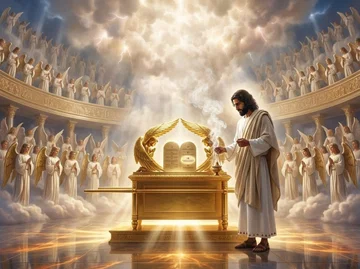
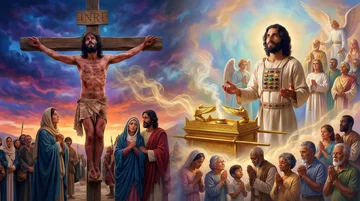
He is the great High Priest passed into the heavens who ministers unseen in the heavenly sanctuary at God's right hand for fallen people.DA 165.5–166.3Ms 204, 1899, par. 13Lt 63, 1893, par. 58–64Ms 197, 1903, par. 9–10Lt 6, 1903, par. 34–35 He is Advocate, Mediator, Intercessor, Representative, Elder Brother and Shepherd, pleading His spotless life together with His wounded crucified body.DA 165.5–166.3Ms 204, 1899, par. 13Lt 193, 1904, par. 7–8Lt 63, 1893, par. 58–64Lt 6, 1903, par. 34–35 He understands human weakness because He was tempted in every way people are, yet remained without sin, and His sympathy is joined to His present work of intercession especially for those suffering, tried, or tempted.DA 165.5–166.3Lt 193, 1904, par. 7–8Lt 63, 1893, par. 58–64Ms 197, 1903, par. 9–10Lt 6, 1903, par. 34–35 Though He ministers in the sanctuary and is not seen, His ministry does not lessen His power or communion with His followers, for by His Spirit He remains with the church, and because He is sympathetic they can approach God's throne of grace with confidence to receive mercy and timely help and have reason for deep and earnest trust in God at the present time.DA 165.5–166.3Lt 193, 1904, par. 7–8Ms 197, 1903, par. 9–10
With the preceding verse He stands between fallen man and God after Adam and Eve's sin caused fearful separation, providing the devised plan through which God can be reconciled to man and man to God.RH May 31, 187021MR 403.1Lt 63, 1895, par. 31–33 As Mediator He invites people to come to the Father through Him, pleads in their behalf, and gives access to God, so that if a person sins the case is not hopeless.RH May 31, 187021MR 403.1Lt 63, 1895, par. 31–33 He meets returning sinners with blessing and peace and rest, and those who by breaking the law have forfeited all right to God's favor, when they return to allegiance and keep the commandments and serve Him with a sincere heart, receive gracious and freely given love.ST Apr 20, 1888Ms 74, 1895, par. 11 Through His mediation believers may claim God's promises and receive all that He has secured for them, and His workers are to depend on Him rather than place human beings in God's position as guide and counselor, seeking God's mercy with confidence.Ms 74, 1895, par. 1121MR 403.1Lt 63, 1895, par. 31–33
Intercession is the golden chain that binds finite man to the throne of the infinite God.Lt 13, 1894, par. 14–15ST Nov 18, 1903 The human sinner whom He died to save and purchased with His blood brings petition to God, and Jesus the great High Priest takes it up, places His own righteousness on the side of the sincere suppliant, and blends His prayer with the human prayer.MYP 95.3–4Lt 13, 1894, par. 14–15ST Nov 18, 1903 He bears requests to the Father with the incense of His righteousness in the golden censer, in the golden censer of His own merits so they are accepted, discerning the sincerity of humble hearts and helping those who know not what they should ask for as they ought by giving them words to speak and giving those with sanctified desire access through Himself to the Father.MYP 95.3–4Lt 13, 1894, par. 14–15ST Nov 18, 1903 As humanity's Elder Brother He met Satan in human nature and conquered him, resisting every temptation that confronts the young, feeling deep and tender concern and watching over them, joining their prayers with the incense of His righteousness and presenting them to God so His strength enables them to endure hardship and reach high ideals and His sacrifice at Calvary pledges their victory.MYP 95.3–4Lt 34, 1896, par. 18 As substitute and surety He sought daily strength and blessings from His Father through prayer then strengthened others, knowing human weakness, needs, and the strength of temptation through His own experience, so the weaker and more helpless they recognize themselves to be the stronger they can become through His strength.MYP 95.3–4Lt 34, 1896, par. 18
He is the true High Priest in contrast with the false and corrupted Caiaphas, pure and undefiled without taint of sin, appointed by God rather than glorifying Himself to be made High Priest.Ms 102, 1897, par. 9–10Ms 101, 1897, par. 17–20 The beautiful official priestly garments, made after the pattern shown in the mount and consecrated for most solemn purpose, had to be whole and without blemish to represent His perfect character, clothed with glory and beauty and fitted for holy official work as representative character for the nation showing by His garments the glory Israel as God's chosen people should reveal to the world.Ms 102, 1897, par. 9–10Ms 101, 1897, par. 17–20 Unlike Caiaphas, who by rending his robe showed human passion and human imperfection and severed himself from God so he was virtually no longer accepted as an officiating priest, He remains the whole and perfect representative and an example to all the human family, having qualified Himself to be not only representative of the race but Advocate touched with the feeling of human infirmities, so that every soul may say, I have a friend at court.Ms 102, 1897, par. 9–10Ms 101, 1897, par. 17–20
Because He alone of all the heavenly hosts passed through humanity He knows human trials from experience, having passed over the ground humans must pass and knowing the circumstances of every case.RH Mar 12, 1901Ms 165, 1904, par. 33Ms 189, 1903, par. 2–4Lt 19, 1901, par. 13–15 He took human nature and experienced human weakness so He could be touched by infirmities and serve as merciful and faithful High Priest, understanding every temptation, trial, weakness, conflict and pang of anguish because He was tempted in every way yet did not sin.RH Mar 12, 19012T 313.2Ms 189, 1903, par. 2–4Lt 19, 1901, par. 13–15 To Him belongs judgment of the world, not to human beings, for His experience as Son of man makes His judgments just, righteous, compassionate and tender as brother in infirmity toward those who fear God and distrust themselves, and He will not bar anyone from heaven unless doing so is necessary for heaven's safety, His love being shown by giving His life to ransom sinners and His death making it possible to share the divine nature.RH Mar 12, 1901Ms 165, 1904, par. 33Ms 189, 1903, par. 2–4Lt 19, 1901, par. 13–15
His priestly mediation is now available but there is coming the time of trouble when His people must live in the sight of the Lord without a High Priest in the Sanctuary.ExVEGW 58.2ST Oct 11, 1905Ms 112, 1909, par. 17–21 Those who receive the seal of the living God and are protected in the time of trouble must reflect the image of Jesus fully and seek to become perfect in Him, for He went over the same ground human beings go over and was subject to temptations just as they are yet without sin, working out perfection in behalf of humanity and overcoming in His humanity through His divine nature.ExVEGW 58.2ST Oct 11, 1905Lt 14b, 1898, par. 8–9Ms 112, 1909, par. 17–21 Knowing His position and work is essential to exercising the faith needed at this time, and He must be taken as Priest and Advocate because He alone is able to represent the fallen human order to the Father and to receive and pardon transgressions, and also taken as King whose will is known and done, with increased faith since salvation is by the power of God through faith and not of ourselves but the gift of God.4SP 312.2–3Lt 14b, 1898, par. 8–9Ms 112, 1909, par. 17–21 That humiliation, temptation, and death as the just for the unjust is of no avail unless the Holy Spirit is given as constant, working, regenerating agent to make effectual in each individual case what was wrought out, abiding with those who wrestle for victory over sin to demonstrate divine might by endowing the human agent with supernatural strength and instructing the ignorant in the mysteries of the kingdom.4SP 312.2–3GW 286.1Ms 112, 1909, par. 17–21
Succor and Power to Overcome
Because He Himself suffered when tempted He is able to help, succor, comfort, strengthen and deliver those who are tempted, giving grace, strength and comfort to endure, knowing what people need and can bear and giving daily proportioned grace for every trial, ministering through angels.Ms 17, 1906, par. 20–22Ms 87, 1902, par. 43–46LC1 135.2–136.1ST Feb 18, 1913Lt 79, 1893, par. 32–33 He is touched with the feeling of human infirmities because though without sin He was tempted in every way like human beings and felt the force of human weakness and suffering, sharing human nature and likeness to His human brothers.Ms 17, 1906, par. 20–22Ms 87, 1902, par. 43–46LC1 135.2–136.1ST Feb 18, 1913Lt 13, 1894, par. 11–13 His temptations were stronger than ours, and because He knows every human trial, the pain of a wounded spirit, a broken heart, and a burdened perplexed mind, and the strength of temptation, sorrow and grief, He can sympathize and succor those facing temptation and whom Satan tempts.Ms 87, 1902, par. 43–46ST Feb 18, 1913Lt 79, 1893, par. 32–33Lt 13, 1894, par. 11–13 His experience of temptation qualifies Him as merciful High Priest who makes reconciliation for sin and brings salvation, and through the merits of the crucified and risen Saviour people may gain victory over temptation.Ms 87, 1902, par. 43–46LC1 135.2–136.1ST Feb 18, 1913 In the wilderness He endured forty days without food and faced a powerful adversary, unlike Moses who was specially sustained by God and did not suffer hunger.ST Feb 18, 1913
God promises those who trust shall not be tempted above what they are able to bear, for with every temptation He has made a way of escape that they may endure it, and those who look to Him in trusting faith need not fall but can resist and gain victory.ST Oct 3, 18952RED 29.1–2LC1 133.1–2ST Apr 5, 1883 As humanity's representative He endured the closest test and the strongest, most subtle and cunning attacks of Satan and conquered them for humanity, passing over the ground where Adam failed and redeeming that disgraceful failure, made perfect through suffering though He was a Son learning obedience by the things He suffered.ST Oct 3, 18952RED 29.1–2LC1 133.1–2ST Apr 5, 1883 He was tried in all points like human beings are, yet without sin and not tainted with guile, and in order to be a perfect Saviour He was touched with the feeling of human infirmities, understanding every device the enemy prepares for the unwary because He Himself suffered being tempted and by painful experience knows what it means to come into conflict with the arch-deceiver and what man will meet in resisting evil.ST Oct 3, 1895ST Dec 10, 1902 Having identified His interests with those He came to save, He knows how to sympathize with every human being, and the soul burden may be laid upon Him, and the hand of faith may lay hold on God's promise to pardon the guilty and impute to them the purity of Christ.ST Oct 3, 1895 Temptation itself is not sin and sin lies in yielding to it, and those who trust in Jesus can find victory and greater strength, and those who confess their sins can come to Him for pardon, approaching God boldly for mercy and grace to help in times of need rather than assuming they must fall.ST Dec 10, 1902RH Feb 20, 1913
Because He overcame, every believer who claims promises in faith and joins weakness to His strength can overcome as He overcame, conquer self and appetite, escape corruption, keep the law and gain victories daily.Ms 80, 1903, par. 13Lt 12, 1892, par. 9–12Ms 39, 1908, par. 39–41Lt 234, 1903, par. 3Lt 166, 1908, par. 3–4 His experience encourages people facing trials to resist Satan's influence and form Christlike characters, to endure with patience and come confidently to God for mercy and grace in their time of need without feeling forsaken by God or giving up under trial.Ms 80, 1903, par. 13Lt 12, 1892, par. 9–12 His victories are to be studied and followed by believers gaining their own victories over temptation, where even yielding a small point gives advantage to the enemy and causes great loss, as they seek the crown of everlasting life given to the overcomer.Ms 39, 1908, par. 39–41 Satan cannot gain possession of them unless they allow him, and connection with God brings His protection.Ms 80, 1903, par. 13 Satan may distress people and cause agony, but he cannot control the will, force anyone to sin, or defile a person without that person's consent, and through Christ's imparted merits and divine nature people may learn to recognize Satan's temptations and overcome sin.4SP 330.1Lt 166, 1908, par. 3–4
He took fallen humanity's infirmities and faced Satan's temptations in human weakness on the sinner's behalf, overcoming where people cannot by their own strength and obtaining a strength impossible for them to gain, so in His name they may overcome and become more than conquerors over world, flesh and devil.LC1 147.3–149.12RED 43.3–45.1ST Jul 9, 1874Ms 178, 1907, par. 2–3 The exalted Son of God left the royal courts of heaven and humbled Himself to take man's nature and stand as the sinner's substitute, drawing near to man and identifying Himself with the sufferings and afflictions of men, bearing the infirmities and degeneracy of fallen humanity yet remaining without sin or any taint of sin.LC1 147.3–149.1ST Jun 11, 1874Ms 178, 1907, par. 2–3 Because fallen man outside Eden, separated from the light and love of God, cannot in his own human strength resist and overcome Satan, though Adam in Eden with superior advantages might have withstood him, Christ combined divine power with human nature to reach man where he is.LC1 147.3–149.1 His humiliation qualified Him to reach fallen people and bring them out of sin's degradation, and as both divine and human He came to break Satan's power over people, who can reach through His humanity for divine power, with His Spirit giving power to resist the enemy's deceptions and escape the world's corruption and His suffering providing a way of escape when they face hardship.ST Jun 11, 1874Ms 178, 1907, par. 2–3 He fought the battle with the prince of darkness on this earth and conquered in behalf of humanity, so heaven can be reached only by Him as the ladder to heaven and only by His aid, never by human effort, and now risen He stands as living Saviour in the heavenly courts as Intercessor pleading His merits so that human beings may be succored when tempted, be delivered out of temptation, resist the temptations of the enemy, and be more than conquerors through Him.
His sinless experience makes Him like His human brothers and proves through grace, merits and faith people may overcome, human weakness does not make overcoming impossible, and though they must do their part those who stand in Him can trust He will be with them in struggling against sin.Lt 216, 1906, par. 1717MR 29.3Ms 80, 1903, par. 37Ms 46, 1886, par. 49MR 365.2–3 He took human nature and bore the infirmities and sorrows of fallen humanity, facing the enemy's fiercest assaults and sharpest temptations while remaining entirely sinless, and His human nature did not yield to Satan at any point.Lt 216, 1906, par. 179MR 365.2–3 He united divinity with humanity so people could understand that through faith in Him they can overcome the world's temptations, His humble human life rather than outward grandeur demonstrating this union, and as second Adam He faced the enemy in every point and overcame, knowing the trials and pain people suffer so His victory makes it possible for them through His strength to overcome and receive eternal life.Ms 177, 1907, par. 3–5Ms 80, 1903, par. 37 Through Christ's merits people can overcome sin and the devil, yet they also have work to do and are not powerless or inactive, and because Jesus overcame temptation every son and daughter of Adam may overcome, and the way to do so is to obey His voice.Ms 46, 1886, par. 49MR 365.2–3
Believers are to hold fast their profession and come boldly with confidence to the throne of grace to obtain mercy and find grace to help in time of need, which throne represents the divine kingdom of grace established through His death.Lt 76, 1900, par. 14–16Ms 17, 1906, par. 20–22Ms 87, 1902, par. 43–46Ms 78, 1899, par. 15Lt 13, 1894, par. 11–13 His sympathy as great High Priest who understands and feels for human weakness because He was tempted in every way as we are yet remained without sin makes it possible to seek mercy and help from God with confidence when in need.Lt 76, 1900, par. 14–16Ms 37, 1902, par. 30–32 As our great High Priest in heaven Christ invites us to hold fast our profession and come resolutely to God's throne of grace for mercy and help when we need it, giving mercy and grace to help in every time of need.Ms 87, 1902, par. 43–46Ms 37, 1902, par. 30–32 Living faith in Him as personal Saviour, looking to Him as entire dependence and the center of hope for eternal life, makes His followers pure, holy and undefiled and causes them to walk with God, giving them confidence to come boldly to the throne of grace.Ms 78, 1899, par. 15
Example of Obedience and Prayer
Hebrews 4:15 presents Christ as both High Priest and master teacher, for priests were teachers, and He fully understands the human soul and is moved by human weakness because He was tempted in every way people are, with His sympathy, faith and love enabling people to be reached and uplifted.ED 78.3–4Ms 124, 1903, par. 2–4Lt 158, 1903, par. 6–8Lt 72, 1897, par. 4–5Ms 156, 1907, par. 12–14 He took human nature and experienced every kind of trial, hunger, thirst, weariness and temptation to which people are subject, meeting temptation as a human being and overcoming through strength given by God and steadfast dependence on His Father, using no power for Himself that is not freely offered to people.DA 22.2Ms 124, 1903, par. 2–4Lt 158, 1903, par. 6–8Ms 156, 1907, par. 12–14Ms 70, 1903, par. 11 He remained blameless and free from sin, enduring Satan's temptations in our behalf, and His sinless life shows that obedience to God's law is possible and that through His strength people can live with purity and nobility.DA 22.2Ms 124, 1903, par. 2–4Lt 158, 1903, par. 6–8Lt 72, 1897, par. 4–5Ms 155, 1902, par. 18–21 His victory assures that no one is left without a Helper, for He commands the whole universe of heaven to go out to help the unselfish worker, so those engaged in saving souls are to be faithful, courageous and true as steel to the Captain of their salvation.Lt 158, 1903, par. 6–8Lt 72, 1897, par. 4–5Ms 156, 1907, par. 12–14
He was truly human and faced temptation as humanity must, standing as humanity's representative, substitute and surety, and His obedience was not achieved through a special power unavailable to people but as a man relying on God, showing what God can do through humanity.RH Sep 3, 1903ST Apr 10, 1893Ms 70, 1903, par. 11Ms 67, 1903, par. 8 He lived among the poor and lowly and worked as a carpenter, standing at the head of humanity and clothing His divinity with humanity so people could approach Him, and He set aside royal glory and did not use displays of divine power to compel belief.Ms 70, 1903, par. 11Ms 67, 1903, par. 8 He came to lead humanity and demonstrate that through the power of the Holy Spirit people can withstand Satan's temptations, and His example teaches that people overcome when divine power works through them, whether tempted in the wilderness or enduring sinners' opposition, yet remaining without sin.ST Apr 10, 1893Ms 67, 1903, par. 8Ms 155, 1902, par. 18–21 He perfectly obeyed God's law, giving an example of faithful obedience and demonstrating that people can keep God's commandments through divine grace.Ms 70, 1903, par. 11Ms 155, 1902, par. 18–21
In His sinless humanity He recoiled from evil yet endured struggle and anguish in a sinful world, and though not subject to the passions of fallen nature He identified with human need and endured agony that required help from His Father.ST Jun 18, 1902Ms 158, 1902, par. 51–53ST Jul 15, 1908GW92 107.1 His humanity made prayer both necessary and a privilege, and He strengthened His humanity through communion with God, often spending whole nights in solitary places with strong crying and tears for Himself and His disciples to obtain energy, perseverance and steadfastness for duty and trial.ST Jun 18, 1902Ms 158, 1902, par. 51–53ST Apr 29, 1903RH Nov 10, 1910GW92 107.1 His need for prayer does not lessen His dignity as Redeemer, for He identified Himself with weakness so people could share His strength, and communion with His Father brought Him comfort, joy and refreshment for life's trials.ST Jun 18, 1902Ms 158, 1902, par. 51–53ST Jul 15, 1908 As Burden-bearer daily beset by temptation and opposition yet living without sin, He bore the trials humans must bear and resisted the temptations humans must resist to show that by receiving power from on high a person can live an unsullied life.ST Apr 29, 1903RH Nov 10, 1910ST Jul 15, 1908 He is therefore touched with the feeling of human infirmities and meets human necessity with sympathetic love, tender compassion without harshness, gracious helpfulness and unwearying patience, driving unrest and doubt from the soul and changing enmity and unbelief to confidence and faith, so that no one can gain power for service without daily communion with God.ST Apr 29, 1903RH Nov 10, 1910
Tempted in all points He felt need to draw strength from the great Source, preserving His oneness with Infinite Power, and prayer to His Father strengthened Him for His work and conflicts just as prayer will strengthen every soul coming to the Father in faith.17MR 85.2–3Ms 38, 1889, par. 3Ms 145, 1906, par. 33–35Lt 206, 1908, par. 10–11 He rose long before day to pray in a solitary place, withdrew into wilderness and desert places, continued all night in prayer, and would go with His disciples into a solitary place, leave them a little distance away, and pray for hours with strong supplication and tears.Ms 38, 1889, par. 3Lt 383, 1908, par. 5Ms 145, 1906, par. 33–35 Because He was tempted this way He understands human need in temptation and is a sure Refuge, never disappointing those who come with sincerity, broken heart, tears, pleading His promise and making requirements known, for victory must be obtained by prayer and agonizing wrestling with God that strengthens for every unforeseen trial, with the Holy Spirit granted to all who connect with heavenly agencies.Lt 383, 1908, par. 5Ms 145, 1906, par. 33–35Lt 206, 1908, par. 10–11 His victory through prayer and communion made it possible for people to live in faith and obedience and develop perfect characters.17MR 85.2–3Ms 38, 1889, par. 3Lt 206, 1908, par. 10–11
He pleading as Intercessor took a suppliant's place, earnestly petitioning the Father for a fresh supply of strength to be invigorated and refreshed, to endure trial and temptation, to brace for duty and be strengthened with encouragement and consolation, yet without sin, giving living assurance and confidence because He identified Himself with human necessities and can supply every peculiar need of human weakness.RH Nov 10, 1910RH May 31, 1906STB 386.4–387.1ST Sep 5, 1900 Believers are to follow the example of the sinless Son of God by asking God in faith for consecration leading to self-denial and self-sacrifice, daily seeking help, grace and power from the Source of all power and casting helpless souls upon the One ready to help in every time of need, instead of forgetting the Lord and giving way to impulse and losing victories.RH Nov 10, 1910RH May 31, 1906STB 386.4–387.1 As representative of humanity and example He prayed for strength and grace and through communion was strengthened for helping others, showing that the weak and sinful need fervent constant prayer and that those who draw near in earnest prayer see the cost of redemption, hate the sins that wound Christ, and come in contrition.ST Sep 5, 1900ST Oct 24, 1900SC 93.4 His temptation in the wilderness came after a great spiritual blessing, teaching that trials may follow blessings, and His refusal to demand miraculous rescue or leave the path of obedience teaches trust in God's promises without testing Him or asking for what He has not promised.Lt 159, 1903, par. 16–17ST Dec 10, 19025MR 251.1 Walking in obedience does not escape trials, opposition and affliction because the enemy hinders all gaining heaven, yet resisting provocation and holding back impulsive words is victory, and such experiences form character for eternal life, with God furnishing power to stand in God-given manhood and promising help and a way to bear every temptation.Ms 185, 1907, par. 8–92RED 79.4–80.1Ms 24, 1895, par. 10–115MR 251.1
Sources