2 Corinthians 8:4
Praying us with much intreaty that we would receive the gift, and take upon us the fellowship of the ministering to the saints.
Translations
Praying us with much entreaty that we would receive the gift, and take on us the fellowship of the ministering to the saints.
Praying us with much intreaty that we would receive the gift, and take upon us the fellowship of the ministering to the saints.
praying us with much intreaty that we would receive the gift, and take upon us the fellowship of the ministering to the saints.
Praying us with much entreaty, that we would receive the gift, and take upon us the fellowship of the ministering to the saints.
Revised Version, American Standard Version
beseeching us with much entreaty in regard of this grace and the fellowship in the ministering to the saints:
with much entreaty calling on us to receive the favour and the fellowship of the ministration to the saints,
begging of us with much entreaty [ to give effect to] the grace and fellowship of the service which [ was to be rendered] to the saints.
With much exhortation, entreating of us the favour and the fellowship of the ministry which was for the saints;—
Berean Standard Bible, Majority Standard Bible
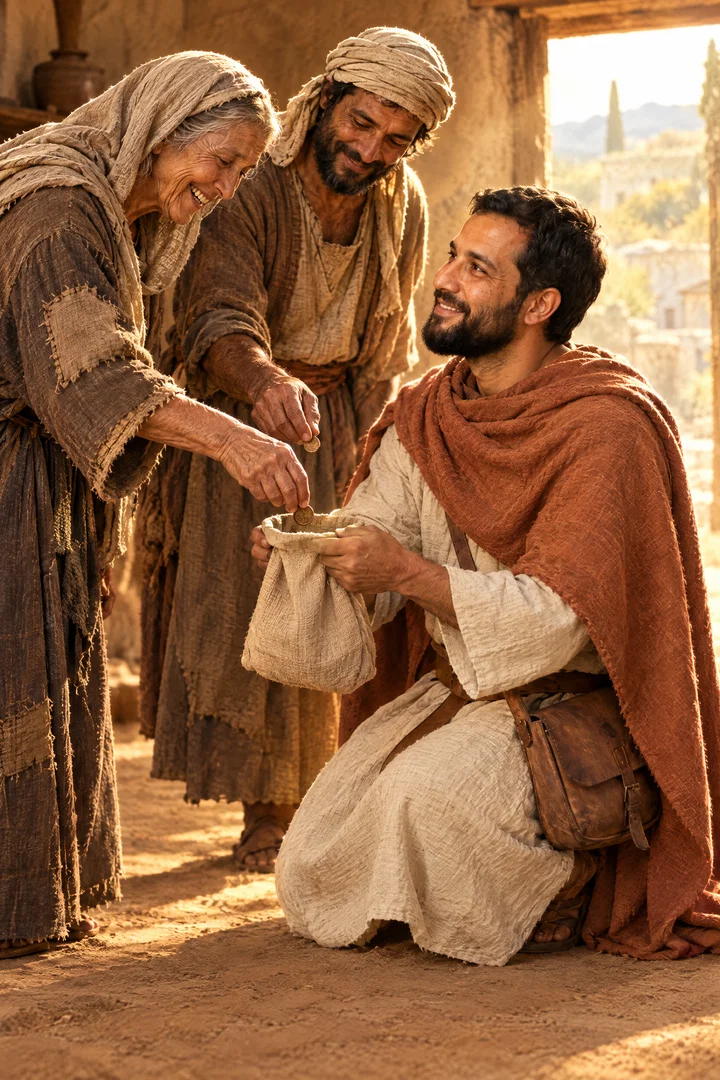
they earnestly pleaded with us for the privilege of sharing in this service to the saints.
begging us with much entreaty to receive this grace and the fellowship in the service to the saints.
Seriously requesting us that they might have a part in this grace of being servants to the needs of the saints:
And praied vs with great instance that we woulde receiue the grace, and fellowship of the ministring which is toward the Saints.
Douay-Rheims (Challoner revision)
With much entreaty begging of us the grace and communication of the ministry that is done toward the saints.
Pictures

Cross-references 20 of 30
- 2 Corinthians 8:9
For ye know the grace of our Lord Jesus Christ, that, though he was rich, yet for your sakes he became poor, that ye through his poverty might be rich.
Christ became poor so others might be enriched, motivating generous giving.
- 1 Corinthians 16:1-2
Now concerning the collection for the saints, as I have given order to the churches of Galatia, even so do ye.
Both describe regular collection for the saints according to one’s means.
- Acts 11:29-30
Then the disciples, every man according to his ability, determined to send relief unto the brethren which dwelt in Judæa:
Disciples sent relief to believers in Judea during a famine.
- 2 Corinthians 9:1-2
For as touching the ministering to the saints, it is superfluous for me to write to you:
The Corinthians’ zeal and readiness to give aid to the saints stirred others to generosity.
- Romans 15:25-27
But now I go unto Jerusalem to minister unto the saints.
Paul carries the Gentile churches’ contribution for Jerusalem’s poor saints.
- 2 Corinthians 9:7
Every man according as he purposeth in his heart, so let him give; not grudgingly, or of necessity: for God loveth a cheerful giver.
Both teach willing, cheerful giving from the heart.
- Acts 4:34-35
Neither was there any among them that lacked: for as many as were possessors of lands or houses sold them, and brought the prices of the things that were sold,
Believers brought gifts to the apostles for distribution according to each person’s need.
- Acts 20:35
I have shewed you all things, how that so labouring ye ought to support the weak, and to remember the words of the Lord Jesus, how he said, It is more blessed to give than to receive.
Both commend giving and service to others over receiving.
- 2 Corinthians 8:12
For if there be first a willing mind, it is accepted according to that a man hath, and not according to that he hath not.
A gift is accepted according to what a person has and willingly gives.
- Philippians 4:15-18
Now ye Philippians know also, that in the beginning of the gospel, when I departed from Macedonia, no church communicated with me as concerning giving and receiving, but ye only.
The Philippians repeatedly supported Paul’s ministry with gifts.
- Acts 2:44-45
And all that believed were together, and had all things common;
Believers shared their possessions to meet one another’s needs.
- 2 Corinthians 8:8
I speak not by commandment, but by occasion of the forwardness of others, and to prove the sincerity of your love.
Generous giving is offered as proof of sincere love.
- 2 Corinthians 8:11
Now therefore perform the doing of it; that as there was a readiness to will, so there may be a performance also out of that which ye have.
The Corinthians are urged to carry out their earlier pledge.
- 2 Corinthians 8:19
And not that only, but who was also chosen of the churches to travel with us with this grace, which is administered by us to the glory of the same Lord, and declaration of your ready mind:
A church-chosen companion helps administer the collection for the saints.
- 2 Corinthians 9:12
For the administration of this service not only supplieth the want of the saints, but is abundant also by many thanksgivings unto God;
The service supplies the saints’ needs and prompts thanksgiving to God.
- 1 Peter 4:10
As every man hath received the gift, even so minister the same one to another, as good stewards of the manifold grace of God.
Both describe gifts used to serve others as stewards of God’s grace.
- Galatians 2:10
Only they would that we should remember the poor; the same which I also was forward to do.
Both texts describe remembering the poor through aid for fellow believers.
- 2 Corinthians 9:1
For as touching the ministering to the saints, it is superfluous for me to write to you:
Both refer to ministry to the saints.
- Romans 15:26
For it hath pleased them of Macedonia and Achaia to make a certain contribution for the poor saints which are at Jerusalem.
The contribution supported poor believers in Jerusalem.
- 2 Corinthians 8:14
But by an equality, that now at this time your abundance may be a supply for their want, that their abundance also may be a supply for your want: that there may be equality:
Abundance supplying want fulfills the fellowship of ministering.
Commentary
Each commentary is drawn from primary sources: the writings of Ellen G. White and Adventist pioneers and periodicals. Each commentary is separate. Its own words are not a quotation; follow the references to read the source passages.
Ellen G. White
44 sources
The verse describes the poor churches of Macedonia in deep poverty and affliction begging Paul and his fellow workers to accept their money gift for the needy believers in Jerusalem and let them share in serving them.RH Feb 18, 1902Lt 28, 1900, par. 23–24Lt 289, 1907, par. 11–13Ms 111, 1899, par. 9–13Ms 16, 1900, par. 16–18 Their giving was willing and unurged, sought eagerly as a privilege and joy rather than a duty imposed from without.AA 343.1–2RH Feb 18, 1902Lt 289, 1907, par. 11–13 In abundance of joy their deep poverty overflowed in riches of liberality, giving to their power and beyond their power even to self-denial of food and clothing.Lt 28, 1900, par. 23–24Lt 289, 1907, par. 11–13Ms 16, 1900, par. 16–18Ms 98, 1899, par. 4–55T 734.2 They first gave their own selves wholly to the Lord by the will of God, keeping nothing back, and only then gave their means.AA 343.1–2Lt 289, 1907, par. 11–13Ms 16, 1900, par. 16–18 Paul set this example before the Corinthians to kindle zeal and finish the same grace in them, teaching that all means are the Lord's entrusted capital and that such liberality proves sincerity of love and completes Christian character.Ms 98, 1899, par. 4–5Ms 28, 1894, par. 2Lt 54a, 1894, par. 30–36Ms 12, 1900, par. 18–20Ms 12a, 1900, par. 16–17
Words and Historical Setting
The entreaty in the verse is the Macedonian believers earnestly, eagerly and repeatedly begging Paul and his fellow workers to receive their gift and to take upon them the fellowship of ministering to the saints.AA 343.1–2RH Feb 18, 1902Lt 28, 1900, par. 23–24Lt 289, 1907, par. 11–13Ms 16, 1900, par. 16–18 They prayed with much entreaty to be allowed to give and to share in caring for and serving fellow believers in need.AA 343.1–2RH Feb 18, 1902Lt 289, 1907, par. 11–13Ms 16, 1900, par. 16–18ST Jan 23, 1896 Their asking was voluntary and joyful, even sacrificial, flowing from first giving themselves wholly to the Lord, and they treated helping others as a privilege.AA 343.1–2Lt 289, 1907, par. 11–13ST Jan 23, 1896
The givers were the churches of Macedonia, living in great trial of affliction with deep poverty.RH Feb 18, 1902Lt 289, 1907, par. 11–13Ms 16, 1900, par. 16–18Ms 98, 1899, par. 4–55T 734.2 They included the poor believers at Philippi.SLP 174.2–175.1 Despite severe affliction their deep poverty abounded with abundance of joy unto riches of liberality.RH Feb 18, 1902Lt 289, 1907, par. 11–13ST Jan 23, 1896Ms 98, 1899, par. 4–55T 734.2
The ministering was pecuniary assistance, financial aid and a practical share in caring for the needy Christian brethren in Jerusalem and Judea.Lt 28, 1900, par. 23–24Ms 111, 1899, par. 9–13Ms 16, 1900, par. 16–1814MR 163.2–164.3Ms 101, 1906, par. 14–17 Those brethren faced deprivation after a famine, and many Christians there had been scattered abroad while those who remained were deprived of human sympathy and exposed to religious enmity.Lt 28, 1900, par. 23–24Ms 16, 1900, par. 16–18 Paul presented this contribution for the poor saints at Jerusalem in his letter to Corinth to kindle zeal and stir benevolent action.Ms 28, 1894, par. 2 Though poor and afflicted themselves, the Macedonians gave generously and rejoiced that they could help relieve suffering believers, even beyond their means.Lt 28, 1900, par. 23–2414MR 163.2–164.3Ms 101, 1906, par. 14–17
Paul at first tried to restrain the Macedonians because of their poverty, and restraint was offered to them.Ms 111, 1899, par. 9–13Ms 98, 1899, par. 4–5 They nevertheless wanted him and Barnabas to carry their contribution to Jerusalem.Ms 111, 1899, par. 9–13 They trusted Paul to convey it, and their giving expressed love and sympathy across the divide between Gentile and Jewish believers to a church poorer than their own, counting possessions only as a means of doing good.SLP 174.2–175.1
The collection for Jerusalem had been begun more than a year before and was to be gathered in and sent without further delay.Ms 16, 1900, par. 16–18 Paul both wrote about it to Corinth and sent Titus to finish in Corinth the same grace they had proposed and already begun and promised.Ms 98, 1899, par. 4–5Ms 12, 1900, par. 18–20Ms 12a, 1900, par. 16–17SLP 175.4–176.2 He was anxious that they perform what they had promised, and the Corinthians willingly responded by taking part in caring for fellow believers in need.Ms 12, 1900, par. 18–20SLP 175.4–176.2
Spirit of Willing Liberality
The giving was willing of itself and unurged, not pressed as a duty from without but eagerly and repeatedly sought as a privilege and joy.AA 343.1–2RH Feb 18, 1902Lt 289, 1907, par. 11–13ST Jan 23, 1896Ms 98, 1899, par. 4–5 No urging was needed to draw it out, for instead of waiting to be asked they prayed with much entreaty to be allowed to give and to take part in ministering to the saints.RH Feb 18, 1902Lt 289, 1907, par. 11–13ST Jan 23, 1896Ms 98, 1899, par. 4–5Ms 12, 1900, par. 15–17 In great trial of affliction their deep poverty abounded with abundance of joy unto riches of liberality by the grace of God bestowed on them.Lt 289, 1907, par. 11–13Ms 16, 1900, par. 16–18Ms 98, 1899, par. 4–5Lt 55, 1897, par. 37–39Ms 12a, 1900, par. 7–12 That liberality was the grace of God upon them through the work of the Holy Spirit on the heart, first receiving grace and then bestowing grace and receiving grace more abundantly as they imparted.Lt 289, 1907, par. 11–13Ms 16, 1900, par. 16–18Lt 37, 1895, par. 8–11
They gave to their power and beyond their power, even beyond their means.Lt 28, 1900, par. 23–24Lt 289, 1907, par. 11–13Ms 16, 1900, par. 16–18Ms 98, 1899, par. 4–514MR 163.2–164.3 The contribution rejoiced to help Christians in Jerusalem facing deprivation after famine, and joy in giving carried them past what ability seemed to allow.Lt 28, 1900, par. 23–24Ms 16, 1900, par. 16–1814MR 163.2–164.3Ms 99, 1893, par. 4–6 Paul had expected only a limited sum and was happily disappointed and greatly surprised at both the amount given and the wholehearted, eager manner in which it was bestowed, for their self-denial and self-sacrifice far exceeded expectation.Ms 16, 1900, par. 16–18Ms 98, 1899, par. 4–5Ms 12, 1900, par. 15–17 They first gave their own selves wholly to the Lord and to His workers by the will of God, keeping nothing back and consecrating themselves and all they had, and only then gave their means.Lt 289, 1907, par. 11–13Ms 16, 1900, par. 16–18ST Jan 23, 1896Ms 98, 1899, par. 4–5Ms 12, 1900, par. 15–17 This order was the reason for all the rest, that having given themselves they came forward of themselves to give what they possessed.AA 343.1–2Ms 98, 1899, par. 4–5Lt 55, 1897, par. 37–39Ms 12a, 1900, par. 7–12Lt 37, 1895, par. 8–11
Their liberality was self-denial and self-sacrifice, even denying themselves food and clothing to make the offering.AA 343.1–2Ms 98, 1899, par. 4–55T 734.2Ms 98, 1899, par. 1–3 They counted possessions only as a means of doing good, and despite their own poverty helped a church poorer than their own.AA 343.1–2Ms 98, 1899, par. 1–3SLP 174.2–175.1 Their charitable service flowed from Christ's grace and self-sacrificing love and the special working of the Holy Spirit on the heart.Ms 99, 1893, par. 4–6Lt 37, 1895, par. 8–11ST Jan 23, 1896Ms 12, 1900, par. 18–20 Yielding to the divine Spirit drew them to Christlike compassion, gratitude to Christ for the knowledge of the Lord Jesus, love for fellow believers, trust in God, and obedience in meeting obligation in harmony with God's will to glorify the Father and advance His glory.Ms 99, 1893, par. 4–66T 271.3–4Ms 98, 1899, par. 1–3ST Jan 23, 1896Ms 12, 1900, par. 18–20
Example to Stir Others
Paul used the Macedonian entreaty to be allowed to give in his letter to Corinth to kindle zeal and stir benevolent action for the poor saints at Jerusalem.Ms 98, 1899, par. 4–5Ms 28, 1894, par. 2 Their praying with much entreaty to receive the gift and share the fellowship of ministering to the saints was held up to arouse Corinth to contribute and to finish in them the same grace they had proposed and begun.Ms 28, 1894, par. 2Ms 40, 1900, par. 3Ms 12, 1900, par. 18–20 The aim was that as Corinth abounded in faith and utterance and knowledge and diligence and love, they would abound in this grace also, performing what they had promised through grace working on their hearts.Ms 98, 1899, par. 4–5Ms 12, 1900, par. 18–20 This arousing of the same spirit in Corinth was a movement of the inspiration of God, showing the special working of the Holy Spirit on believers, and Paul took courage from Macedonia to send Titus to stir up Corinth to the same good works.Ms 98, 1899, par. 4–5Ms 12, 1900, par. 18–20
One correct example is worth more than many commands, because example moves people much further than theory or commands.Ms 40, 1900, par. 3Lt 55, 1897, par. 37–39 A life of self-denial and self-sacrifice in common labor fits a person to organize good works.Ms 40, 1900, par. 3
No command was laid on Corinth, but the Macedonian example was set before them to induce giving, since Macedonia had fewer advantages and less ability than Corinth.Ms 12, 1900, par. 18–20Ms 12a, 1900, par. 16–17 Paul both wrote and sent Titus lest Corinth be outstripped in liberality by the comparatively poor Macedonian churches.Ms 12, 1900, par. 18–20 What he desired was symmetry of Christian character, evidence of love, proof of the sincerity of faith, a lively sense of obligation and accountability to God for the gospel and its power working in them, testimony by yielded fruit to God's honor, and diligent discharge of every duty as Christians under God's control.Ms 12, 1900, par. 18–20Ms 12a, 1900, par. 16–17 Every converted soul who appreciates God's rich gifts will show great benevolence in returning His due to sustain every good work and advance His kingdom, and such liberality completes Christian character and symmetry of faith, counterworks selfishness and self-indulgence, bears the true fruit of God's vineyard, and gives the best tangible evidence of faith and love expressed in deeds.Ms 12a, 1900, par. 16–17
Openly telling of the Macedonians' generous self-sacrifice as proof of the grace Christ wrought in them does not break Christ's command to give alms in secret.ST Apr 7, 1909 That command forbids charity done to secure praise and honor from men, not all knowledge of kind acts.ST Apr 7, 1909 When told with self hidden and Christ magnified to glorify God the Giver rather than the receiver, such reporting puts the same spirit in others and stirs very many to zeal, inspiring others to give.ST Apr 7, 1909
Principles of Christian Stewardship
The pleading to receive the gift and share in ministering to the saints sets forth the true basis of charity according to the Word of God.Ms 16, 1900, par. 16–18 That ministering was pecuniary assistance for the brethren in Jerusalem in a time of famine, when many Christians there had been scattered abroad and those who remained were deprived of human sympathy and exposed to religious enmity.Ms 16, 1900, par. 16–18 The collection had been begun more than a year before and was to be gathered in and sent without further delay, and though in great trial of affliction and deep poverty the Macedonians gave to their power and beyond their power of themselves, with abundance of joy, exceeding expectations, having first given themselves to the Lord.Ms 16, 1900, par. 16–18 The whole matter of gaining God's blessing through giving is outlined in the eighth and ninth chapters of Second Corinthians, where believers came to the apostles and laid their offerings at their feet, pleading to be allowed to give and to take part in ministering to the saints.Ms 58, 1905, par. 7 Those chapters contain the Lord's work and His directions on giving, to be taken as Bible principles and as counsellor, and when God's people follow those directions God is glorified in them and the glory of the Lord is their rereward.Ms 58, 1905, par. 7Lt 5, 1897, par. 34 When God by His Spirit stirs the hearts of His people to see the necessities of the work, they deny self and gifts flow into the treasury for the proclamation of the message for this time.Ms 58, 1905, par. 7
Devoting means to God goes with giving oneself to His service.Lt 54a, 1894, par. 30–36Lt 55, 1897, par. 37–39 All that is possessed is the Lord's entrusted capital given to test whether men will serve Him.Lt 55, 1897, par. 37–39 Faithfulness in giving self, time, labor and money is accepted as a token of loyalty and decides fitness for His heavenly kingdom.Lt 55, 1897, par. 37–39 Believers in deep poverty with large families dependent on daily labor in hard and trying times earnestly ask for the privilege of sharing in ministering to the saints, giving to their power and beyond their power willingly of themselves, as in giving liberally to build a humble church where they can assemble to worship God and let their light shine to others.Lt 54a, 1894, par. 30–36 Such liberal giving is blessed by the Lord, for all that one has and is belongs to the Lord to be used without waste and without selfishness to help brethren.Lt 54a, 1894, par. 30–36 The Macedonians begged Paul to accept their money and to let them have a part in helping the poor saints at Jerusalem, and Paul held up their act before the Corinthians to move them to give for the same need, because example moves people much further than theory or commands.Lt 55, 1897, par. 37–39
Large wealth or high education is not essential to take part in this blessed service.Lt 37, 1895, par. 8–11 True liberality begs with much entreaty for the privilege of giving and sharing in ministering to the saints.Ms 1, 1901, par. 29–30Lt 37, 1895, par. 8–11 Their liberality is the grace of God bestowed on them through the work of the Holy Spirit on the heart, first receiving grace and then bestowing grace and receiving grace more abundantly as they impart, having first given their own selves to the Lord by the will of God.Lt 37, 1895, par. 8–11 The church has not lost this benevolent spirit but is to be workers together with God, bringing firstfruits to God and meeting rich blessing.Lt 37, 1895, par. 8–11 Giving liberally of the Lord's entrusted means meets the pressing emergencies that arise in aggressive warfare, helps God's people see things in a correct light, and teaches that as they impart they receive, for God gives to them that they may give to others.Ms 1, 1901, par. 29–30
Such liberality completes Christian character and symmetry of faith.Ms 12, 1900, par. 18–20Ms 12a, 1900, par. 16–17 It gives evidence of love and proof of the sincerity of faith, with a lively sense of obligation and accountability to God for the gospel and its working in them as the power of God.Ms 12, 1900, par. 18–20 It reveals the power of the truth in counterworking selfishness and self-indulgence, bears the true fruit of God's vineyard to His honor, and gives the very best tangible evidence of the sincerity of faith and of love expressed in deeds.Ms 12, 1900, par. 18–20Ms 12a, 1900, par. 16–17 Every converted soul who appreciates the rich endowment of God's gifts will show great benevolence, returning to God His due by sustaining every good work and advancing His kingdom, and such liberality is required of all who have received God's great gift.Ms 12a, 1900, par. 16–17 The movement showed the special working of the Holy Spirit on the hearts of believers and encouraged Paul to have Titus visit the Corinthian church to finish the collection they had proposed and already begun, anxious that they perform what they had promised through the grace of God working on their hearts, lest the Corinthians be outstripped in liberality by the comparatively poor Macedonian churches.Ms 12, 1900, par. 18–20Ms 12a, 1900, par. 16–17 The character revealed by the Macedonians gave Paul great satisfaction and joy at their gratitude for the knowledge of the Lord Jesus Christ, and they felt it their highest privilege to comply with the requirements of God by liberality to advance His glory, with diligent discharge of every duty as Christians under the control of God.Ms 12, 1900, par. 18–20Ms 12a, 1900, par. 16–17
Present Call to Give
The record stands for study so that believers may learn that liberal spirit and receive the blessings that redound to liberality.Lt 289, 1907, par. 11–13 Reading the eighth chapter in the churches gives the inspiration of liberality for pressing emergencies in aggressive warfare.Ms 1, 1901, par. 29–3017MR 44.5–45.2 It belongs to a chapter commended as an example able to inspire churches to give willingly for God's work and to help others.17MR 44.5–45.2
Giving to the destitute is a sought privilege that poverty does not take away.Ms 12, 1900, par. 11–12Ms 101, 1906, par. 18–19 Even those who are poor, with large families dependent on daily labor in hard and trying times, are not shut out but earnestly ask for the privilege of sharing in ministering to the saints, giving to their power and beyond their power willingly of themselves.Lt 54a, 1894, par. 30–36Ms 12a, 1900, par. 7–12 Brethren scattered abroad are called to earnestly desire a share in it and to supply need where help is required.Ms 12, 1900, par. 11–12Ms 101, 1906, par. 18–19 Children also are called to a willing part in serving others by self-denying offerings for God's work and missionary needs.7MR 9.3 Where help is needed in advancing the cause, even the poor receive a heart to give gladly as a privilege.Ms 12a, 1900, par. 7–12Ms 101, 1906, par. 18–19
When God by His Spirit stirs hearts to see the necessities of the work, believers deny self and gifts flow into the treasury for the proclamation of the present message for this time.Ms 58, 1905, par. 7 Self-denial and self-sacrifice in giving bring rich blessings flowing in upon God's people.Ms 100, 1899, par. 1–3 Providing for a field by large outside donations instead of letting the local people deny themselves to supply the need deprives them of that blessing.Ms 100, 1899, par. 1–3
The earnest request to take part in ministering to the saints is instruction for parents and children to understand and practice by giving themselves to the Lord and supporting His work.Ms 71, 1900, par. 4–5 Churches are thereby taught to give liberally and to consider the needs of sister churches rather than act selfishly, gladly sharing to help saints whose need is greater than their own.Ms 28, 1894, par. 5–6
Applied to particular enterprises, it calls for generous, united giving without complaint even amid many local calls to sustain the work in their own borders.Ms 1, 1901, par. 29–30 At an important time nothing is to be left undone to close the Washington fund during the General Conference, through presenting the matter with clearness in the churches and from house to house and gathering families for prayer with hearts made tender by the Holy Spirit.Lt 130, 1905, par. 9–10 It calls to supply the necessary means for a substantial, economical building for the Sydney Sanitarium to uplift people, as a memorial to uplift the suffering and train workers, where even the poor give gladly to advance the cause.Ms 12a, 1900, par. 7–1211MR 222.2–223.3Ms 12, 1900, par. 11–12 For the neglected Southern Field it requires giving means to better the condition of that hard, destitute field, using the entire profits of the books for it, refusing to divert that means to fields that have much better advantages in every way, and making restitution by doing more than beginning where work should have begun years ago.Ms 164, 1897, par. 12–13 Toward the work and institutions in Scandinavia believers should contribute so that the work can be freed from debt and continue.Ms 148, 1901, par. 12–15 Funds needed for advance moves in unworked foreign fields when the field is ready should not be withheld from selfish motives, but given freely even out of deep need.Ms 11, 1908, par. 7
Generosity should be studied alongside self-denial and putting means to God's use rather than wasting it on selfish wants.Lt 168, 1896, par. 5 All that one has and is belongs to the Lord to be used without waste and without selfishness to help brethren.Lt 54a, 1894, par. 30–36 Such liberal giving is blessed by the Lord, as in giving liberally to build a humble church where believers can assemble to worship God and let their light shine to others.Lt 54a, 1894, par. 30–36 It moves believers to support those who lack resources and to advance every needed good work and the kingdom.11MR 222.2–223.3Ms 111, 1899, par. 22–23
Sources
Pioneers and periodicals
60 sources
The verse describes the collection for the poor saints in Jerusalem and Judea, gathered from churches across the Christian world and sent through Paul and his companions for distribution.RH May 15, 1900RH Jul 29, 1862ST Aug 7, 1893 The Macedonian believers urgently and repeatedly begged Paul to receive their gift and let them share in this service of giving to the saints.RH Feb 18, 1902ST Oct 23, 1893RH Jan 6, 1910 They did so in great affliction and deep poverty, yet giving willingly up to and beyond their ability with abundant joy and liberality.RH Feb 18, 1902ST Jan 23, 1896RH Dec 24, 1901 Their readiness flowed from first giving their own selves to the Lord by the will of God, as proof of true willingness to sacrifice.ST Jan 23, 1896RH Jun 24, 1915ST Jul 8, 1889 Such willingness to give is a grace from God and a sign of His grace at work, to be cultivated through action, following Christ who gave Himself to redeem and purify His people.RH Dec 24, 1901ST Feb 7, 1878ST Mar 25, 1889ST Nov 22, 1899ST Jan 28, 1875
Words and Historical Setting
The word rendered ministering is diakonia, meaning service, ministry, ministration, or deaconship, and fellowship means sharing in that service to the saints.RH Oct 15, 1861RH Dec 12, 1854 In this connection grace means the fruits or gifts of God's Spirit shown in gracious generosity in giving and sharing in ministry, though the same word can also mean God's unmerited kindness, with its sense decided by the context.ST Jul 8, 1889
The verse concerns the collection gathered for the poor saints, the poor Christians and afflicted believers in Jerusalem and Judea in Palestine.RH May 15, 1900ST Oct 14, 1889RH Jul 29, 1862ST Oct 9, 1879 That collection was for the disciples, and possibly also for poor people who were not disciples.ST Aug 7, 1893 Contributions were received by Paul and his companions and the apostles from churches across the Christian world, including Macedonia, Achaia and Corinth, and were sent through Paul for distribution to the poor saints at Jerusalem.ST Oct 14, 1889RH Mar 9, 1911 Paul received and forwarded these gifts even while carrying heavy burdens and facing continual persecution.RH Mar 9, 1911 The early Christians supported this work of relief themselves rather than by fairs, festivals, or other questionable fundraising measures.ST Oct 9, 1879 The Macedonian believers eagerly sought and pleaded to take part in it as an expression of sympathy with fellow believers, regarding helping them as a privilege, and amid deep poverty and affliction they gave beyond what they could ordinarily afford and beyond their means.RH May 15, 1900ST Oct 14, 1889RH Jul 29, 1862
The Macedonian churches were at Philippi, Thessalonica and Berea, founded after the Lord called Paul to Macedonia in a night vision, amid imprisonment and persecution, under the lasting influence of the self-sacrificing example of Paul, Timothy, Titus, Silas and others.RH Jun 24, 1915 In that setting the grace of God worked mightily, so that in great trial of affliction with abundant joy and deep poverty these converts became rich in liberality, giving up to their ability and beyond their ability of their own will, begging earnestly to be permitted to give and to share in serving the saints, having first given themselves to the Lord and to the apostles by the will of God as proof of true willingness to give and sacrifice.RH Jun 24, 1915
Paul worked actively to gather the contributions and urged the churches to give regularly and generously.RH Dec 13, 1870 He would have declined the Macedonians' gift because of their deep poverty, but despite that poverty they eagerly and earnestly asked him to accept it and let them share in ministering to the saints, giving liberally, willingly, and even beyond their means.ST Jun 28, 1883 The verse belongs to his appeal for the Corinthians to join that benevolent work of relieving the poor saints in Jerusalem, and the second letter to the Corinthians explains the motives that should move them to join it.RH Jun 9, 1859
Macedonians' Eager Generosity
The Macedonians with much entreaty urgently, eagerly and repeatedly begged Paul and his companions and the apostles to receive the gift and to take upon them the fellowship of ministering to the saints, treating this service of giving as something to be sought by earnest appeal.RH Feb 18, 1902ST Jan 23, 1896ST Oct 23, 1893ST Oct 23, 1893RH Dec 24, 1901 They counted it a grace in which they desired to take part, and asked to share in the ministry of providing for the saints as a willing act of fellowship in caring for fellow believers.ST Oct 23, 1893RH Jan 6, 1910ST Oct 23, 1893 Their pleading was to be allowed to accept a share in serving the saints even though they were in deep poverty, and their generosity was willing and abundant despite severe affliction.RH Feb 18, 1902ST Jan 23, 1896RH Dec 24, 1901
They did so in great trial of affliction with abundant joy and in deep poverty, yet became rich in liberality, giving willingly of themselves and of their own will up to their ability and beyond their ability.RH Dec 24, 1901RH Jun 24, 1915ST Jul 8, 1889 They gave beyond what they could ordinarily afford or easily afford, with a spirit of sacrifice that needed no urging, and its exercise brought them joy even amid hardship.RH Dec 24, 1901ST Feb 7, 1878RH Jul 29, 1915 Their generosity despite deep poverty was an expression of God-given grace that must be cultivated through action and that helps overcome selfishness and covetousness.RH Dec 24, 1901ST Feb 7, 1878
Their readiness flowed from first giving their own selves to the Lord and then to the apostles and to His workers and servants by the will of God, surrendering wholeheartedly as proof of true willingness to give and sacrifice.ST Jan 23, 1896RH Jun 24, 1915ST Jul 8, 1889RH Jul 29, 1915RH Nov 23, 1905 Their generosity went beyond their means because it flowed from first giving themselves to the Lord and then serving by God's will.ST Jan 23, 1896RH Jun 24, 1915ST Jul 8, 1889 This shows that a church need not wait years before organizing systematic benevolence, but begins with gospel experience, for their readiness to give began with that experience despite deep poverty and severe affliction.RH Jun 24, 1915
They regarded sharing in ministering to the saints as a grace, privilege and fellowship, and earnestly asked to take part in that work and to share in giving and in fellowship in ministering to the saints.ST Oct 23, 1893RH Jan 6, 1910ST Oct 23, 1893RH Jul 29, 1915RH Nov 17, 1910 It was to them an expression of sympathy, love for the cause embraced, willing sacrifice and wholehearted love for missions, rejoicing in the gift.ST Oct 23, 1893ST Oct 23, 1893RH Dec 24, 1901ST Feb 7, 1878RH Nov 17, 1910 Told as mission offerings, believers are to give themselves fully to the Lord first, then dedicate their money and hearts to God as they give.ST Jan 23, 1896RH Nov 17, 1910
Grace and True Motives
The verse shows the grace of giving that the Corinthians were to develop, for willingness to give is itself a grace from God and a sign of His grace at work in the heart.RH Dec 24, 1901ST Feb 7, 1878ST Mar 25, 1889 Liberality stands among the Christian graces, and both the desire to give and the act of giving are a gift of God.ST May 28, 1896RH Apr 16, 1901 This grace must be cultivated through action, and its exercise brings joy even amid hardship while helping to overcome selfishness and covetousness.RH Dec 24, 1901ST Feb 7, 1878 In this connection grace denotes the fruits or gifts of God's Spirit seen in generous giving and sharing in ministry to the saints, though the word can also mean God's unmerited kindness according to context.ST Jul 8, 1889
Such giving was evidence that the givers had received Christ's grace and a test of the sincerity of their love, not a means of earning God's favor.ST Nov 6, 1893 Christians are to show the same self-giving spirit, letting deeds of care accompany words of love.ST Nov 6, 1893RH Mar 9, 1911 Their charitable service flows from giving themselves to the Lord and yielding to the divine Spirit, which draws them to Christlike compassion, leads them to meet obligation in harmony with God's will, and glorifies the Father.ST Jan 23, 1896 Through this voluntary ministry, given even beyond means, believers serve the gospel and prove the sincerity of their love.RH Apr 16, 1901
Giving for the needs of the saints is a ministry and an important work approved by God, one believers may eagerly ask to share in, to be given willingly rather than under compulsion.ST Jul 15, 1889 The same principles of systematic benevolence apply, laying by in store as God has prospered, to sustain God's cause and to equalize the burden of sacrifice so that some are not eased and others burdened, done not by compulsion but freely and as a privilege.RH Feb 26, 1867 It is a privilege and ministry rather than a commercial exchange, in which every believer should contribute, the rich from abundance and the poor even in small amounts, with giving shaped by Scripture rather than by fundraising schemes that make people pay for an equivalent benefit.RH Oct 10, 1871
Their generous self-sacrifice came from Christ's grace and example, for He gave Himself to redeem from all iniquity and purify a people zealous of good works.ST Nov 22, 1899RH Nov 5, 1914 Christ's self-giving grace moved them to still greater sacrifice, even beyond their means despite deep poverty and severe affliction.ST Jan 28, 1875 Remembering God's unspeakable gift encourages generous contribution for suffering fellow believers, for He brought them from darkness into Christ's kingdom and made mortal people heirs of everlasting life.ST Jul 17, 1884 Turning thoughts first to the resurrection of the Son of God and eternal life likewise encourages willingness to give money to needy Christians and to share in serving them.RH Mar 2, 1916
Such giving makes God's cause and its advancement the first and most important object in all plans and labors, using the power to get wealth to establish His covenant rather than hoarding it selfishly, and not counting even their own lives dear so the gospel work might be advanced.RH Nov 23, 1905 Those bought with a price hold all they possess in trust as stewards to be used at the Spirit's bidding, demonstrating the mutual dependence of the body of Christ.RH Mar 5, 1901 God's gifts are therefore to be used unselfishly in service to others, for ministry to the saints is a shared responsibility and an expression of God's grace entrusted to stewards who are accountable for how they use it.ST Jul 8, 1889
Teaching and Encouraging Giving
The verse belongs to the teaching about offerings in chapters 8 and 9 on the grace of liberality.ST Jul 15, 1889ST Dec 18, 1893ST Sep 8, 1909 That instruction emphasizes commanded generosity, giving of oneself as the basis of true liberality, the example of Christ, and how to give.ST Dec 18, 1893 It is to be read with Malachi 1 and Malachi 3:8-12, where joyous, bountiful giving comes from first giving one's own self to the Lord, following Christ who gave Himself to redeem from all iniquity and purify a people zealous of good works.ST Nov 22, 1899 Giving for the needs of the saints is a ministry that believers may eagerly ask to share in, an important work approved by God and to be given willingly rather than under compulsion.ST Jul 15, 1889
The systematic giving of the Corinthians was presented as an incentive to the Macedonians, showing that good works may be made known to inspire others without seeking human praise.RH Jan 23, 1872 The liberality of the Corinthians was reported to others whose zeal was stirred by the example, and such reports could also encourage fulfillment of unpaid pledges, with giving and reporting seeking God's glory and not praise for the givers.RH Dec 24, 1872 The Macedonian Christians eagerly asked to share in the service of helping the saints, their generous self-sacrifice came from Christ's grace, and telling of it could inspire others to serve.RH Nov 5, 1914
Paul openly told of the generous self-sacrifice of the Macedonian Christians as proof of the grace Christ had wrought in them.ST Apr 7, 1909 Such public telling does not break the command to give alms in secret, because that command forbids charity done to secure praise and honor from men, not all knowledge of kind acts.ST Apr 7, 1909 Told with self hidden and Christ magnified, to glorify God the Giver rather than the receiver, it puts the same spirit in others and stirs very many to zeal.ST Apr 7, 1909
Present Applications for Giving
The generous gifts of the Macedonians for the cause of Christ stand as an example worthy of notice and imitation.ST Jan 24, 1906 Giving to support fellow believers is a share in ministry to the saints, a service that may rightly be sought with earnest appeal, and this urges all believers, including those living apart from a church, to give liberally to support God's cause.RH Dec 10, 1872 Giving to support God's work is a willing act of fellowship in serving the saints, bound up with the duty to sacrifice means to sustain the cause and to gladly support those sent out to preach.RH May 1, 1855 Believers eagerly pleaded for the opportunity to share in supporting ministry to fellow Christians, and this calls believers in Indiana to accept responsibility for sustaining preaching and providing a meeting place through systematic giving, rather than relying on more faithful believers in Michigan.RH Jan 16, 1872
When God's Spirit opens eyes to see the needs of His work, people deny themselves and give so the truth can be proclaimed. Believers are to give themselves fully to the Lord first, then dedicate their money and hearts to God in mission offerings, treating this service as a privilege earnestly asked for.RH Nov 17, 1910 All who profess to love His coming must give themselves and their means to send the gospel to earth's remotest bounds and do with their might what their hands find to do, that His coming may be delayed no longer.ST Dec 25, 1901
Liberal offerings to arise and build come from self-surrender and from conviction that what has to be done must be done speedily.RH Jul 29, 1915 This was seen in poverty yet liberality, in a spirit of sacrifice that needed no urging, in earnestly asking to share in giving and in fellowship in ministering to the saints because they first gave themselves to the Lord and to His workers by the will of God.RH Jul 29, 1915 The same is illustrated when brethren contribute liberally despite difficulties to help build a meeting-house.RH Jan 12, 1869
The same willing participation was followed by the South Dakota churches, which gave generously for relief of the schools despite poor crops and little money, continuing generosity despite deep poverty and hardship.RH Aug 7, 1900 Even small and poor believers earnestly ask for the privilege of fellowship in ministering to the saints by sharing resources with needy fields abroad, giving not from abundance but from love for missions and rejoicing in the gift, including sharing tithe for missionary work in regions beyond.RH Jun 4, 1908 Poor Brazilian brethren showed this willing participation by unsolicited offerings for the work, testifying that they did not regard giving as a heavy burden.RH Aug 20, 1903 A pious African illustrated it by eagerly offering a contribution to send the gospel to others and insisting on giving it even when the missionary thought it more than he could afford, in willing, sacrificial participation in gospel work.ST Feb 7, 1884 Widows gave to Armenian orphans and Chinese Christians despite poverty, even surrendering portions of food, as fellowship in serving fellow believers by willingly giving to meet their needs. Christian boys showed self-denial by giving part of needed food for foreign missions, as a share in serving fellow believers through support of mission work.ST Jul 13, 1915
This service of support for needy believers, urged with the request that the gift be accepted and the share in serving the saints be granted, could involve a church-chosen, specially appointed worker traveling with a minister to oversee financial aid for the poor, allowing the minister more time for study and preaching.CO 35.3 Giving across great distances and despite poverty displays unity in Christ and sacrifice, as believers urge others to accept their gift and their participation in serving the saints.ST Jul 8, 1889
Giving for the needs of fellow believers is a privilege and a ministry, not a commercial exchange, and every believer should contribute, the rich from abundance and the poor even in small amounts, with giving shaped by Scripture rather than by fundraising schemes that make people pay for an equivalent benefit.RH Oct 10, 1871 The early Christians supported the work of aiding poor Christians in Jerusalem themselves rather than using fairs, festivals, or other questionable fundraising measures.ST Oct 9, 1879 No secondary machinery was needed to move them to charity, no bazaar, bad dinner, ball, garden party, public meeting with a speech, or organization inviting purchase of worthless articles at ridiculous prices, for they gave freely and willingly in response to exhortation to send relief to suffering fellow Christians.ST Aug 20, 1896
Liberality is one of the Christian graces, and urging it is not discussing temporal matters on the Sabbath, so believers may be exhorted to give on the Sabbath and should not come before the Lord empty-handed.ST May 28, 1896 When selfishness and covetousness are put away, people give willingly to support God's cause, eagerly pleading to share in helping the saints and to take part in the ministry of giving, following the giving of themselves to the Lord and extending even beyond what they could easily afford.RH Dec 18, 1900
Sources