Translations
American King James Version, Webster Bible
But now I go to Jerusalem to minister to the saints.
King James Version, KJV Cambridge Paragraph Bible
But now I go unto Jerusalem to minister unto the saints.
Revised Version, American Standard Version
but now, I say, I go unto Jerusalem, ministering unto the saints.
And, now, I go on to Jerusalem, ministering to the saints;
but now I go to Jerusalem, ministering to the saints;
But, now, I am journeying unto Jerusalem, ministering unto the saints;
Berean Standard Bible, Majority Standard Bible
Now, however, I am on my way to Jerusalem to serve the saints there.
But now, I say, I am going to Jerusalem, serving the saints.
But now I go to Jerusalem, taking help for the saints.
But now go I to Hierusalem, to minister vnto the Saints.
Douay-Rheims (Challoner revision)
But now I shall go to Jerusalem, to minister unto the saints.
Pictures
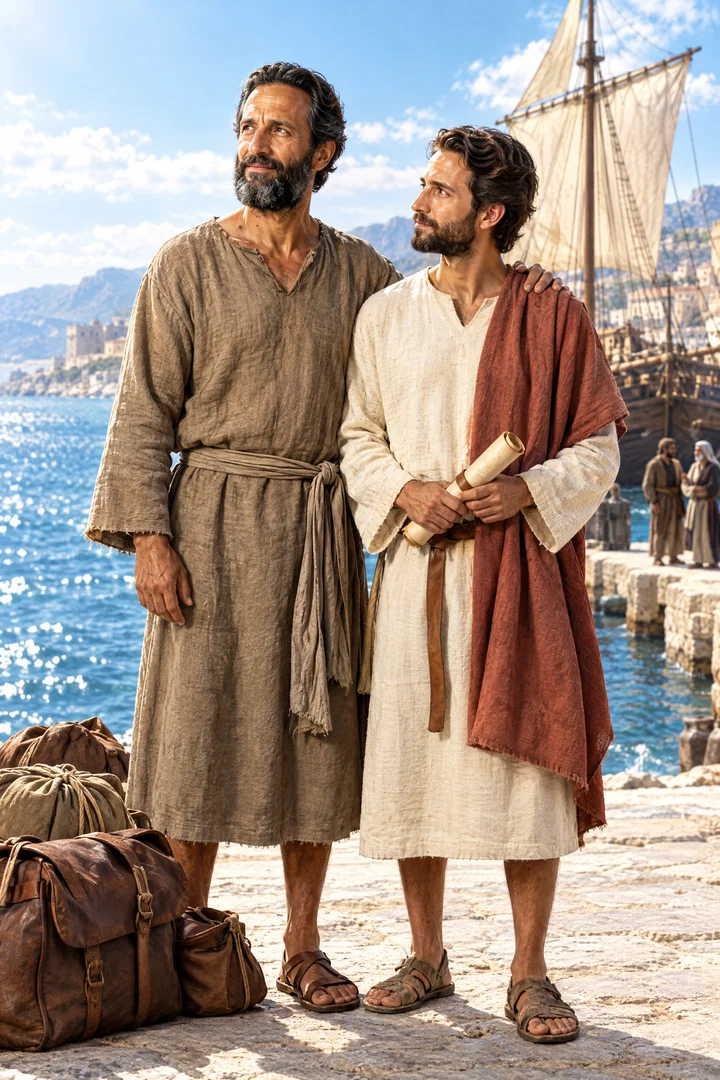
Cross-references
- 1 Corinthians 16:1-4
Now concerning the collection for the saints, as I have given order to the churches of Galatia, even so do ye.
Paul’s collection and arrangements for carrying aid to the Jerusalem believers.
- 2 Corinthians 8:1-4
Moreover, brethren, we do you to wit of the grace of God bestowed on the churches of Macedonia;
The Macedonian churches gave generously to minister to needy believers.
- 2 Corinthians 9:1-5
For as touching the ministering to the saints, it is superfluous for me to write to you:
Paul describes preparing a generous gift for the saints in Jerusalem.
- Acts 11:29-30
Then the disciples, every man according to his ability, determined to send relief unto the brethren which dwelt in Judæa:
Believers sent relief to Christians in Judea.
- Acts 21:15
And after those days we took up our carriages, and went up to Jerusalem.
Records Paul and his companions setting out for Jerusalem with the gathered aid.
- Galatians 2:10
Only they would that we should remember the poor; the same which I also was forward to do.
Paul’s aid to the Jerusalem saints fulfilled the request to remember the poor.
- Acts 24:17
Now after many years I came to bring alms to my nation, and offerings.
Paul came to Jerusalem bringing aid for his people.
- Acts 20:4
And there accompanied him into Asia Sopater of Berea; and of the Thessalonians, Aristarchus and Secundus; and Gaius of Derbe, and Timotheus; and of Asia, Tychicus and Trophimus.
Representatives accompanied Paul on his journey to Jerusalem with the collection.
- Acts 4:32-37
And the multitude of them that believed were of one heart and of one soul: neither said any of them that ought of the things which he possessed was his own; but they had all things common.
Sharing among believers helped leave the Jerusalem church in need.
- 1 Corinthians 16:1
Now concerning the collection for the saints, as I have given order to the churches of Galatia, even so do ye.
both describe collection for Jerusalem saints
- Acts 19:21
After these things were ended, Paul purposed in the spirit, when he had passed through Macedonia and Achaia, to go to Jerusalem, saying, After I have been there, I must also see Rome.
Both state Paul’s purpose to go to Jerusalem and then to Rome.
- Acts 20:2-3
And when he had gone over those parts, and had given them much exhortation, he came into Greece,
Paul’s journey was associated with the contribution for the saints.
- 1 Corinthians 1:2
Unto the church of God which is at Corinth, to them that are sanctified in Christ Jesus, called to be saints, with all that in every place call upon the name of Jesus Christ our Lord, both theirs and ours:
both call living Christians saints
- 2 Corinthians 8:12-14
For if there be first a willing mind, it is accepted according to that a man hath, and not according to that he hath not.
Willing giving shares abundance to supply the needs of others.
- Psalms 16:3
But to the saints that are in the earth, and to the excellent, in whom is all my delight.
Listed as another use of the word “saint.”
- 2 Corinthians 9:5-7
Therefore I thought it necessary to exhort the brethren, that they would go before unto you, and make up beforehand your bounty, whereof ye had notice before, that the same might be ready, as a matter of bounty, and not as of covetousness.
Describes the generous, willing spirit of the contribution.
- Acts 2:44-45
And all that believed were together, and had all things common;
Believers shared their possessions, preceding the Jerusalem believers’ poverty.
- Philippians 1:1
Paul and Timotheus, the servants of Jesus Christ, to all the saints in Christ Jesus which are at Philippi, with the bishops and deacons:
both call living Christians saints
- Colossians 1:2
To the saints and faithful brethren in Christ which are at Colosse: Grace be unto you, and peace, from God our Father and the Lord Jesus Christ.
both call living Christians saints
- 2 Corinthians 1:1
Paul, an apostle of Jesus Christ by the will of God, and Timothy our brother, unto the church of God which is at Corinth, with all the saints which are in all Achaia:
both call living Christians saints
Commentary
Each commentary is drawn from primary sources: the writings of Ellen G. White and Adventist pioneers and periodicals. Each commentary is separate. Its own words are not a quotation; follow the references to read the source passages.
Ellen G. White
7 sources
But now going to Jerusalem to minister to the saints means traveling there to serve the believers by bringing material aid for the poor Christians in Judea and Jerusalem.Ms 95, 1906, par. 44–46SLP 194.2AA 389.1SLP 174.2–175.1SLP 208.2–209.1 That ministering was his duty, and it stands as duty for believers.7MR 270.1–271.3 The aid was a contribution gathered by believers in Macedonia and Achaia, that is, gifts and contributions from Gentile churches and converts collected by other churches.Ms 95, 1906, par. 44–46SLP 194.2AA 389.1SLP 174.2–175.1SLP 208.2–209.1
The offerings relieved poor Jewish Christians.SLP 174.2–175.1SLP 208.2–209.1 They expressed the Gentile disciples' love, fellowship, and sympathy for the Jewish church and their desire for harmony with Jewish believers.SLP 174.2–175.1SLP 208.2–209.1 By his visit and the aid, Paul hoped to meet the Jerusalem church, ease his countrymen's prejudice toward the gospel, ease divisions, and strengthen the bond and unity between Jewish and Gentile believers.SLP 194.2AA 389.1SLP 174.2–175.1
This service helped open the way for him to preach in Jerusalem to those who did not believe that Jesus had risen and was the Son of God.Ms 95, 1906, par. 44–46 Paul took care to administer the funds transparently, bringing delegates chosen by the churches as joint trustees.SLP 208.2–209.1 The gift fulfilled his earlier commitment to remember the poor, had required much time and labor to gather, and was given freely even by churches whose members were deeply poor.SLP 208.2–209.1
Paul's going teaches duty for believers: guarding the door of the lips, refusing to speak unadvisedly or to listen to faultfinding and criticism, speaking kindly and tenderly, confessing sins and seeking forgiveness from God, and striving together in prayer for God's workers rather than tearing down.7MR 270.1–271.3 Serving God's people requires sanctified brain-power and sanctified talent of speech, and only when both are made holy is a person fitted for such service.5MR 65.3
Sources
Pioneers and periodicals
26 sources
Paul was on his way to Jerusalem carrying relief to the poor believers there, a contribution of alms and liberal offerings gathered from Macedonia and Achaia, including Corinth, with regular giving also arranged in Galatia.RH Mar 31, 1859RH Jun 9, 1859ST Dec 28, 1888RH Jun 9, 1859RH Feb 3, 1859 Saints here denotes God's people in this world, people who are holy, consecrated and sanctified, giving an exalted idea of being a Christian.ST Feb 11, 1889ST Mar 5, 1902 The Gentiles owed this ministry because they had been made partakers of spiritual things that came from Jerusalem and were ministered by Jews, so having shared in spiritual blessings they were bound to minister back in material things.RH Mar 31, 1859RH Jun 9, 1859RH Dec 27, 1855 That debt is met by thanking God for free salvation, showing gratitude by ministering worldly goods according to need to those from whom spiritual good was received, and uniting with them to send the gospel freely to others, proving there is only one fold and one Shepherd for Jew and Gentile alike.ST Dec 15, 1881RH Jan 20, 1874ST Sep 10, 1896 It lays the duty of giving on every Christian as free-will offerings for the glory of God, each laying by in store at home on each first day an amount proportionate to ability, even giving unselfishly in poverty to carry on the work Christ left.ST Oct 14, 1889RH Mar 31, 1859ST Dec 15, 1881RH Oct 21, 1873
Journey to Jerusalem
To minister to the saints is to bring relief to the poor believers at Jerusalem, carrying a contribution of alms and liberal offerings gathered for them.RH Mar 31, 1859RH Jun 9, 1859ST Dec 28, 1888RH Jun 9, 1859RH Feb 3, 1859 That relief consisted of money and also of food and clothing that could readily be transported, and it was perhaps intended for other poor people as well.ST Oct 5, 1882 The poor saints in Jerusalem were the recipients, and Paul's visit with this aid is also recorded in Acts 21:15.ST Dec 28, 1888RH Feb 3, 1859
The contribution came from Macedonia and Achaia, including Corinth, with regular giving also arranged in Galatia.RH Jun 9, 1859RH Feb 3, 1859RH Nov 23, 1869RH Nov 29, 1864RH Dec 13, 1870 Paul worked actively and persistently to make the collection broad and generous, sending an agent to Corinth and arranging for it to be gathered beforehand to be given to him on arrival.RH Dec 13, 1870ST Oct 5, 1882 Its completion marked the successful fulfillment of his benevolent effort.RH Nov 23, 1869RH Nov 29, 1864 That gathering involved each person laying by in store at home on each first day an amount proportionate to ability, to be gathered in from various sources.ST Oct 5, 1882
This was the contribution taken on his last visit to Jerusalem.ST Dec 28, 1888 A like contribution had before been carried from Antioch to Jerusalem, as suggested at the Jerusalem conference.ST Aug 19, 1897 At the time of the verse Paul was gathering the collection in Macedonia and intended to take the Corinthian contributions to Jerusalem with it.ST Aug 19, 1897
Paul was on his way to Jerusalem before he could visit Rome on his way to Spain.ST Feb 25, 1889ST Feb 15, 1905ST Sep 10, 1896 He had put off coming to Rome in order to preach where Christ had not been named, foregoing meeting the Roman brethren to labor for those who had never heard.ST Feb 25, 1889ST Sep 10, 1896 Having gone thoroughly over that territory so that he had no more place to work in those parts, he designed to see his Roman brethren as soon as he had discharged his duty at Jerusalem.ST Feb 25, 1889 Together with the surrounding verses the verse connects with his intended journey to Spain and the wide spread of Christianity in apostolic times.ST Feb 15, 1905
The word saints denotes God's people while in this world, generally synonymous with Christian.ST Feb 11, 1889ST Mar 5, 1902 It means people who are holy, consecrated, or sanctified.ST Mar 5, 1902 Its use for the poor believers at Jerusalem gives an exalted idea of being a Christian rather than a lowered idea of being a saint, and sainthood is not limited to people later declared saints by a church.ST Feb 11, 1889ST Mar 5, 1902
The collection sent to the saints in Jerusalem was entrusted to Paul to carry.RH Nov 5, 1861 Money so entrusted could have tempted him to steal from it.RH Nov 5, 1861
Gentile Debt and Unity
The going to Jerusalem to minister to the saints was the carrying of aid for the poor believers there, a contribution from the churches in Macedonia and Achaia for their relief.RH Mar 31, 1859RH Jun 9, 1859RH Dec 27, 1855RH Nov 6, 1900ST Sep 10, 1896 The Gentile believers owed this material help because they had been made partakers of spiritual things from Jerusalem, and their duty in return was to minister in material, carnal things.RH Mar 31, 1859RH Jun 9, 1859RH Dec 27, 1855RH Nov 6, 1900ST Sep 10, 1896 They gave willingly as debtors to the Jews, since they had shared in Jewish spiritual blessings.RH Mar 31, 1859RH Jun 9, 1859ST Sep 10, 1896 They had received nothing except what came from the Jews and was ministered to them by Jews.ST Sep 10, 1896
Those who receive spiritual things come under renewed obligation to God as the fountain of salvation, to those who were His willing instruments of good, and to fellow men for whom Christ died.ST Dec 15, 1881 That debt is met by thanking God for free salvation and by showing gratitude in ministering worldly goods according to need to those from whom spiritual good was received.ST Dec 15, 1881RH Jan 20, 1874 It is met further by uniting with them to send the gospel freely to others, the church sustaining workers to go to those in darkness rather than hiring preaching for itself.ST Dec 15, 1881 So while the gospel is free and must be sent out of pure benevolence, it lays an unpayable debt of gratitude on the receiver.ST Dec 15, 1881
The rule applies that one taught in the word communicates to the one who teaches in all good things, counting the teacher an equal partner and holding all things common with him.RH Nov 6, 1900 Both Jews and Gentiles partake of the same spiritual food, and the Gentile gift to Jewish temporal need expresses gratitude for it.ST Sep 10, 1896 This proves there is only one fold and one Shepherd for Jew and Gentile alike.ST Sep 10, 1896
The bearing of the liberal offerings from the Gentile churches to the Jewish brethren was aimed at removing the barriers of prejudice, distrust, and misunderstanding that unjustly separated Paul from the Jerusalem church.ST Jan 15, 1885 Those barriers had arisen because he presented the gospel to the Gentiles without the restrictions of the ceremonial law, and they greatly obstructed his labors.ST Jan 15, 1885 He longed to be fully united with them and had done all in his power toward that unity, yet he feared his efforts might be in vain and that even the offerings might fail to soften their hearts.ST Jan 15, 1885 He looked forward with apprehension to meeting men of great firmness and decision, though he could not avoid the trying ordeal because removing that prejudice was his sole purpose in coming.ST Jan 15, 1885
Support and Generous Giving
To minister to the saints is to bring aid for the poor believers at Jerusalem, with the contribution coming from the churches in Macedonia and Achaia as a material return for spiritual blessings received, and it lays on churches the duty to support workers who leave home to preach the gospel so they can continue their work.RH Mar 31, 1859RH Jun 9, 1859RH Dec 27, 1855 The gospel is to be sent freely out of pure benevolence, with the church sustaining workers to go to those in darkness rather than hiring preaching for itself.ST Dec 15, 1881 No salary is appointed for Paul and his fellow laborers, but the duty of giving is laid on every Christian, each left to act in the fear of God so that gifts are free-will offerings for the glory of God.RH Dec 27, 1855
The relief was gathered not by taking up a collection at a church meeting but by individuals setting money aside in their own homes. Each person was to lay by in store beforehand on each first day an amount proportionate to ability, to be gathered in from various sources and given to Paul on arrival.RH Oct 21, 1873ST Oct 5, 1882 That gathering involved secular business such as examining financial matters and collecting outstanding dues, and consisted of money and also food and clothing that could readily be transported to Jerusalem.ST Oct 5, 1882 The collection for Jerusalem is thus identified as ministry to the saints and support for the gospel, connected with that setting aside at home on the first day of the week.RH Oct 21, 1873 It is not evidence that the first day was a Sabbath or a day of rest.RH Oct 21, 1873
Paul's work of carrying the gospel did not keep him from attending to the needs of the poor saints or from gathering contributions from Christians across the world for their relief.RH Mar 9, 1911 God's work must therefore be supported by Christians paying their own bills, with no coaxing of the world to pay for weapons used in warfare against it.ST Oct 9, 1879 No fairs, festivals, sociables, kissing games, or other sanctified snares are to be used to accomplish the object.ST Oct 9, 1879
Disciples who were poor sent a contribution by Paul to be distributed for the necessity of the poor saints, which means giving unselfishly even in poverty, letting sympathy go out to precious souls for whom Christ died and refusing to be deprived of doing something in the work of salvation.ST Oct 14, 1889 It calls everyone to do something and to bear the responsibility placed upon them, to have the heart exercised to carry on the work Christ left, to want the gospel preached to perishing souls and to take interest in everything for the advancement of Christ's cause.ST Oct 14, 1889 The pattern is Christ who left the royal throne, clothed divinity with humanity, and came to a world marred by the curse to rescue lost humanity, and following it drives selfishness out of the heart and melts the soul into tenderness and humility before God.ST Oct 14, 1889
Even while surrounded with perils and labors that would have crushed a common man, Paul's design in the proposed journey of thousands of miles to Rome and Spain was not to confine the light to Jerusalem, Palestine, Syria, or his own neighborhood but to push the work to the extreme limit of civilization.RH May 16, 1871 The field of the gospel is co-extensive with the world and not to be done in a corner.RH May 16, 1871 Local believers weary with labors for their own neighborhoods failed to comprehend its scope and became restive at being called to great sacrifices for a distant cause that near friends could not hear vindicated by the living preacher.RH May 16, 1871 Thankfulness is due that Paul comprehended its magnitude and persisted, for otherwise the good news might not have reached distant nations even now.RH May 16, 1871
Sources