2 Kings 19:15
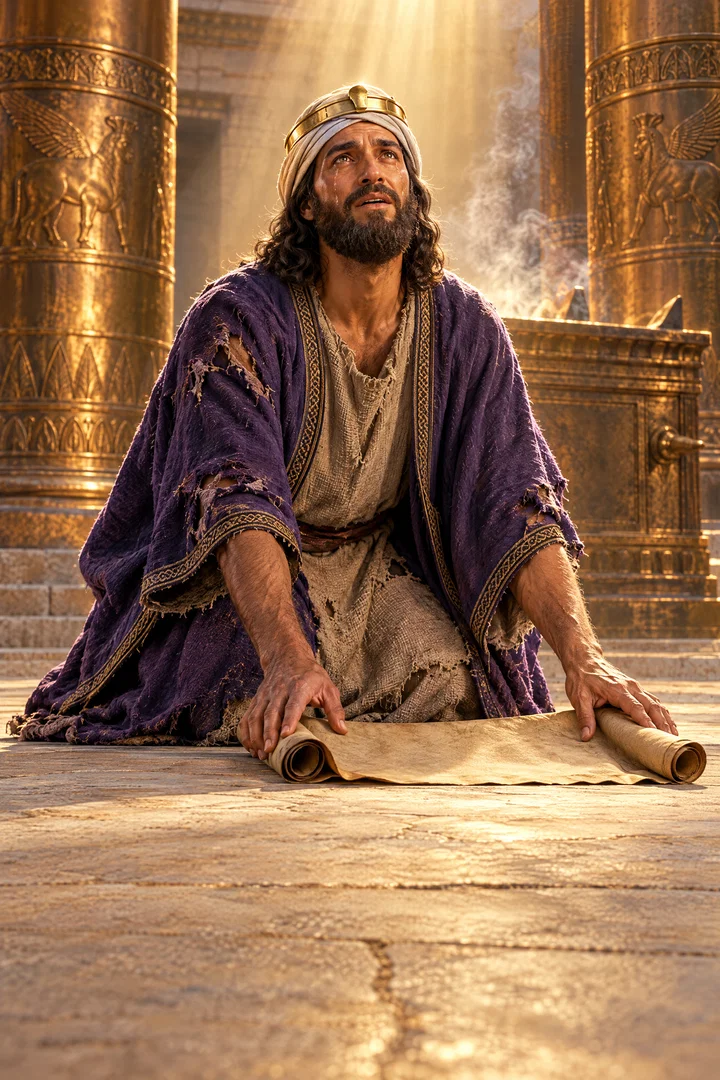
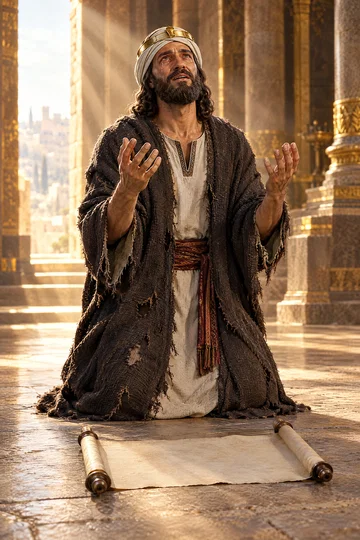
And Hezekiah prayed before the LORD, and said, O LORD God of Israel, which dwellest between the cherubims, thou art the God, even thou alone, of all the kingdoms of the earth; thou hast made heaven and earth.
Translations
And Hezekiah prayed before the LORD, and said, O LORD God of Israel, which dwell between the cherubim, you are the God, even you alone, of all the kingdoms of the earth; you have made heaven and earth.
And Hezekiah prayed before the LORD, and said, O LORD God of Israel, which dwellest between the cherubims, thou art the God, even thou alone, of all the kingdoms of the earth; thou hast made heaven and earth.
And Hezekiah prayed before the Lord, and said, O Lord God of Israel, which dwellest between the cherubims, thou art the God, even thou alone, of all the kingdoms of the earth; thou hast made heaven and earth.
And Hezekiah prayed before the LORD, and said, O LORD God of Israel, who dwellest between the cherubim, thou art the God, even thou alone, of all the kingdoms of the earth; thou hast made heaven and earth.
And Hezekiah prayed before the LORD, and said, O LORD, the God of Israel, that sittest upon the cherubim, thou art the God, even thou alone, of all the kingdoms of the earth; thou hast made heaven and earth.
And Hezekiah prayed before Jehovah, and said, O Jehovah, the God of Israel, that sittest above the cherubim, thou art the God, even thou alone, of all the kingdoms of the earth; thou hast made heaven and earth.
And Hezekiah prayeth before Jehovah, and saith, 'O Jehovah, God of Israel, inhabiting the cherubs, Thou [art] God Himself — Thyself alone — to all the kingdoms of the earth: Thou hast made the heavens and the earth.
And Hezekiah prayed before Jehovah and said, Jehovah, God of Israel, who sittest [between] the cherubim, thou, the Same, thou alone art the God of all the kingdoms of the earth: thou hast made the heavens and the earth.
And Hezekiah prayed before Yahweh, and said, O Yahweh, God of Israel, inhabiting the cherubim, thou thyself, art GOD, alone, for all the kingdoms of the earth,—thou, didst make the heavens and the earth.
Berean Standard Bible, Majority Standard Bible
And Hezekiah prayed before the LORD:“ O LORD, God of Israel, enthroned between the cherubim, You alone are God over all the kingdoms of the earth. You made the heavens and the earth.
Hezekiah prayed before the LORD, and said, “ LORD, the God of Israel, enthroned above the cherubim, you are the God, even you alone, of all the kingdoms of the earth. You have made heaven and earth.
And Hezekiah made his prayer to the Lord, saying, O Lord, the God of Israel, seated between the winged ones, you only are the God of all the kingdoms of the earth; you have made heaven and earth.
And Hezekiah prayed before the Lord, and saide, O Lord God of Israel, which dwellest betweene the Cherubims, thou art very God alone ouer all the kingdomes of the earth: thou hast made the heauen and the earth.
Douay-Rheims (Challoner revision)
And he prayed in his sight, saying: O Lord God of Israel, who sitteth upon the cherubims, thou alone art the God of all the kings of the earth: thou madest heaven and earth:
Pictures
Cross-references 20 of 47
- Isaiah 37:16
O LORD of hosts, God of Israel, that dwellest between the cherubims, thou art the God, even thou alone, of all the kingdoms of the earth: thou hast made heaven and earth.
Hezekiah appeals to the Maker as the true God and ruler of all kingdoms.
- 2 Kings 19:35
And it came to pass that night, that the angel of the LORD went out, and smote in the camp of the Assyrians an hundred fourscore and five thousand: and when they arose early in the morning, behold, they were all dead corpses.
The angel destroys the Assyrian army after Hezekiah’s prayer.
- Psalms 80:1
Give ear, O Shepherd of Israel, thou that leadest Joseph like a flock; thou that dwellest between the cherubims, shine forth.
Both address God as dwelling between the cherubim.
- Nehemiah 9:6
Thou, even thou, art LORD alone; thou hast made heaven, the heaven of heavens, with all their host, the earth, and all things that are therein, the seas, and all that is therein, and thou preservest them all; and the host of heaven worshippeth thee.
Both identify the Lord as Creator of heaven and earth.
- Exodus 25:22
And there I will meet with thee, and I will commune with thee from above the mercy seat, from between the two cherubims which are upon the ark of the testimony, of all things which I will give thee in commandment unto the children of Israel.
God speaks from between the cherubim, where Hezekiah says the LORD dwells.
- Jeremiah 10:11-12
Thus shall ye say unto them, The gods that have not made the heavens and the earth, even they shall perish from the earth, and from under these heavens.
God’s creation of heaven and earth distinguishes him from false gods.
- Acts 14:15
And saying, Sirs, why do ye these things? We also are men of like passions with you, and preach unto you that ye should turn from these vanities unto the living God, which made heaven, and earth, and the sea, and all things that are therein:
Both identify the true God as Creator of heaven and earth.
- 2 Chronicles 32:20-22
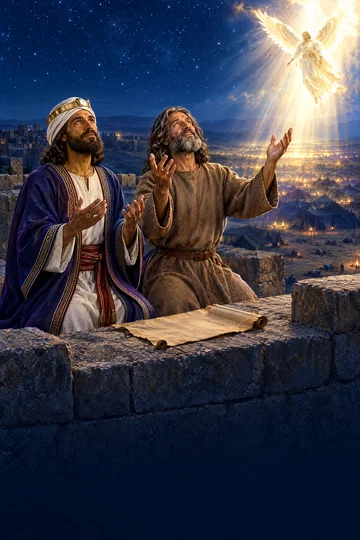
And for this cause Hezekiah the king, and the prophet Isaiah the son of Amoz, prayed and cried to heaven.
Hezekiah prays, and the Lord defeats Assyria and saves Jerusalem.
- Acts 4:24
And when they heard that, they lifted up their voice to God with one accord, and said, Lord, thou art God, which hast made heaven, and earth, and the sea, and all that in them is:
Both prayers identify God as creator of heaven and earth.
- Psalms 99:1
The LORD reigneth; let the people tremble: he sitteth between the cherubims; let the earth be moved.
God reigns, enthroned between the cherubim.
- Psalms 146:6
Which made heaven, and earth, the sea, and all that therein is: which keepeth truth for ever:
Both identify God as the maker of heaven and earth.
- 2 Chronicles 2:12
Huram said moreover, Blessed be the LORD God of Israel, that made heaven and earth, who hath given to David the king a wise son, endued with prudence and understanding, that might build an house for the LORD, and an house for his kingdom.
Both appeal to God as maker of heaven and earth.
- Genesis 1:1
In the beginning God created the heaven and the earth.
God’s creation of heaven and earth establishes his authority over all kingdoms.
- Ezekiel 10:1-4
Then I looked, and, behold, in the firmament that was above the head of the cherubims there appeared over them as it were a sapphire stone, as the appearance of the likeness of a throne.
God’s throne appears above the cherubim, and his glory fills the temple.
- Revelation 14:7
Saying with a loud voice, Fear God, and give glory to him; for the hour of his judgment is come: and worship him that made heaven, and earth, and the sea, and the fountains of waters.
Both call for worship of God as Creator of heaven and earth.
- Isaiah 37:36
Then the angel of the LORD went forth, and smote in the camp of the Assyrians a hundred and fourscore and five thousand: and when they arose early in the morning, behold, they were all dead corpses.
Records the angel striking the Assyrian camp.
- 1 Kings 8:33-34
When thy people Israel be smitten down before the enemy, because they have sinned against thee, and shall turn again to thee, and confess thy name, and pray, and make supplication unto thee in this house:
Both are prayers asking God to hear and rescue Israel from its enemies.
- Exodus 20:11
For in six days the LORD made heaven and earth, the sea, and all that in them is, and rested the seventh day: wherefore the LORD blessed the sabbath day, and hallowed it.
Creation is the stated basis of the Sabbath command.
- Isaiah 37:15
And Hezekiah prayed unto the LORD, saying,
The passage says 2 Kings 19 and Isaiah 37 are the same chapter.
- Psalms 121:2
My help cometh from the LORD, which made heaven and earth.
Both identify the Lord, maker of heaven and earth, as the source of help.
Commentary
Each commentary is drawn from primary sources: the writings of Ellen G. White and Adventist pioneers and periodicals. Each commentary is separate. Its own words are not a quotation; follow the references to read the source passages.
Ellen G. White
2 sources
Hezekiah took Sennacherib's taunting letter into the temple, spread it before the Lord, and made this his prayer there.RH May 27, 1915 He prayed with strong faith for help from heaven.RH May 27, 1915 In the prayer he addressed the Lord as the God of Israel who dwells between the cherubim.RH May 27, 1915PK 355.2–359.1 He confessed Him to be God alone over all the kingdoms of the earth and the Maker of heaven and earth.RH May 27, 1915PK 355.2–359.1
Grounded in that confession, he asked God to hear him and deliver Judah from Assyria, because He alone could bring deliverance.RH May 27, 1915PK 355.2–359.1 His plea sought both the rescue of Judah and the honor of Jehovah as its living Ruler.RH May 27, 1915PK 355.2–359.1 The honor of Jehovah was at stake, that the nations of earth might know that the God of the Hebrews still lives and reigns and that the Lord alone is God.RH May 27, 1915PK 355.2–359.1
Sources
Pioneers and periodicals
37 sources
Hezekiah took Sennacherib's blasphemous, threatening letter into the temple, spread it before the Lord, and asked Him to see and hear its words and send help from heaven in the crisis of the Assyrian invasion and siege of Jerusalem.RH May 27, 1915RH Nov 14, 1912ST Nov 19, 1885 He addressed the Lord as the God of Israel dwelling between the cherubim, who alone is God over all the kingdoms of the earth and the Maker of heaven and earth.RH Nov 14, 1912ST Oct 8, 1885ST Jan 30, 1901 That appeal to God as sole God and Creator set the living God apart from idols made by human hands and presented creation as proof of His existence and authority over all creation.ST Feb 25, 1875RH Mar 18, 1875ST May 8, 1879RH Sep 22, 1863 His Creator name is the mark by which Scripture identifies the true God, the same truth enshrined in the fourth commandment, which alone tells who God is and stands as His seal and title of royalty and right to rule.RH Apr 24, 1856RH Sep 9, 1862ST May 8, 1879RH Sep 22, 1863 In answer God vindicated His own name and cause without Israel's help, sending an angel who in one night slew 185,000 and turned Sennacherib back in shame to destruction.RH May 27, 1915RH Oct 3, 1912RH Apr 21, 1868RH Nov 14, 1912ST Jun 21, 1905
Prayer Setting and Wording
The verse opens Hezekiah's prayer in the temple, where he carried Sennacherib's taunting, threatening and blasphemous letter delivered through Rabshakeh, spread it out before the Lord, and asked God to see and hear its words and send help from heaven.RH May 27, 1915RH Nov 14, 1912ST Nov 19, 1885RH Sep 23, 1902RH Jun 9, 1903 The prayer seeks God's vindication of His name and cause, made with strong faith that the nations of earth might know that the God of the Hebrews still lived and reigned and that He alone could bring deliverance.RH May 27, 1915ST Jun 21, 1905 It was offered in the crisis of Sennacherib's nearly victorious invasion of Palestine and siege of Jerusalem, after Hezekiah refused to submit to Rabshakeh.ST Nov 19, 1885RH Sep 23, 1902 That invasion and siege is the event also confirmed on Sennacherib's cylinder, which agrees with the biblical account though it omits the loss of 185,000 Assyrian soldiers and mentions only a misfortune in the camp.
The chapter belongs to the history of Hezekiah and the Assyrian invasion also recorded in 2 Chronicles 32 and Isaiah 37, with 2 Kings 19 alike, even identical, to Isaiah 37.ST Jan 24, 1906RH Jun 15, 1869RH Sep 15, 1868 The parallel account in Isaiah 37 nevertheless has considerable verbal differences from the account in 2 Kings.RH Mar 11, 1875 The address to God as dwelling between the cherubim is borrowed from the sanctuary service, where the cherubim stood on the ends of the mercy seat that covered the ark in the most holy place, the second apartment of the sanctuary.RH Jul 27, 1876RH Sep 23, 1902 That space above the ark was the place where God met with Moses and specially manifested His glory, and Isaiah 37:16 gives the same expression from the same prayer.RH Jul 27, 1876RH Sep 23, 1902
The prayer from this verse onward contains 134 words, taking about two minutes to repeat.ST Apr 29, 1875ST Aug 26, 1875 The verse stands in the record of Hezekiah's reign as one devoted to God, though he made mistakes. One of those mistakes exalted man, stirred Babylon's greed, and brought the prospect of captivity to his descendants.
Who God Is
Hezekiah in trouble spread the threatening letter before the Lord and prayed to him as Israel's God, the one who dwells between the cherubim, who alone is God over all the kingdoms of the earth and the Maker of heaven and earth.RH Nov 14, 1912ST Oct 8, 1885ST Jan 30, 1901ST Jun 28, 1905 The address confirms that God's heavenly throne is associated with the cherubim.ST Oct 8, 1885ST Mar 26, 1896 The space above the mercy seat of the ark, where the tables of the law were kept, is a representation of that throne, so that the law is the foundation of his heavenly throne.ST Oct 8, 1885ST Mar 26, 1896
The language of dwelling between the cherubim speaks both of God's position in heaven and of his presence in the earthly sanctuary.ST Aug 5, 1875RH Jul 29, 1875 It does not mean he remains fixed there, for he also came down to meet and communicate with Moses and with Israel's elders, and his throne is living and mobile.ST Aug 5, 1875RH Jul 29, 1875 In distress, when Assyria had destroyed nations and their lands, Hezekiah's appeal to the sole God and Creator distinguished the living God from idols made by human hands, which are not gods.ST Feb 25, 1875RH Mar 18, 1875 Creation is thus presented as proof of God's existence and authority, with the Creator alone being God.ST Feb 25, 1875RH Mar 18, 1875
The overthrow of the Assyrian army taught Sennacherib and other rulers that earthly kingdoms remain under God's sovereignty despite human conquests and usurpations.ST Jan 30, 1901
Creator and Sabbath Seal
Scripture identifies the true God in distinction from false gods of every description by the fact that he made heaven and earth, and this Creator role shows his authority over all creation.ST Feb 25, 1875RH Apr 24, 1856RH Sep 9, 1862ST May 8, 1879RH Sep 22, 1863 Hezekiah's declaration that God is Maker of heaven and earth is an appeal to the fourth commandment, which alone among the ten commandments tells who God is by naming him as Creator of heaven and earth and all things therein.RH Sep 9, 1862ST May 8, 1879RH Sep 22, 1863 That appeal points out the true God in distinction from all false gods by declaring his creatorship.RH Sep 9, 1862ST May 8, 1879RH Sep 22, 1863
The fourth commandment thereby brings to view his title of royalty, the extent of his dominion over all creation, and his right to demand obedience from all creatures, and is presented as God's seal, signature, and authenticating mark declaring his authority and right to rule.RH Apr 24, 1856RH Sep 9, 1862ST May 8, 1879 He is thus confessed as the true God and ruler over all kingdoms because he is Maker of heaven and earth.ST Feb 25, 1875RH Apr 24, 1856 In distress, when Assyria had destroyed nations and their lands, this appeal distinguishes the living God from idols made by human hands, with creation presented as proof of God's existence and authority.ST Feb 25, 1875RH Sep 22, 1863 Creation is the basis of the Sabbath's role as a memorial of creation, a sign of the true God, a seal of his moral law, and God's memorial of his creative power, with his name enduring forever and his memorial throughout all generations.ST Feb 25, 1875RH Sep 22, 1863
Answered With Deliverance
The honor of Jehovah was at stake when Hezekiah took Sennacherib's taunting letter into the temple and spread it before the Lord.RH May 27, 1915ST Jun 21, 1905 He prayed with strong faith for help from heaven, that the nations of earth might know that the God of the Hebrews still lived and reigned, since He alone could bring deliverance.RH May 27, 1915 The prayer sought God's vindication of His name and cause against Assyrian blasphemy, and the Lord answered by delivering Jerusalem.ST Jun 21, 1905 It was part of Israel's united and whole-hearted seeking of God in earnest pleading prayer that God especially honors with great blessing.RH Oct 3, 1912
In answer to the prayers of two faithful men of God, God overthrew the king of Assyria and all his host without Israel's help.RH Oct 3, 1912RH Apr 21, 1868RH Nov 14, 1912 He sent an angel that in one night, within twelve hours, killed 185,000, striking the camp as if by an invisible hand.RH Apr 21, 1868RH Dec 18, 1913RH Dec 22, 1859ST Sennacherib with his mighty army was turned back to destruction and returned home in shame despite his proud boasting.RH Oct 3, 1912RH Nov 14, 1912RH Dec 18, 1913 The prayer in utter helplessness pleading for God to vindicate His own cause and put to flight the army whose leader had boldly and blasphemously defied the God of Israel preceded the defeat and destruction of that army.RH Nov 14, 1912RH Dec 18, 1913ST This showed that deliverance came from God rather than human strength.RH Apr 21, 1868RH Dec 22, 1859
Sennacherib's cylinder confirms the account of his invasion of Palestine and siege of Jerusalem, though it does not record the loss of the 185,000 Assyrian soldiers and only mentions a misfortune in the camp. The 185,000 were slain by the angel while the Assyrian army was with the king at Libnah and not in the valley of Tophet near Jerusalem.RH Jun 15, 1869 The king himself was not destroyed there but returned to his own land and died there, so Tophet ordained of old and prepared for the king in Isaiah 30:33 was not fulfilled in that destruction.RH Jun 15, 1869
Model for Prayer
Hezekiah's prayer is a model of public prayer that is short, pointed, direct, simple, tender, filial and quiet, asking directly for the blessing desired without wandering over the moral universe, vain repetitions, and much crying of Ohs and Ahs, as a child who knows his Father is more willing to give good gifts than he is to ask, with the prime object of lifting up hearts to commune with heaven.ST Apr 29, 1875 From this verse onward the prayer contains 134 words, taking about two minutes to repeat, teaching that no public prayer should run thirty or forty minutes or exceed five minutes except on an extraordinary occasion equal to the dedication of the temple at Jerusalem.ST Apr 29, 1875 His example shows that people in trouble may spread their letters before God, tell Him their troubles, and lay out specific needs before Him, bringing the urgent need and asking for help from heaven after spreading Rabshakeh's threatening letter before Him in the temple.RH Nov 14, 1912RH Jun 9, 1903 It teaches believers to name workers and fields and lay their needs before the Lord rather than praying only in general terms.RH Jun 9, 1903
In utter helplessness and humility, yet with confidence, innocence, and all earnestness of soul, Hezekiah pleaded for the city and God's covenant people that God would vindicate His own cause and put the Assyrian army to flight because its leader had boldly and blasphemously defied and insulted the God of Israel.STST Nov 12, 1885 He could spread the king's insulting letter before God and ask Him to see and hear after Sennacherib's threat, and his prayer was followed by the destruction of the Assyrian army and Sennacherib's return home in shame.RH Jul 15, 1862ST Nov 12, 1885 The verse means that if anything is asked according to God's will He hears, for the door of heaven is always open for the prayers of God's people.ST Hezekiah stands among Abraham, Moses, Hannah, Elisha, Isaiah, Ezra, Job, Jeremiah, Jonah, Daniel, Jesus, Peter and Paul as one of God's praying servants, showing that God's people have always been a praying band.RH Nov 21, 1907 Every new move in God's work among men is inaugurated and made possible by prayer, and prayer brings sustenance and growth to that work, opens the way before it, scatters hindrances, keeps it alive and prospers it, and the effectual fervent prayer of a righteous man avails much.RH Nov 21, 1907
The episode teaches confidence in God's power, providence, and promises, and dependence on Him rather than on human wisdom or strength, for one messenger is enough to bring the enemy's doom. The greatest victories for the church or the individual Christian are not those gained by talent, education, wealth, or favor of men, but those gained in the audience chamber with God when earnest, agonizing prayer lays hold upon the mighty arm of power.RH Nov 12, 1914 The same victories will be gained by the people of God in the closing of the work when more troublous times than any in past history come, when no human help is nigh and there are only the promises by which to walk, and seeking God for strength and guidance is wise occupation.RH Nov 12, 1914RH Nov 21, 1907 His prayer is presented as an example of prayer followed by divine intervention, including the turning back of the sun-dial and the prolonging of his life.RH Aug 1, 1871
Sources