Isaiah 37:36
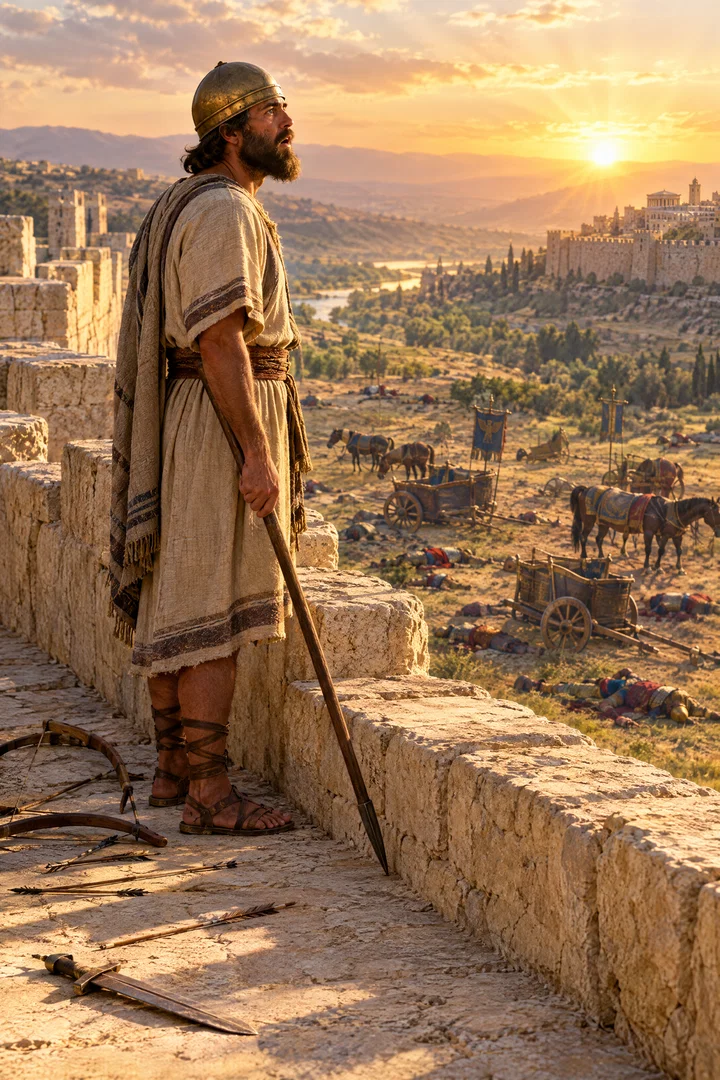
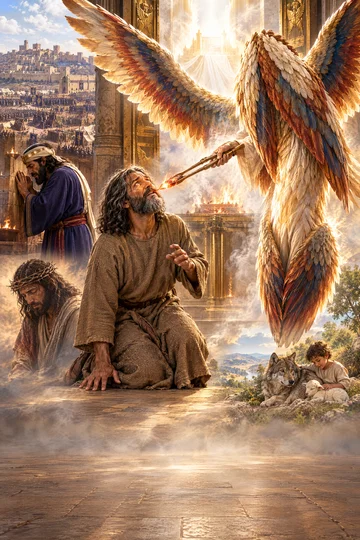
Then the angel of the LORD went forth, and smote in the camp of the Assyrians a hundred and fourscore and five thousand: and when they arose early in the morning, behold, they were all dead corpses.
Translations
American King James Version, King James Version
Then the angel of the LORD went forth, and smote in the camp of the Assyrians a hundred and fourscore and five thousand: and when they arose early in the morning, behold, they were all dead corpses.
Then the angel of the Lord went forth, and smote in the camp of the Assyrians an hundred and fourscore and five thousand: and when they arose early in the morning, behold, they were all dead corpses.
Then the angel of the LORD went forth, and smote in the camp of the Assyrians a hundred and eighty five thousand: and when they arose early in the morning, behold, they were all dead corpses.
And the angel of the LORD went forth, and smote in the camp of the Assyrians a hundred and fourscore and five thousand: and when men arose early in the morning, behold, they were all dead corpses.
And the angel of Jehovah went forth, and smote in the camp of the Assyrians a hundred and fourscore and five thousand; and when men arose early in the morning, behold, these were all dead bodies.
And a messenger of Jehovah goeth out, and smiteth in the camp of Asshur a hundred and eighty and five thousand; and [men] rise early in the morning, and lo, all of them [are] dead corpses.
And an angel of Jehovah went forth, and smote in the camp of the Assyrians a hundred and eighty-five thousand. And when they arose early in the morning, behold, they were all dead bodies.
Then went forth the messenger of Yahweh, and smote—in the camp of the Assyrians—a hundred and eighty-five thousand,—and when men arose early in the morning, lo! they were all, dead bodies!
Berean Standard Bible, Majority Standard Bible
Then the angel of the LORD went out and struck down 185,000 men in the camp of the Assyrians. When the people got up the next morning, there were all the dead bodies!
Then the LORD’s angel went out and struck one hundred and eighty-five thousand men in the camp of the Assyrians. When men arose early in the morning, behold, these were all dead bodies.
And the angel of the Lord went out and put to death in the army of the Assyrians a hundred and eighty-five thousand men: and when the people got up early in the morning, there was nothing to be seen but dead bodies.
Then the Angel of the Lord went out, and smote in the campe of Asshur an hundreth, fourescore, and fiue thousand: so when they arose early in the morning, beholde, they were all dead corpses.
Douay-Rheims (Challoner revision)
And the angel of the Lord went out, and slew in the camp of the Assyrians a hundred and eighty-five thousand. And they arose in the morning, and behold they were all dead corpses.
Pictures

Cross-references 20 of 27
- 2 Kings 19:35
And it came to pass that night, that the angel of the LORD went out, and smote in the camp of the Assyrians an hundred fourscore and five thousand: and when they arose early in the morning, behold, they were all dead corpses.
The angel strikes the Assyrian army, leaving 185,000 dead and sparing Jerusalem.
- 2 Chronicles 32:21
And the LORD sent an angel, which cut off all the mighty men of valour, and the leaders and captains in the camp of the king of Assyria. So he returned with shame of face to his own land. And when he was come into the house of his god, they that came forth of his own bowels slew him there with the sword.
The angel cuts off the Assyrian army, paralleling its destruction in Jerusalem.
- Isaiah 37:20
Now therefore, O LORD our God, save us from his hand, that all the kingdoms of the earth may know that thou art the LORD, even thou only.
Hezekiah asks God to save Jerusalem from Assyria.
- Isaiah 37:10-11
Thus shall ye speak to Hezekiah king of Judah, saying, Let not thy God, in whom thou trustest, deceive thee, saying, Jerusalem shall not be given into the hand of the king of Assyria.
The Assyrian king threatens Jerusalem before the angel’s attack.
- 2 Kings 19:14-19
And Hezekiah received the letter of the hand of the messengers, and read it: and Hezekiah went up into the house of the LORD, and spread it before the LORD.
Hezekiah prays for deliverance from the Assyrian threat.
- 2 Kings 18:13
Now in the fourteenth year of king Hezekiah did Sennacherib king of Assyria come up against all the fenced cities of Judah, and took them.
Identifies Sennacherib’s campaign against Judah.
- Isaiah 36:2
And the king of Assyria sent Rabshakeh from Lachish to Jerusalem unto king Hezekiah with a great army. And he stood by the conduit of the upper pool in the highway of the fuller’s field.
Both texts place Sennacherib at Lachish during the siege.
- 2 Chronicles 32:8
With him is an arm of flesh; but with us is the LORD our God to help us, and to fight our battles. And the people rested themselves upon the words of Hezekiah king of Judah.
Hezekiah assures Judah that God is with them to help and fight their battles.
- 2 Kings 19:36-37
So Sennacherib king of Assyria departed, and went and returned, and dwelt at Nineveh.
The king returns home and dies there.
- 2 Chronicles 32:22
Thus the LORD saved Hezekiah and the inhabitants of Jerusalem from the hand of Sennacherib the king of Assyria, and from the hand of all other, and guided them on every side.
Both describe the LORD saving Hezekiah and Jerusalem from Assyria.
- 2 Chronicles 32:1
After these things, and the establishment thereof, Sennacherib king of Assyria came, and entered into Judah, and encamped against the fenced cities, and thought to win them for himself.
Reform was established before the Assyrian invasion, preceding deliverance.
- Isaiah 37:29
Because thy rage against me, and thy tumult, is come up into mine ears, therefore will I put my hook in thy nose, and my bridle in thy lips, and I will turn thee back by the way by which thou camest.
God warns Sennacherib before destroying his army.
- Isaiah 36:18-20
Beware lest Hezekiah persuade you, saying, The LORD will deliver us. Hath any of the gods of the nations delivered his land out of the hand of the king of Assyria?
Sennacherib boasts that no god can deliver a land, but the LORD destroys his army.
- 2 Kings 19:7
Behold, I will send a blast upon him, and he shall hear a rumour, and shall return to his own land; and I will cause him to fall by the sword in his own land.
The king of Assyria is foretold to return to his own land.
- Isaiah 37:14-16
And Hezekiah received the letter from the hand of the messengers, and read it: and Hezekiah went up unto the house of the LORD, and spread it before the LORD.
Hezekiah spreads the Assyrian letter before God and prays to the Creator.
- 2 Chronicles 32:20
And for this cause Hezekiah the king, and the prophet Isaiah the son of Amoz, prayed and cried to heaven.
Prayer brought an angelic answer against the Assyrians.
- Isaiah 37:1-2
And it came to pass, when king Hezekiah heard it, that he rent his clothes, and covered himself with sackcloth, and went into the house of the LORD.
Hezekiah seeks God and godly counsel in response to the Assyrian threat.
- 2 Chronicles 32:18-19
Then they cried with a loud voice in the Jews’ speech unto the people of Jerusalem that were on the wall, to affright them, and to trouble them; that they might take the city.
The Assyrians liken Jerusalem’s God to idols, but the miracle disproves their claim.
- Psalms 34:7
The angel of the LORD encampeth round about them that fear him, and delivereth them.
The angel of the LORD protects those who fear him and delivers them.
- 2 Kings 18:14
And Hezekiah king of Judah sent to the king of Assyria to Lachish, saying, I have offended; return from me: that which thou puttest on me will I bear. And the king of Assyria appointed unto Hezekiah king of Judah three hundred talents of silver and thirty talents of gold.
Hezekiah’s tribute to Assyria precedes Jerusalem’s deliverance from the invasion.
Commentary
Each commentary is drawn from primary sources: the writings of Ellen G. White and Adventist pioneers and periodicals. Each commentary is separate. Its own words are not a quotation; follow the references to read the source passages.
Ellen G. White
5 sources
The verse records that God sent His angel to strike the Assyrian camp at Jerusalem in one night, killing 185,000 men, who were found as dead corpses in the morning.16MR 16.3–17.3Lt 93, 1900, par. 6–8RH Mar 4, 1915 That slaughter protected Jerusalem and kept the Assyrian siege from succeeding, saving the city from a downfall that otherwise would have occurred.16MR 16.3–17.3RH Mar 4, 1915PK 305.2–3 The destruction fulfilled God's promise that the king of Assyria would not enter or attack the city.16MR 16.3–17.3Lt 93, 1900, par. 6–8 The deliverance answered Hezekiah's prayer for God to save His people and make His own name known.Lt 93, 1900, par. 6–8
The verse belongs to the account of the Lord's gracious deliverance of Hezekiah from the danger of battle.ST Oct 1, 1902 The suddenness of the destruction shows that human power cannot prevent God from acting to defend His people.16MR 16.3–17.3
Sources
Pioneers and periodicals
43 sources
In a single night the angel of the LORD struck one hundred eighty-five thousand Assyrian soldiers dead in their camp, and when morning came the survivors found them lying as dead corpses.ST Jun 1, 1876RH Apr 7, 1868RH Aug 7, 1855 Sennacherib had come against Jerusalem with blasphemous contempt, claiming the God of Jerusalem could no more deliver out of his hand than the gods of the nations, and Hezekiah with Isaiah humbled himself, spread the letter before the LORD, and cried to heaven for deliverance.RH Apr 16, 1867ST Oct 6, 1909ST Jun 7, 1883ST Jun 21, 1905RH Aug 13, 1908 God heard because Hezekiah had pleased Him and would not let His holy name be reproached, and He wrought the deliverance by His own hand alone in an evidently miraculous and invisible manner to make clear to Judah and all nations that He is the living Creator above all gods made by hands.RH Apr 16, 1867ST Jan 2, 1907RH May 21, 1908RH Dec 8, 1868 One angel destroying so great an armed host in one night displays the great power and majesty of God's heavenly servants and their vast superiority in strength over men.ST Jan 17, 1900RH Apr 7, 1868RH Aug 7, 1855ST Dec 4, 1884ST Jul 31, 1901 Therefore numerical superiority gives no power against God, and those in trouble should cry to the LORD and trust His power and providence rather than oppose enemies in human wisdom and strength.ST Jun 1, 1876ST Jun 7, 1883ST Oct 6, 1887
Words and Parallel Accounts
The “they” who arose early in the morning were the Assyrians who remained alive after the angel struck a hundred and fourscore and five thousand in the camp, rising to find the smitten lying as corpses, though those survivors are not named separately apart from the slain.ST Aug 21, 1879ST Sep 2, 1875 The word rendered corpses means dead bodies or carcasses, the same Hebrew word rendered carcasses in Isaiah 66:24.ST Dec 5, 1892ST Jul 28, 1909ST Mar 17, 1914 That identity of wording shows Isaiah 66:24 describes dead corpses eaten by the worm, not living men preserved to suffer forever.ST Dec 5, 1892ST Mar 17, 1914
The thirty-seventh chapter of Isaiah is alike to the nineteenth chapter of 2 Kings.RH Sep 16, 1909 That chapter parallels 2 Kings 19 and is identical to it, so the verse has a parallel account in 2 Kings 19:35.RH Mar 2, 1911ST Sep 12, 1895 The parallel between Isaiah 37 and 2 Kings 19 shows considerable verbal difference.RH Mar 11, 1875
History of the Deliverance
In a single night the angel of the LORD struck 185,000 Assyrian soldiers dead in their camp, and when morning came they were found as dead corpses.RH Mar 4, 1915ST Jun 1, 1876RH Apr 7, 1868ST Jan 2, 1907RH Dec 22, 1859 One angel destroyed that armed host in one night, delivering Jerusalem from Sennacherib's threatened attack.RH Apr 7, 1868RH Aug 7, 1855ST Jan 2, 1907 The stroke fell during Sennacherib's invasion of Judah in 701 B.C.RH Sep 7, 1905 Jerusalem was invested while he was at Lachish, and this southwestern campaign is distinguished from the northeastern campaign described in Isaiah 10.ST Jan 4, 1916ST Nov 20, 1884
The angel entered the camp unnoticed during the night and cut off all the mighty men of valor and the leaders and captains.ST Jun 21, 1905RH May 21, 1908RH Oct 31, 1907 The slaying is placed in twelve hours.RH Aug 7, 1855 Those who give the number as one hundred and eighty-four thousand so teach it.RH Aug 31, 1869
Sennacherib's own inscriptions omit the destruction, since Assyrian kings did not record defeats, and claim only to have shut up Hezekiah like a bird in a cage in Jerusalem his royal city, diminished his territory, and exacted tribute.RH Sep 7, 1905 Though he lived twenty years afterward and carried on extensive warfare elsewhere, he never again returned to Palestine from dread of Jehovah.RH Sep 7, 1905 Assyrian palace records of the successful campaign against Judah confirm the biblical historical record.ST Jan 4, 1916 An Egyptian legend also describes the destruction of an invading army, though its location is disputed.ST Jan 4, 1916
The Bible's thirty talents of gold and three hundred talents of silver tallies to a shekel with Sennacherib's thirty talents of gold and eight hundred talents of silver, because there were a large and a small silver talent and eight hundred of one equals three hundred of the other.RH Sep 7, 1905ST Nov 20, 1884 After the stroke Sennacherib returned with shame of face to his own land, where those who came from his own bowels slew him with the sword in the house of his god.ST Jun 21, 1905 Jehovah saved Hezekiah and Jerusalem's inhabitants from Sennacherib and from all others, guided them on every side, exalted Hezekiah before all nations, and many brought gifts to Jehovah at Jerusalem.ST Jun 21, 1905RH May 21, 1908
The Assyrian army was not shown to have perished in the valley of Hinnom in fulfillment of Isaiah 30:33's Tophet prepared for the king, but was likely with its king at Libnah, while the king returned to his land and died there.RH Jun 15, 1869 Those who place the slaughter in the valley just south of Jerusalem called the Valley of Hinnom, also called Tophet, so teach it.ST Jan 6, 1904 That same valley where children had been offered to Moloch was afterward used to cast the filth, offal, animal carcasses, and criminals of the city amid constant worms and fires.ST Jan 6, 1904
Prayer and Divine Vindication
Sennacherib advanced toward Jerusalem with his army and sent messengers with blasphemous words, contempt, and the taunt asking who the Lord was to deliver out of his hand, claiming that the God of Jerusalem was no stronger than the gods of the nations and could not deliver the city from the king of Assyria.RH Apr 16, 1867ST Jun 21, 1905RH Aug 13, 1908 That defiance made the destruction of the invading army Jehovah's answer, proving He could likewise answer a defiant king's question, who is that god that shall deliver you out of my hands, by delivering His servants, though their duty to refuse false worship does not depend on assurance of miraculous deliverance.RH Aug 13, 1908
Hezekiah humbled himself before the Lord when the king of Assyria came up and threatened the land, and God sent him a message through the prophet.ST Oct 6, 1909 Joined by Isaiah, he sought counsel, spread the taunting, insulting letter out before the Lord, laid his need before Him in prayer, and with Isaiah cried to heaven for deliverance from the mighty Assyrian army besieging Jerusalem.ST Jun 7, 1883ST Oct 6, 1887ST Jun 21, 1905RH Dec 8, 1868ST Sep 5, 1900 In answer to the prayer of Isaiah and Hezekiah the angel of the Lord struck the Assyrian camp, and 185,000 were found dead by morning, a sudden deliverance showing the power of prayer and that those in trouble should cry to the Lord for protection instead of opposing enemies in their own strength.ST Oct 6, 1887RH Dec 22, 1859ST Sep 5, 1900 The humble, importunate prayers were heard, and in one night an angel caused 185,000 men of war to sleep the sleep of death, cutting off all the mighty men of valor and the leaders and captains in the camp of the king of Assyria.ST Jun 21, 1905RH Dec 8, 1868
God heard Hezekiah's prayer and fought for him and blessed his reign because Hezekiah had pleased the Lord, and He would not let His holy name be reproached, so Hezekiah was not left in his extremity and his faithful service was not in vain.RH Apr 16, 1867 The defeat fulfilled God's promise of protection and showed that the Lord, not human strength or false gods, fought for Judah, displaying His power and providence as Creator worthier of trust than human wisdom or strength.ST Jan 2, 1907 Thus Jehovah vindicated His own name and cause, saved Hezekiah and Jerusalem's inhabitants from Sennacherib and from all others, guided them on every side, and exalted Hezekiah in the sight of all nations, with many bringing gifts to Jehovah at Jerusalem, an experience written for learning, while Sennacherib returned with shame of face to his own land where those who came from his own bowels slew him with the sword in the house of his god.ST Jun 21, 1905
The deliverance was possible only because thorough repentance and reform had gone before it, for Hezekiah from the very beginning of his reign spent years turning Judah from abominable idolatry and putting away sin so the Lord of hosts was returned to His people.RH Dec 8, 1868 Had Sennacherib come a few years before under wicked Ahaz, ruin would have been certain, for the arm of God alone could save and that arm could not have been extended for such a people and their prayer could not have been heard, proving sin is the cause of troubles and putting away sin brings people under the protection of an almighty Arm just in season to save from utter ruin.RH Dec 8, 1868 Sennacherib came after these things and the establishment thereof and came too late for success, having no longer merely man to contend with.RH Dec 8, 1868
It was the work of the hand of God alone to save His people from utter destruction, wrought by direct miraculous intervention and an invisible divine hand to prevent glorying in human power.RH May 21, 1908RH Dec 8, 1868RH Dec 22, 1859 It was made evidently miraculous to make clear to Judah and to all nations that there is a God in heaven more mighty than the gods of the peoples of the earth, which are the work of men's hands.RH May 21, 1908 When Assyria stood next as the leading power and influence in the world and had grown corrupt and far from God, God first sent Jonah to call its people to repentance and then bore witness again and again, and the slaughter of Sennacherib's host was the most notable instance of that witness to Assyria that He is God above all.ST Dec 29, 1887 The stroke greatly impressed the nations, so that many brought gifts to Jerusalem and precious things to Hezekiah and he was magnified before them.RH May 21, 1908
Isaiah and Hezekiah subdued their enemies through faith in God, an example Christians could have followed if they had kept the faith once delivered to the saints and retained the spiritual gifts given to the church.RH Dec 16, 1862
Angelic Might and Majesty
One angel destroyed 185,000 armed Assyrians in a single night, which shows the great power of God's heavenly servants and their great superiority in strength and power over human beings.RH Apr 7, 1868RH Aug 7, 1855 One sinless angel before God turned 185,000 of the flower of the Assyrian army to death by morning, so far greater is the power of an unfallen angel than of fallen men.ST Jul 31, 1901 The stroke that left so mighty a host as dead corpses displays the frailty of human beings before God.RH Dec 29, 1868
The slaying was done in obedience to the command of Christ, showing that under God the angels are all-powerful, mighty, and excelling in strength.ST Jan 17, 1900 It was wrought in answer to Hezekiah's prayer and demonstrates the power of the living God whom he appealed to as Creator of heaven and earth.ST Dec 4, 1884 That destruction displays God's majesty and gives reason to trust, love, worship, and humble oneself before Him.RH Dec 29, 1868
The same power shows how easily the angels beholding the shameful scene of Christ's trial could have consumed the adversaries of God to testify their indignation, but they were not commanded to do it.ST Jan 17, 1900 The angels who slew the Assyrians can and will soon visit the earth with judgments, when in quick succession one angel after another will pour out vials of wrath upon its inhabitants.ST Jan 17, 1900 Sin does not make men great but hinders them at every step unto the grave, while God's worth and power and goodness work through humanity in spite of evil, with how much more might have been done without sin unknown until God's books reveal it.ST Jul 31, 1901
Trust and Present Lessons
Numerical superiority gives no power against God, and He can defend His outnumbered people when they are vastly outmatched.ST Jun 1, 1876 A person standing alone in opposition to wrong is not really alone because God is with him, and God is a majority.ST Jun 7, 1883 Good king Hezekiah was taunted by his enemies over his helpless condition, and he spread their taunting, insulting letter out before the Lord.ST Jun 7, 1883 God answered by causing the invading army to lose 185,000 men in a single night, the angel of the Lord striking them dead in their camp and delivering Hezekiah and Israel.ST Jun 1, 1876ST Jun 7, 1883
Those in trouble should cry to the Lord for protection against enemies instead of opposing them in their own strength.ST Oct 6, 1887 When faced with his enemies, Hezekiah sought counsel and laid his need before the Lord in prayer, and God delivered him by destroying the enemy host.ST Oct 6, 1887 God answered Hezekiah's prayer for deliverance from the mighty Assyrian army that came against Jerusalem by sending one messenger to strike the camp, leaving 185,000 dead.ST Oct 6, 1887 That deliverance shows that God's power and providence protect His people, and that trust in Him is better than reliance on human wisdom or strength.
The deliverance was wrought by direct miraculous intervention in an evidently miraculous manner to prevent glorying in human power and to make clear to Judah and to all nations that there is a God in heaven more mighty than the gods of the peoples of the earth, which are the work of men's hands.RH May 21, 1908 The angel cut off all the mighty men of valor and the leaders and captains in the Assyrian camp, so that Sennacherib returned with shame to his own land, and Jehovah saved Hezekiah and the inhabitants of Jerusalem from Sennacherib and from all others and guided them on every side.RH May 21, 1908 The stroke greatly impressed the nations, so that many brought gifts to Jerusalem and precious things to Hezekiah and he was exalted in the sight of all nations.RH May 21, 1908 The victory and its trophies should have been constant reminders of the nothingness of man and the greatness of God, which is the very essence of the gospel of righteousness by faith, and Hezekiah's exaltation should have furnished opportunity for exalting the power and mercy of the King of heaven who wrought this marvelous salvation, but through human pride the reminders were perverted into evidence of human power and the blessing was turned into a curse.RH May 21, 1908
The image of the vast Assyrian host destroyed with its dead covering the plain is used to convey the scale of the ruin caused by indulgence in wine.ST Mar 16, 1904 It does not say that wine destroyed that army.ST Mar 16, 1904 The verse is used as a comparison for the Waldenses' deliverance from Cataneo: no angel struck the papal army, but Providence stopped it by a mountain mist, and the Waldenses drove it back with rocks and swords.ST Dec 9, 1913
The account belongs to the Lord's gracious deliverance of Hezekiah from the danger of battle, preventing the siege from bringing about Jerusalem's downfall.RH Mar 4, 1915ST Oct 1, 1902 In answer to Hezekiah's prayer for deliverance, the angel of the Lord struck down 185,000 Assyrians, putting the army to flight and vindicating God's cause.ST After Hezekiah and Isaiah prayed and cried to heaven over Sennacherib's continued blasphemy, contempt, and claim that the God of Jerusalem was no stronger than the gods of the nations, Jehovah vindicated His own name and cause by sending an angel who cut off all the mighty men of valor and the leaders and captains in the camp of the king of Assyria, slaying 185,000.ST Jun 21, 1905 So Sennacherib returned with shame of face to his own land where those who came from his own bowels slew him with the sword in the house of his god, while Jehovah saved Hezekiah and the inhabitants of Jerusalem from Sennacherib and from all others and guided them on every side, because Hezekiah humbled himself before the Lord and sought counsel through the Lord's prophet, and Hezekiah was exalted in the sight of all nations with many bringing gifts to Jehovah at Jerusalem, an experience written for learning.ST Jun 21, 1905
Sources