Exodus 20:11
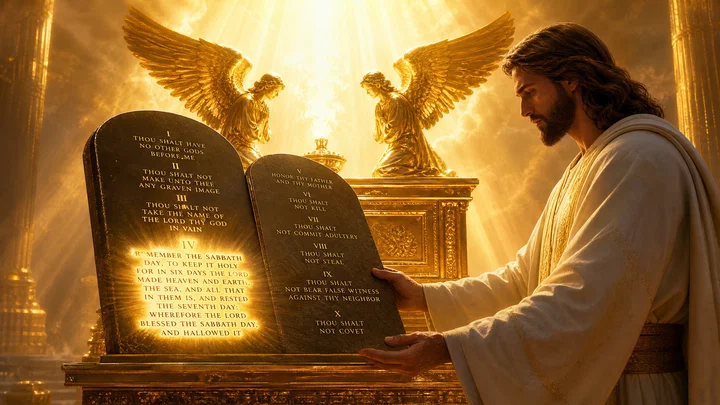
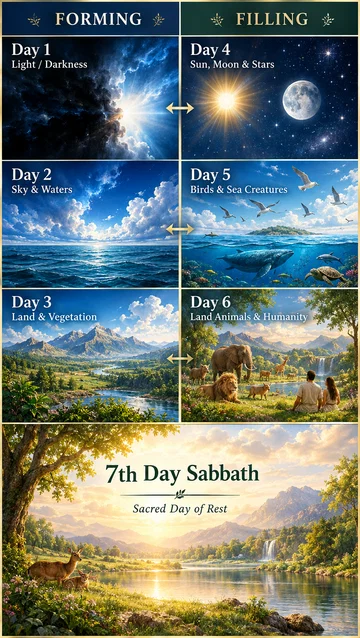
For in six days the LORD made heaven and earth, the sea, and all that in them is, and rested the seventh day: wherefore the LORD blessed the sabbath day, and hallowed it.
Translations
For in six days the LORD made heaven and earth, the sea, and all that in them is, and rested the seventh day: why the LORD blessed the sabbath day, and hallowed it.
For in six days the LORD made heaven and earth, the sea, and all that in them is, and rested the seventh day: wherefore the LORD blessed the sabbath day, and hallowed it.
for in six days the Lord made heaven and earth, the sea, and all that in them is, and rested the seventh day: wherefore the Lord blessed the sabbath day, and hallowed it.
For in six days the LORD made heaven and earth, the sea, and all that is in them, and rested the seventh day: wherefore the LORD blessed the sabbath-day, and hallowed it.
for in six days the LORD made heaven and earth, the sea, and all that in them is, and rested the seventh day: wherefore the LORD blessed the sabbath day, and hallowed it.
for in six days Jehovah made heaven and earth, the sea, and all that in them is, and rested the seventh day: wherefore Jehovah blessed the sabbath day, and hallowed it.
for six days hath Jehovah made the heavens and the earth, the sea, and all that [is] in them, and resteth in the seventh day; therefore hath Jehovah blessed the Sabbath-day, and doth sanctify it.
For in six days Jehovah made the heavens and the earth, the sea, and all that is in them, and rested on the seventh day; therefore Jehovah blessed the sabbath day, and hallowed it.
For, in six days, did Yahweh make the heavens and the earth, [and] the sea—and all that in them is, and rested on the seventh day,—for this cause, Yahweh blessed the sabbath day and hallowed it.
Berean Standard Bible, Majority Standard Bible
For in six days the LORD made the heavens and the earth and the sea and all that is in them, but on the seventh day He rested. Therefore the LORD blessed the Sabbath day and set it apart as holy.
for in six days the LORD made heaven and earth, the sea, and all that is in them, and rested the seventh day; therefore the LORD blessed the Sabbath day, and made it holy.
For in six days the Lord made heaven and earth, and the sea, and everything in them, and he took his rest on the seventh day: for this reason the Lord has given his blessing to the seventh day and made it holy.
For in sixe dayes the Lord made the heauen and the earth, the sea, and all that in them is, and rested the seuenth day: therefore the Lord blessed the Sabbath day, and hallowed it.
Douay-Rheims (Challoner revision)
For in six days the Lord made heaven and earth, and the sea, and all things that are in them, and rested on the seventh day: therefore the Lord blessed the seventh day, and sanctified it.
Pictures


Cross-references 20 of 203
- Genesis 2:2-3
And on the seventh day God ended his work which he had made; and he rested on the seventh day from all his work which he had made.
God rests on the seventh day and blesses and sanctifies it after creation.
- Mark 2:27
And he said unto them, The sabbath was made for man, and not man for the sabbath:
The Sabbath was made for humanity, not humanity for the Sabbath.
- Isaiah 58:13-14
If thou turn away thy foot from the sabbath, from doing thy pleasure on my holy day; and call the sabbath a delight, the holy of the LORD, honourable; and shalt honour him, not doing thine own ways, nor finding thine own pleasure, nor speaking thine own words:
Calls the Sabbath the Lord’s holy day and promises blessing for honoring it.
- Exodus 31:17
It is a sign between me and the children of Israel for ever: for in six days the LORD made heaven and earth, and on the seventh day he rested, and was refreshed.
The Sabbath sign is grounded in God’s creation and rest.
- Exodus 16:22-30
And it came to pass, that on the sixth day they gathered twice as much bread, two omers for one man: and all the rulers of the congregation came and told Moses.
Identified as an earlier direct reference to the Sabbath.
- Luke 23:56
And they returned, and prepared spices and ointments; and rested the sabbath day according to the commandment.
The women rested on the Sabbath according to the commandment.
- Revelation 14:7
Saying with a loud voice, Fear God, and give glory to him; for the hour of his judgment is come: and worship him that made heaven, and earth, and the sea, and the fountains of waters.
The call to worship the Creator echoes the Sabbath’s creation memorial.
- Ezekiel 20:12
Moreover also I gave them my sabbaths, to be a sign between me and them, that they might know that I am the LORD that sanctify them.
The Sabbath is a sign between God and his people.
- Ezekiel 20:20
And hallow my sabbaths; and they shall be a sign between me and you, that ye may know that I am the LORD your God.
The Sabbath is a sign between God and his people by which they know him.
- Genesis 1
In the beginning God created the heaven and the earth.
The six-day creation is the basis for the Sabbath command.
- Isaiah 66:23
And it shall come to pass, that from one new moon to another, and from one sabbath to another, shall all flesh come to worship before me, saith the LORD.
All flesh worships the Lord from Sabbath to Sabbath in the new earth.
- Exodus 31:13
Speak thou also unto the children of Israel, saying, Verily my sabbaths ye shall keep: for it is a sign between me and you throughout your generations; that ye may know that I am the LORD that doth sanctify you.
The Sabbath is a sign that the Lord sanctifies his people.
- Colossians 2:16-17
Let no man therefore judge you in meat, or in drink, or in respect of an holyday, or of the new moon, or of the sabbath days:
Contrasts ceremonial sabbaths as shadows with the creation Sabbath.
- Deuteronomy 5:15
And remember that thou wast a servant in the land of Egypt, and that the LORD thy God brought thee out thence through a mighty hand and by a stretched out arm: therefore the LORD thy God commanded thee to keep the sabbath day.
secondary deliverance reason completes primary creation reason
- Mark 2:28
Therefore the Son of man is Lord also of the sabbath.
Jesus declares himself Lord of the Sabbath.
- Luke 4:16
And he came to Nazareth, where he had been brought up: and, as his custom was, he went into the synagogue on the sabbath day, and stood up for to read.
Jesus customarily attended synagogue and observed the Sabbath.
- Matthew 5:17-19
Think not that I am come to destroy the law, or the prophets: I am not come to destroy, but to fulfil.
Christ affirms that the law, including the Sabbath commandment, remains.
- Matthew 12:12
How much then is a man better than a sheep? Wherefore it is lawful to do well on the sabbath days.
Jesus declares that doing good on the Sabbath is lawful.
- John 1:3
All things were made by him; and without him was not any thing made that was made.
All things were made through Christ, who made the Sabbath when he made the world.
- Mark 16:1-2
And when the sabbath was past, Mary Magdalene, and Mary the mother of James, and Salome, had bought sweet spices, that they might come and anoint him.
Places the first day of the week after the Sabbath.
Commentary part 1 of 3
Each commentary is drawn from primary sources: the writings of Ellen G. White and Adventist pioneers and periodicals. Each commentary is separate. Its own words are not a quotation; follow the references to read the source passages.
Ellen G. White
676 sources
The verse gives its own reason for the Sabbath, that the Lord made heaven and earth and sea and all in them in six days and rested the seventh day and therefore blessed the Sabbath day and hallowed it.ST Nov 19, 1912CE 190.1–21SP 235.2–236.8 Those six days are six literal ordinary twenty-four-hour days that establish the pattern of every human week, with six days for labor and the seventh for rest in commemoration of the Creator's rest.CE 190.1–21SP 85.1–86.1SG3 90.1–2 The Sabbath was instituted in Eden for Adam and Eve and all their descendants, and it stands as God's memorial of creation and the seal of the law that names the Lawgiver as Maker of heaven and earth and declares His right to rule and to worship.ST Jan 31, 1911GC 436.2–437.2Lt 258, 1907, par. 22–25 It stands in the very bosom of the ten moral laws as binding as the laws against stealing, murder and adultery, remaining fully binding and unchangeable and serving as a test of loyalty and sign between God and His people.ST Nov 19, 1912ST Nov 17, 1881Lt 35a, 1877, par. 3–6SG1 164.1 The holy day is specifically the seventh day, Saturday, blessed and sanctified by God Himself, not the first day, so putting Sunday where the seventh should be has no Scriptural authority and exalts human authority above God.Lt 12, 1869, par. 20Lt 163, 1904, par. 4–721MR 88.2RH Nov 20, 1913ST Nov 26, 1912
Creation Words and Reason
The verse itself supplies the reason for the command: in six days the Lord made heaven and earth, the sea and all that is in them, rested the seventh day, and therefore blessed the Sabbath day and hallowed it.ST Nov 19, 19121SP 235.2–236.8ST Jun 11, 1894GC88 434.2ST Jul 29, 1897 The seventh day is the Sabbath of the Lord, binding on a man and his son and daughter and servants and cattle and stranger within his gates, with all work forbidden in it.ST Nov 19, 1912 The command stands in the very bosom and center of the Decalogue as a revelation of the divine will and transcript of the divine character that must forever endure, with not one command annulled and not a jot or tittle changed, binding people of every age and country.ST Nov 19, 1912GC88 434.2ST Jul 29, 1897 It was not changed by Christ, who by precept and example taught its sacred obligations, set aside human traditions and exactions, showed works of mercy and necessity to be lawful and in harmony with it, honored it throughout His earthly life, and provided for its remembrance after His death and resurrection.ST Nov 19, 1912 His followers rested the Sabbath day according to the commandment after His death, escaped from Jerusalem without fleeing in winter or on the Sabbath in answer to His warning to pray their flight be not in winter nor on the Sabbath day, and after His ascension preached to Jews and Gentiles on the Sabbath day.ST Nov 19, 1912
The six days are six literal ordinary twenty-four-hour days like the days of the weekly cycle, not indefinite ages or vast periods, and the weekly Sabbath and seven-day week depend on and commemorate those literal days of labor and rest.CE 190.1–21SP 85.1–86.1SG3 90.1–2PP 111.2Lt 31, 1898, par. 22–25 The creation week establishes the pattern for every week until the end of time, and the first week established the pattern for successive weeks, with God blessing the seventh day and setting it apart for human use.1SP 85.1–86.1SG3 90.1–2 The six days are ordinary days because the command specifies a day for people to observe, and the seventh-day Sabbath is a sign of obedience and a memorial of God as Creator.Lt 31, 1898, par. 22–25ST Mar 20, 1879 Treating the creation days as indefinite ages or thousands of years or vast periods obscures the plain reason given in the command, makes its commemoration of creation incoherent and senseless, and weakens its claim and force.ST Mar 20, 1879SG3 91.1–2CE 190.31SP 87.1 A week of literal days kept in remembrance of God's rest conflicts with making the creation days vast indefinite ages.CE 190.3
The six days establish the pattern for every human week, with six days given for labor because God worked six days and the seventh for refraining from labor in commemoration of the Creator's rest, and human labor corresponds to God's work.CE 190.1–21SP 85.1–86.1SG3 90.1–2PP 111.2 The creation week is the pattern for the human week: six days are for labor and the seventh is a day of rest commemorating the Creator's rest.CE 190.1–2 God could have spoken the world into existence in a single day yet created in six days.8MR 412.1 How He performed creation has not been revealed, and the creation account is a plain revealed fact beyond human comprehension.ST Mar 20, 1879ST Mar 20, 1879 Its age and history cannot be established by geology alone but must be learned from the inspired record, with the great changes caused by the Flood explaining great changes and affecting how earlier conditions are understood.ST Mar 20, 1879
Observance follows the seventh day as marked by the sun around a round world coming to every country and land, and where sunrise or sunset does not occur for months time is calculated from recorded dates with obedience accepted according to circumstances.10MR 9.1–23MR 253.1–212MR 159.1–2 The Sabbath was made for a round world and for the whole world by the sun that rules the day, so when the seventh day comes it is the time to observe it everywhere, and careful keeping of the time is the test of obedience to honor and glorify God.12MR 159.1–2 It is a perpetual sign between God and His people, made for man to observe in honor of creation, and God accepts obedience according to the circumstances of time in a sun-rising and sun-setting world.10MR 9.1–212MR 159.1–2 As a memorial it must be kept on the exact day commemorated, just as independence is commemorated on the Fourth of July, and it is not interchangeable with another day.CH 591.2LSEGW 96.2RH Aug 18, 1910ST Mar 11, 1880 Changing it to the first day of the week is a breach of that law calling for the Sabbath to be honored and restored, for it was instituted at the close of creation and reaffirmed in the law at Sinai.LSEGW 96.2
The verse commands labor through six days including Sunday as a workday and rest on the seventh day, with the seventh day as Sabbath to be kept by resting from secular work such as mowing for hire even when poor and needing means.SG2 93.3–94.1CET 118.1–2 The six working days include Sunday, the seventh day is distinct from Sunday, and treating both days as Sabbath is a misunderstanding.SG2 93.3–94.1HSFM 184.2 The first day of the week is a common working day given by God for labor, not a holy Sabbath.Ms 78, 1897, par. 65–66 Work is a good God-appointed part of human life, as Adam and Eve were placed in Eden to tend and care for the garden, work is not degrading and supports self-sufficiency and should be taught to children alongside obedience to God's commandments.Ms 24b, 1894, par. 10–12 The verse declares to the whole universe, to worlds unfallen and to the fallen world, that God created the world in six days and rested the seventh, leaving no standing room for skepticism that cannot be explained away by science, while life itself stands as a memorial of the only true God.Lt 7, 1900, par. 8–11 The verse gives creation as the reason for the fourth precept with the seventh belonging to God as Sabbath with labor forbidden, while mockery by professed teachers shows forsaking the Lord the fountain of living waters for broken cisterns that hold no water, transgressing the laws, changing the ordinance, and breaking the everlasting covenant.ST Oct 2, 1893
Eden Origin and Early History
The Sabbath was instituted in Eden at creation when the foundations of the world were laid, given to Adam and Eve and all their descendants for sacred use in every generation, observed before the Fall and after expulsion with time counted by sevens, and not introduced at Sinai or given to Jews only.ST Jan 31, 1911GC 436.2–437.2PP 307.1–3GC88 437.1–2ST Feb 13, 1896 It was established at creation, not as a new institution, to commemorate God's work as Creator, giving His six days of work and His rest on the seventh as the reason He blessed and sanctified the Sabbath day and set it apart as a day of rest from labor and worship for mankind.ST Jan 31, 1911PP 307.1–3Ms 19, 1894, par. 10–12 Its authority was confirmed by the miracle of the manna and proclaimed in the commandments at Sinai, where it stands within the Decalogue as the seal of the living God that points out the Lawgiver, makes known His right to rule, and serves as a sign between God and His people and a test of loyalty.ST Jan 31, 1911RH Oct 28, 1902Ms 19, 1894, par. 10–12 It was made after man's creation to meet the necessities of his nature as a blessing to mankind, with moral power to keep the living God in remembrance, so human business must be arranged to meet its divine restriction rather than molding it to business arrangements.ST Jan 31, 1911ST Feb 13, 1896 Looking on the earth beneath and the heavens above on that day directs thoughts to the One who brought all wonderful and beautiful things into existence and fills the heart with love and reverence at tangible proofs of His infinite wisdom and goodness.ST Jan 31, 1911
The Sabbath was founded when the earth was founded amid the admiration and joyful shouting of the sons of God and all the heavenly host when the morning stars sang.1T 75.4–76.1SG1 113.1Ms 6, 1884, par. 6 It was instituted in Eden before the fall and was observed by Adam and Eve and all the heavenly host, made sacred for the worship of angels and people, and Christ who made the worlds is Lord of the Sabbath.ST Sep 14, 1882SG1 113.1 As part of God's law that stands fast forever it will never be done away but will exist in the new earth to all eternity, where the redeemed saints and all the angelic host will observe it in honor of the great Creator.SG1 113.1 It is the Lord's memorial of creation, set apart in Eden as a day of rest and to be kept sacred through all time, ever to be kept as a memorial of God as Creator of the heavens and the earth and Monarch of the universe whom He ordained to be observed by all the world as a sacred rest day.Lt 17, 1904, par. 221MR 88.1
The creation Sabbath made holy by the Creator's rest and blessing was kept by Adam in holy Eden and after the fall, by all patriarchs from Abel to Noah to Abraham to Jacob, and preserved through faithful witnesses through church errors and persecution despite efforts to trample it.SG3 298.1–299.2SG1 111.1GC 453.1–2 That same moral law was given to Adam after his fall, preserved in the ark by Noah, and observed by Abraham, and faithful witnesses continue to keep God's commandments through the church's errors and persecution.SG3 298.1–299.2SG1 111.1 The Sabbath remained sacred when John observed it on Patmos, and its observance is a sacred obligation that continues despite efforts to trample it underfoot.BS 63.1–2GC 453.1–2ST May 13, 1897 The seventh day is the Lord's day, not Sunday, and on that sanctified and blessed day Christ gave to John the things that must come to pass before the close of the world's history.ST May 13, 1897ST Jan 17, 18846T 128.2
Already among the descendants of Cain mankind stood in two classes, one in open rebellion not respecting the Sabbath and the other obeying and revering it.SG3 53.2 Cain's descendants disregarded the appointed seventh day by choosing their own times for work and rest contrary to God's command, distinguishing those who rebelled against God's law from those who obeyed His commandments and revered the Sabbath.SG3 53.2
Israel had lost knowledge of the true Sabbath and of the Creator during bondage in Egypt, so the Sabbath was given anew in the wilderness and its sanctity impressed before Sinai by the weekly miracle of manna with a double portion gathered on the sixth day and rest on the seventh, feeding Israel so for forty years until the borders of Canaan.RH Oct 28, 1902Ms 77, 1900, par. 4ST Feb 28, 1884 The Sabbath was already known and obligatory before Sinai, and the manna events confirmed its observance: Israel gathered twice as much on the sixth day, none fell on the seventh, and the saved portion remained fit to eat through the Sabbath.ST Apr 15, 1880ST Feb 28, 1884PK 180.2 Preparation for it belongs on the sixth day, and baking and boiling are not to be done on the Sabbath.ST Apr 15, 1880 In the wilderness kindling fires on the seventh day was strictly prohibited because fire was not needed for warmth, unlike in Canaan, and greatly polluting the Sabbaths and lax observance were reasons the first generation was excluded from Canaan and the children would be scattered among the heathen.PP 408.4–409.3
God brought Israel out of Egyptian slavery and idolatry despite Pharaoh's opposition so they might keep the Sabbath under His own rule as a moral hedge to preserve their peculiar holy character, and gave the commandments at Sinai so their sacred, enduring claims would be taught to later generations.SCE 14.1–28T 197.4–198.1ST Feb 17, 1898 He called them out of servitude most rigorous, cruel and unjust to become His free servants, free to honor His Sabbath and obey Him without restriction, that they might give the world the knowledge of God and evidence of the superiority of the nation that worships Him.ST Feb 17, 1898Ms 129, 1899, par. 5–6 That same law was entrusted to Abraham after men departed from the Lord, and was proclaimed from Sinai in the hearing of all the people after Israel had largely lost knowledge of it through long bondage, given to preserve men from idolatry and total apostasy.ST Dec 15, 1881 The instructions given through Moses, including the manna test of obedience to God's law, were recorded for the benefit of all who should live on earth to the close of time.Ms 3, 1885, par. 12–13
Churches in Central Africa and among the Armenians of Asia held the Bible as the only rule of faith, believed in the perpetuity of the law and kept its Sabbath for many centuries beyond Romish jurisdiction, remaining almost wholly free from papal corruption though surrounded by heathenism.ST Jun 25, 1885GC88 63.1GC 63.1 When forced to set it aside under Rome they returned to seventh-day obedience when they regained independence.GC 577.3–578.2GC88 577.3–578.24SP 395.2–396.1 The African churches obeyed the commandment by keeping the seventh day, while also abstaining from work on Sunday as a church custom.4SP 395.2–396.1
The Bible Sabbath was kept uncorrupted by Romish apostasy in Britain, Scotland and Ireland, continued to burn while Christians retreated to the mountains and wild moors when heathenism gained control under the Saxons, and shone out again from Scotland through Columba and his co-laborers on Iona, among whom was an observer of the Bible Sabbath.GC 62.3 From the school established at Iona this Sabbath truth was introduced among the people and carried by missionaries not only to Scotland and England but to Germany, Switzerland and even Italy.GC 62.3
The Waldenses kept the seventh-day Sabbath as part of the truth preserved through ages of persecution, refusing to abandon it despite opposition.4SP 70.1 During the long period of papal supremacy and gloom upon the earth God had witnesses in every age who hallowed the true Sabbath while cherishing faith in Christ as the only mediator and holding the Bible as the only rule of life.GC 61.1ST Jun 25, 1885 These witnesses were branded as heretics, with impugned motives, maligned characters, and suppressed, misrepresented or mutilated writings, yet they stood firm and from age to age maintained their faith in its purity as a sacred heritage for generations to come.ST Jun 25, 1885 Separation of the true church from Rome was caused by this conflict over honoring Sunday instead of the Sabbath, and only by fleeing from the power of Rome could any obey the Sabbath commandment in peace.GC88 64.2
God established the Sabbath at creation and made obedience to His holy law the condition for Adam and Eve to retain happiness and receive immortality.ST Jul 12, 1910 The true purpose of the Sabbath became less clear when Israel turned from God and neglected its observance.4RED 46.1–2 The increased work of priests in offering sacrifices on the Sabbath did not violate the fourth commandment because it was holy service to God, and the Sabbath command forbids ordinary burdensome and commercial labor, as shown by the prophets' rebukes of carrying goods and selling food on that day.4RED 46.1–2
Sinai Giving and Setting
The verse belongs to the law God Himself spoke aloud at Sinai after bringing Israel out of Egypt and out of the house of bondage, in audible voice with awful grandeur, majesty and displays of divine power through Moses so all could understand, and wrote with His own finger on tables of stone to denote its enduring character.RH Oct 28, 1902Ms 93, 1908, par. 11–15Lt 160, 1906, par. 3–9Ms 77, 1900, par. 4Ms 176, 1903, par. 3 It was given anew in the wilderness because Israel had lost knowledge of the true Sabbath and of the Creator during bondage, and it expresses His character and authority as Ruler of the world, declaring the seventh day to be the Sabbath of the Lord in which no work is to be done because in six days the Lord made heaven and earth, the sea and all in them, and rested the seventh day, blessing and hallowing it.RH Oct 28, 1902Ms 77, 1900, par. 4Lt 154, 1906, par. 26–28 Its sanctity had already been impressed before Sinai by the weekly miracle of manna with a double portion gathered on the sixth day and rest on the seventh, feeding Israel so for forty years until the borders of Canaan.RH Oct 28, 1902 It is part of the instruction in Exodus 19-24 given to Moses on the mount that men are to obey, to be studied and presented before the people now just as verily as by Israel in Moses' day, guarding against injustice and guiding dealings with one another, and the Teacher who gave it on Sinai is Christ Jesus speaking in human flesh.Lt 160, 1906, par. 3–9 It grounds the seventh-day Sabbath in creation and connects the Sabbath with knowing the Creator, was first given in Eden and repeated when the Lord came down on Sinai with both Father and Son upon the holy mount, and was proclaimed to be kept in commemoration of the ordained rest day as a memorial that God is Creator of heaven and earth and Monarch of the universe who made the world in six days, rested and was refreshed on the seventh, and sanctified it because in it He had rested.Ms 77, 1900, par. 4Ms 176, 1903, par. 3Lt 154, 1906, par. 26–28
He came down enshrouded in glory surrounded by angels and spoke with audible voice in the hearing of all, not trusting it to angels or men, and wrote it on stone so a forgetful people could not forget, mingle tradition, or confuse requirements with practices of men.ST Jun 10, 1880SG3 298.1–299.2ST May 6, 1886Lt 374, 1908, par. 3–4Ms 4, 1904, par. 19 The written law preserved His requirements from mixture with human tradition, and its precepts were framed and proclaimed by God, not devised by human beings or enacted by Moses, with Israel's prosperity depending on obeying them.ST Jun 10, 1880Ms 4, 1904, par. 19 It identifies the God who proclaimed it in awful grandeur to impress Israel with His majesty and give a high and pure conception of Him, declaring Him the living God who created heaven and earth in six days and rested the seventh, not a god of wood or stone made by hands, making the Sabbath His memorial of creation and a sign between Him and His people.Ms 28, 1900, par. 24–25 The lessons taught while Israel abode at Sinai were not to lose influence till the close of time, and youth are to learn them amid nature and the everlasting hills as constant students.Lt 374, 1908, par. 3–4
God proclaimed the Ten aloud and engraved them to make known His majesty and authority as Ruler, to impress sacredness and importance, reveal sin and guilt, and prevent confusing His requirements with human traditions, with instruction to be studied and presented now as in Moses' day.RH Oct 28, 1902Ms 93, 1908, par. 11–15Lt 160, 1906, par. 3–9Ms 77, 1900, par. 4Lt 154, 1906, par. 26–28 To set one aside and exalt the first day for all to observe profanes His holy day, insults God, usurps divine prerogatives and assumes authority of gods, and framing a law for a spurious Sunday Sabbath as a child of the Papacy and compelling obedience brings His displeasure, compels transgression of Jehovah's laws and bears no stamp of divine approval.Lt 154, 1906, par. 26–28
The law was spoken directly with audible voice from the mount amid trumpet, thunder, lightning, cloud, tempest, darkness, devouring fire, smoke, earthquake and flame, filling hearts with fear so Israel entreated Moses to speak lest they die.ST Mar 3, 1881ST Jan 24, 1911ST Jan 24, 1911ST May 6, 1886ST Jan 22, 1880 Israel was taken into covenant as a peculiar treasure and holy nation to be united with a holy God amid sacred grandeur and terrible manifestations, with mysterious trumpet tones waxing louder, peals of thunder, flashes of lightning, and on the summit cloud and tempest and thick darkness with God's glory as devouring fire, so hearts failed, the congregation stood afar off, shook with fear and fell on faces.ST Mar 3, 1881ST Jan 22, 1880 As God's great mirror and great rule of right it shows the offensive character of sin and human guilt before a pure and holy God and fills the soul with terror at the awful power of His utterances, revealing guilt as never before so they entreated Moses to speak and not have God speak lest they die.ST Mar 3, 1881ST Jan 24, 1911 God joined that power and glory to the proclamation so His people would never forget the scene and would be filled with profound veneration, to show all men the sacredness, importance and permanence of His law, and He made the mountain sacred by His presence.ST Jan 24, 1911ST May 6, 1886ST Jan 22, 1880 It was by no means given exclusively to Israel to be confined to them, but Israel was greatly exalted in being made depositary of the law to hand down to later generations, and their entire history was written for admonition upon whom the ends of the world are come.ST Jan 22, 1880
The giving required preparation in which the people were sanctified and washed clothes, impressing God's purity and care for physical as well as moral well-being, and showing clean orderly appearance belongs to approaching the holy law.RH Jan 23, 1900CTBH 181.3 Decency and neatness are not pride, and the sacred law cannot be written on hearts of those neglecting cleanliness in themselves, clothing or homes.RH Jan 23, 1900
The law was first given in Eden and then proclaimed at Sinai after deliverance from Egypt, spoken by God and by Christ as Sovereign with power and glory at Horeb to show its importance, standing on the first table of duties to God and at the heart of the law connecting dispensations.SCE 14.1–2ST May 6, 18868T 197.4–198.1ST May 13, 1886STB 7.1–2 God by mighty power delivered Israel despite Pharaoh's opposition so they might keep it, proclaiming it with His own voice in awful grandeur to make known His majesty and authority as Ruler and to impress sacredness and obligation, and spoken from Sinai by Christ the Redeemer it is the faith once delivered to the saints.8T 197.4–198.1STB 7.1–2 The Sabbath was made specially prominent at Sinai, restating what was instituted in Eden as memorial of creative work after God worked six days, rested the seventh, blessed and sanctified it and set it apart as rest and worship for mankind, requiring rest from labor so that looking on earth beneath and heavens above directs thoughts to Him who brought all wonderful and beautiful things into existence and fills the heart with love and reverence at tangible proofs of infinite wisdom and goodness.ST May 13, 1886 Disregard of that plain law weakened efforts to advance His cause, and unrebuked violations kept the people from receiving heaven's rich blessing.RH Feb 20, 1908
Christ worked with the Father in creation and made the Sabbath, was with the Father from the beginning, and as Redeemer and Maker spoke the law from Sinai as the faith once delivered to the saints and is Lord of the Sabbath.COS 71.1–3Ms 43, 1906, par. 5–7CH 388.2ST Sep 14, 18828T 197.4–198.1 God made heaven, earth, sea and all in them in six days, rested the seventh and blessed and made it holy, setting it apart as reminder of His love and power as Creator, completing His work and sanctifying the day.COS 71.1–3Ms 43, 1906, par. 5–7 The Creator who gave humanity the laws of His kingdom made people in His image, and Jesus Christ was with the Father from the beginning.Ms 43, 1906, par. 5–7 He made the seventh day sacred for worship of angels and people, so it is not a day belonging only to Jews and its requirement is not replaced by a first-day Christian Sabbath.ST Sep 14, 1882 Christ knew the meaning and full reach of its precepts, and in the Sermon on the Mount showed their proper light and far-reaching claims, correcting distorted presentation by teachers of the law, for the law is the foundation of His throne and remains the standard of righteousness, holy, just and good, as long as heaven and earth endure.FE 237.1
The commands were given through Christ enshrouded in cloud and pillar, given in Eden and spoken aloud at Sinai with patient tenderness far from proud buildings amid created works, and should be kept in printed form in plain sight in every house.CH 555.4–556.1Ms 133, 1899, par. 18–19Lt 154, 1906, par. 34–39Ms 27, 1899, par. 19–20Lt 113, 1903, par. 15–18 They were given through Christ while enshrouded in the pillar of cloud, with the first four teaching love to God and the last six love to fellow beings, expressing love to God and others and making known His will.Ms 133, 1899, par. 18–19Ms 27, 1899, par. 19–20 With patient tenderness and mercy to prepare Israel to receive it, God desired to be near His people so they would realize the terrible majesty of His power, the sacredness of His law and man's utter insignificance before the Almighty, drawing near in thick cloud separating Him from sight so they would not be destroyed by His glory while hearing His voice.Lt 154, 1906, par. 34–39 He did not speak it in human habitations or magnificent palaces of the wealthy, but led Israel to the foot of Sinai far from all man had built in pride and self-glorification, surrounded by His created works while He appeared at the top.Lt 154, 1906, par. 34–39 It belongs to the law engraven on stone by God's finger and spoken by Christ Himself through Moses, requiring implicit obedience from those living the new life in Christ and taking His word as guide, giving clearer understanding of genuine medical missionary work and deeper meaning to it.CH 555.4–556.1 It was proclaimed by the voice of Christ, the same clear ringing voice heard in the temple, and unfair transactions, extortion, robbery and turning outer courts into unholy traffic by priests and rulers transgressed it.Lt 113, 1903, par. 15–18 Finite wisdom cannot improve one precept of that holy, just and good law, and not one of the ten can be broken without disloyalty, with unwavering obedience to every jot essential for safety, happiness, prosperity and eternal welfare, springing from love as the rule of daily life even at inconvenience.ST Mar 3, 1881
It belongs to the moral law preserved in the ark by Noah and observed by Abraham, guarded by judgments, statutes and minute directions Moses was required to write, and if man had kept it and Abraham's descendants had kept the covenant without idolatry there would have been no need to proclaim it from Sinai.SCE 14.1–2SG3 298.1–299.2SG1 111.1SG3 53.2BS 63.1–2 It is part of the ten commandments the Lord made known to leave Israel without excuse, belonging to the moral law given to Adam after his fall, preserved in the ark, observed by Abraham, and guarded by judgments and laws with minute directions God required Moses to write as bidden, to draw erring man prone to transgress to obedience of the ten engraved on stone.SG3 298.1–299.2 Had man kept it and had Abraham's descendants kept the covenant pledged by circumcision without going into idolatry and down into Egypt, there would have been no necessity to proclaim it, engrave it and guard it by definite directions.SG3 298.1–299.2 It identifies the fourth commandment's Sabbath as memorial of God the Maker who rested the seventh and blessed and set it apart, which Christ's resurrection on the first day does not change, with faithful witnesses keeping it through church errors and persecution.SG1 111.1 It establishes the seventh day as God's appointed Sabbath which Cain's descendants disregarded by choosing their own times for work and rest, distinguishing rebels against His law from those obeying and revering it, and it shows the Sabbath Jehovah blessed and made holy because He rested on it after completing creation, remaining sacred when John observed it on Patmos.SG3 53.2BS 63.1–2
The verse is part of laws God gave from Sinai to His church after deliverance, to be held with highest regard, to be meditated on, taught, displayed, upheld and obeyed, with books described vindicating and magnifying the law.Lt 308, 1903, par. 4–62MR 90.2–91.1Lt 278, 1907, par. 2PP 305.3–4Lt 29, 1872, par. 31–34 It is positive instruction from God, and the books described vindicate and magnify it.Lt 308, 1903, par. 4–6 It gives truth concerning the Lord's Sabbath in plain, definite, explicit words of the Creator, belonging to heaven's laws in the inspired Word from which alone the Sabbath is learned and not from fathers or other human agency.2MR 90.2–91.1 It is part of the fourth commandment whose claims include the Bible Sabbath, which those convinced can follow in conscience and obey.Lt 278, 1907, par. 2 It has place in the Ten for instruction and government of all mankind, whose precepts express in detail duties of love to God and others.PP 305.3–4 It is the fourth precept of the decalogue, part of holy law whose claims bind, as light souls newly see, where unfaithfulness by advocates gives enemies occasion to reproach faith and brings perplexity and discouragement on those just coming to light.Lt 29, 1872, par. 31–34 Its ten commandments are words of the living God of greater force than customs, maxims, traditions, precepts and teachings of men handed down through scribes, Pharisees and rabbis, which kept Christ's disciples from advancing and becoming efficient workers when He was in the world with few followers.Lt 60a, 1896, par. 1–3
The people at Sinai, blinded and debased by slavery, could not fully comprehend the law without further instruction, and the religious precepts through Moses explained and guarded the Ten Commandments.ST Apr 15, 1875Ms 119, 1903, par. 10Lt 69, 1904, par. 19–20 That moral law dates back to creation with commands binding in every age, and additional precepts were given to explain and apply its far-reaching principles more fully.ST Apr 15, 1875Ms 119, 1903, par. 10
The verse is part of God's counsel at Sinai written on stone tablets placed in the ark as lasting record, and part of the law put in writing through Moses as historian after twenty-five hundred years of oral transmission.8T 207.1–2Ms 187, 1907, par. 22GC v.2 It belongs to the law given at Sinai a second time when God spoke and engraved it on stone as the standard of obedience for humanity, setting out requirements families claiming belief must obey rather than let temporal business overwhelm them.8T 207.1–2Ms 187, 1907, par. 22 It was put in writing through Moses as historian of creation and the law, beginning the written word after twenty-five hundred years in which God-taught knowledge was communicated orally from father to son, with inspired revelation then embodied in an inspired book.GC v.2
The verse is part of the commandments people are urged to believe which directs attention to further teaching in Exodus 31.Ms 142, 1906, par. 32–34 The verse is God speaking so all understand what He told Israel, coming after the command to remember and the reason in the preceding verses.Ms 125, 1909, par. 22–25 The verse is part of the holy law from the beginning spoken in majesty and glory, with keeping the commandments summed as loving God wholly and neighbor as self.11MR 373.1
The verse gives Sabbath truth in the Creator's plain, definite, explicit words with divine origin, belonging to heaven's laws in the inspired Word.2MR 90.2–91.1EW 81.2MWISDAP 26.2Ms 175, 1901, par. 84SP 184.1 Its truth is plain in the Bible alone among heaven's laws spoken by the Creator, without dependence on fathers or human agency, revealing divine origin, and its authority is found in Scripture as part of the divine command to keep the seventh day.Ms 175, 1901, par. 84SP 184.1 The holy law God spoke from Sinai is part of Himself, and holy people strictly obeying it honor Him by teaching it to others.EW 81.2 It is part of heaven's plain principles and Sinai's proclaimed truth carrying weight as heaven's will, under which every soul must bow in humility, so departing while claiming to do heaven's will is sin putting feet on ruin's brink, needing Christ's blood to cleanse all sin and glossed-over iniquity.MWISDAP 26.2
The verse is part of the law proclaimed at Sinai whose penalty for transgression was definite and whose punishment was sure, showing God requires strict regard for His commandments.4T 11.3 The verse's ten precepts are supreme over land laws to be put in mind and heart; when rulers require conflict God's treasure must obey God rather than people and cannot engage in war violating conscience.1T 360.3–361.2 They belong to the higher law supreme over land laws, to be put in mind and written in heart where its words are spirit and life with power to subdue and enforce obedience, as foundation of all righteous laws so lovers of them conform to every good land law.1T 360.3–361.2 When rulers require what conflicts, the only question is obeying God or men, and those with His law in heart obey God rather than men and sooner disobey all men than deviate least from the commandment, so His peculiar treasure cannot engage in war violating conscience because in the army they cannot obey truth and officers' requirements together.1T 360.3–361.2
The verse is part of God's claims on Israel as Creator, and because Israel was prone to forget God added ceremonies were given to keep Him in remembrance which obedient love would have made unnecessary.5T 666.3–667.1 Israel would not obey, being prone to forget God and His claims, so added ceremonies and ordinances were given to keep Him in remembrance and stir minds to obligation to obey and honor their Creator, which would not have been required had they obediently loved to keep His commandments.5T 666.3–667.1
The verse belongs to the law whose great precepts Jesus defended against human traditions and petty rules.DA 397.3Ms 48, 1893, par. 9Ms 10, 1894, par. 9–10 Christ upheld the Ten as expression of truth in purity distinct from human teachings, showing their true character as God's principles not merely technical rules or traditions.Ms 48, 1893, par. 9Ms 10, 1894, par. 9–10 The verse belongs to the law God proclaimed at Sinai as His standard where obedience brings peace and prosperity and transgression brings harmful consequences.Ms 124, 1905, par. 1–4 The verse is part of the law spoken from Sinai after Israel entered covenant and promised to obey.PK 293.1
The verse belongs to the law proclaimed at Sinai whose voice Christ uses in exposing the priests' and rulers' transgression, churches professing faith in Christ are said to violate that Sinai law, and people trample its Sabbath precept when they turn from God's truth.ST Jul 28, 1909Lt 209, 1899, par. 25Ms 73, 1900, par. 11 The verse is a direct communication from heaven in Israel's wilderness record plainly stating sacred principles of morality, justice, reverence for God and respect for man made in God's image, as a lesson for today to be read and understood, presenting holiness, justice and mercy with essential knowledge of God.Ms 71, 1896, par. 14Lt 44, 1903, par. 25 There the divine law is plainly stated, recording sacred principles and presenting holiness, justice and mercy with essential knowledge of God.Ms 71, 1896, par. 14Lt 44, 1903, par. 25
God speaks in definite commands of what shall and shall not be done, and parents are to copy that calm, firm, decisive authority by meaning No without temper, forbidding mishandling of home things, quenching bad habits at first appearance, and teaching neatness, cleanliness and order as in heaven.Ms 64, 1899, par. 17–18 Parents are to say No without loss of temper and mean it, forbidding children to handle and throw about things in the home, quenching undesirable habits when first appearing, and teaching neatness, cleanliness and order, because there is order in heaven and God requires every family disciplined to orderly ways.Ms 64, 1899, par. 17–18
Memorial Seal and Identity
The Sabbath is God's memorial of creation, pointing to Him as Creator, Sovereign and Monarch, keeping ever present the true reason worship is due to Him because He made heaven and earth, the sea and all in them in six days, rested the seventh, and blessed and hallowed it.GC 451GC 436.2–437.2Lt 258, 1907, par. 22–25Ms 78, 1901, par. 12–13COS 71.1–3 It lies at the very foundation of divine worship, teaching in the most impressive manner the distinction between Creator and creatures, which is the true ground not only of seventh-day worship but of all worship, a fact that can never become obsolete and must never be forgotten.GC 436.2–437.2 Instituted in Eden to keep this truth ever before minds, it was made after man's creation to meet the necessities of his nature as a blessing to mankind, set apart as a day of rest from labor and worship when looking on earth beneath and heavens above directs thoughts to the One who brought all wonderful and beautiful things into existence and fills the heart with love and reverence at tangible proofs of infinite wisdom and goodness.ST Jan 31, 1911GC 436.2–437.2 So long as the fact that He is Creator continues to be a reason to worship Him, so long the Sabbath will continue as its sign and memorial, meant each week to remind people of their Maker and to be honored as Jehovah's rest day through all time.GC 436.2–437.2Lt 258, 1907, par. 22–25 Keeping it signifies worship of the only true God and allegiance to Him, while treating another day as sacred in its place obscures that reminder and serves an attempt to supplant God's authority.Lt 258, 1907, par. 22–25Ms 78, 1901, par. 12–13
Had the Sabbath been universally kept, thoughts and affections would have been led to the Creator as the object of reverence and worship, turned from idolatry, and there would never have been an idolater, atheist or infidel.GC 436.2–437.2GC88 437.1–2Ms 51, 1899, par. 10–13 Its sacred observance would have led minds to their Creator, with everything in nature bringing Him to remembrance and bearing witness to His power, love, wisdom and goodness, preserving knowledge of God.Ms 51, 1899, par. 10–13Ms 10, 1894, par. 17–19ST Jan 23, 1912 Had man always kept the blessed and sanctified day there would never have been an infidel, for its witness to creation keeps ever present the true reason worship is due because He is Creator and humans are His creatures.GC88 437.1–2ED 250.1ST Jan 23, 1912 The Sabbath is therefore a sign of loyalty to Him that made heaven and earth and sea and fountains of waters, so the Revelation 14 message commanding worship of God and keeping His commandments especially calls for keeping the fourth commandment.GC 436.2–437.2GC88 437.1–2
The fourth commandment alone points out who the living God is, giving the Lawgiver's name and title as Maker of heaven and earth, serving as its seal of authenticity and binding force and the seal of the living God declaring His right to rule and claim reverence above idols of wood and stone.ST Jan 31, 1911PP 307.1–3Ms 51, 1899, par. 10–13ST Jan 23, 1912 It is the only precept of the Decalogue that points to God as Creator of the heavens and the earth, thus clearly distinguishing the true God from all false gods, making known His right to rule, and standing in direct contrast to the spurious sabbath the world has accepted in its place.ST Jan 31, 1911Ms 82, 1893, par. 15Ms 51, 1899, par. 10–13 Placed in the Decalogue it is a sign between God and His people and a test of loyalty to Him, with moral power to keep the living God in remembrance, so human business must be arranged to meet its divine restriction rather than molding it to business arrangements.ST Jan 31, 1911ST May 13, 1886 The sun, moon and stars declare the glory of their Maker and show His superiority, giving proof that God is the true and living God.ST Jan 23, 1912
As the seal it names the Lawgiver and declares His authority and claim to worship, sanctifies and blesses the day God set apart, and bears the signet of the Creator.ST Mar 7, 1878ST Jun 14, 19104SP 284.1 It occupies a central position among regulations defining duty to God and fellow men, as the golden link uniting finite man to the Infinite God, given for all mankind to endure through all time, not for Hebrews only.ST Mar 7, 1878 When the Sabbath was changed by the papal power the seal was taken from the law, and restoring it restores the seal.ST Jun 14, 1910 The time God claims in the Sabbath is returned to people bearing His name and seal, as a sign of creative and redeeming power.ED 250.1
In the last days His disciples restore the seal by exalting the Sabbath to its rightful position, with blessing on everyone who honors it.ST Jun 14, 1910 The call to restore the Sabbath is part of the warning to return to obedience to God's commandments, for changing it from the seventh to the first breaks God's law.1T 75.4–76.1 It is special truth for the closing scenes and last generations, present truth and a test to this generation though not a test to generations far back without the light, since people are accountable for light shining on their pathway.2T 692.1–693.1 The Sabbath test must be presented with enough light for intelligent decision, so no one is condemned for rejecting truth never brought clearly to mind and conscience, while God accepts sincerity of those ignorant of Sunday's origin until light comes requiring observance of His appointed Sabbath.LSEGW 208.2–209.1GC 605.1Ms 91, 1894, par. 19
The holy day is specifically the seventh day God specified, blessed, sanctified and set apart, not the sixth, first or a common day, and the blessing that hallowed it has never been removed.4SP 273.3–274.1GC 434.2–3Ms 82, 1893, par. 15 The command has never been abolished nor changed to the first day, disregarding the Creator's rest-day transgresses even when done ignorantly, and keeping His Sabbath holy manifests loyalty to God.GC 434.2–3 The Sabbath command is too plain to be misunderstood and rests on creation, requiring no work and forbidding putting the first day in its place by law, which dishonors the Creator and brings condemnation.Lt 105, 1903, par. 8–10Ms 141, 1906, par. 10–13 Changing its observance to Sunday has no scriptural authority and is opposition to God's law, an act of defiance against God.Ms 141, 1906, par. 10–13DA 839.3–4
The fourth commandment identifies the day to keep as the seventh day, Saturday, rather than Sunday the first day, so observing the first as Sabbath after learning the seventh contradicts God's law.Lt 163, 1904, par. 4–7SCE 14.1–2 The first day is not the Sabbath but the word and commandment of men, and to keep it as Sabbath is to reject God's command, setting the choice between obeying God or men.Lt 12, 1869, par. 20 Keeping the seventh distinguishes the few who honor God's law from professed Christians keeping the first day, and its place among the Ten gives it the same enduring authority as the other moral precepts, instituted at creation before the Jewish people existed.SG4 212.1–2 Replacing it with a day lacking that sanctity attempts to set aside God's law and authority.21MR 88.2
The seventh day is the Lord's holy true Sabbath, the Sabbath of Jehovah and of the fourth commandment, not the first day, blessed and made holy by God Himself while Sunday has no holiness given by God.Lt 94, 1910, par. 1–4ST Mar 12, 1896FE 475.2 Jehovah rested on that day, sanctified it and set it apart to be observed most sacredly, and the resurrection of Jesus on the first day does not change it from seventh to first.Lt 94, 1910, par. 1–4SG1 111.1 After light has come about the true Sabbath, observance of the first day is plain contradiction of God's law, a spurious sabbath originating with the papacy and exalted above God's day, so children must be plainly taught not to be confused.6T 193.2–194.1 The African churches returned to that obedience after Rome forced them to set it aside.GC 577.3–578.2
God sanctified one day in seven and requires it to be observed, reserved the seventh for Himself after giving six days for labor, blessed and made it holy, forbids labor upon it and sets it apart sanctified to Himself.ST Feb 14, 1911HSFM 217.3–218.2ST May 25, 1882 It is not merely any seventh part of time but a particular day with special sacredness that the human family must observe, which God has not changed nor authorized any human institution to replace for convenience, profit or desire.ST May 20, 1886 Worldly love of gain desecrates it by spending its hours in worldly pursuits, pleasure and sin, and every transgression will bring punishment, for probation must be used in obedience not squandered.ST Feb 14, 1911ST Sep 1, 1881 Even at annual gatherings seeking the Lord must come first rather than eating and drinking, with temperance and plain food preserving clearness of mind.ST May 25, 1882
The seventh day belongs to God as Sabbath with labor forbidden, set apart for His service, His holy time distinct from six working days, with six days for man's work and the seventh claimed as His own.ST Sep 1, 1881RH Jun 29, 1911GW92 207.1ST May 11, 1876 God gives man six days for his own work and usual business for profit or pleasure but claims the seventh sanctified for Himself, giving it for rest, worship and spiritual improvement, so to steal it for selfish purposes is flagrant outrage.ST May 11, 1876ST Feb 14, 1911 Using it occasionally for secular business is as ruthless violation as rejecting it entirely, making His commandments a matter of convenience, with no exception, no excuse of business, and no partial obedience accepted.ST May 11, 1876ST Feb 14, 1911 Treating it as ordinary workday disregards its holiness and shows contempt for the Lawgiver, with every transgression kept in the book of record for judgment.RH Jun 29, 1911ST May 11, 1876
The Sabbath is God's own rest day given to observe and reverence, set apart in honor of His holy name, holy because the Creator rested, blessed and hallowed it, and treating another day as its replacement breaks the commandment.SG1 164.1EW 26.1–2RH Jul 21, 1851 The Sabbath commandment shines above the ten with glory as brightest and highest, not nailed to the cross, for if it were the other nine would be also; God never changes and the writing in the heavenly ark still reads the seventh day as Sabbath, not the first.EW 26.1–2RH Jul 21, 1851CET 91.4–93.1 The change from seventh to first was made by the Pope, and the holy Sabbath is and will be the separating wall between true Israel and unbelievers and the great question uniting waiting saints.EW 26.1–2RH Jul 21, 1851 Its authority does not depend on popular custom or earlier generations, requiring keeping even out of harmony with the world.ST Sep 12, 1878GC88 454.1–2
Keeping the day God appointed honors the Creator and preserves the memorial, while resting on another day, treating the seventh as ordinary, or honoring a common day God did not rest on disregards holiness and profanes the sanctified day.RH Jun 29, 1911ST Jul 8, 1880 Laboring on God's holy time and resting on the first profanes the sanctified day, honoring a common working day upon which God did not rest and placed no sacred honor, and saying another day will do insults the Maker.ST Jul 8, 1880 Substituting a day God did not sanctify departs from His commandment and disregards the specified day, dishonoring the Creator, for God means just what He says and requires exact obedience.1T 75.4–76.11SP 279.3–280.1Lt 97, 1893, par. 4 Keeping it as written is loyalty to God.Lt 97, 1893, par. 4
Because God blessed and sanctified the seventh as memorial, moving it to another day destroys its meaning and sanctity, changes the memorial of creation and dishonors the day He set apart.ST Mar 12, 1896Ms 43b, 1891, par. 2PK 183.3–184.2 Observing another day instead of the sanctified seventh is transgression, rejecting the fourth commandment and amounting to worshiping what people have made.SG1 164.1ST Nov 19, 1894 Replacing the seventh with the first gives the first no divine credentials and does not change God's institution, leading people to distrust His declarations and treat human tradition as more authoritative.PK 183.3–184.2Ms 139, 1903, par. 22–25
The Sabbath commandment shines above the ten with glory as brightest and highest, the golden link uniting finite man to the Infinite, set apart in honor of His name, leaving no excuse for disobedience.GC 434.2–3ST Mar 7, 1878RH Jul 21, 1851 It stands in the bosom of the Decalogue as revelation of divine will and transcript of divine character that must forever endure, with not one command annulled, binding on son, daughter, servants, cattle and stranger with all work forbidden.ST Nov 19, 1912ST Sep 16, 1913ST Jul 29, 1897 Christ did not change it but by precept and example taught its sacred obligations, set aside human traditions, showed mercy and necessity lawful, honored it through life, provided for its remembrance after death and resurrection, and His followers rested according to the commandment and preached on the Sabbath.ST Nov 19, 1912 Its place at the heart of the Decalogue gives it special significance and declares who the living God is, witnessing in judgment whose principles decide destiny.GC88 434.2ST Jul 29, 1897Ms 77, 1899, par. 11–12
The fourth commandment connects God with humanity, so observance identifies keepers as worshipers of the living Creator and serves as a sign between God and His people for as long as He has a people.ST May 6, 1880 It therefore marks creative power and distinguishes those honoring His commandment, to remain a perpetual memorial for God's people including those joined through faith.Ms 104, 1893, par. 10–14 Keeping it is connected with being His chosen people, while failing brings sorrow and shame, and it is sacred throughout all generations requiring care and wisdom against a false sabbath.9T 211.4ST Jul 9, 1912HSFM 231.4
The verse grounds the Sabbath in God's creation of heaven, earth, sea and all they contain in six days followed by rest and blessing, as a sign of creative and redeeming power pointing to the source of life and knowledge and recalling original glory and purpose to recreate in His image.ED 250.1 The seventh day is God's memorial sacredly observed, keeping ever fresh that God made the world by Christ's hand in six days and rested, sanctified and blessed the rest day.Lt 1, 1894, par. 1–2 Sabbathkeepers bear a sign of allegiance to Jesus, shining light in a world darkened by disregard, testifying even to worldlings in high places that His law was trampled and the seventh is His true rest day.Lt 126, 1903, par. 9–11Ms 139, 1906, par. 24–26 The commandments must be obeyed as given, not altered to accommodate practices.Lt 147, 1904, par. 6–8Ms 126, 1901, par. 17–19
The verse identifies the Sabbath as a sacred institution with keeping it as a fourth-commandment requirement, not a matter of convenience or personal inclination.4T 247.4STMW6 4.3 The commandment plainly teaches it is to be kept, and studying its evidence leads to understanding and keeping the Lord's holy Sabbath. The seventh day is the ancient Sabbath giving the basis for observance, part of unchangeable truth to be restored and proclaimed and enjoined on believers keeping all commandments.4SP 184.2Ms 67, 1898, par. 32–33Ms 140, 1906, par. 14
God gives evidence for the seventh day's sanctity by declaring it His day because He sanctified it, and accepting it on that authority is full conversion.RH Nov 5, 1908
Sabbath reform must be joined with thorough temperance in all things, half reforms ignoring it fall short, and God's people cannot unite their interests with those who ignore and oppose it.Lt 1, 1882, par. 52–54 Keeping it is among God's broadest highest most sacred claims, and genuine reform must include it rather than exalting incomplete reform above it.Lt 1, 1882, par. 52–54
The Sabbath as God's sign of obedience is borne by the baptized declaring they are Christ's subjects and partakers of divine nature, binding them by covenant to live to the Lord with all worldly considerations secondary.Ms 27a, 1900, par. 7–9 Bearing it surrenders all to God, no longer living in pride and self-indulgence but using all entrusted capabilities to His glory, never losing that relation.Ms 27a, 1900, par. 7–9
The Sabbath is the seventh day and cannot be replaced by another day such as Thursday, for God rested the seventh and blessed and made it holy.Lt 22, 1885, par. 13–14 Keeping it may require giving up position when work demands otherwise.Lt 22, 1885, par. 13–14
Sources