2 Chronicles 32:20
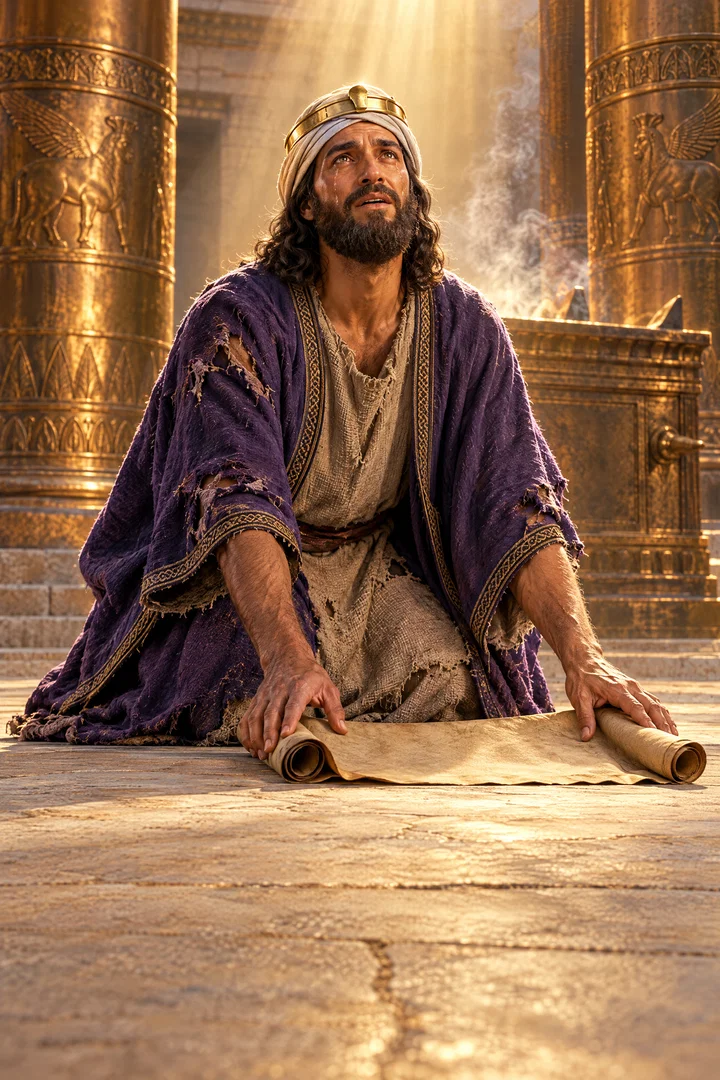
And for this cause Hezekiah the king, and the prophet Isaiah the son of Amoz, prayed and cried to heaven.
Translations
American King James Version, King James Version, KJV Cambridge Paragraph Bible, Webster Bible
And for this cause Hezekiah the king, and the prophet Isaiah the son of Amoz, prayed and cried to heaven.
Revised Version, American Standard Version
And Hezekiah the king, and Isaiah the prophet the son of Amoz, prayed because of this, and cried to heaven.
And Hezekiah the king prayeth, and Isaiah son of Amoz the prophet, concerning this, and they cry to the heavens,
And because of this, king Hezekiah and the prophet Isaiah the son of Amoz prayed and cried to heaven.
And Hezekiah the king and Isaiah son of Amoz, the prophet, prayed concerning this,-and made outcry unto the heavens,
Berean Standard Bible, Majority Standard Bible
In response, King Hezekiah and the prophet Isaiah son of Amoz cried out to heaven in prayer,
Hezekiah the king and Isaiah the prophet, the son of Amoz, prayed because of this, and cried to heaven.
And Hezekiah the king, and Isaiah the prophet, the son of Amoz, made prayer because of this, crying out to heaven.
But Hezekiah the King, and the Prophet Isaiah the sonne of Amoz prayed against this and cryed to heauen.
Douay-Rheims (Challoner revision)
And Ezechias the king, and Isaias the prophet the son of Amos, prayed against this blasphemy, and cried out to heaven.
Pictures

Cross-references
- Isaiah 37:14-20
And Hezekiah received the letter from the hand of the messengers, and read it: and Hezekiah went up unto the house of the LORD, and spread it before the LORD.
Hezekiah prays to the Lord against the Assyrian threat.
- 2 Kings 19:14-19
And Hezekiah received the letter of the hand of the messengers, and read it: and Hezekiah went up into the house of the LORD, and spread it before the LORD.
Hezekiah prays for deliverance from the Assyrian threat.
- 2 Kings 19:35-37
And it came to pass that night, that the angel of the LORD went out, and smote in the camp of the Assyrians an hundred fourscore and five thousand: and when they arose early in the morning, behold, they were all dead corpses.
The angel destroys the Assyrian army, and Sennacherib returns and is killed.
- Isaiah 36
Now it came to pass in the fourteenth year of king Hezekiah, that Sennacherib king of Assyria came up against all the defenced cities of Judah, and took them.
The passage gives the fuller account of the Assyrian threat that prompted Hezekiah and Isaiah to pray.
- Isaiah 37:36
Then the angel of the LORD went forth, and smote in the camp of the Assyrians a hundred and fourscore and five thousand: and when they arose early in the morning, behold, they were all dead corpses.
The angel strikes the Assyrian camp after Hezekiah and Isaiah pray.
- 2 Kings 19:4
It may be the LORD thy God will hear all the words of Rab-shakeh, whom the king of Assyria his master hath sent to reproach the living God; and will reprove the words which the LORD thy God hath heard: wherefore lift up thy prayer for the remnant that are left.
Hezekiah asks Isaiah to pray after the Assyrian reproaches God.
- 2 Kings 19:6-7
And Isaiah said unto them, Thus shall ye say to your master, Thus saith the LORD, Be not afraid of the words which thou hast heard, with which the servants of the king of Assyria have blasphemed me.
Isaiah gives God’s answer to the prayer and predicts the Assyrian king’s fate.
- 2 Kings 19:1
And it came to pass, when king Hezekiah heard it, that he rent his clothes, and covered himself with sackcloth, and went into the house of the LORD.
Hezekiah responds to the Assyrian challenge with mourning and prayer.
- 2 Kings 18:13-19
Now in the fourteenth year of king Hezekiah did Sennacherib king of Assyria come up against all the fenced cities of Judah, and took them.
Hezekiah faces Sennacherib’s invasion, the crisis prompting prayer for deliverance.
- 2 Chronicles 32:8
With him is an arm of flesh; but with us is the LORD our God to help us, and to fight our battles. And the people rested themselves upon the words of Hezekiah king of Judah.
The verse promises God’s help in the invasion and battle.
- 2 Kings 18:35
Who are they among all the gods of the countries, that have delivered their country out of mine hand, that the LORD should deliver Jerusalem out of mine hand?
Sennacherib questions whether God can deliver Jerusalem; Hezekiah and Isaiah pray for deliverance.
- 2 Chronicles 32:1
After these things, and the establishment thereof, Sennacherib king of Assyria came, and entered into Judah, and encamped against the fenced cities, and thought to win them for himself.
Sennacherib’s invasion prompted Hezekiah and Isaiah to pray.
- 2 Kings 18:37
Then came Eliakim the son of Hilkiah, which was over the household, and Shebna the scribe, and Joah the son of Asaph the recorder, to Hezekiah with their clothes rent, and told him the words of Rab-shakeh.
The representatives report Rabshakeh’s words to Hezekiah.
- 2 Chronicles 32:3-5
He took counsel with his princes and his mighty men to stop the waters of the fountains which were without the city: and they did help him.
Hezekiah prepares Jerusalem to withstand the Assyrian siege.
- Psalms 65:2
O thou that hearest prayer, unto thee shall all flesh come.
Names God as the one who hears prayer.
Commentary
Each commentary is drawn from primary sources: the writings of Ellen G. White and Adventist pioneers and periodicals. Each commentary is separate. Its own words are not a quotation; follow the references to read the source passages.
Ellen G. White
2 sources
The prayer arose when the Assyrian spokesman had reproached the living God, blaspheming Him and threatening Jerusalem in its day of trouble and rebuke and blasphemy.PK 354.2–4RH May 27, 1915 Hezekiah sent to Isaiah asking him to lift up prayer for the remnant that were left, that the Lord would hear all the words of Rabshakeh and reprove them.PK 354.2–4 In that crisis Hezekiah the king and Isaiah the prophet prayed and cried to heaven together in united prayer.PK 354.2–4RH May 27, 1915
God answered their prayer through Isaiah with a message to Hezekiah not to be afraid of the words by which the servants of the king of Assyria had blasphemed Him.PK 354.2–4RH May 27, 1915 He declared He would send a blast upon Sennacherib so that he would hear a rumor.PK 354.2–4 He declared further that the Assyrian king would return to his own land and fall by the sword there.PK 354.2–4RH May 27, 1915
Sources
Pioneers and periodicals
13 sources
When Sennacherib's representatives threatened Jerusalem with blasphemy against God, mockery of His power, and taunting of His people, Hezekiah the king and Isaiah the prophet prayed and cried to heaven together humbly and earnestly for help and deliverance.RH May 27, 1915ST Jun 21, 1905ST Aug 8, 1906ST Aug 8, 1906RH Dec 8, 1868 They laid the Assyrian defiance before the Lord, asking Him to vindicate His own name and cause.ST Jun 21, 1905 God answered their prayers through Isaiah, assuring Hezekiah not to fear, for the Assyrian king would return to his own land and fall by the sword there.RH May 27, 1915 The Lord sent an angel who cut off the mighty men and leaders in the Assyrian camp, striking down 185,000 soldiers in one night and miraculously delivering Jerusalem, so that Sennacherib returned home in disgrace and was later killed by his sons while worshiping his idol.ST Aug 8, 1906RH Apr 9, 1872RH Jun 11, 1857 Their turning to God shows that His people need not defend themselves with carnal weapons even against an armed foe, but when powerful forces are arrayed against them they are to plead with God for power from on high with humility, renewed consecration, and greater earnestness in prayer.ST Sep 13, 1905RH Sep 24, 1908
Assyrian Crisis and Deliverance
The verse belongs to Sennacherib's war against Judah, in which he captured its cities, besieged Lachish, exacted tribute from Hezekiah, and sent forces against Jerusalem.RH Jun 11, 1857 When his representatives continued to threaten Jerusalem, blaspheme God, mock His power, and taunt His people, Hezekiah the king and Isaiah the prophet prayed and cried to heaven.RH May 27, 1915ST Jun 21, 1905ST Aug 8, 1906ST Aug 8, 1906 Their prayer came in response to the Assyrian attack on God's people and insults against God, answering Sennacherib's contemptuous challenge and taunts.ST Jun 21, 1905ST Aug 8, 1906ST Aug 8, 1906 They laid the Assyrian blasphemy before the Lord, asking Him to vindicate His own name and cause.ST Jun 21, 1905
The king and the prophet prayed together, crying to heaven humbly and earnestly for help and deliverance, with humbling of themselves and the people.RH May 27, 1915RH Dec 8, 1868 God answered their prayers through Isaiah, assuring Hezekiah not to fear and declaring that the Assyrian king would return to his own land and fall by the sword there.RH May 27, 1915 The Lord sent an angel who cut off all the mighty men of valor and the leaders and captains in the camp of the king of Assyria, revealing the strength and power of one single angel.ST Aug 8, 1906RH Apr 9, 1872 In one night he struck down a hundred fourscore and five thousand soldiers, miraculously overthrowing the army and delivering Jerusalem, displaying God's power rather than human strength.RH Apr 9, 1872RH May 21, 1908RH Dec 8, 1868
Sennacherib returned home in disgrace after the defeat of his leaders and army.ST Aug 8, 1906 He was later killed by his sons while worshiping his idol.RH Jun 11, 1857 Taken with the parallel accounts, the verse supports the conclusion that the army was with the king at Libnah, not near Jerusalem, when the angel killed the 185,000, which rules out that destruction as the fulfillment of Isaiah 30:33.RH Jun 15, 1869
Prayer's Meaning and Example
The miraculous rescue of Jerusalem from Sennacherib's army and taunts against God displayed divine power rather than human strength, and should have led the people to exalt Him.RH May 21, 1908 Hezekiah and Isaiah's turning to God in prayer instead of taking up carnal weapons shows that even when facing an armed foe God's people need not defend themselves in that way, for their struggle is not against flesh and blood and their weapons are spiritual.ST Sep 13, 1905 Their earnest turning to God when powerful forces were arrayed against them calls believers under opposition to plead with God for power from on high with humility, renewed consecration, and greater earnestness in prayer.RH Sep 24, 1908 Their example shows that God's servants seek strength and guidance through prayer, and that prayer sustains and advances God's work.RH Nov 21, 1907
Sources