2 Kings 25:10
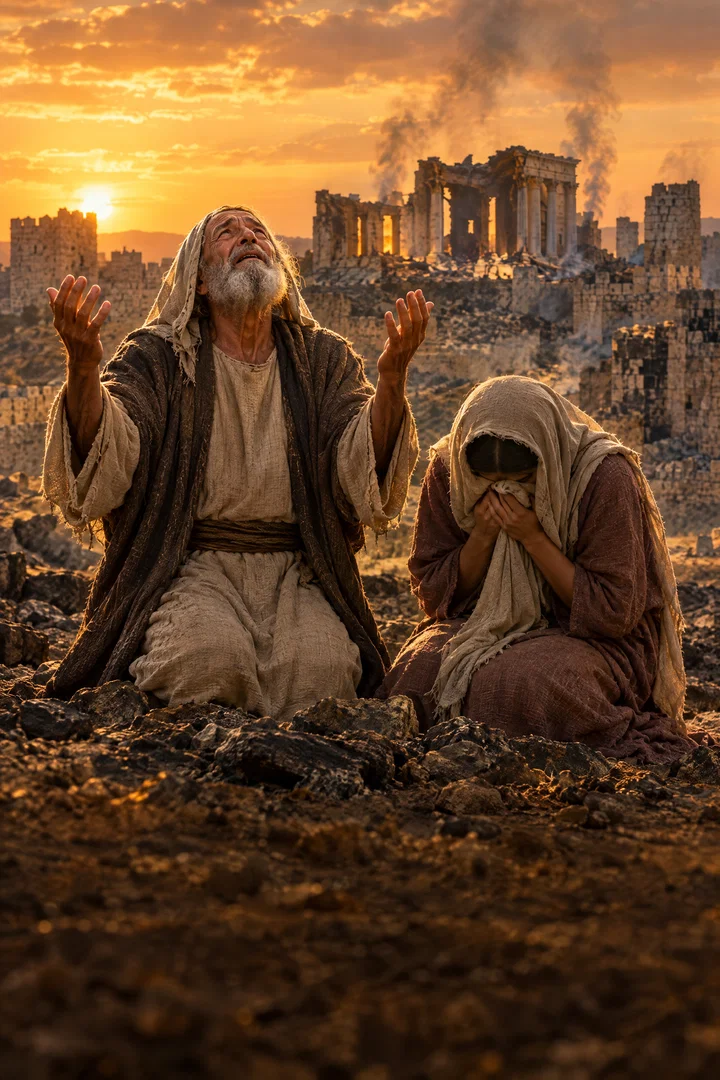
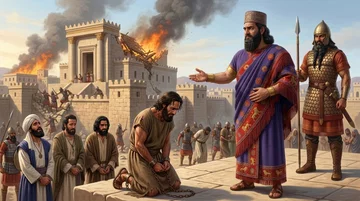
And all the army of the Chaldees, that were with the captain of the guard, brake down the walls of Jerusalem round about.
Translations
And all the army of the Chaldees, that were with the captain of the guard, broke down the walls of Jerusalem round about.
King James Version, KJV Cambridge Paragraph Bible
And all the army of the Chaldees, that were with the captain of the guard, brake down the walls of Jerusalem round about.
And all the army of the Chaldees, that were with the captain of the guard, broke down the walls of Jerusalem on all sides.
Revised Version, American Standard Version
And all the army of the Chaldeans, that were with the captain of the guard, brake down the walls of Jerusalem round about.
and the walls of Jerusalem round about have all the forces of the Chaldeans, who [are] with the chief of the executioners, broken down.
And all the army of the Chaldeans that were with the captain of the body-guard broke down the walls of Jerusalem round about.
And, the walls of Jerusalem round about, did all the force of the Chaldeans who were with the chief of the royal executioners, break down.
Berean Standard Bible, Majority Standard Bible
And the whole army of the Chaldeans under the captain of the guard broke down the walls around Jerusalem.
All the army of the Chaldeans, who were with the captain of the guard, broke down the walls around Jerusalem.
And the walls round Jerusalem were broken down by the Chaldaean army which was with the captain.
And all the armie of the Caldees that were with the chiefe stewarde, brake downe the walles of Ierusalem round about.
Douay-Rheims (Challoner revision)
And all the army of the Chaldees, which was with the commander of the troops, broke down the walls of Jerusalem round about.
Pictures
Cross-references
- Jeremiah 52:4-14
And it came to pass in the ninth year of his reign, in the tenth month, in the tenth day of the month, that Nebuchadrezzar king of Babylon came, he and all his army, against Jerusalem, and pitched against it, and built forts against it round about.
Provides a parallel account of the siege and destruction.
- 2 Chronicles 36:19
And they burnt the house of God, and brake down the wall of Jerusalem, and burnt all the palaces thereof with fire, and destroyed all the goodly vessels thereof.
Both describe Jerusalem’s walls being broken down during its destruction.
- Jeremiah 39:8-9
And the Chaldeans burned the king’s house, and the houses of the people, with fire, and brake down the walls of Jerusalem.
Describes Jerusalem’s broken walls and the people carried away captive.
- Jeremiah 25:11
And this whole land shall be a desolation, and an astonishment; and these nations shall serve the king of Babylon seventy years.
Gives the duration of the captivity.
- Ezekiel 17:12-20
Say now to the rebellious house, Know ye not what these things mean? tell them, Behold, the king of Babylon is come to Jerusalem, and hath taken the king thereof, and the princes thereof, and led them with him to Babylon;
Judgment follows Zedekiah’s breach of his oath and covenant with Babylon.
- Micah 4:10
Be in pain, and labour to bring forth, O daughter of Zion, like a woman in travail: for now shalt thou go forth out of the city, and thou shalt dwell in the field, and thou shalt go even to Babylon; there shalt thou be delivered; there the LORD shall redeem thee from the hand of thine enemies.
Zion is driven from the city and goes into exile in Babylon.
- Daniel 9:2
In the first year of his reign I Daniel understood by books the number of the years, whereof the word of the LORD came to Jeremiah the prophet, that he would accomplish seventy years in the desolations of Jerusalem.
Identifies the prophesied period of Jerusalem's desolation.
- Ezra 1
Now in the first year of Cyrus king of Persia, that the word of the LORD by the mouth of Jeremiah might be fulfilled, the LORD stirred up the spirit of Cyrus king of Persia, that he made a proclamation throughout all his kingdom, and put it also in writing, saying,
Judah’s captivity closes as restoration and return from exile begin.
- 2 Kings 24:8-16
Jehoiachin was eighteen years old when he began to reign, and he reigned in Jerusalem three months. And his mother’s name was Nehushta, the daughter of Elnathan of Jerusalem.
Recounts Jehoiachin’s capture and deportation to Babylon.
- 2 Chronicles 36:21
To fulfil the word of the LORD by the mouth of Jeremiah, until the land had enjoyed her sabbaths: for as long as she lay desolate she kept sabbath, to fulfil threescore and ten years.
The land’s desolation fulfills the seventy years and allows it to enjoy its sabbaths.
- Daniel 1:1-2
In the third year of the reign of Jehoiakim king of Judah came Nebuchadnezzar king of Babylon unto Jerusalem, and besieged it.
Places Daniel in the period when Jerusalem and the temple lay in ruins.
- Luke 21:20-24
And when ye shall see Jerusalem compassed with armies, then know that the desolation thereof is nigh.
Describes Jerusalem’s later destruction by the Romans.
Commentary
Each commentary is drawn from primary sources: the writings of Ellen G. White and Adventist pioneers and periodicals. Each commentary is separate. Its own words are not a quotation; follow the references to read the source passages.
Ellen G. White
1 source
The breaking down of the walls all around Jerusalem was carried out by the whole Chaldean army that accompanied the captain of the guard, marking the overthrow of the city in its destruction.STB 290.3 That destruction and the carrying away of the people into exile came as a consequence of their failure to act as God's missionaries to the nations.STB 290.3 Instead of fulfilling that purpose they had shut themselves away and separated themselves from the peoples around them.STB 290.3
In scattering them abroad God purposed that the knowledge of His truth might be carried to the world that otherwise would not have received it.STB 290.3 The exile was therefore not abandonment but a means of spreading light through a dispersed people.STB 290.3 If in that condition they proved loyal and true and submissive, God would restore them and bring them back again to their own land.STB 290.3
Sources
Pioneers and periodicals
17 sources
The verse records that the Chaldean army with the captain of the guard broke down the walls of Jerusalem round about in Nebuchadnezzar's conquest and carried the Jews into Babylonian captivity.RH Oct 8, 1861RH Jul 21, 1868 Nebuzar-adan came on the seventh day of the fifth month and with the breaking of the walls burned the house of the Lord and the king's house and every great house, carrying away the remnant and the vessels of gold, silver and brass, including the pillars, the sea and the bases whose brass was without weight.ST Jan 14, 1886 The breaking of the walls all around marked the final fall after a year and a half of siege, ending independent government in Judah so that though the people returned after seventy years they never again became an independent nation but remained a province until Jerusalem was finally destroyed by the Romans in A.D. 70.ST Aug 20, 1885ST Nov 4, 1897ST Jul 23, 1885ST Nov 7, 1906 It stands at the end of the history told in Kings from the accession of Solomon to the captivity, closing the account of the remaining kingdom of Judah after the ten tribes were swept away.ST Dec 9, 1897ST Jun 10, 1913ST May 12, 1909 The ruin was the inevitable climax of a long course of apostasy from when the people rejected God as King to have a visible king like the nations, and it is a type of events to transpire at the close of this dispensation in which those in the Christian age have a special interest.RH Sep 17, 1872
Fall of Jerusalem
The Chaldean army that was with the captain of the guard broke down the walls of Jerusalem round about when Nebuchadnezzar conquered and captured the city and carried the Jews into Babylonian captivity.RH Oct 8, 1861RH Jul 21, 1868ST Sep 19, 1911 Nebuzar-adan, captain of the guard and servant of the king of Babylon, came to Jerusalem on the seventh day of the fifth month and broke down the walls round about.ST Jan 14, 1886 With that he burned the house of the Lord and the king's house and all the houses of Jerusalem and every great man's house with fire, and carried away to Babylon all the remnant of the people and all the vessels of gold and silver and brass.ST Jan 14, 1886 These included the two great pillars of brass which Solomon had made and the brazen sea and the bases, the brass of all these vessels being without weight, and so the captivity of Judah was completed and the land left desolate.ST Jan 14, 1886 The breaking down of the walls all around marked the final fall after a year and a half under siege, with the temple and the houses of the leading men burned and Zedekiah and many people taken to Babylon.ST Aug 20, 1885
The verse stands at the end of the history told in the books of Kings, which runs from the accession of Solomon to the Babylonian captivity.ST Dec 9, 1897 It belongs to the third great section of that history, 2 Kings 18-25, covering the remaining kingdom of Judah after the ten tribes had been swept away, following the undivided kingdom under Solomon in 1 Kings 1-11 and the divided kingdom in 1 Kings 12 to 2 Kings 17.ST Dec 9, 1897 It records the breaking down of the walls of Jerusalem round about as part of the laying waste of Jerusalem that closes the history of the kingdom of Judah and the final capture of the Jewish nation by Nebuchadnezzar.ST Jun 10, 1913ST May 12, 1909 That close records the wicked and weak reigns of the kings of Judah, together with the despoiling of the temple, the slaying of the captives at Riblah, the capture of Zedekiah the last king, the appointment of Gedaliah as governor and his slaying through treachery, the going of the remnant to Egypt contrary to the counsel of Jeremiah, and the kind treatment shown to Jehoiachin by the king of Babylon.ST Jun 10, 1913ST May 10, 1910 The account of Jerusalem's fall is to be compared with the concluding chapter of Jeremiah, which is an addition to Jeremiah's words.RH Jul 27, 1916
The destruction ended independent government in Judah, for Babylon successfully subverted the kingdom and scattered Judah after earlier nations had only been temporarily successful against God's people.ST Nov 4, 1897ST Nov 7, 1906 Nebuchadnezzar put out the eyes of Zedekiah, the last king, and took him to Babylon, where he died in captivity.ST Nov 4, 1897 The people were removed to Babylon by 588 B.C., and after the seventy-year captivity they were allowed to return, but Judah never again became an independent nation but remained only as a province subservient to the great ruling kingdoms.ST Nov 4, 1897ST Jul 23, 1885 The diadem was removed and the crown overturned to be no more until he come whose right it is, until Jerusalem was finally destroyed by the Romans in A.D. 70.ST Nov 4, 1897ST Jul 23, 1885 The capture was an almost total destruction followed by captivity and half a century of desolation, leaving the temple in ruins in Daniel's day, though the temple later stood again until its final destruction by the Romans in A.D. 70.ST Jul 23, 1885ST Dec 8, 1881RH Jul 21, 1868
Theological Meaning and Application
The breaking down of the walls of Jerusalem round about was the inevitable climax of a long downward course of apostasy. That course began when the people rejected God as their King and asked Samuel for a visible king to judge them like all the nations, a demand that foreshadowed the later rejection of Christ in saying, We have no king but Caesar. The history of the undivided and divided kingdom was apostasy varied only by occasional efforts to revive true worship and restore the reality of the sanctuary and its services. Despite centuries of prophetic warnings against formalism, against trusting in human power, and against rejecting covenant blessings conditioned on obedience, the downward course continued until Israel was first carried captive by the king of Assyria and then judgment fell in Judah's captivity and Jerusalem's ruin. In this ruin the destruction of the walls by the Chaldean army under Nebuchadnezzar fulfilled God's judgment on Israel for disobeying His commands and adopting slavery.RH Oct 8, 1861
The final destruction of Jerusalem and the Babylonian captivity is a type of events to transpire either under the gospel or at the close of this dispensation.RH Sep 17, 1872 Its primary and typical fulfillment was among God's ancient people, yet it was molded to also represent gospel-age events.RH Sep 17, 1872 Those living in the Christian dispensation therefore have a special interest in it beyond what applied to the Jews.RH Sep 17, 1872
The captivity to which the verse belongs closes the history of the great empires mentioned in the Bible from the confusion of tongues onward.ST Feb 11, 1897 It provides one of the salient facts of the histories of Shinar, Chaldea, Elam, Karvak, Accad, Babel, Assyria, Egypt and Israel showing God's overruling hand in the history of nations.ST Feb 11, 1897 That captivity is received as a true past event, but like other truths that were once present necessities, this history does not by itself reveal God's truth for later emergencies, since distinct aspects of truth arise in successive generations to meet their needs.ST May 11, 1915
Sources