2 Kings 4:33
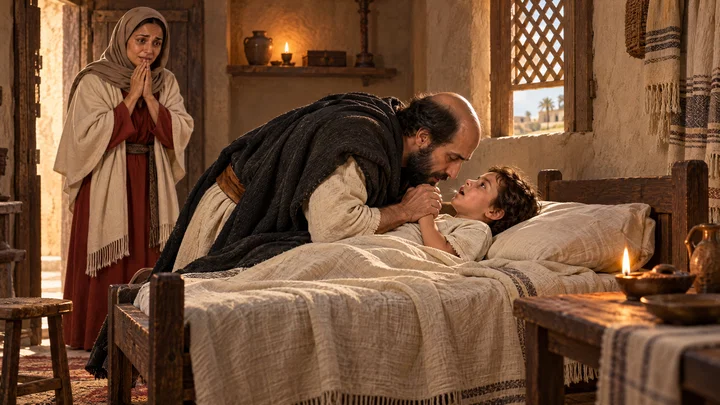
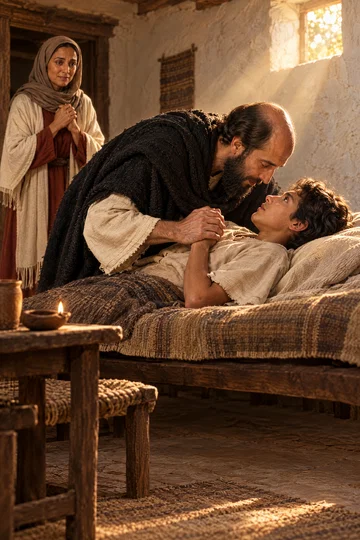
He went in therefore, and shut the door upon them twain, and prayed unto the LORD.
Translations
He went in therefore, and shut the door on them two, and prayed to the LORD.
King James Version, Revised Version
He went in therefore, and shut the door upon them twain, and prayed unto the LORD.
He went in therefore, and shut the door upon them twain, and prayed unto the Lord.
He went in therefore, and shut the door upon them both, and prayed to the LORD.
He went in therefore, and shut the door upon them twain, and prayed unto Jehovah.
and he goeth in and shutteth the door upon them both, and prayeth unto Jehovah.
And he went in and shut the door upon them both, and prayed to Jehovah.
So he went in, and shut the door upon them two,—and prayed unto Yahweh.
Berean Standard Bible, Majority Standard Bible
So he went in, closed the door behind the two of them, and prayed to the LORD.
He went in therefore, and shut the door on them both, and prayed to the LORD.
So he went in, and shutting the door on the two of them, made prayer to the Lord.
He went in therefore, and shut the doore vpon them twayne, and prayed vnto the Lord.
Douay-Rheims (Challoner revision)
And going in he shut the door upon him, and upon the child, and prayed to the Lord.
Pictures
Cross-references
- 1 Kings 17:21-22
And he stretched himself upon the child three times, and cried unto the LORD, and said, O LORD my God, I pray thee, let this child’s soul come into him again.
Elijah prays when raising a child from the dead.
- Luke 7:14
And he came and touched the bier: and they that bare him stood still. And he said, Young man, I say unto thee, Arise.
Jesus raises the widow of Nain’s son before his own resurrection.
- Luke 8:54-55
And he put them all out, and took her by the hand, and called, saying, Maid, arise.
Jesus restores the ruler’s daughter to life.
- John 11:43-44
And when he thus had spoken, he cried with a loud voice, Lazarus, come forth.
Jesus calls Lazarus out of the tomb, raising him before his own resurrection.
- Matthew 6:6
But thou, when thou prayest, enter into thy closet, and when thou hast shut thy door, pray to thy Father which is in secret; and thy Father which seeth in secret shall reward thee openly.
Both texts describe prayer with the door shut in private.
- John 11:25
Jesus said unto her, I am the resurrection, and the life: he that believeth in me, though he were dead, yet shall he live:
Jesus declares himself the resurrection and the life.
- 2 Kings 4:21
And she went up, and laid him on the bed of the man of God, and shut the door upon him, and went out.
The mother laid her dead son where Elisha prayed.
- 1 Kings 17:19-21
And he said unto her, Give me thy son. And he took him out of her bosom, and carried him up into a loft, where he abode, and laid him upon his own bed.
Another prophetic example of prayer.
- Acts 9:40
But Peter put them all forth, and kneeled down, and prayed; and turning him to the body said, Tabitha, arise. And she opened her eyes: and when she saw Peter, she sat up.
Peter raises Tabitha from the dead.
- Mark 5:22-43
And, behold, there cometh one of the rulers of the synagogue, Jairus by name; and when he saw him, he fell at his feet,
The passage pairs the Shunammite’s son story with the raising of Jairus’s daughter.
- Acts 20:10
And Paul went down, and fell on him, and embracing him said, Trouble not yourselves; for his life is in him.
Paul restores Eutychus to life.
- 2 Kings 8:1-6
Then spake Elisha unto the woman, whose son he had restored to life, saying, Arise, and go thou and thine household, and sojourn wheresoever thou canst sojourn: for the LORD hath called for a famine; and it shall also come upon the land seven years.
The woman whose son Elisha restored receives her home and land back after seven years.
- 2 Kings 4:10-11
Let us make a little chamber, I pray thee, on the wall; and let us set for him there a bed, and a table, and a stool, and a candlestick: and it shall be, when he cometh to us, that he shall turn in thither.
The chamber provided for Elisha became the place where he prayed privately.
- 2 Kings 13:20-21
And Elisha died, and they buried him. And the bands of the Moabites invaded the land at the coming in of the year.
A dead man comes to life after touching Elisha’s bones.
- Daniel 6:10-23
Now when Daniel knew that the writing was signed, he went into his house; and his windows being open in his chamber toward Jerusalem, he kneeled upon his knees three times a day, and prayed, and gave thanks before his God, as he did aforetime.
Daniel prays faithfully and is delivered from the lions.
- Luke 8:40
And it came to pass, that, when Jesus was returned, the people gladly received him: for they were all waiting for him.
Jesus restores the ruler’s daughter to life.
- Acts 12:5-11
Peter therefore was kept in prison: but prayer was made without ceasing of the church unto God for him.
The church prays, and Peter is delivered by an angel.
Commentary
Each commentary is drawn from primary sources: the writings of Ellen G. White and Adventist pioneers and periodicals. Each commentary is separate. Its own words are not a quotation; follow the references to read the source passages.
Ellen G. White
2 sources
Elisha's ministry was peaceful and marked by personal care, and this verse belongs to the account that presents it in that light.PK 235.1 He shut himself in alone with the dead child and prayed to the Lord, and only after that prayer was the child restored to life.PK 239.3–240.1 His miracles, including this restoration, brought healing and rejoicing wherever they were wrought.PK 235.1 The bringing back of the child to life was a reward for the faith of the Shunammite woman.PK 239.3–240.1 It also foreshadows Christ, the Life-giver, restoring the dead to their faithful loved ones at His coming.PK 239.3–240.1
Sources
Pioneers and periodicals
43 sources
Elisha entered the chamber where the dead boy lay on the bed, shut himself in alone with the child, and made prayer to the Lord his first act before stretching himself upon him.ST Jul 28, 1898ST Jul 28, 1898ST Sep 5, 1900 The shut door is solitary wrestling with God apart, entering the inner chamber to pray to the Father in secret in dependence on Him as the source of all life-giving power.ST Aug 6, 1894ST Oct 5, 1904ST Oct 5, 1904ST The child's return to life and health was a genuine resurrection from the dead and an answer to that private earnest prayer, proving the power of prayer to reach even beyond death.RH Aug 6, 1872RH Mar 8, 1864ST Sep 5, 1900RH Feb 5, 1867RH Aug 31, 1869 It was wrought by virtue of the Son of God's sacrifice though not yet offered, and was not a resurrection to immortality but a special exception before the first advent.ST Aug 12, 1889RH Aug 6, 1872ST Oct 12, 1876ST Apr 30, 1896ST Jan 11, 1905 It illustrates that restoring those dead in sin to spiritual life requires earnest dependence on God in prayer with close personal contact and persevering effort, and not healing by proxy or mere outward instruction.RH Apr 22, 1915RH Jul 20, 1916
Setting and Action
Elisha found the Shunammite's son dead and laid upon his bed, went in where the child lay, shut the door upon the two of them, and was alone with the child while the mother and others remained outside.ST Jul 28, 1898ST Jul 28, 1898ST Apr 24, 1893 His first act was to pray unto the LORD, casting his burden upon the LORD to sustain and restore life and asking God for the child's life, and only afterward did he lay himself upon the child in physical effort to restore him in addition to that prayer.ST Jul 28, 1898ST Jul 28, 1898ST Apr 24, 1893 That prayer is connected with the child's return to life.ST Sep 5, 1900
The room was the little bedchamber on the wall that the Shunammite family had built and furnished for Elisha for rest and secret prayer and study.RH Jul 25, 1907 The mother had laid her dead son on that bed and then gone to call the man of God, and Elisha entered alone with the child and called upon the Lord to restore his life.RH Jul 25, 1907
The child was the only son of the Shunammite woman who had entertained Elisha.ST Jun 2, 1881 He had fallen under sunstroke out on the plains in the heat of the kind still common there, which shows the diseases of that land to be of the same types as in scriptural days.RH Aug 29, 1871 This was at Shunem on the opposite side of the very hill on which Nain stood above the plain of Jezreel.ST Jun 2, 1881
Elisha went personally after Gehazi's hasty attempt with Elisha's staff had failed, for the work God gives cannot be handed off to another.RH Jan 23, 1913 The woman had no confidence in the staff or in Gehazi because she knew the Spirit of God was in Elisha, so she clung to the prophet and would not go home without him in a struggle of faith like Jacob wrestling until she won her suit.ST Jul 28, 1898 Her faith was shown by a journey of some sixteen miles and by importunate pleadings that constrained the man of God to yield, accompany her home, and pray, while Gehazi's ostentatious haste failed because there is no virtue in the staff apart from connection with the Spirit of God or with one in whom that Spirit is manifested.ST Jul 28, 1898 In one reading Elisha shut himself and the child's mother in with the dead child and prayed as part of the raising, which is counted as one of six raisings before Christ's resurrection.RH Nov 20, 1860ST Sep 5, 1900
Solitary Earnest Prayer
The shut door means solitary wrestling with God alone, apart from others with only the prophet and the dead child inside.ST Oct 5, 1904ST Oct 5, 1904 It is like Jacob wrestling alone with God, after the Saviour's custom of going apart by Himself to pray.ST Oct 5, 1904ST Oct 5, 1904 It carries out His instruction to enter into the inner chamber, shut the door, and pray to the Father in secret who sees in secret and recompenses.ST Oct 5, 1904ST Oct 5, 1904
Elisha shut the door and prayed to the Lord because he depended on God as the source of all life-giving power.ST Aug 6, 1894 He cast his burden upon the LORD to sustain and restore life, asking God earnestly in private for the child's life before the son was restored to life and health.ST Aug 6, 1894ST The account is an example of prevailing in prayer while alone with God.ST Nov 24, 1887ST Apr 2, 1902 Faith and not the number of people praying is the real power with God, so a person need not be discouraged from asking God alone.ST Apr 2, 1902 Elisha withdrew with the Shunammite's son, shut the door, and pleaded with God alone for the child's restoration.ST Nov 24, 1887ST Apr 2, 1902
Prayer was followed by doing what one can to help bring about what was prayed for.ST Aug 6, 1894 When Elisha found the child dead, the first thing he did was go in, shut the door, and pray unto the Lord, and the physical effort to restore the child came afterward in addition to that prayer.ST Aug 6, 1894ST Jul 28, 1898 The verse shows the need for a private chamber to be alone with the Lord in prayer and preparation for public service, continuing in supplication there until God heard and raised the boy to life again.RH Jul 25, 1907 The child's restoration to life and health is presented as an answer to prayer.RH Feb 5, 1867RH Aug 7, 1855 It is an example of God's presence working through the Spirit in answer to prayer, proving the power of prayer.RH Feb 5, 1867RH Aug 31, 1869RH Aug 1, 1871 Elisha's prayer shows that prayer reaches the heart of the Infinite and of God, and can reach even beyond death to bring back life.ST Sep 5, 1900STRH Dec 18, 1913
Resurrection Power and Christ
The account records a genuine resurrection from the dead in which Elisha received power to raise the young Shunammite, demonstrating that the dead can be restored to life and affirming the reality of resurrection.RH Aug 6, 1872RH Mar 8, 1864 His restoration is not a different kind of event because he was not raised to immortality.RH Aug 6, 1872RH May 28, 1861
The raising occurred long before Christ's resurrection and broke the power of death, though it was not a resurrection to immortality.ST Aug 12, 1889 It took place before the resurrection of Christ and proves together with other raisings that Christ was not the first and only one raised from the dead.ST Mar 30, 1876ST Apr 30, 1896 Christ's resurrection does not rule out others having been raised before him.ST Dec 30, 1903
The boy's restoration counts as a resurrection from the dead even though he was not raised to immortality.ST Aug 12, 1889RH Aug 6, 1872RH May 28, 1861 It was an exception to the general rule of resurrection, occurring before the first advent of Christ, and proves that apart from such special cases all others live only by a resurrection from the dead through the power of Christ.ST Jan 28, 1889
The raising was done by virtue of the Son of God's sacrifice, though that sacrifice had not yet occurred and was established in God's purpose.ST Oct 12, 1876 Christ is preeminent in these resurrections: they center in him, and the raising of others depended on his power, for he is the one through whom the dead are raised, and he called Moses back to life.ST Apr 30, 1896ST Dec 30, 1903 The Shunammite's son was truly raised from the dead before Christ died and rose, like Moses, Enoch, Lazarus and others, by virtue of Christ's death and resurrection, whose power was determined in His character from the foundation of the world, and made him a victor over the power of death.ST Jan 11, 1905 His being called first-fruits of those who sleep does not always mean first in point of time but first in pre-eminence, just as Ephraim and Jacob are called first-born though Manasseh and Esau were older.ST Jan 11, 1905
Elisha's raising of the dead, like miracles performed through Elijah, Peter, and Paul, did not by itself prove that Jesus was the Messiah, since others were also raised.ST Jan 30, 1912 Jesus' Messiahship is proved by his death, burial, and resurrection in fulfillment of Scripture.ST Jan 30, 1912
The raising is treated as a true assertion of Scripture, accepted on the authority of the divinely inspired book rather than judged by whether the miracle seems reasonable in isolation.RH Aug 29, 1912 Elisha's miracles were being presented by critics to Sunday-school children as legends and myths rather than true events.ST Jan 24, 1906
Finding Christ in Story
The verse belongs to the account of Elisha's miracles, through which God worked and instructed Israel.ST May 13, 1908 It belongs to Elisha's raising to life of the only son of the Shunammite woman who had entertained him, at Shunem on the opposite side of the very hill on which Nain stood above the plain of Jezreel.ST Jun 2, 1881 That raising was remembered together with Elijah's raising of the widow's son at Sarepta as the proudest sign of their greatness as prophets, a triumph over the grave.ST Jun 2, 1881 Shunem was near Nain, and the memory of Elisha's raising a child there may have led the people at Nain, when Jesus raised the widow's only son there, to have the memory of Elijah and Elisha on every lip and to cry that a great prophet had risen and that God had visited His people.ST Jun 2, 1881
The story of Elisha raising the Shunammite woman's son to life is not a Christless lesson but contains Christ to be found and taught.ST May 15, 1884 A teacher filled with the Holy Ghost can find Christ in it and teach Him out of it, as Peter and Stephen and Paul and Apollos sought and found Christ in the Old Testament Scriptures and proclaimed Him to their hearers.ST May 15, 1884 Showing Christ out of the Old and New Testaments together is more effective than out of the New Testament only.ST May 15, 1884
Giving Life to Others
Shutting the door and praying earnestly to God while alone with the dead child was part of close, personal, persevering work through which the child's life was restored, and it shows that bringing spiritual life to those dead in sin requires earnest prayer, close personal care, deep consecration, and persevering effort. Earnest dependence on God is required, not merely outward instruction or moral teaching.RH Apr 22, 1915 The restoration involved close personal contact, not healing by proxy, and shows God's desire for people to come into close personal touch with others so that His power working through them may awaken them from death to life.RH Jul 20, 1916 Reaching people requires personal contact and care, not merely giving them religious materials.
The lesson is to make a personal effort for others' salvation and not hastily conclude that they have rejected God's truth or deserve condemnation. The restoration was a greatly desired blessing and joy sent by God to the Shunammite home as a reward for lovingly entertaining His servant.CO 73.5ST Jun 16, 1914 Kindly housing and feeding the Lord's servants brings great blessing in return, and sweet cooperation between God's workers and His people opens the way for mighty manifestations of God's power.RH Jul 25, 1907 It took place in the little bedchamber on the wall that the family had built and furnished for rest and secret prayer and study, where the mother had laid her dead son and then gone to call the man of God, and where he entered alone with the child and called upon the Lord to restore his life, continuing in supplication there until God heard and raised the boy to life again.RH Jul 25, 1907
God graciously remembered that hospitality by saving the household from a great famine.CO 73.5 The woman had no confidence in the staff or in Gehazi because she knew the Spirit of God was in Elisha, so she clung to the prophet and would not go home without him in a struggle of faith like Jacob wrestling with the angel until she won her suit.ST Jul 28, 1898 Her faith was shown by a journey of some sixteen miles and importunate pleadings that constrained the man of God to yield, accompany her home, and pray.ST Jul 28, 1898 There is no virtue in the staff apart from connection with the Spirit of God or with one in whom that Spirit is manifested, so hasty ostentatious ministration was not honored of God, while Elisha's prayer was honored and Heaven answered the prayer of faith.ST Jul 28, 1898 The same answered faith was remembered years afterward when the Lord moved the king to restore her home taken during her seven years' absence.ST Jul 28, 1898
The chapter gives comfort to parents grieving the death of a little young son, assuring them that though they miss him sorely they will meet him again in the glad reunion of the resurrection.RH Jan 4, 1906 The story in 2 Kings 4:18-37 was spoken as words of comfort at the death of a two-month-old infant son, giving hope in the resurrection and the life to grieving parents.RH Jun 24, 1902
Sources