2 Kings 5:23
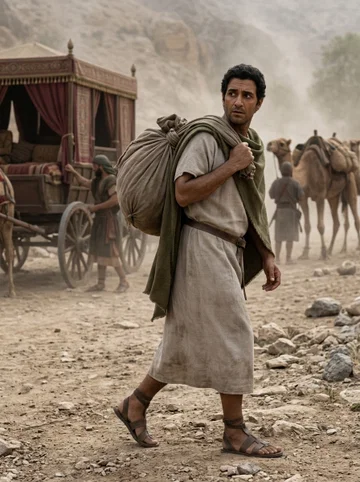
And Naaman said, Be content, take two talents. And he urged him, and bound two talents of silver in two bags, with two changes of garments, and laid them upon two of his servants; and they bare them before him.
Translations
And Naaman said, Be content, take two talents. And he urged him, and bound two talents of silver in two bags, with two changes of garments, and laid them on two of his servants; and they bore them before him.
King James Version, KJV Cambridge Paragraph Bible
And Naaman said, Be content, take two talents. And he urged him, and bound two talents of silver in two bags, with two changes of garments, and laid them upon two of his servants; and they bare them before him.
And Naaman said, Be content, take two talents. And he urged him, and bound two talents of silver in two bags, with two changes of garments, and laid them upon two of his servants; and they bore them before him.
And Naaman said, Be content, take two talents. And he urged him, and bound two talents of silver in two bags, with two changes of raiment, and laid them upon two of his servants; and they bare them before him.
And Naaman said, Be pleased to take two talents. And he urged him, and bound two talents of silver in two bags, with two changes of raiment, and laid them upon two of his servants; and they bare them before him.
And Naaman saith, 'Be pleased, take two talents;' and he urgeth on him, and bindeth two talents of silver in two purses, and two changes of garments, and giveth unto two of his young men, and they bear before him;
And Naaman said, Consent to take two talents. And he urged him, and bound two talents of silver in two bags, with two changes of raiment, and laid them upon two of his young men; and they bore them before him.
And Naaman said, Be content, accept two talents. So he urged him, and bound up two talents of silver in two bags, and two changes of raiment, and laid them upon two of his young men, and they bare them before him.
Berean Standard Bible, Majority Standard Bible
But Naaman insisted, “ Please, take two talents.” And he urged Gehazi to accept them. Then he tied up two talents of silver in two bags along with two sets of clothing and gave them to two of his servants, who carried them ahead of Gehazi.
Naaman said, “ Be pleased to take two talents.” He urged him, and bound two talents of silver in two bags, with two changes of clothing, and laid them on two of his servants; and they carried them before him.
And Naaman said, Be good enough to take two talents. And forcing him to take them, he put two talents of silver in two bags, with two changes of clothing, and gave them to his two servants to take before him.
And Naaman saide, Yea, take two talents: and he compelled him, and bound two talents of siluer in two bagges, with two change of garments, and gaue them vnto two of his seruants, that they might beare them before him.
Douay-Rheims (Challoner revision)
And Naaman said: It is better that thou take two talents. And he forced him, and bound two talents of silver in two bags, and two changes of garments, and laid them upon two of his servants, and they carried them before him.
Pictures

Cross-references
- 2 Kings 5:27
The leprosy therefore of Naaman shall cleave unto thee, and unto thy seed for ever. And he went out from his presence a leper as white as snow.
Gehazi’s deceitful taking of Naaman’s gifts ends in leprosy.
- 2 Kings 4:27
And when she came to the man of God to the hill, she caught him by the feet: but Gehazi came near to thrust her away. And the man of God said, Let her alone; for her soul is vexed within her: and the LORD hath hid it from me, and hath not told me.
Both reveal Gehazi’s selfish character beneath his formal propriety.
- 2 Kings 5:1
Now Naaman, captain of the host of the king of Syria, was a great man with his master, and honourable, because by him the LORD had given deliverance unto Syria: he was also a mighty man in valour, but he was a leper.
same account identifying Naaman
- 2 Kings 5:16
But he said, As the LORD liveth, before whom I stand, I will receive none. And he urged him to take it; but he refused.
Gehazi accepted the gift that Elisha had refused.
- 2 Kings 5:10-14
And Elisha sent a messenger unto him, saying, Go and wash in Jordan seven times, and thy flesh shall come again to thee, and thou shalt be clean.
Naaman’s healing follows his obedience to the instruction to wash in the Jordan.
- Luke 4:27
And many lepers were in Israel in the time of Eliseus the prophet; and none of them was cleansed, saving Naaman the Syrian.
Naaman was the only leper cleansed by Elisha.
- 2 Kings 5:2
And the Syrians had gone out by companies, and had brought away captive out of the land of Israel a little maid; and she waited on Naaman’s wife.
same Naaman account, maid serves his wife
- 2 Kings 5:3
And she said unto her mistress, Would God my lord were with the prophet that is in Samaria! for he would recover him of his leprosy.
The maid points Naaman to Elisha for healing.
- Joshua 7:21
When I saw among the spoils a goodly Babylonish garment, and two hundred shekels of silver, and a wedge of gold of fifty shekels weight, then I coveted them, and took them; and, behold, they are hid in the earth in the midst of my tent, and the silver under it.
Achan’s coveting of treasure brought death, while Gehazi’s taking silver brought leprosy.
Commentary
Each commentary is drawn from primary sources: the writings of Ellen G. White and Adventist pioneers and periodicals. Each commentary is separate. Its own words are not a quotation; follow the references to read the source passages.
Ellen G. White
7 sources
The verse belongs to the history of Naaman, captain of the host of Benhadad king of Syria, in days of constant Syrian-Israelite border warfare after the battle in which Ahab died.PK 244.2 At that time a Syrian raid carried away a little Israelite maid to wait on Naaman's wife.PK 244.2 Though a slave far from home, that maid was one of God's witnesses fulfilling the purpose for which Israel had been chosen.PK 244.2 Ministering in that heathen home she sympathized with her leprous master and, remembering the healings wrought through Elisha and knowing the power of Heaven was with the prophet in Samaria, declared that he would recover Naaman of his leprosy.PK 244.2
Naaman urged Gehazi to accept and gave him two talents of silver in two bags, twice the amount Gehazi had asked for, with two changes of garments.PK 250.4–251.3PK 252.1PK 252.2Lt 83, 1896, par. 23–25Lt 62, 1900, par. 1–2 He bound the silver for carrying and laid it upon two of his servants, with the garments, and they bore them before him.PK 250.4–251.3PK 252.1PK 252.2Lt 83, 1896, par. 23–25Lt 62, 1900, par. 1–2
Gehazi obtained the silver and garments through covetous deception, falsely requesting a reward and taking what Elisha had refused.PK 252.14T 336.1–2Lt 83, 1896, par. 23–25Lt 62, 1900, par. 1–2 The secret transaction was not hidden from God, for every detail of the meeting was revealed to Elisha.PK 252.2 His conduct placed a stumbling block before Naaman, who had received new light and was favorably disposed toward serving the living God.PK 252.1
Falsehood and deception of every kind is sin against the God of truth, for God is a God of sincerity and truth.4T 336.1–2 His word is truth and all His precepts are true and righteous altogether, so prevarication and any exaggeration or deception is offensive in His sight.4T 336.1–2 For the falsehood he uttered from covetousness, the leprosy that had afflicted Naaman came upon Gehazi from the Lord as punishment and remained until death, showing that lying brings divine condemnation and that even life itself should not be purchased with falsehood.4T 336.1–2Lt 83, 1896, par. 23–25 The account warns that greed and mixing sacred service with selfish conduct bring disgrace and judgment upon God's work.Lt 62, 1900, par. 1–2
Sources
Pioneers and periodicals
18 sources
After his cure Naaman pressed a gift of gratitude that Elisha refused, but at Gehazi's urging he willingly gave double silver and clothing to be carried before him by two servants.ST Oct 3, 1878RH Sep 25, 1860RH May 23, 1912ST Dec 7, 1904RH Nov 4, 1873 Gehazi reasoned by worldly policy that it was strange to refuse so rich and willing a giver and to let slip so good an opportunity to add to his treasures.ST Oct 3, 1878 His taking was greedy, covetous deception for dishonest gain, as if selling the power of God working to bless mankind.RH May 23, 1912RH Dec 23, 1915RH Feb 26, 1901RH Nov 4, 1873ST Dec 7, 1904 The ill-gotten wealth brought upon him the leprosy from which Naaman had been cured, leaving him a leper as white as snow and proving that sin has no real fruit and warning against grasping for wealth instead of using entrusted means for God's work.RH Dec 23, 1915ST Oct 3, 1878RH Feb 26, 1901RH Nov 4, 1873RH May 23, 1854
Gift Taken Through Deceit
After Naaman the Syrian was cured of leprosy he stood before the man of God urging him in the fervency of gratitude to receive a present, which Elisha refused and wanted nothing of, though Naaman thought the gift of God could be purchased with money.ST Oct 3, 1878RH Sep 25, 1860RH Nov 4, 1873ST The gift was then obtained through Gehazi's deceit after Elisha had refused Naaman's offer, Gehazi looking for money under the guise of divine healing.RH Sep 25, 1860ST Gehazi acted from a spirit of worldly policy, reasoning that it was strange for his master to refuse, that a valuable present had been offered which they might have just as well as not, that the Syrian was rich and able to give and grateful and willing to give, that it was astonishing to let slip so good an opportunity to add to their treasures, and that if his master was so unmindful of his interests he himself would not lose such opportunities but would run after Naaman and take somewhat of him.ST Oct 3, 1878
At Gehazi's urging and request Naaman agreed and was content to give two talents of silver and two changes of garments, pressing him to accept them.RH Sep 25, 1860RH May 23, 1912ST Mar 25, 1897ST Oct 3, 1878RH Sep 25, 1860 He bound the two talents of silver in two bags and laid them with the garments upon two of his servants to bear before Gehazi, packing them for the servants to carry.RH May 23, 1912ST Dec 7, 1904ST Mar 25, 1897ST Oct 3, 1878RH Sep 25, 1860 These were the treasures Gehazi coveted and obtained by lying and pretending, and this ill-gotten wealth brought him the leprosy from which Naaman had been cured.RH May 23, 1912ST Oct 3, 1878RH Sep 25, 1860
Gehazi received only two talents of silver and two changes of clothing, while the revelation of what was in his heart exposed his underlying desire to obtain more than he had actually taken.RH Sep 13, 1906 That exposure served to prevent the fuller grasping he wanted.RH Sep 13, 1906
The taking is part of the account in which Gehazi's deceptive, selfish heart is exposed after Naaman is healed.ST Dec 7, 1904 It further manifests the same selfish disposition and real character he showed toward the Shunammite woman, when he gave her only a mere formal notice and would prevent her from making her wishes known to the prophet.ST Dec 7, 1904ST Jul 28, 1898 The later taking of silver and garments from Naaman proves his true character and shows his attempt to thrust the Shunammite away was not true reverence but an entirely formal sense of propriety, and that he was lacking in religious principle although assistant to a great prophet.ST Oct 5, 1904
Covetousness Judged and Applied
The two talents of silver in two bags with two changes of garments, laid upon two servants to bear before him, were taken through greedy, covetous deception for dishonest gain and lucre under the guise of divine healing, after Elisha had refused Naaman's gifts.RH Dec 23, 1915RH Feb 26, 1901ST Dec 7, 1904ST The costly silver and clothing show how valuable the present was, and make the taking a warning against grasping for wealth instead of using entrusted means to support God's work.RH Feb 26, 1901 Covetousness led Gehazi to lie and pretend, as if the power of the Lord working miracles to bless mankind could be sold for money.RH May 23, 1912RH Nov 4, 1873 The treasures he coveted were obtained by that lying and pretending, when Naaman urged him to accept them and provided them to be carried by his servants.RH May 23, 1912RH Nov 4, 1873
That ill-gotten wealth brought upon Gehazi the very leprosy from which Naaman had been cured.RH Dec 23, 1915ST Oct 3, 1878RH Nov 4, 1873RH Sep 25, 1860ST Dec 7, 1904 He went out a leper as white as snow, bearing the mark of God's wrath till he sank into the grave, which shows what God thinks of the covetous.RH Dec 23, 1915RH Nov 4, 1873 His case shows the sure punishment of sin.ST May 13, 1908 His promised gain turned instead to leprosy, proving that sin has no real fruit and its promises are all false and deceitful, leaving only shame if repented of and death if not.RH May 23, 1854 He was a liar with secret sin, and even when no man looks east, west, north, or south, God looks from above and sees.
In the same account Naaman at first relied on his own judgment and worldly wisdom, thinking that dipping in Jordan was blind obedience and that a better way was dictated.ST Apr 19, 1910ST Mar 25, 1897 Obeying God's instruction to wash was necessary, for human wisdom is not to be preferred to implicit faith.ST Apr 19, 1910ST Mar 25, 1897 When it is sure that God commands a thing, it is right to trust Him and obey.ST Apr 19, 1910
Sources