2 Thessalonians 3:8
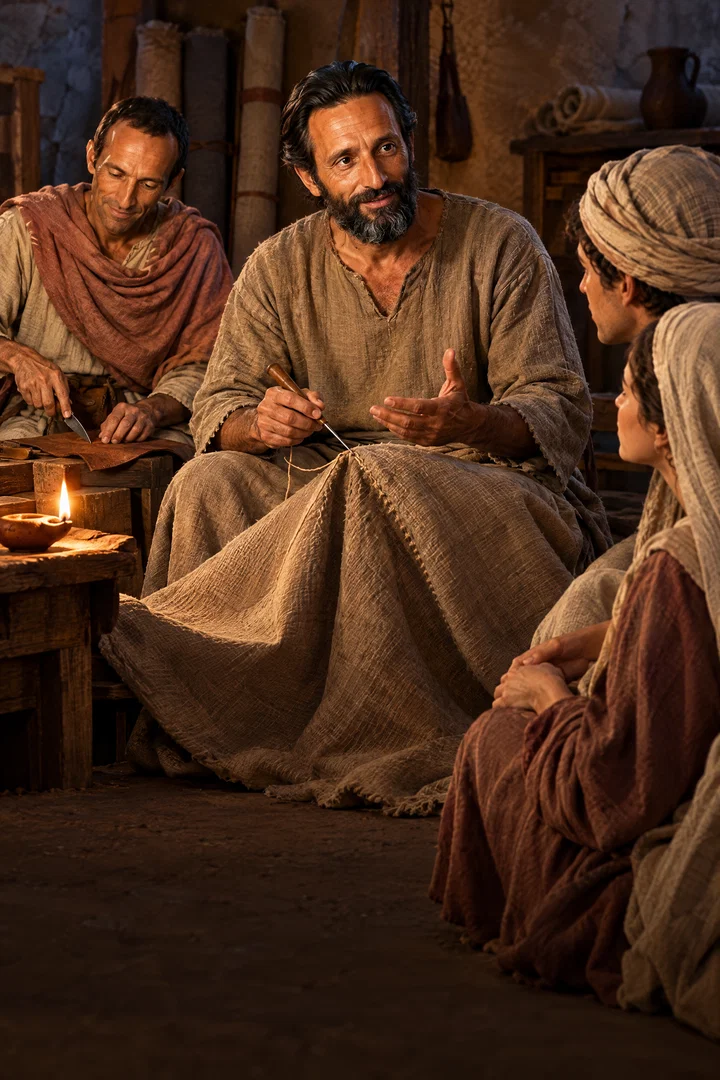
Neither did we eat any man’s bread for nought; but wrought with labour and travail night and day, that we might not be chargeable to any of you:
Translations
Neither did we eat any man’s bread for nothing; but worked with labor and travail night and day, that we might not be chargeable to any of you:
Neither did we eat any man’s bread for nought; but wrought with labour and travail night and day, that we might not be chargeable to any of you:
neither did we eat any man’s bread for nought; but wrought with labour and travail night and day, that we might not be chargeable to any of you:
Neither did we eat any man's bread for naught; but wrought with labor and toil night and day, that we might not be chargeable to any of you:
neither did we eat bread for nought at any man’s hand, but in labour and travail, working night and day, that we might not burden any of you:
neither did we eat bread for nought at any man’s hand, but in labor and travail, working night and day, that we might not burden any of you:
nor for nought did we eat bread of any one, but in labour and in travail, night and day working, not to be chargeable to any of you;
nor have we eaten bread from any one without cost; but in toil and hardship working night and day not to be chargeable to any one of you:
Nor, as a free-gift, did eat, bread, from anyone, but, with toil and hardship, night and day, working,—that we might not burden any of you;—
Berean Standard Bible, Majority Standard Bible
nor did we eat anyone’s food without paying for it. Instead, in labor and toil, we worked night and day so that we would not be a burden to any of you.
neither did we eat bread from anyone’s hand without paying for it, but in labor and travail worked night and day, that we might not burden any of you.
And we did not take food from any man for nothing, but were working hard night and day not to be a trouble to any of you:
Neither tooke we bread of any man for nought: but we wrought with labour and trauaile night and day, because we would not be chargeable to any of you.
Douay-Rheims (Challoner revision)
Neither did we eat any man’s bread for nothing, but in labour and in toil we worked night and day, lest we should be chargeable to any of you.
Pictures
Cross-references
- 1 Thessalonians 2:9
For ye remember, brethren, our labour and travail: for labouring night and day, because we would not be chargeable unto any of you, we preached unto you the gospel of God.
Both describe Paul laboring night and day to avoid burdening believers while preaching.
- 1 Corinthians 9:12
If others be partakers of this power over you, are not we rather? Nevertheless we have not used this power; but suffer all things, lest we should hinder the gospel of Christ.
Paul had a right to support but chose not to claim it, avoiding a burden on the church.
- Acts 18:3
And because he was of the same craft, he abode with them, and wrought: for by their occupation they were tentmakers.
Paul worked as a tentmaker to support himself while carrying out his ministry.
- 1 Thessalonians 4:11-12
And that ye study to be quiet, and to do your own business, and to work with your own hands, as we commanded you;
Both urge working with one’s hands to provide for one’s needs and avoid burdening others.
- Acts 20:34
Yea, ye yourselves know, that these hands have ministered unto my necessities, and to them that were with me.
Paul worked with his hands to provide for his own needs and others.
- 1 Corinthians 4:12
And labour, working with our own hands: being reviled, we bless; being persecuted, we suffer it:
Both describe Paul working with his own hands.
- 2 Corinthians 11:9
And when I was present with you, and wanted, I was chargeable to no man: for that which was lacking to me the brethren which came from Macedonia supplied: and in all things I have kept myself from being burdensome unto you, and so will I keep myself.
Paul labored so he would not be chargeable to the Corinthians.
- 2 Thessalonians 3:12
Now them that are such we command and exhort by our Lord Jesus Christ, that with quietness they work, and eat their own bread.
Both command quiet, self-supporting labor.
- 1 Corinthians 9:6-7
Or I only and Barnabas, have not we power to forbear working?
Paul discusses his right to support while working for his own needs.
- 1 Corinthians 9:18
What is my reward then? Verily that, when I preach the gospel, I may make the gospel of Christ without charge, that I abuse not my power in the gospel.
Paul chooses to preach the gospel without charge, though gospel workers have a right to support.
- 1 Thessalonians 2:6
Nor of men sought we glory, neither of you, nor yet of others, when we might have been burden some, as the apostles of Christ.
Paul worked to avoid burdening the Thessalonian believers while preaching.
- Luke 10:7
And in the same house remain, eating and drinking such things as they give: for the labourer is worthy of his hire. Go not from house to house.
states right to support Paul waived
- Ephesians 4:28
Let him that stole steal no more: but rather let him labour, working with his hands the thing which is good, that he may have to give to him that needeth.
Both commend honest labor to provide for oneself and help others.
- 2 Corinthians 12:15
And I will very gladly spend and be spent for you; though the more abundantly I love you, the less I be loved.
Both show Paul spending himself for others.
- Acts 20:35
I have shewed you all things, how that so labouring ye ought to support the weak, and to remember the words of the Lord Jesus, how he said, It is more blessed to give than to receive.
The passage urges believers to work so they can give, citing the blessing of giving.
- 1 Timothy 5:18
For the scripture saith, Thou shalt not muzzle the ox that treadeth out the corn. And, The labourer is worthy of his reward.
The passage also teaches that workers, including ministers, may rightly receive support.
- 2 Corinthians 11:23
Are they ministers of Christ? ( I speak as a fool) I am more; in labours more abundant, in stripes above measure, in prisons more frequent, in deaths oft.
Both describe Paul’s abundant labors.
Commentary
Each commentary is drawn from primary sources: the writings of Ellen G. White and Adventist pioneers and periodicals. Each commentary is separate. Its own words are not a quotation; follow the references to read the source passages.
Ellen G. White
17 sources
At Thessalonica Paul earned his own living by hard manual work at his tent-making trade night and day, refusing to eat food for free or live at the believers' expense so as not to burden them.Ms 93, 1899, par. 9–10GW 234.2ST May 30, 1878AA 347.2–3Ms 97, 1899, par. 5 Though as a gospel laborer he had full right to be supported, he deliberately gave up that right there and would not accept maintenance from the church he was planting.Ms 93, 1899, par. 9–10GW 234.2ST May 30, 1878 He toiled thus to set himself as a living pattern of quiet, diligent labor, showing that all should work and eat their own bread and that honest industry is honorable and consistent with true greatness of Christian character.Ms 93, 1899, par. 9–10GW 234.2ST May 30, 1878SLP 100.3–101.24T 409.1–3 He also refused support to keep the gospel free from suspicion among shrewd, money-loving hearers and from burdening churches already pressed with poverty, lest selfish motives be charged and his usefulness be hindered.ST May 30, 1878RH Mar 6, 1900SLP 100.3–101.24T 409.1–3GW92 163.4 His example rebukes both disorderly idleness and the claim that the nearness of Christ's coming excuses neglect of daily work, and it calls ministers especially to prove their calling by useful labor and willing self-support rather than throwing themselves upon the brethren.Ms 93, 1899, par. 9–10ST May 30, 1878AA 347.2–31T 446.2SLP 117.2
Paul's Self-Support at Thessalonica
Thessalonica was the first place where this was done, after leaving Philippi for the seacoast city, preaching the gospel there while working with his own hands at the trade of tent-making, fashioning canvas, together with a fellow worker.AA 347.2–3Ms 97, 1899, par. 5RH Mar 6, 19004T 409.1–3 He would not eat any man's bread for nothing nor live at anyone's expense, but with labour and travail worked night and day so as not to be chargeable or burdensome to the believers.Ms 93, 1899, par. 9–10GW 234.21T 446.2Ms 97, 1899, par. 5RH Mar 6, 1900 By day he labored in the cause of Christ and then toiled a large share of the night, frequently all night when the day was not enough, including hard work at night to provide for himself.GW 234.2ST May 30, 1878GW92 145.24T 409.1–3
He had once held an elevated position and was not dependent on labor, but according to Jewish custom had learned the trade.4T 409.1–3 Having used and expended his means for the cause of Christ and for his own support, and being feeble in health, he was obliged where unpopular truth prevailed to resort to his trade for a livelihood.AA 347.2–34T 409.1–3 In this way he provided for his own necessities and for the necessities of others.4T 409.1–3GW92 164.1
Though as an apostle and laborer in the gospel he had power and perfect right to claim support, for the laborer is worthy of his hire, he gave up that right at Thessalonica and refused to be supported by the churches he had planted.Ms 93, 1899, par. 9–10GW 234.2ST May 30, 1878AA 347.2–3RH Mar 6, 1900 His bread was justly earned by his labors as an apostle of Jesus Christ.4T 409.1–3 His toilworn hands bore testimony to that self-support, which detracted nothing from the force of his sensible, intelligent, and eloquent appeals.4T 409.1–320MR 344.2–345.1
At times he also supported his fellow workers, himself suffering hunger to relieve the necessities of others, sharing his earnings with Luke and helping Timothy obtain the necessary equipment for his journey.4T 409.1–3GW92 164.120MR 344.2–345.1
Why Paul Refused Support
Diligent self-supporting labor night and day rather than eating anyone's bread for free was his chosen course at Thessalonica, even though he and his fellow worker had power and right to receive support, in order to make themselves a living example for believers to follow.Ms 93, 1899, par. 9–10GW 234.2AA 347.2–3Ms 97, 1899, par. 5 By that example he taught with quietness that they should work and eat their own bread, giving a living illustration of his teaching that if a man will not work neither shall he eat.Ms 93, 1899, par. 9–10AA 347.2–3Ms 97, 1899, par. 5 Though a minister could rightly receive support, he set this pattern and labored hard, including at night when the day was not enough, to prevent prejudice against the gospel.ST May 30, 1878AA 347.2–3
He did this so as not to be chargeable or burdensome to the believers and to churches already pressed with poverty, lest accepting means stand in the way of his usefulness.Ms 93, 1899, par. 9–10GW 234.24T 409.1–3GW92 163.4 Though leaving gospel work to do manual work pained him, he provided for himself to remove grounds for suspicion about his motives and for misrepresentation by enemies.4T 409.1–3GW92 163.4 He feared acceptance of means would give enemies occasion to misrepresent his motives and detract from his message.4T 409.1–3GW92 163.4
He acted thus to keep the influence of the gospel at its best among the sharp, shrewd trader Greeks of the seacoast city, who held that gain is godliness and honored ability to make money by fair means or foul.RH Mar 6, 1900 Knowing their practices, he would not give them occasion to say he preached in order to be supported by the gospel, to suspect selfish motives, to depreciate the work of the gospel, or to hurt the influence of God's servants upon hearers and fellow laborers.ST May 30, 1878RH Mar 6, 1900SLP 100.3–101.2 Although he had perfect right to be supported in preaching, for the laborer is worthy of his hire, he gave up that right there for this reason.RH Mar 6, 19004T 409.1–3GW92 164.1
His example in joining practical work with gospel teaching dignified and honored industry, showing that labor benefiting people or advancing God's cause is honorable.SLP 100.3–101.24T 409.1–3GW92 164.1 There is true dignity in labor, manual labor cannot be degrading and is not inconsistent with true greatness or elevation of Christian character, and his toilworn hands detracted nothing from the force of his appeals.SLP 100.3–101.220MR 344.2–345.1 His religious industry rebukes indolence and ministerial idleness, teaching that ministers who have opportunity to help sustain themselves should do so gladly.4T 409.1–3GW92 164.1
The verse grounds the command to withdraw from every brother walking disorderly and the command that if any would not work neither should he eat.Ms 93, 1899, par. 9–10 It rebukes those walking disorderly, working not at all but acting as busybodies, and directs such to work with quietness and eat their own bread while the brethren continue without weariness in well doing.Ms 93, 1899, par. 9–10AA 347.2–3 It was given especially to set a right example of diligent labor for those at Thessalonica who refused to work with their hands.Ms 93, 1899, par. 9–10AA 347.2–3
The verse also contradicts the claim that expectation of Christ's soon return justified abandoning ordinary work.ST May 30, 1878 Paul held up his own hard labor to earn his living while working with untiring zeal for Christ as the pattern to correct the idea that Christ's coming was at hand.ST May 30, 1878SLP 117.2 Believers must therefore not neglect daily duties and resign themselves to idle waiting or aimless excitement, but remain steadfast in faith, carry on the work appointed them by God, and communicate the light received to others.SLP 117.2
Call to Diligent Ministry
Even Paul, a most eloquent preacher miraculously converted for a special work, was not above manual labor with his own hands.1T 446.2GW92 145.2 His working with labor and travail night and day so as not to be chargeable shows that a preacher is not above laboring for his own needs, especially when not actively preaching.1T 446.2GW92 145.2
Gospel ministers may work with their hands to support themselves and avoid becoming a burden to the people they serve.4T 409.1–3GW92 163.41T 448.1–449.1 Such labor is part of self-sacrificing ministry, showing that their work is not merely preaching but serving to save souls.4T 409.1–31T 448.1–449.1 Though leaving gospel ministry to do manual work pained him, he did so to remove grounds for suspicion about his motives.4T 409.1–3GW92 163.4 When ministers have opportunity to labor to help sustain themselves and to feel hardships and privations in the cause of Christ, they should do so with gladness rather than withdrawing with pain from ministry to toil.4T 409.1–3GW92 164.1
Ministers chosen to labor must give proof of their high calling by growing and improving until they become able workmen.1T 446.2 Those who think they have a duty to preach are not entitled to throw themselves and their families upon the brethren for support until they show good fruits of their labor.1T 446.2 Young preachers and those of little experience should work with purpose and a definite plan, preparing under experienced ministers instead of moving from place to place with unfinished teaching and no clear aim.1T 446.21T 443.1–444.2GW92 142.1 They should labor diligently rather than live at others' expense, as a lesson in diligence and responsibility.1T 443.1–444.2GW92 142.1
Young preachers are injured by flattery and by being relieved of the burdens of life, and when not preaching they should do what they can for their own support.1T 446.2 This is the best test of the nature of their call, for if they desire to preach only that they may be supported as ministers, and the church pursues a judicious course in withholding support, they will soon lose the burden and leave preaching for more profitable business.1T 446.2 At the call of duty he would lay aside his business to meet violent opponents and stop their proud boasting and then resume his humble employment, showing ministers should be willing to set aside business for duty and return to it afterward.4T 409.1–3
Sources
Pioneers and periodicals
28 sources
Paul and his companions refused to eat anyone's food without paying for it, but worked hard with toil night and day at their trade so as not to lay the Thessalonians under obligation or debt.RH Nov 15, 1853RH Jun 25, 1901ST Jun 3, 1908ST Aug 5, 1889 He gave up a real and perfect right to be supported in his preaching, for the laborer is worthy of his hire, choosing not to use it so as not to burden anyone or give occasion to charge him with selfish motives and hinder the gospel.ST May 30, 1878RH Mar 6, 1900RH Nov 15, 1853ST Jun 3, 1908RH Feb 6, 1908 His self-supporting labor was set as an example of unselfish industry for believers to follow in working quietly and eating their own bread.ST May 30, 1878RH Nov 15, 1853RH Nov 20, 1856 Expectation of Christ's soon return never justifies abandoning ordinary work, and idleness disguised as holiness is rejected.ST May 30, 1878RH Jun 25, 1901 Those who walk disorderly and will not work are not to be supported in idleness, but are to be admonished to work with quietness and eat their own bread, and if any will not work neither should he eat.RH Nov 20, 1856RH Aug 19, 1852RH Feb 20, 1855
Paul's Labor and Reason
Paul and his companions refused to eat anyone's food without paying for it, but worked hard with labor and travail night and day so as not to be chargeable to the Thessalonians.RH Nov 15, 1853ST Jun 3, 1908ST Aug 5, 1889ST Oct 24, 1911RH Oct 4, 1864 Though they had the right to receive support, they chose not to burden the believers and set an example of unselfish labor for them to follow.RH Nov 15, 1853ST Jun 3, 1908ST Aug 5, 1889RH Oct 4, 1864ST Apr 22, 1903 People able to work should labor rather than depend needlessly on others, while trusting God to provide.ST Apr 22, 1903
To be chargeable means to be under obligation or debt.RH Jun 25, 1901 As a rule Paul earned his living from place to place by his tent-making trade, because the borrower is servant to the lender and he would not be in debt to others or take food or benefit without paying for it.RH Jun 25, 1901 His paying full price for all good received condemns trying to get something for nothing and is to be followed by all Christians in working quietly and eating their own bread.RH Jun 25, 1901 He gave up a real and perfect right to be supported in preaching, for the laborer is worthy of his hire, choosing not to use it in order not to burden anyone.ST May 30, 1878RH Nov 15, 1853ST Jun 3, 1908RH Apr 15, 1862RH Feb 20, 1855 A minister could rightly receive support, yet Paul supported himself by working hard, including at night when the day was not enough, and worked with his hands rather than accepting support without charge.ST May 30, 1878RH Apr 15, 1862ST Aug 5, 1889
The work described took place in Thessalonica on the seacoast after leaving Philippi, where he preached the gospel while working with his hands night and day and refusing to live on others without payment.RH Mar 6, 1900 The seacoast Greeks were sharp, shrewd traders who held that gain is godliness and honored ability to make money by fair means or foul, and he knew their practices.RH Mar 6, 1900 He worked this way to prevent prejudice against the gospel and to give no occasion to say he and his fellow workers preached in order to be supported by the gospel.ST May 30, 1878RH Mar 6, 1900RH Feb 6, 1908 He would not invite suspicion of selfish motives, depreciation of the work of the gospel, hindrance to ministry, or hurt to the influence of God's servants upon hearers and fellow laborers, but gave up that right there to keep the influence of the gospel at its best.RH Mar 6, 1900RH Feb 6, 1908
At Corinth this same settled purpose not to burden anyone for his support meant laboring together with Aquila and Priscilla at tent-making so he would not depend on the Corinthians for his living.ST Jan 28, 1903 He had no mission board to depend on, though he did from time to time receive contributions from believers to assist his work.ST Jan 28, 1903 He worked while preaching the gospel, not to increase his wealth but to meet the expenses of his mission, of which his own support made up a considerable part.ST Jan 27, 1904 Earning a living in this way can serve the greater work of proclaiming the gospel, with neither duty neglected.ST Jan 27, 1904
Example Against Idleness
Paul and his companions refused to eat anyone's food without paying for it, but wrought with labour and travail night and day, working even at night when the day was not enough and working with their own hands, so as not to be chargeable to the believers, though they had a real right to receive support for gospel work.ST May 30, 1878RH Nov 15, 1853RH Nov 20, 1856RH Apr 15, 1862RH Aug 19, 1852 They chose this course in order to make themselves an example of unselfish labor for believers to follow in working quietly and eating their own bread.ST May 30, 1878RH Nov 15, 1853RH Nov 20, 1856RH Apr 15, 1862RH Feb 20, 1855 That course also rebukes idle preachers who depend on the generosity of their people while refusing to work when not occupied in preaching, and active labor of this kind supports health and mental and spiritual growth.RH Apr 15, 1862 The example was offered alongside teaching in order to establish believers in Christ's teaching, not to stand independently as a positive command or to draw them away from God's commandments.
Expectation of Christ's soon return did not justify abandoning ordinary work.ST May 30, 1878 Idleness disguised as holiness is rejected, and trying to get something for nothing is condemned.RH Jun 25, 1901 Chargeable means being under obligation or debt, and because the borrower is servant to the lender Paul as a rule earned his living from place to place by his tent-making trade and paid full price for all good received, refusing to be in debt to others, and all Christians are to follow him in this by working quietly and eating their own bread.RH Jun 25, 1901
Those unwilling to work are not to be supported in idleness, while support for ministers genuinely called to preach and their families remains proper.RH Aug 19, 1852 Those who walk disorderly, working not at all but as busybodies, are to work with quietness and eat their own bread, and if any will not work neither should he eat.RH Nov 20, 1856RH Feb 20, 1855 Believers must hold to that tradition, withdraw from every brother who walks disorderly, and admonish the disobedient without treating him as an enemy.RH Nov 20, 1856RH Feb 20, 1855
Sharing of goods is to supply need, not to indulge idleness.RH Nov 20, 1856RH Feb 20, 1855 This is the remedy for trials with the slothful and impostors, so that the needy are cared for, burdens are borne equally, means sustain the cause of truth, and the church is not burdened with drones or with slothfulness in business, joined to providing for one's own house.RH Nov 20, 1856RH Feb 20, 1855 Members must not treat financial support as permission to live disorderly.ST Aug 7, 1879
Those able to work should labor rather than depend needlessly on others, while trusting God to provide.ST Apr 22, 1903 God wants His children to work with their own hands, to be not slothful in business and to provide things honest in the sight of all.ST Aug 12, 1897 Diligent daily labor is the way to provide the best one can for present need without anxious thought for the morrow about what to eat, drink, or wear, joined with trusting God for daily bread and seeking first the kingdom of God and His righteousness by living His Word, and God will care for the rest, so dependence on life insurance or any similar scheme is not required to fulfill God's Word to provide.ST Aug 12, 1897
Ministry Support and Practice
Support for ministers genuinely called to preach and their families is proper, while those unwilling to work are not to be supported in idleness.RH Aug 19, 1852 A minister in pressing need can work with his hands and preach in the time he can spare, rather than demand support before proving his calling and faithfulness.RH Aug 8, 1865 A gospel worker should work with his hands when he has no other work to do, and unwillingness to work is not excused by being a minister, which is both an example for ministers who lack support and a lesson in sympathy for poor messengers.RH Oct 13, 1859 This rebukes idle preachers who depend on generosity while refusing to work when not preaching, and active labor also supports health and mental and spiritual growth.RH Apr 15, 1862
Christian workers should labor to support themselves rather than expect others to maintain them without cause, working hard even night and day so as not to burden those served, which rejects idleness disguised as holiness. Working with one's own hands so as not to be a financial burden is a continuing duty while the gospel is preached.RH Nov 26, 1861RH Aug 19, 1851 True missionary work includes willing manual and even menial labor, proving no avoidance of work or leaving it for others but doing more than one's share, and the grace of God is seen in such self-denying service for others, so the one with most grace will labor the most and count no helpful work beneath him.ST Oct 24, 1895 Earning a living can serve the greater work of proclaiming the gospel with neither duty neglected, for work while preaching meets the expenses of mission, of which one's own support makes up a considerable part, rather than increasing wealth.ST Jan 27, 1904 Ordinary business and manual work can be done in service to God rather than opposing spiritual life, by laboring with one's own hands so as not to be financially dependent on those served.RH Aug 28, 1900
Freedom from material obligation to those served, by working hard even night and day rather than taking food or money without earning it or becoming a burden, did not cancel the debt of gratitude to Christ for forgiveness and salvation, which is repaid by making the Saviour known to others.RH The principle is working with one's own hands to obtain means for spreading the message rather than placing the burden on others, as applied by those who planned to build and cultivate with their own hands to support themselves, a plan proved successful in Greenland.ST Dec 5, 1892 The same principle was lived by self-sacrificing believers who first preached present truth at the cost of ease and comfort.RH May 20, 1858 It is a resolve to refuse another's support without working for it, to avoid depending on the church as a pauper and provide for oneself with God's help, a resolve not changed by financial debts or poor health.RH Feb 2, 1864
Sources