Acts 20:34
Yea, ye yourselves know, that these hands have ministered unto my necessities, and to them that were with me.
Translations
Yes, you yourselves know, that these hands have ministered to my necessities, and to them that were with me.
King James Version, KJV Cambridge Paragraph Bible
Yea, ye yourselves know, that these hands have ministered unto my necessities, and to them that were with me.
And ye yourselves know, that these hands have ministered to my necessities, and to them that were with me.
Revised Version, American Standard Version
Ye yourselves know that these hands ministered unto my necessities, and to them that were with me.
and ye yourselves know that to my necessities, and to those who were with me, minister did these hands;
Yourselves know that these hands have ministered to my wants, and to those who were with me.
yourselves, acknowledge that, for my necessities and for those who were with me, hard wrought these hands!
Berean Standard Bible, Majority Standard Bible
You yourselves know that these hands of mine have ministered to my own needs and those of my companions.
You yourselves know that these hands served my necessities, and those who were with me.
You yourselves have seen that with these hands I got what was necessary for me and those who were with me.
Yea, ye knowe, that these handes haue ministred vnto my necessities, and to them that were with me.
Douay-Rheims (Challoner revision)
You yourselves know: for such things as were needful for me and them that are with me, these hands have furnished.
Pictures
Cross-references
- Acts 18:3
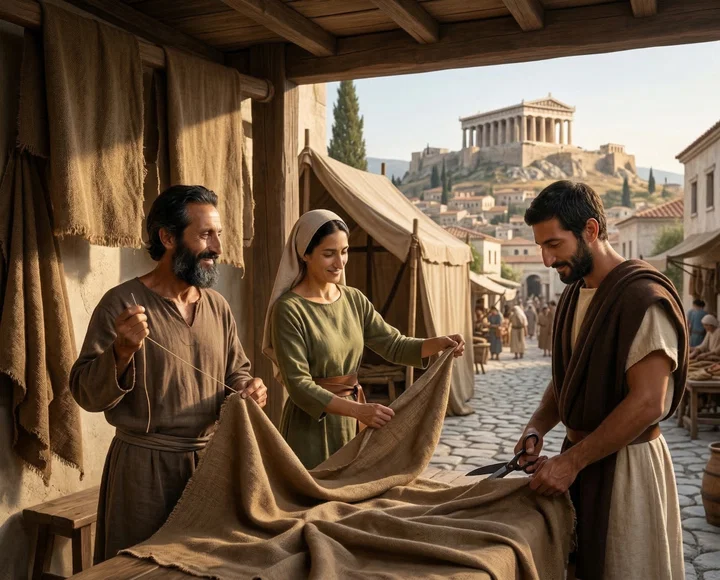
And because he was of the same craft, he abode with them, and wrought: for by their occupation they were tentmakers.
Paul worked as a tentmaker to support himself while carrying out his ministry.
- 1 Thessalonians 2:9
For ye remember, brethren, our labour and travail: for labouring night and day, because we would not be chargeable unto any of you, we preached unto you the gospel of God.
Paul worked to avoid burdening those he served.
- 2 Thessalonians 3:8
Neither did we eat any man’s bread for nought; but wrought with labour and travail night and day, that we might not be chargeable to any of you:
Paul worked to provide for himself and his companions rather than burdening others.
- 1 Corinthians 9:12-18
If others be partakers of this power over you, are not we rather? Nevertheless we have not used this power; but suffer all things, lest we should hinder the gospel of Christ.
Paul had a right to support but chose to provide for himself so as not to hinder the gospel.
- Ephesians 4:28
Let him that stole steal no more: but rather let him labour, working with his hands the thing which is good, that he may have to give to him that needeth.
Honest hand labor provides for personal needs and enables giving to the needy.
- Acts 20:18-21
And when they were come to him, he said unto them, Ye know, from the first day that I came into Asia, after what manner I have been with you at all seasons,
Paul recalls his conduct and faithful labor throughout his ministry in Asia.
- 1 Corinthians 4:12
And labour, working with our own hands: being reviled, we bless; being persecuted, we suffer it:
Paul describes working with his hands while enduring hardship.
- 2 Thessalonians 3:10
For even when we were with you, this we commanded you, that if any would not work, neither should he eat.
Both teach the duty to work for one’s living.
- Matthew 20:26-28
But it shall not be so among you: but whosoever will be great among you, let him be your minister;
Both teach that true leadership is service, not dominion.
- 2 Corinthians 12:17-18
Did I make a gain of you by any of them whom I sent unto you?
Paul asks whether he or Titus made gain from the church.
- 1 Thessalonians 2:5
For neither at any time used we flattering words, as ye know, nor a cloke of covetousness; God is witness:
Paul denies using a pretext to pursue gain.
- Acts 20:20
And how I kept back nothing that was profitable unto you, but have shewed you, and have taught you publickly, and from house to house,
His work supported public and house-to-house teaching.
- 1 Corinthians 9:14
Even so hath the Lord ordained that they which preach the gospel should live of the gospel.
God ordained that gospel workers live from the gospel.
- 2 Corinthians 12:15
And I will very gladly spend and be spent for you; though the more abundantly I love you, the less I be loved.
Paul willingly spends himself for the believers, as he labored to meet their needs.
- Acts 20:17
And from Miletus he sent to Ephesus, and called the elders of the church.
same calling of elders to Miletus
Commentary
Each commentary is drawn from primary sources: the writings of Ellen G. White and Adventist pioneers and periodicals. Each commentary is separate. Its own words are not a quotation; follow the references to read the source passages.
Ellen G. White
33 sources
Paul held up his own toilworn hands to the elders as proof they knew his life, that he had coveted no one's silver or gold and had not been chargeable to any person for his support.Ms 93, 1899, par. 6–8Lt 103, 1900, par. 19–22Ms 97, 1899, par. 6–8 He earned his living by the trade of tentmaking learned in youth, and by that manual labor supplied his own necessities and those of his companions, at times even hungering himself to relieve others.ED 66.1AA 352.1Ms 93, 1899, par. 6–8Lt 103, 1900, par. 19–22Lt 135, 1897, par. 15–16 Though as a planter of churches he had the right to be supported, he refused it lest he burden poor churches or give occasion to suspect he preached for gain.SLP 100.3–101.2GW92 164.14T 409.1–3 Such honorable work takes nothing from ministerial dignity or the force of eloquent preaching, for labor that benefits humanity is a blessing and not a disgrace.Ms 93, 1899, par. 6–8Lt 103, 1900, par. 19–22Ms 9, 1879, par. 14 His course both gave him access to souls he could not otherwise reach and stands as an example that ministers should work with their hands as circumstances demand rather than live in idleness.Lt 103, 1900, par. 19–22Ms 9, 1879, par. 14SLP 100.3–101.2RH Oct 3, 1912CT 279.3
Paul's Self-Supporting Ministry
Paul was appealing to the elders' own knowledge of his manner of life, holding up his toilworn hands before them as living proof that he had coveted no one's silver or gold or apparel and had not been chargeable to any person for his support.Ms 93, 1899, par. 6–8Lt 103, 1900, par. 19–22Ms 97, 1899, par. 6–8RH Mar 13, 190020MR 344.2–345.1 Those hands testified with remarkable impressiveness that he had supplied his own needs and the needs of those who were with him by his own work.Lt 103, 1900, par. 19–22Ms 97, 1899, par. 6–8RH Mar 13, 190020MR 344.2–345.1 He was not speaking mysteries but pointing to what they themselves had seen of his faithful, self-supporting labors.Ms 93, 1899, par. 6–8
He earned his living by the humble trade of tentmaking, fashioning canvas, which he had learned in youth according to the Jewish custom that every child learn a useful trade by which to gain a livelihood if necessary.Lt 103, 1900, par. 19–22SLP 100.3–101.2SLP 99.3–100.2 That custom rested on the conviction that indolence is a great sin and that labor is elevating, and that religion and business are to be combined.SLP 99.3–100.2 Though highly educated and eloquent, a rabbi of distinguished ability chosen as a member of the Sanhedrin, whose education was not complete without apprenticeship at a trade, he learned the trade in its higher and lower branches, rejoiced to support himself working with his hands, and resorted to it whenever his means were spent to advance the cause of Christ.Ms 93, 1899, par. 6–8Lt 103, 1900, par. 19–22SLP 99.3–100.2 He was a man of learning, able in the Scriptures, an orator and minister of Christ, yet he was not ashamed or afraid of work and did not treat manual labor as in any way lowering his work in the ministry.Ms 93, 1899, par. 6–8Ms 9, 1879, par. 14Lt 135, 1897, par. 15–16Lt 1, 1904, par. 12–16
He did this work at Corinth while living and laboring with Aquila and Priscilla and instructing them more perfectly in the truth, and at Ephesus during three years and six months of disputing and persuading concerning the kingdom of God.Ms 93, 1899, par. 6–8Ms 97, 1899, par. 6–8SLP 99.3–100.2SLP 147.1–3GW 235.2 Though feeble in health he labored by day in the cause of Christ and then toiled a large share of the night, frequently all night, to make provision.SLP 100.3–101.2 He continued through incessant gospel work, continual opposition from unbelieving Jews, mob attacks with insult and abuse, weariness and painfulness from unceasing toil, disease that enfeebled him, constant danger, and at times depression of spirits, while guarding a church yet young in the faith and bearing the burden of all the churches.SLP 100.3–101.2SLP 147.1–3
By his own manual labor he ministered to his own necessities and to those who were with him, earning his daily bread as a tentmaker alongside his daily preaching of the gospel.ED 66.1AA 352.1Ms 9, 1879, par. 14Lt 135, 1897, par. 15–16Lt 1, 1904, par. 12–16 At times he suffered hunger himself to relieve others, and by diligent work and careful economy he was able to help fellow workers and worthy poor people, seeking no personal gain from the believers.AA 352.1SLP 201.2Lt 103, 1900, par. 19–22 He shared his earnings with Luke and helped Timothy obtain equipment for his journey.Lt 103, 1900, par. 19–2220MR 344.2–345.1 His work supplied their necessities and enabled him to help fellow workers even when doing so meant personal hardship.AA 352.1Lt 103, 1900, par. 19–22
Though as a laborer in the gospel who had planted many churches he had the right to receive support, he refused to be supported and was willing to forego that right.SLP 100.3–101.2GW92 164.1 He worked at his trade so as not to be burdensome to churches pressed with poverty.SLP 100.3–101.24T 409.1–3 He feared his usefulness as a minister might be injured by suspicions that he was preaching the gospel for gain, and he labored to remove from enemies all occasion to misrepresent him and detract from his message.SLP 100.3–101.2GW92 164.14T 409.1–3
He combined this labor with extensive gospel work, teaching Scripture in public and from house to house with tears while also working at his trade.Ms 93, 1899, par. 6–8MH 154.1–3SLP 147.1–3 He was a wise teacher whose letters to the churches are full of instructive lessons, carrying a heavy burden for the churches, striving to show them their errors that they might correct them, seeking earnestly to lead them in the right way, and helping them in their difficulties.Ms 93, 1899, par. 6–8Lt 135, 1897, par. 15–16Lt 1, 1904, par. 12–16 He traveled constantly from country to country and city to city, establishing churches and caring for even the smallest afterward, countering error and interrupting his work at the call of duty to meet and silence violent opponents and then resuming his humble employment.ED 66.1SLP 100.3–101.2 Yet amid all this busy activity he allowed nothing to divert him from one great purpose, constrained by the sense of God's presence to look ever unto Jesus, to press on toward the prize of his high calling, and to win souls.Lt 135, 1897, par. 15–16Lt 1, 1904, par. 12–16
The verse belongs to the farewell address in Acts 20:19-38, which preaches law and gospel in perfect harmony, declaring that the law has no power to save the transgressor of the law and thus showing the necessity of a Redeemer.Ms 40, 1891, par. 70
Dignity and Duty of Labor
Honorable manual labor is nothing to be ashamed of or afraid of, and does not in any way lower the work of the ministry, take away ministerial dignity, or lessen influence.Ms 93, 1899, par. 6–8Ms 9, 1879, par. 1420MR 345.2RH Mar 13, 1900 Toilworn, toil-hardened hands take nothing from the force of sensible, intelligent, eloquent appeals as a Christian minister, and such work does not make a person coarse, rough, uncourteous, discourteous, discontented, nor is it degrading or inconsistent with true greatness and elevation of human and Christian character.Lt 103, 1900, par. 19–2220MR 345.2RP 29.2 The verse is an appeal to the elders' own knowledge of his manner of life, not mysteries, holding up those hands as proof that he coveted no man's silver or gold or apparel and was not chargeable to any man for his support while teaching Scripture and supplying his own needs and the needs of those with him.Ms 93, 1899, par. 6–8Lt 103, 1900, par. 19–22 He did this though a man of learning, able in the Scriptures, an orator and minister of Christ, living and laboring with Aquila and Priscilla at Corinth while instructing them more perfectly in the truth, proving that becoming a Christian does not require ceasing temporal pursuits.Ms 93, 1899, par. 6–8Ms 9, 1879, par. 14 Any labor that benefits humanity or advances the cause of God is honorable, bread thus earned is justly earned, idleness is sin, and men and women must work, for labor is a blessing rather than a curse, disgrace, or time lost.SLP 100.3–101.2RP 29.2Ms 11, 1885, par. 14
Skill in ordinary work, in the common arts and trades, is a gift from God, and He is to be honored even in everyday toil.RH Oct 3, 1912CT 279.3MYP 216.1RP 29.2 As Christ Himself worked with His hands, believers are not to spend time in idle contemplation, for manual work can be joined with communion with God, thinking of God and heaven and taking the Saviour to the work, knowing He is at the right hand ready to help in every time of need.Ms 11, 1885, par. 14 Every man must be a worker with brains and muscle and sinew, dedicated without reserve to the service of God, bearing the taxation of physical powers without counting the work belittling or degrading and without discontent, while at the same time exerting the mind to advance in spiritual knowledge and practicing the lessons taught.Lt 2, 1889, par. 18–19 Working at his trade of tentmaking, learned in its higher and lower branches and often practiced during his ministry, gave Paul access to a class of people he could not otherwise have reached and opportunity to instruct fellow workers in the way of salvation.SLP 100.3–101.2RH Oct 3, 1912RP 29.2 This physical toil did not weaken his ministry nor lessen the power of his appeals.RH Oct 3, 1912CT 279.3MYP 216.1
His course dignifies and honors industry and gives an example to the Christian ministry and to young ministers, presenting the highest type of Christianity and the character of a faithful, all-round Christian minister, a Christian gentleman of the highest type.Lt 103, 1900, par. 19–22SLP 100.3–101.2 Christians and ministers should as there is opportunity exercise physical as well as mental powers in earnest industrious labor rather than idleness, working with their hands and willingly practicing a trade as opportunity and circumstances demand, yet remaining ready to interrupt secular work at the call of duty to meet opposition or take a special opportunity to win souls and then resume humble employment.Ms 9, 1879, par. 14SLP 100.3–101.2Ms 93, 1899, par. 15 It is not obligatory upon ministers to do in all respects as Paul did.Lt 103, 1900, par. 19–22 His zeal and industry rebuke indolence, selfish ease, and neglect of available work to help sustain themselves and avoid hindering ministry, and reprove ministers who feel they suffer hardship and privation.SLP 100.3–101.2GW92 164.1
Those who are able but are not specially called of God and set apart by God and the brethren by the Holy Spirit to devote their whole time to teaching the truth and carrying the message to new places should labor with their hands at what is good and supply their own necessities rather than throw themselves on the church for support.Lt 20, 1859, par. 2Ms 1, 1859, par. 5–8Ms 1, 1859, par. 3–4 They should not spend time visiting from church to church or state to state without a special message or errand, for the churches are just as well off without that visiting unless they have a special message to deliver, nor be hurried into the field by encouragement before enduring hardships, suffering severe trials, obtaining experience, and being fitted and qualified.Lt 20, 1859, par. 2Ms 1, 1859, par. 5–8Ms 1, 1859, par. 3–4 They can still assist in their own place, do errands for the Lord, be useful where they are, and when ministers are absent baptize and administer ordinances, but must be careful of time and when not on a special errand for God labor with their hands.Ms 1, 1859, par. 5–8Ms 1, 1859, par. 3–4 Those truly called give unmistakable evidence by bearing the burden and weight of the message to new places where truth has not been preached to bring individuals into the truth, and those who have strength to work and preach at the same time do not need to depend on the influence and means of others but gain better success in convincing souls.Ms 1, 1859, par. 5–8
Such useful physical labor exercises and strengthens the body to endure the hardships of gospel service, establishes health and physical strength and keeps all parts of the body in working order.GW 236.3AA 352.3Ms 93, 1899, par. 15 Diligence in business does not quench fervency of spirit in service for the Lord.Ms 93, 1899, par. 15 Laboring with the hands to obtain something for the necessity of God's servants and to assist hungry souls starving for present truth, even by staying diligent in affairs at home and depriving oneself of the privilege of attending meetings abroad, is a sacrifice of personal inclinations and desires that glorifies God rather than worldly-mindedness or gratifying self, and God notices all such work by those who know the truth and are established in it.21MR 365.2
Sources
Pioneers and periodicals
55 sources
Paul's own hands supplied his own necessities and the necessities of those who were with him, so he did not depend on others for a livelihood.ST Jul 24, 1893ST Apr 17, 1884 That work was the tentmaker's trade, carried on day after day and often far into the night alongside preaching, without shame or fear of ordinary manual labor.RH Oct 3, 1912ST Oct 24, 1895RH Feb 6, 1908 He coveted no one's silver or gold or apparel and sought no wealth or profit from those to whom he preached, setting an example that by so laboring believers ought to support the weak and remember that it is more blessed to give than to receive.ST Jul 24, 1893ST Mar 25, 1903ST Mar 3, 1898ST Aug 12, 1889 Though as a gospel worker he was entitled to temporal support from those served in spiritual things, he set aside that apostolic right so as not to burden churches pressed by poverty or give opponents grounds to question his motives.ST Apr 17, 1884RH Apr 30, 1872ST Jan 11, 1905 Such labor did not lower or hinder his ministry but honored honest industry, taught converts the duty and dignity of self-support, and belonged to unwearied, self-sacrificing service with the single aim to be faithful to Christ and win souls.RH Mar 13, 1900RH Oct 3, 1912ST Jul 20, 1904ST Oct 24, 1895ST Jan 27, 1904
Setting at Miletus
Paul spoke these words in his farewell address to the elders of Ephesus at Miletus during the latter part of the third missionary journey while carrying the collection for the poor to Jerusalem.ST Sep 2, 1897 He was on his way to Jerusalem for the last time and had called the elders to him for final words of instruction and admonition, knowing they would see his face no more.ST Jul 29, 1897 Miletus was the nearest city on the mainland to the island of Patmos, twenty-four miles from the west coast of Asia Minor.ST Jun 12, 1901 It lay about forty miles south of Ephesus.ST Jul 29, 1897
The farewell talk closes his experiences at Thessalonica, at Berea, at Athens, at Corinth, at Ephesus, and at Troas, showing how wonderfully God wrought with him and how the word of God triumphed in every place notwithstanding persecutions.ST Jul 7, 1909 His counsel to the elders of the church of Ephesus shows the patience and the spirit of Christ and the wisdom needed to labor acceptably in God's cause.ST Feb 13, 1912 That farewell admonition is evidence of his love and faithfulness to God.ST Jan 13, 1914
In that final meeting he declared that he had taught the whole counsel of God and was free from the blood of all people, teaching from house to house as well as in public.RH Aug 1, 1912 The account contains no instruction changing the Sabbath.RH Aug 1, 1912 The labor of his own hands to which he pointed was carried on at Ephesus, and also at Corinth, together with his refusal to covet anyone's silver, gold, or clothing.RH Sep 14, 1911RH Jun 16, 1868 It went forward amid demanding gospel work and guarding the interests of churches yet young in the faith, with many tears, patient endurance of repeated mob attack, insult and abuse, labor in weariness and painfulness, enfeeblement by disease, anguish over apostasy, sleepless nights in prayer and earnest thought, and steadfast untiring zeal amid constant opposition, clamor of enemies, and desertion of friends.RH Sep 14, 1911RH Sep 3, 1901
Meaning of the Words
Paul's own hands supplied his own necessities and also the necessities of those who were with him, as the Ephesian elders knew from his way of life among them.ST Apr 17, 1884ST Sep 2, 1897ST Mar 25, 1903ST Mar 3, 1898 He supported himself and his companions through his own work and his own labor rather than coveting or seeking other people's possessions, silver or gold or apparel.ST Jul 24, 1893ST Mar 25, 1903ST Mar 3, 1898 He did more than work for his own support alone, and did not depend on them for his livelihood while carrying out his work.ST Jul 24, 1893ST Sep 2, 1897 His labor was disinterested and unselfish, and it was set as an example that by so laboring believers ought to help the weak and remember the words of the Lord Jesus that it is more blessed to give than to receive.ST Mar 25, 1903ST Mar 3, 1898
The work was the tentmaker's trade, taken up when he was not preaching and returned to when his means were spent in advancing Christ's cause and supporting himself.RH Oct 3, 1912RH Feb 6, 1908 He labored through the day and much of the night to provide for his needs and for those working with him.RH Feb 6, 1908 Though entitled to support as a gospel worker, he was willing to forgo it so he would not burden churches already pressed by poverty or give opponents grounds to question his motives.RH Feb 6, 1908 His work did not weaken his ministry but honored honest work and industry, gave him access to people he might not otherwise have reached, and showed that skill in ordinary work is a gift from God and that God can be honored in daily labor.RH Oct 3, 1912RH Feb 6, 1908
He worked day after day while he was engaged in preaching, and was neither ashamed nor afraid to do ordinary manual labor.ST Oct 24, 1895 Ministers of the gospel are not degraded by soiling their hands with common work, following Christ who was a carpenter.ST Oct 24, 1895 He labored to supply his own necessities and those of his companions, and set this as an example to church leaders that so laboring they ought to support the weak and remember that it is more blessed to give than to receive.ST Oct 24, 1895
Self-Denying Example to Follow
The verse proves that Paul coveted no man's silver or gold or apparel, and sought no wealth, profit, or clothing from those to whom he preached, but supplied himself and his companions by his own work.ST Jul 24, 1893ST Mar 25, 1903ST Mar 3, 1898RH Feb 4, 1862RH Apr 30, 1872 His labor was chosen, disinterested, unselfish sacrifice and self-denial, practiced even despite physical weakness, to serve and save fellow believers and to advance the truth without depending on others.ST Mar 3, 1898RH Jun 24, 1915RH Nov 30, 1869ST Apr 17, 1884RH Oct 4, 1864 He had set aside his apostolic right to receive support, giving up temporal comforts so he would not depend on others.ST Apr 17, 1884RH Oct 4, 1864RH Apr 30, 1872ST Jan 11, 1905
Manual labor did not shame him, lower his ministry, or weaken it, and ministers of the gospel are not degraded by soiling their hands with common work.RH Mar 13, 1900RH Oct 3, 1912ST Oct 24, 1895 He worked day after day while engaged in preaching, neither ashamed nor afraid to do ordinary manual labor, following Christ who was a carpenter.ST Oct 24, 1895RH Feb 6, 1908 When not preaching he worked at the tentmaker's trade, and when his means were spent in advancing Christ's cause and supporting himself he returned to it, laboring through the day and much of the night.RH Oct 3, 1912RH Feb 6, 1908 Though entitled to support as a gospel worker, he was willing to forgo it so he would not burden churches already pressed by poverty or give opponents grounds to question his motives.ST Jan 11, 1905RH Feb 6, 1908 His work honored honest work and industry, taught converts the duty and dignity of honest labor and self-support, gave him access to people he might not otherwise have reached, and shows that skill in ordinary work is a gift from God by which God can be honored in daily labor.RH Oct 3, 1912ST Jan 22, 1885RH Feb 6, 1908
He set this as an example that by so laboring believers ought to support the weak, help the needy, and remember the Lord Jesus' words that it is more blessed to give than to receive.ST Mar 25, 1903ST Mar 3, 1898ST Aug 12, 1889ST Aug 21, 1879RH Aug 21, 1860 His example teaches that labor should enable believers to meet their own needs without depending on those served in ministry and still have means to support the weak.ST Aug 12, 1889ST Aug 21, 1879RH Aug 21, 1860 Able Christians are to labor and use what they have for this end, and ministers in particular are to work in this way.ST Aug 21, 1879RH Aug 21, 1860ST Jan 11, 1905
His appeal to support the weak was not a request for personal gain, for his life proves he lived by the saying that would otherwise have remained unrecorded.ST Jul 1, 1880 The fruit of giving abounds to the account of the giver, so that the giver is the gainer.ST Jul 1, 1880 His labor belongs to the earnest, serious, and useful life Christians are to lead while souls are perishing, growing from union with Jesus into good work and abundant fruit.ST Feb 2, 1882RH Nov 27, 1866 It expresses love for the brethren as a ministry of the hands to physical necessities, mindful of the poor and following the Lord's example, not to be forgotten beside continual prayer and the ministry of the Word, giving all a field in which to prove love.RH Nov 27, 1866ST May 1, 1901
Ministry Support and Oversight
Though God ordained that those who preach the gospel may live from their preaching, Paul set aside that apostolic right and would not claim it for himself.ST Apr 17, 1884RH Apr 30, 1872RH Feb 6, 1908 Though he had the care of all the churches and was entitled to temporal support from those to whom he ministered in spiritual things, he coveted no man's silver or gold or apparel and claimed no large income or allowance for the helpers with him.RH Apr 30, 1872ST Jan 11, 1905ST May 5, 1898 He gave up temporal comforts and practiced self-denial despite physical weakness, in order to serve people and help save them.ST Apr 17, 1884RH Apr 30, 1872 His own hands ministered to his necessities and to those who were with him, so he was not dependent on others for livelihood.ST Apr 17, 1884RH Apr 30, 1872RH May 23, 1912 When not preaching he worked at the tentmaker's trade, and when his means were spent in advancing Christ's cause and supporting himself he returned to it, laboring through the day and much of the night.RH Feb 6, 1908 He was willing to forgo support so he would not burden churches already pressed by poverty or give opponents grounds to question his motives.RH Feb 6, 1908
In this self-denying way he fulfilled his care as debt and obligation and disclaimed dominion and authority over faith.ST Jan 11, 1905 The only true principle of oversight of the churches is humble ministry and service, not dominion or authority over faith.ST Jan 11, 1905ST May 5, 1898 Those having oversight ought so to labor to support the weak, to give rather than to receive.ST Jan 11, 1905ST May 5, 1898 Support is not the first concern of a man called to preach, and he will not offer to preach in exchange for support.RH Aug 8, 1865 When in want he will work with his hands while preaching what time he can spare, supplying his own pressing needs and the needs of those with him, and will trust God to move hearts to supply him if needed.RH Aug 8, 1865
God himself leads those he calls through hardship and self-support as a fiery ordeal to prove, establish, fit, and accredit them to endure and to share the full confidence and support of the church.RH Aug 8, 1865 The church must not deprive them of that proving by treating unproved men as accredited ministers with influence and support at once.RH Aug 8, 1865 In the early years after Christ's death support for gospel teachers could depend on gifts and offerings and on their own labor.RH Jan 16, 1913 A minister who lacked support worked with his hands to provide for his own needs and those of his companions before a system for sustaining the ministry had been established.RH Jan 16, 1913RH Nov 26, 1914 As public interest grew ministers were urged to give their full time to ministry, and study of the Bible led to the adoption of tithing.RH Nov 26, 1914
The verse illustrates a self-supporting missionary method practiced from the beginning of Christianity and a method by which the church achieved its great advances.ST Nov 21, 1892ST Dec 5, 1892 The Moravian missionaries followed the same principle and planned to build a house and farm so they could support themselves and not burden others.ST Dec 5, 1892 Hilliard followed this example by doing carpentry, which helped reduce the mission's expenses.RH Jan 24, 1907 A pastor named Anderson followed the same example, laboring with his hands while serving as a pastor. A true gospel worker does not walk disorderly and does not covet any man's silver, gold, or apparel.RH Oct 20, 1874 He does not even ask the people for daily bread, but labors with his own hands, asking no contributions and boarding himself except when freely invited to homes, which is orderly Christian conduct free from greed.RH Oct 20, 1874 He left no debt for the believers to pay.RH Jun 18, 1914
His example illustrates meeting temporal needs through work rather than relying on debt.RH Feb 13, 1913 It is the duty to work faithfully, to provide for one's household, and to have means to help others, and this duty continues as long as the gospel is preached.RH Nov 26, 1861 Workers in the cause may use their own hands to provide for their needs and help spread the message, accepting hardship and giving up ease and comfort in order to support the work.RH May 20, 1858 A minister should be willing to labor physically when there is no other work to do, and such experience teaches compassion for poor ministers.RH Oct 13, 1859 A minister might be willing to support himself in the same way, but physical weakness can make him dependent on a salary.ST Mar 7, 1878
This self-supporting labor did not hinder gospel work but helped meet the expenses of the work, including his own support, and was not aimed at increasing material wealth.ST Jan 27, 1904 It belonged to unwearied, self-sacrificing service together with traveling constantly from country to country and city to city through hardship by land and sea, preaching Christ, countering error, establishing churches wherever hearers accepted Christ no matter how few, caring for even the smallest church afterward, and writing letters that bring help and strength and warn of dangers and false doctrines at the close of earth's history.ST Jul 20, 1904 Amid all these varied labors he kept one steadfast aim to be faithful to Christ, to serve and honor Him, and to win souls, unmoved by opposition and persecution.ST Jul 20, 1904 In this way a Christian can fulfill both the duty to provide for practical needs and the duty to witness for Christ and the commission to preach the gospel.ST Jan 27, 1904
Sabbath Proof and Applications
Within the chapter the record of self-support by manual toil establishes the first day as a day of ordinary labor rather than a commanded day of holy rest.AUST Jun 21, 1920RH Nov 27, 1913 The hands in question supplied personal necessities and the necessities of traveling companions by labor with their own hands.AUST Jun 21, 1920RH Nov 27, 1913RH Apr 14, 1859 The only record of preaching on the first day is the meeting in Acts 20, held at the close of the Sabbath on Saturday evening when the disciples came together to break bread, with preaching continuing until midnight.AUST Jun 21, 1920 That late hour was kept because departure was intended on Sunday morning for a long walk to meet the other disciples at Assos, proving the day to be an ordinary working day and not a Sabbath rest day.AUST Jun 21, 1920 The same example of labor teaches that Christians are to work so they can give to people in need, including the weak, and even the poor can offer charity through small earnings or useful labor as an expression of gratitude to Christ.RH Apr 14, 1859
Sources