1 Corinthians 4:12
And labour, working with our own hands: being reviled, we bless; being persecuted, we suffer it:
Translations
And labor, working with our own hands: being reviled, we bless; being persecuted, we suffer it:
And labour, working with our own hands: being reviled, we bless; being persecuted, we suffer it:
and labour, working with our own hands: being reviled, we bless; being persecuted, we suffer it:
And labor, working with our own hands. Being reviled, we bless; being persecuted, we suffer it;
Revised Version, American Standard Version
and we toil, working with our own hands: being reviled, we bless; being persecuted, we endure;
and labour, working with [our] own hands; being reviled, we bless; being persecuted, we suffer;
and labour, working with our own hands. Railed at, we bless; persecuted, we suffer [ it];
And toil, working with our own hands: being reviled, we bless, being persecuted, we hold on,
Berean Standard Bible, Majority Standard Bible
We work hard with our own hands. When we are vilified, we bless; when we are persecuted, we endure it;
We toil, working with our own hands. When people curse us, we bless. Being persecuted, we endure.
And with our hands we do the hardest work: when they give us curses we give blessings, when we undergo punishment we take it quietly;
And labour, working with our owne handes: we are reuiled, and yet we blesse: we are persecuted, and suffer it.
Douay-Rheims (Challoner revision)
And we labour, working with our own hands: we are reviled, and we bless; we are persecuted, and we suffer it.
Pictures


Cross-references
- Acts 18:3
And because he was of the same craft, he abode with them, and wrought: for by their occupation they were tentmakers.
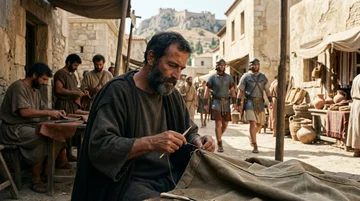
Paul worked as a tentmaker while carrying out ministry at Corinth.
- Acts 20:34
Yea, ye yourselves know, that these hands have ministered unto my necessities, and to them that were with me.
Paul worked with his hands to provide for his needs and his companions.
- 1 Peter 2:23
Who, when he was reviled, reviled not again; when he suffered, he threatened not; but committed himself to him that judgeth righteously:
Christ did not retaliate when reviled or suffering, the example Paul followed.
- 2 Corinthians 11:23-27
Are they ministers of Christ? ( I speak as a fool) I am more; in labours more abundant, in stripes above measure, in prisons more frequent, in deaths oft.
Both describe Paul’s ministry toil, persecution, and other hardships.
- 2 Thessalonians 3:8
Neither did we eat any man’s bread for nought; but wrought with labour and travail night and day, that we might not be chargeable to any of you:
Paul worked with his hands to avoid burdening others.
- Matthew 5:44
But I say unto you, Love your enemies, bless them that curse you, do good to them that hate you, and pray for them which despitefully use you, and persecute you;
Both teach blessing those who persecute or oppose believers.
- 1 Thessalonians 2:9
For ye remember, brethren, our labour and travail: for labouring night and day, because we would not be chargeable unto any of you, we preached unto you the gospel of God.
Paul labored night and day while preaching so as not to burden the believers.
- 2 Timothy 3:12
Yea, and all that will live godly in Christ Jesus shall suffer persecution.
Both state that godly life in Christ brings persecution.
- John 15:18-21
If the world hate you, ye know that it hated me before it hated you.
Paul’s persecution fulfills Christ’s warning that his servants will be persecuted.
- 2 Corinthians 4:9
Persecuted, but not forsaken; cast down, but not destroyed;
Both describe Paul being persecuted for Jesus’ sake.
- 2 Timothy 2:9
Where in I suffer trouble, as an evil doer, even unto bonds; but the word of God is not bound.
Both describe enduring hardship and persecution in ministry.
- Ephesians 4:28
Let him that stole steal no more: but rather let him labour, working with his hands the thing which is good, that he may have to give to him that needeth.
joint proof hand symbolizes labor
- 1 Corinthians 9:12
If others be partakers of this power over you, are not we rather? Nevertheless we have not used this power; but suffer all things, lest we should hinder the gospel of Christ.
Both describe unpaid labor to avoid hindering the gospel.
- 2 Corinthians 6:8
By honour and dishonour, by evil report and good report: as deceivers, and yet true;
Both describe being defamed while serving God.
- 2 Thessalonians 3:10
For even when we were with you, this we commanded you, that if any would not work, neither should he eat.
The principle that one who will not work should not eat supports the value of labor.
- Matthew 5:39
But I say unto you, That ye resist not evil: but whosoever shall smite thee on thy right cheek, turn to him the other also.
Both teach responding to mistreatment without retaliation.
- Hebrews 11:36-38
And others had trial of cruel mockings and scourgings, yea, moreover of bonds and imprisonment:
Ancient worthies endured persecution and suffering.
- 1 Samuel 26:9-11
And David said to Abishai, Destroy him not: for who can stretch forth his hand against the LORD’s anointed, and be guiltless?
David spares Saul instead of retaliating.
- Colossians 3:23
And what soever ye do, do it heartily, as to the Lord, and not unto men;
Both commend wholehearted work as service to the Lord.
Commentary
Each commentary is drawn from primary sources: the writings of Ellen G. White and Adventist pioneers and periodicals. Each commentary is separate. Its own words are not a quotation; follow the references to read the source passages.
Ellen G. White
14 sources
Paul with his fellow workers and apostles supported themselves by working with their own hands at the trade of tent-making while serving the gospel and Christ.AA 277.1Ms 25, 1906, par. 2–4GW 237.2CT 279.3 When reviled he answered with blessing, when persecuted he patiently endured it, and when defamed or slandered he entreated, continuing his work though attacked, insulted and abused rather than retaliating.AA 277.1Ms 25, 1906, par. 2–4GW 237.2 That labor and endurance took place amid weariness, pain, sleeplessness, hunger, thirst, fasting, cold, nakedness, buffeting, homelessness, dangers in every place and being made as the filth of the world, for the apostles shared the same feelings, weaknesses, temptations and bodily liability to suffering, peril, fear and anxiety as people today.Ms 25, 1906, par. 2–4ST Jul 20, 1904RH Sep 14, 1911 He bore these hardships for the sake of the truth and the salvation of others, and though his life was toil and struggle with sorrow and poverty, he found joy in service while enriching many and possessing all things while having nothing.ED 68.1–2ST Jul 20, 1904SLP 147.1–3 His example teaches ministers to sacrifice for their work and not expect an easy life nor treat manual labor as beneath them, but to be willing to work for their support when not preaching, since such toil does not lower or discredit ministry but strengthens the body and opens access to those otherwise unreachable.GW 237.21T 446.2GW92 145.2RH Mar 13, 1900CT 279.3
Paul's Labor and Endurance
Paul with his fellow workers and apostles supported themselves by working with their own hands while serving the gospel and Christ.AA 277.1Ms 25, 1906, par. 2–4GW 237.21T 446.2AA 354.2–3 That self-supporting labor belonged to his preaching ministry, not apart from it, as he carried on the gospel work while providing for his own needs.GW 237.21T 446.2AA 354.2–3RH Sep 14, 1911SLP 147.1–3 His manual work was the trade of tent-making in its higher and lower branches, done often during his ministry to support himself and others.CT 279.3
When reviled he answered with blessing, when persecuted he patiently endured it, and when defamed or slandered he entreated.AA 277.1Ms 25, 1906, par. 2–4GW 237.2ED 68.1–2ST Jul 20, 1904 He continued his work though attacked, insulted and abused rather than retaliating, answering abuse with blessing and enduring persecution with patient, gracious endurance.GW 237.2ED 68.1–21T 446.2AA 354.2–3SLP 147.1–3 That labor and endurance took place amid weariness, pain, sleeplessness, hunger, thirst, fasting, cold, nakedness, buffeting and homelessness.Ms 25, 1906, par. 2–4ST Jul 20, 1904RH Sep 14, 1911 It also took place amid dangers from waters, robbers, countrymen, heathen, city, wilderness, sea and false brethren, with constant journeying, danger and opposition, and being made as the filth of the world and offscouring of all things.Ms 25, 1906, par. 2–4ST Jul 20, 1904RH Sep 14, 1911
The apostles were men of the same feelings, weaknesses and temptations as people today, with bodies liable to disease, pain, suffering, hardship and peril, feeling hunger and cold, fear, anxiety and disquietude just as severely.Ms 58, 1900, par. 51–52 He endured these hardships for the sake of the truth and the salvation of others.SLP 147.1–3 Though his life was toil and struggle with sorrow and poverty, he found joy in service, with constant rejoicing while enriching many and possessing all things while having nothing.ED 68.1–2ST Jul 20, 1904 At the close he was able to look back on its struggles and triumphs as a fight well fought.ST Jul 20, 1904
Call to Faithful Ministry
Paul's working with his own hands while serving the gospel sets the pattern of sacrifice for ministers, who are not to expect an easy life nor to treat manual labor as beneath them.GW 237.2 Being reviled, he answered with blessing, and being persecuted, he patiently endured it, accepting hardship rather than retaliating.GW 237.21T 446.2GW92 145.2RH Mar 13, 1900 Young or inexperienced preachers in particular are to be willing to work for their support when they are not preaching, rather than immediately relying on the church for livelihood.1T 446.2GW92 145.2 Preaching does not excuse ministers from useful physical labor, and by working Paul opposed ease and indulgence while showing that physical work strengthens the body, including its muscles and sinews.1T 446.2GW92 145.2Ms 97, 1899, par. 9
Manual labor and hardship did not lower or discredit his ministry.RH Mar 13, 1900 His toil-hardened hands took nothing away from the force of his earnest appeals as a Christian minister.CT 279.3 The time spent in manual labor, often during his ministry to support himself and others at the trade of tent-making in its higher and lower branches, was not lost time but gave him access to a class he could not otherwise have reached.RH Mar 13, 1900CT 279.3 Skill in the common arts is a gift from God to be used to honor Him even in everyday toil, and idleness is sin.CT 279.3
The verse defines what a faithful steward of the mysteries of God looks like, which ministers of Christ and physicians are to make their diligent study in 1 Corinthians 4 to see where they stand.Ms 25, 1906, par. 2–4 Such stewards labor, working with their own hands, and when reviled bless, when persecuted endure, and when defamed entreat, accepting hunger, thirst, nakedness, buffeting, homelessness, and being made as the filth of the world and offscouring of all things.Ms 25, 1906, par. 2–4 Stewardship is great accountability for handling the Master's goods in means or property and keeping everything in order, with a conscience void of offense toward God and fellow men, with no mean actions in dealing with other stewards, and with no attempt to make one's own course appear as possessing great wisdom.Ms 25, 1906, par. 2–4
The apostles lived the truth they preached and gloried in nothing except the cross of Christ.Ms 58, 1900, par. 51–52 They were men of the same feelings and weaknesses as people today, subject to temptation, with bodies liable to disease, pain, suffering, hardship and peril, feeling hunger and cold, fear, anxiety and disquietude just as severely, yet they labored with their own hands and endured reviling and persecution.Ms 58, 1900, par. 51–52 Ministers today must do the same, being saved by the truth they present and practicing what they preach by giving themselves wholly to Jesus because He gave Himself for them and died for them, with life hid with Christ in God.Ms 58, 1900, par. 51–52 This follows Christ Himself, the Monarch of heaven crucified in shame with intense agony of soul and body, who became a servant in humble obedience so that men debased by sin might through His righteousness be exalted, made kings and priests of God, crowned with eternal glory and given the incorruptible inheritance.Ms 58, 1900, par. 51–52
Sources
Pioneers and periodicals
29 sources
Working with the hands means literal manual labor for self-support so as not to be a burden to others, and being reviled and persecuted means answering insult with blessing and enduring persecution patiently without retaliation, answering defamation with entreaty.RH Mar 13, 1900RH May 16, 1854RH Feb 4, 1862RH Sep 30, 1873 It stands where the worship of men is reproved and Jesus Christ alone is shown as the foundation for character and the church.ST Aug 11, 1909 Paul so labored at Corinth, Ephesus, and Thessalonica to meet his own support and expenses while preaching without charge and suffering all things lest he hinder the gospel, proving manual labor compatible with serving God and growth in grace.RH Mar 13, 1900RH Sep 14, 1911RH May 4, 1911 This is the normal life of the primitive apostles and the pattern for every Christian minister and worker, who does not make support the first thing but labors with his hands, goes where God pleases and endures hardness as a good soldier without expecting affluence or ease.RH May 13, 1902RH Aug 8, 1865ST Apr 1, 1886 Such hunger, nakedness, buffeting, reviling, and defamation borne patiently and cheerfully mark the path after the Master in harmony with Christ, for as He endured insult and reproach without reviling so His followers receive the same treatment, and entry into the kingdom of God is through much tribulation.ST Jan 8, 1880ST Nov 14, 1895RH Oct 24, 1854RH Feb 25, 1858RH Dec 11, 1856
Setting and Meaning
The letter to which the verse belongs is the first preserved letter to Corinth, written in A.D. 57 to meet false philosophy creeping in, to correct division into factions, to point out heathen sins entering the church, and to emphasize the death and resurrection of Jesus.ST Aug 11, 1909 Within that letter chapters 1 and 2 contrast the wisdom of the world with the power of the Gospel.ST Aug 11, 1909 Chapters 3 and 4, where the verse stands, reprove the worship of men and show that Jesus Christ alone is the foundation on which character and the church can be built.ST Aug 11, 1909
To labor working with one's own hands is literal manual labor for self-support, so as not to be a burden to others.RH Mar 13, 1900RH Sep 14, 1911RH Feb 4, 1862RH Aug 28, 1900 At Corinth this meant tent-making to provide for daily needs while preaching, with shop work stopping for the Sabbath.RH Mar 13, 1900RH Sep 14, 1911 Such manual labor and active business are compatible with serving God and growth in grace.RH Mar 13, 1900RH Aug 28, 1900
To be reviled and bless is to answer insult and abuse with blessing rather than retaliation.RH Feb 4, 1862RH Sep 30, 1873ST Dec 23, 1889 To be persecuted and suffer it is to endure persecution patiently.RH Feb 4, 1862RH Sep 30, 1873ST Dec 23, 1889RH Jul 22, 1902 When defamed, the response is entreaty or appeal, and this practical life of love marks a change from former zeal in persecuting the church to religion expressed through love rather than mere controversy or zeal for a sect.RH Sep 30, 1873ST Dec 23, 1889RH Jul 22, 1902 The ministry so described is marked by hardship and low social standing, unlike the later exalted status of religious leaders.RH May 16, 1854
The verse belongs to a life of hunger and thirst, nakedness and buffeting, homelessness and having no certain dwelling-place.ST Jan 8, 1880ST Nov 14, 1895RH Feb 25, 1858 It belongs with weariness and pain, sleeplessness and fasting, cold and constant journeying, and dangers from waters, robbers, countrymen, heathen, city, wilderness, sea, and false brethren.ST Jul 20, 1904ST Jan 8, 1880ST Nov 14, 1895 It belongs with poverty and shame, imprisonment and exile, and even death borne without earthly reward.ST Jul 20, 1904RH Jul 22, 1862RH Feb 25, 1858 Hungering, thirsting, nakedness, buffeting, homelessness, reviling, persecution, defamation, and being made filth and offscouring are crosses to be submitted to patiently, meekly, and cheerfully on the journey to the New Jerusalem.ST Jan 8, 1880ST Nov 14, 1895RH Feb 25, 1858
The apostles were counted as the filth of the world and the offscouring of all things.RH May 16, 1854ST Jan 8, 1880ST Nov 14, 1895 At Corinth members lived as kings while the apostles were despised as the lowest refuse, a disparity God never designed.ST Jan 8, 1880ST Nov 14, 1895ST Apr 30, 1894 Christ's followers are still despised and treated as fools and as the offscouring of society while the powerful and admired have public favor.ST Nov 14, 1895RH Sep 18, 1856 Having no earthly advocate, they look to Christ, whose kingdom is not of this world, and to future consolation when the Lord is at hand.RH Sep 18, 1856
Doctrine and Witness
Christian service involves hard manual labor, answering insult with blessing and enduring persecution patiently, and such hardship and self-denial mark the path after the Master, showing willingness to suffer for Christ and unpopular truth rather than seeking ease or human approval.RH Sep 30, 1873
Paul's experience is in harmony with Christ, as part of the great tribulation through which all the redeemed in every age must pass to reach obedience, justification, and eternal life.ST Jan 8, 1880 Entry into the kingdom of God is through much tribulation, and all who live godly in Christ Jesus shall suffer persecution, hungering and thirsting, being naked and buffeted, having no certain dwelling-place, and laboring with their own hands, while blessing when reviled, enduring when persecuted, entreating when defamed, and being made as the filth of the world and the offscouring of all things.ST Jan 8, 1880 Patience must be exercised continually on the Christian path to gain eternal life.RH Oct 24, 1854 Hungering, thirsting, nakedness, buffeting, homelessness, reviling, persecution, defamation, and being made filth and offscouring are crosses that confess Jesus in all the acts of life when submitted to patiently and meekly as ills, trials, disappointments and afflictions on the journey to Mount Zion in self-denial following Jesus, and they must be borne cheerfully by everyone who expects to see the inside of the city, the New Jerusalem.RH Feb 25, 1858
Enduring hunger, thirst, nakedness, beatings, homelessness and hard work with their own hands, and answering reviling with blessing, persecution with patient endurance, and defamation with entreaty, while counted as the filth of the world and the offscouring of all things, fulfills the prediction that followers of Christ would receive the same treatment Christ received on earth, because they chose to walk as Christ walked in this world.ST Nov 14, 1895 As Jesus suffered more and greater abuses from men than anyone and endured insult and reproach and every kind of abuse in a peaceful and forgiving manner without reviling in return or threatening, and prayed for His murderers to be forgiven, so the apostles imitated Him in meekness and forgiveness under abuse by answering insult with blessing, bearing persecution patiently, and meeting defamation with gentle appeal.ST Nov 14, 1895RH Dec 11, 1856 This response is the true excellence of Christians, cuts off the plea that no man could bear such affront or that forgiveness looks cowardly and foolish, preserves peace in the soul, and gains victory over enemies.RH Dec 11, 1856
Willingness to work with their own hands and to bear hardship, poverty, shame, imprisonment, exile, and even death without earthly reward testifies to conviction that Christ had triumphed and to God's power in them.RH Jul 22, 1862
At Corinth church members lived as kings while the apostles were despised as the lowest refuse, and God designed no such disparity in His church.ST Apr 30, 1894 That condition proves many hearts were becoming united to the world and separating from Christ, becoming envious, covetous and lustful, seeking their own and not the things of Jesus Christ.ST Apr 30, 1894 It was a sad departure from earlier self-sacrifice when houses and lands were sold and life given for the cause, and part of the leavening of worldliness already corrupting the church in apostolic times toward apostasy.ST Apr 30, 1894
The hand naturally symbolizes labor, as labor done with the hands.ST Dec 5, 1895 Applied to the mark of the beast, receiving the mark in the right hand means receiving it by work-action, by ceasing to work on Sunday in deference to the law, distinct from receiving it in the forehead, the mind, by knowingly observing Sunday as a religious institution.ST Dec 5, 1895
Ministry Pattern and Conduct
Paul labored with his own hands at Corinth, Ephesus, and Thessalonica to earn his bread and meet his own support, expenses, and pressing want while preaching the gospel without charge in what spare time he could give and suffering all things lest he hinder the gospel.RH May 4, 1911RH Aug 8, 1865RH Aug 16, 1870 Manual labor did not lower or discredit his apostleship, nor was it counted beneath him.RH Mar 13, 1900RH May 4, 1911 Preaching was his work, and earning a living served that work rather than seeking material gain.RH May 4, 1911 Manual labor and active business are therefore compatible with serving God and living by the Holy Spirit, and the trials of working life help growth in grace and knowledge of the truth.RH Aug 28, 1900 Amid weariness, pain, danger, and opposition he blessed when reviled and endured when persecuted.RH Mar 13, 1900RH Sep 14, 1911
A man called by God to preach does not make support the first thing and does not offer to preach only if the church gives support, but labors with his hands and discharges the responsibility laid upon him.RH Aug 8, 1865 God leads those He calls by His own hand through a fiery ordeal of crosses and trials to prove, establish, and fit them to endure and to share the full confidence and support of the church.RH Aug 8, 1865 God who calls and qualifies can move upon hearts in a miraculous manner to supply wants.RH Aug 8, 1865 This self-supporting, suffering life is the normal life of the primitive apostles and the pattern for every Christian minister and worker.RH May 13, 1902ST Apr 1, 1886RH May 20, 1858
The minister in a peculiar sense is not his own but God's servant, wholly devoted, always engaged as much as possible in the Lord's work, not choosing his own pleasure or employment nor pursuing the ministry to subserve his own ends as a by-work.ST Apr 1, 1886 He engages to go where God pleases and to do or endure what God commands, bidding farewell to friends, pleasures, and comforts and standing ready to endure the greatest sufferings, not expecting a numerous audience, cordial friends, a civilized country, legal protection, affluence, splendor, or even a competency.ST Apr 1, 1886 He expects instead slights and hatred from men and even pretended friends, gloomy prisons and tortures, miserable accommodations in wretched wildernesses, hunger and thirst, nakedness, weariness and pain, hard work with his own hands with little worldly enjoyment, blessing when reviled and suffering when persecuted, enduring hardness as a good soldier of Jesus Christ, expecting great things from God and attempting great things for God.ST Apr 1, 1886 Those first in present truth so gave up ease and comfort and worked with their own hands to procure means to spread the message, calling for equality so that all the burden does not rest on a few.RH May 20, 1858 The same pattern is seen in more than forty years of earnest self-sacrificing labor in India for the salvation of the heathen, and in one who preached while earning his living with tub and brushes, and these words encourage canvassers to bear insult and hardship faithfully.RH May 13, 1902ST Apr 1, 1886
True ministry is marked by humility and self-sacrifice rather than supporting the pastor's salary and work by worldly pleasure such as dancing festivals, calling for earnestness, devotion, and sacrifice in a time when men are lovers of pleasures more than lovers of God.RH Aug 16, 1870 Such a practical life of working with the hands and answering reviling with blessing and persecution with patient endurance marks the change from former zeal in persecuting the church and shows religion expressed through a life of love, not merely controversy or zeal for a sect.RH Jul 22, 1902 When enemies rage, revile, persecute, and defame, the wise course is to answer him not, but to bless when reviled, to suffer persecution, and to entreat when defamed, refusing to come down from Heaven-appointed work to meet specious opposing arguments.ST Dec 23, 1889RH Apr 29, 1909RH Jan 10, 1871
This patient, gentle forbearance without retaliation reflects Christ's spirit of self-sacrifice rather than the world's resentment and vindictiveness.ST Sep 23, 1886 To bless rather than retaliate when insulted and to endure persecution patiently is part of following Christ's example in treating wrongdoers and of bearing opposition while advancing the gospel.ST Dec 23, 1889RH Jul 15, 1875
Sources