1 Thessalonians 2:9
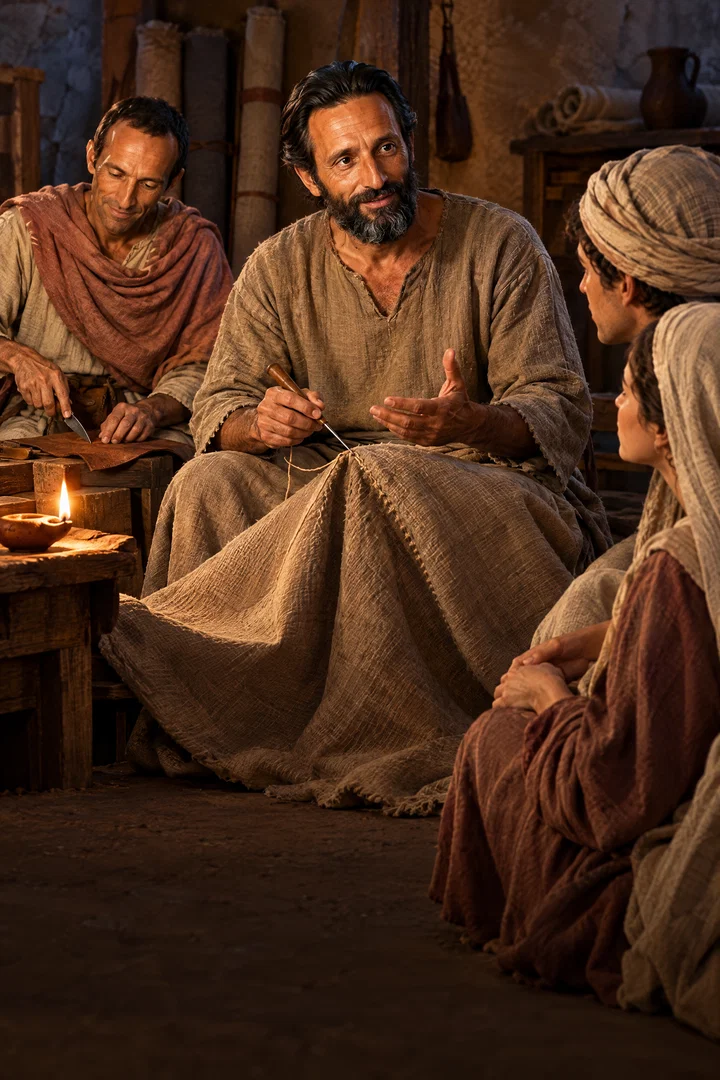
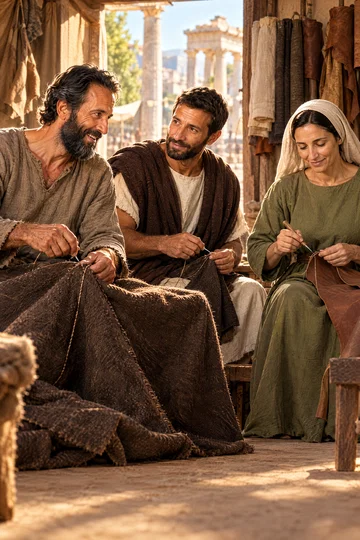
For ye remember, brethren, our labour and travail: for labouring night and day, because we would not be chargeable unto any of you, we preached unto you the gospel of God.
Translations
For you remember, brothers, our labor and travail: for laboring night and day, because we would not be chargeable to any of you, we preached to you the gospel of God.
King James Version, KJV Cambridge Paragraph Bible
For ye remember, brethren, our labour and travail: for labouring night and day, because we would not be chargeable unto any of you, we preached unto you the gospel of God.
For ye remember, brethren, our labor and toil: for laboring night and day, because we would not be chargeable to any of you, we preached to you the gospel of God.
For ye remember, brethren, our labour and travail: working night and day, that we might not burden any of you, we preached unto you the gospel of God.
For ye remember, brethren, our labor and travail: working night and day, that we might not burden any of you, we preached unto you the gospel of God.
for ye remember, brethren, our labour and travail, for, night and day working not to be a burden upon any of you, we did preach to you the good news of God;
For ye remember, brethren, our labour and toil: working night and day, not to be chargeable to any one of you, we have preached to you the glad tidings of God.
For ye remember, brethren, our toil and hardship: night and day, working, so as not to be a burden unto any of you, we proclaimed unto you the glad-message of God,
Berean Standard Bible, Majority Standard Bible
Surely you recall, brothers, our labor and toil. We worked night and day so that we would not be a burden to anyone while we proclaimed to you the gospel of God.
For you remember, brothers, our labor and travail; for working night and day, that we might not burden any of you, we preached to you the Good News of God.
For you have the memory, my brothers, of our trouble and care; how, working night and day, so that we might not be a trouble to any of you, we gave you the good news of God.
For ye remember, brethren, our labour and trauaile: for we laboured day and night, because we would not be chargeable vnto any of you, and preached vnto you the Gospel of God.
Douay-Rheims (Challoner revision)
For you remember, brethren, our labour and toil: working night and day, lest we should be chargeable to any of you, we preached among you the gospel of God.
Pictures
Cross-references
- 2 Thessalonians 3:8
Neither did we eat any man’s bread for nought; but wrought with labour and travail night and day, that we might not be chargeable to any of you:
Paul worked night and day so as not to burden believers.
- 1 Corinthians 9:12-18
If others be partakers of this power over you, are not we rather? Nevertheless we have not used this power; but suffer all things, lest we should hinder the gospel of Christ.
Paul forgoes support so his preaching will not hinder the gospel.
- Acts 18:3
And because he was of the same craft, he abode with them, and wrought: for by their occupation they were tentmakers.
Paul worked as a tentmaker while carrying out his ministry.
- Acts 20:34-35
Yea, ye yourselves know, that these hands have ministered unto my necessities, and to them that were with me.
Paul worked with his hands to provide for himself and others.
- 2 Corinthians 11:9
And when I was present with you, and wanted, I was chargeable to no man: for that which was lacking to me the brethren which came from Macedonia supplied: and in all things I have kept myself from being burdensome unto you, and so will I keep myself.
Paul preached without being a burden to the churches.
- 2 Thessalonians 3:10
For even when we were with you, this we commanded you, that if any would not work, neither should he eat.
Paul’s no-work-no-eat rule echoes his labor to avoid burdening the Thessalonians.
- Acts 17:1-4
Now when they had passed through Amphipolis and Apollonia, they came to Thessalonica, where was a synagogue of the Jews:
Describes Paul preaching and laboring in Thessalonica.
- 1 Timothy 1:11
According to the glorious gospel of the blessed God, which was committed to my trust.
It is cited as another use of the name gospel of God.
- 1 Thessalonians 2:2
But even after that we had suffered before, and were shamefully entreated, as ye know, at Philippi, we were bold in our God to speak unto you the gospel of God with much contention.
It is cited alongside this verse as another use of that name.
- 1 Peter 4:17
For the time is come that judgment must begin at the house of God: and if it first begin at us, what shall the end be of them that obey not the gospel of God?
It is cited as another verse calling the message the gospel of God.
- 1 Corinthians 9:18
What is my reward then? Verily that, when I preach the gospel, I may make the gospel of Christ without charge, that I abuse not my power in the gospel.
Paul preaches the gospel without charge, supporting himself rather than burdening others.
- 1 Corinthians 9:14
Even so hath the Lord ordained that they which preach the gospel should live of the gospel.
Says gospel preachers are entitled to live from their work.
- Acts 20:35
I have shewed you all things, how that so labouring ye ought to support the weak, and to remember the words of the Lord Jesus, how he said, It is more blessed to give than to receive.
Labor supports others, and giving is more blessed than receiving.
- Luke 10:7
And in the same house remain, eating and drinking such things as they give: for the labourer is worthy of his hire. Go not from house to house.
support was right because laborer is worthy of hire
Commentary
Each commentary is drawn from primary sources: the writings of Ellen G. White and Adventist pioneers and periodicals. Each commentary is separate. Its own words are not a quotation; follow the references to read the source passages.
Ellen G. White
18 sources
At Thessalonica Paul preached the gospel by day while working with his hands at tentmaking through much of the night, laboring night and day.GW 234.28RED 50.3AA 347.2–3 By this toil he supported himself and at times others, so he would not be chargeable to the believers or burden them for material aid.4T 409.1–3RP 29.220MR 344.2–345.1 Although as an apostle he was fully entitled to ministerial support, for the laborer is worthy of his hire, he willingly gave up that just claim to remove suspicion that he preached for personal gain.8RED 50.3RH Mar 6, 1900SLP 100.3–101.24T 409.1–3GW92 164.1 This caution was especially needed at Thessalonica, where sharp traders believed gain was godliness, so that receiving support there would have weakened his message and harmed his hearers and fellow laborers.RH Mar 6, 1900 His self-denying labor remains the pattern for ministers to join preaching with useful work when needed, dignifying manual toil, rebuking indolence, and keeping the body strong to give teaching greater force.AA 347.2–3GW92 164.1CT 279.3AA 352.3Ms 97, 1899, par. 9
Paul's Labor at Thessalonica
After leaving Philippi he came to Thessalonica on the seacoast, where with his fellow workers he preached the gospel of God by day while working with his hands at his trade of tentmaking through much of the night, in labour and travail night and day.GW 234.28RED 50.3AA 347.2–3Ms 97, 1899, par. 5RH Mar 6, 1900 He and the other apostles toiled in this way to support themselves while carrying forward the gospel work, joining preaching with labor for their own support.GW 234.28RED 50.3AA 347.2–3SLP 100.3–101.2 By working at his trade, at times continuing into the night, he earned his bread and provided for his own needs and at times for the needs of others.4T 409.1–3RP 29.2GW 236.2 In this he would not be chargeable to any of the believers, would not depend on his hearers for material aid, and would not burden the churches, especially sparing poor churches any financial burden for his support.SLP 100.3–101.24T 409.1–3RP 29.220MR 344.2–345.1GW 236.2
His night-and-day toil was gentle care like a nurse cherishing her children, with affectionate desire for the believers that imparted to them not only the gospel of God but his own life, because they were dear to him.Ms 97, 1899, par. 5 By his own example of working night and day he illustrated his teaching that if a man will not work neither shall he eat.Ms 97, 1899, par. 5
Reasons for Refusing Support
It was perfectly right for Paul to be supported by the gospel, for the laborer is worthy of his hire, yet as an apostle he willingly gave up his just claim to ministerial support.RH Mar 6, 1900SLP 100.3–101.2GW92 164.1GW 236.2 His apostolic labor entitled him to his bread, but he labored with his hands making tents to earn it rather than claim it.RH Mar 6, 1900GW92 164.1GW 236.2 He accepted the toil of a craftsman even though preaching was his chief work.GW92 164.1GW92 163.4
He declined that support to remove suspicion that he and his fellow laborers preached for personal gain.8RED 50.3RH Mar 6, 1900SLP 100.3–101.2 He feared that imputed selfish motives would give excuse to depreciate the work of the gospel, weaken his message, and hurt the influence of God's servants.RH Mar 6, 1900SLP 100.3–101.24T 409.1–3GW92 163.4 By supporting himself and not depending on his hearers for material aid, he kept his message from being misrepresented.8RED 50.3SLP 100.3–101.24T 409.1–3
This caution was especially needed at Thessalonica, where the Greeks were sharp traders educated to shrewd practice in deal, who believed gain was godliness and honored ability to make money by fair means or foul as reason for honor.RH Mar 6, 1900 There he judged that receiving support would not have the best influence on his fellow laborers and hearers, so he gave no opportunity to say they preached in order to be supported by the gospel.RH Mar 6, 1900 His working also met practical needs and gave him access to people he might not otherwise have reached in order to teach them.SLP 100.3–101.2CT 279.3RP 29.2
Example for Ministers Today
Paul's night-and-day toil at Thessalonica shows that preaching the gospel can be joined with working for one's own support, so that he and his fellow workers sustained themselves while preaching and would not be a financial burden to the believers.AA 347.2–3Ms 97, 1899, par. 9Ms 93, 1899, par. 15 His example teaches young ministers that preaching does not excuse ministers and teachers from useful work when circumstances require it, for he was not ashamed of honest labor and such work is not demeaning alongside service to God.AA 347.2–3Ms 97, 1899, par. 9Ms 93, 1899, par. 15 Working with his hands in the gospel field was itself a way of teaching and training, strengthening the body for service.AA 352.3Ms 97, 1899, par. 9
His work as a tentmaker honored industry and gave fellow workers an example of diligence and self-support, even though his apostolic work entitled him to support.GW92 164.1CT 279.3RP 29.2 Skill in ordinary work is a gift from God, and God is to be honored in daily toil rather than letting time be wasted.CT 279.3RP 29.2 Manual labor does not diminish the dignity, influence, or force of a Christian minister, and his labor-worn hands did not weaken the force of his appeals.CT 279.3RP 29.220MR 344.2–345.1Ms 93, 1899, par. 15 By this he rebuked indolence and selfish ease and showed diligence to be honored.GW92 164.1CT 279.3
Physical work with the hands kept him from becoming enfeebled and prepared and strengthened the body to endure the toil and hardship of gospel work.GW 236.3AA 352.3Ms 97, 1899, par. 9 Keeping the whole body exercised gives teaching greater vitality and force, while ministers' teaching loses vitality and force when they fail to exercise the whole body.GW 236.3AA 352.3 Making this faithful, Christlike life of self-denying labor one's own at home and abroad, in health and in sickness, amid the world and in the sanctuary, gives a hope that does not bring shame.Lt 9a, 1889, par. 5 Every trial patiently endured in such labor is recorded in heaven and will be rewarded when Christ comes to give every man according to his works.Lt 9a, 1889, par. 5
Sources
Pioneers and periodicals
21 sources
Paul with his fellow workers preached the gospel at Thessalonica while working with his hands night and day so as not to be financially burdensome to the believers.RH Mar 6, 1900RH Apr 15, 1862ST Jan 28, 1903 Labour and travail was hard, sustained manual work at his trade to supply his own needs and the expenses of his ministry, which supported himself and his companions without requiring those he taught to provide for him.ST Jul 29, 1897RH Oct 4, 1864RH Nov 20, 1866ST Nov 21, 1892RH Nov 27, 1866 Although he had every right to be supported, he declined support so as not to hinder the gospel or give opponents grounds to reproach it by imputing selfish motives to its preachers.RH Mar 6, 1900RH Feb 6, 1908RH Nov 26, 1861 His self-support remains an example and duty for gospel ministers and self-supporting missionaries, joining honest industry with preaching and removing suspicion from the ministry.RH Apr 15, 1862ST Jan 27, 1904RH Feb 6, 1908RH May 25, 1905ST Nov 21, 1892 The message he preached is the gospel of God because God is its source who gave His Son to save humanity, the same as the gospel of Christ in whom God was reconciling the world to Himself.RH Apr 7, 1868ST Sep 16, 1886RH Sep 18, 1900
Labor Without Being Chargeable
After leaving Philippi he came to Thessalonica on the seacoast, and there with his fellow workers he preached the gospel while working with his hands with labor and travail night and day.RH Mar 6, 1900RH Apr 15, 1862RH Aug 16, 1870 He labored night and day so as not to be financially burdensome or chargeable to the believers.RH Mar 6, 1900RH Apr 15, 1862ST Jan 28, 1903 He chose not to burden those he served with the cost of his support while he preached to them.RH Apr 15, 1862ST Jan 28, 1903RH Aug 16, 1870 His toil both supplied his own needs and stood as an example of active labor for gospel ministers.RH Apr 15, 1862RH Oct 4, 1864
Labour and travail means hard, sustained manual work at his trade, carried on even through the night, to supply his own needs and meet the expenses of his ministry.ST Jan 27, 1904RH Feb 6, 1908RH May 4, 1911 Such work was not beneath him and was no hindrance to his ministry.RH Oct 4, 1864ST Jan 27, 1904 He did not make earning money his aim, for preaching the gospel was his work and he earned money to cover the expenses of carrying it out, with his own support making up a considerable part of them.ST Jan 27, 1904RH May 4, 1911 He supported himself by manual labor, relying on the Lord to provide the opportunity rather than depending on the world or the church.ST Jul 29, 1897 A Christian in this way attends both to practical duties and to the work of preaching, and honest work dignifies industry and enables one to serve others as well as oneself.ST Jan 27, 1904RH Feb 6, 1908
By working with his own hands while preaching he taught the way of Christ without making those he taught responsible for his support.RH Nov 20, 1866ST Nov 21, 1892 He supported himself and his companions by his own labor amid extensive preaching, writing, suffering, and winning of souls.RH Nov 27, 1866RH Sep 3, 1914 He worked to support himself and his family so as not to be a financial burden to those he served.RH Sep 3, 1914ST Sep 17, 1902 His labor was an act of service that required nothing from his hearers for his provision.RH Nov 20, 1866ST Nov 21, 1892RH Sep 3, 1914
It was perfectly right for him to be supported in this way, for the laborer is worthy of his hire, yet he declined support lest he burden his hearers, hinder the gospel, and give opponents grounds for reproach.RH Mar 6, 1900RH Nov 26, 1861RH Aug 16, 1870 He would give no opportunity to say he and his fellow laborers preached in order to be supported by the gospel.RH Mar 6, 1900 He feared being suspected of selfish motives, which would give excuse to depreciate the work of the gospel by imputing selfish motives to preachers and would hurt the influence of God's servants.RH Mar 6, 1900RH Feb 6, 1908 This mattered especially at Thessalonica, where the Greeks were sharp traders educated to shrewd practice in dealing, who believed gain was godliness and that ability to make money by fair means or foul was reason for honor.RH Mar 6, 1900
His night-and-day labor for those he served also carried deep anguish, tears, and prayers for their salvation.ST Apr 8, 1903 Preaching alone was not enough, for he longed to see souls freed from sin and saved.ST Apr 8, 1903 His travail therefore joined bodily toil with travail of heart for the salvation of his hearers.ST Apr 8, 1903
Example and Gospel of God
Paul's working night and day while preaching at Thessalonica stands as an example of active, honest labor for gospel ministers, showing that supporting oneself by one's own hands was a duty then and remains a duty while the gospel is preached.RH Apr 15, 1862ST Jan 27, 1904RH Feb 6, 1908RH Nov 26, 1861 His labor at his trade was not beneath him, was not aimed at material gain, and met his own needs and a considerable part of the expenses of his ministry.ST Jan 27, 1904RH Feb 6, 1908 In this he joined practical duties with preaching, attending both to daily work and to witness even though commissioned to distant regions.RH Apr 15, 1862ST Jan 27, 1904 Such honest work dignifies industry, enables believers to provide for themselves and to help others as well, and removes grounds for suspicion about motives and for objection to the ministry.RH Feb 6, 1908RH Nov 26, 1861 By refusing to be financially burdensome to the believers he also avoided giving opponents grounds for reproach.RH Feb 6, 1908RH Nov 26, 1861
His course is the model for self-supporting missionary work, in which gospel workers support themselves through their own labor rather than requiring those they teach to provide for them or making them responsible for support.RH May 25, 1905ST Nov 21, 1892RH May 20, 1858 It was followed by workers in India who went at their own expense and made their work self-supporting so as not to burden those they served.RH May 25, 1905 It was likewise followed by the early self-sacrificing workers in the present truth, who labored with their hands to obtain means to spread the message.RH May 20, 1858
The message he preached is called the gospel of God because God is its source and gave His Son to save humanity.RH Apr 7, 1868 That gospel of God is the same as the gospel of Christ and is the mystery of God.ST Sep 16, 1886RH Sep 18, 1900 This is because Christ is God with us, and God was in Christ reconciling the world to Himself.ST Sep 16, 1886
Sources