Acts 19:28
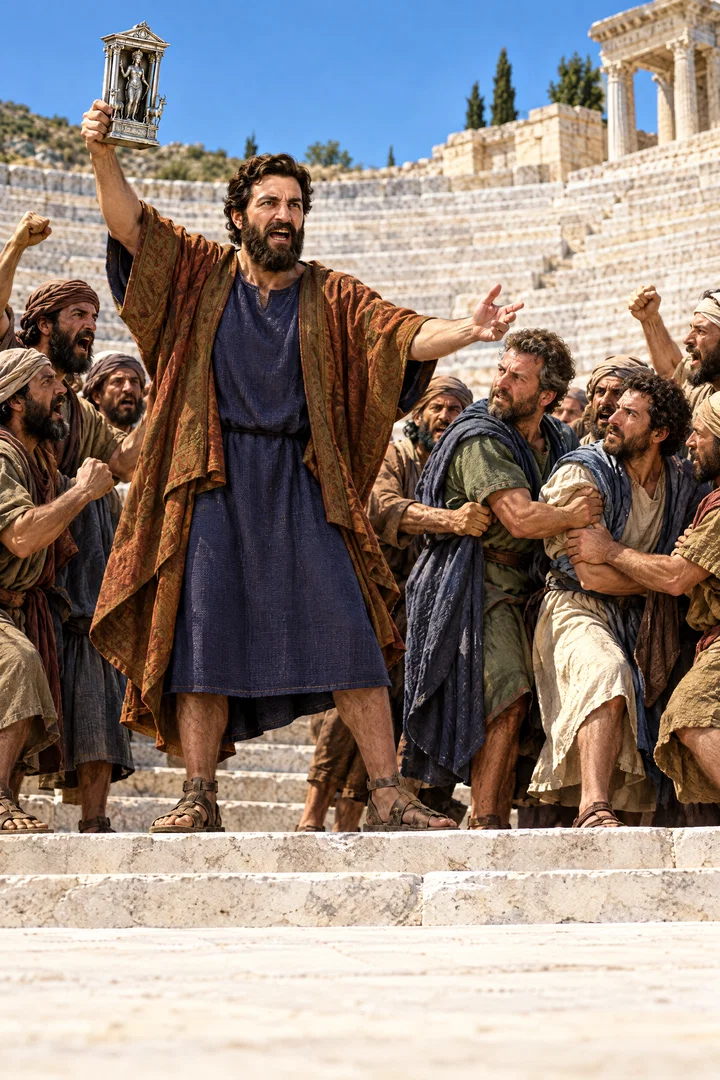
And when they heard these sayings, they were full of wrath, and cried out, saying, Great is Diana of the Ephesians.
Translations
American King James Version, King James Version, KJV Cambridge Paragraph Bible, Webster Bible
And when they heard these sayings, they were full of wrath, and cried out, saying, Great is Diana of the Ephesians.
And when they heard this, they were filled with wrath, and cried out, saying, Great is Diana of the Ephesians.
And when they heard this they were filled with wrath, and cried out, saying, Great is Diana of the Ephesians.
And they having heard, and having become full of wrath, were crying out, saying, 'Great [is] the Artemis of the Ephesians!'
And having heard [ this], and being filled with rage, they cried out, saying, Great [ is] Artemis of the Ephesians.
Now, hearing this, and becoming full of wrath, they began crying aloud, saying—Great, is Diana of the Ephesians!
Berean Standard Bible, Majority Standard Bible
When the men heard this, they were enraged and began shouting, “ Great is Artemis of the Ephesians!”
When they heard this they were filled with anger, and cried out, saying, “ Great is Artemis of the Ephesians!”
And hearing this, they were very angry, crying out and saying, Great is Diana of Ephesus.
Now when they heard it, they were full of wrath, and cried out, saying, Great is Diana of the Ephesians.
Douay-Rheims (Challoner revision)
Having heard these things, they were full of anger, and cried out, saying: Great is Diana of the Ephesians.
Pictures
Cross-references
- Acts 19:35-41
And when the townclerk had appeased the people, he said, Ye men of Ephesus, what man is there that knoweth not how that the city of the Ephesians is a worshipper of the great goddess Diana, and of the image which fell down from Jupiter?
The town clerk calms the uproar and dismisses the assembly.
- Acts 19:34
But when they knew that he was a Jew, all with one voice about the space of two hours cried out, Great is Diana of the Ephesians.
The crowd repeats its cry for Diana for two hours.
- 1 Corinthians 15:32
If after the manner of men I have fought with beasts at Ephesus, what advantageth it me, if the dead rise not? let us eat and drink; for to morrow we die.
The Ephesian riot may be the setting for Paul’s metaphor of fighting beasts.
- Revelation 2:1
Unto the angel of the church of Ephesus write; These things saith he that holdeth the seven stars in his right hand, who walketh in the midst of the seven golden candlesticks;
Both texts are associated with Ephesus.
- Acts 20:1
And after the uproar was ceased, Paul called unto him the disciples, and embraced them, and departed for to go into Macedonia.
departure from Ephesus hastened by the uproar
- 1 Corinthians 16:8
But I will tarry at Ephesus until Pentecost.
same intent to stay at Ephesus until Pentecost
- Acts 19:3-5
And he said unto them, Unto what then were ye baptized? And they said, Unto John’s baptism.
Ephesian disciples move from John’s baptism to baptism in the name of Jesus.
Commentary
Each commentary is drawn from primary sources: the writings of Ellen G. White and Adventist pioneers and periodicals. Each commentary is separate. Its own words are not a quotation; follow the references to read the source passages.
Ellen G. White
11 sources
The outcry took place at Ephesus after more than three years with that city as the center of work that raised up a flourishing church and spread the gospel throughout the province of Asia among both Jews and Gentiles.AA 291.1–2 It hastened departure at the time when the plan was to pass through Macedonia and Achaia to go to Jerusalem and then to see Rome, with Timothy and Erastus sent on into Macedonia and with the decision to remain at Ephesus until after Pentecost.AA 291.1–2
The setting was a city where Diana was widely and popularly worshiped and her magnificent temple was a source of civic and national pride.AA 286.1–3RH Sep 7, 1911 The idol was traditionally said to have fallen from the sky, and its symbolic markings and inscriptions were believed to have power, while superstition surrounding her shaped the city.AA 286.1–3RH Sep 7, 1911 Books explaining the symbols attracted magicians who influenced the temple's superstitious worshipers.RH Sep 7, 1911
The outcry occurred during the yearly festival season in her honor, a May month-long celebration that drew great crowds from all parts of the province and across Asia.AA 291.3–292.1SLP 141.1 It was conducted with utmost pomp and splendor through grand processions, sacrifices, libations, performances, and lavish public festivities.AA 291.3–292.1SLP 141.1 That gala season was a trying time for the newly converted believers meeting in the school of Tyrannus, who were an inharmonious note in the festive chorus and faced freely heaped ridicule, reproach, and insult.AA 291.3–292.1
The work had given heathen worship a telling blow, causing a perceptible falling off in attendance at the national festival and in the enthusiasm of the worshipers.AA 291.3–292.1 Its influence extended far beyond actual converts, as many who had not openly accepted the new doctrines became enlightened enough to lose all confidence in their heathen gods.AA 291.3–292.1
The wrathful cry was stirred up by Demetrius and his fellow craftsmen warning that the preaching and teaching threatened the shrine-making trade in silver shrines and the image-making business.SLP 142.2AA 292.2–3AA 295.1–2 The income of pagan priests and artisans was at stake, as well as the honor, worship, and temple of Diana, and they turned the people against Paul after his teaching turned people away from handmade gods.AA 292.2–3RH Sep 14, 1911AA 295.1–2 The angry and repeated shout in praise of Diana defended both idolatrous worship and economic interests and arose from religious superstition stirred by fear of economic loss.SLP 142.2AA 292.2–3RH Sep 14, 1911 The furious response came from fear that the teaching would diminish Diana's worship and the city's pride in her temple, and the shout proclaiming her greatness expressed public devotion to the goddess and the civic interests bound up with her cult.ST May 18, 1882
Those who angrily acclaimed Diana perished along with the goddess and her temple, and their religion was forgotten or came to seem like an idle tale.SLP 155.3 The temple and its worship were built on a false foundation and proved worthless when tested.SLP 155.3
Sources
Pioneers and periodicals
52 sources
The shout arose in the riot at Ephesus stirred up by Demetrius and his fellow craftsmen against Paul's preaching, when the crowd heard that his teaching that gods made with hands are no gods had turned away much people almost throughout all Asia and endangered their wealth and Diana's honor.ST Jun 26, 1884ST Mar 4, 1903ST Mar 4, 1903ST Feb 17, 1898RH Dec 3, 1867
Self-interest drove the outcry, for the craftsmen lived by making silver shrines and by Diana's worship, and concern for her reputation was used to win the wider crowd.ST Feb 17, 1898ST Aug 12, 1897ST Jul 24, 1893ST Feb 17, 1898
It was an angry, wrathful, repeated and prolonged public chant exalting Diana's greatness in defense of threatened worship and livelihood.ST Feb 17, 1898ST Mar 4, 1903ST Jan 23, 1907ST Jan 23, 1896ST Nov 1, 1910
Its united loud acclaim was an appeal to popular belief rather than an argument for truth, and popularity and respectability give an idol no valid claim to worship.RH Sep 13, 1906RH May 12, 1868ST Oct 16, 1884ST Oct 6, 1881ST Apr 14, 1881
Paul directed hearers away from Diana to Jesus Christ as their only Saviour and to worship the Creator instead, refusing to place Christ on the same level with her, and the same cry is repeated when the Sunday institution is defended against Sabbath truth by alarm and appeal to custom and prejudice.RH Mar 31, 1859RH Sep 13, 1906RH May 12, 1868ST Nov 13, 1893
Setting of the Uproar
The shout belongs to the riot at Ephesus raised by Demetrius and his fellow craftsmen against Paul's preaching, when the crowd's anger erupted in exalting Diana.ST Jun 26, 1884RH Dec 3, 1867 When the makers of silver shrines and workmen of like occupation heard Demetrius warn that Paul taught that gods made with hands are no gods and had persuaded and turned away much people not alone at Ephesus but almost throughout all Asia, they were filled with wrath and broke out shouting in her honor.ST Mar 4, 1903ST Mar 4, 1903ST Feb 17, 1898ST Aug 12, 1897 His sayings set before them their wealth from the business, the spread of Paul's work, and the danger that their trade would come into disrepute along with the temple and magnificence and worldwide worship of the great goddess worshiped by all Asia and the world.ST Mar 4, 1903ST Mar 4, 1903ST Feb 17, 1898ST Aug 12, 1897 The cry was therefore an angry defense of livelihood as well as of Diana, shouting her praise against Paul's work.ST Mar 4, 1903
Paul's work had weakened confidence in heathen gods and reduced attendance at the festival, threatening the profitable trade in silver shrines and images. Demetrius's appeal stirred the craftsmen to anger by playing on fear that his teaching would undermine both their trade and the worship of Diana.ST Aug 12, 1897 Their anger arose amid opposition to Paul's preaching because it threatened that trade, and the resulting confusion filled the city so that the crowd rushed to the theater, most not knowing why.ST Jul 24, 1893 Self-interest drove the outcry, for the people's cry honoring Diana served the silversmiths' selfish opposition to Paul whose teaching threatened the idol-making trade. Concern for Diana's reputation was a secondary appeal used to win the wider crowd to their cause, while their zeal displayed itself in shouting that she was great.ST Feb 17, 1898 Their living came from her worship, and opposition to Christianity arose because it harmed their business, so the cry of devotion expressed an economic interest.ST Feb 17, 1898
When the people recognized Alexander as a Jew they would not hear his intended defense but cried out together for about two hours, revealing the uproar and hostility stirred by the dispute over their goddess.RH Jul 6, 1868 Their noisy devotion lasted about two hours before it was quieted, an example of zealous but misguided worship.ST Apr 14, 1881 The cry shows the force of the mob's devotion to Diana, and the town clerk eventually calmed the disturbance by urging the people not to act rashly.ST Apr 11, 1906 Paul himself did not enter the theater and was scarcely in danger in this particular riot.RH Dec 3, 1867 Though wrath and persecution were raised against his preaching in defense of Diana worship, God worked wonderfully at Ephesus and even in that opposition the word of God triumphed.RH Dec 3, 1867ST Jul 7, 1909
Paul's reference to fighting beasts at Ephesus is metaphorical for contention with these fierce pagan zealots, whose violence and fury resembled wild beasts, not an actual fight with animals in the theater.RH Dec 3, 1867 The Ephesian account also shows the right kind of conversion, for those who turned to God broke with former idolatrous and evil practices. Those who yielded to Christ destroyed their idolatrous possessions and sinful livelihoods, burning their books of magic rather than keeping them as curiosities or mementoes.ST Dec 14, 1904
Diana and Her Worship
Ephesus was defined by the worship of Diana, also called Artemis and identified with the moon, whose great, costly, magnificent temple stood in the city as a source of civic and national pride.RH Sep 7, 1911ST Nov 29, 1910RH Jul 28, 1868RH Jun 30, 1863 That worship was popular and worldwide, extending throughout Asia and the world, and the outcry over her greatness expressed both public devotion to the goddess and the civic interests bound up with her cult.ST May 18, 1882RH Sep 7, 1911 The idol was traditionally said to have fallen from the sky, its symbolic inscriptions were believed to have great power, and books explaining them attracted magicians who influenced its superstitious worshipers.RH Sep 7, 1911
Devotion was tied to silver models of her temple used in household worship, and the approach to the great temple lay through street commerce in rosaries, crowns, garlands, pictures and other articles of religion.ST Apr 1, 1886 Vendors assailed travelers in many languages to sell their wares, and they were filled with wrath and uproar when Paul preached the gospel in its simplicity because it exposed and threatened their trade and called the people to worship the Creator instead.ST Apr 1, 1886 Diana belongs to the same cult and character as Semiramis, wife of Nimrod, who was among the first goddesses worshiped.ST Mar 4, 1913 She is the queen of heaven worshiped in Jeremiah's day, also called Venus, Astarte, Isis, Aphrodite, Flora, Ceres, Eostre and Ashtaroth, the pagan goddess of sensual love.ST Mar 4, 1913ST Apr 22, 1889
Satan worked wonders in support of pagan deities and their worship, and the Ephesian devotion to Diana was sustained by that working.RH Jul 28, 1868 The worship of Diana, like the worship of Baal and Dagon and later false religious systems, was part of his deceptive effort to draw people away from God.RH Jul 28, 1868RH Jul 28, 1868 The temple's ruins and the remains of the theater are the chief surviving reminders of Ephesus's former power and grandeur. The temple itself was later destroyed by the Heruli during their naval expedition.ST Sep 16, 1886
Meaning of the Cry
The outcry was wrathful anger breaking into a loud public chant that proclaimed the greatness of Diana.ST Feb 17, 1898ST Jan 23, 1907ST Nov 1, 1910 When the spread of Paul's teaching threatened their worship, their trade and their interests, the worshipers answered with intense fury and forceful defense of their religion.ST Feb 17, 1898ST Jan 23, 1907ST Nov 1, 1910 Stirred by Demetrius's warning that the goddess and her temple were endangered, the people of Ephesus responded with a repeated shout in her praise.RH Sep 14, 1911ST Feb 17, 1898ST Nov 1, 1910 Their shouting displayed zeal for Diana and set peaceful, voluntary faith over against a coerced defense of worship.ST Feb 17, 1898ST Jan 23, 1907
It was an angry defense of both livelihood and goddess, crying her praise against Paul's work after hearing that his teaching endangered wealth and honor.ST Mar 4, 1903ST Jan 23, 1896 Demetrius had warned the makers of silver shrines that Paul's doctrine that gods made with hands are no gods, taught not only at Ephesus but almost throughout all Asia, imperiled both their gain from the trade and the honor of the temple of the great goddess worshiped by all Asia and the world.ST Mar 4, 1903 Hearing this, they were filled with wrath and broke into the united exclamation of her greatness.ST Mar 4, 1903ST Jan 23, 1896 So those whose livelihood and interests depend on a religious institution react with anger when it is challenged.ST Jan 23, 1896
The united shout was an appeal to popular belief rather than an argument for the truth.RH May 12, 1868 Loud acclaim does not make Diana a true divinity, nor do the respectability and prominence of those who join in it give her any valid claim to worship, and Paul's rejection of gods made by human hands is not to be softened or joined to the worship of Christ.RH Sep 13, 1906RH May 12, 1868 Worship had made her a goddess who could not be lightly spoken against, showing how popularity can shield a belief from criticism even when it conflicts with scriptural truth.RH May 12, 1868ST Oct 6, 1881 The same pattern appears when human traditions are defended for religious or financial reasons, especially the claim that Sunday is the Christian Sabbath, whose defenders meet challenge with alarm and appeal to popular custom.RH May 12, 1868
The noisy devotion lasted about two hours before it was quieted, a prolonged example of zealous but misguided worship.ST Oct 16, 1884ST Apr 14, 1881 The craftsmen's shouting in support of Diana was a cry produced by opposition to faith.ST Oct 16, 1884ST Apr 14, 1881 Such uproar stands in contrast to the holy and happy results that faith should bring.ST Oct 16, 1884
True God Versus Idols
The uproar belongs to Paul's call to turn from Diana to worship the Creator instead, for he directed his hearers away from Diana to Jesus Christ as their only Saviour.RH Aug 10, 1876 He would not place Christ on the same level as Diana or honor false religions, but exalted Christ alone, and his refusal brought opposition and a mob crying out in rage for her.RH Sep 13, 1906ST Nov 13, 1893RH Aug 10, 1876 Their loud acclaim and the respectability of those who joined it gave Diana no valid claim to worship and made her no true divinity.RH Sep 13, 1906 His rejection of gods made by human hands is not to be softened or combined with the worship of Christ.RH Sep 13, 1906
The chapter contains no hint that Paul introduced a new Sabbath.RH Nov 21, 1871 Christians at Ephesus faced the worshipers of Diana as adherents of a rival pagan religion, a setting that distinguishes Christian work from cooperation with those who would direct people into her worship.RH Jul 30, 1914 That open worship would end, but lifeless formalism would remain as harmful as open idolatry.ST Jul 29, 1897 The goddess is connected with the adoption of heathen festivals and imagery in nominal Christian worship.
Her worshipers were so caught up in devotion to Diana that Paul found it difficult to gain an attentive audience for the Word.RH Feb 22, 1912 That condition is compared with the modern world's fascination with philosophy.RH Feb 22, 1912
Warnings for Today
The angry shout for Diana is the pattern of opposition to Sabbath preaching, for the Sunday institution stands as a goddess of Christendom whom people worship and fear to see despised.RH Mar 31, 1859RH May 12, 1868 Those who call the first day the Christian Sabbath and resist teaching that challenges that tradition repeat the Ephesians' alarm and appeal to popular custom and prejudice.RH May 12, 1868RH May 12, 1868 Their alarm and appeal to popular prejudice raise a tumult that obscures the truth.RH May 12, 1868
Forceful defense of religion by outcry stands in contrast to freedom of conscience and peaceful, voluntary faith.ST Jan 23, 1907 Patient, calm efforts to remove prejudice are therefore needed before the truth can be taught.RH May 12, 1868 The same pattern points forward to a future cry in which deceived nations will praise Sunday instead of turning to God and His word, while those who expose the deception and proclaim the truth will be treated as traitors.ST Jul 23, 1896 Willingness to support a constitutional amendment enforcing Sunday is itself a proclaiming of Diana's greatness.ST Feb 28, 1884
The outcry shows how people whose livelihood and interests depend on a religious institution react with anger when it is challenged.ST Jan 23, 1896 When preaching threatens trade and honor, religious and economic interests together provoke opposition to the preaching of the Bible.ST Jan 23, 1896ST Jul 1, 1880 Artists and dealers who oppose action against obscene pictures are like the shrine makers who stirred a crowd in defense of Diana, reacting angrily when livelihood or interests are threatened.ST Oct 3, 1906 So too the church party in Guadaloupe may awaken to resist the gospel in order to preserve its religious practices, yet such opposition need not prevent a church from arising there.RH Jul 30, 1908
The determined following of Diana measures the devotion Mammon receives in professedly Christian churches.ST Feb 14, 1884 It likewise pictures legislatures submitting to the brewing interest as though worshiping it.ST Jul 28, 1881 People who accept theories against the Bible with unthinking, fervent acclaim are like the ancient Ephesians, ready to cry out in praise of nineteenth-century science.ST Aug 25, 1881 Reform enthusiasm that ends when Sunday is past also follows the Ephesian cry in support of Diana.ST Jun 28, 1905 The verse thus poses a Christ-or-Diana test of principle, in which a person is pressured to cast incense to Diana in order to be set free.ST Jan 30, 1896
Sources