Acts 27:43
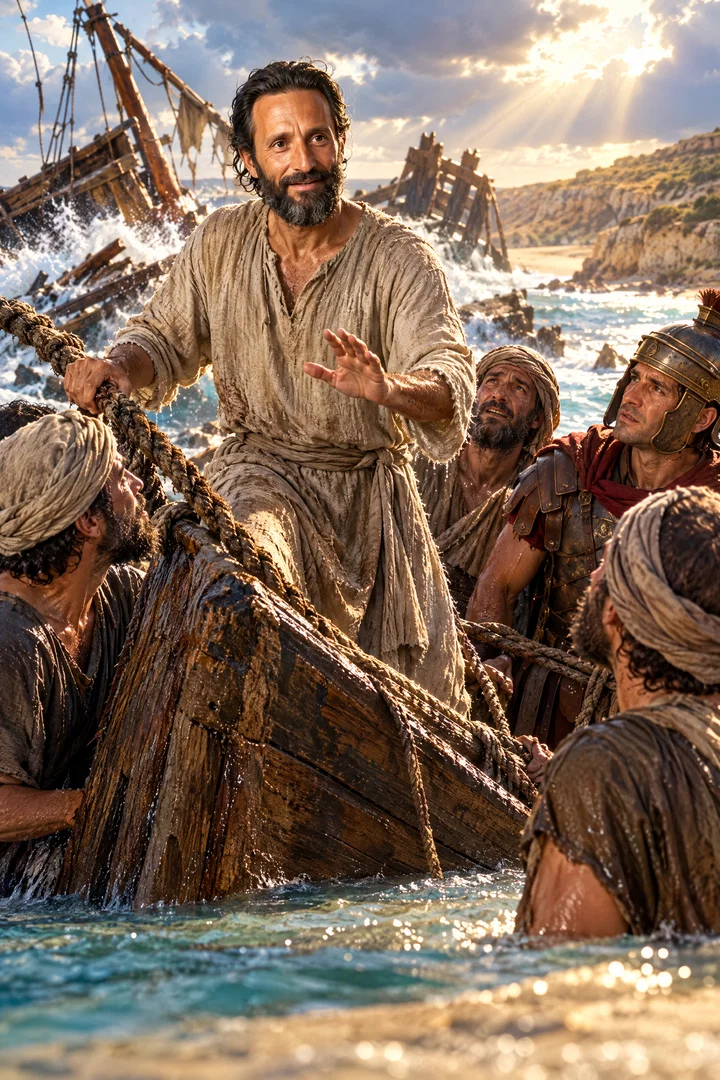
But the centurion, willing to save Paul, kept them from their purpose; and commanded that they which could swim should cast themselves first into the sea, and get to land:
Translations
American King James Version, King James Version, KJV Cambridge Paragraph Bible
But the centurion, willing to save Paul, kept them from their purpose; and commanded that they which could swim should cast themselves first into the sea, and get to land:
But the centurion, willing to save Paul, kept them from their purpose, and commanded that they who could swim, should cast themselves first into the sea, and get to land:
But the centurion, desiring to save Paul, stayed them from their purpose; and commanded that they which could swim should cast themselves overboard, and get first to the land:
But the centurion, desiring to save Paul, stayed them from their purpose; and commanded that they who could swim should cast themselves overboard, and get first to the land;
but the centurion, wishing to save Paul, hindered them from the counsel, and did command those able to swim, having cast themselves out first — to get unto the land,
But the centurion, desirous of saving Paul, hindered them of their purpose, and commanded those who were able to swim, casting themselves first [ into the sea], to get out on land;
but, the centurion, being minded to bring Paul safely through, hindered them of their purpose, and ordered such as were able to swim, to cast themselves overboard and, get first to the land,—
Berean Standard Bible, Majority Standard Bible
But the centurion, wanting to spare Paul’s life, thwarted their plan. He commanded those who could swim to jump overboard first and get to land.
But the centurion, desiring to save Paul, stopped them from their purpose, and commanded that those who could swim should throw themselves overboard first to go toward the land;
But the captain, desiring to keep Paul safe, kept them from their purpose, and gave orders that those who had knowledge of swimming were to go off the ship and get first to land:
But the Centurion willing to saue Paul, stayed them from this counsell, and commanded that they that coulde swimme, shoulde cast them selues first into the sea, and goe out to land:
Douay-Rheims (Challoner revision)
But the centurion, willing to save Paul, forbade it to be done; and he commanded that they who could swim, should cast themselves first into the sea, and save themselves, and get to land.
Pictures
Cross-references
- Acts 27:24
Saying, Fear not, Paul; thou must be brought before Cæsar: and, lo, God hath given thee all them that sail with thee.
Paul was assured that everyone aboard would survive.
- Acts 28:1-3
And when they were escaped, then they knew that the island was called Melita.
Continues the shipwreck account as Paul reaches shore and is bitten by a snake.
- Matthew 14:24
But the ship was now in the midst of the sea, tossed with waves: for the wind was contrary.
Satan used enraged sea against disciples
- Acts 27:31
Paul said to the centurion and to the soldiers, Except these abide in the ship, ye cannot be saved.
Paul warned that everyone had to remain aboard to be saved.
- Acts 27:20
And when neither sun nor stars in many days appeared, and no small tempest lay on us, all hope that we should be saved was then taken away.
The passengers lost hope of being saved.
- Acts 27:18
And we being exceedingly tossed with a tempest, the next day they lightened the ship;
The ship was severely battered by the storm.
- Acts 27:1-2
And when it was determined that we should sail into Italy, they delivered Paul and certain other prisoners unto one named Julius, a centurion of Augustus’ band.
Introduces Paul’s voyage under a centurion’s custody.
- Acts 27:37
And we were in all in the ship two hundred threescore and sixteen souls.
the souls are those who swim
- Acts 27:14
But not long after there arose against it a tempestuous wind, called Euroclydon.
A tempestuous wind began the voyage’s crisis.
- 2 Corinthians 11:25
Thrice was I beaten with rods, once was I stoned, thrice I suffered shipwreck, a night and a day I have been in the deep;
Paul says he suffered shipwreck three times before the voyage described in Acts 27.
Commentary
Each commentary is drawn from primary sources: the writings of Ellen G. White and Adventist pioneers and periodicals. Each commentary is separate. Its own words are not a quotation; follow the references to read the source passages.
Ellen G. White
8 sources
This verse belongs to Paul's voyage to Rome as a prisoner under a centurion's guard, ending in shipwreck.AA 439.1ST Nov 6, 1879 It took place in the first century of the Christian era, when traveling by sea was attended with peculiar hardship and peril.AA 439.2 Mariners directed their course largely by the position of the sun and stars, and when these did not appear and there were indications of storm, owners of vessels were fearful of venturing into the open sea, while during a portion of the year safe navigation was almost impossible.AA 439.2 It occurred after the ship ran aground, as those aboard were trying to reach land.AA 444.3–445.1RH Nov 30, 1911 The soldiers wanted to kill all the prisoners because they could not keep them in charge while every man needed all his strength to save himself, and under Roman law the guards would forfeit their own lives if any prisoner escaped, a cruel policy sanctioned by law.AA 444.3–445.1RH Nov 30, 1911
Julius the centurion, willing to save Paul, kept the soldiers from their purpose.AA 444.3–445.1RH Nov 30, 1911AA 439.3SLP 269.2 He did so to save Paul because all alike were under deep obligation to Paul for saving the lives of all on board, because he was convinced that the Lord was with Paul, and because he feared to do him harm.AA 444.3–445.1RH Nov 30, 1911SLP 269.2 He commanded those who could swim to cast themselves first into the sea and get to land, while the rest followed on boards and broken pieces of the ship, so that all escaped safe to land with not one missing when the roll was called.AA 444.3–445.1RH Nov 30, 1911AA 439.3SLP 269.2 The rescue shows Paul as self-possessed and helpful to his fellow travelers in helping to save the people aboard.ST Nov 6, 1879 Paul's sea journey served God's purpose in that the ship's crew witnessed God's power through Paul and Gentiles heard about Jesus, and many were converted through his teaching and miracles.EW 172.3
Sources
Pioneers and periodicals
31 sources
When the ship ran aground the soldiers wanted to put the prisoners to death because they could not guard them while struggling to save themselves and under Roman law their own lives would be forfeited if any escaped.RH Nov 30, 1911ST Apr 29, 1903 Julius the centurion, willing to save Paul, held them back from their purpose and commanded those who could swim to cast themselves first into the sea and get to land while the rest followed on boards and broken pieces, and so all escaped safe to land with not one missing.RH Nov 30, 1911ST Jun 12, 1884ST Oct 29, 1912 He acted to save Paul because he favored him and owed his life to him, was convinced the Lord was with him and feared to harm him, and recognized that Paul's counsel under God's providence had helped save everyone aboard.RH Nov 30, 1911ST Mar 26, 1885ST Jun 12, 1884 A whole shipload of reckless and wicked people escaped death because Paul, God's servant, was aboard, and his preservation in the wreck shows the Lord's marvelous working with His servant in divine deliverance.ST Nov 6, 1879ST Jul 23, 1885ST Jul 21, 1909RH Sep 10, 1903ST Nov 25, 1889 Satan sought to destroy Paul by the enraged sea, yet the terrifying voyage was God’s answer in His own way to Paul’s earnest prayer for a prosperous journey to Rome, disastrous by human judgment but truly prosperous because all things work together for good to them that love God.ST Oct 24, 1895ST Feb 25, 1889ST Aug 27, 1896
Shipwreck Scene and Rescue
The verse belongs to Paul's voyage to Rome as a chained prisoner on his way to Caesar's court after his appeal to Caesar, following his seizure in Judea and more than two years of Roman imprisonment.ST Feb 25, 1889ST Apr 29, 1903RH Dec 6, 1906 That voyage came after he had already suffered shipwreck three times.RH Apr 21, 1903 It was attended with the greatest dangers rather than a prosperous journey, and he was not delivered from the unbelievers in Judea as he had earnestly desired.ST Feb 25, 1889
After fourteen days of storm the ship was nearing land in dangerous waters and dropped anchor while waiting for daylight.ST Mar 26, 1885 The storm that broke over the Mediterranean near southern Italy and Sicily ran the ship aground and wrecked it.ST Aug 21, 1901 The wreck brought Paul to Malta about November 1, A.D. 60.ST Oct 21, 1897 Afterward he reached the Italian shore and traveled by land toward Rome, with the account to be told with its particulars of where the party landed and what took place after.ST May 28, 1885ST May 26, 1898
When the ship ran aground the soldiers wanted to put the prisoners to death because they could not guard them while struggling to save themselves.RH Nov 30, 1911 Under Roman law their own lives would be forfeited if any prisoner escaped, so Paul's life hung on their decision to kill to prevent escape.RH Nov 30, 1911ST Apr 29, 1903
Julius the centurion, willing to save Paul, held the soldiers back from their purpose.RH Nov 30, 1911ST Dec 28, 1876RH Nov 16, 1916ST Apr 29, 1903 He commanded that those who could swim should cast themselves first into the sea and get to land, while the rest followed on boards and broken pieces of the ship.RH Nov 30, 1911ST Jun 12, 1884ST Oct 29, 1912 So all escaped safe to land with not one missing when the roll was called.RH Nov 30, 1911 On Malta the survivors gave thanks to God even though the storm had not ceased.ST Mar 26, 1885
The centurion acted to save Paul because he favored him and regarded him with gratitude for helping save them.ST Jun 12, 1884 He owed his own life to Paul as the one who had saved all on board, was convinced the Lord was with him, and feared to harm him.RH Nov 30, 1911 He recognized that Paul's counsel under God's providence had helped save everyone aboard.RH Nov 30, 1911ST Mar 26, 1885
During the voyage Roman soldiers guarded Paul and the other prisoners, and after the wreck they camped together for three months on an island.ST Feb 16, 1915
Providence Prayer and Deliverance
A whole shipload of reckless and wicked people escaped death because Paul, God's servant, was aboard, and his presence brought deliverance to others.ST Nov 6, 1879ST Jul 23, 1885 In the rescue the centurion stopped the soldiers from killing the prisoners and ordered those able to swim to reach land first, and that decision helped save the people aboard and helped preserve everyone aboard.ST Nov 6, 1879RH Sep 10, 1903RH Nov 16, 1916 Paul's presence in that action prevented a general massacre and helped preserve his own life during the shipwreck.RH Sep 10, 1903RH Nov 16, 1916
The rescue shows the Lord's marvelous working with His servant in the voyage to Rome and the shipwreck.ST Jul 21, 1909 Paul's preservation in the shipwreck is a divine deliverance that must stand or fall with the deliverance of Shadrach, Meshach, and Abednego from the fiery furnace, the Old Testament deliverance and the New Testament deliverance being one as part of the same divine system brought to product and perfection in Christ.ST Nov 25, 1889 The shipwreck is a historical fact whose credibility supports the vital truths connected with it.ST Jul 5, 1910
Satan sought to destroy Paul by the enraged sea, just as he sought to destroy Christ and then the disciples by the sea.ST Aug 27, 1896 Though the sea is God's making and all God made is good, the restless, raging, roaring, turbid, angry sea there is not a symbol of comfort to man, though it has its useful lessons.ST Aug 27, 1896 In the emergency Paul's influence helped guide the company toward safety and he became a source of reassurance to the distressed passengers and crew, self-possessed and helpful to his fellow travelers.ST Nov 6, 1879ST Jun 12, 1884 On the deck of his shattered vessel in the crash of the billows he spoke in the same calm and determined tone he kept everywhere else, deterred by no danger, awed by no presence, and shrinking from no responsibility, standing unmoved amid peril like a grand embodiment of power.RH Jan 22, 1857 When as a chained prisoner on the way to Caesar's court his life hung on the soldiers' decision to kill the prisoners to prevent escape, and the centurion willing to save him held them back and sent those able to swim first toward land, his faith and courage rose above the danger and cheered his discouraged companions.ST Apr 29, 1903
The voyage belongs to the terrifying sea journey Paul endured on his way to Rome, as part of the toil and suffering through which he continued to testify of Christ. It tells of a storm that broke over the Mediterranean near southern Italy and Sicily and wrecked his ship, in which storm and shipwreck he showed great power of endurance.ST Aug 21, 1901 The journey was given by God in answer to Paul's earnest prayer for a prosperous journey by the will of God to visit Rome.ST Oct 24, 1895 By human judgment it looked disastrous and was attended with the greatest dangers rather than the prosperous journey prayed for, yet it was truly prosperous because all things work together for good to them that love God.ST Oct 24, 1895ST Feb 25, 1889 God looks at things differently than people do and knows far better than they do how prayers should be answered, so what people regard as disastrous is prosperous when seen as God sees it, and Paul made no complaint about it.ST Oct 24, 1895 God heard Paul's prayer but answered it in His own way, proving that hearing a prayer and answering it are two different things and that God is the best judge of how a request should be granted, since Paul as a prisoner in chains after his appeal to Caesar, following his seizure by the unbelieving Jews in Judea and more than two years imprisonment by the Romans, was not delivered from the unbelievers in Judea as he had earnestly prayed and asked the Roman brethren to pray.ST Feb 25, 1889
Doctrine and Christian Application
The souls in the shipwreck are bodily persons who swim and get to land, some on boards and broken pieces, and the 276 souls aboard are men and women in bodies rather than separate deathless spirits, so that soul here means person, creature, man.RH Sep 12, 1854 The centurion's effort to save Paul belongs to an account that places Paul's hope on God's promise made to the fathers, a promise still awaiting fulfillment.ST Dec 19, 1878 The circumstances surrounding that rescue, which seemed to obstruct Paul's plans, ultimately brought him to his desired destination at Rome and gave him opportunities for missionary work along the way.ST Mar 30, 1904
Paul's trip to Rome in Acts 27 and 28 was labor and sacrifice and suffering, not holiday rest or vacation, which exposes any search for holidays and vacations in Paul's life as false.ST Mar 18, 1889 Ministers of Christ should therefore make capital out of the sacrifice of Christ and His apostles, by which souls are saved, rather than out of a supposed holiday.ST Mar 18, 1889 The storm that broke over the Mediterranean near southern Italy and Sicily and wrecked Paul's ship displayed his great power of endurance, yet the same Lord who said Peace, be still to the troubled Sea of Galilee rules the Great Sea.ST Aug 21, 1901 That Lord calls missionaries from the West to go on mission to the East and can bear them safely on a quiet, almost motionless sea when they lack Paul's endurance.ST Aug 21, 1901
Sources