Matthew 14:24
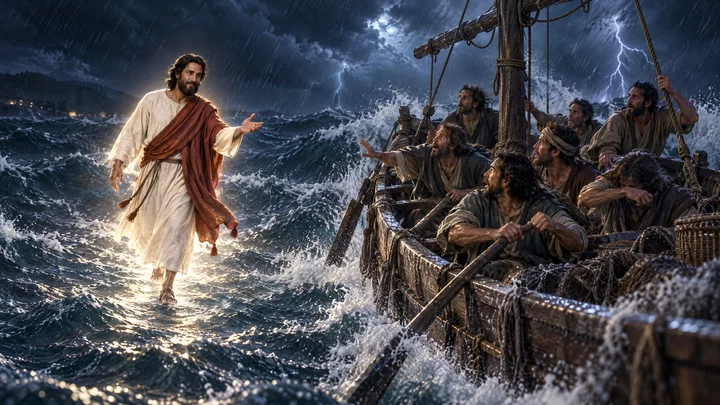
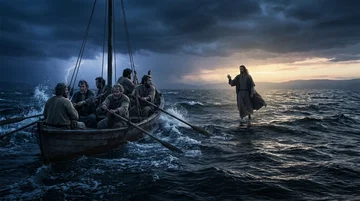
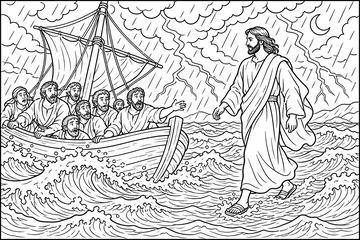
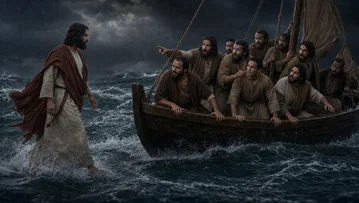
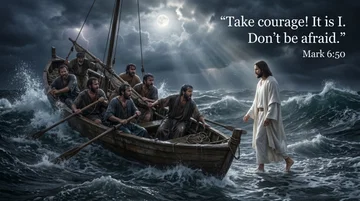
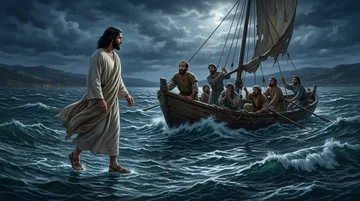
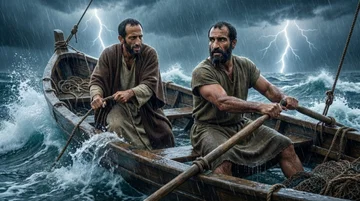
But the ship was now in the midst of the sea, tossed with waves: for the wind was contrary.
Translations
But the ship was now in the middle of the sea, tossed with waves: for the wind was contrary.
King James Version, KJV Cambridge Paragraph Bible
But the ship was now in the midst of the sea, tossed with waves: for the wind was contrary.
But the boat was now in the midst of the sea, tossed with waves: for the wind was contrary.
Revised Version, American Standard Version
But the boat was now in the midst of the sea, distressed by the waves; for the wind was contrary.
and the boat was now in the midst of the sea, distressed by the waves, for the wind was contrary.
but the ship was already in the middle of the sea tossed by the waves, for the wind was contrary.
Now, the boat, still many furlongs from the land, was holding off, being distressed by the waves,—for, the wind, was, contrary.
but the boat was already far from land, buffeted by the waves because the wind was against it.
but the boat was already in the middle of the sea, buffeted by the waves because the wind was against it.
But the boat was now in the middle of the sea, distressed by the waves, for the wind was contrary.
But the boat was now in the middle of the sea, and was troubled by the waves: for the wind was against them.
And the shippe was nowe in the middes of the sea, and was tossed with waues: for it was a contrarie winde.
Douay-Rheims (Challoner revision)
But the boat in the midst of the sea was tossed with the waves: for the wind was contrary.
Pictures
Cross-references
- Mark 6:47-48
And when even was come, the ship was in the midst of the sea, and he alone on the land.
The disciples struggle to row against the contrary wind in the sea.
- John 6:16-21
And when even was now come, his disciples went down unto the sea,
The disciples struggle against wind and waves before Jesus comes to them across the sea.
- Mark 4:39
And he arose, and rebuked the wind, and said unto the sea, Peace, be still. And the wind ceased, and there was a great calm.
Jesus rebukes the wind, and the troubled sea becomes calm.
- Matthew 14:32
And when they were come into the ship, the wind ceased.
The wind ceases when Jesus enters the boat.
- Mark 6:45-46
And straightway he constrained his disciples to get into the ship, and to go to the other side before unto Bethsaida, while he sent away the people.
Jesus sends the disciples away and withdraws alone to pray.
- John 6:1-14
After these things Jesus went over the sea of Galilee, which is the sea of Tiberias.
Parallel account of the feeding miracle and the crowd’s response.
- Psalms 107:29
He maketh the storm a calm, so that the waves thereof are still.
God calms the stormy sea.
- Matthew 8:23-27
And when he was entered into a ship, his disciples followed him.
Both texts describe a storm on the sea during a voyage with Jesus.
- Luke 8:22-25
Now it came to pass on a certain day, that he went into a ship with his disciples: and he said unto them, Let us go over unto the other side of the lake. And they launched forth.
Parallel account of Jesus calming the sea.
- Mark 6:47
And when even was come, the ship was in the midst of the sea, and he alone on the land.
same evening boat alone in midst of sea
- John 6:17
And entered into a ship, and went over the sea toward Capernaum. And it was now dark, and Jesus was not come to them.
same dark crossing to Capernaum without Jesus
- Mark 4:38
And he was in the hinder part of the ship, asleep on a pillow: and they awake him, and say unto him, Master, carest thou not that we perish?
Jesus sleeps while the disciples despair amid the storm.
- Matthew 14:31
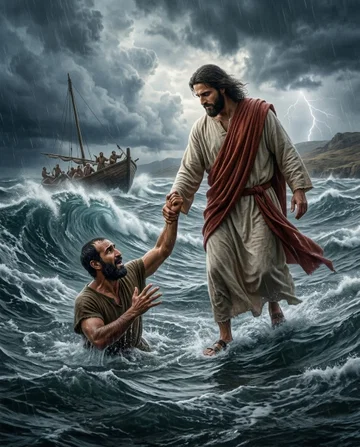
And immediately Jesus stretched forth his hand, and caught him, and said unto him, O thou of little faith, wherefore didst thou doubt?
Jesus catches Peter after he falters while walking on the water.
- Matthew 14:30
But when he saw the wind boisterous, he was afraid; and beginning to sink, he cried, saying, Lord, save me.
Looking at the wind and waves brings fear and sinking.
- Matthew 14:33
Then they that were in the ship came and worshipped him, saying, Of a truth thou art the Son of God.
golden text for walking on sea account
- Matthew 14:28
And Peter answered him and said, Lord, if it be thou, bid me come unto thee on the water.
Peter asks Jesus to call him onto the water.
- Mark 6:35-44
And when the day was now far spent, his disciples came unto him, and said, This is a desert place, and now the time is far passed:
A parallel account of Jesus feeding the multitude.
- Mark 6:52
For they considered not the miracle of the loaves: for their heart was hardened.
Their failure to understand the loaves explains their doubt during the storm.
Commentary
Each commentary is drawn from primary sources: the writings of Ellen G. White and Adventist pioneers and periodicals. Each commentary is separate. Its own words are not a quotation; follow the references to read the source passages.
Ellen G. White
20 sources
After the feeding of the multitude the disciples were far from shore in the midst of the storm-dark Sea of Galilee on their crossing to the farther side, tossed by the waves and driven off course because the wind was contrary.ST Dec 29, 1887RH Feb 6, 1913ST Dec 29, 1887 A crossing that should have taken only a few hours became a long, tedious struggle through a dark tempestuous night, with strong men bending to their oars until strength was exhausted while the vessel would not obey them and threatened to be engulfed.ST Dec 29, 18872SP 267.1 They were rowing in obedience to Christ's command and straining to reach the appointed place to take Him aboard, yet all their skill and strenuous effort to reach shore by themselves proved fruitless and futile.ST Dec 29, 18873RED 60.1–62.12SP 267.2–268.1 Though distant on the shore Jesus had not forgotten them but never for a moment lost sight of them, seeing their danger and knowing their thoughts while watching over them with deepest solicitude and compassionate tenderness.ST Dec 29, 18873RED 60.1–62.1DA 381.1 Their helplessness became a severe and necessary trial that brought them to despair and longing for His presence until humbled ambition turned to prayer, setting the scene for Him to come to them in their greatest need walking calmly on the boisterous waves and stilling their fear and the tempest with His voice.ST Dec 29, 18873RED 60.1–62.12SP 274.24RED 87.2ST Mar 15, 1877
Storm-Tossed Night Crossing
The night of tossing comes directly after the feeding of the multitude seated on the grassy plain on a spring evening, the same crossing recorded in Mark 6:45-52 and John 6:14-21.DA 377.1 It follows the crowning miracle that confirmed the conviction cherished all day that the long-looked-for Deliverer was present, lifting hopes ever higher that He would turn Judea into an earthly paradise flowing with milk and honey, satisfy every desire, break Roman power, deliver Judah and Jerusalem, heal soldiers wounded in battle, feed whole armies, conquer nations, and give Israel dominion.DA 377.2
The ship is far from shore in the midst of the sea, on the storm-dark Sea of Galilee while crossing to the farther side, tossed by waves and driven off course because the wind was contrary.ST Dec 29, 1887RH Feb 6, 1913ST Dec 29, 18873RED 60.1–62.12SP 267.2–268.1 What was normally a passage of only a few hours became a long, tedious struggle through a dark and tempestuous night, with strong men accustomed to hardship bending to their oars for many hours until strength was exhausted.ST Dec 29, 18872SP 267.14RED 87.2ST Mar 15, 1877 Their vessels would not obey their will but were driven hither and thither, and the boat was in danger of being engulfed so that they feared perishing.ST Dec 29, 1887ST Jul 18, 1878
They were crossing in obedience to Christ's command and straining to reach the appointed place where He had promised to meet them and be taken aboard, yet contrary winds and waves made their rowing and skill to manage the ship fruitless.ST Dec 29, 18873RED 60.1–62.12SP 267.2–268.12SP 267.12SP 274.2 Their efforts to reach shore through their own efforts proved futile through many hours of rowing against the storm.2SP 274.24RED 87.2ST Mar 15, 1877 Their trouble followed their departure from Jesus with dissatisfied, murmuring hearts after their wish to make Him king had been thwarted.ST Dec 29, 1887
Watched, Tested, Rescued
Though far away on the shore, Jesus had not forgotten the disciples, never for a moment losing sight of them, seeing their danger and knowing their thoughts.ST Dec 29, 18873RED 60.1–62.1DA 381.1 He watched over them with deepest solicitude and compassionate tenderness, like a mother watching her child.DA 381.1 Their boat carried a precious burden, for they were to be the light of the world.DA 381.1
The violent sea with men struggling against the waves shows how tiny and vulnerable human beings are before the power of nature, while God holds the winds and controls the waters.7MR 280.4–281.2 As the boat careened over the waves it was guarded by angels.7MR 280.4–281.2 Their danger and helplessness became a severe and necessary trial of faith that brought them to despair and to feeling utterly deserted.ST Dec 29, 18873RED 60.1–62.1Lt 5, 1876, par. 9–15 They regretted leaving Jesus and longed for His presence, believing they would be safe and secure with Him.ST Dec 29, 18873RED 60.1–62.12SP 267.2–268.12SP 267.1Lt 5, 1876, par. 9–15
When unholy ambition was subdued and quelled and in humility they prayed for help, help was given.ST Dec 29, 18873RED 60.1–62.1DA 381.1 The verse sets the scene for Jesus coming to them in their greatest need, walking calmly on the boisterous, white-capped waves.4T 288.1–2ST Jul 18, 1878DA 809.3 Though strong men, bewildered by the uselessness of their efforts and the apparent hopelessness of their case, they had laid down their oars in despair and given all up for lost, expecting death as tempest and billows threatened to engulf them.4T 288.1–2ST Jul 18, 1878Lt 5, 1876, par. 9–15 His appearance at first increased their terror, for they interpreted it as a sure precursor of immediate death.4T 288.1–2ST Jul 18, 1878
But His voice above the roar of the elements, It is I; be not afraid, reassured them and turned the horror of despair into the joy of faith and hope, so that with the beloved Master present they felt no more anxiety nor dread of death.4T 288.1–2ST Jul 18, 1878 The tempest was hushed by His word and the boat was suddenly stilled and safely landed.2SP 274.24RED 87.2ST Mar 15, 1877DA 809.3 The setting exposes Peter's impulsive mixture of faith and unbelief: though told not to be afraid, he focused on the boisterous wind and waves, forgot his Lord's power, and began to sink in peril when attempting to come to Jesus, but when he cried for help Jesus immediately took hold of him and lifted him from the water.RH Feb 6, 1913DA 383.2–384.1
The experience illustrates that Christ's followers may find their own strength and wisdom insufficient and all human efforts and skill to manage the ship vain, with human strength exhausted and death threatening, so that Jesus is their only hope.GW92 31.1–23RED 83.1–2 When they entrust the work to Him in faith He can accomplish what seemed impossible.GW92 31.1–2 That past deliverance in like peril was given to be remembered in later danger.3RED 83.1–2
Sources
Pioneers and periodicals
45 sources
After feeding the five thousand Jesus sent the disciples ahead across the sea toward Capernaum while he remained alone on the mountain praying through the night, and toward three o'clock in the morning they were still far from shore in the middle of the sea rowing with little progress in the darkness.ST Jun 20, 1900ST Jun 20, 1900ST Sep 21, 1904ST Jul 26, 1905 The boat was battered by a violent contrary wind and strong waves that drove it off course, and being tossed means being agitated and tormented as by waves, showing how desperate the struggle had become.ST Dec 29, 1887ST Aug 25, 1881ST Dec 29, 1887ST Aug 14, 1893ST Jun 20, 1900 Though skilled fishermen, the disciples labored vainly for hours and were worn down, exhausted, perplexed and afraid of being engulfed, longing for Jesus' presence and help.ST Aug 25, 1881ST Oct 28, 1897ST Jun 12, 1901 Though distant on shore Jesus saw their toil and danger with watchful eye and never lost sight of them, and he came to them in the fourth watch when human hope had failed, walking on the sea to reassure them, rescue sinking Peter, enter the boat and calm the storm to bring them safely to land.ST Dec 29, 1887ST Aug 25, 1881ST Sep 21, 1904ST Oct 28, 1897RH Oct 7, 1909 The perilous voyage pictures life and the church battered in a night storm while Jesus intercedes on high, teaching that those who keep their eyes on Jesus instead of the surrounding trouble find peace and strength, and that believing his nearness and hearing his voice above the tempest is the antidote for doubt and fear.RH Nov 14, 1865RH Jul 28, 1903ST Jul 8, 1930ST May 12, 1909ST Dec 16, 1886
Words and Setting
The setting is the night after the feeding of the five thousand with the five loaves in a remote wilderness place where there was no nearby source of food.ST Jul 26, 1905 In the evening the crowds were dismissed and the disciples were sent ahead across the Sea of Galilee toward Capernaum and on their crossing to Bethsaida, while Jesus remained behind alone on a mountain near the sea.ST Jun 20, 1900ST Jul 7, 1898 He spent the greater part of the night there in prayer while the disciples were out on the sea in trouble, and about three o'clock in the morning, in the fourth watch, He came to them walking on the sea to relieve their distress.ST Jun 20, 1900ST Feb 1, 1899 They were alone in the boat at night making a hard and distressed voyage, for an opposing wind tossed the boat and made rowing hard, leaving them perplexed and then in terror when toward morning they mistook Him for a ghost and cried out for fear until He reassured them.ST Jun 20, 1900ST Jun 12, 1901
The boat was by then far out in the midst of the sea, still far from the shore sought after rowing through the night in darkness.ST Jun 20, 1900ST Sep 21, 1904ST Aug 2, 1905 Despite laboring at the oars they made little progress, remaining only about half way across, roughly three or four miles, with waves troubling and battering them because the wind was contrary.ST Aug 2, 1905ST Aug 2, 1905ST Aug 2, 1905 Their efforts to row were thus made futile and fruitless, and worn down by struggling against the storm they were left in danger of being overwhelmed.ST Sep 21, 1904ST Aug 2, 1905
The word rendered tossed is the passive of the Greek verb basanizo, meaning to be tossed and agitated as by the waves.ST Aug 14, 1893 In its use here of a contrary wind driving the boat back toward the middle of the lake with waves threatening to sink it, it means literally tormented or tortured, showing how desperate the struggle was.ST Aug 14, 1893ST Jun 20, 1900 Its primary sense is to test, examine, scrutinize and try, with torment as a derived secondary sense describing the mode of testing rather than torment alone, so that the ship tossed with waves illustrates affliction as agitation and trying.ST Aug 14, 1893
Storm and Disciples Distress
A violent storm caught the boat far out in the middle of the sea, with strong waves tossing and battering it while a contrary wind drove against it and pushed it off course back toward the middle.ST Dec 29, 1887ST Aug 25, 1881ST Dec 29, 1887ST Aug 25, 1881 The gale worsened through the night as the disciples struggled at the oars for hours, yet they could not reach the shore they sought or the promised meeting place, so a crossing normally of only a few hours became a whole night of danger.ST Dec 29, 1887ST Aug 25, 1881ST Dec 29, 1887ST Feb 11, 1886 They labored vainly against the waves and feared being engulfed, swallowed, overwhelmed, or drowned.ST Dec 29, 1887ST Aug 25, 1881ST Aug 25, 1881ST Feb 11, 1886 Their danger was real, setting the scene for Jesus to come walking on the water, rescue Peter when he began to sink, enter the boat, calm the wind, and bring them safely to land, showing that trusting him brings safety while turning from him in need would likely lead to loss.ST Feb 11, 1886
Though they were skilled sailors and fishermen, their strength could not overcome the tempest, their vessels would not obey their will, and they were driven hither and thither until bewildered by the uselessness of their efforts.ST Aug 25, 1881ST Jul 18, 1878ST Mar 4, 1913 They labored for many hours with little progress, and were worn down, physically tired, mentally distressed, exhausted, disappointed, perplexed, and afraid, longing for Jesus' presence and help.ST Aug 25, 1881ST Jul 18, 1878ST Oct 28, 1897ST Jun 12, 1901ST Mar 4, 1913 At last, bewildered and seeing the hopelessness of their case, they laid down their oars in despair and gave all up for lost, expecting to perish while tempest and billows threatened death.ST Jul 18, 1878 Then toward morning in the darkness they saw Jesus walking calmly upon the boisterous, white-capped waves and mistook him for a ghost, crying out in terror, at first interpreting his appearance as a sure precursor of immediate death until his voice above the roar, It is I; be not afraid, turned horror into joy.ST Jul 18, 1878ST Jun 12, 1901ST Mar 4, 1913
Their trouble followed their departure from Jesus with dissatisfied, murmuring, ambitious hearts after their wish to make him a temporal king had been thwarted and refused.ST Dec 29, 1887ST Aug 25, 1881 Their stalled journey in the middle of the sea through most of the night, making little progress in the hours before dawn, matched that disappointment and failure of hope for a temporal kingdom.ST Mar 5, 1896ST Oct 28, 1897ST Mar 4, 1913 Their discouraged state deepened their fear as they struggled against the waves, and their physical weariness brought corresponding discouragement.ST Mar 5, 1896ST Mar 4, 1913 When human hope failed they prayed, but at first they still mistook Jesus walking toward them for a threatening apparition.ST Mar 5, 1896
The storm was opposition from the prince of the power of the air, bent on thwarting their journey across the Sea of Galilee.ST Aug 2, 1905 They rowed through the night but had made only about half the crossing, roughly three or four miles, and darkness and peril fed their anxious doubts and fears.ST Aug 2, 1905 Their fear also revived superstitious beliefs in storm spirits and sea spirits that threatened their lives.ST Aug 2, 1905
Christ Watching and Rescuing
Though far off on the shore, Jesus saw the disciples' danger and toil in the middle of the sea, knew their thoughts, kept them under his watchful eye, never forgot them nor lost sight of them, and held them within his power as master of the sea.ST Dec 29, 1887ST Aug 25, 1881RH Oct 7, 1909ST Oct 12, 1904RH Apr 29, 1875 Their helplessness against waves and contrary wind severely tested their faith and taught them their helplessness, and help came when their ambition was subdued and they humbly prayed, believing they would be safe with him.ST Dec 29, 1887RH Oct 7, 1909 When they thought they were lost he was near, and he does not forget his followers in the dark and difficult trials of life but remains near and mighty to save.RH Oct 7, 1909RH Apr 29, 1875 He saw them in their toil and came at the right moment to deliver them.RH Jan 23, 1908
He comes to his troubled followers in darkness before dawn, in the fourth watch of the night, when they are worn down by struggling against the storm and are in the midst of great difficulty.ST Mar 15, 1877ST Sep 21, 1904RH Jul 28, 1903ST Oct 12, 1904 Their boat made little progress against the contrary wind, and their exhaustion and disappointment heightened their fear when human hope had failed.ST Sep 21, 1904ST Oct 28, 1897 He may leave them in difficulty until the time best for them, then come near to rescue them and bring relief in trial.RH Jul 28, 1903ST Oct 28, 1897 The long fruitless rowing for many hours came before he appeared walking on the water, reassured them, and stilled the tempest as the boat reached land.ST Mar 15, 1877ST Aug 25, 1881
The storm-tossed sea is the setting for Christ coming to them walking calmly upon the boisterous, white-capped billows, reassuring them with It is I, be not afraid, rescuing Peter when he begins to sink, entering the boat, calming the wind, stilling the tempest, and bringing them safely to shore.ST Mar 15, 1877ST Aug 25, 1881ST Jul 18, 1878ST Jul 7, 1898 At first sight they were more terrified, mistaking him for a sure precursor of immediate death and crying out in great fear, but his coming heralded not death but life, and his voice above the roar of the elements turned horror of despair into joy of faith and hope, so that with the beloved Master present they felt no more anxiety nor dread of death.ST Jul 18, 1878 Their danger was real, but trusting him they reached shore safely, while turning from him in need would likely have led to their loss.ST Feb 11, 1886
The account of Jesus walking on the sea shows of a truth that Jesus is the Son of God.ST Sep 19, 1900 The storm did not put the disciples beyond his power, for he was master of the sea.ST Oct 12, 1904 His power over the sea and the storm in walking on the waves demonstrates the same power that makes him mighty to raise the dead.ST Oct 12, 1904ST May 24, 1905
The storm is the setting for Peter's impulsive mixture of faith and unbelief.RH Feb 6, 1913 Though told not to be afraid and to be of good cheer, he looked away from Christ to the boisterous wind and waves, forgot his Lord's power, and began to sink.RH Feb 6, 1913ST Jun 12, 1901 Fear is the natural result of losing confidence in Christ through doubt, leaving the disciples first perplexed and then in unnecessary terror when toward morning they mistook Jesus for a ghost.ST Jun 12, 1901 When Peter faltered in the water and cried for help and reached out to him, Jesus immediately stretched forth his hand, took hold of him, and lifted him from the water, and Christ remains near to save.RH Feb 6, 1913ST Jul 8, 1930
Faith Prayer and Help
The tossing in the middle of the sea shows what happens when the eyes leave Jesus for the trouble around, for to dwell on wind and wave is to begin to sink, while to look to Him brings peace and rest and strength to endure trial and overcome difficulty.RH Jul 28, 1903 The helplessness of that night severely tested faith, teaching the rowers how powerless they were when their toil against the contrary wind made no progress toward the appointed meeting place and left their efforts futile.ST Dec 29, 1887ST Mar 5, 1896 Their disappointment after the refusal of the earthly kingdom deepened the discouragement, and with human hope failing they longed for His presence, believing they would be safe with Him.ST Dec 29, 1887ST Mar 5, 1896
Though distant on shore He saw the danger and knew their thoughts, watching without losing sight and without forgetting His own in dark and difficult trial.ST Dec 29, 1887RH Oct 7, 1909 Help came when ambition was subdued and they humbled themselves and humbly prayed, and even when they thought themselves lost He was near.ST Dec 29, 1887RH Oct 7, 1909 At first, in their fear, they mistook Him coming toward them for a threatening apparition.ST Mar 5, 1896 He may leave His followers in difficulty until the time best for them, yet He sees them in trial and comes to their relief.ST Oct 28, 1897
The danger was real, with exhaustion and disappointment heightening fear, but trusting the Deliverer brought them safely to shore, while to have turned from Him in need would likely have led to loss.ST Oct 28, 1897ST Feb 11, 1886 That rescue shows how a life threatened by trouble may safely entrust itself to the crucified and risen Redeemer.ST Feb 11, 1886 Those who keep their eyes on Him not only find calm themselves but are fitted to help rescue others by sympathy and encouragement and practical aid.RH Jul 28, 1903 In that storm He was the source of safety and comfort and joy, and His constant care teaches the need to know Him now in order to meet His coming and the judgment in peace.RH Sep 10, 1901
Picture of Life and Church
The tossing in the midst of the sea pictures the journey of life amid danger and trouble, with the storm picturing the troubles that beset that journey until the Lord comes aboard.ST Jul 8, 1930ST Jul 14, 1898RH Jun 11, 1901 The ship tossed means a person surrounded by trouble, and the storm reflects times of distress when life feels dark and help is urgently needed.ST Dec 16, 1886RH Jan 28, 1873 It pictures also the dangers and trials of life, especially the increasing perils of the last days, met by Christ's words Be of good cheer, it is I, be not afraid.RH Nov 14, 1865 Being tossed is meeting winds and waves of trouble in the form of discipline, disappointments, losses, cares, anxieties, pain and weakness, sorrows and bereavements.RH Apr 29, 1875 It is days of darkness when storm-clouds lower and waves dash fiercely round the believer and threaten to devour, and believers should not be surprised when this happens.RH Apr 29, 1875RH Jan 28, 1873
Believing and recognizing Jesus as near and mighty to save, and hearing His voice above the tempest saying Fear not for it is I, is the only antidote for doubts and fears and makes it possible to be of good cheer.RH Apr 29, 1875RH Jan 28, 1873 He walks the waves beside the threatened one, and no storm can drive Him away.RH Jan 28, 1873 He bids the waters bear up His follower, makes His arm a defense, shines His face on the billows to drive away terror, and beckons the follower to follow the illumined way.RH Jan 28, 1873 He comes walking on the troubled waters amid the roaring billows and noise of the tempest, will not let them sink, but commands the raging storm to calm, so darkness will give way to a better day.RH Apr 29, 1875ST Dec 16, 1886
The ship tossed by waves while Jesus is away pictures believers discouraged by life's tempests and sad at their absent Lord.RH Aug 21, 1860 Though absent, He is on the mountain top, on the distant hills of light, pleading their cause with God.RH Aug 21, 1860 When it seems the Master is asleep and they are in peril, they are to awake Him with earnest prayer, and when He rebukes the wind there will be a great calm.RH Aug 21, 1860 When sinking hearts quail before the tempest's wildest rage, He will come treading upon the rude billows that disturb them, hushing the fury of the fearful tempest and guiding them to the port of peace.RH Aug 21, 1860
The verse shows the position of the church in this present world as a boat full of disciples in a night storm on dark waters, battered by Satanic wrath while Jesus prays for her on the mountain-top after ascending on high.ST May 12, 1909 She has often seemed forsaken and alone through many a dark watch, but Jesus is praying for her and will soon come to her rescue walking on the sea to pilot her quickly to the other shore.ST May 12, 1909 His voice speaks peace to His storm-tossed children above the crash of the elements when the world goes to wreck.ST May 12, 1909 Like her Master she must be bruised and buffeted in this world if she would share His victory in the world to come, for the bruising of the Seed of the woman precedes the fulfillment of the promise that He shall bruise the serpent's head.ST May 12, 1909 The disciples' danger is like a launch drifting at night in rough waters, with the Lord coming to rescue just as help arrived for the launch.RH Dec 13, 1906
The ship is made safer by leaving the shore for the deep sea, where it does not run aground and rides beyond blasts that rise fast near land.ST Mar 12, 1894 White rocks abounding near the shore bring dread until marked by light on the chart, and then give courage to put to sea.ST Mar 12, 1894 This means leaving life's shallow sea for God's deep sea of profound divine love to catch the Spirit's breeze and know His peace.ST Mar 12, 1894 It means casting the net without waiting for calmer seas or fuller knowledge and relying on God to guide the bark to where the fish abide.ST Mar 12, 1894 It means trusting the Lord to steer, to overwhelm all danger and stem the squall, and to guide home to heaven when life's storms are past.ST Mar 12, 1894
Sources