Acts 4:37
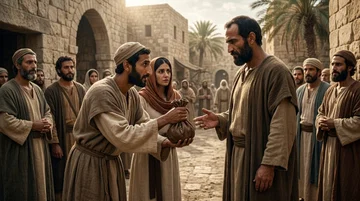
Having land, sold it, and brought the money, and laid it at the apostles’ feet.
Translations
American King James Version, King James Version
Having land, sold it, and brought the money, and laid it at the apostles’ feet.
having land, sold it, and brought the money, and laid it at the apostles’ feet.
Having land, sold it, and brought the money, and laid it at the apostles' feet.
having a field, sold it, and brought the money, and laid it at the apostles’ feet.
having a field, sold it, and brought the money and laid it at the apostles’ feet.
a field being his, having sold [it], brought the money and laid [it] at the feet of the apostles.
being possessed of land, having sold [ it], brought the money and laid it at the feet of the apostles.
Having a field, sold it, and brought the money and laid it at the feet of the Apostles.
Berean Standard Bible, Majority Standard Bible
sold a field he owned, brought the money, and laid it at the apostles’ feet.
having a field, sold it and brought the money and laid it at the apostles’ feet.
Having a field, got money for it and put the money at the feet of the Apostles.
Where as he had land, solde it, and brought the money, and laid it downe at the Apostles feete.
Douay-Rheims (Challoner revision)
Having land, sold it, and brought the price, and laid it at the feet of the apostles.
Pictures

Cross-references
- Acts 5:1-4
But a certain man named Ananias, with Sapphira his wife, sold a possession,
Ananias and Sapphira’s deceit contrasts with Barnabas’s sincere, voluntary gift.
- Acts 2:44-45
And all that believed were together, and had all things common;
Believers sold possessions and shared the proceeds to meet one another’s needs.
- Acts 11:29-30
Then the disciples, every man according to his ability, determined to send relief unto the brethren which dwelt in Judæa:
Disciples sent relief to believers in Judea according to their ability.
- Matthew 19:21
Jesus said unto him, If thou wilt be perfect, go and sell that thou hast, and give to the poor, and thou shalt have treasure in heaven: and come and follow me.
The church’s action puts Christ’s teaching about selling possessions and following him into practice.
- 2 Corinthians 8:12-14
For if there be first a willing mind, it is accepted according to that a man hath, and not according to that he hath not.
Willing giving provides for the needs of fellow believers and promotes equality.
- Acts 5:1-2
But a certain man named Ananias, with Sapphira his wife, sold a possession,
Ananias pretended to give the full price, unlike Joses’s full gift.
- Acts 4:32
And the multitude of them that believed were of one heart and of one soul: neither said any of them that ought of the things which he possessed was his own; but they had all things common.
One heart and common property explains the sale.
- Colossians 4:10
Aristarchus my fellowprisoner saluteth you, and Marcus, sister’s son to Barnabas, ( touching whom ye received commandments: if he come unto you, receive him;)
Identifies Mark as Barnabas’s cousin.
- Luke 12:33
Sell that ye have, and give alms; provide yourselves bags which wax not old, a treasure in the heavens that faileth not, where no thief approacheth, neither moth corrupteth.
Giving possessions to God’s work accords with the promise of lasting heavenly treasure.
- Acts 13:1
Now there were in the church that was at Antioch certain prophets and teachers; as Barnabas, and Simeon that was called Niger, and Lucius of Cyrene, and Manaen, which had been brought up with Herod the tetrarch, and Saul.
Barnabas is named among the teachers and prophets at Antioch.
- Luke 6:13
And when it was day, he called unto him his disciples: and of them he chose twelve, whom also he named apostles;
Christ appointed the apostles who later received the believers’ funds.
- Acts 6:1-6
And in those days, when the number of the disciples was multiplied, there arose a murmuring of the Grecians against the Hebrews, because their widows were neglected in the daily ministration.
The complaint about daily distribution leads to appointing others to oversee it.
Commentary
Each commentary is drawn from primary sources: the writings of Ellen G. White and Adventist pioneers and periodicals. Each commentary is separate. Its own words are not a quotation; follow the references to read the source passages.
Ellen G. White
8 sources
The verse describes Joses, a Levite from Cyprus called Barnabas, selling his land and bringing the money and laying it at the apostles' feet for distribution to believers in need.7RED 19.3–20.13SP 283.1–284.1AC1 19.3–20.2RH Feb 2, 1911 The proceeds helped provide homes, food, and sustenance for converts who had lost homes and livelihoods or had been driven from their homes for following Christ.7RED 19.3–20.13SP 283.1–284.1AC1 19.3–20.2 His giving was willing, free, liberal, and self-sacrificing, expressing faith through benevolence and showing the Holy Spirit's work in making believers united and generous.7RED 19.3–20.13SP 283.1–284.1AC1 19.3–20.2RH Feb 2, 1911 He had freely given his means to support Christ's cause and help the poor.SLP 36.2AC1 52.23SP 320.3–321.1
Love for fellow believers and for Christ's mission outweighed attachment to money and possessions, valuing people's souls and salvation above earthly possessions and inheritance.7RED 19.3–20.13SP 283.1–284.1AC1 19.3–20.2RH Feb 2, 1911 Earthly wealth was thus used as a means to sustain Christ's cause, help others hear the gospel, and relieve the needs of the poor.RH Feb 2, 1911SLP 36.2AC1 52.23SP 320.3–321.1 Barnabas had already been acquainted with Paul during the time when Paul opposed the believers.AC1 52.2
His gift was a genuine act of giving, unlike Ananias and Sapphira's deceptive claim to have brought all their proceeds while keeping part back.Lt 232, 1899, par. 26–28 Giving all was not required, for God would have accepted a truthful gift of only part.Lt 232, 1899, par. 26–28 The lesson is that a gift must not be misrepresented in order to gain a reputation for generosity or devotion.Lt 232, 1899, par. 26–28
Sources
Pioneers and periodicals
42 sources
Joses, surnamed Barnabas, a Levite of Cyprus whose name means son of consolation, owned land in his native country and after his conversion sold it and brought the proceeds and laid them at the apostles' feet.RH Feb 2, 1911ST Jan 15, 1885ST Aug 5, 1889ST May 24, 1883ST Dec 19, 1878 His act belonged to the days after Pentecost at Jerusalem, when believers were of one heart and soul and shared to meet one another's needs.ST Sep 23, 1908RH Feb 10, 1916ST Jun 2, 1898ST Jul 29, 1897 The sale and gift were wholly voluntary, his to give or to keep as he chose, and were an act of willing self-sacrifice in which love for Christ and fellow believers outweighed attachment to possessions.ST Sep 23, 1913ST Jan 21, 1897ST Jul 29, 1913 The money became part of a common treasury under the apostles' oversight for orderly distribution to the urgent needs of the many gathered believers.RH Aug 17, 1916RH Apr 15, 1909RH Feb 4, 1862ST May 24, 1883 In contrast to Ananias and Sapphira, who pledged proceeds and then withheld part while pretending to give the whole, Barnabas freely gave his all and was blessed, showing that full consecration of substance and self is acceptable while profession that withholds self is not.ST Jan 29, 1908ST Jul 7, 1914ST Jul 29, 1913ST Jan 21, 1897
Giver and Setting
The giver was Joses, surnamed Barnabas by the apostles, a Levite of the country of Cyprus.RH Feb 2, 1911ST Jan 15, 1885ST Aug 5, 1889 His surname means son of consolation or son of exhortation, marking his excellence as a Christian teacher.ST Jan 15, 1885ST Aug 5, 1889 He owned land and possessions in Cyprus, his native country.ST May 24, 1883ST Dec 19, 1878 After his conversion to Christianity he sold them and devoted the proceeds to the cause of God, bringing the money and laying it at the apostles' feet.ST Jan 15, 1885ST May 24, 1883ST Dec 19, 1878
The act belongs to the time after Pentecost at Jerusalem, when through prayer all differences and selfishness were put away and believers became of one heart and one soul.ST Sep 23, 1908RH Feb 10, 1916 Then the Holy Spirit was given in fullness and power, giving boldness through simple trust in God's word and bringing saved people into the church to serve.ST Sep 23, 1908RH Feb 10, 1916 Thousands were converted through preaching with demonstration of the Spirit, and the sick were healed.RH Feb 10, 1916 Spirit-filled people could both suffer and speak, with patience and earnestness, boldness and kindness, and the name of Jesus remains powerful for that work still.RH Feb 10, 1916
His sale and gift were part of the primitive church's provision for the poor and sharing to meet one another's needs.ST Jun 2, 1898ST Jul 29, 1897 He sold land, even a field, and brought the money to the apostles for common care.ST Jun 2, 1898ST Jul 29, 1897
Willing Sacrificial Gift
The sale of the land and the bringing of the money was voluntary, a free stewardship that was his to give or to keep as he chose.ST Sep 23, 1913ST Jul 29, 1913 It was an act of willing service honored by God, not a response to a law or demand, for property remained each person's to give or withhold.ST Sep 23, 1913ST Jul 29, 1913 Different circumstances call for different plans, with the Spirit leading one missionary to go out without any provision in simple faith and leading another to go provided with a proper amount of funds. The gift was a willing act of self-sacrifice in which love for fellow believers and for Christ's mission outweighed attachment to money and possessions.ST Jan 21, 1897 It exemplifies practical devotion of possessions to the cause and to meeting the needs of others, faith expressed through benevolence and unity wrought by the Spirit in making believers united and generous.ST Jan 21, 1897
He gave himself to the work as well as his means, joining complete generosity in possessions with personal service.ST Nov 8, 1883ST Apr 3, 1884 His giving was entire, even to the last cent, taking on further service for the cause, and it was laying up treasure in heaven.ST Nov 8, 1883ST Apr 3, 1884 His sacrifice demonstrated faith by what was surrendered for the cause.ST Apr 23, 1902 It showed unselfish use of wealth, the example of a wealthy supporter using means to support the spread of the gospel, bringing blessing when money is used for spiritual good.ST Apr 23, 1902ST Feb 14, 1884RH Jan 16, 1900
The sharing reflects a literal understanding of Christ's teaching about earthly possessions.RH Feb 20, 1855RH Nov 20, 1856 The proceeds from sold possessions were brought for distribution according to need, placed under care so they could be given to each person according to need.RH Feb 20, 1855RH Nov 20, 1856 They supplied need, not idleness.RH Feb 20, 1855RH Nov 20, 1856
Orderly Care for Need
The money was laid at the apostles' feet and thereby entered a common treasury held under their oversight and guidance.RH Aug 17, 1916RH Apr 15, 1909 That treasury existed to meet the urgent needs of the many believers gathered in Jerusalem.RH Aug 17, 1916RH Apr 15, 1909 From it provision was made through orderly, systematic distribution carried out through regular channels.RH Aug 17, 1916RH Apr 15, 1909
The apostles thus had charge of distributing the common fund to the poor, with access to wealth placed at their feet that they could have taken for themselves.RH Feb 4, 1862ST May 24, 1883 Instead they delegated the work of distribution to seven deacons and gave themselves to preaching and prayer.RH Feb 4, 1862 Having charge of the fund did not mean they necessarily performed the distribution in person.ST May 24, 1883
This sharing of proceeds from sold possessions was the characteristic way of life of the primitive church.ST May 18, 1904 Its discontinuance is explained by selfishness.ST May 18, 1904
Contrast with Deception
Barnabas was blessed because he was separated from sin, and his faithful, consecrated life stands in contrast to Ananias and Sapphira, who were identified with sin and were slain in God's presence.ST Jan 29, 1908ST Oct 9, 1901 God's presence is a devouring fire, but it devours only sin and what is identified with sin, and that presence rested upon Barnabas for blessing rather than for destruction.ST Jan 29, 1908 Like the three Hebrews in the fiery furnace, he was whole-hearted, free in Christ Jesus, and filled with God's purifying presence dwelling in him.ST Jan 29, 1908
In contrast, Ananias and Sapphira were identified with sin and were slain by that same presence.ST Jan 29, 1908ST Oct 9, 1901 Shortly after the Jerusalem church was organized, some believers had been cast out of their homes and cut off from support because of faith, while others had money and valuable property, and those with possessions sold them to place the proceeds in a common fund from which distribution was made to the needy, as Joses did in selling his property and giving the money to the apostles.ST Jul 7, 1914 Under the Spirit Ananias and Sapphira had pledged the proceeds from sale of property, but afterward allowed covetousness to enter and decided the pledge was too large, yet wanting the high esteem given to sacrificers they sold and withheld a large share while pretending to give the whole.ST Jul 7, 1914 Barnabas gave the money from the land he sold in an act known and praised by the believers, and his sincere gift stands against their false claim that they gave the whole price when they kept part of it.ST Jan 21, 1897
Barnabas freely gave his all for the work and God used him, while Ananias and Sapphira claimed to give their all while withholding part and came under God's judgment. His giving was free and voluntary stewardship, his to give or to keep as he chose, and was not required by God, whereas they gave part while deceitfully keeping some back.ST Jul 29, 1913 A profession of giving oneself to God is not acceptable when self is withheld.ST Jan 21, 1897 Different circumstances call for different plans, with the Spirit leading one missionary to go out without any provision in simple faith and leading another to go provided with a proper amount of funds.
Poverty and Later Relief
Believers who owned land sold it and brought the money and laid it at the apostles' feet for God's work.RH Nov 29, 1864RH Jun 9, 1859RH Feb 3, 1859RH Nov 23, 1869 The early church used its means so fully in the cause at the very commencement of the work that its members were reduced to poverty and left in need.RH Nov 29, 1864RH Jun 9, 1859RH Feb 3, 1859RH Nov 23, 1869 That expending of their resources in God's work explains why the poor believers in Jerusalem later needed relief.RH Nov 29, 1864RH Jun 9, 1859RH Feb 3, 1859
That poverty is why assistance was afterward needed by the church at Jerusalem.RH Nov 23, 1869 It is why the disciples at Antioch sent relief to Judea when Agabus signified the coming dearth.RH Nov 23, 1869 It is why Paul later labored to send relief from other churches to the poor saints at Jerusalem.RH Nov 23, 1869
Present Call to Consecration
Barnabas selling his land and laying the money at the apostles' feet is the pattern for consecrating personal substance, means, ability, resources and time to God to support mission work and those who give their lives to preach, so that the gospel and its blessings are shared and souls are brought to salvation.ST Jan 1, 1885RH Dec 1, 1904ST Feb 5, 1902ST Sep 27, 1883 Such voluntary, selfless, wholehearted giving testifies to devotion to God, commended the Christian movement to others, has lasting value in God's kingdom, and belongs not only to the early church but was still to be found in the nineteenth century.ST Jan 1, 1885ST Feb 5, 1902ST Sep 27, 1883 Those who cannot go out themselves to preach share in the work by using their means to sustain those who do, and people of means devote both resources and time to spreading the truth.RH Dec 1, 1904ST Sep 27, 1883
Giving means voluntarily when the cause is in want, as at Jerusalem, is evidence that God has called a person to bear financial responsibility in His work as truly as He calls ministers and reformers to prominent places. God always begins and carries forward His work through men and women with this spirit of sacrifice, who see the importance of the work and do what they can without waiting to be repeatedly urged, thereby showing they walk in the light and hear His voice. The example is full consecration in which all one has is placed at God's disposal, yet it does not command everyone to sell all property and become a missionary or to repeat the same outward act.ST Feb 27, 1912RH Aug 19, 1873 God may instead call a person to manage property wisely and devote its income to mission work, for the form of service differs while the ownership is surrendered, and the spirit of the gospel teaches self-denial for the advancement of Christ's cause pointing to much larger liberality than was required in the old Jewish church.ST Feb 27, 1912RH Aug 19, 1873
Spirit-filled, united prayer opens the channel of the soul to accept light and produces full consecration in which heart and material means are given for the advancement of Christ's cause, with substance surrendered for gospel work as the Pentecostal answer that lightens the earth with glory.RH Dec 3, 1903 This gift is the concrete life that follows the prayer of Acts 4:27-29, in which God stretches out His hand to heal with signs and wonders through the name of Jesus, shakes the place of prayer, fills all with the Holy Spirit to speak the word with boldness and to witness to the resurrection with great power and great grace, makes the multitude of one heart and soul holding nothing as their own, and removes lack by owners of lands and houses selling them and distributing to every need.RH Mar 13, 1900 In the present tarrying time that same sequence must occur now, with believers selling what they have so that a mighty work is done in a short time.RH Mar 13, 1900
The apostolic zeal that sold farms and everything to forward the work, made itself poor for the cause, sacrificed life itself, and endured stripes, imprisonment, stoning and crucifixion shows that true earnestness gives up property and trusts God for the blessings of life even at the prospect of being left poor in this world's goods.RH Nov 4, 1873 With the trump soon to sound and probation to close, when earthly property will be destroyed with those whose treasure remains here, those holding present truth in a world lying in wickedness should be as earnest as the apostles and more so because their time is far shorter.RH Nov 4, 1873 They transfer treasure to the other world by noble acts of charity and sacrifice in God's cause instead of comparing themselves with fallen Babylon.RH Nov 4, 1873
Believers sell homes at once when they see it necessary for the prosperity of the cause and put the means right in to advance it, from faith that the work is God's work, from seeing His hand leading in the enterprise, and from confidence in the integrity of those bearing responsibility.RH May 6, 1873 That sacrificing spirit and liberality must be kept alive, for God's Spirit will never go with a people who have lost it.RH May 6, 1873 If gifts gained by toil and sacrifice are used lavishly and carelessly and given to unconsecrated ministers who love ease, the liberality of the people will dry up, woe will come to prosperity, and the responsibility will rest on those who caused it.RH May 6, 1873
Sources