Acts 7:2
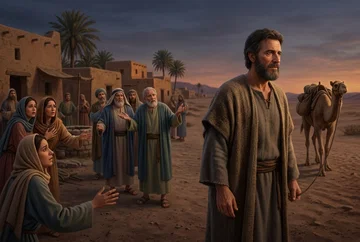
And he said, Men, brethren, and fathers, hearken; The God of glory appeared unto our father Abraham, when he was in Mesopotamia, before he dwelt in Charran,
Translations
And he said, Men, brothers, and fathers, listen; The God of glory appeared to our father Abraham, when he was in Mesopotamia, before he dwelled in Charran,
King James Version, KJV Cambridge Paragraph Bible
And he said, Men, brethren, and fathers, hearken; The God of glory appeared unto our father Abraham, when he was in Mesopotamia, before he dwelt in Charran,
And he said, Men, brethren, and fathers, hearken; The God of glory appeared to our father Abraham when he was in Mesopotamia, before he dwelt in Charran,
And he said, Brethren and fathers, hearken. The God of glory appeared unto our father Abraham, when he was in Mesopotamia, before he dwelt in Haran,
And he said,Brethren and fathers, hearken: The God of glory appeared unto our father Abraham, when he was in Mesopotamia, before he dwelt in Haran,
and he said, 'Men, brethren, and fathers, hearken: The God of the glory did appear to our father Abraham, being in Mesopotamia, before his dwelling in Haran,
And he said, Brethren and fathers, hearken. The God of glory appeared to our father Abraham when he was in Mesopotamia, before he dwelt in Charran,
And, he, said—Brethren and fathers, hearken! The God of Glory, appeared unto our father Abraham, while he was in Mesopotamia, before he dwelt in Haran,—
Berean Standard Bible, Majority Standard Bible
And Stephen declared: “Brothers and fathers, listen to me! The God of glory appeared to our father Abraham while he was still in Mesopotamia, before he lived in Haran,
He said, “Brothers and fathers, listen. The God of glory appeared to our father Abraham when he was in Mesopotamia, before he lived in Haran,
And he said, My brothers and fathers, give hearing. The God of glory came to our father Abraham, when he was in Mesopotamia, before he was living in Haran,
And he sayd, Ye men, brethren and Fathers, hearken. That God of glory appeared vnto our father Abraham, while he was in Mesopotamia, before he dwelt in Charran,
Douay-Rheims (Challoner revision)
Who said: Ye men, brethren, and fathers, hear. The God of glory appeared to our father Abraham, when he was in Mesopotamia, before he dwelt in Charan.
Pictures
Cross-references 20 of 39
- Genesis 12:1-3
Now the LORD had said unto Abram, Get thee out of thy country, and from thy kindred, and from thy father’s house, unto a land that I will shew thee:
God calls Abraham from his homeland and promises blessing through him.
- Hebrews 11:8
By faith Abraham, when he was called to go out into a place which he should after receive for an inheritance, obeyed; and he went out, not knowing whither he went.
Abraham obeyed God’s call by faith, going out without knowing his destination.
- Genesis 13:14-15
And the LORD said unto Abram, after that Lot was separated from him, Lift up now thine eyes, and look from the place where thou art northward, and southward, and eastward, and westward:
God promises Abraham and his seed the land forever.
- Galatians 3:29
And if ye be Christ’s, then are ye Abraham’s seed, and heirs according to the promise.
Those who belong to Christ are Abraham’s seed and heirs according to the promise.
- Romans 4:13
For the promise, that he should be the heir of the world, was not to Abraham, or to his seed, through the law, but through the righteousness of faith.
Abraham’s promised inheritance embraces the world and comes through faith, not law.
- Hebrews 11:13
These all died in faith, not having received the promises, but having seen them afar off, and were persuaded of them, and embraced them, and confessed that they were strangers and pilgrims on the earth.
Abraham died in faith without receiving the promises.
- Genesis 11:31
And Terah took Abram his son, and Lot the son of Haran his son’s son, and Sarai his daughter in law, his son Abram’s wife; and they went forth with them from Ur of the Chaldees, to go into the land of Canaan; and they came unto Haran, and dwelt there.
Terah took Abraham’s family from Ur toward Haran, where they settled.
- Genesis 12:7
And the LORD appeared unto Abram, and said, Unto thy seed will I give this land: and there builded he an altar unto the LORD, who appeared unto him.
God promises the land to Abraham and his descendants.
- Genesis 17:8
And I will give unto thee, and to thy seed after thee, the land wherein thou art a stranger, all the land of Canaan, for an everlasting possession; and I will be their God.
God promises Abraham and his seed the land as an everlasting possession.
- Galatians 3:16
Now to Abraham and his seed were the promises made. He saith not, And to seeds, as of many; but as of one, And to thy seed, which is Christ.
Christ is identified as the promised seed of Abraham.
- Joshua 24:2
And Joshua said unto all the people, Thus saith the LORD God of Israel, Your fathers dwelt on the other side of the flood in old time, even Terah, the father of Abraham, and the father of Nachor: and they served other gods.
Abraham’s family served other gods before God led Abraham out.
- Genesis 15:7
And he said unto him, I am the LORD that brought thee out of Ur of the Chaldees, to give thee this land to inherit it.
God identifies himself as the one who brought Abraham from Ur to give him the land.
- Hebrews 11:9
By faith he sojourned in the land of promise, as in a strange country, dwelling in tabernacles with Isaac and Jacob, the heirs with him of the same promise:
Abraham sojourned as a stranger in the promised land.
- James 2:23
And the scripture was fulfilled which saith, Abraham believed God, and it was imputed unto him for righteousness: and he was called the Friend of God.
Abraham believed God and was counted righteous, and is called God’s friend.
- Hebrews 11:39
And these all, having obtained a good report through faith, received not the promise:
Abraham died in faith without receiving the promise.
- Genesis 12:2-3
And I will make of thee a great nation, and I will bless thee, and make thy name great; and thou shalt be a blessing:
Promises were made to Abraham after his call.
- Isaiah 51:2
Look unto Abraham your father, and unto Sarah that bare you: for I called him alone, and blessed him, and increased him.
Both describe God calling and blessing Abraham.
- Genesis 12:4
So Abram departed, as the LORD had spoken unto him; and Lot went with him: and Abram was seventy and five years old when he departed out of Haran.
Gives Abraham’s age when he departed from Haran.
- Hebrews 6:13-15
For when God made promise to Abraham, because he could swear by no greater, he sware by himself,
God’s word and oath make his promise to Abraham sure.
- Galatians 3:7
Know ye therefore that they which are of faith, the same are the children of Abraham.
Both identify Abraham as the father of those who believe.
Commentary
Each commentary is drawn from primary sources: the writings of Ellen G. White and Adventist pioneers and periodicals. Each commentary is separate. Its own words are not a quotation; follow the references to read the source passages.
Ellen G. White
9 sources
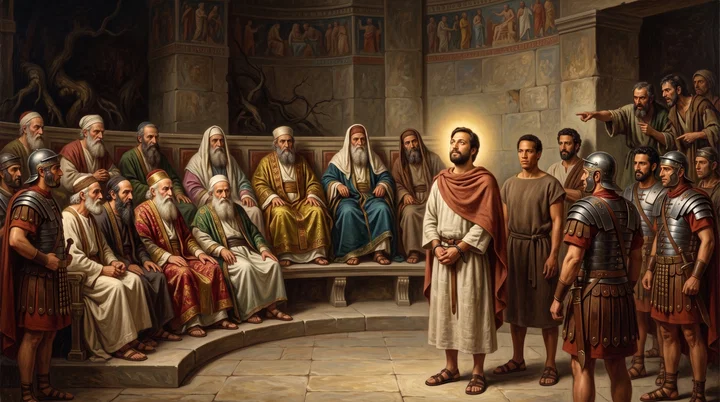
The verse belongs to the testimony of Stephen, the foremost of the seven deacons, a Jew by birth who spoke the Greek language and knew Greek customs and manners, a man of deep piety and broad faith who was very active for Christ and preached the gospel in the synagogues of the Greek Jews.AA 97.1 It begins his defense, his final testimony before his judges in the council when questioned on the charge of blasphemy.AA 97.1EW 164.27RED 32.33SP 296.27RED 34.1 He answered in a clear, thrilling voice that rang through the council hall and held the assembly spellbound, and the occasion, time, and place of his address are important to its full significance.3SP 296.23SP 297.2
The verse recalls that God, the God of glory, appeared to father Abraham in Mesopotamia before Abraham lived in Haran, also called Charran.7RED 34.13SP 297.2 From Abraham it opens his rehearsal of Israel's history and God's dealings with the people, tracing down from generation to generation through all the national records of Israel to Solomon, taking up the most impressive points and drawing on those records to vindicate his cause.EW 164.27RED 32.33SP 296.27RED 34.1 It shows his thorough knowledge of the Jewish economy and the spiritual interpretation of it now made manifest through Christ, for he spoke in the power of the Holy Spirit as a student of the prophecies and one learned in all matters of the law, ably defended the truths he advocated and utterly defeated the learned rabbis and doctors of the law who disputed with him, fulfilling the promise to give a mouth and wisdom which adversaries could not gainsay nor resist, for they were not able to resist the wisdom and the spirit by which he spoke.AA 97.13SP 296.2
Through that history he connected Jesus Christ with Israel's history and showed how Christ had been foretold in prophecy.EW 164.27RED 34.1 He presented evidence from prophecy that Jesus, though crucified, was the Son of God, the same truth Paul later proclaimed.AC1 53.2 Through that history he also showed that Israel's confidence in the law had not kept the people from idolatry.7RED 34.1
The verse belongs to Old Testament testimony showing that the patriarchs' witness points to Christ, with its setting with Abraham fitting the testimony of the patriarchs and prophets through whom Christ spoke, and the Old Testament revealing his mission and identity as the Messiah.3SP 388.1–28RED 45.1–46.1 The Old Testament prophecies in that defense identify Jesus as the Messiah and show that he would come in humility, be rejected and slain, and rise and ascend.8RED 45.1–46.1
Sources
Pioneers and periodicals
48 sources
Stephen opened his defense before the council with a courteous appeal for attention, declaring that the God of glory appeared to Abraham in Mesopotamia before he dwelt in Haran.ST Feb 1, 1877ST Aug 19, 1897ST Feb 17, 1888ST Jan 22, 1902ST Jun 14, 1883 In that appearing God called him to leave his country, kindred and relatives for a land He would show him, with promise to make a great nation of him, bless him and make his name great, and bless all families of the earth in him.ST Jan 13, 1887ST Aug 19, 1897 The God of glory is the One to whom glory belongs by name and character, revealed in manifestation and in Christ who is its brightness and express image, whose glory is His goodness, mercy and character as the source of all true glory.ST May 27, 1908ST Jun 14, 1883ST Jan 22, 1894 God promised the land to Abraham and to his seed after him when he had no child, yet gave him no inheritance in it, not even to set his foot on, so the possession awaits the resurrection of the dead and the renewed earth and new earth prepared as the heavenly country and eternal inheritance in Christ who is the seed.RH Feb 25, 1858ST Jun 9, 1881RH Sep 16, 1873ST Jun 23, 1881RH May 16, 1907 His grace met Abraham in Ur of the Chaldees while an idolater among idolaters, calling him out from ancestral idolatry to serve the Creator, and his obedience in going out without knowing his destination stands as the pattern of faith in separation and self-surrender.RH Aug 5, 1909RH Jul 30, 1914RH Dec 5, 1907RH Jun 16, 1863
Opening Words and Setting
Stephen opens his address before the council with a courteous, respectful appeal for attention, calling his Jewish hearers brethren and fathers and asking them to hearken.ST Aug 19, 1897ST Jun 14, 1883ST Aug 19, 1897 He answers the high priest without denying the charge or defending himself, and at once directs attention to God appearing to Abraham.ST Aug 19, 1897ST Aug 19, 1897 That respectful beginning, referring to Abraham and the God of the patriarchs, is suited to Jewish hearers who valued favorable references to their fathers.ST Jan 22, 1902ST Jun 14, 1883 From that opening he begins a history showing that God's covenant purpose was not bound to a place or ceremony, since it began before Israel possessed the land, built the tabernacle or temple, or received circumcision.ST Jun 14, 1883
He names God the God of glory, even the God of the Shechinah, the divine glory.ST May 27, 1908ST Jun 14, 1883 Glory belongs to His name and character.ST May 27, 1908 That glory was revealed in a manifestation of God's glory to Abraham, and God is the source of all true glory, revealed in Christ who is its brightness and the express image of God, whose glory is His goodness, mercy and character.ST May 27, 1908ST Jan 22, 1894 Abraham responded to that appearing by leaving the darkness of idolatry and proclaiming the true God, continuing in Haran until the people would hear no more.ST Jan 22, 1894
The appearing took place in Mesopotamia, before Abraham dwelt in Charran or Haran.ST Feb 1, 1877ST Aug 19, 1897ST Feb 17, 1888ST Aug 19, 1897 It was God's first appearance and first call to Abraham, before Abraham left his country and people, beginning the account of his call to leave his country and go to a land God would show him.ST Feb 1, 1877ST Feb 17, 1888ST Jul 24, 1901 Although Noah and Shem were still living near Abraham's time, the world had again become wicked and God's truth perverted by false worship, so God called Abraham away to preserve the truth and raise a family and nation that would obey it.ST Jul 24, 1901
In that appearing God told him to leave his country, land, kindred and relatives and come into a land God would show him.ST Jan 13, 1887ST Aug 19, 1897ST Aug 19, 1897RH Dec 17, 1903 With that call came the promises to make a great nation of him, bless him and make his name great, bless those who blessed him and curse him who cursed him, and bless all families of the earth in him.RH Dec 17, 1903 In answer to that call Abraham left his own country and came into the land of Canaan, first leaving the Chaldeans and living in Haran, then after his father's death being brought from there into the land where his descendants lived.RH Dec 17, 1903 He was seventy-five years old when he left Haran, which places his father's death at that time, and he obeyed by setting out without knowing where he was going.ST Jan 13, 1887 He had to be separated from his land and kindred before he could come into the land God would give him, and though he later lived in that land he received no inheritance in it, not even enough ground to set his foot on, while God promised it to him and to his seed as a possession when he had no child, whose Old Testament record is found in Genesis.ST Aug 19, 1897ST Jun 9, 1881ST Aug 19, 1897
Call and Journey Details
The first appearance came while Abraham was still in Mesopotamia, before he settled in Haran, calling him to leave his country and kindred for a land to be shown him.RH Sep 16, 1873RH Sep 19, 1912 He first left the Chaldeans at Ur and lived in Haran, and after his father's death God brought him from there into the land of Canaan where his descendants afterward lived.RH Sep 16, 1873RH Jul 30, 1914 He was seventy-five years old when he left Haran, which places his father's death at that time.
He obeyed by setting out without knowing where he was going, continuing afterward as a sojourner wherever God led him.ST Jan 13, 1887ST Jul 24, 1901 He had to be separated from his land and his kindred before he could come into the land God would give him.ST Aug 19, 1897ST Aug 19, 1897 That separation marks the beginning of a life shaped by standing apart, becoming a pattern of faith.ST Aug 19, 1897RH Aug 5, 1909
The call to go to Canaan came while he was in Ur, but his father's household stopped partway at Haran and did not reach Canaan.RH Sep 19, 1912 They served other gods and were unwilling to give up idolatry, and after Terah died Abraham went on to Canaan while Nahor and his family remained in Haran.RH Sep 19, 1912 Genesis 11 identifies Ur as the place where Abraham and his father's family lived, and his journey to Haran and stay there were directed by God's providence even though Terah accompanied him.ST Jul 24, 1901
His long life overlapped earlier generations, giving opportunity to learn God's statutes and judgments.RH Feb 20, 1913 Although Noah and Shem were still living near that time, the world had again become wicked and God's truth perverted by false worship.ST Jul 24, 1901 God therefore called Abraham away so that he could preserve the truth and raise a family and nation that would obey it.ST Jul 24, 1901
His stay in Haran also served missionary work, for people there joined his household and worshiped the true God.ST Jul 24, 1901 Having left the darkness of idolatry, he proclaimed the true God there until the people would hear no more.ST Jul 24, 1901ST Jan 22, 1894
Land Promise Awaiting Fulfillment
God promised the land to Abraham and to his seed after him when Abraham had no child, yet gave him no inheritance in it, not even enough ground to set his foot on.RH Feb 25, 1858ST Jun 9, 1881RH Sep 16, 1873ST Feb 21, 1878ST Jan 28, 1903 The promise was made to two parties, Abraham and his seed, and remained unfulfilled to Abraham in his lifetime.RH Feb 25, 1858ST Jun 9, 1881RH Sep 16, 1873RH Apr 16, 1857 Abraham therefore did not possess the promised land during his lifetime, though God called him in Mesopotamia and led him into the land of Canaan.RH Feb 25, 1858ST Jun 9, 1881RH Apr 16, 1857
Abraham lived in the promised land as a stranger and pilgrim, receiving the promise but living there as a stranger without possessing it.RH Sep 16, 1873ST Dec 24, 1885RH May 23, 1854 He with Isaac and Jacob and his children died in faith still believing and trusting the promise without possessing it.RH Sep 16, 1873ST Feb 21, 1878RH May 23, 1854 They sojourned as strangers looking toward a heavenly country and the city God prepared.RH May 16, 1907RH May 23, 1854 Stephen showed that God commended Abraham's faith in the promise even though Abraham owned no part of the land.ST Nov 28, 1878
Possession therefore requires the resurrection of the dead, when Abraham and all the faithful heirs with him who have died or will die are raised.RH Feb 25, 1858ST Jun 23, 1881ST Dec 24, 1885ST Feb 21, 1878ST Nov 26, 1894 They would receive the promised land after the resurrection, not in this life.ST Jun 23, 1881ST Feb 21, 1878ST Nov 26, 1894 From this fact Stephen argued the resurrection and Messiahship of Christ.RH Feb 25, 1858 The promise therefore awaits its fulfillment after the resurrection, when Abraham and the faithful inherit the renewed earth.ST Jun 23, 1881ST Feb 21, 1878ST Nov 26, 1894
That fulfillment is the renewed earth and new earth, including the heavenly country and city God prepared.ST Jun 23, 1881RH May 23, 1854 The land promised to Abraham and to his seed, which is Christ, is finally to be given to Christ, and that promise includes the whole earth, which is the first dominion given to Adam and lost, now to be restored to Christ forever. Israel's possession under Joshua was not the fulfillment of the promise to Abraham's seed but only an earnest of the real and eternal inheritance.ST Jan 28, 1903 God's appearing to Abraham in Mesopotamia before Haran takes in the promise of the kingdom to Abraham, belonging with the covenants made with Adam, Noah, Abraham, Israel and David.ST Feb 1, 1899 Whose promise is life, salvation and the kingdom through Jesus Christ, all included in the new and everlasting covenant in Christ ratified by His death, to be fulfilled through Christ and involving the resurrection of the dead.ST Feb 1, 1899
This means the land promised to those who honor father and mother is the new earth, where the rewards and penalties for keeping or breaking the commandments are really meted out.RH May 16, 1907 God gave Abraham and his seed none of this present world, not so much as to set his foot on, and they sojourned in the land as in a strange country looking to the world beyond for fulfillment.RH May 16, 1907 Even so, honoring parents also lengthens life in this world because parental restraint and warning save children from indulgences, excesses, disease, dangers and early death.RH May 16, 1907
Stephen's Speech and Martyrdom
The verse opens Stephen's reverent review of Israel's history beginning with Abraham, rehearsing events recorded in Exodus and confirming that record as reliable history.ST Nov 28, 1878ST Apr 13, 1904ST May 24, 1883 He starts where his hearers' accepted history starts, recounting that God appeared to Abraham in Mesopotamia before he dwelt in Charran, called him to leave his country for a land God would show him, and then traces the promise through Abraham's descendants to its fulfillment in Christ.ST Feb 1, 1877ST May 24, 1883ST Feb 19, 1902 In this way the address answers the charges against him from the Old Testament Scriptures themselves.ST May 24, 1883ST Feb 19, 1902
Stephen who speaks here was one of the seven deacons, full of faith and power, who did great wonders and miracles among the people and was brought before the Sanhedrin for trial.RH Aug 27, 1901 Undaunted by what stood before him, though reading his fate in their faces, he pleaded with the council in a masterly defense of the faith of Jesus.RH Aug 27, 1901 Saul was present, caring for the garments of the stoners at his feet while Stephen was stoned, and heard the powerful discourse before consenting to the death; the scene left a deep impression on Saul that could not be effaced before he later yielded to the truth.RH Aug 27, 1901RH Jul 4, 1871
The sermon was preached to Jews who had resisted much light, pointed in exposing their sins, so that the hearers were cut to the heart, gnashed their teeth at him, and killed him.RH Apr 7, 1868 His case shows that preaching with God's power produces a result, whether conversion or anger.RH Apr 7, 1868 That power belongs to Acts 2 to 8 as the evidence of God's power with the apostolic church, and it comes from consecration and simple trust in the power of God's word.ST Sep 23, 1908 It gives boldness in preaching that brings persecution and brings saved souls into the church to serve.ST Sep 23, 1908
The stoning was the Jews' second rejection of Christ through rejection of His servant Stephen.STSTST Sep 2, 1913 By the condemnation and persecution of the apostles and God's people following Christ's resurrection, Jerusalem's guilt was filled up.RH May 10, 1915 Stephen's testimony and martyrdom stand in the very last part of the seventieth week, closing the special and exclusive work for the Jewish people and bringing the seventy weeks and the final half-week of ministry to them to an end in the autumn of A.D. 34.RH Oct 11, 1915ST Jun 26, 1907STST Sep 2, 1913 At that turning point Paul was called as apostle to the Gentiles and believers went out preaching among the Gentiles.ST Jun 26, 1907
Stephen's method shows that apostles and inspired teachers depended upon and taught the word, the Scriptures, preaching the Scriptures rather than working without their aid.ST Apr 16, 1896 His Spirit-filled testimony shows that Christ can be found and proclaimed from the Old Testament Scriptures.ST May 15, 1884 His defense uses prophecy and its fulfillment concerning the Messiah in Jesus' life and work as evidence of Christ's divinity and Messiahship.ST Jan 24, 1906
The sermon recorded in Acts 7 says nothing about a change of the Sabbath to the first day of the week.RH Apr 3, 1879 If Christ had changed the Sabbath at His resurrection, Stephen would have known of it by the time he spoke and would have mentioned it in that sermon which so greatly excited the Jews.RH Apr 3, 1879 His silence shows no such change had taken place.RH Apr 3, 1879
Doctrine and Christian Application
God's grace met Abraham in the land of the Chaldees at Ur while he was an idolater among idolaters in darkness.RH Dec 5, 1907RH Jun 16, 1863 The God of glory appeared to him in Mesopotamia before he settled in Haran and called him out from among the idolaters of ancient Chaldea and from his ancestral home and its idolatrous practices.RH Dec 5, 1907ST Jan 22, 1894 That call was to leave the darkness of idolatry and, following the Spirit's leading, to serve the Creator in spirit and truth.ST Jan 22, 1894 Abraham responded by leaving that darkness and proclaiming the true God, continuing even in Haran until the people would hear no more.ST Jan 22, 1894
The call shows God is able to bring people out of darkness to save them.RH Dec 5, 1907 He called Abraham to save him and also to challenge people of every race to follow the same way by the Spirit's leading. This appearance in Mesopotamia before Abraham lived in Charran marks the beginning of a life shaped by God's call to stand apart, for Abraham was called away from his kindred and native country.RH Aug 5, 1909 His response is an example of faith that steps out at God's call in separation and self-surrender, and his example became a pattern of faith.RH Aug 5, 1909RH Jul 30, 1914
The move to Canaan served both to carry God's truth there and to prepare Abraham and his family for life in the new earth, since living under different conditions and serving people in need helped them grow in faith and character.RH Jul 30, 1914 From that call of Abram out of Ur onward, the nations have benefited from the spread and prevalence of Christianity. Beginning this history with God's appearing to Abraham in Mesopotamia before he lived in Haran shows God's covenant purpose was not bound to a place or ceremony, for it began before Israel possessed the land, built the tabernacle or temple, or received circumcision.ST Jun 14, 1883 The reference to Abraham is unintelligible without the record in Genesis, where his identity is given and the everlasting covenant made with Abraham, Isaac, and Jacob is recorded, including the promise that makes those who are Christ's Abraham's seed and heirs.
Sources