Exodus 31:18
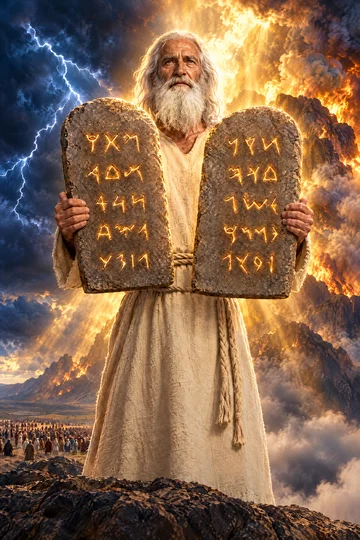
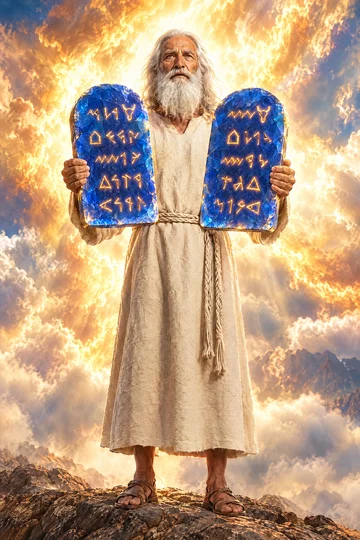
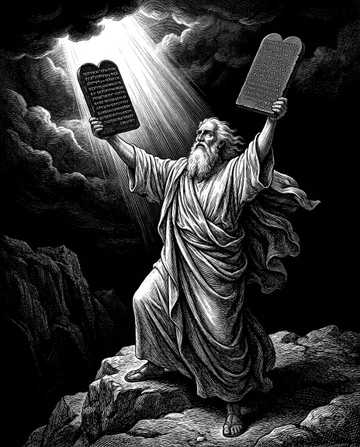
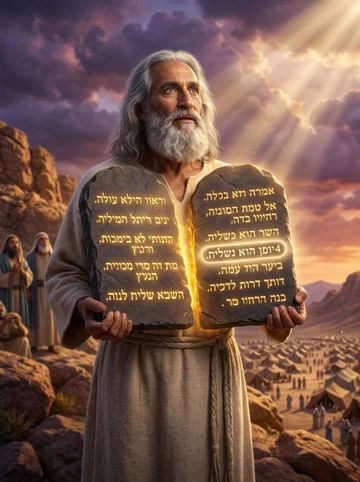
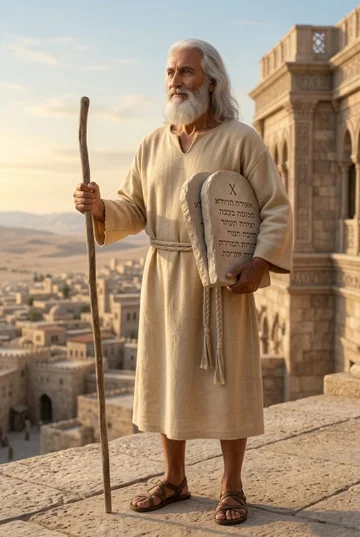
And he gave unto Moses, when he had made an end of communing with him upon mount Sinai, two tables of testimony, tables of stone, written with the finger of God.
Translations
And he gave to Moses, when he had made an end of communing with him on mount Sinai, two tables of testimony, tables of stone, written with the finger of God.
And he gave unto Moses, when he had made an end of communing with him upon mount Sinai, two tables of testimony, tables of stone, written with the finger of God.
And he gave unto Moses, when he had made an end of communing with him upon mount Sinai, two tables of Testimony, tables of stone, written with the finger of God.
And to Moses, when he had made an end of communing with him upon mount Sinai, he gave two tables of testimony, tables of stone, written with the finger of God.
Revised Version, American Standard Version
And he gave unto Moses, when he had made an end of communing with him upon mount Sinai, the two tables of the testimony, tables of stone, written with the finger of God.
And He giveth unto Moses, when He finisheth speaking with him in mount Sinai, two tables of the testimony, tables of stone, written by the finger of God.
And he gave to Moses, when he had ended speaking with him on mount Sinai, the two tables of testimony, tables of stone, written with the finger of God.
Then gave he unto Moses, as he finished speaking with him in Mount Sinai, the two tables of the testimony,—tables of stone, written with the finger of God,
Berean Standard Bible, Majority Standard Bible
When the LORD had finished speaking with Moses on Mount Sinai, He gave him the two tablets of the Testimony, tablets of stone inscribed by the finger of God.
When he finished speaking with him on Mount Sinai, he gave Moses the two tablets of the covenant, stone tablets, written with God’s finger.
And when his talk with Moses on Mount Sinai was ended, he gave him the two stones of the law, two stones on which was the writing made by the finger of God.
Thus (when the Lord had made an ende of communing with Moses vpon mount Sinai) he gaue him two Tables of the Testimonie, euen tables of stone, written with the finger of God.
Douay-Rheims (Challoner revision)
And the Lord, when he had ended these words in mount Sinai, gave to Moses two stone tables of testimony, written with the finger of God.
Pictures

Cross-references 20 of 165
- Exodus 20:8-11
Remember the sabbath day, to keep it holy.
The Sabbath commandment grounds the seventh day in creation and forms part of the law given on stone tablets.
- Deuteronomy 10:1-5
At that time the LORD said unto me, Hew thee two tables of stone like unto the first, and come up unto me into the mount, and make thee an ark of wood.
Moses recounts God writing the commandments again and their placement in the ark.
- Revelation 11:19
And the temple of God was opened in heaven, and there was seen in his temple the ark of his testament: and there were lightnings, and voices, and thunderings, and an earthquake, and great hail.
The heavenly temple reveals the ark containing God’s testimony.
- Deuteronomy 5:22
These words the LORD spake unto all your assembly in the mount out of the midst of the fire, of the cloud, and of the thick darkness, with a great voice: and he added no more. And he wrote them in two tables of stone, and delivered them unto me.
God spoke the commandments and wrote them on two stone tablets.
- Exodus 24:12
And the LORD said unto Moses, Come up to me into the mount, and be there: and I will give thee tables of stone, and a law, and commandments which I have written; that thou mayest teach them.
God promises Moses stone tablets bearing the law and commandments.
- Exodus 32:15-16
And Moses turned, and went down from the mount, and the two tables of the testimony were in his hand: the tables were written on both their sides; on the one side and on the other were they written.
both prove God wrote on the tables
- Deuteronomy 4:13
And he declared unto you his covenant, which he commanded you to perform, even ten commandments; and he wrote them upon two tables of stone.
Identifies the Ten Commandments as God’s covenant, written on two stone tablets.
- Exodus 25:16
And thou shalt put into the ark the testimony which I shall give thee.
Names the testimony placed in the ark, identified as the stone tablets.
- Matthew 5:18
For verily I say unto you, Till heaven and earth pass, one jot or one tittle shall in no wise pass from the law, till all be fulfilled.
Jesus says no part of the law will pass away.
- Deuteronomy 9:10
And the LORD delivered unto me two tables of stone written with the finger of God; and on them was written according to all the words, which the LORD spake with you in the mount out of the midst of the fire in the day of the assembly.
Both describe the stone tablets written with God’s finger.
- Hebrews 9:4
Which had the golden censer, and the ark of the covenant overlaid round about with gold, where in was the golden pot that had manna, and Aaron’s rod that budded, and the tables of the covenant;
Identifies the covenant tables kept in the ark.
- Exodus 34:28
And he was there with the LORD forty days and forty nights; he did neither eat bread, nor drink water. And he wrote upon the tables the words of the covenant, the ten commandments.
God writes the covenant words, identified as the Ten Commandments.
- 2 Corinthians 3:3
Forasmuch as ye are manifestly declared to be the epistle of Christ ministered by us, written not with ink, but with the Spirit of the living God; not in tables of stone, but in fleshy tables of the heart.
Contrasts stone tablets with the Spirit’s writing on human hearts.
- Exodus 34:1
And the LORD said unto Moses, Hew thee two tables of stone like unto the first: and I will write upon these tables the words that were in the first tables, which thou brakest.
God promises to write the words on the replacement tablets.
- 2 Corinthians 3:7
But if the ministration of death, written and engraven in stones, was glorious, so that the children of Israel could not stedfastly behold the face of Moses for the glory of his countenance; which glory was to be done away:
Identifies the stone-tablet ministry as glorious yet condemning.
- Exodus 25:21
And thou shalt put the mercy seat above upon the ark; and in the ark thou shalt put the testimony that I shall give thee.
The testimony God gave Moses was to be placed inside the ark.
- Romans 7:12
Wherefore the law is holy, and the commandment holy, and just, and good.
Calls God’s law holy, just, and good.
- Jeremiah 31:33
But this shall be the covenant that I will make with the house of Israel; After those days, saith the LORD, I will put my law in their inward parts, and write it in their hearts; and will be their God, and they shall be my people.
God promises to write his law in his people’s hearts.
- Revelation 14:12
Here is the patience of the saints: here are they that keep the commandments of God, and the faith of Jesus.
Both texts connect God’s commandments with faithful obedience.
- Hebrews 8:10
For this is the covenant that I will make with the house of Israel after those days, saith the Lord; I will put my laws into their mind, and write them in their hearts: and I will be to them a God, and they shall be to me a people:
God’s law once written on stone is promised within the minds and hearts of his people.
Commentary part 1 of 5
Each commentary is drawn from primary sources: the writings of Ellen G. White and Adventist pioneers and periodicals. Each commentary is separate. Its own words are not a quotation; follow the references to read the source passages.
Ellen G. White
83 sources
After He finished speaking with Moses on Mount Sinai, God gave him two tables of testimony, tables of stone inscribed with His own finger.FE 507.2–3Ms 119, 1903, par. 13–14Lt 188, 1903, par. 27–29 They are called the testimony because they contain His Ten Commandments, which are the basis of the covenant between God and Israel and are kept in the ark of the testimony.1SP 273.1SG4 7.2–8.2ST May 13, 1880 Unlike truths given through human language, they are wholly divine in authorship, a transcript of God's unchanging character and government, written on stone to show the law is immutable and binding on all to the close of time.RH Mar 26, 1908Ms 110, 1904, par. 58–61GC 433CT 248.1 At their center stands the Sabbath identifying God as Creator, given as His holy sign and perpetual covenant by which His people know He sanctifies them and show love by keeping all His commandments.FE 507.2–3Ms 119, 1903, par. 13–14Ms 131, 1907, par. 15–20Ms 151, 1901, par. 27–28Ms 83, 1903, par. 17–19 What God wrote cannot be erased but is preserved in the heavenly sanctuary, to be brought forth as the unalterable standard of righteousness and rule of judgment by which every life is weighed.RH Mar 26, 1908Ms 122, 1901, par. 9–108MR 100.2–31SP 273.1ExVEGW 25.3
Giving on Mount Sinai
After He had made an end of communing and speaking with Moses upon Mount Sinai, God gave him two tables of testimony, tables of stone written with His own finger.FE 507.2–3Ms 119, 1903, par. 13–14Lt 188, 1903, par. 27–29Ms 152, 1901, par. 29–31Ms 117, 1909, par. 7–10 They were the written testimony of His law, given so His people might make no mistake about what He required and might ever bear in mind His claims and obey the truth exactly as it stands.FE 507.2–3Lt 188, 1903, par. 27–29Ms 117, 1909, par. 7–10 The Sabbath commandment was one of the commandments engraved on them, identifying the seventh-day Sabbath as a holy, perpetual covenant and a forever sign between God and Israel that the Lord sanctifies them, rooted in His six-day creation and seventh-day rest.FE 507.2–3Ms 119, 1903, par. 13–14Lt 188, 1903, par. 27–29Ms 152, 1901, par. 29–31Ms 131, 1907, par. 15–20 That Sabbath observance is the special sign distinguishing His people from the world, which parents are to teach their children to obey so they may be numbered among God's people, and the claim that it is no longer binding works against God's own writing to take the world captive.Ms 119, 1903, par. 13–14Ms 152, 1901, par. 29–31Ms 131, 1907, par. 15–20
The gift came finally, after God gave directions for building the tabernacle as a sanctuary for the special manifestation of the divine presence and after He gave special instruction enforcing Sabbath observance, at the end of Moses being in the mount forty days and forty nights.Lt 19c, 1874, par. 4–61SP 242.2ST May 13, 1880SG3 272.1–273.1ST Jul 15, 1880 Moses with his minister Joshua was summoned up to meet with God to receive it, after appointing Aaron and Hur assisted by the elders to act in his stead.ST May 13, 1880 The glory of the Lord abode upon Mount Sinai like devouring fire in the eyes of Israel, and the cloud covered it six days.ST May 13, 1880 Moses could not at once approach and endure the glory, but spent six days putting away common thoughts and feelings, devoting his thoughts to God and sanctifying himself by meditation and prayer to be prepared to converse with his Maker, and on the seventh day God called him out of the midst of the cloud.ST May 13, 1880SG3 272.1–273.1 This guarding of the Sabbath in particular was needed because Israel, compelled to work on the Sabbath as slaves in Egypt, had largely lost Sabbath knowledge, and, once freed to observe unmolested, the people would forget the commandment and the workmen would say the tabernacle work was the Lord's work under His supervision and could be done without observing the Sabbath; therefore the seventh day was distinguished as God's memorial to be kept holy as a sign forever, grounded in His making heaven and earth in six days and resting and being refreshed on the seventh, reinforced through nearly forty years of wandering by withholding manna every seventh day and miraculously preserving the double preparation-day portion.Lt 19c, 1874, par. 4–6RH Nov 6, 1913
God handed the tables down from the cloud with His own divine hands, having engraved the Ten Commandments on them with His own finger, the moral law of ten commandments distinct from the ritual or ceremonial law and the full tabernacle instructions, which found fulfillment when type met antitype in Christ's death while the moral law endures as the throne of Jehovah.1SP 242.2ST May 13, 1880SG3 272.1–273.1ST Jul 15, 1880 The charge closing at this giving was given by Jesus Christ enshrouded in the pillowy cloud, speaking to Moses about the importance of the Sabbath for those who claim to be God's denominated people.Ms 170, 1904, par. 1 God Himself came down upon Sinai in glory surrounded by angels after delivering Israel from Egyptian bondage and dividing the Red Sea, and after Israel failed when proved by murmuring and wishing to return to Egypt.1SP 263.1–265.1 He spoke the law of ten commandments with an audible voice in the hearing of all the people, trusting no man and not even angels to teach them, and proclaimed it amid thunder and flame in awful grandeur from Sinai's mount, so that no education can come from a higher source than obedience to all His commandments learned from God Himself and His law rather than from human, unsanctified teachers.Lt 164, 1910, par. 5–7Lt 60, 1898, par. 8–131SP 263.1–265.1SG3 298.1–299.2
The pattern shown to Moses on the mount is the standard for work in God's service, requiring the exactness, skill, tact, wisdom and perfection shown for the tabernacle in every line of that work.Ms 109, 1899, par. 1–4 Moses going up to receive the tables left the children of Israel for the time under Aaron's leadership, and those forty days were a short time of test and a crisis of severe temptation to idolatry in which Israel failed by rejecting the leadership and principles entrusted to them.Ms 26, 1900, par. 5–8Ms 83, 1907, par. 4–8 In that crisis Aaron proved an unfaithful general, failing to carry the people through and uniting with them in carrying out their plans, and the Lord declared he would certainly have been slain had not Moses interceded in his behalf.Ms 26, 1900, par. 5–8 Guardians of youth are to read this history and be afraid, putting their trust in God, walking in trembling fear of offending Him, and learning how to act wisely in an emergency as true shepherds watching for souls as those who must give an account, for as God dealt with His ancient people at Sinai for despising His Word, so He will deal with those today who despise His Word and refuse to humble their proud hearts before His wisdom and righteousness.Ms 26, 1900, par. 5–8Ms 83, 1907, par. 4–8
Meaning of Testimony
The two tables are called the tables of the testimony because they contain God's testimony in the Ten Commandments, and the chest Moses was required to make expressly to hold them is for that reason called the ark of the testimony, the ark of God's testament, and the ark of the covenant, because the Ten Commandments were the basis of the covenant made between God and Israel.1SP 273.1SG4 7.2–8.2RH Nov 9, 1905ST Mar 4, 1903 The ark was made like a chest of acacia wood, precious wood, overlaid within and without with pure gold and ornamented with crowns of gold around the top, with its cover the mercy-seat of solid gold bearing a cherub of pure solid gold fixed at each end, their faces turned toward each other and looking reverentially downward toward the mercy-seat, with one wing of each stretched forth on high and the other covering their forms in token of reverence and humility.1SP 272.1ST Mar 4, 1903 Those cherubim represent all the heavenly angels looking with interest and reverence to the law of God deposited in the ark, for the earthly ark holding the tables in the inner apartment of the tabernacle was the pattern of the true ark in heaven where the law of God is deposited in the heavenly sanctuary with living angels standing beside it.SG4 7.2–8.21SP 272.1ST Mar 4, 1903 The final giving of the Decalogue, called the testimony, engraved on two tables of stone by the hand of Divine Majesty, came after God gave directions for building a sanctuary for the special manifestation of the divine presence and gave further instructions in regard to the Sabbath.ST May 13, 1880 Moses with his minister Joshua was summoned to meet with God on Mount Sinai to receive it after appointing Aaron and Hur assisted by the elders to act in his stead, the glory of the Lord abode upon Mount Sinai like devouring fire in the eyes of Israel with the cloud covering it six days, Moses spent six days putting away common thoughts and feelings and sanctifying himself by meditation and prayer to be prepared to converse with his Maker and endure His glory, then God called him out of the midst of the cloud on the seventh day, and he was in the mount forty days and forty nights.ST May 13, 1880
The tables hold the moral law of ten commandments, the Decalogue, the original moral law engraved in stone, distinct from the political regulations given to Moses in secret council with Jehovah which contain important lessons for every age but are not the universally obligatory law written by the finger of God to the close of time.ST Sep 14, 1882RH Aug 25, 1874GC88 262.1–2 God Himself came down upon Sinai in glory surrounded by angels after delivering Israel from Egypt and dividing the Red Sea and after Israel failed when proved and murmured and wished to return to Egypt, and spoke the law of ten commandments with an audible voice in the hearing of all the people and of assembled Israel, trusting no man and not even angels to teach them.1SP 263.1–265.1 He then wrote the commandments with His own holy finger upon tables of stone and proclaimed His holy law from Mount Sinai and engraved the precepts of the Decalogue, because Israel had confused ideas of God's law from witnessing Egyptian idolatry, were prone to forget and readily led astray, to leave them without excuse and to remove all possibility of mingling tradition with His holy precepts or confusing His requirements with the practices of men.1SP 263.1–265.1 Engraving on stone would not have been necessary if man had kept the law of God as given to Adam after his fall, preserved by Noah in the ark, and observed by Abraham, but Abraham's descendants failed to keep the covenant of which circumcision was the token by staying separate and perfect and free from idolatry, instead mingling with the nations, going into idolatry, and going down into Egypt.1SP 263.1–265.1
He did not leave His people with the engraved precepts alone but guarded them with definite judgments, laws, and statutes dictated to Moses in the mount, spoken from His mouth and written by Moses in a book, which are the principles of the ten commandments simplified into minute duties toward one another and toward the stranger, given so that erring man prone to transgress would be drawn back to obedience of the moral law in duty to God and to one another and led to strict obedience without error.1SP 263.1–265.1 That ritual or ceremonial law and those judgments found fulfillment when type met antitype at Christ's death when the typical sacrifices ceased, while the moral law contained in the ten commandments, enforced by the prophets, was not taken away or revoked in any part, but stands fast as the faithful witness in heaven, immutable and holding its claims upon man in all ages.RH Aug 25, 1874GC88 262.1–2 The system enjoined upon the Hebrews was not repealed or relaxed by the One who originated it, but was to be more fully carried out and more extended as salvation through Christ alone was more fully brought to light in the Christian age, and the two stone tablets bearing the Ten Commandments remain in the ark in heaven's Most Holy Place with their wording unchanged, the Sabbath commandment still identifying the seventh day as the Lord's Sabbath and enjoining its observance as not a burden except when transgressed.WLF 18.3–4RH Aug 25, 1874 The moral law existed from the beginning of the world, first written not on stone but on the hearts of all people when they came from the Creator's hands, then formed in letters by God's finger, and though those letters are now greatly defaced by sin they cannot be wholly blotted out while people retain any consciousness of good and evil.GC88 262.1–2 Every part of it stays in force on all mankind in all ages because it depends not on time or place or other changeable circumstances but on the nature of God and the nature of man and their unchangeable relation to each other, and Christ came not to destroy it but to fulfill it by establishing it in its fullness against human glosses, bringing what was dark and obscure into full and clear view, declaring the true and full import of every part, and showing the length and breadth, the entire extent, and the height and depth, the inconceivable purity and spirituality of every commandment in all its branches.GC88 262.1–2
The law rests on two principles, love for God which embraces the first four commandments defining duty to God, and love for one's neighbor which embraces the last six defining duty to fellow man and to other people, containing the whole duty of humanity and the foundation principles of the duty of God's subjects.ST Apr 15, 1875Ms 79, 1896, par. 9ST Jun 5, 1901 These principles were stated more explicitly after the fall and expressed in particular precepts to clarify human duties, protect life, and preserve God's law from being forgotten.ST Apr 15, 1875 The ten commandments are summed up in love to God and love to one's neighbor, and other commands in Scripture amplify and specify what is already contained in them, including the special requirement for eternal life made known to the lawyer of loving God with all heart and soul and mind and strength and loving neighbor as self, with duty in the Christian age not limited but more especially defined and simply expressed.RH Aug 25, 1874Ms 79, 1896, par. 9ST Jun 5, 1901 Reverence for the Sabbath engraved on the first table of stone leads to keeping the first three commandments toward God and the last six revealing duty to fellow man, for observance of the Lord's Sabbath is the sign of obedience to all His commandments and the Sabbath sign is the covenant between God and man, the golden clasp uniting man to God in supreme obedience and reverence and uniting man to his fellow man.Ms 45, 1900, par. 24–25
Divine Authorship and Permanence
God Himself spoke the precepts and wrote them with His own finger and hand on tables of stone.CT 248.1GC88 c.4–d.26T 9.2–3 Unlike the rest of the Bible, where God-given truths are expressed in human language as a union of the divine and the human, the tables are wholly divine in authorship, of divine and not human composition.GC88 c.4–d.2 They are a transcript of God's character and eternal unchanging character, clearly revealing His will, His mind, His requirements, and the principles and laws of His kingdom and government, made known for Israel and for all nations and tongues.CT 248.16T 9.2–3 At the judgment the tables of stone, kept hidden until that day, will be presented as the standard of righteousness, and obedience to that perfect law is the prerequisite of salvation, leaving no excuse for sin and determining life or death.GC 433
Writing on stone signifies that the law is immutable, never to be erased, blotted out, destroyed, changed or abolished, but to endure forever like the principles of God's government.RH Mar 26, 1908Ms 110, 1904, par. 58–61Ms 122, 1901, par. 9–108MR 100.2–3Lt 51, 1901, par. 8–9 It is still binding on all men to the close of time in all ages and countries, not optional or non-binding, and allegiance to God is shown by obedience and not mere profession.Ms 110, 1904, par. 58–61Lt 51, 1901, par. 8–9 It is not the handwriting against humanity that was removed at Christ's death; the sacrificial ordinances that prefigured Christ's death ended when type met antitype, but the Sabbath of the fourth commandment was not changed and remains binding forever.Lt 51, 1901, par. 8–9 The tablets are preserved by God in the ark beside His presence and will be produced unchanged at the great judgment as testimony against disregard of His commandments and idolatrous worship of a counterfeit Sabbath.RH Mar 26, 1908Ms 122, 1901, par. 9–108MR 100.2–3 Nothing in them says the Sabbath was abolished or transferred to the first day of the week, and the fourth commandment remains unchanged and is shown with special glory, so that honoring another day instead of the day God sanctified is transgression.EW 216.2
Engraving became necessary because Israel had confused ideas of God's law from witnessing Egyptian idolatry, were prone to forget and misunderstand, and were readily led astray.1SP 263.1–265.1SG3 298.1–299.2 God therefore spoke the ten commandments with an audible voice in the hearing of all the people, trusting no man and not even angels to teach them, and then wrote them Himself on stone to make His requirements clear, to leave them without excuse, and to remove all possibility of mingling tradition with His holy precepts or confusing His requirements with the practices of men.1SP 263.1–265.1SG3 298.1–299.2Lt 21, 1905, par. 6–9 It would not have been necessary if man had kept the law as given to Adam after his fall, preserved by Noah in the ark, and observed by Abraham.1SP 263.1–265.1Ms 64, 1895, par. 8 But Abraham's descendants failed the covenant of which circumcision was the token by failing to stay separate and perfect and free from idolatry, mingling with the nations, going into idolatry, and going down into Egypt, after Israel had already failed when proved and murmured and wished to return to Egypt.1SP 263.1–265.1 He therefore guarded the engraved ten precepts with definite judgments, laws, statutes and directions dictated to Moses in the mount and written by Moses in a book, which simplify the principles of the ten commandments into minute duties toward one another and toward the stranger, to draw erring man prone to transgress back to strict obedience without error in duty to God and neighbor.1SP 263.1–265.1 Placing His holy law in lasting form was highly essential so it would never be lost to man but ever kept prominently before the world, for had it been obeyed the wickedness now seen in the world would never have existed.Lt 21, 1905, par. 6–9Ms 64, 1895, par. 8
The law was pronounced in awful grandeur from Sinai's mount directly from the voice of God, so no education can come from a higher source.Lt 164, 1910, par. 5–7 The highest education that can be given to man is obedience to all of God's commandments, learned not from human unsanctified teachers but from God Himself and from God's law, and every truly sanctified soul living the Word will be educated and taught of God in this way.Lt 164, 1910, par. 5–7 Jehovah Himself engraved His ten commandments on tables of stone so that all inhabitants of the earth might understand His eternal and unchangeable character, and these wonderful revelations must be laid hold of by teachers who desire to advance in learning and proficiency, with heart and mind brought into harmony with God in obedience in order to understand the divine requirements they contain.CT 248.1Ms 31, 1908, par. 1 God condescended to speak with His own voice and to write with His own hand the living oracles, instinct with life and luminous with truth, committed to men as a perfect guide, making His requirements so explicit and so very plain that none need err.PP 503.3 He constantly seeks thereby to draw men close under His protection so Satan cannot practice his cruel deceptive power upon them, for Satan is ever at work to pervert what God has spoken, to blind the mind and darken the understanding and thus lead men into sin, and is so ready to catch away the mind and divert the affections from the Lord's promises and requirements that greater diligence is needed to fix them in the mind and impress them upon the heart.PP 503.3
Sabbath Sign and Covenant
After He had finished speaking with Moses on Mount Sinai, God gave him two tables of testimony of stone written with His own finger, and the Sabbath commandment was one of the commandments engraved on them with full divine authority as a perpetual covenant and forever sign rooted in six-day creation and seventh-day rest.Ms 119, 1903, par. 13–14Lt 188, 1903, par. 27–29Ms 131, 1907, par. 15–20Ms 151, 1901, par. 27–28Ms 83, 1903, par. 17–19 The Sabbath stands engraved on the first table of stone, at the center identifying God as Creator, and keeping it is keeping the law and expresses obedience to all the commandments.Ms 191, 1905, par. 46–475MR 88.2–89.1Ms 45, 1900, par. 24–25 The Sabbath blessed and sanctified at creation and instituted in Eden when the foundations of the earth were laid recalls His making heaven and earth in six days and His rest, blessing, sanctifying, and being refreshed on the seventh day.Lt 188, 1903, par. 27–29Lt 19c, 1874, par. 4–6Ms 45, 1900, par. 24–25Lt 83, 1900, par. 8–10 The claim that the Sabbath commandment is no longer binding is Satan's working to take the world captive against God's own writing.Ms 131, 1907, par. 15–20
The seventh-day Sabbath is God's holy sign between Him and His people and Israel throughout their generations forever, a perpetual and everlasting covenant and memorial by which they acknowledge He alone is God and know that He sanctifies them.FE 507.2–3Ms 119, 1903, par. 13–14Lt 188, 1903, par. 27–29Ms 85, 1899, par. 9–114MR 340.5–341.1 Keeping it as God's rest day acknowledges Him before the churches and the world as Creator, and human numbers, honor, or attempted changes to God's law cannot make another day holy or give it heaven's seal.Ms 131, 1907, par. 15–20Lt 83, 1900, par. 8–10 It is the covenant between God and man, the golden clasp uniting man to God in supreme obedience and reverence and uniting man to fellow man in duty, with love to Him shown by keeping all His commandments.5MR 88.2–89.1Ms 45, 1900, par. 24–25 Reverence for the Sabbath leads to keeping the first three commandments toward God and the last six revealing duty to fellow man.Ms 45, 1900, par. 24–25 Parents are therefore to teach their children to obey the Sabbath commandment so they may be numbered among God's people, and eternal security is given to everyone who strives in the right way on right principles.Ms 152, 1901, par. 29–31Ms 45, 1900, par. 24–25
Sabbath observance is the great test that distinguishes those who keep the commandments of God from those who transgress His law, marking the obedient party distinct from the disobedient and unholy party and drawing a plain line between him that serves God and him that serves Him not.Ms 85, 1899, par. 9–11Ms 169, 1903, par. 14–17Ms 105, 1899, par. 25–26 It is the sign of obedience to all His commandments, identifying those who bear God's sign and who stand under Christ's banner as commandment-keepers apart from transgressors and unbelievers.5MR 88.2–89.1Ms 45, 1900, par. 24–25Ms 105, 1899, par. 25–26 Its observance belongs to the work of restoring God's moral image in humanity, with these truths made prominent as the breach in His law is repaired.Ms 105, 1899, par. 25–26 It is the foundation on which God's people stand securely when Satan uses deception and counterfeit miracles in the final conflict, rather than miracles which Satan can counterfeit.9T 15.5–16.1
The word forever confirms the Sabbath and law cannot be changed by human numbers, honor, attempted changes, inventions, or transgression, for God honors the Sabbath as His everlasting covenant which does not change.Ms 131, 1907, par. 15–20Ms 191, 1905, par. 46–47Lt 83, 1900, par. 8–10 The seventh day is the memorial of creation and the Sabbath, not the first day or an ordinary workday, and Sunday has no sanctification placed in it at all.21MR 88.3–4Ms 191, 1905, par. 46–47Lt 83, 1900, par. 8–10 Replacing it with a spurious Sunday Sabbath or an ordinary workday defies the Lawgiver, turns people away from God and the city of God, and brings a penalty for breaking His law.Ms 131, 1907, par. 15–2021MR 88.3–4 The devil makes Sunday a power to intimidate people not to keep the very day God gave them to keep.Ms 191, 1905, par. 46–47 Those who knowingly violate the Sabbath are warned that they will be cut off from God's people, with transgression bringing condemnation in the judgment, penalty and death, while keeping it holy brings blessing, cheerfulness, large success, life to the receiver, and preservation in trial.Ms 85, 1899, par. 9–11Ms 191, 1905, par. 46–475MR 88.2–89.1
Preserved for Final Judgment
What God wrote on the two tables of testimony could not be blotted out, erased or destroyed.RH Mar 26, 1908Ms 122, 1901, par. 9–108MR 100.2–3 The tables held the ten commandments inscribed by God himself, and for that reason they are called the tables of the testimony.1SP 273.1SG4 7.2–8.2RH Nov 9, 1905 Moses was required to place them inside the ark, a chest of acacia wood overlaid within and without with gold, with a mercy-seat of solid gold and cherubim with faces toward each other looking reverentially downward upon the law.GC88 433.2SG4 7.2–8.2RH Nov 9, 1905 The ark was made expressly as a depository to contain them, and therefore is called the ark of the testimony, the ark of God's testament and the ark of the covenant, because the ten commandments were the basis of the covenant made between God and Israel.1SP 273.1SG4 7.2–8.2RH Nov 9, 1905 Its value and sacredness came only from the presence of those divine precepts within it as a receptacle.GC88 433.2
The earthly ark and the inner apartment of the tabernacle were the pattern of the true ark in heaven, where the law of God is deposited in the heavenly sanctuary with living angels standing beside it looking with interest and reverence toward it.GC88 433.2SG4 7.2–8.2 That heavenly ark was later brought into the most holy place of the temple as a sacred reminder of the wilderness experience.GC88 433.2 The tablets are preserved by God and kept hidden from humanity, now lying in the ark in their hiding place in the heavenly sanctuary.RH Mar 26, 1908Ms 122, 1901, par. 9–108MR 100.2–3Lt 47, 1902, par. 13 When God's temple in heaven is opened they will be produced and brought forth at God's appointed time as a testimony against disregard of His commandments and idolatrous worship of a counterfeit Sabbath.Ms 122, 1901, par. 9–108MR 100.2–3Lt 47, 1902, par. 13 Jesus shut the door of the holy place and opened the door of the most holy place in 1844, bringing the ark and the law into view as present truth, which enemies of present truth oppose by seeking to open the door He shut and close the door He opened.ExVEGW 25.3EW 35.2
Their unveiling will be a triumphant time for all who have been faithful and true, and a convincing testimony to the truth and binding claims of God's law.Lt 47, 1902, par. 13 The tables stand as the unalterable standard of righteousness, the rule of judgment and unanswerable witness against transgression, by which every person, character, deed, business transaction and principle is compared, weighed and decided.Ms 65, 1886, par. 47–49Ms 82, 1899, par. 2513MR 381.2–382.119MR 265.3 The law is a transcript of God's character and His own righteousness, brief, comprehensive and authoritative, clearly revealing His will, the requirements He makes of His people and the laws of His kingdom made known for all nations and tongues.GC88 639.1–2 Obedience to that perfect law is the prerequisite of salvation and leaves no excuse for sin, bringing life, happiness, peace, noble character, holiness, purity, sanctified love and beauty of character, while transgression brings death, horror and despair.RH Apr 17, 1900Ms 82, 1899, par. 2513MR 381.2–382.1
At the end the stone tablets appear in the sky held in a hand, folded together then opened, with the precepts of the Decalogue traced as with fire so plain that all inhabitants of the earth can read them.GC88 639.1–2 Their display arouses memory, sweeps superstition and heresy from every mind, and fixes every man's choice of whom to serve and worship after opportunity to compare character and to repent and reform is past.GC88 639.1–2 Those who trampled the requirements, set aside its precepts to secure worldly favor, taught others to transgress and tried to compel God's people to profane His Sabbath are condemned by that same law and see with awful distinctness that they are without excuse.GC88 639.1–2 The wicked will then recognize that their deeds arose from a depraved character and furthered rebellion against God, and that the law they disobeyed was their life.13MR 381.2–382.1
The heavenly tables bear the same unchanged wording spoken on the mount in solemn grandeur amid flashing lightnings, rolling thunder, thunder and flame, appointing six days for labor and the seventh day as the Sabbath of the Lord.WLF 18.3–4SG1 164.1EW 216.2ExVEGW 15.3–17.1 Nothing in them abolishes the Sabbath or transfers it to the first day of the week.SG1 164.1EW 216.2ExVEGW 15.3–17.1 The fourth commandment stands living among the ten holy precepts with brighter light upon it than the other nine and a halo of glory around it, because it alone points out who the living God is, the Maker of heaven and earth, dating from creation.SG1 164.1EW 216.2SG2 82.1 Keeping it would have preserved the world from idolatry, infidelity and atheism, but the man of sin trampled it thinking to change times and laws from the seventh to the first day, calling forth the third angel's message to repair the breach and warn the world to keep the commandments.SG1 164.1 In vision the heavenly temple on Mount Zion, a temple supported by seven pillars of transparent gold set with glorious pearls, also shows tables bearing the names of the 144,000 engraved in letters of gold.1T 69.1
History Warning and Obedience
The giving came after the directions for building the tabernacle and after enforced Sabbath observance, because Israel compelled to work on the Sabbath as slaves in Egypt had largely lost knowledge of the Sabbath.Lt 19c, 1874, par. 4–6RH Nov 6, 1913 Freed from bondage where taskmasters had forced Sabbath labor into freedom where they could observe all precepts unmolested, they were given the commandments in awful grandeur on Mount Sinai to guard His Sabbath in particular.Lt 19c, 1874, par. 4–6RH Nov 6, 1913 He knew the people would forget the Sabbath commandment and the workmen would say the tabernacle work was the Lord's work under His supervision and could be done without observing the Sabbath.Lt 19c, 1874, par. 4–6 Therefore the seventh day was distinguished as God's memorial to be kept holy to the Lord as a sign between Him and Israel forever, grounded in His making heaven and earth in six days and resting and being refreshed on the seventh day, so the people may know that He is the Lord who sanctifies them.Lt 19c, 1874, par. 4–6 The law on two stone tablets written by God's own finger included that Sabbath command, which the Israelites were reminded to keep during their wilderness journey, and keeping it faithfully reminded them that God was their Creator and Redeemer and that He sanctified them.PK 180.2PK 181.1 It was reinforced through nearly forty years of wandering by withholding manna every seventh day and miraculously preserving the double portion gathered on the preparation day, and it guarded them from idolatry while kept in the proper spirit.RH Nov 6, 1913
While God was writing down His law during the forty days Moses was in the mount to be committed to His covenant people, Satan at the very foot of Sinai was carrying forward the work of overthrowing God's law begun in heaven, exciting doubt, apostasy and rebellion.PP 335.1–2 He led Israel to deny loyalty to Jehovah and demand gods of gold, and when Moses came from the awful presence of the divine glory with the precepts they had pledged to obey, Israel was in open defiance of its commands, bowing in adoration before a golden image.PP 335.1–2 By leading Israel to this daring insult and blasphemy, Satan planned to cause their ruin and divorce from God and destruction, and thus secure the extinction of the seed of Abraham, the seed of promise that was to preserve the knowledge of the living God and through whom the true Seed was to come to conquer Satan.PP 335.1–2 The two stone tables of testimony written by God's own finger were a lasting witness to His claims to keep Israel from forgetting what He had commanded, yet Israel stood amid visible glory and soon disbelieved and worshiped a calf, where faithfulness to revealed word would have kept them from apostasy.Ms 117, 1909, par. 11–14 Breaking the tablets signified that Israel had broken its covenant with God and that God had broken covenant with them.3T 298.1
To break both tables is to violate the whole law by unholy zeal, acting in unsanctified human way instead of God's way, failing to deny self and restrain uprising passion, and mingling strange fire with offerings through unadvised speech and actions.13MR 310.2 Such breaking dishonors God, brings truth into disrepute, causes God's work to be misjudged and reproached, works against God's honor and salvation of souls, and furnishes arguments against the truth.13MR 310.2
The moment after speaking with Moses on Mount Sinai when God gave two stone tablets bearing the testimony written by His own finger places the Sabbath command as the special sign distinguishing God's people from the world, so parents are to teach children to obey it that they may be numbered among God's people.Ms 152, 1901, par. 29–31 The commandments so written were entrusted to Israel and are now committed to care with solemn duty to proclaim God's law including the seventh-day Sabbath commandment.Ms 107, 1906, par. 10–13 The close of that instruction made observance of His commandments make Israel a distinct people denominated of God, separate from the world, with the Sabbath the distinguishing sign between God and Israel throughout generations forever that they may know the Lord sanctifies them.19MR 38.2–39.2 The seventh-day Sabbath as God's memorial of creation and sign of authority belongs to all God's commandments, keeping it identifies bearers of God's sign, and its observance belongs to restoring God's moral image, so these truths are to be made prominent in repairing the breach in His law.Ms 105, 1899, par. 25–26 Its claims as binding and enduring are to be openly upheld and taught, including in sanitariums, with truth presented so it enlightens rather than offends.Lt 14, 1901, par. 23–24
Exodus 31:12-18 with Exodus 20 gives the great test question, the clean pure testing truth that means life to the receiver.Lt 161, 1910, par. 1–3 Its verity and confirmation are to be established with heaviest evidences and brought to the front, especially in Washington and in large public gatherings such as camp-meetings and tent efforts in or near large cities, with abundance of ministerial help so workers are not overwearied.Lt 161, 1910, par. 1–3 It must not be set aside for excitement over minor jot-and-tittle matters that give the trumpet uncertain sound and open the door to questioning and division of sentiment.Lt 161, 1910, par. 1–3
God gave the two tables of testimony of stone written with His own finger so His people might make no mistake about what He required, especially which day to observe as Sabbath, and these written tables were preserved so they would ever bear in mind God's claims and obey truth exactly as it stands.Ms 117, 1909, par. 7–10 This Sabbath-keeping in obedience to the tables is genuine sanctification.Lt 19c, 1874, par. 4–6 The law written on stone with His own finger is a transcript of God's character clearly revealing His will and requirements and the principles that are the laws of His kingdom for all nations and tongues, and at the judgment the tables kept hidden until that day will be presented as the standard of righteousness. Obedience to God's perfect law is the prerequisite of salvation, its principles leave no excuse for sin and determine whether people receive life or death. These tablets contained the holy law including the Sabbath commandment, and obedience to that law deepens understanding of genuine medical missionary work.Ms 83, 1903, par. 17–19
Observance of the Lord's Sabbath gives eternal security to everyone striving in the right way on right principles, for it is the sign of obedience to all His commandments.Ms 45, 1900, par. 24–25 The Sabbath blessed and sanctified at creation is a sign between God and His people throughout generations forever that He is the Lord who sanctifies them, and God will fulfill His word when agents show love by keeping all commandments.Ms 45, 1900, par. 24–25 Reverence for the Sabbath engraved on the first table leads to keeping the first three commandments toward God and the last six revealing duty to fellow man, for the Sabbath sign is the covenant, the golden clasp uniting man to God in supreme obedience and reverence and uniting man to fellow man.Ms 45, 1900, par. 24–25 The law was pronounced in awful grandeur from Sinai's Mount directly from God's voice, so no education can come from a higher source.Lt 164, 1910, par. 5–7 The highest education is obedience to all God's commandments, learned not from human unsanctified teachers but from God Himself and from God's law, and every truly sanctified soul living the Word will be educated and taught of God in this way.Lt 164, 1910, par. 5–7
Further points
The closing charge on Sinai joins the Sabbath instruction to the handing over of the tables to show the sacred authority of God's testimony and law.Lt 89, 1899, par. 8–10 That testimony is holy and must be guarded as holy, kept distinct and reverenced rather than treated as ordinary.Lt 89, 1899, par. 8–10 It must not be mixed with common or unsuitable material that would lower its sacred character.Lt 89, 1899, par. 8–10
Sources