Daniel 1:11
Then said Daniel to Melzar, whom the prince of the eunuchs had set over Daniel, Hananiah, Mishael, and Azariah,
Translations
American King James Version, King James Version, KJV Cambridge Paragraph Bible, Webster Bible
Then said Daniel to Melzar, whom the prince of the eunuchs had set over Daniel, Hananiah, Mishael, and Azariah,
Then said Daniel to the steward, whom the prince of the eunuchs had appointed over Daniel, Hananiah, Mishael, and Azariah:
Then said Daniel to the steward whom the prince of the eunuchs had appointed over Daniel, Hananiah, Mishael, and Azariah:
And Daniel saith unto the Meltzar, whom the chief of the eunuchs hath appointed over Daniel, Hananiah, Mishael, and Azariah,
And Daniel said to the steward, whom the prince of the eunuchs had set over Daniel, Hananiah, Mishael, and Azariah,
Then said Daniel, unto the overseer whom the ruler of the eunuchs had appointed over Daniel, Hananiah, Mishael, and Azariah:
Berean Standard Bible, Majority Standard Bible
Then Daniel said to the steward whom the chief official had appointed over Daniel, Hananiah, Mishael, and Azariah,
Then Daniel said to the steward whom the prince of the eunuchs had appointed over Daniel, Hananiah, Mishael, and Azariah:
Then Daniel said to the keeper in whose care the captain of the unsexed servants had put Daniel, Hananiah, Mishael, and Azariah:
Then sayd Daniel to Melzar, whome the chiefe of the Eunuches had set ouer Daniel, Hananiah, Mishael, and Azariah,
Douay-Rheims (Challoner revision)
And Daniel said to Malasar, whom the prince of the eunuchs had appointed over Daniel, Ananias, Misael, and Azarias:
Pictures
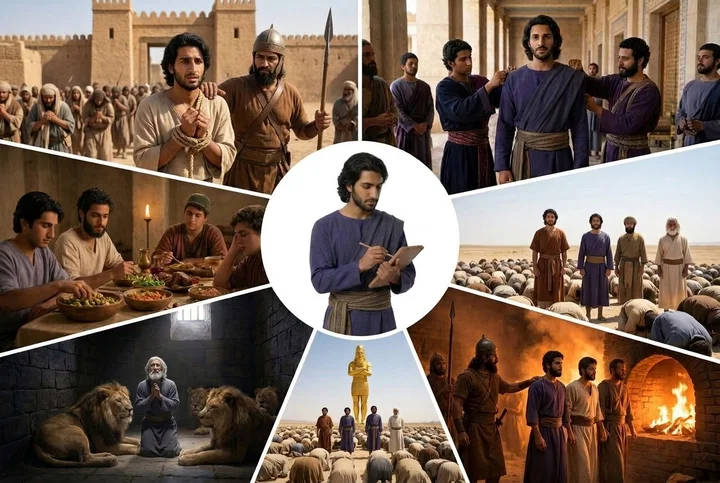
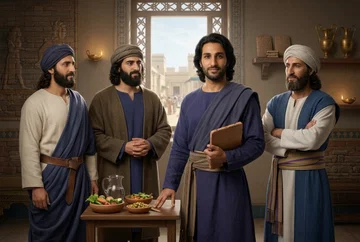
Cross-references
- Daniel 1:17
As for these four children, God gave them knowledge and skill in all learning and wisdom: and Daniel had understanding in all visions and dreams.
God gives the faithful youths knowledge, skill, and wisdom.
- Daniel 1:20
And in all matters of wisdom and understanding, that the king enquired of them, he found them ten times better than all the magicians and astrologers that were in all his realm.
After their training, Daniel and his companions surpass the king’s other advisers in wisdom and understanding.
- Daniel 1:15-16
And at the end of ten days their countenances appeared fairer and fatter in flesh than all the children which did eat the portion of the king’s meat.
Their healthier appearance confirms the food test, prompting Melzar to change their diet.
- Daniel 1:5
And the king appointed them a daily provision of the king’s meat, and of the wine which he drank: so nourishing them three years, that at the end thereof they might stand before the king.
The king assigns Daniel and his companions daily provisions for their royal training.
- Ezekiel 14:14
Though these three men, Noah, Daniel, and Job, were in it, they should deliver but their own souls by their righteousness, saith the Lord GOD.
Daniel is named as an example of righteousness.
- Daniel 3:16-18
Shadrach, Meshach, and Abed-nego, answered and said to the king, O Nebuchadnezzar, we are not careful to answer thee in this matter.
The three Hebrews refuse the king’s command to worship his image.
- Daniel 6:4-5
Then the presidents and princes sought to find occasion against Daniel concerning the kingdom; but they could find none occasion nor fault; forasmuch as he was faithful, neither was there any error or fault found in him.
Daniel’s early stand of principle prepares him for a later, more severe trial.
- Daniel 3:24-27
Then Nebuchadnezzar the king was astonied, and rose up in haste, and spake, and said unto his counsellors, Did not we cast three men bound into the midst of the fire? They answered and said unto the king, True, O king.
The three Hebrews remain unharmed in the furnace for refusing to disobey God.
- Daniel 1:19
And the king communed with them; and among them all was found none like Daniel, Hananiah, Mishael, and Azariah: therefore stood they before the king.
study to stand before the king
- Daniel 2:17-19
Then Daniel went to his house, and made the thing known to Hananiah, Mishael, and Azariah, his companions:
Daniel and his companions seek God, who reveals the dream and its meaning.
- Daniel 1:3-4
And the king spake unto Ashpenaz the master of his eunuchs, that he should bring certain of the children of Israel, and of the king’s seed, and of the princes;
Describes Israelite youths selected for service and instruction in Babylon.
- Daniel 2:16
Then Daniel went in, and desired of the king that he would give him time, and that he would shew the king the interpretation.
Daniel’s success in an earlier test gave him confidence to ask the king for time.
Commentary part 1 of 2
Each commentary is drawn from primary sources: the writings of Ellen G. White and Adventist pioneers and periodicals. Each commentary is separate. Its own words are not a quotation; follow the references to read the source passages.
Ellen G. White
116 sources
Melzar was the steward whom the chief of the eunuchs had set over Daniel, Hananiah, Mishael and Azariah while they were being trained in Babylon to serve in the king's palace.CTBH 25.5–26.2ST Mar 2, 1882RH Feb 10, 1910 When the chief feared to grant their wish lest they appear sickly and his own life be endangered, Daniel turned to Melzar with an earnest appeal to try them ten days on pulse to eat and water to drink and then compare their appearance with those who ate the king's food.CTBH 25.5–26.2RH Feb 10, 1910Ms 73, 1909, par. 1–6Ms 110, 1904, par. 40–47 He refused the king's meat and wine because they included flesh forbidden to Jews by the law of Moses and had been offered to false gods, and because rich food and stimulating drink would clog the mind and impair health for God's service.CTBH 25.5–26.2Ms 110, 1904, par. 40–47Lt 141, 1896, par. 22ST Feb 11, 1886 At the end of ten days they appeared fairer and healthier than those who ate the king's dainties, so their simple diet was continued, and God blessed their obedience with health, comeliness and surpassing wisdom and understanding.CTBH 25.5–26.2RH Feb 10, 1910Lt 159, 1901, par. 16–18Ms 73, 1909, par. 1–6Ms 9, 1893, par. 1–3 His courteous yet courageous stand, rooted in early home training in God and governed appetite, made him the leader of his companions and remains the pattern of integrity, temperance and faithfulness for youth and all believers under trial today.HSFM 209.6–210.2Lt 159, 1901, par. 16–18FE 79.2–80.1Ms 132, 1901, par. 9–10Ms 113, 1901, par. 19–23
Persons and Place Named
Melzar was the officer, steward and attendant whom the prince or chief of the eunuchs had set over and appointed to oversee Daniel, Hananiah, Mishael and Azariah.CTBH 25.5–26.2RH Feb 10, 1910Lt 159, 1901, par. 16–18Ms 73, 1909, par. 1–6Ms 33, 1909, par. 1–8 It was to this assigned official that Daniel addressed his appeal for a trial of a simple diet.ST Mar 2, 1882RH Feb 10, 1910Lt 159, 1901, par. 16–18Ms 73, 1909, par. 1–6Ms 33, 1909, par. 1–8
The four were young Hebrew captives in Babylon, taken from their homes and trained in the learning and tongue of the Chaldeans to stand in the king's palace and serve through their whole training for duties of the kingdom and service in the Babylonian court.CTBH 25.5–26.2CTBH 26.3–27.2SPBC 178.1MYP 147.1Ms 140, 1906, par. 19–20 Their nurture and admonition at home in religious education had prepared them to stand the test there and remain faithful representatives of their religion.CTBH 26.3–27.2SPBC 178.1MYP 147.1Ms 140, 1906, par. 19–20Ms 5, 1909, par. 16
The setting is the heathen land of Babylon, the palace chamber and king's court, where as faithful captives and witnesses they lived under appointed authority.PK 479.2PK 476B.1Ms 47, 1898, par. 10–13ST Nov 4, 18868T 153.1–3 There they were constantly surrounded by idolatrous literature and practices and corrupting influences, with a spirit at work opposed to truth and righteousness and to God's faithful people.PK 479.2Lt 29, 1900, par. 1–2Ms 47, 1898, par. 10–13ST Nov 4, 18868T 153.1–3
Request Made to Melzar
The appeal to Melzar came after the chief over the eunuchs had refused out of fear for his own life, and Melzar himself hesitated lest abstinence should leave the four looking unhealthy, pale and sickly and so bring himself into disfavor with the king and endanger his life.CTBH 25.5–26.2Ms 110, 1904, par. 40–47FE 79.2–80.1ST Feb 11, 1886 Daniel then turned to Melzar with an earnest plea for a simpler fare in place of the daily allowance appointed from the king's table.CTBH 25.5–26.2Ms 110, 1904, par. 40–47FE 79.2–80.1ST Feb 11, 1886 That courteous approach had already won Melzar's favor and confidence, opening the way for the request to be heard.FE 79.2–80.1
What Daniel asked was not to be compelled to eat the king's meat and drink his wine, but to be given pulse to eat and water to drink for ten days.CTBH 25.5–26.2RH Feb 10, 1910Ms 73, 1909, par. 1–6Ms 33, 1909, par. 1–8Ms 110, 1904, par. 40–47 At the end of the ten days their countenances were to be compared with the countenances of those eating the king's food, and the decision to be made by physical appearance.RH Feb 10, 1910Ms 73, 1909, par. 1–6Ms 33, 1909, par. 1–8Ms 110, 1904, par. 40–47Ms 85, 1910, par. 5–10 Melzar was the officer whom the prince of the eunuchs had set over Daniel, Hananiah, Mishael and Azariah, and to him this test of food and drink was directly addressed.CTBH 25.5–26.2RH Feb 10, 1910Ms 73, 1909, par. 1–6Ms 33, 1909, par. 1–8Ms 85, 1910, par. 5–10
Ten days was a short time, yet Daniel had faith that the Lord would work for them on simple food within it.Ms 110, 1904, par. 40–47 When the trial was granted he was assured he had gained his case.FE 79.2–80.1
Reasons for Refusing Fare
Daniel purposed not to defile himself with the portion appointed from the king's table because that provision included wine and the luxuries of the table as well as swine's flesh and other meats pronounced unclean by the law of Moses and forbidden to Jews.CTBH 25.5–26.2ST Feb 11, 1886 The request for pulse to eat and water to drink in place of the daily allowance of meat and wine was made to preserve clear mental powers and physical health for God's service, in the belief that the king's meats and wine would impair mind and body.Ms 132, 1901, par. 11 The refusal was an act of true temperance and decision to be true to the religion of the fathers even at risk of the king's displeasure, in obedience to divine law both natural and moral.ST Feb 11, 1886
The king's food and wine had first been offered to false gods, which consecrated the whole, so that even to pretend to eat or drink would deny faith, implicate them with heathenism, and dishonor the law of God.Ms 110, 1904, par. 40–47 To sit at the king's table on those terms would compromise truth and righteousness learned through religious instruction passed down across generations.Ms 122, 1897, par. 27–29 The refusal of meat from the royal table and wine from the royal cellar was carrying out principles of truth to exalt God and show Babylon that there is a King above the king of Babylon.4MR 123.2–3Ms 47, 1898, par. 10–13 Amid idolatrous literature and practices they would not lose knowledge of God and interest in the religion of the Bible, but were ordained to be connected with great men that those men might become acquainted with the Hebrew religion and know that God reigns over all kingdoms.Ms 47, 1898, par. 10–13 Their course was a determined avoidance of what would compromise faith and harm physical and mental powers, regarding the king's food and wine as both harmful and dedicated to idols.4MR 125.3–126.3Ms 122, 1897, par. 25–26
They had been taught that this class of rich food, flesh meats, stimulating drinks, and great variety would not keep mind and physical structure in the very best health to do God's service.20MR 116.1–5Lt 73, 1896, par. 50–53 The mind must not be clogged with articles difficult of digestion, for improper food clouds the brain, impairs digestion, confuses thought, and oppresses with a variety of flesh meats or meat of any kind.Lt 141, 1896, par. 22Ms 83, 1886, par. 12–14 Even healthful food must be restricted in quantity and kept under self-control, with a healthful current of blood maintained by proper regard for what is eaten, leaving mind and body fit for hard labor rather than surfeited by overeating or by wine and flesh meats which are not healthful or necessary for physical strength.Lt 141, 1896, par. 22 Their habits in Judean homes had heretofore been temperate through training in temperance and self-denial, giving healthful blood, healthy appearance, and freedom from imbecility and weakness, while indulgence in extravagant eating and drinking of luxuries that tempt appetite weakens moral and physical power.Ms 110, 1904, par. 9 Their conscientious refusal of the stimulus of flesh and wine was obedience to God's will in self-denial to honor Him by steadfast principle in all habits of life.20MR 116.1–5Lt 73, 1896, par. 50–53
To comply with the king and his officers would have meant surrender of principle, compromise of truth, and apostasy from God, allowing an influence to come between them and their Maker.Ms 2b, 1895, par. 25–26 A single yielding to pressure of the occasion to eat and drink as the Babylonians did would have weakened moral discernment and sense of right, sacrificed physical vigor, clearness of intellect, and spiritual power, and one wrong step would have led to others until connection with Heaven was severed.BS 21.1CH 66.1 They therefore decided to stand firm in integrity whatever the result, answering to God as the great Judge over all rather than to the judgment of men, since it is better to incur the displeasure of men than to surrender loyalty to God.Ms 110, 1904, par. 40–47Ms 2b, 1895, par. 25–26 That faithfulness in the first test over the king's food protected physical powers for God's service, prepared Daniel to remain faithful in later tests even at cost of life, and became the turning point by which God vindicated His servants and spread knowledge of the true God throughout Babylon.Ms 2b, 1895, par. 25–26Ms 7, 1886, par. 4–610MR 90.1–91.2Ms 43, 1886, par. 9–10
Outcome of the Test
At the end of ten days Daniel, Hananiah, Mishael and Azariah appeared far more healthy, fair, ruddy and healthful than those who ate the king's dainties, with clear eyes and sparkle of eye.CTBH 25.5–26.2RH Feb 10, 1910Ms 9, 1893, par. 1–3FE 79.2–80.1 Their countenances showed marked superiority not only in personal appearance but in physical activity and mental vigor, with no disadvantage from rigid abstinence.CTBH 25.5–26.2FE 79.2–80.1STMW9 60.1–2 The result was contrary to expectation, for Melzar had feared that abstemious diet would make them look pale and sickly and deficient in muscular strength while luxurious food would make them ruddy and beautiful and promote activity.CTBH 25.5–26.2FE 79.2–80.1 The trial proved true temperance and its attendant blessings, showing that simple diet suited them better and left clear minds fitted to gain knowledge.CTBH 25.5–26.2Ms 9, 1893, par. 1–3STMW9 60.1–2
On that proof pulse and water became their continued food instead of the king's meat and wine.CTBH 25.5–26.2RH Feb 10, 1910ST Feb 11, 1886 They were permitted to continue their simple diet through their whole training for the duties of the kingdom.CTBH 25.5–26.2RH Feb 10, 1910FE 79.2–80.1ST Feb 11, 1886 They had the privilege of following their own course in obtaining their education, banishing from diet everything that would defile while power from above worked in harmony with their efforts.Ms 73, 1909, par. 1–6FE 79.2–80.1STMW9 60.1–2 Their refusal expressed self-denial and steadfast obedience, which God approved.Ms 73, 1909, par. 1–6STMW9 60.1–2
God blessed obedience with strength, health, comeliness, undimmed senses and intellectual power.CTBH 25.5–26.2CTBH 26.3–27.2ST Feb 11, 1886 He gave them knowledge and skill in all learning and wisdom, and to Daniel understanding in visions and dreams, keeping minds clear and free from oppression by luxurious food, from sickness, and fit for study and taxing labor with strength of thought and memory to think and work vigorously.Lt 159, 1901, par. 16–18Ms 73, 1909, par. 1–6CTBH 26.3–27.2ST Sep 18, 1884Ms 47, 1898, par. 10–13 When examined the king found them ten times better than all the magicians, astrologers and wise men in all his realm, better than any in Chaldean learning.Lt 159, 1901, par. 16–18Ms 73, 1909, par. 1–6ST Sep 18, 1884 They are illustrations of what earnest whole-souled youth may be when appetite is kept under control so the mind is clear and keen to comprehend instruction, and to those who close the door to temptation, deny appetite and place themselves in right relation to God the Lord will manifest Himself.Lt 159, 1901, par. 16–18Ms 73, 1909, par. 1–6Ms 47, 1898, par. 10–13
Manner and Character Shown
Daniel won his way by courtesy rather than confrontation, presenting his case to the officer set over him and his companions with respect, consideration and perfect courtesy toward elders and youth, without flying into passion, speaking defiance, or insisting on having his own way.FE 79.2–80.1BS 19.2–3Ms 132, 1901, par. 9–10CH 64.2Ms 14, 1896, par. 12–13 He first took the matter to God with his companions in earnest prayer to seek wisdom from the Lord, and then acted on the decision made, standing as a witness in a course heaven could behold without shame because religious principle was at stake.Ms 14, 1896, par. 12–13 By such courteous conduct he had gained Melzar's favor and confidence, and God brought him into favor and tender love with the prince of the eunuchs, so that his request for a simpler diet was granted because he had obtained favor with God and with men.Lt 159, 1901, par. 16–18FE 79.2–80.1BS 19.2–3Ms 132, 1901, par. 9–10CH 64.2
He acted with true courage united to that courtesy, from purity of motive and determination of purpose to honor the Lord, a heart God read with pleasure and to which success in education is given not by chance or destiny.Ms 132, 1901, par. 9–10CE 91.3Ms 14, 1896, par. 12–13 He brought all his habits, appetites and passions into conformity to the requirements of God, putting from the mind all that is cheap and frivolous and discarding nonsense and amusement-loving propensities as out of place in those living by faith.MYP 41.3 He took himself in hand by regulating his own diet, temperate in eating and governing appetite not by impulse but by sound reasoning from Christian temperance, keeping the food placed in his stomach under his own control and refusing to clog the mind with articles difficult of digestion or to surfeit himself even with healthful food unrestricted in quantity.Ms 132, 1901, par. 9–10Lt 141, 1896, par. 22
Daniel stood first among the four, and his firm stand for what was right strongly influenced Hananiah, Mishael and Azariah, who looked to him as their leader.Ms 113, 1901, par. 19–234MR 129.1 If he had yielded to self-pleasing they too would have failed, and his faithfulness in small things prepared him for greater responsibilities and helped shape a life faithful to principle even when a greater test or sacrifice came.Ms 113, 1901, par. 19–234MR 129.1
That steadfastness rested on early education from childhood to youth that had made him acquainted with God, storing the mind with pure, sound, honest principles and with truth engraved upon the tablets of the soul and memory stored with the precious truths of the Word.Ms 56, 1895, par. 8 Training in the nurture and admonition of the Lord at home had preserved all four in the time of test and trial and made right impressions on their minds, preparing them to stand true in captivity and to be true representatives of their religion under every circumstance.Ms 56, 1895, par. 8Ms 140, 1906, par. 19–20Ms 5, 1909, par. 16 Truths only dimly comprehended before became essential when they were brought into captivity, flashing out in time of need like concealed treasure and newly discovered jewels revealing all their beauty.Ms 56, 1895, par. 8
Trust in God's blessing did not replace diligent study or strenuous effort, for through God's grace their future and destiny depended also upon their own will, choices and actions.SPBC 178.1MYP 147.1Lt 54, 1895, par. 6Lt 55, 1895, par. 16–17 They used their abilities fully in the opportunities given them, bringing all their ability to the work and by close, severe taxation of their powers making the most of their opportunities for study and labor while God worked in them to will and do His pleasure.SPBC 178.1MYP 147.1Lt 55, 1895, par. 16–17 They refused to waste time on selfish aims or amusement and worked willingly and earnestly in their responsibilities, Daniel's close connection with God through prayer enabling him to meet his duties and studies under both human teachers and heavenly supervision.MYP 147.2–3Ms 51, 1893, par. 33
He sought the power that comes alone from God, that he might represent not himself and not his imperfections in selfish and fraudulent practices, but the truth in righteousness.Ms 7, 1895, par. 27–30 He had not a vestige of pride or self-importance, but was weighed with the Spirit of wisdom from God, representing the sacredness of the work, magnifying the truth, and ever presenting before men and angels the holy perfume of the character of Christ, which is the sacred fire of God's own kindling.Ms 7, 1895, par. 27–30
He afterward stood as a man in the highest position in the court next to the king, one who sought God constantly and earnestly, practiced strict temperance in all things, exercised self-control, and clung to Jesus in perpetual presence with constantly full joy.19MR 256.2–3 He was not only a man of business but a man of prayer with power to prevail with God, one of God's noblemen and a missionary in the highest sense.19MR 256.2–3 By precept and by example he trained himself and educated others for the society of pure and holy intelligences, gathering about him those who bring holy angels into the midst of the workers and not influences that taint the atmosphere, a pattern for men placed in positions of trust bearing manifold daily responsibilities to whom the Lord will grant wisdom to do His work acceptably when asked in faith.19MR 256.2–3
Health and Temperance Teaching
Daniel 1:11 records Daniel's appeal to Melzar for a ten-day trial of pulse to eat and water to drink, with comparison of countenances against those eating the king's meat, and it teaches that what is eaten and drunk influences the powers of the mind.Ms 73, 1909, par. 1–6Ms 175, 1898, par. 3–4Ms 9, 1893, par. 1–3 Eating carelessly simply to gratify taste impairs the digestive organs and confuses the brain, so that neither can act its part as fully as God intended, while carefulness in diet preserves healthful bodies, clear minds, calm nerves and unimpaired judgment.Ms 73, 1909, par. 1–64MR 123.2–3Ms 153, 1899, par. 16–20 Their disciplined refusal of meat from the royal table and wine from the royal cellar and of the luxurious bill of fare kept their minds clear, left them free from oppression caused by luxurious food, kept them never sick, and made them better prepared physically for taxing labor and better prepared for study to think and work vigorously with strength of thought and memory.Ms 175, 1898, par. 3–44MR 123.2–3Ms 47, 1898, par. 10–13 Daniel's mental clarity, firmness of purpose, and strength in learning were due in great degree to that plain diet together with his life of prayer, and power from above worked in harmony with their efforts so that the education they gained was better than that of any of the magicians, astrologers, or wise men in all the king's realm.Ms 73, 1909, par. 1–6Ms 47, 1898, par. 10–134T 515.4 By obedience to God even in little things they developed mental and spiritual understanding and distinguished right from wrong and sacred from common.Ms 175, 1898, par. 3–4Ms 9, 1893, par. 1–34MR 123.2–3
Daniel's plan in this verse is a proved sum to be studied and tested by those who desire to come into right relation to God, proving that health reform does not cause loss of physical strength but sustains it.Ms 73, 1909, par. 1–620MR 116.6RH Feb 24, 1910 No human testimony for the advantages of a meat diet or a great variety of food should have any weight against faithful dedication to God without reserve with earnest prayer, for the Lord honors such faith with a clear mind, physical soundness, moral purity, clear eyes and ruddy healthful countenances, superior knowledge and wisdom, strength, and sound judgment.20MR 116.6RH Feb 24, 1910Lt 73, 1896, par. 50–53 He governed appetite not by impulse but by sound reasoning from Christian temperance, explaining that the mind must not be clogged with articles difficult of digestion, keeping the food placed in his stomach under his own control and cooperating with God by not surfeiting himself with overeating and by not using wine or flesh meats, which are not healthful or necessary for physical strength.Lt 141, 1896, par. 22Lt 73, 1896, par. 50–53 Even healthful food must be restricted in quantity, and proper regard for the articles eaten keeps a healthful current of blood flowing through the veins and leaves mind and body fit for hard, stern labor, not oppressed with a variety of flesh meats, or meat of any kind.Lt 141, 1896, par. 22Lt 73, 1896, par. 50–53
The ten-day trial set up by the request to Melzar demonstrated while gaining an education the advantage of an abstemious diet over the rich food and wine of the king's table, with telling benefit for physical health and spiritual advancement.Ms 123, 1901, par. 11Ms 93, 1899, par. 16 It teaches strict abstinence from fermented wines and from exciting and intoxicating wine and from intoxicating drinks, which God wants His people to do for themselves just as these Hebrew youth did and to let alone.Ms 123, 1901, par. 11Ms 93, 1899, par. 16Ms 73, 1909, par. 7 He does not want irritable tempers and disturbed and confused minds, and leaving alone wine that excites and intoxicates prevents those harmful results seen all around.Ms 73, 1909, par. 7
True health reform in this verse begins in a heart transformed by the grace of Christ, giving victory over hereditary and cultivated tendencies and diseased appetite, and then works outward in a converted intellect and outward reformation.Lt 73, 1896, par. 39–42Lt 73, 1896, par. 34–38 Through that grace Daniel gains strength of principle, power and ability to stand as a faithful sentinel and true reformer, and by that self-denying action he makes an impression upon other hearts that will never be effaced, with an influence carried to all parts of the world.Lt 73, 1896, par. 34–3820MR 113.3–114.1 Appetite, passions, hereditary or cultivated habits and tendencies, and all circumstances and surroundings must be servants to the God-fearing man, not rulers over him, for the Christian is not to be enslaved by habit but to rule the animal passions and to control circumstances by an inwrought principle learned from Christ, a principle that must pass like a plowshare through hereditary and cultivated habits.Lt 73, 1896, par. 39–4220MR 113.3–114.1
Keeping the body from the defilement of appetite and passion in this verse is obedience to the laws of nature, which are part of the law of God, so perception stays clear and every faculty stays healthy to be presented to God in service.BS 25.2–3Ms 49, 1897, par. 16–17Ms 153, 1899, par. 16–20 Those who are truly sanctified live in conformity to divine law in soul, body, and spirit, bringing appetites and habits of life into conformity to natural law and refusing to indulge appetite and passion at the expense of health and life, so that every faculty is preserved in full vigor for the service of Christ and for duty to fellow men and to God, presenting the body a living sacrifice, holy and acceptable, and elevating the moral standard by temperance and self-denial wherever they are.BS 25.2–3Ms 49, 1897, par. 16–17Lt 310, 1904, par. 4–10 The body is God's property by creation and redemption, bought with a price, to be consecrated to Him with sanctified mind and purified soul, and to educate an appetite for tobacco, liquor, or any hurtful thing is the sin of presumption, a standard all must meet and teach to children with purity of tastes, appetite, and habits giving calm nerves, clear brain, and unimpaired judgment.Ms 153, 1899, par. 16–20
Example for Believers Today
Daniel's appeal to Melzar belongs to the history of four faithful captives whose loyalty made them witnesses in Babylon to the supremacy of God, the holiness of His requirements, and the blessed results of obedience.PK 479.2CTBH 26.3–27.24MR 123.2–3 They were carrying out principles of truth to exalt God and show the Babylonians that there is a living King above the king of Babylon, ordained to be connected with great men that those men might become acquainted with the Hebrew religion and know that God reigns over all kingdoms.4MR 123.2–3Ms 47, 1898, par. 10–13Lt 57, 1896, par. 12–14 Their captivity gave opportunity to make the true God known among heathen nations by cheerful unselfish service, true worship, and open honor, refusing to compromise with idolatry or mix faith with Babylonian religion while living in close connection with God.Ms 47, 1898, par. 10–138T 153.1–3Lt 57, 1896, par. 12–14 God blessed their obedience to physical and moral law with strength, health, comeliness, clear minds, and intellectual power, giving knowledge and skill in all learning and wisdom and to Daniel understanding in visions and dreams.CTBH 26.3–27.24MR 123.2–3Ms 47, 1898, par. 10–13
Their steadfast adherence to right amid temptation and luxury shows what God will do for those who give themselves wholly to Him, seek His purpose, and yield to divine guidance.ST Apr 11, 1911PK 490.1–2ST Nov 4, 1889 They valued the favor of God above the favor and praise of princes, bound by truth to His throne, refusing to be turned aside or to bow to any earthly mandate detracting from His honor.MYP 27.4–28.1ST Nov 4, 18894MR 169.3–170.3 Because of faithful integrity and determination to honor God above every human power, God loved them, spread His shield over them, honored them with wisdom, knowledge, and understanding, and signally honored them before men as servants of the Lord God of hosts whose power is over all heaven and earth.8T 153.1–3MYP 27.4–28.14MR 169.3–170.3 Even in the king's court they were not ashamed to display their true colors, confessing faith in the Lord God of heaven by words, habits, practices, propriety and earnest piety, with strength from heaven to confess allegiance, and integrity and trust so grown through seeking wisdom and making God their strength.ST Apr 11, 1911MYP 27.4–28.1
They stand as the pattern of integrity, temperance, and faithfulness under temptation for youth, children, and students, showing that youth can remain true to God even in unfavorable, corrupt surroundings and enjoy His favor and blessing.HSFM 209.6–210.2RH May 22, 1900 Daniel in his youth resisted corrupting influence and held to what was right, proving faithfulness can require refusing customary food and drink and that steadfast trust sustains under temptation.Lt 42, 1900, par. 20ST Nov 4, 1886 Young people can stay closely connected to God, reverence Him, use abilities in His service, and avoid wasting time on selfish motives and amusements, training abilities by reverence and disciplined work.ST Apr 11, 1911CT 283.4MYP 27.4–28.1 Character built in probationary time decides eternal destiny, and youth are to follow these noble youth by never being ashamed of their colors but putting them on and unfurling them to the gaze of men and angels, making a telling confession by choice words and consistent action, determined that Christ shall occupy the throne in the soul temple and laying talents without reserve at His feet for His service.ST Apr 11, 1911MYP 27.4–28.1
Their experience teaches consistency in eating and self-denial, for the first chapter of Daniel is full of valuable instruction that eating habits distinguish followers of God from followers of worldly appetite.Ms 71, 1910, par. 5–66T 372.2RH Jun 11, 1914 Daniel with Hananiah, Mishael, and Azariah endured the test of appetite, holding right principles of food even when youth feel they lack advantages in eating, living by wise principles under appointed authority with body and mind exercised in proportion.Ms 71, 1910, par. 1Ms 71, 1910, par. 5–6RH Feb 10, 1910 Their firm adherence to self-denial was no loss, and the lesson is to be learned to a purpose and studied diligently from the highest standpoint by young men living in the present stage of history.6T 372.2RH Jun 11, 1914Lt 128, 1910, par. 7 It calls every gospel minister to proclaim the thrilling present truths and calls all to be as Daniel and his fellows, light-bearers gathering rays from heaven and shedding them abroad, with institutions to model such faithfulness among the world.8T 153.1–3Lt 128, 1910, par. 7
Students should copy Daniel, whose purity of motive and determination to honor the Lord God read with pleasure, for success in education comes from God to such a heart and not by chance or destiny.CE 91.3STE 221.1 He did not walk in sparks of his own kindling but made the Lord his wisdom, made divine philosophy the foundation of education, and welcomed the counsel of the Lord in submission to divine discipline.CE 91.3Lt 103, 1902, par. 9 Heavenly wisdom surpasses the learning of the highest schools, and students are to put the religious and spiritual side first, gain knowledge by diligent persevering effort, and prepare to endure trial by self-denial and strict temperance rather than letting amusements rule life.STE 221.1Lt 103, 1902, par. 9 They are to climb to the highest round in philosophy, history, science, and literary attainments only for the honor of God and good of humanity, treating science as a stepping stone to purposes enduring as eternity, keeping heaven and immortal life before the mind, pondering the path on holy ground with angels about, and having Jesus as teacher every day and hour.CE 91.3CE 89.2Lt 103, 1902, par. 9
Those established, rooted, and grounded in truth who enter worldly schools and colleges as students should live the truth as missionaries without pretension and without open controversy.Ms 2b, 1895, par. 17–18Ms 22c, 1895 [Copy 3], par. 21–244MR 51.1–53.1 They live out what they believe without sacrificing principle, respect all rules and regulations, study the situation to see the best way to represent truth so light shines forth, and depend more on the power of God seen in the life than on words spoken.Ms 22c, 1895 [Copy 3], par. 21–244MR 51.1–53.1 They are kind and faithful to earthly authority, complying in all that does not conflict with service to Christ, letting no one interpose between soul and God, praying much for grace to live Christ's religion and to keep the Sabbath the best possible under all circumstances.Ms 2b, 1895, par. 17–18Ms 22c, 1895 [Copy 3], par. 21–24 When inquiry is aroused they tell in simple language the simple story of truth as it is in Jesus and Bible doctrines including Sabbath observance, dropping seeds that under the Holy Spirit spring up to bear fruit to God's glory in saving souls, while those without decided connection with God risk being led astray instead of diffusing light.Ms 2b, 1895, par. 17–18Ms 22c, 1895 [Copy 3], par. 21–244MR 51.1–53.1
Daniel's faithfulness in the little thing entrusted to him gave character to his whole life, teaching that whatever is worth doing is worth doing well and requiring faithfulness in smallest duties as well as works of largest sacrifice.Ms 47, 1898, par. 14–15Ms 123, 1898, par. 20 His followers are to be in the world but not of it, distinct in manner of dealing, showing purity of character and honesty, proving conscientiously believed truth sanctifies and makes receivers sons and daughters of God, children of the heavenly King and members of the royal family, faithful, true, honest and upright in small as well as great acts.Ms 47, 1898, par. 14–15Ms 123, 1898, par. 20 It means not only professing truth but living it and acting on temperance principles, with reverence, zeal, industry, toil, and whole dependence on God though by nature as weak as any worker now, finding wealth in mind and soul culture by making God first and last and best and learning from Christ.Ms 47, 1898, par. 14–15Ms 123, 1898, par. 20 To all who follow his example the Lord gives encouragement like that He gave Daniel.Ms 47, 1898, par. 14–15
Daniel's temperance and self-denial set a moral standard, showing that correct physical habits preserve influence and that those ruled by Christ can become faithful reformers whose lasting impression reaches far beyond them, even throughout the world.CH 68.2HL 43.520MR 112.3–113.2 Canvassers are to copy his self-control in appetite and life together with the chastity of Joseph and the meekness of Moses, and those who do have power attending them wherever they go.MC 14.3–15.1ST Feb 11, 1886 All who follow him and his fellows in resolutely denying flesh meats, unhealthful food, and injurious indulgences receive strength, wisdom, and sound judgment in return for obedience.Ms 37, 1909, par. 15–17ST Feb 11, 1886 The small sums saved by such self-denial do more for upbuilding God's cause, building meetinghouses, and supporting missionaries than larger gifts costing no denial.Ms 37, 1909, par. 15–17ST Feb 11, 1886
When duty brings God's people into trial they can be sure God will protect them, unlike those who place themselves under temptation.10MR 90.1–91.2GC88 508.2–509.1GC 509.1 Daniel would not accept what could weaken physical powers and hinder glorifying God, and his faithfulness in that first test over the king's food prepared him to remain faithful in later tests even at cost of life, with God's honor never compromised for convenience.10MR 90.1–91.2RH Sep 9, 1902 Their diligent effort, self-denial, and obedience to strict temperance prepared them to endure trial and bear witness for God.10MR 90.1–91.2RH Sep 9, 1902
Daniel gained responsible position not by forcing or rushing into prominence but through self-denial, connection with God, enduring trial, remaining true to principle, and faithful work.Lt 75, 1898, par. 23–25Ms 73, 1909, par. 10–1113MR 100.2–3 He stood where example could lead others into right paths, as is true for every work however lesser, each person tested by God in his own lot and place.Lt 75, 1898, par. 23–25Ms 73, 1909, par. 10–11 It means humbling self, praying much in family and alone, trusting and pleading with God in unfavorable positions, walking in simple faith without filling the mind with self, overcoming hasty temper, remembering words are heard by angels, and walking humbly so angels impress the mind and heavenly agencies minister continually, speak through human agents, and open opportunities to make known the God of heaven.Ms 73, 1909, par. 10–11 Thus acknowledging God as highest power, cherishing the Redeemer's meekness, using every talent in service even in the family to encourage missionaries, never missing opportunity to perfect character while a world is to be saved, and studying the lifework to bear the judgment test, one stands on vantage ground with Daniel and his companions overcoming by the blood of the Lamb and the word of testimony.Ms 73, 1909, par. 10–1113MR 100.2–3
Daniel kept his mind clear and composed in Babylon's courts by refusing what beclouds the brain, and his clear mind is the standard for those entrusted with safety of fellow men.Ms 153, 1902, par. 4 Unlike men given grave responsibility to safeguard others from accident and harm who indulge tobacco, liquor, and stimulating narcotics and temporarily lose reasoning faculties, he did not dull his mind.Ms 153, 1902, par. 4 His course calls for continual aim at the highest standard to gain cooperation with God, by which humans cooperating with God glorify Him on earth, learn His lessons, glorify Him in heaven, and receive the crown of everlasting life.Ms 65, 1901, par. 15–16Ms 191, 1903, par. 24Ms 132, 1901, par. 28 It calls for intelligent faith, watching unto prayer, taking no first wrong step, trusting without fear, keeping simple faith amid temptation so God manifests Himself and protects from corruption, and for those in God's institutions to keep walking humbly and heed Daniel and Revelation amid last-day perils so divine cooperation continues.13MR 67.1Ms 65, 1901, par. 15–16Ms 191, 1903, par. 24
Daniel asking Melzar for permission to eat and drink as conscience directed illustrates what young men today may be, earnest, whole-souled, and determined to be true to principle at any cost.Lt 159, 1901, par. 16–18Ms 42, 1886, par. 123MR 85.1 They reasoned that to fulfill God's purpose they must keep appetite under control, and then mind would be clear and keen to comprehend His instruction, standing firm on principle though surrounded by evil influences and refusing what would hinder character and spiritual growth.Lt 159, 1901, par. 16–18Ms 42, 1886, par. 123MR 85.1 God brought Daniel into favor and tender love with the prince of the eunuchs so the request was granted, blessed efforts to honor Him with knowledge and skill, and when examined the king found them ten times better than all magicians and astrologers, rewarding integrity with wisdom and influence.Lt 159, 1901, par. 16–18Ms 42, 1886, par. 123MR 85.1 To those today who do as these youth did, closing the door to temptation, denying appetite, and placing themselves in right relation to God, the Lord will manifest Himself, giving clear thought, sound judgment, and strength for service and fitting pure temperate workers whose habits make faith evident.Lt 159, 1901, par. 16–18RH Feb 3, 1916Lt 48, 1887, par. 4–5 Their example shows God's grace enables resistance and standing for right even under severe trial, with moral dignity, purity, and righteousness maintained by choosing obedience.CH 64.1RH Feb 3, 1916Lt 48, 1887, par. 4–5
Acting on the light God gives by first living faithfully themselves and then working for others brings wisdom, skill, and understanding from God.Ms 175, 1898, par. 5
Sources