Daniel 3:24
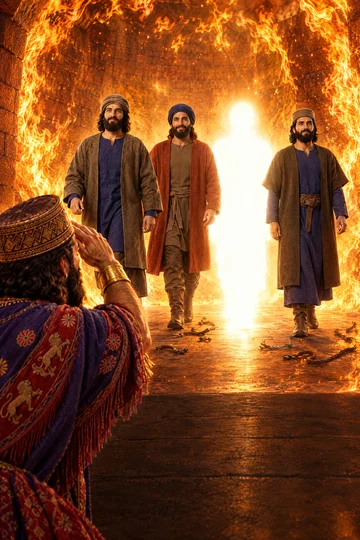
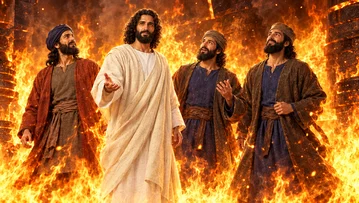
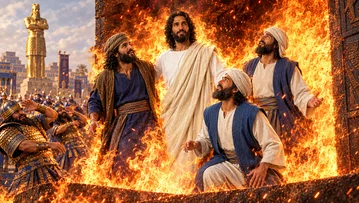
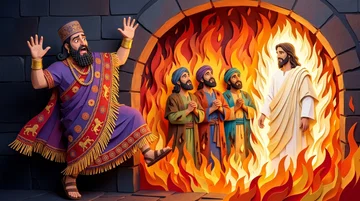
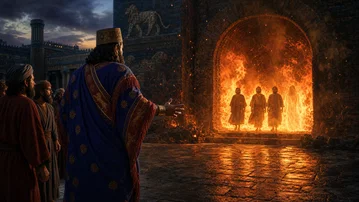
Then Nebuchadnezzar the king was astonied, and rose up in haste, and spake, and said unto his counsellors, Did not we cast three men bound into the midst of the fire? They answered and said unto the king, True, O king.
Translations
Then Nebuchadnezzar the king was astonished, and rose up in haste, and spoke, and said to his counsellors, Did not we cast three men bound into the middle of the fire? They answered and said to the king, True, O king.
Then Nebuchadnezzar the king was astonied, and rose up in haste, and spake, and said unto his counsellors, Did not we cast three men bound into the midst of the fire? They answered and said unto the king, True, O king.
Then Nebuchadnezzar the king was astonied, and rose up in haste, and spake, and said unto his counsellers, Did not we cast three men bound into the midst of the fire? They answered and said unto the king, True, O king.
Then Nebuchadnezzar the king was astonished, and rose up in haste, and spoke, and said to his counselors, Did we not cast three men bound into the midst of the fire? They answered and said to the king, True, O king.
Then Nebuchadnezzar the king was astonied, and rose up in haste: he spake and said unto his counsellors, Did not we cast three men bound into the midst of the fire? They answered and said unto the king, True, O king.
Then Nebuchadnezzar the king was astonished, and rose up in haste: he spake and said unto his counsellors, Did not we cast three men bound into the midst of the fire? They answered and said unto the king, True, O king.
Then Nebuchadnezzar the king hath been astonished, and hath risen in haste; he hath answered and said to his counsellors, 'Have we not cast three men into the midst of the fire — bound?' They have answered and are saying to the king, 'Certainly, O king.'
Then Nebuchadnezzar the king was astonied, and rose up in haste; he spoke and said unto his counsellors, Did not we cast three men bound into the midst of the fire? They answered and said to the king, True, O king.
Then, Nebuchadnezzar the king, was amazed, and rose up in haste: he spake and said to his nearest friends—Were there not three men, we cast into the midst of the fire, fast bound? They answered and said to the king, Surely, O king!
Berean Standard Bible, Majority Standard Bible
Suddenly King Nebuchadnezzar jumped up in amazement and asked his advisers, “Did we not throw three men, firmly bound, into the fire?”“ Certainly, O king,” they replied.
Then Nebuchadnezzar the king was astonished and rose up in haste. He spoke and said to his counselors, “Didn’t we cast three men bound into the middle of the fire?”They answered the king, “ True, O king.”
Then King Nebuchadnezzar, full of fear and wonder, got up quickly, and said to his wise men, Did we not put three men in cords into the fire? and they made answer and said to the king, True, O King.
Then Nebuchad-nezzar the King was astonied and rose vp in haste, and spake, and saide vnto his counsellers, Did not wee cast three men bound into the middes of the fire? Who answered and said vnto the King, It is true, O King.
Douay-Rheims (Challoner revision)
Then Nabuchodonosor the king was astonished, and rose up in haste, and said to his nobles: Did we not cast three men bound into the midst of the fire? They answered the king, and said: True, O king.
Pictures
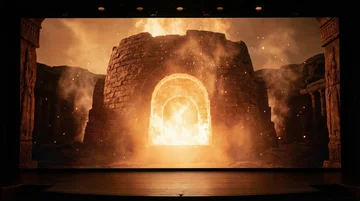
Cross-references 20 of 26
- Daniel 3:16-18
Shadrach, Meshach, and Abed-nego, answered and said to the king, O Nebuchadnezzar, we are not careful to answer thee in this matter.
The three Hebrews trust God and refuse to worship the image despite the furnace threat.
- Daniel 3:28
Then Nebuchadnezzar spake, and said, Blessed be the God of Shadrach, Meshach, and Abed-nego, who hath sent his angel, and delivered his servants that trusted in him, and have changed the king’s word, and yielded their bodies, that they might not serve nor worship any god, except their own God.
Nebuchadnezzar praises God for delivering the faithful men who refused to worship another god.
- Hebrews 11:34
Quenched the violence of fire, escaped the edge of the sword, out of weakness were made strong, waxed valiant in fight, turned to flight the armies of the aliens.
Faith is linked with the three Hebrews’ deliverance from the fire.
- Daniel 3:19
Then was Nebuchadnezzar full of fury, and the form of his visage was changed against Shadrach, Meshach, and Abed-nego: therefore he spake, and commanded that they should heat the furnace one seven times more than it was wont to be heated.
The furnace was heated seven times hotter, yet the three men stood firm.
- Daniel 6:16-23
Then the king commanded, and they brought Daniel, and cast him into the den of lions. Now the king spake and said unto Daniel, Thy God whom thou servest continually, he will deliver thee.
Daniel likewise faced danger without resisting and trusted God to deliver him.
- Jeremiah 27:6
And now have I given all these lands into the hand of Nebuchadnezzar the king of Babylon, my servant; and the beasts of the field have I given him also to serve him.
God calls Nebuchadnezzar his servant and grants him authority.
- Daniel 3:29
Therefore I make a decree, That every people, nation, and language, which speak any thing amiss against the God of Shadrach, Meshach, and Abed-nego, shall be cut in pieces, and their houses shall be made a dunghill: because there is no other God that can deliver after this sort.
The king’s decree follows the companions’ deliverance and declares that no other god can deliver like this.
- Isaiah 43:2
When thou passest through the waters, I will be with thee; and through the rivers, they shall not overflow thee: when thou walkest through the fire, thou shalt not be burned; neither shall the flame kindle upon thee.
God promises protection through fire, fulfilled in the furnace.
- Daniel 3:6
And whoso falleth not down and worshippeth shall the same hour be cast into the midst of a burning fiery furnace.
The decree commands image worship on pain of the fiery furnace.
- Daniel 4:37
Now I Nebuchadnezzar praise and extol and honour the King of heaven, all whose works are truth, and his ways judgment: and those that walk in pride he is able to abase.
Nebuchadnezzar acknowledges that God can humble the proud.
- Daniel 3:1
Nebuchadnezzar the king made an image of gold, whose height was threescore cubits, and the breadth thereof six cubits: he set it up in the plain of Dura, in the province of Babylon.
The golden image was the idol they refused to worship, leading to the fiery furnace.
- Isaiah 33:14
The sinners in Zion are afraid; fearfulness hath surprised the hypocrites. Who among us shall dwell with the devouring fire? who among us shall dwell with everlasting burnings?
The question about dwelling in devouring fire echoes the three men surviving the furnace.
- Daniel 6:22
My God hath sent his angel, and hath shut the lions’ mouths, that they have not hurt me: forasmuch as before him innocency was found in me; and also before thee, O king, have I done no hurt.
God’s protection of Daniel from the lions parallels the furnace rescue.
- Acts 5:29
Then Peter and the other apostles answered and said, We ought to obey God rather than men.
God’s protection of the Hebrews illustrates obeying God rather than human commands.
- Daniel 3:20
And he commanded the most mighty men that were in his army to bind Shadrach, Meshach, and Abed-nego, and to cast them into the burning fiery furnace.
shares same word for casting
- Daniel 3:15
Now if ye be ready that at what time ye hear the sound of the cornet, flute, harp, sackbut, psaltery, and dulcimer, and all kinds of musick, ye fall down and worship the image which I have made; well: but if ye worship not, ye shall be cast the same hour into the midst of a burning fiery furnace; and who is that God that shall deliver you out of my hands?
contrasts earlier defiance with astonishment
- Daniel 3:18
But if not, be it known unto thee, O king, that we will not serve thy gods, nor worship the golden image which thou hast set up.
refusal to worship causes casting into furnace
- Daniel 3:8-12
Wherefore at that time certain Chaldeans came near, and accused the Jews.
The men are accused for refusing the king’s worship order.
- Daniel 3:30
Then the king promoted Shadrach, Meshach, and Abed-nego, in the province of Babylon.
shows promotion following deliverance
- Exodus 20:4-5
Thou shalt not make unto thee any graven image, or any likeness of any thing that is in heaven above, or that is in the earth beneath, or that is in the water under the earth:
The men refused to worship the golden image, keeping the commandment against images.
Commentary
Each commentary is drawn from primary sources: the writings of Ellen G. White and Adventist pioneers and periodicals. Each commentary is separate. Its own words are not a quotation; follow the references to read the source passages.
Ellen G. White
63 sources
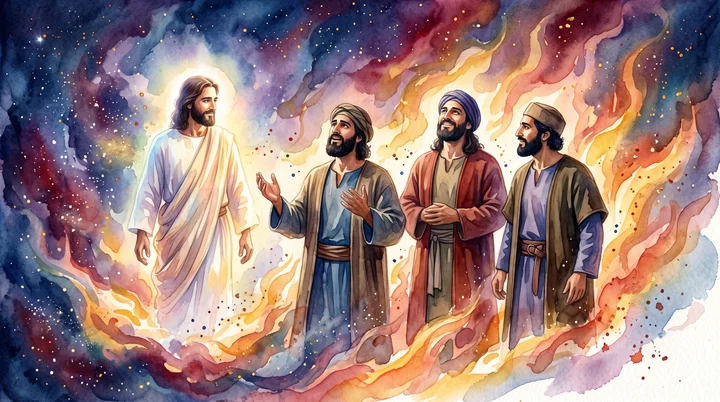
Nebuchadnezzar was seized with terror as he gazed at the furnace, his face paling as he rose in haste to ask his counselors whether three bound men had been cast into the fire, and they answered that it was true.Ms 73, 1909, par. 12–14Lt 126, 1910, par. 2–8Ms 110, 1904, par. 52–56PK 503.2BS 33.1–2 What astonished him was the contrast, for the furnace had been heated seven times hotter than usual and had killed those who threw them in, yet he saw four men loose and walking unharmed amid the flames, with the fourth like the Son of God.ST Dec 24, 1912PK 503Ms 73, 1909, par. 12–14BS 33.1–2ST Oct 19, 1882 The Fourth with them was Christ Himself, present to preserve those who honored Him rather than worship a human image, so that the fire could not consume them.Lt 118, 1910, par. 2Ms 73, 1909, par. 12–14PK 511.13MR 95.4Ms 44, 1886, par. 8–10 Even the king and his nobles trembled and had to acknowledge the living God above every earthly power, and through that steadfastness the knowledge of the true God was spread throughout Babylon and to many countries.ST Oct 19, 1882PK 511.1DA 28.35T 453.1–413MR 60.1–61.2 Their firmness to be true to principle come what may is the pattern for steadfast adherence to the close of the controversy, when the same abiding presence will be with followers in the time of trouble so that Satan with all evil hosts cannot destroy even the weakest saint who trusts Him.STBk 121.2STA 121.2ST2 13.1PK 512.1PK 513.1
Astonished King Questions
The king was seized with sudden terror and astonishment while gazing into the furnace, his countenance paling as his eyes remained fixed on the flames, and he rose up in haste to question his counselors and lords.Ms 110, 1904, par. 52–56PK 503.2BS 33.1–2PK 509.1ST Oct 19, 1882 His astonishment broke upon him as he watched what was taking place in the fire he had ordered heated seven times hotter than usual to punish defiance in the height of his power and glory.BS 33.1–2ST Oct 19, 1882PK 508.3 He turned to those beside him to have them confirm what had been done, asking whether three men bound had been cast into the midst of the fire, and they answered that it was true.Ms 73, 1909, par. 12–14PK 503.2BS 33.1–2PK 509.1ST Oct 19, 1882 Their confirmation was given by the very counselors and lords who had devised the ensnaring decree, having hit upon the scheme of leading the king to proclaim that every knee should bow to the golden image.PK 503.2PK 509.112MR 218.2–220.1
The furnace had been made so fierce that the bursting flame killed the men who thrust the Hebrews in with haste, even as the three bound exiles were cast in.BS 33.1–2ST Oct 19, 1882Ms 163, 1898, par. 5–11 What astonished him was the contradiction of what had been done, for instead of three bound men he saw four men loose walking unharmed and unhurt amid the flames.ST Dec 24, 1912Lt 90, 1897, par. 21–25Ms 110, 1904, par. 52–56Ms 71, 1910, par. 16–20BS 33.1–2 The three were no longer bound but walking freely without injury, and the fourth figure with them appeared like the Son of God, like the Son of Man.ST Dec 24, 1912PK 503Lt 90, 1897, par. 21–25Ms 110, 1904, par. 52–56Ms 163, 1898, par. 5–11 His question about the three therefore opened the way to his declaration of the four, setting the contrast between what was cast in and what was now seen.Ms 73, 1909, par. 12–14Lt 126, 1910, par. 2–8PK 509.1ST Oct 19, 1882PK 508.3
The setting was the plain of Dura, where the idolatrous golden image had been set up to represent the kingdom of Babylon and more particularly the glory of Nebuchadnezzar himself.Ms 168, 1898, par. 1–3Lt 109a, 1898, par. 5–8Ms 47a, 1898, par. 2–5 He had set it up after reading the interpretation of his dream in the light of his own idolatrous mind instead of in the light of Scripture and the living oracles, supposing the image had sufficient authority to convert all nations to its worship as representing the excellence of Babylon.Ms 168, 1898, par. 1–3Ms 47a, 1898, par. 2–5 These events came in the same year the youthful Hebrews entered the service of the king of Babylon, severely testing their integrity and proving before an idolatrous nation the power and faithfulness of the God of Israel.BS 33.1–2BS 29.1 The men who sought to destroy the three Hebrews were themselves destroyed by the bursting flame, destroyed by the recoil of their own actions.BS 33.1–212MR 218.2–220.1Ms 163, 1898, par. 5–11 The king could recognize the divine likeness of the fourth as the Son of God, the representative of God, because his connection with Daniel and the three Hebrews had taught him about God and about Christ.Ms 163, 1898, par. 5–11
God Present Delivering
This verse belongs to the history of the Lord's wonderful deliverance of the three Hebrew worthies from the fiery furnace.Lt 118, 1910, par. 2Lt 122, 1910, par. 7–9 That history teaches important principles regarding the working out of His purpose for the children of obedience and the children of disobedience.Lt 118, 1910, par. 2 It shows that God is near to those who honor Him rather than worship human-made images, and that He accompanies them through trial.Ms 73, 1909, par. 12–14 They stood firm when the furnace was heated seven times hotter than usual and were cast in bound, yet they were not forsaken of God.STBk 121.2STA 121.2ST2 13.1 The form of the Fourth was with them walking in the flames, and they came forth without even the smell of fire upon their garments.STBk 121.2STA 121.2ST2 13.1
The Fourth seen with them was Christ Himself, the Lord Jesus, present to preserve them from all harm.Ms 168, 1898, par. 1–3Lt 109a, 1898, par. 5–813MR 60.1–61.2 He manifests Himself to them as He promises to manifest Himself to those who have His commandments and keep them, and as He abides in the heart by faith.13MR 60.1–61.2 God had not forsaken them, and the king called them out to find them unharmed with no smell of fire on their garments.3MR 95.4Ms 44, 1886, par. 8–10 Their faith in the living Word was honored in the sight of all, for they had relied on God and remembered His promise to be with them through waters and fire so they would not be burned.PK 511.1 God takes His stand with the oppressed in this deliverance and rebukes all earthly powers that rebel against the authority of Heaven.PK 511.1
Their deliverance displayed God's wonderful power and made known that the God of heaven rules over earthly kings.Ms 16, 1896, par. 31–34Lt 32, 1899, par. 6–11 It fulfilled their trust that He could save them, though they had remained loyal even if He did not.Ms 16, 1896, par. 31–34 God has not promised His people exemption from trials, but He has promised strength equal to the day and grace sufficient in weakness. Imprisonment and persecution do not mean He has ceased to reign or abandoned His obedient people, for Jesus was with the faithful three and the flames could not harm them.Lt 49, 1886, par. 7–8 Even when they face suffering and seem abandoned they remain under His care, for He remains mindful of them and protects them in times of deadly trial.4SP 445.2–446.1GC 626.2–627.1 Christ is with His faithful people amid persecution, even at the stake, and reveals Himself to them in their deepest trial.18MR 78.2
Because the Son of God was with Shadrach, Meshach, and Abednego walking unharmed, the fire could not consume them.Ms 159, 1903, par. 15–19 Their walking so united with Him shows that at the Lord's coming smoke and flame will not harm the righteous who are united with Him.Ms 159, 1903, par. 15–19 They endured because Jesus walked with them in flames they did not deliberately seek.3T 47.2 Had they deliberately entered the fire themselves they would have been consumed, teaching that God sustains those who do not deliberately seek temptation when it comes.3T 47.2 Anyone called to go through the fiery furnace for Christ's sake will have Jesus by his side just as the three had Him.
King Convinced Nations Enlightened
When Christ showed Himself in the fire even the king and his nobles trembled and had to acknowledge that the living God is above every earthly power.ST Oct 19, 1882 The king was convinced that the Hebrews' God was the living God with superior power over every kingdom and over every earthly king.13MR 60.1–61.2Ms 47a, 1898, par. 2–5Ms 15, 1896, par. 4–6 He was led to proclaim the supremacy of the God whom his Hebrew captives worshiped.DA 28.3 His wrath was turned into praise and thanksgiving to Jehovah.Lt 151, 1904, par. 6–8
God's wise providence works unceasingly over human affairs and comes into close contact even with idolatrous minds to give them light.Lt 109a, 1898, par. 5–8 He brought His servants face to face with the greatest monarch when idolaters rose to crush out the truth in Babylonian persecution over refusal to disregard the Sabbath and to observe heathen festivals, so that the king and his people might receive light.DA 28.3 The astonished questioning marks the moment that purpose came to bear on the king's heart until he believed.DA 28.3Lt 109a, 1898, par. 5–8
Through their steadfastness the knowledge of the true God was spread abroad throughout the length and breadth of Babylon.Ms 2b, 1895, par. 25–26 The attempt to force idolatry brought that knowledge before the princes and great men of Babylon.5T 453.1–4 Representatives of the different nations gathered for the dedication carried the tidings of the wonderful deliverance to many countries, so that through the faithfulness of His children God was glorified in all the earth.PK 511.1 In this the purpose for which God had permitted them to be carried as captives to that heathen land was accomplished to His honor.PK 511.1Ms 2b, 1895, par. 25–26 Although convinced by the wonderful miracle, the king lost the holy impression made upon his mind because he did not continue to walk in the light.13MR 60.1–61.2
Pattern for Final Crisis
The three in Babylon purposed to be true to principle come what may and would not turn aside from allegiance to the truth, standing firm in trial though the flaming fiery furnace was heated seven times hotter than it was wont to be heated and they were cast in bound.STBk 121.2STA 121.2ST2 13.1Ms 61, 1890, par. 41Ms 40a, 1890, par. 101–102 They were not forsaken of God in the furnace, for the form of the Fourth was seen walking with them in the flames, and they came forth delivered without even the smell of fire upon their garments.STBk 121.2STA 121.2ST2 13.1Ms 61, 1890, par. 41Ms 40a, 1890, par. 101–102 Their firmness is the pattern for steadfast adherence to truth through the continual and sharp contests that will continue to the close of the controversy between the two great powers of good and evil, requiring the same purpose to stand firm at any cost now.STBk 121.2STA 121.2Ms 61, 1890, par. 41Ms 40a, 1890, par. 101–102Ms 40, 1890, par. 92–94
Its lessons apply in this day, when though innocent of wrongdoing many of God's servants will be given over to suffer humiliation and abuse at the hands of those inspired by Satan and filled with envy and religious bigotry.PK 512.1 Especially the wrath of man will be aroused against those who hallow the Sabbath of the fourth commandment, and at last a universal decree will denounce these as deserving of death.PK 512.1 Their stand illustrates loyalty required when human authority demands disobedience to God, including future decisions for or against the commandments of God in the Southern States.Lt 35, 1895, par. 1–3Ms 15, 1896, par. 33–34
Those who make cruel enactments seeking to destroy God's people are destroyed by the recoil of their own actions, as the men who sought to destroy the three Hebrews were themselves destroyed.12MR 218.2–220.1 So men today who strive to turn God's people from their allegiance by setting up an idol Sunday sabbath will likewise be destroyed.12MR 218.2–220.1 So it will be in the end of the world, when students of God's Word must work away from the customs and appointments of the world's great counselors with the same refusal to bow as those who would not bow the knee to the idolatrous golden image.Ms 168, 1898, par. 1–3 They will not say the Lord delays His coming, and only those prepared like wise virgins with oil in their vessels with their lamps will go forth to meet the Bridegroom.Ms 168, 1898, par. 1–3
That same abiding presence that comforted and sustained the worthies, the Lord Himself walking with them, will be with His followers wherever they are in the closing period of earth's history.PK 513.1 In the midst of the time of trouble such as has not been since there was a nation, His chosen ones who stand steadfastly for the right will stand unmoved.PK 513.1 Satan with all the hosts of evil will be unable to destroy even the weakest of God's saints, angels that excel in strength will protect them, and Jehovah will reveal Himself as a God of gods able to save to the uttermost those who have put their trust in Him.PK 513.1
Courage for Faithful Witnesses
Shadrach and his companions stood in the fire as men utterly helpless in themselves who trusted the word of God and withstood the power of the whole world seated on its throne.ED 254.2–3RH Dec 24, 1908RH Nov 11, 1915 In the later test they openly disregarded the king's requirement in the very face of death rather than surrender principle, compromise truth, or prove disloyal to God.Ms 2b, 1895, par. 25–26 Their stand witnesses to the power of God's word against human power and policy in support of evil, and places them among the world's true nobility and royal line in which the youth of today are called to take their places.ED 254.2–3RH Dec 24, 1908
Their refusal to worship the idol rather than be untrue to God reveals the principle of self-denial and self-sacrifice.5T 42.2–43.2Lt 73, 1896, par. 39–4220MR 113.3–114.1 All appetites and passions, all hereditary or cultivated habits or tendencies, and all circumstances and surroundings are to be servants to the God-fearing man, not rulers over him.Lt 73, 1896, par. 39–42 The Christian is not to be enslaved by habit nor to be the servant of circumstances, but to rule the animal passions and to control circumstances by an inwrought principle learned of the greatest Teacher the world ever knew.Lt 73, 1896, par. 39–42 That principle, as seen in Christ, in John the Baptist, in Daniel and in the three worthies, passes like a plowshare through hereditary and cultivated habits and through all circumstances and surroundings, so that those in solemn position toward the world today must practice duty now and not wait until will and circumstances are adjusted.Lt 73, 1896, par. 39–42 No threat of the furnace and no offer of favor, worldly honors, or exalted position moves such faithful men to deny and betray the truth, because human reputation is to them as nothingness.Ms 201, 1898, par. 11 To live is to obey the word of Christ, and to die for the truth's sake is gain, and this steadfastness comes from having the divine principles inwrought in the heart as if written with the finger of God by believing and practicing the Word.Ms 201, 1898, par. 11
Their deliverance in the fiery furnace gives reason to trust that God can preserve His servants when they face danger for the gospel.GC88 145.1–146.1AA 570.1–2RH Sep 5, 1912 The Lord preserved the life of His faithful servants in persecution, keeping the three Hebrews alive in the fiery furnace when the fire should have killed them, in the same way He kept John alive when cast into boiling oil.AA 570.1–2RH Sep 5, 1912 When the three worthies were cast bound into the midst of the fire God preserved them alive and their testimony was not silenced, because the Son of God was with them, abiding in the heart by faith.Ms 150, 1899, par. 8–10 The same divine presence and preservation keeps faithful witnesses in other deadly punishments for Christ's sake, such as being cast into a cauldron of boiling oil.Ms 150, 1899, par. 8–10
That same preserving power belongs to a fearless advocate of truth when powerful enemies summon him to answer, determine to silence him, and cry for his blood.SG4 275.3–276.3 Trust in that God who still lives and reigns removes anxiety and care for self and for ease, and turns anxiety toward the truth not being exposed to the insults and scorn of the ungodly, giving readiness to die rather than allow enemies to triumph.SG4 275.3–276.3GC 146.1 That preservation gives ground for trust to one called by God to appear before hostile rulers, even when sick and when violence is very probable, as it gave Luther reason to trust God when he faced danger for defending the truth.GC 146.1GW92 57.2–61.14SP 120.11T 373.2–375.1 The outcome is placed in the Lord's hands, for if He will not save, life is of little consequence, and faithfulness means not fleeing and not retracting, preventing the gospel from being exposed to scorn even by shedding blood for it, and leaving it to God whether life or death will contribute most to the salvation of others.GC 146.14SP 120.1
Anyone called to go through the fiery furnace for Christ's sake will have Jesus by his side just as the three had Him in Babylon. Those who love their Redeemer will rejoice at every opportunity to share His humiliation and reproach, and love for Him makes suffering for His sake sweet.
Sources
Pioneers and periodicals
164 sources
The moment records the king startled and rising in haste to ask his counsellors to confirm that three bound men had been cast into the midst of the fire, and their answer that it was true establishes the certainty of their peril and opens his recognition that what he sees is not what he expected.ST May 6, 1897ST Oct 19, 1882RH Apr 20, 1869ST Oct 13, 1909ST Oct 9, 1901 They had been thrown bound into a furnace heated seven times hotter than usual with heat so fierce it slew the men who cast them, proving to all human expectation that death was certain and that the deliverance that followed was genuine.ST Dec 16, 1897RH Jul 14, 1904ST Jun 3, 1913 Instead of consumed forms he sees four persons loose and walking unhurt in the midst of the fire, the flames consuming only their bonds, and the fourth with form like a son of the gods is the divine Angel of Jehovah, even Christ, present with His people in affliction.ST Dec 24, 1912ST Jan 29, 1908ST Jul 27, 1904RH Oct 8, 1903RH Aug 20, 1908 Their preservation vindicates their refusal to worship the golden image at the command of the state, showing that civil rulers overstep their God-given limit when they control worship and punish conscience, and must be obeyed only until they command against God, when believers must obey God rather than men and meekly accept the penalty.RH Feb 20, 1900ST May 12, 1890ST Jul 11, 1911ST Apr 14, 1898ST Mar 6, 1907 That stand is precisely the test of the last days when a decree will command worship of the image of the beast on pain of death, and it teaches unfailing confidence that God does not always spare from the fire but comes down to walk with the faithful in it until He delivers them.RH Jul 14, 1904RH May 1, 1855ST Oct 5, 1882ST Dec 30, 1880RH Dec 30, 1915
Words and Historical Setting
Nebuchadnezzar was astonished by what he saw in the furnace and rose up in haste to ask his counsellors whether three men bound had been cast into the midst of the fire, and they answered True, O king.RH Apr 20, 1869ST Oct 13, 1909ST Aug 29, 1895ST Jan 9, 1907RH May 1, 1900 The question and answer establish the reality of the peril of the three Hebrews whom he had ordered bound and thrown in, and set up his recognition that the scene before him was unlike what he expected, for they were still present and not as he expected.RH Apr 20, 1869ST Oct 13, 1909ST Aug 29, 1895ST Jan 9, 1907RH May 1, 1900 His astonishment and haste led to the discovery that God was with them and delivered them unharmed, loose and accompanied by a fourth, because God was present with them in the fire.ST Oct 13, 1909ST Oct 9, 1901ST Aug 29, 1895ST Jan 9, 1907RH May 1, 1900
The furnace had been heated seven times hotter than usual, and Shadrach, Meshach and Abed-nego had been cast in bound in all their clothing by strong men.ST Dec 16, 1897ST Jun 3, 1913ST Oct 18, 1899 The heat was so intense that it slew the executors who cast them in, and to all human expectation would instantly kill and consume the condemned.ST Dec 16, 1897RH Jul 14, 1904RH Jul 24, 1900 The deaths of the men who cast them in by its intense heat showed the fire was deadly and proved the later deliverance was genuine, for the three remained unharmed while those who threw them perished.ST Dec 16, 1897RH Jul 14, 1904RH Jul 24, 1900 The fire produced no effect upon them, without even the smell of smoke upon their garments, because Jesus was with them during that trying hour, proving that anywhere with Jesus is safe to go.ST Dec 16, 1897RH Jul 14, 1904ST Jun 3, 1913
The Hebrew verb remah in the verse means to cast or throw, as in casting three bound men into the midst of the fire.ST Jul 23, 1874RH Feb 8, 1870RH Feb 17, 1874 The same word can also mean to set or place, as in the reference to the thrones in Daniel 7:9.ST Jul 23, 1874RH Feb 17, 1874 By contrast the same verb in Daniel 7:9 carries the sense to set or place, so the thrones there are erected or established as thrones of judgment, not cast down.ST Jul 23, 1874RH Feb 17, 1874 The story depends on their being thrown into the fire, not merely placed near it.RH Feb 8, 1870RH Feb 17, 1874RH Jan 10, 1871
The Septuagint account adds that he heard the men praising God and singing in the flame, for the children of faith walked in the flame singing praises to God and blessing the Lord which Nebuchadnezzar heard.ST Jan 29, 1908ST Oct 9, 1901 Instead of blazing garments and burnt shriveled forms he saw four beings loose walking in the midst of the fire with no hurt, the fire having devoured only the bands of earthly bondage.ST Jan 29, 1908 The king's own words were not inspired as Daniel and the other prophets were inspired, but the book of Daniel is inspired and gives the correct record concerning Nebuchadnezzar in chapters 1, 2, 3, 4, including this speech.ST Jul 16, 1912 He had come to see that God was just and right and his own ways evil, and he submitted to God and sent out his own great conception of God and God's goodness and God's power, and it is the word that records this that is inspired, not the man who spoke it.ST Jul 16, 1912
The events stood roughly twenty years after the vision of the great image in Daniel 2, by which time Nebuchadnezzar's kingdom had grown in power and glory through conquest and successful administration.RH Aug 6, 1908 The manifestation of God's power in the furnace took place less than fifty years before Belshazzar's feast and was seen by great men who were afterward present at that feast, yet they heeded not its lesson and joined in dishonoring the same God whose power had been displayed.ST Oct 23, 1901ST Aug 13, 1896 That history was a matter of public record that Belshazzar knew or had opportunity to know, yet he did not take it to heart.ST Oct 23, 1901ST Aug 13, 1896 Casting alive into a burning furnace was a customary punishment under Babylonian kings, as ancient Assyrian inscriptions indicate.ST May 9, 1878 The book of Daniel gives the true history of Nebuchadnezzar and Babylon, a history confirmed by Babylonian clay cylinders and inscriptions describing Nebuchadnezzar's restoration and building of the edifices in Babylon.RH May 13, 1909
The king watched the furnace surrounded by officers of his government, Chaldeans, and distinguished great men from many countries, filled with fury and waiting to see how soon the men who defied him would be utterly consumed.ST May 6, 1897 His triumph suddenly came to an end when he saw something he thought must be an illusion, and stricken with terror while gazing into the burning fiery furnace after the flames had killed the men who threw them in, his countenance paled and his eyes remained fixed on the flames.ST May 6, 1897ST Oct 19, 1882 He shaded his eyes with his hand and directed his gaze to the furnace, watching it with intense interest and discerning the result of his cruel project more quickly than those around him.ST May 6, 1897 With alarm and with a voice trembling with excitement and terror he turned to his lords and great men to confirm that three men bound had been cast into the midst of the fire, and they answered that it was true.ST May 6, 1897ST Oct 19, 1882 The question marks his astonished realization that a supernatural deliverance was taking place, opening the way for his declaration that he saw four men loose walking unhurt in the fire, and it reveals that when Christ manifests himself even kings and nobles tremble and must acknowledge that the living God is above every earthly power.ST May 6, 1897ST Oct 19, 1882
Miracle in the Furnace
What the king expected to see was blazing garments and burnt shriveled forms, but instead he saw four beings loose and walking in the midst of the fire with no hurt.ST Dec 24, 1912ST Jan 29, 1908ST Jul 27, 1904 The three who had been cast in bound were walking free and blessing God and singing praises in the flame, which he heard, while the fire devoured only the bands of earthly bondage and left them without even the smell of smoke upon their garments.ST Jan 29, 1908ST Aug 13, 1874RH Aug 20, 1908 Their garments were not scorched, and their complete protection demonstrated power over the elements and fulfilled the promise that those who trust in God will not be burned.ST Jul 27, 1904ST Aug 13, 1874ST Dec 3, 1902 The only effect of the fire was to burn their bonds and set them free, mocking unwarranted control over men who are first servants of God, and their walking forth unharmed before the representative men of Babylon proved it was no distorted vision when he called them servants of the most high God.RH Aug 20, 1908
The fourth has the aspect like a son of the gods, which on the lips of a pagan king means a son of the gods.RH Aug 20, 1908ST Dec 16, 1897 He did not know Him as Christians know the Son of God, but he recognized Him as more than human and sensed that the Deliverer was divine.ST Dec 16, 1897ST Aug 9, 1899 That figure is the shining Angel of Jehovah who went with Israel through the wilderness, in whom is the name of the Father, against whom the people sinned by rebellion, who is Christ, and the Son of God came down and walked with them.RH Aug 20, 1908ST Jan 27, 1904 He had a visible form like a man, proving Christ had a visible human-like form before coming to earth.RH Oct 8, 1903
The deliverance is a real Bible miracle, a true account and no myth, allegory or fancy, a factual miracle showing mighty miraculous power.ST Nov 25, 1889ST Dec 9, 1913 It is a distinctive, direct manifestation of God's power, not a greater display of power than His ordinary works in nature, in which God restrained the natural course of the fire as an exception to the usual operation of natural law.RH Aug 20, 1908ST Mar 24, 1914 It was made possible by the interposition of the infinite Author of life with supernatural power, the same divine power that brought forth grass, herbs, trees, fish, birds and man, and that preserved Israel through the sea, Daniel among the lions, and Jonah in the sea-monster, while the fire destroyed those who threw them in.ST Dec 9, 1913RH Jul 14, 1904 The Old and New Testaments stand together on such deliverances, so that the furnace deliverance stands or falls together with Paul's shipwreck and Peter's jail delivery, and it stands in the infallible Old Book that regenerates men and upholds pilgrims, so that to deny this miracle is to deny the infallibility of the Bible and leads at last to denying every essential saving truth.ST Nov 25, 1889
Those who held the other position treated the preservation as possibly true because spirits can keep fire from burning flesh by enveloping it in a tissue of electricity, as claimed when a spirit medium held his finger in a kerosene lamp five minutes without even raising a blister.RH Feb 2, 1864
Loyalty Tested by Idolatry
Nebuchadnezzar resisted God's revelation that Babylon and the kingdoms following it would eventually fall, accepting Babylon as the head of gold but wanting it to rule over and shape all future kingdoms so that it would stand forever.ST Oct 11, 1905ST Jun 3, 1913ST Dec 3, 1912 He was pleased with the dream God gave Daniel reproducing the dream previously given to the king, but was not pleased with the interpretation as it related to his kingdom being succeeded by another, above all the declaration that after him another kingdom would arise.ST Jun 3, 1913 To assure himself his kingdom would be perpetuated and to show the Lord's word through Daniel false, he erected a golden image on the plain of Dura for his subjects to worship as one grand patriotic demonstration to perpetuate his kingdom and make Babylon an eternal universal kingdom.ST Jun 3, 1913ST Dec 3, 1912 That attempt through patriotism and trust in human power denied the prophecy describing the decline and failure of human kingdoms, while God's everlasting kingdom endures because of its righteousness.ST Dec 3, 1912
The three Hebrews faced a positive sweeping decree that all must fall down and worship the golden image when the music sounded or that same hour be cast into the furnace, presenting the duty to worship God regardless of a king's command.RH Feb 20, 1900ST May 12, 1890RH Oct 21, 1862 Bowing to the image would have broken God's commandment against idolatry and violated the first and second commandments, when a human decree backed by custom and law stood opposed to obedience to God.RH Oct 21, 1862RH Jul 13, 1916ST Nov 15, 1899 The decree was not aimed specifically at them and did not forbid worship of their God, and they held honored positions in the government, yet loyalty to Jehovah required refusing to bow even with certain death before them.ST May 12, 1890RH Oct 21, 1862RH Jul 13, 1916RH Oct 21, 1862 Obedience could not be rendered as a merely civil law in harmony with the majority for the good of the people and the stability of Babylon without compromising faith, and God vindicated that refusal.ST May 12, 1890
Their refusal was required even in appearance and outward deference, and they would not shift responsibility for their choice to the government.RH Oct 21, 1862RH Oct 21, 1862 Their disobedience violated the king's command and was therefore treated as a crime and condemned to death, but it was not sin against God because it obeyed God, while bowing to the image and obeying a human law that takes God's place would have been sin.ST Jun 11, 1912ST Jan 23, 1912ST Jan 20, 1898ST Aug 6, 1896ST Jun 24, 1897 God vindicated them against the human punishment imposed for their obedience, showing faithful acts that civil governments treat as crimes do not depart from God's principles of right.ST Jun 11, 1912ST Jun 24, 1897 They were required to honor the king's rival institution after already obeying what they believed God commanded, and obeying that unjust command would have denied their experiences in Daniel 1 and 2 when fasting and prayer brought answer from God.ST Aug 29, 1895RH Oct 21, 1862
Their faithfulness did not depend on knowing that God would deliver them from the fire; they accepted the consequences rather than disobey God when the king's demand conflicted with God's law.ST Sep 10, 1885RH Mar 1, 1860 They obeyed God rather than men and thereby gained a place among the faithful who through faith quenched the violence of fire.ST Sep 10, 1885 The verse itself records the king's astonishment and confirmation that the three men had been thrown into the fire bound, cited to show that God must be obeyed when a human command conflicts with divine law.RH Mar 1, 1860
The casting of the three Hebrews into the fiery furnace was an act of religious dominion testing the relative power of Babylon's gods against the Creator whom the Hebrews worshiped.ST Dec 12, 1911 It expressed the basic principle of Babylon's despotic rule that world dominion by the state rested on world dominion in matters of religion.ST Dec 12, 1911 The supremacy of the national gods had to be proved over every god that could be brought against them, and many of Babylon's bloodiest battles were fought for that purpose of showing the gods adopted by Babylon more powerful than all others.ST Dec 12, 1911
Limits of Civil Power
Nebuchadnezzar overstepped the God-given bounds of civil rule when he tried to direct worship and punish refusal, seeking to take God's place by commanding what men must worship.ST Jul 11, 1911ST Dec 3, 1896ST Jul 1, 1903 Though as a heathen king he was God's servant to restrain evil and prevent incivility, his decree uniting church and state under law turned into persecution for conscience' sake.ST Dec 3, 1896ST Jul 1, 1903 God humbled him and proud Babylon for that usurpation and rebuked the misuse of authority, proving by the astonishment in the furnace crisis that the king's power could not overcome God.ST Jul 11, 1911ST Jul 1, 1903ST The miraculous preservation changed the king's word and showed rulers are not to control people in religion, since deliverance demonstrated God intervenes when a ruler usurps His authority.ST Jun 18, 1912STRH Feb 1, 1906
Civil government is ordained of God only to regulate outward civil things to protect life and property and keep sinful men from harm, never to aid religion or touch conscience and soul.RH Aug 20, 1908 It has no authority in the spiritual realm to direct faith and worship, for each person is responsible to God and must be free to follow conscience without compulsion to violate duty to God.ST Apr 23, 1912RH Aug 20, 1908 Church and state must therefore be kept forever separate, flourishing best when separate, since their union works ill to both.ST Nov 28, 1892 When conscience and service to God are at stake human authority must give way, and believers may refuse pagan commands that conflict with God's law while meekly accepting the penalty and seeking lawful repeal rather than violently rebelling.ST Jul 24, 1884ST Sep 13, 1899
The three Hebrews' refusal of the religious command to bow was right and innocent, doing no harm to ruler, state, or society, and God vindicated them by honoring and protecting them in the fire.ST Apr 14, 1898ST Mar 6, 1907ST Oct 30, 1901ST Sep 13, 1899 Their deliverance exposed the wrongness of the coercive decree and proved the government had exceeded its authority, establishing that rulers have a set limit.ST Apr 14, 1898 Christians must obey the law of the land when it does not conflict with God's law, but must obey God rather than men when the two conflict, justified and free from blame for such disobedience.ST Oct 30, 1901ST Oct 3, 1895 The abrupt recognition that the men cast bound into the fire were no longer as expected confirmed that obedience to God takes precedence when rulers demand disobedience.ST Mar 6, 1907ST Oct 30, 1901
A decree presented as civil law can still require religious obedience, and calling the king's worship command civil did not make obedience harmless or remove the conflict of conscience.ST Sep 9, 1889RH Oct 22, 1908 The existence of a law or its enforcement as in the casting into the furnace under royal law does not make its demand just. Breaking an unrighteous law does not make punishment just, for the act exacted submission rather than rightly changing ideas and stands as religious persecution under claim of punishing lawbreakers.ST Jan 21, 1903 Those who execute such unrighteous laws must give account to God for their stewardship just as the one they imprisoned must.ST Jan 21, 1903
God Himself taught through the furnace that there can be a rule within a rule and a kingdom within a kingdom in the state, namely the rule of conscience and the kingdom of God set up in the heart of His child even while remaining a subject of the state.RH Sep 14, 1911 His astonishment at seeing the form of a fourth with the three who obeyed conscience rather than the state holds each soul personally accountable to God without regard to kings' decrees, and no state can rightly claim ultimate authority over conscience.RH Sep 14, 1911 God's presence shielding them proves their stand for conscience against the state's claim of supreme rights was right in His sight, and proves every martyr who dies rather than violate conscience does no wrong and is not guilty of his own death but is vindicated and upheld by God.RH Sep 14, 1911
The account teaches religious liberty applicable in every age, upholding the right to worship according to faith despite apparent disobedience to law.ST May 21, 1912ST Aug 9, 1910 Refusal to worship the state's gods could be treated as disloyalty and punished by state authority, showing persecution enforced as state power yet bound up with religion, and showing whenever church and state are united persecution results.ST Oct 1, 1896RH Jun 8, 1916 No earthly power can compel a true Christian to violate conscience, rulers aligned against those who obey God cannot dictate religious observance, and religious tests and enforced observance only develop hypocrisy and work injustice.ST Nov 5, 1894ST Nov 28, 1892
Prophecy of Last Days
The three Hebrews commanded to worship the golden image on pain of death stand in precisely the situation of the church when the decree goes forth that all shall worship the image of the beast on pain of death.RH Jul 14, 1904RH May 1, 1855ST Nov 1, 1905 Their refusal to worship shows the privileges and blessings of serving God alone, and the principles of their loyalty tested in conflict with an apostate civil government apply in the latter days.RH Jul 14, 1904RH May 1, 1855 Their trial placed them in the dilemma of the final test facing God's faithful people, to obey the persecuting power and worship its image or remain true to God despite the threat of death, and their fiery trial supplies the comparison for what the remnant are called to pass through.ST Oct 5, 1882ST Nov 1, 1905 God saved them by direct interposition in the fire, and He will thus interpose to save His people, but not until the time of trouble such as never was has fully opened upon the world.RH May 1, 1855ST Oct 5, 1882 He may deliver His faithful by direct intervention only after they have been brought to terrible extremity, and their deliverance when threatened with death for refusing to worship the image is the precedent for God's people being delivered.ST Oct 5, 1882RH May 12, 1868
They remained faithful when commanded to worship the image and faced the furnace, and their steadfast loyalty rather than the threat of death is the example for those who will refuse coercion to worship a false sabbath, God alone giving power to remain loyal.ST May 6, 1897ST Dec 5, 1895 They could not worship the image and worship the true God at the same time, and could not worship idols and keep the second commandment.ST Dec 5, 1895 The decree to fall down and worship interfered with their liberty even though it did not forbid worship of any other god they chose.ST Dec 5, 1895 No man can serve two masters or bear the badge of two opposing powers at once, and this applies directly to the final issue over worship.ST Dec 5, 1895 No person can observe Sunday in obedience to law and still keep the fourth commandment and have the seal of God without receiving the mark of the beast.ST Dec 5, 1895
Their not perishing in the furnace, though guilt lay heavily for ignoring God's earlier appeals and in blindness opposing the righteous and attempting to kill them, illustrates how Christ will appear to deliver and translate the faithful who face a decree of death.RH Jan 1, 1901RH Mar 28, 1854 Their preservation in the fiery furnace provides the comparison for John's preservation in the boiling oil.ST May 19, 1914RH Sep 5, 1912 Their deliverance shows that God can protect His faithful servants from death in persecution, as He protected John in the boiling-oil caldron.ST May 19, 1914RH Sep 5, 1912 God's deliverance of the Hebrew children from the fire proves He can work deliverance for those who keep His commandments.RH Jan 1, 1901RH Mar 28, 1854 The same deliverance can be wrought again if necessary when the decrees of the two-horned beast go forth, so that those who stand by faith in the living God and keep the commandments of God and the faith of Jesus will be sheltered in that fearful day.RH Mar 28, 1854
Their staying alive in the fiery furnace because the form of the Fourth was with them proves that the righteous can dwell unharmed in devouring fire until the fire has utterly consumed sin and all identified with sin, as the saints will rest unharmed and undisturbed upon the whole earth converted into a lake of fire.ST Sep 26, 1911ST Jun 27, 1911RH Oct 22, 1914 Their endurance of the furnace shows that God's people can endure the final test by fire.ST Dec 1, 1914ST Apr 19, 1910ST Mar 26, 1912 God's sinless children with sin uprooted through His power will remain unharmed in the devouring fire of His presence with the Son of God with them, while the wicked perish.ST Sep 26, 1911ST Jun 27, 1911RH Oct 22, 1914 People in harmony with God remaining unharmed in fire is exemplified when astonishment seizes on the realization that the three men ordered bound and thrown into the furnace are not suffering the expected fate but are still there.ST Apr 19, 1910ST Mar 26, 1912 For God is a devouring fire to sin but a Saviour to His people, who will rest undisturbed upon the earth melted and converted into devouring fire that destroys sin and all identified with sin.ST Sep 26, 1911ST Dec 1, 1914
Nebuchadnezzar's astonishment when his decree that all who would not worship according to the Babylonian system should be cast into the fiery furnace was reversed is an instance of ancient Babylon making the state serve to propagate false religion to the point of religious persecution.ST Nov 8, 1905ST Dec 24, 1896 It belongs to the continual controversy between Christ and Satan and between Christianity and the Babylonian system over the commandments of God and the testimony of Jesus that began in heaven and lasts to the close of time.ST Nov 8, 1905 The reversal was a rebuke to the state for misuse of its authority and a demonstration of the superior power by which Christ conducts His work, for Christ was present in the furnace with His faithful followers, and though by order it had been heated seven times hotter than usual the fire did not harm them.ST Nov 8, 1905 Babylon demanded worship in the form of service and obedience to its laws even when those laws are contrary to God's laws, requiring all to bow to the golden image with refusal meaning death in the fiery furnace, which is an example of what the beast always demands, false worship opposed to worship of the Lord God only.ST Jul 13, 1915RH Apr 10, 1916 Nebuchadnezzar's pride and exaltation of self, the same spirit as Lucifer and Nimrod, resulted in a legal religious creed enforced by the state and in religious persecution of the faithful, exemplifying the Babylonian principle of a religion disconnected from God and left without power enlisting the state to supply power and obtain its hire.ST Dec 24, 1896ST Sep 8, 1914 That persecuting course of oppression under the persecuting Babylonian system by compulsory worship of false gods, as the first phase of apostasy opposing and persecuting God's people, ends in the destruction of the proud city.ST Dec 24, 1896ST Sep 8, 1914ST Jul 13, 1915 His demand for universal submission under threat of punishment is compared with the Papacy's claim to universal spiritual jurisdiction and its demand for submission under pains and penalties, continued in spiritual Babylon.RH Apr 10, 1916
The chapter shows God as the God who delivers, written not for Daniel's own time only but for all later time and for all classes of people, most emphatically for the last days.RH Aug 27, 1908 A new experience came into the life of the proud and boastful king when astonished and impressed by the deliverance, turning his scornful challenge over who could deliver into the true confession that no other god is able to deliver after this sort, true in its fullest sense though misapplied by making the God of heaven a state-protected god.RH Aug 27, 1908 The deliverance that astonished him is put on record to give all people confidence in the God of heaven as able to deliver from the power of darkness and to translate into the kingdom of the Son of His love, a deliverance that must first be revealed as salvation from sin or the record fails of its purpose.RH Aug 27, 1908 The faithfulness that produced that astonishment was rewarded with increased temporal honors and promotion in the province of Babylon instead of loss of life and position.RH Aug 27, 1908 The lesson applies in the most literal way in the present generation, when the whole earth will be a burning fiery furnace reserved for the day of judgment and destruction of ungodly men, from which only the God of Shadrach, Meshach, and Abednego can deliver.RH Aug 27, 1908 Believers will then face the same test over worshiping the image to the beast under threat of death, with the difference that then those who do worship will perish in the fires of the last day, so faith and loyalty must be learned now to pass safely through the final crisis to promotion in the kingdom of heaven.RH Aug 27, 1908
God's Purpose for Nations
Daniel 3:24 belongs to another step in God's education of the Babylonian king, offering statesmen a lesson about respecting the rights of others.ST Jan 29, 1908 Together with Daniel 2 and 4 it proclaimed righteousness by faith, teaching Nebuchadnezzar that God can humble the proud and bringing him to conversion.RH Aug 22, 1907 The event took place in Babylon and carries a lesson for all classes of people, written not for Daniel's own time only but for all later time, most emphatically for the last days. It forced the great king to acknowledge that the God of the Hebrews is a Deliverer above all other gods.ST Jul 16, 1912 That deliverance led to a proclamation of God's power and helped make the knowledge of the true God known through the Babylonian kingdom.ST Jun 21, 1905 It convinced Nebuchadnezzar that a King stood above him, as one of three lessons teaching him about the true God and his own dependence on divine power, after which he acknowledged and worshiped the true God.RH Apr 25, 1912
God purposed to make the gospel of the kingdom known in Babylon through willing human instruments with superhuman authority and power, in fact and not in theory, by men themselves actually lost and saved.RH Aug 27, 1908 That purpose is also seen where God made His truth known through Gentile kings when Israel did not carry the gospel to the nations.RH Nov 11, 1902 The trust that put the three Hebrews in the furnace did not come from a miraculous exhibition but from knowing God through His Word and His works as able to save their souls from death, so they remained loyal though it might destroy their bodies.RH Aug 27, 1908 God used their committal to the fire for His own glory and the extension of His kingdom, revealing to the multitude of heathen worshipers His power to save by showing Himself ruler of the most destructive element.RH Aug 27, 1908 Through the visible He spoke of the invisible: by delivering their bodies from the power of fire He proclaimed His ability to deliver the souls of the Babylonians from the power of sin, and by making Himself known as above all other gods He summoned them to forsake other gods and serve Him.RH Aug 27, 1908 That experience revealed that the Most High rules human kingdoms and formed part of the gospel of the kingdom proclaimed through Nebuchadnezzar's royal proclamation, making its lesson personal to all who heard it.RH May 29, 1900 Their loyalty shows that God honors and preserves those who remain faithful, and their faithfulness helped spread knowledge of the true God throughout the Babylonian and Medo-Persian empires.ST Sep 6, 1899 God thus authenticated His servants through miracles, for Shadrach, Meshach, and Abednego came out of the fiery furnace unharmed, convincing those who witnessed the miracle that they served Jehovah.ST Nov 7, 1895
The moment marks Nebuchadnezzar recognizing that the three men had been thrown into the furnace bound and being astonished to see them walking there with a fourth figure.RH Oct 22, 1901 His astonishment turns his scornful challenge over who could deliver into the true confession that no other god is able to deliver after this sort, true in its fullest sense.RH Aug 27, 1908 He identified the fourth figure as like the Son of God and declared that no other god could deliver in this way.RH Oct 22, 1901 Yet this miracle did not end the king's pride or bring him fully to conversion until further lessons.RH Oct 22, 1901 He misapplied the truth by making the God of heaven a state-protected god.RH Aug 27, 1908 After witnessing God's wonderful deliverance he published a decree that anyone speaking against the God of heaven should be cut in pieces because no other god can deliver in this way.ST May 13, 1897 He had a right to worship the God of heaven himself and to do all in his power to exalt Him above other gods, but he had no right to use his authority to compel his subjects to change from idol worship to worship of the true God.ST May 13, 1897 Threatening men with death for not worshiping the true God was no more right than his decree consigning to the flames all who refused to worship the golden image, showing truth misinterpreted and misapplied through the deceiving power of the enemy and God's way confused by human inventions.ST May 13, 1897
The deliverance that astonished him is put on record to give all people confidence in the God of heaven as able to deliver from the power of darkness and to translate into the kingdom of the Son of His love, a deliverance that must first be revealed as salvation from sin.RH Aug 27, 1908 The verse shows the moment Nebuchadnezzar was humbled after seeking to exterminate the three Hebrews, rising in haste in astonishment at their deliverance.RH Aug 18, 1863 Affliction of God's people thus becomes a means of leading others to glorify Him and furthers His cause, as the proud monarch was brought low to address them as servants of the most high God and to decree that no one speak amiss against their God.RH Aug 18, 1863 Their case was one where according to all human calculation the wrath of man must have swallowed them up, yet they bore it with faith and meekness, God delivered them and brought honor to His own name, and their enemies were put to utter shame and confusion.RH Sep 29, 1863 Their persecution is an example of God causing human wrath to praise Him and restraining the remainder.RH Sep 29, 1863ST Jan 3, 1905 The king suddenly realized that the three men he had ordered bound and thrown into the furnace are not alone but four there, for Christ is with believers in their affliction and keeps them from harm, so that persecuting God's children means persecuting Christ.ST Jan 31, 1906
Encouragement for Faithful Living
The moment belongs to every believer threatened with death for praying and going to worship, strengthening the suffering heart with sure confidence in God in the trying hour.RH Oct 25, 1864ST Sep 6, 1899 The lesson is to go on in duty and leave the outcome to Him, willing to lay down a thousand lives, filled with His love and rejoicing that His will be done.RH Oct 25, 1864ST Jan 9, 1912 Nothing is to be doubted: He will either take the faithful to heaven if they are burned to death or deliver them in this life, for whether deliverance comes or not they must remain faithful, trusting that God is with them in suffering and that martyrs who die are also in His care, with immortality and life beyond death because Christ has passed through death.RH Oct 25, 1864ST Sep 6, 1899ST Jan 9, 1912 The furnace and other persecutions can even spread the Gospel, for God rules when His children face death, whether He preserves them from harm or they die to live with Him in glory, so hostile plans do not defeat His purposes.ST Jul 29, 1897
God does not always spare from the fire but comes down and walks with His children in it, for the three thrown bound into the furnace were not alone there.ST Dec 30, 1880RH Dec 30, 1915ST Jan 7, 1903 The fire became a place of safety when the divine companion came down among them, and with the fourth figure seen with them the faithful are shown never to be alone in fiery trial, even through death's valley, for the Lord is near.RH Dec 30, 1915RH Jul 23, 1901RH Sep 1, 1910 That presence made the furnace safer than the throne of Babylon, giving something better than freedom from trouble, since God comes into trouble and is with those suffering in it.RH Sep 1, 1910ST Jan 7, 1903
Deliverance is nearest when the trial is at its hottest, as seen when the king suddenly rose in alarm and confirmed that three men had been thrown bound into the fire.RH Jan 20, 1859 God's method with His faithful in every age is first trial then blessing, first straits then deliverance, the casting bound into the burning furnace coming first and then the sight of one like the Son of God with them.RH Jan 13, 1874 The furnace is the fiery trial that must precede the blessing of manifested presence, just as answer by fire precedes answer by rain and fiery trial precedes the Spirit's gentle descent like rain upon mown grass, so those cast into fiery temptation should remain until called to come out.RH Jan 13, 1874RH Jun 23, 1868
The furnace is dreadful trial yet refining, as gold is refined in fire, with the fourth form present there.RH Feb 13, 1866 The fire can burn away only bonds imposed by Satan and worldly influences while God preserves His people until deliverance, and even when individual members are destroyed others take their place.RH May 11, 1869 The same flame that slew the executors did not injure the captives but only consumed the cords that bound their usefulness, leaving them free without even smell of fire, showing that an offense that injures one proves blessing and liberation to another according to attitude and confessed defects of character still needing to be overcome.ST Mar 20, 1907 Praise can rise even from extreme danger, and the furnace shows how faithful people find the bright side in affliction.RH Jun 3, 1862
The deliverance inspires trust in God through danger, for the Hebrew children cast bound walked unharmed through the fire with the Son of God in the furnace.RH Dec 12, 1907RH Jan 10, 1871RH Mar 10, 1868 God protects and aids those who serve Him faithfully, still cares for and preserves His servants under trial, and rescues the faithful righteous who stand against worship of human ambition and world patriotism despite powerful opposition.RH Dec 12, 1907ST Dec 1, 1914RH Sep 2, 1862 Trust did not shrink from danger, and the same power and willingness that delivered servants who trusted in Him delivers people from sin.RH Aug 15, 1907RH Jan 10, 1871
On the human side the three quenched the power of fire through faith, while on the divine side deliverance was wholly due to direct interference of the God of heaven whose angel was manifested in power over the destroying elements, and the same divine-human cooperation saves from the fire that shall never be quenched.RH Aug 20, 1908 Love for God, His law, and what is right sustained them through threat of death, leaving them unharmed with a fourth figure walking with them.RH Jul 2, 1867 It is better to face the furnace with God's presence than to enjoy life distant from Him, better to face death than worship any but the true and living God.RH May 24, 1870 Faith that does not stagger in the darkest moment, believes without doubt when appearances are all against it, and looks not at seen things but gives glory to God is the shield to quench fiery darts and furnish every piece of armor for the last conflict with darkness.RH May 19, 1851
Faithful prayer was answered when God delivered the companions who refused the golden image under threat of death, and their deliverance moved the nation.ST Nov 11, 1886RH Sep 17, 1872 Prayer preserved the three in the furnace, and the king's astonished rising to confirm that three bound men had been thrown in marks the moment he saw the result of prayer that quenched the fire.ST Sep 9, 1880ST Apr 29, 1913ST Jul 8, 1913 God answered prayer and delivered them for His glory, showing that He answers prayer and delivers.ST Jul 8, 1913RH Sep 17, 1872
The stand teaches to fear God and not man, making God's approval preeminent and men's approval, even kings', minor, for it is a thousand times better to be hurled into a furnace with God's favor and a good conscience than to live with kings' flatteries in a palace. Not what is popular but what is right governs life, numbers decide neither rectitude nor truth, majorities are seldom right, and religious truth has ever been in the minority, yet the right triumphs because God's work is by His Spirit and not by army or power or civil force.ST Jun 25, 1912 Principle can pass through fire unharmed, so obedience to God's law must not be abandoned to avoid danger, inconvenience, difficult circumstances, or popular custom.ST Jun 17, 1903RH Jan 15, 1867RH May 17, 1860ST Feb 3, 1881
Present danger lies less in daily jeopardy of life than in false doctrine, corrupting alliance of church with world, and indulgence of the unrenewed nature, calling for quiet but no less heroic determination to keep unspotted and maintain pure doctrine and life against worldly Christianity.ST Mar 12, 1885 Refusal of customs that turn from God — deceit, Sabbath-breaking, impurity, fraud, lying, intrigue — may bring scorn and pressure even from family, yet gives opportunity to triumph with God.ST Jul 8, 1886 Facing death to seal faith with lifeblood requires genuine courage, faith, and fortitude fruitful in winning souls, while enduring conflict manfully for weary years in Christ's meekness, gentleness, and patience may require even more grace.ST Apr 3, 1907 The three were Christians and Sabbath-keepers who would rather suffer than transgress God's law, standing in the noble company of Sabbath-keepers from creation with the Son of God and His apostles.RH May 11, 1916
The furnace became the opportunity for men willing and anxious to honor God to honor Him, and God uses even such trial to help them do it.RH Aug 17, 1916 Danger, suffering, and human law do not excuse disobedience, for the companions chose obedience over the king's command even at cost of the fire, and faith steadily forges each link, rising when seeming to sink, lifted from death's brink so that greater foe and stronger fight make greater victory with the Fourth close by like the Son of God.ST Feb 26, 1880ST Mar 20, 1893 Obedience must not be abandoned for convenience, and God's people are to do what He requires even when threatened, speaking though dens and deaths stare them in the face, staying true in hostile settings by faith in His word against human power.RH Jan 15, 1867 Contentment lets God choose placement even when the furnace is hot, and criticism and ostracism become the modern furnace for higher allegiance, while deliverance may be followed by promotion to trust and usefulness as in Babylon.ST Feb 17, 1909
Sources