Daniel 1:13
Then let our countenances be looked upon before thee, and the countenance of the children that eat of the portion of the king’s meat: and as thou seest, deal with thy servants.
Translations
Then let our countenances be looked on before you, and the countenance of the children that eat of the portion of the king’s meat: and as you see, deal with your servants.
King James Version, KJV Cambridge Paragraph Bible
Then let our countenances be looked upon before thee, and the countenance of the children that eat of the portion of the king’s meat: and as thou seest, deal with thy servants.
Then let our countenances be looked upon before thee, and the countenances of the children that eat of the portion of the king's provision: and as thou seest, deal with thy servants.
Then let our countenances be looked upon before thee, and the countenance of the youths that eat of the king’s meat; and as thou seest, deal with thy servants.
Then let our countenances be looked upon before thee, and the countenance of the youths that eat of the king’s dainties; and as thou seest, deal with thy servants.
and our appearance is seen before thee, and the appearance of the lads who are eating the king's portion of food, and as thou seest — deal with thy servants.'
then let our countenances be looked upon before thee, and the countenance of the youths that eat of the king's delicate food: and as thou shalt see, deal with thy servants.
then let our countenances be looked upon before thee, and the countenances of the youths who have been eating the delicacies of the king,—and, as thou shalt see, deal thou with thy servants.
Berean Standard Bible, Majority Standard Bible
Then compare our appearances with those of the young men who are eating the royal food, and deal with your servants according to what you see.”
Then let our faces be examined before you, and the face of the youths who eat of the king’s delicacies; and as you see, deal with your servants.”
Then take a look at our faces and the faces of the young men who have food from the king's table; and, having seen them, do to your servants as it seems right to you.
Then let our countenances bee looked vpon before thee, and the countenances of the children that eate of the portion of the Kings meate: and as thou seest, deale with thy seruantes.
Douay-Rheims (Challoner revision)
And look upon our faces, and the faces of the children that eat of the king’s meat: and as thou shalt see, deal with thy servants.
Pictures

Cross-references
- Daniel 1:17
As for these four children, God gave them knowledge and skill in all learning and wisdom: and Daniel had understanding in all visions and dreams.
God gave the faithful youths knowledge and wisdom after their temperate diet.
- Daniel 1:8
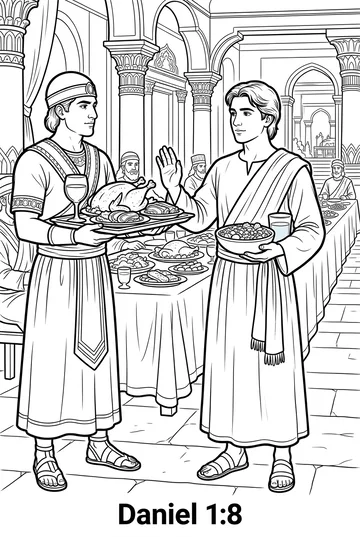
But Daniel purposed in his heart that he would not defile himself with the portion of the king’s meat, nor with the wine which he drank: therefore he requested of the prince of the eunuchs that he might not defile himself.
Daniel’s resolve not to defile himself with the king’s food begins the dietary test.
- Daniel 1:20
And in all matters of wisdom and understanding, that the king enquired of them, he found them ten times better than all the magicians and astrologers that were in all his realm.
Their tested diet was followed by wisdom and understanding surpassing Babylon’s wise men.
- Leviticus 11
And the LORD spake unto Moses and to Aaron, saying unto them,
The Mosaic law forbade some of the foods Daniel might have been offered.
- Daniel 1:5
And the king appointed them a daily provision of the king’s meat, and of the wine which he drank: so nourishing them three years, that at the end thereof they might stand before the king.
Defines the king’s food tested against.
- Daniel 1:3-4
And the king spake unto Ashpenaz the master of his eunuchs, that he should bring certain of the children of Israel, and of the king’s seed, and of the princes;
The verses describe young Israelites taken to Babylon and selected for royal service.
- Daniel 1:9
Now God had brought Daniel into favour and tender love with the prince of the eunuchs.
God grants Daniel favor with the officer, allowing his request.
- Daniel 1:19
And the king communed with them; and among them all was found none like Daniel, Hananiah, Mishael, and Azariah: therefore stood they before the king.
After their training, Daniel and his companions stand before the king.
- Daniel 1:4
Children in whom was no blemish, but well favoured, and skilful in all wisdom, and cunning in knowledge, and understanding science, and such as had ability in them to stand in the king’s palace, and whom they might teach the learning and the tongue of the Chaldeans.
they were already healthy young men
- Daniel 11:26
Yea, they that feed of the portion of his meat shall destroy him, and his army shall overflow: and many shall fall down slain.
Uses the same word for the king’s rich food
- Daniel 2:48
Then the king made Daniel a great man, and gave him many great gifts, and made him ruler over the whole province of Babylon, and chief of the governors over all the wise men of Babylon.
Daniel’s faithfulness during God’s training leads to promotion in Babylon.
Commentary part 1 of 2
Each commentary is drawn from primary sources: the writings of Ellen G. White and Adventist pioneers and periodicals. Each commentary is separate. Its own words are not a quotation; follow the references to read the source passages.
Ellen G. White
93 sources
Daniel and his companions ask the steward over them for ten days on simple food, after which their faces are to be examined beside those of the youths eating the king's food and they are to be treated according to what is seen.CTBH 25.5–26.2RH Feb 10, 1910ST Mar 2, 1882 The request carries out their settled refusal to defile themselves with food and wine devoted to idols and forbidden by God's law, for loyalty to God is at stake and not mere personal preference.CTBH 25.5–26.2Ms 175, 1898, par. 3–44MR 125.3–126.3ST Sep 18, 1884ST Feb 11, 1886 What is eaten and drunk shapes body, mind and morals, so their plain abstemious diet keeps digestion sound, nerves calm and thought clear while rich food, meat and wine becloud reason and weaken power for service.Ms 73, 1909, par. 1–6Lt 159, 1901, par. 16–18Ms 93, 1910, par. 3–44MR 125.3–126.3Lt 141, 1896, par. 22 God honors their steadfast principle with favor from rulers and with superior health, comeliness and tenfold wisdom, making their countenances a visible witness that there is a King above Babylon's king.Ms 73, 1909, par. 1–6Lt 159, 1901, par. 16–18Ms 175, 1898, par. 3–4Ms 13, 1900, par. 7–10Ms 132, 1901, par. 9–10 Their course stands recorded as the pattern of true temperance for youth in every age, calling all to make appetite servant rather than master and to trust God to protect those faithful in trial.Lt 159, 1901, par. 16–18RH May 22, 1900CTBH 189.2BS 20.3
Test Proposed and Decided
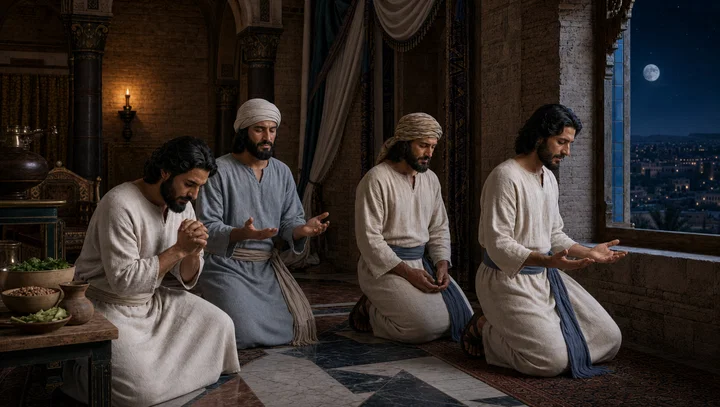
The verse records a ten-day test proposed after a request for simpler fare, that the countenances of Daniel and his companions be looked upon and compared with the countenance of the children eating the portion of the king's meat, and that the official then deal with his servants as he saw fit.CTBH 25.5–26.2RH Feb 10, 1910ST Mar 2, 1882HSFM 209.6–210.2Ms 33, 1909, par. 1–8 The trial was to prove true temperance and its blessings, with willingness to be judged by the result and to have further action decided by what was seen.CTBH 25.5–26.2RH Feb 10, 1910ST Mar 2, 1882HSFM 209.6–210.2Ms 73, 1909, par. 1–6 Daniel made the proposal to Melzar, with Hananiah, Mishael, and Azariah included in the ten days of pulse to eat and water to drink.RH Feb 10, 1910Ms 33, 1909, par. 1–8Ms 73, 1909, par. 1–6 It gives a proved sum that those desiring right relation to God can study and prove for themselves.Ms 73, 1909, par. 1–6
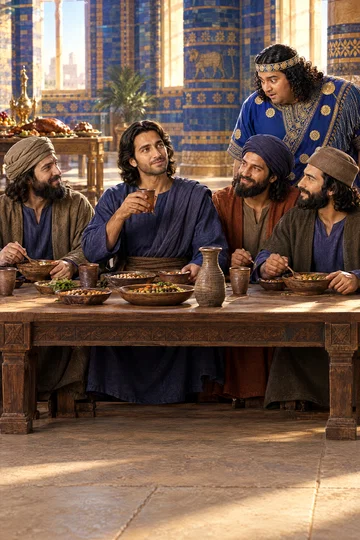
The contrast is between pulse and water on the one side and the king's rich food, meat, luxuries, dainties, and wine on the other.RH Feb 10, 1910Ms 33, 1909, par. 1–8Ms 73, 1909, par. 1–6CH 64.3–65.1STMW9 60.1–2 The companions in the comparison ate the king's rich food while Daniel and the other Hebrew youths lived on simple food.RH Feb 10, 1910Ms 33, 1909, par. 1–8CH 64.3–65.1GW92 82.2 Plain diet with a life of prayer is set against indulgence in the king's provision.CH 64.3–65.1STMW9 60.1–2GW92 82.2
The proposal answered the officer in charge, the steward and keeper of their food, who hesitated to grant plain food because he feared such rigid abstinence would spoil personal appearance and bring himself into disfavor with the king.CTBH 25.5–26.2ST Mar 2, 1882CH 64.2ST Feb 11, 1886 He feared the young men would look unfavorable, pale and weak, and incur the king's displeasure.CTBH 25.5–26.2ST Mar 2, 1882CH 64.2ST Feb 11, 1886 Daniel therefore pleaded that their countenances be compared at the end of the ten days and that he then deal with them as seen fit.CTBH 25.5–26.2ST Mar 2, 1882ST Feb 11, 1886
At the expiration of the ten days Daniel and his companions were found fairer and fatter in flesh and far more healthy in appearance than those who had partaken of the king's dainties.CTBH 25.5–26.2ST Mar 2, 1882Ms 73, 1909, par. 1–6CTBH 26.3–27.2 Those who had practiced temperance looked better and showed greater physical activity and mental vigor, with countenances a visible certificate of physical soundness and moral purity.CH 64.3–65.1CTBH 26.3–27.2STMW9 60.1–2 Their request was thus vindicated, Melzar took away the meat and wine and gave them pulse, and the simple pulse and water they first requested became thereafter their food during training.CTBH 25.5–26.2Ms 33, 1909, par. 1–8Ms 73, 1909, par. 1–6CH 64.3–65.1
The scene takes place during training for the Babylonian court, where the young Hebrew captives appealed to a palace attendant and made their case before him.PK 476B.1PK 479.2Lt 54, 1895, par. 613MR 67.1 They submitted their case to be judged by what was seen, demonstrating faithfulness amid temptation.PK 476B.1Lt 54, 1895, par. 613MR 67.1 Their trust did not replace effort, for they studied diligently and used their abilities through disciplined work.Lt 54, 1895, par. 6
Loyalty Behind Refusal
The proposal in the verse carries out a settled purpose not to defile self with the king's meat and wine.CTBH 25.5–26.2ST Feb 11, 1886Ms 132, 1901, par. 11 That royal fare included swine's flesh and other meats pronounced unclean by the law of Moses.CTBH 25.5–26.2ST Feb 11, 1886Ms 132, 1901, par. 11 The food and wine had also been dedicated to idols, so to partake would be participation in heathen worship, a denial of faith and a dishonor to God exposing character to corrupting influences.4MR 125.3–126.3Ms 122, 1897, par. 25–26Ms 122, 1897, par. 27–29 Wine in particular was feared as a snare that would weaken physical and mental powers and judgment.4MR 125.3–126.3Ms 122, 1897, par. 25–26 Refusal was therefore meant to preserve clear mental powers and physical health for God's service, to help resist temptation, and to equip the youths to represent true religion.Ms 132, 1901, par. 11
Far more than a scrupulous difference from others was at stake, for a vital principle involving light given by God and loyalty to God stood in the balance.ST Sep 18, 1884Ms 2b, 1895, par. 25–26Ms 14, 1896, par. 12–13 To comply with king and officers would have meant surrender of principle, compromise of truth, and apostasy from God.Ms 2b, 1895, par. 25–26BS 21.1 The youths therefore determined to be true whatever the consequences, leaving human judgment aside because God is the great Judge over all.Ms 2b, 1895, par. 25–26Ms 7, 1886, par. 4–610MR 90.1–91.2 Yielding to appetite would have weakened their sense of right, physical vigor, clear thinking, and spiritual power, and could have led from one wrong step to another until connection with Heaven was lost.Ms 175, 1898, par. 3–4BS 21.1 That fidelity became the turning point of their life, later forcing open disregard of the king's requirements even in the face of death, through which knowledge of the true God was spread throughout Babylon for the very purpose for which captivity had been permitted.Ms 47, 1898, par. 10–13Ms 2b, 1895, par. 25–26
The request was made courteously after favor had been gained, without passion, defiance, complaint, or contention.CH 64.2Ms 191, 1903, par. 21–23Ms 14, 1896, par. 12–134MR 124.2 There was willingness to follow court practices so long as they did not dishonor God, acting with integrity rather than as a slave, making no excuse to please men.BS 19.2–3Ms 191, 1903, par. 21–23Lt 80, 1894, par. 1 Daniel did not insist on eating and drinking as he pleased, but first took the matter to God in earnest prayer and sought wisdom before decision, then acted with true courage and perfect Christian courtesy toward elders and youth.Ms 14, 1896, par. 12–13 Speaking in such a way as to gain the confidence of those having power to control the matter, he quietly begged the privilege of simple food and obtained the ten-day comparison.CH 64.2Ms 191, 1903, par. 21–234MR 124.2 Pleasing God mattered more to him than royal favor or even life.BS 19.2–3
Daniel acted in faith that God would sustain them during the ten days on simple food and vindicate fidelity even at risk to themselves.Ms 110, 1904, par. 40–47Ms 7, 1886, par. 4–6Ms 132, 1901, par. 11 He asked that he and his companions be examined alongside those eating the king's food, leaving the official to judge by what was seen and to deal with them accordingly.Ms 13, 1900, par. 7–10Ms 25, 1887, par. 1710MR 90.1–91.2 He would not accept a condition he believed would weaken him and hinder him from honoring God, but was willing to risk the consequences rather than dishonor Him.Ms 7, 1886, par. 4–610MR 90.1–91.2 Trust was joined with determined effort to obey, in the confidence that the result would prove the wisdom of the choice.Ms 13, 1900, par. 7–10Ms 132, 1901, par. 11
That firmness had been prepared by early training in Judea in pure, sound principles, the truths of God's Word, and strict temperance in all things for present and future good.Ms 71, 1910, par. 1Ms 56, 1895, par. 8Ms 140, 1906, par. 19–20Ms 5, 1909, par. 16 Upbringing in their homes, where wine and luxuries of the king's table were unknown, had given temperate habits, healthy blood, and healthy appearance with no trace of weakness, and had laid out their course as students to stand high in clear intellect and in clear presentation of matters bringing a knowledge of God.Ms 71, 1910, par. 1Ms 110, 1904, par. 9 Careful home training in the hills of Judea thus met the severe test that tried the faith of the captives, producing firm loyalty to right principle under trial and refusal to apostatize and break God's commandments even if life must be sacrificed.Ms 140, 1906, par. 19–20Ms 5, 1909, par. 16Ms 110, 1904, par. 25–28
Health and Mental Effects
What is eaten and drunk shapes the powers of body, mind, and morals, and a careful, abstemious diet keeps the digestive organs sound, the blood healthful, the nerves calm, and the mind clear and keen to comprehend instruction and gain knowledge.Ms 73, 1909, par. 1–6Lt 159, 1901, par. 16–18Ms 93, 1910, par. 3–4Ms 71, 1910, par. 14MR 123.2–3 The ten-day test of pulse to eat and water to drink set against the king's meat, rich food, luxuries, and wine was proposed to Melzar, the steward and keeper of their food, that the countenances of Daniel with Hananiah, Mishael, and Azariah be looked upon and compared with the countenances of the children eating the portion of the king's meat, and that further dealing be decided by what was seen.Ms 73, 1909, par. 1–6Lt 159, 1901, par. 16–18Ms 93, 1910, par. 3–4Ms 71, 1910, par. 1CTBH 26.3–27.2 Eating merely to gratify taste impairs digestion and confuses the brain, while denying selfish appetite and governing appetite by sound reasoning and conscience closes the door to temptation and places the eater in right relation to God.Ms 73, 1909, par. 1–6Lt 159, 1901, par. 16–184MR 123.2–3Lt 141, 1896, par. 22Ms 35, 1890, par. 10–11 Care of the blood-making organs by such a diet honors God, keeps intelligence dependent on right habits, and leaves students better prepared for study and for taxing physical labor, with vigorous thinking, strength of thought and memory, and freedom from sickness.Ms 73, 1909, par. 1–6Lt 159, 1901, par. 16–18Ms 93, 1910, par. 3–4Ms 71, 1910, par. 14MR 123.2–3 At the expiration the youths were found fairer and fatter in flesh and far more healthy in appearance than those eating the king's dainties, so pulse and water became their food thereafter, their privilege to follow their own course in education was kept, and a power from above working with their effort gave knowledge and skill in all learning and wisdom better than that of all the magicians, astrologers, and wise men in the realm.Ms 73, 1909, par. 1–6Lt 159, 1901, par. 16–18CTBH 26.3–27.24MR 123.2–3RH Feb 10, 1910
Strict temperance in all things preserves physical strength, comeliness, endurance, intellectual power, and spiritual power for present and future good.HSFM 209.6–210.2Ms 175, 1898, par. 3–4CTBH 26.3–27.24MR 123.2–3BS 20.3 Their willingness to be judged by the visible result showed resolve to avoid defilement and to honor God, and the healthy appearance that followed is the evidence and blessing of self-denial and true temperance.HSFM 209.6–210.2Ms 175, 1898, par. 3–4CTBH 26.3–27.24MR 123.2–3RH Feb 10, 1910 Such resolve strengthened their minds and preserved their physical powers, and obedience to God's laws was followed by health, strength, comeliness, and intellectual ability, with increased understanding and wisdom and examination proving them ten times better.Ms 175, 1898, par. 3–4CTBH 26.3–27.24MR 123.2–3RH Feb 10, 1910BS 20.3 By contrast, indulgence of perverted appetite weakens the sense of right, vigor, clear thinking, and connection with Heaven, leaving those at the king's table behind in every way even while the faithful are faithful in little things.HSFM 209.6–210.2Ms 175, 1898, par. 3–44MR 123.2–3RH Feb 10, 1910BS 20.3 Abstaining from intoxicating drink and resisting appetite therefore benefits bodily health and mental ability and supports moral and intellectual attainment.HSFM 209.6–210.2Ms 175, 1898, par. 3–4CTBH 26.3–27.2RH Feb 10, 1910BS 20.3
Wine was feared as a snare that weakens physical and mental powers and judgment, and wine with flesh meats, stimulating drink, tobacco, liquor, luxurious variety, and food dedicated to idols were refused because they burden digestion, clog and confuse the brain, becloud reason, and dishonor God by participation in heathen worship.4MR 125.3–126.3Lt 141, 1896, par. 22Ms 35, 1890, par. 10–11Ms 122, 1897, par. 25–26Lt 73, 1896, par. 50–53 The mind must not be clogged by articles difficult of digestion, and even healthful food must be restricted in quantity, for excessive food and surfeiting burden digestion and weaken ability to learn.4MR 125.3–126.3Lt 141, 1896, par. 22Ms 35, 1890, par. 10–1120MR 116.6Lt 73, 1896, par. 50–53 Meat eating and great variety of food give no advantage for strength or service, and all human testimony for a meat diet should have no weight in light of this test.Lt 141, 1896, par. 22Ms 35, 1890, par. 10–1120MR 116.6Ms 122, 1897, par. 25–26Lt 73, 1896, par. 50–53 Proper regard for food keeps a healthful current of blood in the veins and keeps mind and body fit for hard, stern labor, unoppressed by flesh meats of any kind.4MR 125.3–126.34MR 123.2–3Lt 141, 1896, par. 2220MR 116.6Lt 73, 1896, par. 50–53 Those who ate the king's luxuries and drank his wine lost the clear sparkle of the eye and the ruddy healthful glow of the countenance, while the abstemious countenances became a certificate of physical soundness and moral purity.4MR 125.3–126.34MR 123.2–3Lt 141, 1896, par. 22Ms 35, 1890, par. 10–11Lt 73, 1896, par. 50–53
Plainness of diet joined with a life of prayer gives in great degree clearness of mind, firmness of purpose, and strength of intellect in acquiring knowledge and strength to resist temptation.4T 515.4GW92 82.2MYP 242.219MR 256.2–3Ms 73, 1909, par. 9 That course requires self-control in appetite with constant earnest seeking of God, touching no liquor or tobacco, living on simple wholesome food of plain variety, taking few kinds at one meal, eating sparingly even of plain food especially when the brain is constantly taxed and there is lack of physical exercise, and never loading down the stomach but giving it a chance.4T 515.4GW92 82.2MYP 242.219MR 256.2–3Ms 71, 1910, par. 14–15 Such simple diet keeps the human organism free from disturbances, proves itself in health, strength of body, strength of voice, and strength of intellect, and keeps joy full by bringing holy influences rather than tainting the atmosphere.4T 515.4GW92 82.219MR 256.2–3Ms 73, 1909, par. 9Ms 71, 1910, par. 14–15 It calls for force of character rather than time-serving, for keen feeling and quick perception in labor for God, and for subduing the passions as part of fighting for the kingdom and perfecting Christian character.4T 515.4MYP 242.219MR 256.2–3Ms 73, 1909, par. 9Ms 71, 1910, par. 14–15
Divine Blessing and Witness
God brought Daniel into favor and tender love with the prince of the eunuchs and with the officer in charge, and because religious principle was at stake He showed approval of steadfast principle by having the request for the ten-day trial on pulse to eat and water to drink granted.Lt 159, 1901, par. 16–18Ms 13, 1900, par. 7–10Ms 14, 1896, par. 12–13 The proposal was made courteously, without passion, defiance, or insistence on pleasing self, after earnest prayer and seeking wisdom from the Lord, and it asked that after ten days their countenances be looked upon and compared with the countenances of those eating the portion of the king's meat, with further dealing decided by what was seen.Lt 159, 1901, par. 16–18Ms 13, 1900, par. 7–10Ms 14, 1896, par. 12–13 The officer had feared that rigid abstinence and a simple diet would leave them pale and weak in personal appearance and bring himself into disfavor with the king, yet their course obtained favor with God and with men.Ms 132, 1901, par. 9–10CH 64.2Ms 14, 1896, par. 12–13
God cooperated with such obedience by giving knowledge and skill in all learning and wisdom, understanding in visions and dreams to Daniel, and success that on examination proved them ten times better than all the magicians and astrologers in the realm.Ms 73, 1909, par. 1–6Lt 159, 1901, par. 16–18Ms 13, 1900, par. 7–10 Their temperance and resolve to honor God preserved physical powers, kept the digestive organs sound and the blood healthful, and strengthened minds to stand high in clear intellect and clear presentation of matters that bring a knowledge of God and the truth.Ms 73, 1909, par. 1–6Ms 175, 1898, par. 3–4Ms 71, 1910, par. 1 What was eaten and drunk influenced powers of mind and health of body, so that careful diet left them fairer and fatter in flesh, while eating merely to gratify taste would have impaired digestion and confused the brain.Ms 73, 1909, par. 1–6CTBH 26.3–27.2 A power from above worked in harmony with diligent effort and did not replace it, and Melzar therefore took away the meat and wine and gave them pulse, leaving them the privilege of following their own course in education.Ms 73, 1909, par. 1–6Lt 159, 1901, par. 16–18 Those who make the most of their opportunities and place themselves in right relation with God by denying appetite, closing the door to temptation, and eating and drinking as conscience directs will be rewarded even as Daniel was, and to all who do as these youth did the Lord will manifest Himself.Lt 159, 1901, par. 16–18Ms 13, 1900, par. 7–10
The stand was ordained to show Babylon that there is a King above the king of Babylon and above the images Babylon worshipped, carrying to a heathen nation the knowledge of the only true God, the Creator of heaven and earth.Ms 13, 1900, par. 7–104MR 123.2–3Ms 47, 1898, par. 10–13 Their captivity served God's purpose of making them representatives who made no compromise with idolatry, remained loyal to faith and to the Creator, and stood firm in principle through close connection with God.Ms 2b, 1895, par. 25–268T 153.1–3Lt 57, 1896, par. 12–14 Loyalty to God in this test gave Babylon evidence of His supremacy and of the results of obedience, and God ordained their connection with the great men of Babylon that these men might become acquainted with the religion of the Hebrews and know that God reigns over all kingdoms.PK 479.2Ms 47, 1898, par. 10–13 Through steadfastness under threat the knowledge of the true God was afterward spread throughout the empire, accomplishing the very purpose for which their captivity in that heathen land had been permitted.Ms 2b, 1895, par. 25–26
Their countenances became a visible certificate of physical soundness and moral purity and evidence of pure, correct, temperate habits, and the favorable result after ten days led to permission to continue their chosen diet.STMW9 60.1–220MR 116.1–5Lt 124, 1899, par. 12–14 Faithfulness even in little things made a distinction in every way, leaving them far ahead in physical appearance of the youth at the king's table, while those who ate the king's luxuries and drank his wine had lost the clear sparkle of the eye and the ruddy healthful glow from the countenance.4MR 123.2–320MR 116.1–5Lt 73, 1896, par. 50–53 God showed His approval and desired His servants to honor Him by steadfast principle in all habits of life, honoring them with a clear mind, knowledge, skill, and wisdom.20MR 116.1–5Lt 73, 1896, par. 50–53
Faithfulness in this little thing entrusted to them gave complexion to the whole life, for whatever is worth doing is worth doing well, requiring faithfulness in the smallest duties as well as in work requiring the largest sacrifice.Ms 47, 1898, par. 14–15Ms 113, 1901, par. 19–23 Daniel's faithfulness in small things helped his companions stand firm too and prepared him for greater responsibilities and tests, even when sacrifice involved life, and his place was earned through self-denial, endurance, and steadfast faithfulness linked with God rather than by rushing into advancement.Ms 47, 1898, par. 14–15Ms 113, 1901, par. 19–23Lt 75, 1898, par. 23–25 When duty brings believers into trial in the king's court they can trust God to protect them, which is different from choosing the society of the ungodly, conforming to worldly customs, and becoming familiar with sin until it appears less repulsive.GC88 508.2–509.1GC 509.1
Example for Daily Life
The course taken in proposing the ten-day comparison of countenances was recorded for the youth of all succeeding ages to emulate as proof of true temperance and integrity under test.RH May 22, 1900CTBH 189.2 What was done then can be done again even under circumstances as unfavorable, with the same favor and blessing, showing that religious principle enables the young to resist temptation and remain faithful even at personal cost and sacrifice.BS 20.3ST Nov 4, 1886CH 65.3 The danger is not from scarcity but from abundance and constant temptation to excess, so strict temperance in the use of all bounties and total abstinence from every injurious or debasing indulgence are required to preserve the powers unimpaired for service. Right physical habits promote mental superiority, for intellectual power, physical strength, and longevity depend upon immutable laws with no chance about it, and there is no divine interference to preserve men from the consequences of violating nature's laws. While parents are responsible for the stamp of character and the education and training given to sons and daughters, position and usefulness in the world depend to a great degree upon one's own course of action.
Success in education is not a matter of chance or destiny but comes through self-denial in eating and drinking, diligent persevering effort, and making religious interest first and the highest study.Ms 93, 1910, par. 3–4Ms 140, 1904, par. 8–9MYP 147.1SPBC 178.1CE 91.3 The heart drawn toward heavenly things testifies of heavenly things in words and actions, creating a fragrant atmosphere and spiritual health of soul.Ms 140, 1904, par. 8–9 Care of the body's blood-making organs through a careful diet, proportionate exercise of body and mind, purity of motive and determination of purpose to honor the Lord, welcoming divine counsel and submitting to divine discipline, and using abilities and opportunities fully all belong to the lesson, for blessing does not replace deliberate labor.Ms 93, 1910, par. 3–4Ms 71, 1910, par. 5–6MYP 147.1SPBC 178.1CE 91.3
The experience is a lesson in health reform and a pattern for institutions, canvassers, and families to copy, showing how eating habits express separation from worldly practices and affect physical, mental, and moral well-being.6T 372.2RH Jun 11, 1914Ms 132, 1901, par. 15 Refusing meat to glorify God protects physical, mental, and moral development, and those who resolutely follow divine guidance in diet can receive strength, wisdom, and sound judgment.RH Feb 24, 19109T 157.4Ms 132, 1901, par. 15 Putting the choice of food to a practical trial by comparing appearance, self-denial becomes preparation for a life of useful service.RH Jun 11, 1914RH Feb 24, 1910Ms 85, 1910, par. 31–33
Appetite and passions must be made servants rather than rulers, with appetite kept under control so the mind is clear and keen to comprehend instruction, the door to temptation closed, and eating and drinking ordered as conscience directs in right relation to God.Lt 159, 1901, par. 16–18Lt 141, 1896, par. 22Ms 85, 1910, par. 11–14 Diet must be regulated by knowledge given for benefit, temperate in eating and governed not by impulse but by sound reasoning, refusing wine and meat and luxuries and rich variety because they clog the mind and burden digestion, and restricting even healthful food in quantity and kinds at one meal without surfeiting the stomach.Lt 159, 1901, par. 16–18Lt 141, 1896, par. 22STB 851.2–852.1 Such disciplined appetite in conformity to requirements, with continual alert struggle, victory over self, refusal of sinful association and unprofitable amusement, and offering the body fit for hard, stern labor with healthful blood, qualifies for higher work, keeps the senses and mental faculties clear to discern truth and righteousness, and preserves spirituality.Lt 141, 1896, par. 22MYP 41.3STB 851.2–852.1Ms 85, 1910, par. 11–14
Those established, rooted and grounded in the truth who enter worldly colleges and institutions of learning as students are to follow the same pattern: live out belief without pretension, never sacrifice principle, and start no open controversy.Ms 22b, 1895 [Copy 2], par. 24–27Ms 22c, 1895 [Copy 3], par. 21–244MR 51.1–53.1 They are to respect all rules and regulations of the school, depend far more on the power of God manifested in the life than on words spoken, keep the living principles of truth including Sabbath observance, and let the godly life do the witnessing.Ms 22b, 1895 [Copy 2], par. 24–27Ms 22c, 1895 [Copy 3], par. 21–244MR 51.1–53.1 That consistent life provokes inquiry, and then inquirers are to be told in simple language the simple Bible doctrines, the truth as it is in Jesus, with opportunity for questions, dropping seeds that under the Holy Spirit spring up to bear fruit for the glory of God in the saving of souls.Ms 22b, 1895 [Copy 2], par. 24–27Ms 22c, 1895 [Copy 3], par. 21–244MR 51.1–53.1 This work belongs only to those with the Spirit wrought into the being, prudent and wise, led and taught of God, making a friend of God rather than companionship that harms spirituality, fighting bravely in divine strength as more than conquerors, for those without decided connection will themselves be led astray and children and youth reveal what is expected when parents treat them as a sacred trust and train them from babyhood to keep the commandments and form character after the divine similitude.Ms 65, 1901, par. 15–16Ms 22c, 1895 [Copy 3], par. 21–24Ms 62, 1901, par. 17–18
Faithfulness in the little thing of offering the countenance to be examined gives complexion to the whole life, for whatever is worth doing is worth doing well in smallest duties as well as largest sacrifice, showing purity of character, honesty in dealings, and sanctification through truth received and obeyed as children of the heavenly King in the world but not of it.Ms 7, 1895, par. 27–30Ms 47, 1898, par. 14–15 Living out the light received and then working for others joins temperance with preserving physical strength for mental and spiritual usefulness, and loyalty in daily life in Babylon brought rich blessings and divine protection.ST Nov 4, 1886Lt 36, 1887, par. 15–16Ms 175, 1898, par. 54MR 169.3–170.3 In His dealings lessons of value were worked out for those living in the present stage of history, to be studied diligently from the highest standpoint by young men and proclaimed as thrilling truths appropriate for this time by every gospel minister, all as light-bearers gathering rays from heaven and shedding them on those around them in answer to the present call for workers.Lt 128, 1910, par. 7 Youth in the last days face equally severe tests over loyalty to the commandments, and need the same firmness to resist corrupting surroundings through grace and hold fast to purity and God-fearing principles in positions of trust.Lt 36, 1887, par. 15–16
Sources