Translations
American King James Version, King James Version, KJV Cambridge Paragraph Bible, Webster Bible
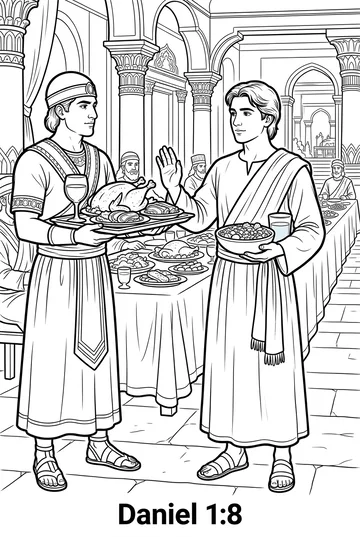
So he consented to them in this matter, and proved them ten days.
Revised Version, American Standard Version
So he hearkened unto them in this matter, and proved them ten days.
And he hearkeneth to them, to this word, and trieth them ten days:
And he hearkened unto them in this matter, and proved them ten days.
So then he hearkened unto them, according to this word,—and proved them ten days;
Berean Standard Bible, Majority Standard Bible
So he consented to this and tested them for ten days.
So he listened to them in this matter, and tested them for ten days.
So he gave ear to them in this thing and put them to the test for ten days.
So hee consented to them in this matter, an proued them ten dayes.
Douay-Rheims (Challoner revision)
And when he had heard these words, he tried them for ten days.
Pictures
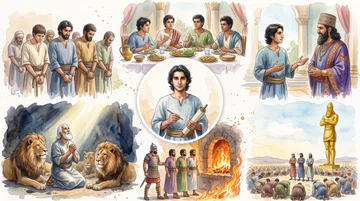
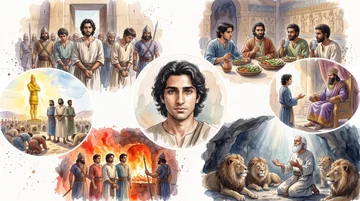

Cross-references
- Daniel 1:8
But Daniel purposed in his heart that he would not defile himself with the portion of the king’s meat, nor with the wine which he drank: therefore he requested of the prince of the eunuchs that he might not defile himself.
Daniel resolves not to defile himself with the king’s food.
- Daniel 1:20
And in all matters of wisdom and understanding, that the king enquired of them, he found them ten times better than all the magicians and astrologers that were in all his realm.
Their tested wisdom and understanding surpassed the king’s other advisers tenfold.
- Daniel 1:5
And the king appointed them a daily provision of the king’s meat, and of the wine which he drank: so nourishing them three years, that at the end thereof they might stand before the king.
The king assigns the captives food and wine that Daniel’s trial replaces.
- Daniel 3:16-18
Shadrach, Meshach, and Abed-nego, answered and said to the king, O Nebuchadnezzar, we are not careful to answer thee in this matter.
Both accounts show steadfast loyalty to God despite the king’s demands and danger.
- Daniel 1:9
Now God had brought Daniel into favour and tender love with the prince of the eunuchs.
God gave favor that gained consent
- Daniel 1:18-19
Now at the end of the days that the king had said he should bring them in, then the prince of the eunuchs brought them in before Nebuchadnezzar.
At the end of the appointed time, the young men stand before the king.
- Daniel 1:10
And the prince of the eunuchs said unto Daniel, I fear my lord the king, who hath appointed your meat and your drink: for why should he see your faces worse liking than the children which are of your sort? then shall ye make me endanger my head to the king.
The officer explains the risk of Daniel’s proposed test.
- Daniel 1:4
Children in whom was no blemish, but well favoured, and skilful in all wisdom, and cunning in knowledge, and understanding science, and such as had ability in them to stand in the king’s palace, and whom they might teach the learning and the tongue of the Chaldeans.
their health explains short test
- Ezekiel 14:14
Though these three men, Noah, Daniel, and Job, were in it, they should deliver but their own souls by their righteousness, saith the Lord GOD.
Daniel is named with Noah and Job as an exemplar.
- Daniel 1:3
And the king spake unto Ashpenaz the master of his eunuchs, that he should bring certain of the children of Israel, and of the king’s seed, and of the princes;
their background explains diet similarity
- Exodus 16:4
Then said the LORD unto Moses, Behold, I will rain bread from heaven for you; and the people shall go out and gather a certain rate every day, that I may prove them, whether they will walk in my law, or no.
God feeds Israel with bread from heaven.
Commentary part 1 of 2
Each commentary is drawn from primary sources: the writings of Ellen G. White and Adventist pioneers and periodicals. Each commentary is separate. Its own words are not a quotation; follow the references to read the source passages.
Ellen G. White
126 sources
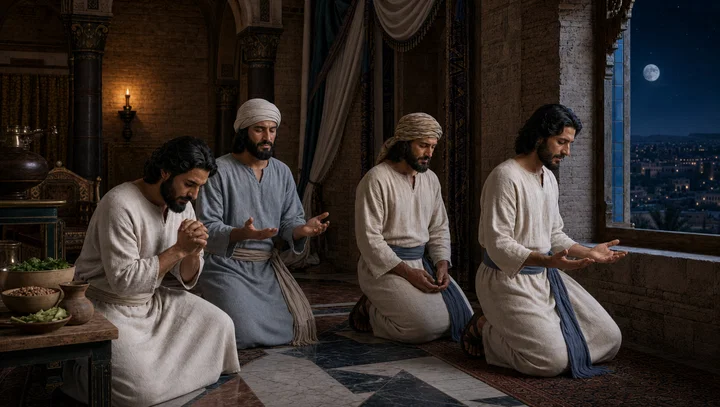
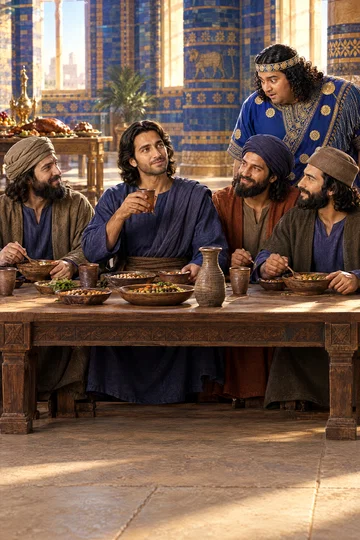
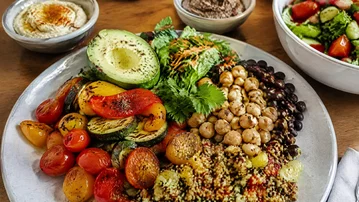
Melzar the steward consented to prove Daniel, Hananiah, Mishael and Azariah for ten days on pulse to eat and water to drink instead of the portion of the king's meat and wine.ST Mar 2, 1882CTBH 25.5–26.2RH Feb 10, 1910 Daniel had purposed not to defile himself with food pronounced unclean by the law of Moses and dedicated to idols, and he sought the trial by earnest entreaty with humility, courtesy and courage after taking the matter to God in prayer.CTBH 25.5–26.2Lt 159, 1901, par. 16–184MR 125.3–126.3Ms 2b, 1895, par. 25–26 At the end of the ten days they appeared fairer and fatter in flesh than those who ate the royal luxuries, with clear eyes and ruddy health, and pulse and water became their continuing food.ST Mar 2, 1882CTBH 25.5–26.2RH Feb 10, 1910 The short trial is a forcible illustration of true temperance, proving that plain simple food keeps mind and body in best health for God's service while rich food and stimulating drink clog digestion, confuse the brain and enfeeble intellect.CTBH 25.5–26.2HSFM 209.6–210.2Ms 175, 1898, par. 3–420MR 116.1–5Ms 65, 1901, par. 11–14 Their faithfulness in this small test over appetite was the turning point that enabled faithfulness in larger trials even in the face of death, and God co-operated with their diligent effort by giving them knowledge, wisdom and favor, making them an example of what youth today may be in standing true to principle at any cost.Lt 159, 1901, par. 16–18Ms 73, 1909, par. 1–6Ms 13, 1900, par. 7–10Ms 2b, 1895, par. 25–26Ms 47, 1898, par. 14–15
The Ten-Day Agreement
The one in charge — called Melzar, the steward, the keeper, the overseer, the chief official and the prince of the eunuchs — consented to Daniel’s proposal and proved Daniel, Hananiah, Mishael and Azariah for ten days on pulse to eat and water to drink, or simple fare, instead of the portion of the king’s meat and wine.ST Mar 2, 1882CTBH 25.5–26.2RH Feb 10, 1910Ms 33, 1909, par. 1–8Ms 73, 1909, par. 1–6 At the end of the trial they looked healthier than the youths who ate the king’s fare, so the simple diet of pulse and water was continued as their food.ST Mar 2, 1882CTBH 25.5–26.2RH Feb 10, 1910Ms 33, 1909, par. 1–8 God helped Daniel because he had purposed obedience, bringing him into favor and tender love with the prince of the eunuchs so the request was granted and he and his companions were allowed to eat and drink as conscience told them they should.Lt 159, 1901, par. 16–18Ms 13, 1900, par. 7–10
The consent was sought by earnest entreaty and was granted after Daniel purposed in his heart not to defile himself, took the matter to God in prayer for wisdom, and then presented the request with humility, courtesy, courage and without passion, excuse, loud protest or defiance, gaining the confidence of those with power to decide.Lt 159, 1901, par. 16–18Ms 13, 1900, par. 7–10PK 476B.1Ms 2b, 1895, par. 25–2620MR 116.1–5 A vital principle was involved, for they would not compromise in the least degree the light God had given, would let no influence come between them and their Maker, and determined to be true whatever the consequences because God is the great Judge.ST Sep 18, 1884Ms 2b, 1895, par. 25–26 They earnestly begged not to be compelled to eat the king’s meats and wines and asked for the ten-day trial on their chosen abstemious diet, with examination of their physical appearance afterward to decide whether it disadvantaged them.Ms 132, 1901, par. 9–1020MR 116.1–5
The officer at first hesitated for fear that such rigid abstinence would make the youths look unfavorable and bring himself into disfavor with the king.CTBH 25.5–26.2 He feared the rigid abstinence would harm their appearance, and that harm would bring disfavor from the king upon himself.CTBH 25.5–26.2
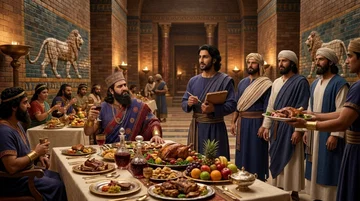
The test took place in Babylon in an ornate palace chamber beside the steward’s table at the beginning of the seventy years’ captivity, where the captive Hebrews stood as witnesses for God in a heathen land in both prosperity and adversity.PK 479.2PK 479.1PK 476B.1 Taken to Babylon as captives, they bore their faith and their name as worshipers of the living God as a high honor, carrying out God’s purpose to give heathen nations the blessings that come through a knowledge of Jehovah as His representatives.PK 479.1Ms 48, 1898, par. 17–18 Their perilous surroundings in wicked and corrupt Babylon did not make godliness impossible, for God’s providence placed them there and His grace strengthened them to resist temptation and keep their principles.PK 490.1–218MR 259.3–260.1Ms 48, 1898, par. 17–18
Ten days was a very short time for the test, but the youths were willing to take the risk.Ms 93, 1910, par. 3–4Ms 85, 1910, par. 5–10 The proposed test was accepted and carried out for ten days so that their appearance and condition on the chosen diet could be examined and compared with that of the youths who ate the royal food and judged whether it was to their disadvantage.Ms 73, 1909, par. 1–6Ms 85, 1910, par. 15–17RH Feb 10, 1910Ms 132, 1901, par. 9–1020MR 116.1–5 Afterward they appeared healthier, which showed their choice was wholesome and no mistake, vindicating their refusal of the king’s rich food and wine.Ms 33, 1909, par. 1–8Ms 85, 1910, par. 15–17RH Feb 10, 1910
Reasons for Refusing Food
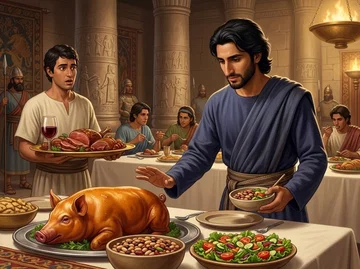
Daniel had purposed in his heart not to defile himself with the portion of the king's meat and wine, and the ten-day trial was sought to test simple fare in its place.CTBH 25.5–26.2CTBH 189.2 That royal provision included meats pronounced unclean by the law of Moses, including swine's flesh and other forbidden meats.CTBH 25.5–26.2 It also included luxuries and indulgences they had not had in their Judean homes, which they refused as contrary to what God allowed.Ms 132, 1901, par. 11Ms 110, 1904, par. 9 Their refusal was a determined effort to resist what would harm physical, mental and moral growth, choosing only what would keep mind clear and body fit for God's service and for the development of Christian character.Ms 132, 1901, par. 11Ms 132, 1901, par. 15 It rested on temperate habits already formed in the training school of temperance and self-denial, and it teaches that youth now should be trained in that same school not to indulge extravagance in eating and drinking.Ms 110, 1904, par. 9
The food and wine had been dedicated to idols, so to partake would dishonor God and implicate the eaters in heathen worship.4MR 125.3–126.3Ms 122, 1897, par. 25–26Ms 122, 1897, par. 27–29 To eat would compromise faith and truth, and even to accept a place at the king's table on those terms would have been surrender of principle and apostasy from God.Ms 2b, 1895, par. 25–26Ms 122, 1897, par. 27–29Ms 16, 1896, par. 23–24 A vital principle of loyalty was involved, admitting no compromise in the least degree and no influence allowed to come between them and their Maker, whatever the consequences or the judgment of men.Ms 2b, 1895, par. 25–26 They therefore held to temperance in eating and drinking as obedience to the will of God as the supreme law of life, that they might stand as sincere representatives of true religion amid false religions.Ms 2b, 1895, par. 25–26Ms 16, 1896, par. 23–24
Wine was discerned as a snare that would become pleasing and soon be preferred to water, and therefore to be refused altogether.4MR 125.3–126.3Ms 122, 1897, par. 25–26 It was an exciting and intoxicating stimulus whose evil results are seen on every hand, producing irritable tempers and disturbed and confused minds.Ms 122, 1897, par. 25–26Ms 73, 1909, par. 7 For that reason they practiced strict abstinence from fermented wine and from the rich food and wines of the king's table while gaining their education, proving the advantage of an abstemious diet.Ms 123, 1901, par. 11Ms 16, 1896, par. 23–24Ms 93, 1899, par. 16 Their stand included wine and every stimulating drink, with liquor, tobacco and other stimulating narcotics understood as likewise to be let alone in self-denial.Ms 16, 1896, par. 23–24Ms 73, 1909, par. 7
They had been taught that that class of food would not keep mind and body in the best health for God's service, and they earnestly begged not to be compelled to eat it.20MR 116.1–5Ms 65, 1901, par. 11–14Lt 73, 1896, par. 50–53 Rich food and flesh meats with wine as stimulus would clog the mind with articles difficult of digestion, confuse the brain, impair the digestive organs, and enfeeble brain and muscle.Ms 65, 1901, par. 11–14Lt 141, 1896, par. 22Ms 16, 1896, par. 23–24 Such clogging would leave them unable to distinguish between right and wrong and between the sacred and the common, and unable to receive the education God would give to make them successful Christian statesmen.Ms 65, 1901, par. 11–14Lt 141, 1896, par. 22 By governing appetite not by impulse but by sound reasoning, restricting even healthful food in quantity and keeping what entered the stomach under their own control, they kept a healthful current of blood and kept mind and body fit for hard labor and for God's work.Lt 141, 1896, par. 224MR 130.1Ms 25, 1887, par. 17
Results of the Trial
At the end of the ten days Daniel, Hananiah, Mishael and Azariah appeared fairer and fatter in flesh than those who ate the portion of the king's meat and drank his wine.ST Mar 2, 1882CTBH 25.5–26.2RH Feb 10, 1910Ms 33, 1909, par. 1–8Ms 73, 1909, par. 1–6 They were far healthier, with clear eyes, a ruddy healthful glow and a clear sparkle of the eye, while the youths who lived on the king's luxuries lost that soundness.CTBH 25.5–26.2Ms 73, 1909, par. 1–6Lt 34, 1900, par. 2–5 The simple fare of pulse to eat and water to drink was thus proved to suit them, supporting a clear brain and an active mind for learning.ST Mar 2, 1882Ms 73, 1909, par. 1–6Lt 34, 1900, par. 2–5
Because the trial showed their choice was wholesome and no mistake, pulse and water became their continuing food.ST Mar 2, 1882CTBH 25.5–26.2RH Feb 10, 1910Ms 85, 1910, par. 15–17 They were permitted to follow their own course in obtaining their education, and the authorities regarded them more highly than the other students.ST Mar 2, 1882Ms 73, 1909, par. 1–6
God co-operated with them in their effort to honor Him, giving them knowledge and skill in all learning and wisdom, and to Daniel understanding in all visions and dreams.Lt 159, 1901, par. 16–18Ms 73, 1909, par. 1–6Ms 13, 1900, par. 7–10Ms 47, 1898, par. 10–13 He gave clear understanding and sounder judgment, with strength of thought and memory from minds kept clear and free from the oppression caused by luxurious food, from sickness, and from confusion of brain.Ms 47, 1898, par. 10–13Ms 65, 1901, par. 11–14Ms 191, 1903, par. 21–23 When examined after years of training they were found ten times better than all the magicians, astrologers and wise men in the realm.Lt 159, 1901, par. 16–18Ms 73, 1909, par. 1–6Ms 65, 1901, par. 11–14Ms 191, 1903, par. 21–23
Their loyalty gave Babylon evidence of God's supremacy, the holiness of His requirements, and the results of obedience.PK 479.2PK 479.1Ms 47, 1898, par. 10–13 It showed there is a King above the king of Babylon who reigns over all kingdoms, carrying to Babylon the knowledge of the only true God and the blessings that come through a knowledge of Jehovah.Ms 13, 1900, par. 7–10PK 479.1Ms 47, 1898, par. 10–13 Standing true as steel to principle in both prosperity and adversity, refusing to be corrupted by selfishness and choosing to honor God at loss of all things rather than compromise with idolaters, they revealed Him to the idolatrous nation as cheerful, faithful, unselfish representatives giving most unselfish service.PK 479.18T 153.1–3Ms 48, 1898, par. 17–1813MR 133.1–2
The ten-day proof is a sum proved that may be proved again today and settles the question of diet.Ms 73, 1909, par. 1–620MR 116.6 No human testimony about the advantages of a meat diet or a great variety of food carries weight in light of that history.Ms 73, 1909, par. 1–620MR 116.6 Health reform does not cause loss of physical strength but sustains strength and gives victory in labor.Ms 73, 1909, par. 1–6
Temperance and Health Lessons
The ten-day agreement affords a comprehensive and forcible illustration of true temperance and its attendant blessings of strength, health, comeliness and physical stamina and endurance.CTBH 25.5–26.2HSFM 209.6–210.2Ms 175, 1898, par. 3–4RH May 22, 1900 It teaches strict temperance in all things and in eating and drinking, with avoidance of excess, artificial stimulants and indulgence of perverted appetite.CTBH 25.5–26.2HSFM 209.6–210.2Ms 175, 1898, par. 3–4Lt 42, 1900, par. 20 The firm choice to preserve physical powers by temperance was blessed with increased physical, mental and spiritual understanding for greater usefulness, showing that obedience to natural and moral law brings vigor and favor even under difficult circumstances.HSFM 209.6–210.2Ms 175, 1898, par. 3–4RH May 22, 1900Lt 42, 1900, par. 20 Diet can be tested by trial, and what is eaten and drunk influences the powers of the mind.Ms 73, 1909, par. 1–6Lt 34, 1900, par. 2–5Ms 71, 1910, par. 1RH Nov 10, 1904Ms 180, 1901, par. 11–13 Careful diet gives healthful bodies and clear minds, while eating simply to gratify taste impairs the digestive organs and confuses the brain so that neither body nor brain can act fully as intended.Ms 73, 1909, par. 1–6Lt 34, 1900, par. 2–5Ms 71, 1910, par. 1Ms 93, 1899, par. 16Ms 180, 1901, par. 11–13 Refusing wine, intoxicating drink and rich foods kept intelligence clear for study and for presenting the knowledge of God and truth, placing the youths where clearer understanding and sounder judgment could be given.Ms 71, 1910, par. 1RH Nov 10, 1904Ms 93, 1899, par. 16Ms 180, 1901, par. 11–13
Plainness of diet in connection with a life of prayer gives clearness of mind, firmness of purpose and strength of intellect in acquiring knowledge.Ms 9, 1893, par. 1–3Ms 47, 1898, par. 10–13GW92 82.24T 515.4MYP 242.2 The simple fare without wine or highly flavored meat suited the body, supported a clear brain and active mind for learning, and made a visible distinction from those who indulged appetite.Ms 9, 1893, par. 1–3Ms 47, 1898, par. 10–13MYP 242.24MR 130.1 It kept minds clear, freed them from the oppression caused by luxurious food, kept them from sickness, and gave strength of thought and memory so they could think and work vigorously and be better prepared for study and for taxing labor.Ms 47, 1898, par. 10–13GW92 82.24T 515.4MYP 242.24MR 130.1 Workers must therefore cultivate force of character with keen feeling and quick perception rather than being mere time-servers, be temperate in eating, keep rich and luxurious food from their tables, and when the brain is constantly taxed and there is lack of physical exercise eat sparingly even of plain food.GW92 82.24T 515.4 Strict compliance with God's requirements benefits the health of body and mind, and to reach the highest standard of moral and intellectual attainments it is necessary to seek wisdom and strength from God and to observe strict temperance in all the habits of life.Ms 175, 1898, par. 3–4BS 20.3CH 65.3ST Nov 5, 1896 The ten days prove the triumph of religious principle over temptation to indulge appetite, showing that through principle the young may triumph over the lusts of the flesh and remain true even at great sacrifice.BS 20.3CH 65.3
Bringing appetites and habits of life into conformity to natural and divine law preserves the full vigor of every faculty for the service of Christ, since every depraved appetite becomes a warring lust and whatever conflicts with natural law diseased the soul, clouded the brain, perverted temper and spirit, and offered enfeebled powers.BS 20.3BS 25.2–3Ms 153, 1899, par. 16–20 Purity of tastes, appetite and habits gives calm nerves, clear brain, unimpaired judgment and clear perception, keeping every faculty in health for service and presenting the body a living sacrifice, holy and acceptable, as God's temple and property.BS 25.2–3Ms 153, 1899, par. 16–20 The test sets a rule for schools to give students only food that will not cause disturbance in the body, and those who do not know how to provide such food must learn how.Ms 73, 1909, par. 9 A simple diet helps subdue the passions, and perfecting Christian character here by such self-control is required, for without it the courts of heaven are shut and the pleasures of eternal life cannot be enjoyed.Ms 73, 1909, par. 9 The experience teaches health reform and guarding physical, mental and moral health as a people separated from the world.6T 372.2RH Jun 11, 1914Ms 49, 1897, par. 79T 157.4Ms 103, 1898, par. 8 Self-denial and refusal to adopt wrong customs can preserve spirituality and keep the mind clear for understanding Scripture and discerning truth, helping escape evils that arise through lust and showing that sound judgment follows practiced self-denial.RH Jun 11, 1914Ms 85, 1910, par. 11–14Ms 49, 1897, par. 79T 157.4
Faithfulness and Divine Blessing
The ten-day proving was a trial of loyalty in which the four young captives chose to remain faithful to their religion even at the risk of displeasing the king.PK 479.1CTBH 26.3–27.2ST Nov 4, 1886ST Apr 11, 1911Lt 36, 1887, par. 15–16 They stood true as steel to principle, refused to be corrupted by selfishness, and chose to honor God at the loss of all things rather than compromise with idolaters.PK 479.1CTBH 26.3–27.2ST Sep 18, 1884 Their resolve not to eat the king's food or drink his wine was resistance to temptation and corrupting practice, sustained by humble, prayerful trust in God and steady adherence to what was right.ST Sep 18, 1884ST Nov 4, 1886ST Apr 11, 1911Lt 36, 1887, par. 15–16 Obedience to God's physical and moral law in that setting brought strength, health, comeliness, intellectual power, wisdom and understanding.CTBH 26.3–27.2ST Sep 18, 1884
No influence was allowed to come between them and their Maker, and they would not compromise in the least degree the light God had given or sacrifice loyalty to God.Ms 2b, 1895, par. 25–26BS 21.1Ms 175, 1898, par. 510MR 90.1–91.2 They determined to be true whatever the consequences and however men might judge them, because God is the great Judge over all.Ms 2b, 1895, par. 25–26 To comply would have meant surrender of principle, compromise of truth and apostasy from God.Ms 2b, 1895, par. 25–26CH 66.1 Yielding to the pressure to eat and drink as the Babylonians did would have weakened their sense of right and wrong, physical vigor, clearness of intellect and spiritual power, and could have led them further from God and into separation from Him.BS 21.1CH 66.1 Their determination to honor God through temperance by refusing food they believed would weaken them and dishonor Him, rather than adjusting principle to fit circumstances, was walking in the light they had received.Ms 175, 1898, par. 510MR 90.1–91.2
Faithfulness in this small test over eating was the turning point of their Christian life that led afterward to open disregard of the king's requirements in the very face of death.Ms 2b, 1895, par. 25–26 Faithfulness in little things enabled faithfulness in larger responsibilities and gave complexion and completeness to the whole life.Ms 47, 1898, par. 14–15Ms 113, 1901, par. 19–23 Whatever is worth doing is worth doing well, and faithfulness is required in the smallest duties as well as in work requiring the largest sacrifice.Ms 47, 1898, par. 14–15 Their perseverance in self-denial and strict temperance prepared them to endure trial, and through their steadfastness when God vindicated His servants the knowledge of the true God was spread throughout Babylon.Ms 2b, 1895, par. 25–26RH Sep 9, 1902 It is better to incur the displeasure of men than to surrender loyalty to God, and principle is never to be sacrificed even in the slightest particular.Ms 2b, 1895, par. 25–26
Their success depended not only on God's blessing but also on their own effort, for they did not treat blessing as a substitute for work.SPBC 178.1MYP 147.1Lt 54, 1895, par. 6 Through God's grace their future depended on their choices and actions, so they used their abilities fully, studied diligently, made the most of their opportunities, and exerted all their powers in disciplined study and labor while God taught and worked in them.SPBC 178.1MYP 147.1Ms 16, 1896, par. 23–24Ms 103, 1893, par. 9–10Lt 54, 1895, par. 6 They placed themselves under God in perfect training so all their faculties might do highest service for Him, seeking knowledge to honor and glorify God, perfect Christian character, keep clear intellect, and stand as sincere, faithful representatives of true religion amid false religions.Ms 16, 1896, par. 23–24 Their ability to take that stand came from childhood training in strict temperance.CTBH 23.2–3
God helped Daniel because he purposed obedience not to defile himself, bringing him into favor and tender love with the prince of the eunuchs so the request was granted.Lt 159, 1901, par. 16–18 God read his heart and looked with pleasure on purity of motive and determination of purpose to honor the Lord.CE 91.3 Because they valued the favor of God above the favor and praise of princes, refused to bow to any earthly mandate that detracted from God's honor, and were not ashamed in words, habits and practices to display their true colors and confess faith in the Lord God of heaven, God loved them, spread His shield over them, set a hedge about them, upheld them, and signally honored them before men as Lord God of hosts over heaven and earth.Lt 57, 1896, par. 12–14MYP 27.4–28.1Lt 144, 1901, par. 10 Their steadfast loyalty was rewarded with rich blessings, with skill, understanding, knowledge and wisdom, and with protection for those brought into trial in the way of duty.Lt 57, 1896, par. 12–14RH Feb 24, 1910Lt 144, 1901, par. 10 Success in education and in the proving comes from God and not from chance or destiny, for Daniel did not walk in sparks of his own kindling but made the Lord his wisdom, made divine philosophy the foundation of education, welcomed the counsel of the Lord and submitted to divine discipline.CE 91.3
Appetite had to be kept under control so the mind would be clear and keen to comprehend God's instruction.Lt 159, 1901, par. 16–18 Daniel put himself first under discipline in the ten-day test by regulating diet according to knowledge given for his benefit, governing appetite not by impulse but by sound reasoning from Christian temperance.Lt 159, 1901, par. 16–18Lt 141, 1896, par. 22 He refused wine, meat, flesh meats and luxuries from the king's table because the mind must not be clogged by articles difficult of digestion, and even healthful food must be restricted in quantity and kept under his own control so he could cooperate with God in keeping the stomach healthful and not surfeit himself by overeating.Lt 141, 1896, par. 22 Proper regard for what was eaten kept a healthful current of blood flowing through the veins and left mind and body fit for hard, stern labor, unoppressed by a variety of flesh meats or meat of any kind.Lt 141, 1896, par. 22 His self-control was part of presenting the body a living sacrifice, holy and acceptable to God.Ms 49, 1897, par. 16–17
Their course was the fruit of careful training in the home in the hills of Judea, a God-centered upbringing that formed their minds so God could make right impressions on them.CTBH 23.2–3Ms 5, 1909, par. 16Ms 110, 1904, par. 25–28 From childhood in strict temperance they were taught to conform to nature's laws in all habits, that eating and drinking directly affect the physical, mental and moral nature, that capabilities are a gift from God for which they are accountable and must not be dwarfed or crippled, and that the law of God is to be exalted in mind and reverenced in heart.CTBH 23.2–3 Truths learned from God's Word, though only dimly understood earlier, became essential in their time of need and shone out like newly discovered treasure, preserving them through trial in captivity.Ms 56, 1895, par. 8 Having passed through the training school of temperance and self-denial with temperate habits already formed, healthful blood, an appearance betokening health and no trace of imbecility or weakness, they lived uncorrupted amid courtly grandeur, hypocrisy, paganism and evil, and became an honor to God and a bright and shining light in the court of Babylon.CTBH 23.2–3Ms 83, 1886, par. 12–14Ms 110, 1904, par. 9 Their test of faith as Hebrew captives is the pattern for youth in the last days, upon whom tests as severe will come.Ms 110, 1904, par. 25–28
The recorded account of Daniel's life serves to encourage those who face trial and temptation.BS 16.2 It shows God's grace enabling people weakened by sin to resist temptation and stand for what is right even under severe trial.CH 64.1
Example for Youth Today
Daniel and his companions illustrate what young men today may become when earnest, whole-souled and determined to be true to principle at any cost, closing the door to temptation, denying appetite and placing themselves in right relation to God so that the Lord manifests Himself to them.HSFM 209.6–210.2Lt 159, 1901, par. 16–18Ms 65, 1901, par. 11–14CT 283.4 Their self-denial, purpose, diligence and steadfastness exemplify true temperance, showing that obedience to God's natural and moral laws brings physical and mental vigor and divine favor even under difficult circumstances.HSFM 209.6–210.2MYP 41.3 Their history shows that bringing right eating and right drinking into religion, first learned by home training and then by healthful food that brings health to body and mind, places youth where God can help them distinguish right from wrong and blesses them under a power above all human power.Ms 65, 1901, par. 11–14 A life shaped by reverence for God and free from selfish distractions is a standard Christian youth can reach, and bringing habits and appetites into line with God's requirements prepares them for greater service.CT 283.4MYP 41.3
Their steadfast course in the first chapter of Daniel is full of valuable instruction for youth who feel they lack advantages in eating, proving that loyalty can be maintained under any circumstances and consequences.Ms 71, 1910, par. 5–6Ms 140, 1906, par. 19–20 Though young and surrounded by the temptations of the royal court in a dangerous tempting setting, Daniel held firmly to what was right and relied on God in humble prayerful trust and steady adherence to principle.ST Apr 11, 1911Lt 36, 1887, par. 15–16 God gives grace to resist temptation and sustains genuine purity and godly principles, and faithfulness brings His favor and the moral strength gained by resisting temptation and self-indulgence.ST Apr 11, 1911Lt 36, 1887, par. 15–16RP 20.2–3
Daniel is the pattern for men in responsible positions and for students entering worldly schools and secular colleges, living out belief without sacrificing principle.Ms 7, 1895, par. 27–30Ms 22b, 1895 [Copy 2], par. 24–27Ms 22c, 1895 [Copy 3], par. 21–244MR 51.1–53.1 He made no pretensions, respected the rules and regulations of the school, kept the living principles of truth including Sabbath observance, and let the power of God manifested in his life work as leaven.Ms 22b, 1895 [Copy 2], par. 24–27Ms 22c, 1895 [Copy 3], par. 21–24Ms 2b, 1895, par. 17–18 His principles became known and aroused inquiry, giving opportunity to tell in simple language the simple Bible doctrines without starting open controversy, dropping seeds of truth that under the Holy Spirit spring up to bear fruit for the glory of God in the saving of souls.Ms 22b, 1895 [Copy 2], par. 24–27Ms 22c, 1895 [Copy 3], par. 21–244MR 51.1–53.1 This work belongs to those established, rooted and grounded in the truth with the Spirit of God wrought into their being and led and taught of God, for others with no connection with God will themselves be led astray, and by such steadfastness to principle under all circumstances in compliance with human wishes where they do not conflict with service to Christ they gain an influence for good where they are placed.Ms 174, 1897, par. 25–26Ms 2b, 1895, par. 17–184MR 51.1–53.1
Daniel as leader exerted strong influence over the other three through sacred fellowship, and had he failed in his firm stand for the right without pleasing and indulging self they also would have failed and would not have been handed down as young men signally honored by the God of heaven.Ms 113, 1901, par. 19–234MR 129.1 Faithfulness in little things enables sight of the necessity of faithfulness in larger responsibilities and gives completeness to the whole life, so youth today must serve the Lord, conquer unlawful appetites and passions, purify the soul by belief of the truth, overcome by the blood of the Lamb and the word of testimony, look to God for strength, pray in faith and be true to principle in small things to stand when the larger test involving life comes.Ms 113, 1901, par. 19–23 The ten days of proving pictures probationary time in which each person is responsible for building a character that will stand the test of the judgment and decides eternal destiny, with only one opportunity and no second probation to stand the test and proving of God by depending on Christ.FE 245.1 Their test as Hebrew captives, the fruit of careful training in the home in the hills of Judea, is the pattern for youth in the last days upon whom tests as severe will come, requiring young men and young women to be willing to sacrifice life itself rather than apostatize and break God's commandments.FE 245.1Ms 110, 1904, par. 25–28
Gospel ministers must proclaim the thrilling truths appropriate for this time, and all must be as Daniel and his fellows, light-bearers gathering rays of light from heaven and shedding them abroad on those around them, a lesson of value to be diligently studied by young men from the highest standpoint.Lt 128, 1910, par. 7 Men placed in positions of trust must seek God as constantly and earnestly as Daniel did, being not only men of business but men of prayer who by precept and example train themselves and others for holy society, for to those who ask in faith the Lord grants wisdom to do His work acceptably.19MR 256.2–3Lt 75, 1898, par. 23–2513MR 100.2–3 His place was gained through persevering effort, self-denial, connection with God and faithful work under trial, not by forcing his way or by ambition and self-promotion.Lt 75, 1898, par. 23–2513MR 100.2–3 Men with grave responsibilities for safeguarding their fellow men from accident and harm must keep minds clear and composed by refusing tobacco, liquor and stimulating narcotics that becloud the brain and temporarily take away reasoning, and students should copy Daniel as a loyal steadfast servant who kept heaven before him, used learning for the honor of God and the good of humanity, and had Jesus as teacher every day.CE 89.219MR 280.2
True reform comes by thorough co-operation with Christ through grace ruling in the heart, not by outward restriction alone, and those who depend on God can receive grace to overcome and strength and ability for their work.4MR 125.1–2Ms 132, 1901, par. 2820MR 112.3–113.2 Those ruled by Christ gain strength of principle to stand as faithful sentinels, gain victories over hereditary and cultivated tendencies, make appetite and circumstances servants not rulers, and make impressions on other hearts carried throughout the world.HL 43.520MR 112.3–113.2Ms 65, 1901, par. 15–16Ms 33, 1909, par. 22–25 Keeping to the path of self-denial resists Satan's desire to turn footsteps aside and warp character, and fighting bravely against his suggestions in God's strength makes one more than conquerors and able to exert an influence for the truth.Ms 65, 1901, par. 15–16
The account presents Daniel as reverent, zealous, purposeful, industrious and wholly dependent on God, courteous among idolaters, obedient to court practices that did not dishonor God, cheerful and faithful in business, giving unselfish service as God's representative and a bright light amid moral darkness.Lt 80, 1894, par. 1Ms 51, 1893, par. 33Ms 49, 1893, par. 20–2213MR 67.1 His religion led him to maintain integrity and dignity, to refuse what would hinder the building of true character and growth in the divine life, to stand firm on principle amid evil influences, and to keep faith simple and true under God's watchful care and protection from corruption.Lt 80, 1894, par. 1Ms 42, 1886, par. 123MR 85.113MR 67.1 God rewarded his integrity with knowledge, understanding, wisdom and influence, and his close connection with God, diligence in study and faithfulness serve as a model for students to act faithfully in their schools.Lt 80, 1894, par. 1Ms 51, 1893, par. 33Ms 49, 1893, par. 20–22 Daniel and his fellows in Babylon are thus a pattern for every institution bearing the Seventh-day Adventist name to follow in being to the world, just as Joseph in Egypt is a pattern.HPMMW 6.2–3
Sources