Daniel 4:31
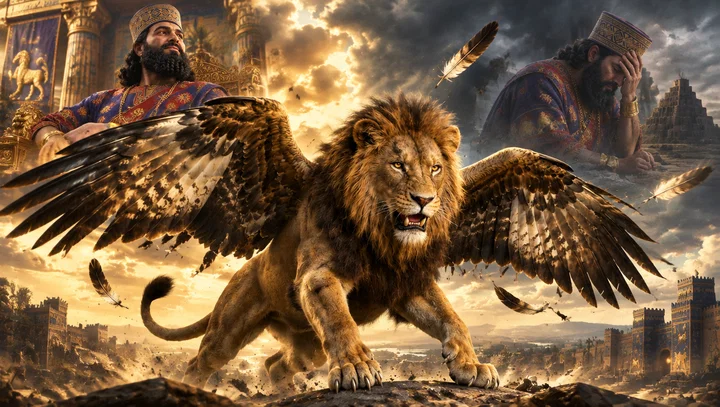
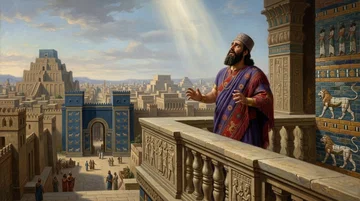
While the word was in the king’s mouth, there fell a voice from heaven, saying, O king Nebuchadnezzar, to thee it is spoken; The kingdom is departed from thee.
Translations
While the word was in the king’s mouth, there fell a voice from heaven, saying, O king Nebuchadnezzar, to you it is spoken; The kingdom is departed from you.
King James Version, KJV Cambridge Paragraph Bible
While the word was in the king’s mouth, there fell a voice from heaven, saying, O king Nebuchadnezzar, to thee it is spoken; The kingdom is departed from thee.
While the word was in the king's mouth, there fell a voice from heaven, saying, O king Nebuchadnezzar, to thee it is spoken; The kingdom hath departed from thee.
While the word was in the king’s mouth, there fell a voice from heaven, saying, O king Nebuchadnezzar, to thee it is spoken: the kingdom is departed from thee.
While the word was in the king’s mouth, there fell a voice from heaven, saying, O king Nebuchadnezzar, to thee it is spoken: The kingdom is departed from thee:
'While the word is [in] the king's mouth a voice from the heavens hath fallen: To thee they are saying: O Nebuchadnezzar the king, the kingdom hath passed from thee,
While the word was in the king's mouth, there fell a voice from the heavens: King Nebuchadnezzar, to thee it is spoken: The kingdom is departed from thee;
While yet the word was in the mouth of the king, a voice, out of the heavens, fell,—Unto thee, is it said, O Nebuchadnezzar the king, The kingdom, hath departed from thee;
Berean Standard Bible, Majority Standard Bible
While the words were still in the king’s mouth, a voice came from heaven: “ It is decreed to you, King Nebuchadnezzar, that the kingdom has departed from you.
While the word was in the king’s mouth, a voice came from the sky, saying, “ O King Nebuchadnezzar, to you it is spoken: ‘ The kingdom has departed from you.
While the word was still in the king's mouth, a voice came down from heaven, saying, O King Nebuchadnezzar, to you it is said: The kingdom has gone from you:
And at the ende of these dayes I Nebuchad-nezzar lift vp mine eyes vnto heauen, and mine vnderstanding was restored vnto me, and I gaue thankes vnto the most High, and I praysed and honoured him that liueth for euer, whose power is an euerlasting power, and his kingdome is from generation to generation.
Douay-Rheims (Challoner revision)
And while the word was yet in the king’s mouth, a voice came down from heaven: To thee, O king Nabuchodonosor, it is said: Thy kingdom shall pass from thee,
Pictures
Cross-references 20 of 30
- Daniel 2:37-38
Thou, O king, art a king of kings: for the God of heaven hath given thee a kingdom, power, and strength, and glory.
Daniel says God gave Nebuchadnezzar his kingdom and dominion.
- Daniel 4:27
Wherefore, O king, let my counsel be acceptable unto thee, and break off thy sins by righteousness, and thine iniquities by shewing mercy to the poor; if it may be a lengthening of thy tranquillity.
Daniel urges the king to turn from sin and show mercy before judgment.
- Daniel 3:1-6
Nebuchadnezzar the king made an image of gold, whose height was threescore cubits, and the breadth thereof six cubits: he set it up in the plain of Dura, in the province of Babylon.
Nebuchadnezzar’s golden image and compulsory worship display the pride that preceded his humbling.
- Daniel 5:22-23
And thou his son, O Belshazzar, hast not humbled thine heart, though thou knewest all this;
Belshazzar is reproved for not humbling himself despite knowing Nebuchadnezzar’s history.
- Daniel 4:25
That they shall drive thee from men, and thy dwelling shall be with the beasts of the field, and they shall make thee to eat grass as oxen, and they shall wet thee with the dew of heaven, and seven times shall pass over thee, till thou know that the most High ruleth in the kingdom of men, and giveth it to whomsoever he will.
The announced loss of the kingdom fulfills the warning of Nebuchadnezzar’s humiliation until he recognizes God’s rule.
- Daniel 4:17
This matter is by the decree of the watchers, and the demand by the word of the holy ones: to the intent that the living may know that the most High ruleth in the kingdom of men, and giveth it to whomsoever he will, and setteth up over it the basest of men.
The king’s loss of rule fulfills the decree that God rules human kingdoms.
- Daniel 4:37
Now I Nebuchadnezzar praise and extol and honour the King of heaven, all whose works are truth, and his ways judgment: and those that walk in pride he is able to abase.
Nebuchadnezzar acknowledges that God can humble the proud.
- Daniel 5:20-21
But when his heart was lifted up, and his mind hardened in pride, he was deposed from his kingly throne, and they took his glory from him:
Daniel recalls Nebuchadnezzar’s pride and loss of his rule.
- Daniel 2:38
And wheresoever the children of men dwell, the beasts of the field and the fowls of the heaven hath he given into thine hand, and hath made thee ruler over them all. Thou art this head of gold.
The title “head of gold” fed Nebuchadnezzar’s pride before his kingdom was taken from him.
- Jeremiah 27:6-7
And now have I given all these lands into the hand of Nebuchadnezzar the king of Babylon, my servant; and the beasts of the field have I given him also to serve him.
God gives Nebuchadnezzar authority over nations but sets its appointed limit.
- Daniel 5:2-4
Belshazzar, whiles he tasted the wine, commanded to bring the golden and silver vessels which his father Nebuchadnezzar had taken out of the temple which was in Jerusalem; that the king, and his princes, his wives, and his concubines, might drink therein.
Belshazzar profaned the holy vessels despite Nebuchadnezzar’s prior warning and was judged.
- Daniel 4:14
He cried aloud, and said thus, Hew down the tree, and cut off his branches, shake off his leaves, and scatter his fruit: let the beasts get away from under it, and the fowls from his branches:
The command to cut down the tree foretells the king’s fall and loss of his kingdom.
- Daniel 5:26
This is the interpretation of the thing: MENE; God hath numbered thy kingdom, and finished it.
Both announce God’s decree that Babylon’s kingdom has ended.
- Daniel 4:1-3
Nebuchadnezzar the king, unto all people, nations, and languages, that dwell in all the earth; Peace be multiplied unto you.
Nebuchadnezzar proclaims God’s signs and everlasting dominion to all peoples.
- Proverbs 16:18
Pride goeth before destruction, and an haughty spirit before a fall.
Nebuchadnezzar’s judgment fulfills the principle that pride goes before a fall.
- Daniel 4:22
It is thou, O king, that art grown and become strong: for thy greatness is grown, and reacheth unto heaven, and thy dominion to the end of the earth.
The interpretation identifies the tree with Nebuchadnezzar and his rule.
- Daniel 4:10-12
Thus were the visions of mine head in my bed; I saw, and behold a tree in the midst of the earth, and the height thereof was great.
The dream’s great tree represents the king’s greatness and prosperity.
- Daniel 4:16
Let his heart be changed from man’s, and let a beast’s heart be given unto him; and let seven times pass over him.
decrees his change to a beast's heart
- Daniel 2:21-22
And he changeth the times and the seasons: he removeth kings, and setteth up kings: he giveth wisdom unto the wise, and knowledge to them that know understanding:
same lesson taught through Daniel years earlier
- Daniel 5:21
And he was driven from the sons of men; and his heart was made like the beasts, and his dwelling was with the wild asses: they fed him with grass like oxen, and his body was wet with the dew of heaven; till he knew that the most high God ruled in the kingdom of men, and that he appointeth over it whomsoever he will.
It recalls Nebuchadnezzar living outdoors and being wet with heaven’s dew.
Commentary
Each commentary is drawn from primary sources: the writings of Ellen G. White and Adventist pioneers and periodicals. Each commentary is separate. Its own words are not a quotation; follow the references to read the source passages.
Ellen G. White
65 sources
While his proud boast that he had built great Babylon by his own power and for his own majesty was still in his mouth, a voice fell from heaven declaring that the kingdom was departed from him as immediate divine judgment.Lt 126, 1910, par. 13–15Lt 34, 1900, par. 24–27Ms 29, 1895, par. 19–22ED 176.2–38T 126.4–127.1 The interpretation had been plainly given with counsel to break off sins by righteousness and mercy, and he was then proved for twelve months while his actions were weighed in heaven, but prosperity deceived him and he treated the warning as commonplace.Lt 126, 1910, par. 13–1513MR 61.3–62.2Ms 15, 1896, par. 7–9Lt 71, 1894, par. 27–31 His sin was pride that put himself where God should be, forgetting God as the source of strength and glorifying himself instead.Ms 29, 1895, par. 19–22Lt 71, 1894, par. 27–31SLP 14.1–213MR 65.1–2 The sentence meant the kingdom was taken from him until he would know that the Most High rules in the kingdom of men and gives it to whomsoever He will, teaching that all who walk in pride He is able to abase.Lt 126, 1910, par. 13–15Ms 233, 1902, par. 14–17Lt 34, 1900, par. 24–27Lt 71, 1894, par. 27–317MR 69.1–3 At that utterance his reason was taken away and he was driven to dwell with the beasts and eat grass for seven years, until he lifted his eyes to heaven and blessed the Most High, when his understanding and kingdom were restored with added majesty.13MR 61.3–62.2Lt 34, 1900, par. 24–27TEPD 3.113MR 65.1–2
Dream Context and Wording
The declaration belongs to the account of Nebuchadnezzar's dream in which the lofty tree represents his greatness and prosperity, with nations gathered under his sovereignty and his kingdom firmly established in the hearts of his loyal subjects.8T 126.3 It belongs to another dream God gave him after he lost the holy impression made by the deliverance of the three Hebrews in the fiery furnace because he did not continue to walk in the light he had acknowledged as true.13MR 60.1–61.2 God had already revealed Himself to him by the dream of the great image with Babylon as the head of gold and by the miracle in the furnace.13MR 60.1–61.2 He sometimes credited his kingdom's glory and splendor to Jehovah's favor, and the account connects with his earlier vision of the great image, which showed that Babylon would fall, other kingdoms would follow, and God's everlasting kingdom would ultimately replace earthly powers.PK 514.1
While walking in the royal palace he said within himself that this great Babylon was what he had built for the house of the kingdom by the might of his power and for the honor of his majesty.Lt 126, 1910, par. 13–15Ms 29, 1895, par. 19–22Lt 71, 1894, par. 27–31TEPD 3.1Lt 11a, 1886, par. 4–5 God read his heart and heard its whisperings of self-gratulation and self-glorification.Ms 29, 1895, par. 19–22 His prosperity had elevated and deceived him, and in an unguarded moment he claimed the building of great Babylon by his own power and for his own honor.Lt 71, 1894, par. 27–31TEPD 3.1Lt 11a, 1886, par. 4–5 He placed a high estimate on his human ability and did not consider God his source of strength and ability, swelling with self-importance as he boasted.Lt 71, 1894, par. 27–31
While that proud claim to have built Babylon by his own power was still in his mouth, a voice fell from heaven declaring that the kingdom was departed from him.Lt 126, 1910, par. 13–15Ms 29, 1895, par. 19–22Lt 71, 1894, par. 27–31ED 176.2–38T 126.4–127.1 The sentence from heaven fell instantly while he was speaking, answering his boast that very utterance.Lt 126, 1910, par. 13–15TEPD 3.18T 126.4–127.1Lt 11a, 1886, par. 4–5 The declaration marks the loss of Babylon's power and glory as immediate divine retribution, with the taking of his kingdom accompanied by the removal of his reason and the humiliation of the ruler who had trusted in his own greatness.ED 176.2–38T 126.4–127.1
Probation Warning and Timing
The meaning of the dream as a symbol of his power and glory had been made entirely plain, and with it came counsel to break off sins by righteousness and iniquities by showing mercy to the poor, that the threatened sentence might not be fulfilled.13MR 61.3–62.2Lt 71, 1894, par. 27–31 The king was impressed for a time and was placed on trial for twelve months, during which he was tested and proved while his actions were weighed in the balances of the sanctuary in heaven.Lt 126, 1910, par. 13–1513MR 61.3–62.2Lt 71, 1894, par. 27–31 But a heart not fully transformed by grace soon loses the impression of the Holy Spirit.13MR 61.3–62.2
At the end of the twelve months he manifested the same spirit that had set up the golden image, treating the counsel given him as commonplace.13MR 61.3–62.2Lt 71, 1894, par. 27–31 Prosperity had elevated and deceived him, and self-indulgence and inordinate ambition ruled his heart while he neglected God's warnings.13MR 61.3–62.2Ms 15, 1896, par. 7–9Lt 71, 1894, par. 27–31TEPD 3.1Lt 11a, 1886, par. 4–5 God's sentence fell instantly while his proud boast about his own power and majesty in building great Babylon was still in his mouth, and the thing was fulfilled that same hour when the appointed time of judgment came.Lt 126, 1910, par. 13–15Lt 34, 1900, par. 24–27Ms 29, 1895, par. 19–22PK 519.3–4Lt 256, 1903, par. 10–11 While he was speaking proudly about Babylon and his power and greatness, a voice from heaven announced that his kingdom had been taken from him, fulfilling the warning he had received as the consequence of his pride.Ms 233, 1902, par. 14–17Ms 15, 1896, par. 7–9Lt 114, 1903, par. 15–18Ms 15, 1896, par. 4–6
Cause and Meaning of Sentence
His sin was pride, placing himself where God should be, forgetting God and glorifying himself instead of considering God his source of strength and ability.Ms 29, 1895, par. 19–22Lt 71, 1894, par. 27–31SLP 14.1–221MR 332.4–5 He placed a high estimate on his human ability, swelling with self-importance while indulging self-gratulation and self-glorification over what he had built by the might of his own power for the honor of his own majesty.Ms 29, 1895, par. 19–22Lt 71, 1894, par. 27–3121MR 332.4–5 His self-exaltation and oppressive rule led to his dethronement and humiliation, for his rule, once largely just and merciful through God-given wisdom, had become vain and oppressive.13MR 65.1–2Ms 15, 1896, par. 13–16
The sentence declared that the kingdom was taken from him until he would know that the Most High rules in the kingdom of men and gives it to whomsoever He will.Lt 126, 1910, par. 13–15Ms 233, 1902, par. 14–17Lt 34, 1900, par. 24–27PK 519.3–47MR 67.2–68.2 It was the immediate fulfillment of the warning foretold in the dream, beginning his being driven from human society and humbled until he learned that lesson.Ms 233, 1902, par. 14–17PK 519.3–47MR 67.2–68.2 The verse reveals God as Lord over all His creatures and all His works, who removes ability from those who grasp for ambitious projects in self-confidence.Lt 71, 1894, par. 27–31 It teaches all humanity that all who walk in pride He is able to abase, and that human ability and strength cannot take the place of dependence on God.Lt 71, 1894, par. 27–317MR 69.1–321MR 332.4–5
It means God can so humble kings and nobles for His glory that they acknowledge a power above themselves and use the tongue to praise Him.Lt 34, 1900, par. 24–27
Punishment and Restoration Outcome
The plain meaning of the symbol of his power and glory had been given, with counsel to break off sins by righteousness and iniquities by showing mercy to the poor so that the sentence might not be fulfilled, and he was impressed for a time and placed on trial for twelve months, but a heart not fully transformed by grace soon loses the impression of the Holy Spirit.13MR 61.3–62.2Lt 34, 1900, par. 24–27 At the end of the twelve months he manifested the same spirit that set up the golden image, and prosperity elevated and deceived him while self-indulgence and inordinate ambition ruled his heart and he neglected the warning.13MR 61.3–62.2TEPD 3.1 While words of self-glorification and vanity about great Babylon built by the might of his own power and for the honor of his own majesty were still in his mouth, the decree to fell the tree took effect at that very utterance.13MR 61.3–62.2Lt 34, 1900, par. 24–27TEPD 3.17MR 67.2–68.221MR 332.4–5 The blessings God had bestowed were removed, his reason was taken away, and the mighty ruler was driven from men that same hour to dwell with the beasts of the field, to eat grass as oxen and be wet with the dew of heaven.13MR 61.3–62.2Lt 34, 1900, par. 24–27TEPD 3.121MR 332.4–5 His downfall shows that indulged pride brings judgment and that human ability and strength cannot take the place of dependence on God.21MR 332.4–5
For seven times, or seven years, he lived and acted like a beast among the wild animals, for his self-exaltation and oppressive rule led to his dethronement and humiliation.13MR 61.3–62.27MR 67.2–68.213MR 65.1–2Ms 15, 1896, par. 13–16Lt 53, 1898, par. 21–22 His rule, once largely just and merciful through God-given wisdom, had become vain and oppressive.13MR 65.1–2Ms 15, 1896, par. 13–16 Till his hairs grew like eagles' feathers and his nails like birds' claws he remained under that humiliation, showing that God can humble those who do not honor Him and that the Most High rules human kingdoms and gives them to whom He wills.Lt 34, 1900, par. 24–2713MR 65.1–2Ms 15, 1896, par. 13–16
God brought him down as he exalted himself by removing the mind and wisdom He had given him, leaving him a lunatic, because he did not acknowledge God.Ms 233, 1902, par. 22–24Ms 163, 1898, par. 5–11Lt 53, 1898, par. 21–22 God gives human beings reason and expects them to use it under His control instead of living like dumb beasts, and even in that judgment He was seeking to teach the king.Ms 163, 1898, par. 5–11 Authority and wisdom come from God, so leaders must humble themselves, do justice, and remain in the Lord's way, for those who exalt themselves or oppose God's law are subject to His authority.Ms 233, 1902, par. 22–24
At the end of the days he lifted his eyes to heaven, his understanding and reason returned, and he blessed and praised the Most High whose dominion is everlasting and who does according to His will in heaven and earth.Lt 34, 1900, par. 24–27 His honor and kingdom were restored with added excellent majesty as he praised the King of heaven whose works are truth and whose ways are judgment and who is able to abase those who walk in pride.Lt 34, 1900, par. 24–27 His humiliation led to conversion and miraculous restoration, changing him from a proud despot to a humble, obedient, compassionate ruler, after loss of dominion and banishment from human society for seven years until he acknowledged God's rule.7MR 67.2–68.2PK 529.2–3PK 522.2 His later acknowledgment of the God of Israel showed God's power and mercy, and that God can so humble kings and nobles for His glory that they acknowledge a power above themselves and use the tongue to praise Him.Lt 34, 1900, par. 24–27PK 529.2–3
Divine Watcher and Sovereignty
A Watcher guards the interests of all men, with every individual before Him, noting every thought of the heart and every plan and imagination, hearing secret whispering, with nothing hid and every secret thing to be brought into judgment.Ms 29, 1895, par. 19–22 Those who take a measuring line to measure character and climb upon the judgment seat to pass sentence on others are to remember that Watcher in secret councils as well as open councils, for God's eye reads and measures men and unless they humble their hearts those bearing responsibilities will make grievous mistakes.Ms 29, 1895, par. 19–22 As Watcher He takes notice of all human transactions and is present as witness in them, and after warning and reproof had been given, when Nebuchadnezzar disregarded the warnings and went over ground where God had forbidden him to go, the Watcher pronounced judgment, for no injustice or deceit escapes detection, since He who abhors everything false traces every act exactly as it is.Lt 36, 1890, par. 16–19 The voice from heaven that answered the proud boast is that Watcher from heaven, who hears open pride and also beholds secret unclean deeds, so that even impure work with others done secretly out of human sight is not hidden from Him.Lt 106a, 1896, par. 26
God, not man, is Ruler and His kingdom is an everlasting kingdom, and men today must learn that God is supreme.7MR 69.1–3 Nebuchadnezzar's greatness as ruler of the greatest earthly kingdom did not gain him acceptance with God, for his rule could be taken from him in a moment to teach all humanity that all who walk in pride He is able to abase.7MR 69.1–3Lt 205, 1903, par. 14 Success in the work of the Lord comes because God gives it, not for man's own glory but for God's glory, and whoever seeks to steal a ray of light from God's glory will be punished for presumption.7MR 69.1–3 The same result surely follows whenever a people boast in wisdom, exalt self, and indulge pride, for pride goes before destruction and a haughty spirit before a fall; a church that becomes proud and boastful will be laid low, and those in charge of any institution who take to themselves credit for success and glory in wisdom and efficiency will certainly be brought to humiliation.7MR 69.1–3
Human reasoning powers, abilities and capabilities are gifts dependent on God and only lent in trust, which He can take away when they are not used for His glory, as He did to Nebuchadnezzar.ST Dec 5, 1911ST Jan 28, 1897Ms 97, 1899, par. 24–25 Reason was never given for man to suppose he can climb higher than the Source from which reason flows, but talents are given to be improved by exercise in learning from Christ how to use them wisely.ST Jan 28, 1897 Thinking highly of self and boasting of ability is failure to deny self, and true excellence is shown not by boasting but by Christlikeness, meekness and lowliness, usefulness and love.Ms 97, 1899, par. 24–25
God had warned Nebuchadnezzar not to go on in pride, but prosperity lifted him up and deceived him, and the moment he boasted that great Babylon was built by his own power for his own honor, heaven answered instantly with sentence upon him.Lt 11a, 1886, par. 4–5 The kingdom departed from him that instant, the tree was felled, the blessings God had bestowed were removed, his reason was taken away, and the mighty ruler was driven from men to find his place among the beasts of the field.Ms 29, 1895, par. 19–22Lt 11a, 1886, par. 4–5 By the mandate of heaven God can in a moment of time deprive men of entrusted wisdom and power, of health or reason, and take the kingdom from them, bringing men down to teach them utter weakness and need of divine aid, so that the Lord alone is to be exalted and man is to glory in nothing but Christ and Him crucified.Ms 29, 1895, par. 19–22Lt 11a, 1886, par. 4–5Ms 11, 1895, par. 23–24 Nebuchadnezzar's sin was pride, placing himself where God should be, and his retribution was degradation with his reason taken from him, showing that God chastises not merely to separate sin from the sinner but by His own light to reveal the sin that led the soul away from God and would be its ruin unless corrected.Ms 29, 1895, par. 19–22 Selfish, masterly men connected with the work of God who deal with others with iron determination and form unholy confederacies will be placed in Nebuchadnezzar's circumstances and humbled, for God is living and will tolerate no such confederacy but will break it up; therefore these men are not to be feared or envied, and all in high or lowly positions must be less self-sufficient, fear and tremble, and put away harsh control of others.Ms 11, 1895, par. 23–24
Prophecy and Later Babylon
The sentence spoken by the divine Watcher that stripped the kingdom from Nebuchadnezzar stands as a type of what would fall upon Babylon's last ruler, for Babylon in pride and confidence that its power would endure was to lose its rule and be brought low.PK 533.1 Nebuchadnezzar's forgetting of God and glorifying of himself brought divine judgment in which his kingdom was taken from him and he was driven from human society to live among the beasts.SLP 14.1–2 That sin and fall and judgment was a known warning to Belshazzar concerning the consequences of pride and irreverence toward God, which should have taught him to honor God, yet he ignored it.SLP 14.1–2CTBH 20.1–21.2
Despite warning Nebuchadnezzar continued in his own strength until God took away his wisdom and kingdom to bring him to acknowledge God's power to create and to destroy.Ms 39, 1899, par. 9–11RH Feb 6, 1900 The kings who succeeded him failed to profit by his experience, and the kingdom of Babylon passed away because in her prosperity her rulers forgot God and ascribed her honor and glory to human achievement.Ms 39, 1899, par. 9–11RH Feb 6, 1900 The same law operates still, for when men forget God and refuse to obey His law they are humiliated and tested by God, and if they do not humble their hearts and confess their sins they receive the penalty of transgression.RH Feb 6, 1900
Warning for Leaders Today
God let Nebuchadnezzar go so far that his own course counteracted his influence, and the loss of his kingdom warns that self-exaltation and resistance to God cost influence and authority, for no worker is indispensable to God's work.Lt 177, 1900, par. 27–30Lt 92, 1900, par. 1–5 The record warns against trusting self and one's own wisdom or making human strength a support, for turning aside from the path God has marked out forfeits His guidance and prosperity.8T 162.1–221MR 53.3–4 As soon as influence is used to accommodate self, to lead away from the straight narrow way God has cast up, to lift a pin or remove a landmark of truth He has given, or to lower the banner and blend in other things to gain popularity in the last-days message, prosperity ceases because God will not be guide.Lt 126, 1898, par. 10 Exalting one's own judgment and making one's own ways supreme opens the way to come under Satan's influence and be led to ruin.STB 363.2Ms 122, 1905, par. 5 Like Pharaoh of Egypt, Nebuchadnezzar became willfully obstinate in spite of warnings from heaven, and for that self-exaltation the kingdom was taken and he came under Satan's jurisdiction, led blindfold until spirit and methods conformed to the deceiver and the whole mind was charmed and held as in a snare with no power to escape.MWISDAP 20.2
High-mindedness left the king of Babylon to his own way, warning all in positions of trust not to lean on exalted ideas of their own.Ms 15, 1896, par. 18 Those who resist correction and refuse God's word may persist in rebellion until God removes reason and the heart becomes unimpressible, yet they remain responsible for their own ruin.Lt 19a, 1897, par. 1 Neglecting and failing to practice the lessons God has given brings judgment, as shown when the kingdom was taken after despised light.Lt 201, 1899, par. 3–4 When a man takes too much power and authority into his own word and sways the work in a way God cannot endorse, the kingdom departs from him.Lt 199, 1901, par. 2–3 Self-exaltation and magnifying one's own power and authority bring God's disapproval, for no man is sufficient in himself to rule God's work, and the Lord Himself must be ruler over work He can sign with His approval.Lt 199, 1901, par. 2–312MR 3.1
To act the Nebuchadnezzar is to stand requiring everyone to understand and carry out one's own mind and ideas, assuming over God's heritage a supremacy and authority God has not given.Lt 188, 1901, par. 2–3Lt 188, 1901, par. 1 It is to investigate and criticize and condemn sanitarium and medical missionary work that does not meet those ideas, to harass workers with drawbacks and discouragements instead of encouraging and instructing those making a small beginning, and to reveal supremacy by making laws and pledges for the future.Lt 188, 1901, par. 2–3Lt 188, 1901, par. 1 One in leadership must therefore be very careful of words, lest self be exalted even in a good action.Lt 188, 1901, par. 2–3Lt 188, 1901, par. 1 God forbids men to make themselves the controlling power by framing binding agreements and restrictions, demanding others sign them, taking control of His work, and refusing to cooperate except on their own terms.Lt 180, 1901, par. 14–16 Men are not God, and all talents and powers are to be exercised for Him after His own order and plan with minds cleansed from self-exalting planning, rather than pursuing ambitious plans by one's own will while disregarding His warnings and direction.Lt 180, 1901, par. 14–16Ms 93, 1903, par. 19
The taking of the kingdom warns a leader entrusted with sanitarium and medical-missionary work, for carrying that work by human wisdom and personal devising brings in principles God will not sustain or favor.11MR 310.3–311.1 God removes position, power, and divine restraint from a leader who patterns after Nebuchadnezzar in pride and self-glory by diverting workers and means into self-created enterprises.Lt 45, 1900, par. 18–21 The lesson is to humble the heart, keep the eye single to His glory, stay in the appointed work, and plan so as to give all others a chance to accomplish the work after the wisdom God gives them individually.11MR 310.3–311.1Lt 45, 1900, par. 18–21 God takes kingdom and position from a steward who becomes proud, feels himself a man of power, exalts his own work above its appointed place, demerits God's appointed ministry, treats his judgment as superior, and dishonors God's servants.Lt 135, 1899, par. 3–6Ms 103a, 1899, par. 20–22 Exalting self puts one in danger of losing what was entrusted and in peril through pride and abandoning the faith, left deprived of power and humbled as Nebuchadnezzar was left.Ms 103a, 1899, par. 20–22Lt 123, 1898, par. 1–3
Selfish, masterly men connected with God's work who deal with others with iron determination and form unholy confederacies will be placed in Nebuchadnezzar's circumstances and humbled.Ms 11, 1895, par. 23–24 God lives and will tolerate no such confederacy but will break up what He will not sustain, so such men are not to be feared or envied, and all in high or low positions must be less self-sufficient, fear and tremble, and put away harsh control of others.Ms 11, 1895, par. 23–24 What happened to Nebuchadnezzar will surely be fulfilled in those with great light who sustain one another in doing what God warned against, whose ambitious projects He will bring to confusion and uproot.Lt 71, 1894, par. 27–31 Yet if they repent and humble their hearts, make Him their trust, and keep the way of the Lord to do justice and judgment, there is pardon and peace in forgiveness with approval, acceptance, and another trial and proving.Lt 71, 1894, par. 27–31 His prideful ambition to gain glory and spread power shows idolatry in which desire possesses the heart and commands its service, warning that presumptuous ambition and high opinions of one's own wisdom bring divine judgment and that God humbles those who exalt themselves.Lt 297, 1903, par. 2–4Ms 224, 1902, par. 7–8Lt 256, 1903, par. 10–1118MR 93.3–94.2
Success in the Lord's work comes because God gives it, not for man's glory but for God's, and whoever seeks to steal a ray from God's glory will be punished for presumption.7MR 69.1–3 God removed the kingdom to teach all humanity that all who walk in pride He is able to abase, that God and not man is Ruler, and that His kingdom is everlasting and supreme.7MR 69.1–3 Whenever a people boast in wisdom, exalt self, and indulge pride, the same result follows, for pride goes before destruction and a haughty spirit before a fall.7MR 69.1–3 A church that becomes proud and boastful will be laid low, and those in charge of any institution who take credit for success and glory in wisdom and efficiency will certainly be brought to humiliation.7MR 69.1–3
Sources
Pioneers and periodicals
79 sources
While he was still boasting on his palace that he had built great Babylon by his own power and for his own honor, a voice from heaven addressed him by name and announced that the kingdom was departed from him at that very moment.RH May 4, 1869ST Dec 23, 1897RH Feb 13, 1900ST Mar 16, 1882RH Jul 19, 1864 The sentence took effect the same hour when he was driven from men to dwell with the beasts, eat grass like an ox and lose his reason until seven times passed over him.ST Sep 19, 1911ST Jul 29, 1875RH Aug 12, 1875RH Feb 13, 1900ST Oct 16, 1901 It came about a year after warning to break off his sins by righteousness and mercy to the poor, because in pride he took God's glory to himself and refused to humble himself and acknowledge that the Most High rules in the kingdom of men and gives it to whomever He wills.RH Jan 2, 1900RH Jan 2, 1900ST Sep 21, 1904ST Jan 16, 1912RH Nov 22, 1906 God in mercy deposed him to teach him dependence and humility, preserving the kingdom for him until his understanding returned and he blessed and praised God as able to abase those who walk in pride.ST Aug 3, 1904ST Oct 18, 1905RH Apr 25, 1912ST Oct 16, 1901 The same pride that weighed Babylon and found it wanting warns later rulers and nations that forget God that their power stands only while He wills, and it foreshadows the sudden fall of modern Babylon in her boast of permanence.ST Apr 8, 1897ST Feb 4, 1886ST Apr 8, 1897ST Apr 9, 1896RH May 29, 1900
Words and Historical Setting
The word rendered word is the Aramaic millah, meaning something spoken or said, elsewhere translated thing, matter and commandment, including its use for word in Daniel 3:28.ST Oct 2, 1901 Its use here for the message spoken from heaven to Nebuchadnezzar supports reading the same word in Daniel 2:5 and 2:8 as the king's decree that had gone forth rather than a dream that had vanished.ST Sep 24, 1902
While walking upon his palace he boasted with the word still in his mouth that he had built great Babylon by the might of his own power and for the honor of his own majesty.RH Feb 13, 1900ST Mar 16, 1882RH Mar 25, 1873 He claimed its palaces, towers, hanging gardens, massive walls and vast domain as his own achievement as the greatest monarch on earth, on the pinnacle of human pride and power and office.RH Feb 13, 1900ST Mar 16, 1882 Heaven interrupted him almost at once while the proud survey and boast were still in his mouth.ST Mar 16, 1882RH Jul 19, 1864ST Oct 16, 1901
While he was speaking, a voice from heaven addressed him by name as O king Nebuchadnezzar and announced to thee it is spoken that the kingdom is departed from thee.RH Feb 13, 1900ST Oct 16, 1901 His rule was taken from him at that very moment, and his judgment began suddenly and in the same hour when his pride reached its limit.RH May 4, 1869ST Dec 23, 1897ST Sep 21, 1904ST Jan 16, 1912ST Oct 18, 1905 The announcement marked the fulfillment of God's sure prediction and the beginning of his loss of reason and human society.ST Dec 23, 1897ST Sep 21, 1904
The sentence came about twelve months after Daniel interpreted the dream and warned the king to break off his sins by righteousness and his iniquities by showing mercy to the poor so that his tranquillity and peace might be lengthened.ST Sep 21, 1904ST Jan 16, 1912ST Apr 12, 1905ST Jan 17, 1906 Deeply impressed at the time, the king made no real change in his life and failed to humble himself and heed counsel to practice righteousness and mercy.RH Nov 22, 1906ST Jan 17, 1906 His pride brought the judgment despite the earlier warning and a year of mercy in which he failed to show true repentance.RH Oct 22, 1901ST Apr 12, 1905
The fulfillment came within a year toward the close of his reign, when his conquests and great works were completed in complete tranquillity and prosperity. The verse belongs to Nebuchadnezzar's own royal proclamation to all peoples, nations and languages dwelling in all the earth, telling of himself, Babylon, Daniel and God.ST Oct 16, 1901 It declares the signs and wonders of the Most High, how great are His signs and how mighty His wonders, whose kingdom is everlasting and whose dominion is from generation to generation.ST Oct 16, 1901 The record was written by the king for all posterity and kept through Daniel, though later idolatrous rulers of Babylon with heathen priests sought to obliterate that knowledge because it showed their mightiest emperor humbled by the God of a despised nation.ST Oct 16, 1901
The record of Nebuchadnezzar's experience is inspired, but this does not mean Nebuchadnezzar himself or his words were inspired.ST Jul 16, 1912 The events precede the prophetic vision of Daniel 7 given in the first year of Belshazzar.ST Apr 5, 1877 The fall of Babylon under Belshazzar came about forty-four years after Nebuchadnezzar's account and about twenty-three years after his death, when the greatness and real glory of the kingdom had departed with him.ST Feb 4, 1886 There were only about three decades between his humiliation and proclamation and Belshazzar's feast, which was widely known among those present.ST Oct 23, 1901 A Babylonian inscription records that Nebuchadnezzar spent four years away from governing and carrying out royal and religious duties, corresponding to his absence from royal affairs.ST Jan 11, 1916
Affliction and Restoration Narrative
The sentence pronounced upon him was that he would be driven from men to dwell with the beasts of the field, be made to eat grass as oxen, have the heart of a beast given to him, and have seven times pass over him until he knew that the Most High rules in the kingdom of men and gives it to whomever He wills.RH Feb 13, 1900ST Oct 16, 1901ST Dec 23, 1897 The voice addressed him by name to declare that the kingdom was departed from him and that the power he boasted was God's alone.RH Feb 13, 1900ST Oct 16, 1901 The kingdom was preserved for him through the judgment, as the remaining tree stump of the dream had signified.ST Dec 23, 1897
The sentence took effect the same hour, driving him in horror from his palace to wander unsheltered with the beasts and live among cattle.RH Feb 13, 1900ST Oct 16, 1901 He ate grass of the field like an ox, his body was wet with dew, he gave up language and ordinary human food and clothing, lost erect posture, grew hair coarse and long like eagles' feathers or lion's hair and nails like birds' claws, and behaved like a wild beast.ST Jul 29, 1875RH Feb 13, 1900ST Mar 16, 1882ST Oct 16, 1901 He who suffered this was the greatest king of Babylon, who had built its finest buildings and raised the city to the height of its glory, stricken with madness for wickedness in imagining himself a god.ST Sep 19, 1911RH Feb 13, 1900 The seven times were understood as seven long years, cited as an example of a seven-year period in which he ate grass like an ox.ST Jul 29, 1875RH Aug 12, 1875RH Feb 13, 1900
His affliction was a beast-madness called lycanthropy, in which he believed himself not a man but a beast. In that state he lived in the open air night and day apart from human habitations, fed on herbs, and became covered with hair. His subjects were not allowed to know his condition while the queen held the reins of power and carried on the government in his name in expectation of his recovery at the announced date.
After seven years of obscuration his understanding suddenly returned when he lifted his eyes to heaven.ST Oct 16, 1901 His lords and counselors gathered about him with joy, he took the government again into his own hands and performed the functions of royalty, and his reason, kingdom, majesty, honor, glory, brightness returned with more excellent majesty added.ST Oct 16, 1901ST Dec 23, 1897 He became a better king, and his last days as an old man were as brilliant as his first until he expired at Babylon in the forty-fourth year of his reign in B.C. 561 after a short illness.ST Mar 25, 1903 God did not leave him during the humiliation, but the cause of it stayed with him until he learned the lesson.ST Oct 16, 1901
When restored he blessed, praised and honored the Most High whose dominion is everlasting and whose kingdom is from generation to generation.ST Oct 16, 1901RH Mar 25, 1873 He confessed that the inhabitants of the earth are as nothing, that God does His will in heaven and earth with none able to stay His hand, that His works are truth and His ways judgment, and that He is able to abase those who walk in pride.ST Oct 16, 1901RH Mar 25, 1873ST Aug 13, 1896 The removal proved his kingdom had been given by the God of heaven, and the restoration led to that acknowledgment.ST Aug 13, 1896 Under this chastening of the Almighty in his vain-glory he humbled himself, showing in his better moods a spirit of real piety, self-condemnation and self-abasement, which renders him one of the most remarkable characters in Scripture. The loss of his kingdom was the means used to save him from trusting in outward greatness and his own achievements, and afterward he lived in the firm belief of God's power to humble the proud.RH Mar 25, 1873ST Mar 25, 1903
God's Sovereign Rule Teaches Humility
The sentence from heaven took the kingdom from Nebuchadnezzar at the very moment it was spoken, while his boast was still in his mouth, and began his loss of reason and human society until he learned that the Most High rules in the kingdom of men and gives it to whomever He wills.ST Dec 23, 1897ST Jan 16, 1912RH Mar 26, 1914 God is shown as supreme Ruler over earthly kings, exercising His authority to give and to remove kingdoms as He wills, able to rule over kings and kingdoms.ST Jul 16, 1912ST Aug 9, 1910 He had made Nebuchadnezzar's kingdom universal and mighty, then took it from him, and He did not abdicate when Adam rebelled or when empire passed to Babylon and then to Medo-Persia, Grecia and Rome.ST Dec 23, 1897ST Jan 16, 1912 The kingdom departed because pride robbed God of His honor and took it to Himself, after long prosperity the king took the glory of Babylon's greatness to himself and assumed the glory of building it.RH May 4, 1869RH Mar 23, 1869ST Apr 9, 1896 Lifted up by his greatness and extent of kingdom, he ignored Heaven's authority and his pride brought the threatened judgment, reaching its limit when divine judgment began and the day of his humiliation and of Babylon's humiliation came at hand.RH May 4, 1869RH Feb 13, 1900ST Apr 9, 1896 Babylon was thus weighed in the balances of God's righteous purposes and found wanting, so its days were numbered and its kingdom taken away and given to Medo-Persia, teaching that rulers who exalt themselves instead of serving God's purpose are removed.ST Apr 9, 1896
The judgment came after he failed to humble himself and correct his error, refusing to recognize he was God's servant responsible to God for the conduct of the kingdom.RH Feb 1, 1906 He did not heed Daniel's counsel to practice righteousness and mercy through a dream and its interpretation given to turn him from the prideful purpose that threatened his ruin, but went on in his own strength, and he would have been spared had he heeded God's earlier lessons.RH Feb 6, 1900RH Nov 22, 1906RH Oct 22, 1901 God took from him the kingdom and the talent of wisdom to lead him to see and acknowledge that the God of Israel is able to create and to destroy.RH Feb 6, 1900 God used the judgment in mercy to humble him and teach dependence, deposing him from his throne and taking his kingdom, majesty, glory, honor, wisdom and reason.ST Aug 3, 1904ST Oct 18, 1905 He was brought down from rank so he would learn humility and his weakness before God, for his power and achievements did not impress Jehovah, and those godlike faculties enabling him to rule were taken so he became as a beast, that he might know the legitimate sphere of civil rulers and their responsibility to the King of heaven.RH Apr 25, 1912RH Feb 1, 1906RH Jul 11, 1854 Human power, achievements and reasoning powers are gifts dependent on God that He can remove when not used for His glory, and in removing them God granted another opportunity to acknowledge Him as supreme Ruler in heaven and earth to whom kings and nations owe allegiance and homage, a history and judgment that became light to warn Belshazzar.ST Oct 18, 1905
God is a Watcher who marks motives, words and actions as an unseen witness to every secret design and open plan, and His voice came from heaven while the proud survey and boast of building great Babylon by the might of his power for the honor of his majesty was still in the mouth.ST Sep 14, 1888 This humbling illustrates justification by faith as God laying human glory in the dust and doing what people cannot do for themselves, through a message proclaimed in Babylon that showed God's power to humble human pride until Nebuchadnezzar acknowledged God and testified that God can abase those who walk in pride.RH Aug 22, 1907 The experience brought him to know God and His righteousness; he was healed and his sins were broken off by righteousness.ST Nov 26, 1912 Though deeply impressed at the time of the interpretation, he made no real change and showed no true repentance by mercy to the poor, so the predicted calamity came in loss of kingdom, demonstrating God's knowledge of the future and supreme control over earth's mightiest kings and humbling him unto conversion.ST Jan 17, 1906 Stripped of worldly power and earthly honor with the reason that had failed to lead him to know God's love, reduced to beasts he looked to heaven, and when understanding returned he praised and honored God, so his conversion came through loss of honor rather than through honor and dominion received.ST Jan 17, 1906ST Sep 10, 1902
The fall came only after faithful warning, showing that God warns before He punishes and leaves the guilty with no excuse when justice speaks in the Judgment day, after long-suffering had endured until further waiting would no longer be mercy as God's displeasure upon guilt for pride.RH Mar 18, 1873 The seven times when the kingdom departed show that man proposes but God disposes.ST Aug 13, 1912
Prophecy Symbolism and Fulfillment
Daniel 4:31 belongs to the symbolic prophecy of the tree in Nebuchadnezzar's dream whose meaning is fully explained in the Bible itself with its application directly made.RH Jan 2, 1900RH Sep 2, 1909RH Mar 8, 1915 Prophecy was given to disclose future events rather than hide them, and the key to symbolic prophecy is found in Scripture, so this divinely interpreted prophecy with others supplies the basis for interpreting prophecy generally.RH Sep 2, 1909 Its fulfillment can be compared with historical events as evidence of the reliability of divine prophecy.RH Mar 8, 1915 The fulfillment demonstrates God's knowledge of the future and His supreme control over the mightiest of earth's kings, for the dream foretold what would befall the haughty monarch if he did not break off his sins by righteousness and show repentance by mercy to the poor, and because he made no real change the predicted calamity came in the loss of his kingdom.ST Jan 17, 1906 The account records the heavenly judgment announced while he was speaking, with the seven-year affliction and restoration, and calls for study of the circumstances and effectiveness of that judgment, which humbled the proud king and was instrumental in his conversion so that when his reason returned he acknowledged Jehovah as his God.RH Jan 2, 1900ST Jan 17, 1906
The seven times when the kingdom departed are seven years when he ate grass like an ox.ST Jul 29, 1875RH Aug 12, 1875ST Aug 13, 1912 During that time his nails grew like birds' claws and his hair like an eagle's feathers.ST Jul 29, 1875RH Aug 12, 1875 This episode stands as an example of a seven-year period.RH Aug 12, 1875 A time in prophetic reckoning is a year, and Nebuchadnezzar's experience supplies the basis for interpreting the prophetic period of a time and times and half a time as three and a half years, or 1,260 symbolic days and therefore 1,260 years.RH Sep 18, 1900 The departure of the kingdom shows that man proposes but God disposes.ST Aug 13, 1912
The humiliation when a voice from heaven declared the kingdom departed may be represented by the plucking of the lion's wings in Daniel 7:4.RH Feb 3, 1853ST Jul 23, 1874RH Apr 23, 1857RH Feb 8, 1870RH Nov 14, 1854 The judgment fell in the zenith of Babylonian power, when the wings of outrageous pride, soaring ambition and swift conquest were clipped by insanity.RH Jan 23, 1908 The sentence changed him from man to beast, and after his degraded bestial condition he was lifted up from the earth and restored to a sane sense of his humble place as a man in relation to Almighty God.RH Jan 23, 1908 The proud monarch was humbled when the kingdom was taken from him, showing the departure of Babylon's glory.RH Feb 3, 1853RH Feb 8, 1870RH Nov 14, 1854 That humiliation may also explain the human heart given to the lion-like first beast.RH Feb 3, 1853ST Jul 23, 1874RH Apr 23, 1857RH Feb 8, 1870RH Nov 14, 1854
Because of that pride the day of his humiliation and of Babylon's humiliation was at hand.ST Apr 9, 1896 Babylon was weighed in the balances of God's righteous purposes and found wanting, so its days were numbered and its kingdom was taken away and given to Medo-Persia.ST Apr 9, 1896 Nebuchadnezzar ruled when Babylon reached its height, and the kingdom later came to an end under Belshazzar.ST Mar 5, 1912 God took the kingdom and the talent of wisdom from Nebuchadnezzar after he ignored warning and went on in his own strength, to lead him to see and acknowledge that the God of Israel is able to create and to destroy.RH Feb 6, 1900 The events of Belshazzar and the fall of Babylon came about forty-four years after Nebuchadnezzar's account and about twenty-three years after his death, when the greatness and the real glory of the kingdom had departed with him.ST Feb 4, 1886 His acknowledgment of God had no discernible impression on those who followed him, for his immediate successors disregarded the message and soon forgot His works, in prosperity forgot God and ascribed honor and glory to human achievement, and with his death the greatness of Babylon began to wane toward conquest by Medo-Persia until iniquity culminated in his grandson Belshazzar and the kingdom passed away.RH Feb 6, 1900ST Feb 4, 1886RH May 29, 1900
At the height of Babylonian pride a voice from heaven declares the kingdom departed, meaning earthly Babylonian glory is cut off by God's decree.ST Apr 8, 1897 The king's fall while expressing contempt for his enemies and confidence in his own permanence illustrates the downfall of ancient Babylon and parallels the coming fall of modern Babylon, which likewise sets itself above God and claims lasting power.RH Oct 11, 1915 Beyond the coming complete surrender of nominal Christianity to Rome lies God's judgment in which modern Babylon likewise loses its kingdom.ST Apr 8, 1897 Divine judgment strikes at the height of human boasting, ending the world's cry of peace and safety in sudden destruction, as when proud Babylon exalts herself and deceived nations laud the human-made greatness of the pope of Rome enthroned above the nations in place of God as arbiter, bringing upon Babylon plagues of death and mourning and famine and utter burning with fire.ST Apr 8, 1897 Heaven's judgment fell at the moment he boasted of Babylon's greatness, supplying the pattern for spiritual Babylon: when she declares her greatness and denies that she is a widow, that declaration signals that her judgments are about to fall.RH Sep 20, 1906
Civil Government and Liberty
Nebuchadnezzar's error was aspiring to take God's place by directing and controlling worship and punishing those who would not worship as he decreed.ST Jul 11, 1911ST Dec 3, 1896ST Jul 1, 1903 Even when he claimed to advance the true religion, forcing worship upon people regardless of conscience was failure to humble himself and correct his error, and for this his rule was taken from him.ST Jul 11, 1911ST Jul 1, 1903 His loss of rule demonstrates that civil government is God's servant to restrain evil, but must not take God's place nor coerce conscience nor control religion.ST Jul 11, 1911ST Dec 3, 1896ST Jul 1, 1903
Earthly kingdoms and rulers remain subject to God's authority, while the king was still speaking a voice from heaven declared that his kingdom had been taken from him.RH Mar 26, 1914RH Feb 1, 1906ST Aug 19, 1897 Because his heart was lifted up by his greatness and the extent of his kingdom and he refused to recognize that he was God's servant responsible to God for the conduct of the affairs of the kingdom, those godlike faculties which enabled him to rule among men were taken from him and he became as a beast of the field.RH Feb 1, 1906ST Aug 19, 1897 This was done that he might know that the Most High rules in the kingdom of men and gives it to whomever He wills, teaching the legitimate sphere of the authority of civil rulers and their responsibility to the King of heaven, who fashions things according to His own will and upholds earthly governments.RH Feb 1, 1906ST Aug 19, 1897
His authority as secular ruler over the whole earth had been given while he was still a pagan idolater, so those who held this understanding questioned using his deposition as proof that a ruler's authority depends on formally recognizing God in government. Daniel showed loyalty to principle and integrity by fearlessly interpreting the dream even though the message announced that the kingdom is departed from the king, not counting the cost of right-doing, not deterred by the pomp and glory of the royal court, and not softening God's message or abating one iota from its pointedness for fear of incurring royal displeasure.ST Nov 24, 1898 When the king viewed Babylon as built by his own power for his own majesty he was thinking only of his own glory, pleasure and exaltation, the same selfish self-exalting spirit that actuated Satan in heaven, and as God cast that spirit out of heaven so He cast the king out of his rulership until he would learn the lesson of humiliation.ST Sep 4, 1907
The Most High rules in the kingdom of men and gives and removes kingdoms as He wills, and He did not abdicate when Adam rebelled, when empire was given to Babylon and then taken to give to Medo-Persia and then to Grecia and then to Rome. The same rule governs today Great Britain, France, Germany, Russia and the United States in their proud and boastful talk as if they reign by themselves; their tenure depends on recognizing God not in words but in deeds and on giving glory to Him from their existence.ST Jun 10, 1913 When they can no longer be used to His glory they will fail and be removed, and the everlasting kingdom of God will succeed all earthly rule forever, while Babylon's downfall while prospering and feeling secure warns nations that turn from founding principles and assume authority beyond their proper civil sphere and forget that God rules over earthly kingdoms.ST Jun 10, 1913
Warnings for Later Generations
Belshazzar was Nebuchadnezzar's grandson, called son after the custom of calling ancestors fathers, and he knew of this humiliation and its reason and had every opportunity to know God and His truth and to know and do righteousness.ST Jun 28, 1899ST Aug 13, 1896 The voice from heaven deposing Nebuchadnezzar and the dream foretelling it, its cause, and the seven years of insanity and exile followed by restoration are public record that he knew or had opportunity to know and should have taken to heart, occurring only about three decades before his feast and widely known among those present.ST Jun 28, 1899ST Aug 13, 1896 Yet his presumption went beyond Nebuchadnezzar's, for he disregarded the lesson completely as though these things had never occurred, refused to heed the light permitted to shine upon his pathway, and followed the same prideful course of exalting self.ST Jun 28, 1899 He publicly defiled the vessels of the Lord's house to insult the God who had thus humiliated Nebuchadnezzar, making himself guilty of the very sins for which his grandfather had been condemned, so that in the midst of pronounced idolatry and defiance of God his doom was written upon him and his house.ST Jun 28, 1899 He could have retained his kingdom and life by following the instruction given to Nebuchadnezzar, which Daniel later contrasted with his failure to heed the light he had received.ST Oct 18, 1905
Nebuchadnezzar's full acknowledgment of the true God, published by decree to all the nations of his dominion, had no discernible impression on those who followed him in the kingdom.ST Feb 4, 1886RH May 29, 1900 His immediate successors disregarded the royal proclamation and its message, soon forgot His works, rejected God for idolatry and unrighteousness, and in prosperity forgot God and ascribed honor and glory to human achievement.RH Feb 6, 1900ST Aug 3, 1904RH May 29, 1900 Iniquity culminated in his grandson Belshazzar, and with Nebuchadnezzar's death the greatness of Babylon began to wane toward conquest by Medo-Persia, the events of Belshazzar and the fall coming about forty-four years after that account and about twenty-three years after Nebuchadnezzar's death, when the greatness and real glory of the kingdom had departed with him and the kingdom of Babylon passed away.ST Aug 3, 1904ST Feb 4, 1886RH May 29, 1900 The lesson of the chapter was made known among the nations and languages under his rule, for through Daniel and his companions the gospel of the kingdom was preached in Babylon, and God made truth known through Gentile kings when Israel failed to carry the gospel to the nations.RH Feb 13, 1900RH Apr 10, 1916RH Nov 11, 1902 That message in the dream of the image, the deliverance of the three Hebrews from the furnace, and the dream of the tree came to every person as personally as if each had passed through it, calling all to put confidence in God, not forget His doings, keep His commands, remember His doings and glorify Him, and Nebuchadnezzar's own royal proclamation to all peoples, nations and languages dwelling in all the earth was written by the king for all posterity and kept through Daniel, though later idolatrous rulers with heathen priests sought to obliterate it because it revealed their mightiest emperor humbled and taught by the God of a despised nation.RH Feb 13, 1900ST Oct 16, 1901RH May 29, 1900 It shows the signs and wonders the Most High wrought toward him, how great are His signs and mighty His wonders, His kingdom an everlasting kingdom and His dominion from generation to generation, and it ended in his blessing and glory from God after confessing pride and foolishness; it is God's instruction to nations in the last days, a wonderful lesson for the mightiest of earth and for the very days now passing.RH Feb 13, 1900RH Aug 22, 1907ST Oct 16, 1901
The warning also applies to people who credit themselves for their power and prosperity instead of recognizing the fulfillment of prophecy, for their apparent strength does not protect them from divine judgment.ST May 20, 1875 The taking of the kingdom teaches nations and rulers that the Most High rules in the kingdom of men and gives it to whomever He will, and only those in harmony with that righteous rule can persist, making harmony with God in knowing Him, having peace with Him, and being covered with His righteousness the vitally important thing above all prophecy.ST Dec 1, 1914 The same law works today: when men forget God and refuse to obey His law they are humiliated, God tests them, and if they do not humble their hearts and confess their sins they receive the penalty of transgression.RH Feb 6, 1900 Success has a tendency to brag, so God lets the boaster be jeered at, and the account is an example of affliction and judgment as means by which God humbles people.RH Mar 23, 1869RH Jan 16, 1872 Persecution if sanctified becomes a blessing by making one humble, fulfilling blessed are the poor in spirit for theirs is the kingdom of heaven, for God answered proud boasting over great works, saying I endowed, I started, I built, is not this great Babylon that I have built, by taking the kingdom away and turning Nebuchadnezzar out to eat grass like an ox.RH Jan 16, 1872
Because God fashions things according to His own will and upholds earthly governments, His people need not enter the political field, attend primaries and elect officials to suppress evil, but are to seek power through prayer until schooled sorrow teaches rulers that God is ruler of rulers still and sets up the sovereign that He will.ST Aug 19, 1897 While no brute is ever raised to manhood, a man can descend to the level of beasts, for the kingdom was taken because pride robbed God of His honor and took it to Himself, sentencing him almost at once while the proud words were still in his mouth on the pinnacle of human pride and power to be cast out to dwell with cattle, eat grass like an ox with body wet with dew till hairs grew like eagles' feathers and nails like birds' claws, until seven times passed over him.ST Mar 16, 1882 The self-degrading pride claiming man made himself by natural selection is more impious and more dishonoring to God than Nebuchadnezzar's pride, requiring no miracle to make its holder a brute but making brutes his blood relations, a lower state than Nebuchadnezzar's, who was mercifully bereft of reason and given instincts suited to his condition.ST Mar 16, 1882 His fate among beasts while kingship was taken from him is also presented as a curse for being blind to beauty and unmoved by its divine appeal.ST Mar 8, 1910 His later memory of seven years living with the beasts of the field makes a picture of how poor and shameful the world's past progress in evil will appear beside the coming age of God's glory.RH Feb 16, 1864
Sources