Daniel 5:31
And Darius the Median took the kingdom, being about threescore and two years old.
Translations
And Darius the Median took the kingdom, being about three score and two years old.
And Darius the Median took the kingdom, being about threescore and two years old.
And Darius the Median took the kingdom, being about threescore and two year old.
And Darius the Median took the kingdom, being about sixty and two years old.
Revised Version, American Standard Version
And Darius the Mede received the kingdom, being about threescore and two years old.
and Darius the Mede hath received the kingdom, when a son of sixty and two years.
And Darius the Mede received the kingdom, [being] about sixty-two years old.
And, Darius the Mede, received the kingdom,—when about sixty-two years of age.
Berean Standard Bible, Majority Standard Bible
and Darius the Mede received the kingdom at the age of sixty-two.
Darius the Mede received the kingdom, being about sixty-two years old.
And Darius the Mede took the kingdom, being then about sixty-two years old.
And Darius of the Medes tooke the kingdome, being threescore and two yeere olde.
Douay-Rheims (Challoner revision)
And Darius the Mede succeeded to the kingdom, being threescore and two years old.
Pictures
Cross-references 20 of 25
- Daniel 8:20
The ram which thou sawest having two horns are the kings of Media and Persia.
Identifies the kingdom Darius took as Media and Persia, the ram’s two horns.
- Daniel 6:1-3
It pleased Darius to set over the kingdom an hundred and twenty princes, which should be over the whole kingdom;
Darius organizes his new kingdom and appoints Daniel over the realm.
- Daniel 2:39
And after thee shall arise another kingdom inferior to thee, and another third kingdom of brass, which shall bear rule over all the earth.
The silver kingdom succeeding Babylon is fulfilled by Medo-Persia.
- Daniel 9:1
In the first year of Darius the son of Ahasuerus, of the seed of the Medes, which was made king over the realm of the Chaldeans;
Dates Daniel’s account to Darius the Mede’s first year as ruler over the Chaldeans.
- Daniel 5:1-4
Belshazzar the king made a great feast to a thousand of his lords, and drank wine before the thousand.
Belshazzar’s feast profanes the sacred vessels and accompanies Babylon’s fall.
- Isaiah 13:19-22
And Babylon, the glory of kingdoms, the beauty of the Chaldees’ excellency, shall be as when God overthrew Sodom and Gomorrah.
Foretells Babylon’s overthrow and desolation.
- Daniel 5:22-23
And thou his son, O Belshazzar, hast not humbled thine heart, though thou knewest all this;
Belshazzar’s pride and dishonor of God explain Babylon’s fall.
- Daniel 6:28
So this Daniel prospered in the reign of Darius, and in the reign of Cyrus the Persian.
Daniel prospered under Darius and Cyrus after Babylon fell.
- Jeremiah 25:11-12
And this whole land shall be a desolation, and an astonishment; and these nations shall serve the king of Babylon seventy years.
The seventy years of service to Babylon end with punishment of its king.
- Isaiah 21:2
A grievous vision is declared unto me; the treacherous dealer dealeth treacherously, and the spoiler spoileth. Go up, O Elam: besiege, O Media; all the sighing thereof have I made to cease.
Elam and Media are summoned in connection with Babylon’s fall.
- Isaiah 47:5
Sit thou silent, and get thee into darkness, O daughter of the Chaldeans: for thou shalt no more be called, The lady of kingdoms.
Babylon’s fall came with its loss of rule to the Medes and Persians.
- Jeremiah 50:24
I have laid a snare for thee, and thou art also taken, O Babylon, and thou wast not aware: thou art found, and also caught, because thou hast striven against the LORD.
Babylon is caught unaware as its kingdom is taken.
- Daniel 5:27
TEKEL; Thou art weighed in the balances, and art found wanting.
Babylon is judged and found wanting before its fall.
- Isaiah 45:1-6
Thus saith the LORD to his anointed, to Cyrus, whose right hand I have holden, to subdue nations before him; and I will loose the loins of kings, to open before him the two leaved gates; and the gates shall not be shut;
Isaiah foretold Babylon’s capture and the change of rule.
- Jeremiah 51:9
We would have healed Babylon, but she is not healed: forsake her, and let us go every one into his own country: for her judgment reacheth unto heaven, and is lifted up even to the skies.
Babylon’s destruction follows the failure of the message meant to heal her.
- Daniel 6:25-26
Then king Darius wrote unto all people, nations, and languages, that dwell in all the earth; Peace be multiplied unto you.
proves universal sway of successor kingdom
- Daniel 9:2
In the first year of his reign I Daniel understood by books the number of the years, whereof the word of the LORD came to Jeremiah the prophet, that he would accomplish seventy years in the desolations of Jerusalem.
first year follows succession
- Isaiah 14:22-23
For I will rise up against them, saith the LORD of hosts, and cut off from Babylon the name, and remnant, and son, and nephew, saith the LORD.
Foretells Babylon’s fall and desolation.
- Daniel 5:2
Belshazzar, whiles he tasted the wine, commanded to bring the golden and silver vessels which his father Nebuchadnezzar had taken out of the temple which was in Jerusalem; that the king, and his princes, his wives, and his concubines, might drink therein.
Profaning the temple vessels led to the loss of the kingdom.
- Daniel 5:16
And I have heard of thee, that thou canst make interpretations, and dissolve doubts: now if thou canst read the writing, and make known to me the interpretation thereof, thou shalt be clothed with scarlet, and have a chain of gold about thy neck, and shalt be the third ruler in the kingdom.
Belshazzar offers Daniel the third rank because he himself is second in the kingdom.
Commentary
Each commentary is drawn from primary sources: the writings of Ellen G. White and Adventist pioneers and periodicals. Each commentary is separate. Its own words are not a quotation; follow the references to read the source passages.
Ellen G. White
16 sources
Darius the Median took the kingdom on the night Belshazzar was slain, ending Babylon's rule and beginning the Medo-Persian kingdom.Ms 50, 1893, par. 7–9PK 522.1RH Feb 6, 1900 The transfer came while Babylon was besieged by Cyrus, commander of the combined Median and Persian armies, yet Belshazzar felt secure behind strong walls and abundant provisions and spent the hour in feasting and revelry.SLP 10.1–13.1PK 523.1Ms 47a, 1898, par. 2–5Lt 109a, 1898, par. 5–8 The taking of the kingdom was God's judgment that weighed his life and character in the balances of the sanctuary and pronounced him wanting for profaning what God had made sacred.5T 244.4–5Lt 40a, 1878, par. 6–12 Babylon fell because its rulers forgot God, credited human achievement for its glory, and disregarded the light given through Nebuchadnezzar, and when Belshazzar's probation ended God left him to the certain result of his own presumptuous choice.PK 522.2Lt 65, 1895, par. 6–711MR 98.3–99.3RH Feb 6, 1900 The fall was a literal fulfillment of divine prophecy, and as it came suddenly while men were unprepared in revelry, so sudden judgment will come at the end of the world.5T 244.4–5Lt 40a, 1878, par. 6–12PK 501.3Ms 168, 1898, par. 1–3
Babylon Falls to Darius
Daniel 5:31 marks the end of Babylon's rule and the beginning of the Medo-Persian kingdom, coming after the death of Nebuchadnezzar and the weak rule of his successors.PK 522.1RH Feb 6, 1900 Babylon fell because its rulers forgot God and credited human achievement with the kingdom's honor and glory, and those who followed Nebuchadnezzar failed to learn from his experience.RH Feb 6, 1900 Babylonia was the first and greatest world-moulding empire, the great and golden kingdom to which it was fitting that God's revelation and warning should be given, yet it passed away under the weaker rulers Nabonadius and his son Belshazzar in 538 B.C., in the same generation in which the revelation was given.PK 496.3
The transfer came while Babylon was besieged by Cyrus, the nephew of Darius the Mede and commander of the combined Median and Persian armies.PK 523.1 Its strong walls, brass gates, and abundant provisions made Belshazzar feel secure, even as the siege was bringing the transfer of the kingdom to Darius.PK 523.1 The fall came in an hour of feasting and revelry, placing Belshazzar's sacrilegious feast and judgment in the setting of this transfer of power.SLP 10.1–13.1Ms 47a, 1898, par. 2–5Lt 109a, 1898, par. 5–8
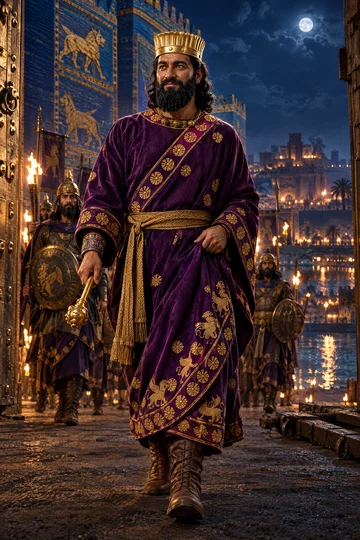
On the night Belshazzar was slain, Darius the Median took the kingdom, carrying out the announced transfer of the kingdom to the Medes and Persians.Ms 50, 1893, par. 7–9 An alien monarch took the throne, showing that wealth and power could not protect Babylon's king from sudden doom.Ms 50, 1893, par. 7–9
Divine Judgment on Arrogance
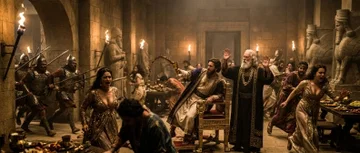
Belshazzar was a man of absolute power, void of self-control, corrupt at heart and swayed by base passions.Lt 40a, 1878, par. 6–12 With his thousand lords he held an idolatrous feast marked by music, dancing, sparkling wine and blasphemy.5T 244.4–5Lt 40a, 1878, par. 6–12 While warmed and beclouded by wine he forgot God and dishonored Him by drinking with his princes from the vessels consecrated to Jehovah while praising the gods of gold and silver and the idols of Babylon.5T 244.4–5Lt 40a, 1878, par. 6–12
God was an unseen witness of that unholy scene.5T 244.4–5Lt 40a, 1878, par. 6–12 In the midst of their sacrilegious mirth a bloodless hand traced mysterious characters upon the palace wall that pronounced the king's doom and destiny.5T 244.4–5Lt 40a, 1878, par. 6–12 Filled with terror, the king and courtiers heard their doom pronounced.5T 244.4–5 The taking of the kingdom was God's judgment that weighed his motives, character, life and soul in the balances of His sanctuary and pronounced him wanting.Lt 40a, 1878, par. 6–12 This shows the punishment of those who made light of what God had chosen as sacred.5T 244.4–5
Babylon was soon to fall because Belshazzar ignored the lessons and opportunities God had given him.PK 522.2 Its calamity followed the king's disregard of heaven-sent light given through Nebuchadnezzar.11MR 98.3–99.3 Its rulers forgot God and credited human achievement with the kingdom's honor and glory, and those who followed Nebuchadnezzar failed to learn from his experience.RH Feb 6, 1900
When Belshazzar's probation ended, God no longer protected him from the certain results of his choices.Lt 65, 1895, par. 6–7 His fall came as the consequence of his own course and not because God had forced him to act or failed to warn him, for God gives warnings and reproofs but leaves people free to choose, and the sin and its results rest with the one who chooses it.Lt 65, 1895, par. 6–7 His presumption and defiance reached the limit of God's forbearance, illustrating that God eventually ends persistent blasphemy and disobedience.6MR 391.1–3 An alien monarch took the throne after Belshazzar was slain, showing that wealth and power could not protect Babylon's king from sudden doom. The Medo-Persian realm that succeeded Babylon was also judged and incurred God's wrath because God's law was trampled underfoot, and wickedness, blasphemy, and corruption prevailed.PK 501.3RH Feb 6, 1900
Prophecy Fulfilled, Warning Repeated
The taking of the kingdom by Darius the Median was the literal fulfillment of divine prophecy, when Babylon fell and its dominion passed to the Medes and Persians.PK 501.3 The succeeding Medo-Persian realm was itself judged and incurred wrath because the law of God was trampled underfoot while wickedness, blasphemy, and corruption prevailed.PK 501.3
The taking of Belshazzar's kingdom was God's judgment upon a man of absolute power who was void of self-control, corrupt at heart, and swayed by base passions.Lt 40a, 1878, par. 6–12 With his princes and his thousand lords he made an idolatrous feast with music, dancing, sparkling wine, and blasphemy, and while warmed and beclouded by wine he forgot God and dishonored Him by drinking from the vessels consecrated to Jehovah while praising the gods of gold and silver and the idols of Babylon.5T 244.4–5Lt 40a, 1878, par. 6–12 God, whom they defied, was the unseen witness of that unholy scene and of that sacrilegious mirth, making a history to testify to the close of time.5T 244.4–5Lt 40a, 1878, par. 6–12 In the midst of the revelry a bloodless hand traced mysterious characters upon the palace wall, declaring his destiny and pronouncing his doom by the servant of the Most High, filling with terror the king and his courtiers.5T 244.4–5Lt 40a, 1878, par. 6–12 His motives, character, life, and soul were weighed in the balances of the sanctuary and found wanting, showing the punishment of those who make light of what God has chosen as sacred.5T 244.4–5Lt 40a, 1878, par. 6–12 His record will stand when the books of heaven are opened before the great Judge.Lt 40a, 1878, par. 6–12
The same hand that wrote his doom keeps a faithful record of every act of injustice or oppression committed against God's people.5T 244.4–5 God witnesses slander and falsehood uttered against the servants of Christ.5T 244.4–5 To profane by slanderous touch the character of those whom Christ purchased by His blood is worse than to profane soulless vessels consecrated to His service.5T 244.4–5
Babylon fell in an hour of feasting and reveling, and in the same manner sudden judgment will come upon men while unprepared in the end of the world.Ms 168, 1898, par. 1–3
Sources
Pioneers and periodicals
139 sources
That same night Belshazzar was slain and Darius the Mede took and received the kingdom, ending the rule of Babylon and the Chaldean kings and transferring world sovereignty from Babylon to another power.STST Sep 20, 1905RH Mar 8, 1915 Darius was about sixty-two years old when he took the kingdom, in 538 B.C. when empire passed from Babylon to the Medes and Persians near the return of the captive Jews.STST Sep 20, 1905RH Nov 26, 1857ST Sep 6, 1899ST Sep 20, 1905 He was Cyaxares king of the Medes, son of Astyages and maternal uncle of Cyrus, who had come with Persians as commander of the combined host while regal power remained in Darius, and who then stepped aside to place his uncle on the throne with first rank.STRH Nov 26, 1857ST May 10, 1877ST Aug 31, 1915ST Oct 23, 1901 In this the sentence that Babylon would be divided and given to the Medes and Persians was executed at once, completing the first division of the image from the golden head to the silver breast and arms and beginning the second of four successive universal governments.ST Jan 15, 1880ST Feb 13, 1907ST Feb 22, 1877RH Feb 9, 1869ST Sep 17, 1885 It reveals God as Ruler and Judge who numbers the days of nations, sets aside a kingdom when it can no longer serve His glory after being weighed and found wanting, and raises another in its place.ST Sep 6, 1899ST Jan 23, 1912ST Oct 18, 1905ST Aug 17, 1904ST Dec 1, 1914
Night Babylon Fell
In that same night Belshazzar was slain, Darius the Mede took and received the kingdom, ending the rule of Babylon and of the Chaldean kings and transferring world power and sovereignty to another empire.STST Sep 20, 1905RH Mar 8, 1915ST Jan 15, 1880RH Nov 26, 1857 The taking fulfilled the sentence that Babylon's kingdom would be divided and given to the Medes and Persians.ST Jan 15, 1880RH Nov 26, 1857ST Sep 20, 1905 Darius was about sixty-two years old, about threescore and two, when he took and received the kingdom after Belshazzar was slain.STST Sep 20, 1905ST Sep 20, 1905RH May 11, 1869RH Jan 9, 1900 The transfer occurred in 538 B.C., when empire passed from Babylon to the Medes and Persians.RH Nov 26, 1857ST May 20, 1897ST Jun 6, 1916ST Oct 11, 1905ST May 3, 1877 It closed Babylon's allotted rule near the time for the return of the captive Jews to Jerusalem.RH Nov 26, 1857ST Sep 6, 1899
Belshazzar was Babylon's last and most unworthy king, the grandson of Nebuchadnezzar, the eldest son of Nabonidus also called Nabonadius or Nabonnedus.RH May 11, 1869RH Mar 11, 1873STST May 20, 1913ST Jun 22, 1904 He reigned conjointly with his father during the last three years, with Nabonidus as first ruler and Belshazzar as second ruler.ST Dec 30, 1903ST Jan 23, 1912ST May 20, 1913RH Dec 24, 1872 Nabonidus gave his last years to worship of the gods and to religious devotions and temple-building and left the grave affairs of state to pleasure-loving Belshazzar.STST May 20, 1913 When Babylon fell Nabonidus was absent at Borsippa and was taken alive, while Belshazzar remained in Babylon as viceroy, ruling there, and was slain there.ST Jun 22, 1904 Because the first and second places were already filled by Nabonidus and Belshazzar, Belshazzar could only promise Daniel the place of third ruler for reading the handwriting on the wall.ST May 20, 1913ST May 20, 1913RH Dec 24, 1872 After the reading, though it pronounced the doom of Babylon, he clothed Daniel with purple, put a gold chain about his neck, and proclaimed him third ruler in the kingdom.ST May 20, 1913ST May 20, 1913
Belshazzar's association with Nabonidus began in 540 B.C., with Nabonidus still first ruler and Belshazzar second, and his final year was 538 B.C.ST Dec 30, 1903ST Jan 23, 1912 He had reigned seventeen years and jointly three years, and since Babylon ended in 538 the vision of Daniel 7 was given about 541.ST Dec 30, 1903ST May 3, 1877 Darius's first year coincided with Belshazzar's last year and with the year of Daniel's vision in Daniel 8.ST Dec 24, 1894ST Jul 10, 1901RH Nov 25, 1902 The third year of Belshazzar when Daniel 8 was given was also the first year of Darius when Daniel prayed in Daniel 9, so those visions belong to the same year, not fifteen years apart.ST Dec 24, 1894ST Jul 10, 1901 Belshazzar named in Daniel 5 is the same Belshazzar named in Daniel 7:1.ST Apr 5, 1877 Daniel 5 belongs to the historical part of the book, which stands by itself apart from the prophetical part beginning with Daniel 7, and in chronological order Daniel 7 follows Daniel 4.ST Apr 5, 1877
The account is true and reliable history, confirmed by Babylonian inscriptions that confirm the historical setting and Belshazzar's role in the city's rule.ST Jul 23, 1885ST May 20, 1913 The same capture of Babylon is told in Babylonian cuneiform writing on the cylinder of Cyrus, which tells how he captured Babylon, and in another cuneiform account from Nabonidus.RH Sep 7, 1905 Clay commemorative cylinders placed by Nabonidus when he repaired the tower temple of the moon at Ur of the Chaldees, dating about 556-539, close with a prayer to the moon-god for himself and for Belshazzar his son, giving a second independent witness agreeing with the Bible.ST May 20, 1913RH Sep 21, 1905 Belshazzar, or Belshar-usur, was a real person familiar in inscriptions, the eldest son and heir of Nabonidus associated with his father on the throne, not an invention, not merely a general or temporary regent, and not a myth.ST May 20, 1913RH Sep 21, 1905 An ancient record mentions his death, confirming the account of his death.RH May 13, 1909 The Greek account that Nabonidus was the last king, was absent from Babylon, and was captured not killed agrees with the Bible account that Belshazzar was ruling in Babylon and was slain.ST Jun 22, 1904
The existence of Darius the Mede is challenged by critics, and his statement that he took the kingdom at about sixty-two years old belongs to the historical portions under attack and has not yet been vouched for by contemporary inscriptions among the monuments of Babylon.STST Jan 11, 1916 Buried witnesses risen from the dust-heaps of forgotten centuries have testified to the literal accuracy of great portions of other parts of the Old Testament.ST While the battle is still going on and fresh discoveries are continually being made, no point should be treated as settled adversely against the historical statements in Daniel.ST The argument from ignorance is never secure and carries little weight.ST
Identity of Darius
Darius the Median is Cyaxares, king of the Medes, son of Astyages and maternal uncle of Cyrus.STRH Nov 26, 1857ST May 10, 1877ST He was brother of Mandana daughter of Astyages, whose marriage to Cambyses king of Persia made her the mother of Cyrus, so that Darius was Cyrus's uncle on his mother's side.RH Nov 26, 1857ST May 10, 1877 Born about 600 B.C., one year before Cyrus born in 599 B.C., he succeeded to the throne of Media while Cyrus succeeded to the throne of Persia.RH Nov 26, 1857 He is also called Cyaxares II by Xenophon and is the one identified in Daniel 9:1 as son of Ahasuerus, of Median descent, made king over the Chaldean realm, with Ahasuerus proposed to be Astyages.ST Aug 31, 1915ST Oct 23, 1901 Two years after Nebuchadnezzar's death, in the first year of Neriglissar, he began the fatal war that would utterly subvert Babylon, summoning to his aid his nephew Cyrus of the Persian line.ST
War was first waged against the Medes, whereupon Darius called Cyrus to aid him.RH Nov 26, 1857ST May 10, 1877STST Jan 22, 1880 Cyrus came with 30,000 Persians as commander-in-chief and generalissimo of the combined Medes and Persians, while regal power remained vested solely in Darius.ST May 10, 1877RH Nov 26, 1857ST Jun 28, 1899ST Feb 22, 1877ST Jan 22, 1880 The Medes and Persians prosecuted that war with uninterrupted success until Cyrus laid siege to Babylon in the sixteenth year of Belshazzar, and Darius as civil ruler took the throne on Babylon's taking in 538.ST May 10, 1877STST Jun 28, 1899 Although Cyrus performed all the work of subjugation and led the forces that conquered the city, the verse says Darius took the kingdom because upon the taking Cyrus placed his uncle Darius upon the throne.RH Nov 26, 1857ST May 10, 1877ST Jan 22, 1880 Though he conquered the city, Cyrus stepped aside and left the rule of the new realm to Darius, deferring to him and giving him first rank with title and rank of king.ST Aug 31, 1915ST Jun 28, 1899ST Sep 17, 1885ST Jan 22, 1880 He held back from Media's throne to gain the Medes' support after defeating Astyages and uniting Media and Persia, placing Darius, a Median prince, in power.ST Oct 23, 1901ST Oct 23, 1901 The empire consisted of two divisions, Median and Persian, and Cyrus and Darius shared it, with Darius holding the first rank.ST Sep 17, 1885ST Jan 22, 1880
Darius became the first king of the universal Medo-Persian empire and the last Median ruler placed over Babylon, representing Media, the lower horn of the two-horned ram.ST Jun 28, 1899ST Jan 23, 1912ST Feb 20, 1912 He reigned about two years until his death about 536, having no heirs, when Cyrus succeeded him.ST May 10, 1877ST Jan 11, 1916ST Jun 28, 1899ST Sep 17, 1885ST Jan 22, 1880 Shortly after Babylon's fall Cyrus married the daughter of Darius and received the kingdom of Media in reversion after her father's death.ST Jan 22, 1880 In the same year Cyrus also came to the Persian throne on the death of his father Cambyses, then added Media also and became absolute monarch of the whole united Medo-Persian Empire with the ruling house in the Persian line, so the higher horn came up last.ST May 10, 1877ST Jan 22, 1880 Afterward he pushed conquests northward, westward and southward until it ruled 127 provinces from India to Ethiopia.ST May 10, 1877
He may have ruled under or alongside Cyrus, to whom he was connected and who deferred to him.ST Jan 23, 1912 Some hold he was governor only acting in place of the king, to be identified with Gobryas, whom Cyrus made satrap and viceroy of Babylon with great power.ST Jan 11, 1916RH Nov 16, 1916ST Feb 20, 1912ST Nov 27, 1884 As such he received the kingdom for Cyrus, proclaimed peace, appointed governors in Babylon, took part in the attack in which Belshazzar died, and may have borne Darius as another name or taken Cyrus's decree to Ecbatana in Media.ST Jan 11, 1916ST Feb 20, 1912 His identification remains disputed and is not established by evidence outside Scripture, with proposals making him Astyages's son Cyarxes II or another Median prince or son of Astyages.ST Oct 23, 1901ST Oct 23, 1901 The school question connecting Babylon's capture with Cyrus does not explain how Cyrus and Darius relate, and one setting of the capture details Cyrus lowering the Euphrates and entering through the riverbed while Babylonians kept the Tammuz festival without explaining Darius's role or age.ST Nov 4, 1897ST Feb 4, 1886
Darius came before Cyrus, since Cyrus reigned after Darius, so the revelation given in the third year of Cyrus came after the first year of Darius the Mede. Therefore the one who says in Daniel 11:1 that he stood to confirm and strengthen Darius in his first year is an angel and not Daniel, for Daniel had little to do in strengthening kings, while angels are sent to execute the will of God. Daniel's personal history continued for a few years after this change of rule; he was probably about ninety-four when he died at Susa and did not return to Judea with the Hebrew captives released under Cyrus.ST Jan 18, 1877 With Nabonidus absent from the capital and Belshazzar dead, Daniel as third ruler was the one to enter into any negotiations that arose, which was to the advantage of the captive people of God, and Darius did give Daniel high consideration as shown in the next chapter.ST Oct 5, 1904
Capture of City
Babylon fell to the Persians during Belshazzar's feast and revelry, with Belshazzar slain and Cyrus master of the city by morning.RH May 11, 1869ST Sep 17, 1885ST Feb 22, 1877ST Jan 18, 1883 Persian soldiers came through the emptied channel of the Euphrates into the heart of the city and rushed with drawn swords to the palace, where they found the forewarned king and slew him.RH May 11, 1869ST Feb 22, 1877 This happened while Belshazzar was in presumptuous revelry and Daniel was making known the doom written on the palace wall, and with it the empire of Babylon ceased in the person of its last and most unworthy king.RH May 11, 1869ST Jan 18, 1883 The city's careless revelry helped bring its kingdom and freedom to an end when the king and his lords were slain during the drunken feast.ST Feb 22, 1877ST Jan 18, 1883
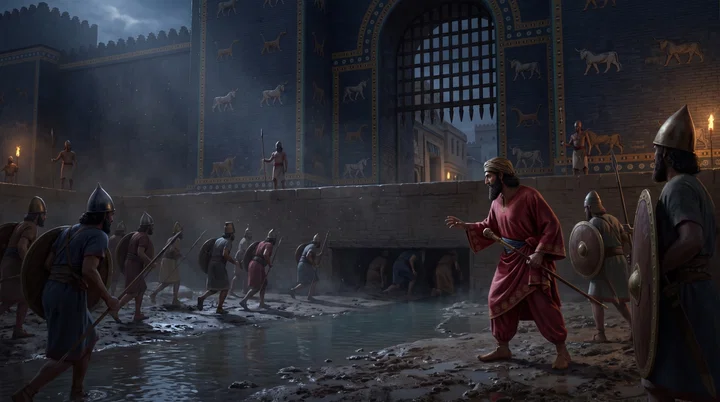
After nearly two years of siege Cyrus stationed men above and below the city where the Euphrates entered and left it.ST Jan 15, 1880RH Nov 26, 1857 On the annual festival night of revelry he turned the river aside by breaking the embankment to the western forty-mile-square lake and opening a trench around the city to drain the channel through the city, so that it became fordable.ST Jan 15, 1880RH Nov 26, 1857 His soldiers rushed through the dry channel into the heart of the city to execute judgment.ST Jan 15, 1880RH Nov 26, 1857 The Euphrates ran through Babylon with high walls of brick and bitumen on both banks, brass gates at every crossing street, steps to the water, and bars of brass and iron, but they could not stop the entrance because in the confusion of impious feasting the two-leaved gates were left open and not shut.ST Jan 15, 1880RH Nov 26, 1857
The strong inner fortress stood not on the Euphrates itself but on both sides of a bayou or shallow side-branch running from it, with water-gates fronting the stream at the foot of each street.ST Jul 3, 1879 Cyrus dammed the mouth of the bayou above the fortress and deepened its channel below where it entered the Euphrates, leaving the bed dry in a few hours.ST Jul 3, 1879 The defenders were so confident in the strength of their fortress that they neglected to close the water-gates, so when the water was drawn off there was nothing to prevent the besiegers from entering by the dry bed into every part of the fortress and taking the kingdom.ST Jul 3, 1879
Babylon was sixty miles in circumference, fifteen miles on each side, with walls eighty-seven feet thick and three hundred fifty feet high, a great defending army and provision for twenty years, so its people scoffed at Cyrus.RH Nov 26, 1857 Yet the city was taken at midnight while full of revelry and mirth, dance and song, banquets and joyous throngs, carefree and care-bereft.RH Nov 26, 1857ST May 20, 1880 Her river proved false and her gods of stone were heedless as the conqueror entered at her open gates and passed, and she was gone.ST May 20, 1880 Her place on earth abides not and she has no memorial, leaving only a lone waste wilderness of ruined heaps, silent marsh, and darkness and ruin.ST May 20, 1880
Cyrus used channels to lower the Euphrates and sent his men into the city through the riverbed while the Babylonians were distracted by their Tammuz festival and failed to guard the gates.RH Oct 11, 1915ST Nov 4, 1897ST Feb 4, 1886 The city was weakly defended by its drunken soldiers and officers, and in one account a traitor inside opened the gates to give easy access.RH Oct 11, 1915ST Nov 4, 1897 The diverted Euphrates did not pose a serious obstacle to an advancing army and supplies the historical precedent for entering and taking Babylon.ST Feb 4, 1886 The taking is placed immediately after the feast and the message of doom on the palace wall, and the hall where the feast may have been held is identified as a possible site where Cyrus was enthroned in June 538 B.C. and as the setting of Belshazzar's feast.RH Oct 29, 1908RH Apr 6, 1911
The Medes and Persians who took the kingdom were a strictly temperate people grown up through self-discipline and the hardships of hard natural surroundings, living on plain frugal food of bread, cresses and water without wine, figs or luxuries.ST Feb 3, 1904 They knew the intemperate course of Babylon was working her undoing and calculated upon that intemperance as a capital element in their plans for empire.ST Feb 3, 1904 Cyrus told his troops the Babylonians were soft, effeminate and unable to bear hunger, thirst, peril or danger, while hunger, thirst, fatigue and danger were the delight of the sober, hardy Persians.ST Feb 3, 1904 Babylon's defenders had stayed in their strongholds and were feasting instead of fighting, as had been foretold.ST Mar 6, 1907ST Feb 3, 1904
Prophecy and Succession
That night the sentence against Babylon was carried out, for the kingdom was divided and given to the Medes and Persians.ST Jan 15, 1880ST Feb 13, 1907ST Sep 17, 1885RH Nov 21, 1854 In the very night the handwriting was read and interpreted Belshazzar was slain and Darius the Median took the kingdom, so that PERES was executed at once.ST Jan 15, 1880ST Sep 17, 1885ST Aug 13, 1896 The overthrow came in the same night Belshazzar completed the apostasy, after the gospel of the kingdom had been preached in Babylon through Daniel and Nebuchadnezzar had been brought to acknowledge and worship the true God, but after his death Babylon relapsed into idolatry until that apostasy became hopeless when Belshazzar drank wine from the sacred vessels taken from God's house in Jerusalem while worship was offered to false gods.RH Apr 10, 1916ST Aug 13, 1896 God had numbered Belshazzar's kingdom and finished it, and had weighed him in the balances and found him wanting, because though he knew how God had humbled Nebuchadnezzar he had not humbled his heart but lifted himself against God, profaning God's holy vessels to praise gods of gold and silver and wood and stone that are no gods while the God in whose hand his breath was and whose were all his ways he had not glorified, having taken his last step beyond returning.RH Apr 10, 1916ST Aug 13, 1896
The taking of the kingdom completed the first division of the great image in Nebuchadnezzar's prophetic dream, fulfilling that another kingdom inferior to Babylon would arise.ST Feb 22, 1877RH Feb 9, 1869ST Sep 17, 1885 That succeeding power answering to the silver breast and arms and chest after the golden head was Media, now become the empire of the Medes and Persians.ST Sep 17, 1885ST Jun 6, 1916ST Oct 11, 1905ST Sep 17, 1885 The transfer in 538 B.C. marked Babylon's fall and the passing of world power to the Medo-Persian kingdom, represented also by the bear following the lion in Daniel's prophecies.ST Sep 21, 1882ST Jun 6, 1916ST Oct 11, 1905 As Babylon had fallen to the Medes and Persians, so Medo-Persia would later fall to Greece after ease and plenty weakened it.ST Sep 21, 1882
It was the end of the Chaldean kingdom and the beginning of the second of four successive universal governments, namely Babylon, Medo-Persia, Greece, and Rome, standing in the prophetic line leading to the last form of the Roman Empire under papal rule.RH Jun 20, 1854ST Jun 26, 1879ST Oct 29, 1885RH Nov 26, 1857 The change of kingdom may be reflected in the vision's image of Babylon's wings being plucked.RH Feb 17, 1874 Babylon was overthrown by Cyrus in 538 B.C. after continuing 139 years from 677 B.C., and that year marks the beginning of the Medo-Persian kingdom which lasted 207 years until its close in 331 B.C. when Darius was overthrown by Alexander the Great at the battle of Arbela.ST May 3, 1877 The great universal kingdom of Babylon thus ended ignominiously after a brief career of about sixty-eight years, in the same night Belshazzar king of the Chaldeans was slain.ST Oct 22, 1885ST Oct 5, 1904
Babylon's day is reckoned from its certain dominance under Nebuchadnezzar when it reached its zenith to its decline and fall under Belshazzar, the only king named after Nebuchadnezzar, who was weak, dissolute, sacrilegious and fearful, under whom the empire came to an end when God cast it down from its height, broke its mighty walls and opened its invulnerable gates because it would no longer be used by Him, giving the kingdom to another.ST Mar 5, 1912ST Oct 22, 1885ST Oct 5, 1904 The second part of the image did not arise until Darius the Median took the kingdom after Nebuchadnezzar's death, showing that the image's kingdoms represent successive empires, not a single ruler whose personal life must continue until the image is destroyed.ST The casual mention of Darius the Mede receiving the kingdom at Belshazzar's death is almost the whole basis held by some for dividing the Medo-Persian power into two distinct empires, the Median as the second kingdom and the Persian as the third kingdom of Daniel's prophecies, leaving Greece as the fourth.ST
The taking of the kingdom was the first of three overturnings by which earthly dominion is removed until He come whose right it is, for after the diadem was taken from Zedekiah, the last earthly king in David's line, and the kingdom was given to Nebuchadnezzar of Babylon, the dominion of the earth passed from Babylon to Persia when Darius the Median took the kingdom.ST Jan 1, 1894 That transfer marks the end of the seventy years of Babylonian servitude and the punishment of Babylon's king, but not the end of Judea's desolation, which continued.RH Apr 28, 1853 About two years later God moved Cyrus to allow the Jews to return to their land, for Darius the Median's rule in Babylon after the city's fall in 538 came before the decree of Cyrus that ended the seventy years.RH Apr 28, 1853RH Mar 14, 1865ST Jul 26, 1910 As the seventy years drew to a close God used the conquerors to break Babylon's power, and Cyrus then issued the proclamation for Israel to return to its land.RH Mar 14, 1865
The fall opened the way for the Hebrews to regain liberty and their religious privileges, and for the captive Israelites the fall of Belshazzar signaled that bondage was beginning to break and deliverance was at hand.ST Apr 23, 1912RH Aug 21, 1856 That overthrow brought ruin to those who had long rejected God's warnings, while it gave God's people a pledge of deliverance, liberty, and restoration.RH Jan 23, 1855 Cyrus, as generalissimo of both armies, had been called by name and appointed to the work by the Lord over two hundred and sixty years before, and God wrought the overthrow for His people, so that the overthrow together with association with Daniel led Cyrus to recognize the true God as great over all others.RH Nov 26, 1857ST Dec 19, 1892 The fall dated to 538 B.C. is the fulfillment of prophecy about Babylon's capture, proving His promises certain because He declares the end from the beginning and does all His pleasure, and together with the destruction of Jerusalem it demonstrates that He will overthrow the nations and restore the dominion to the people.ST Sep 17, 1885RH May 1, 1913
The historical account leading up to the fall of ancient Babylon serves as a prophecy of modern Babylon and its eventual fall, and that fall before the conqueror Cyrus serves as an object lesson in prophecy of the eventual fall of mystical Babylon.RH Oct 11, 1915 The chapter's lesson for the present depends on the meaning Scripture gives to the name Babylon.RH Jul 31, 1900
God Judges Nations
Daniel 5:31 belongs to the revelation of God as Ruler and Judge who governs human kingdoms, sets a nation aside when it can no longer serve His glory and raises another in its place, giving the kingdom to whomever He will and numbering the days of nations that do not serve His purpose.ST Jan 23, 1912ST Jul 16, 1912ST Dec 1, 1914ST Apr 9, 1896 It marks the end of Babylon's allotted rule and its transfer to Darius the Median near the return of the captive Jews, for Babylon had been weighed and found wanting and its days were numbered, and its lesson is that God weighs each person's character and each must consider whether the future will be with Him.ST Sep 6, 1899ST Dec 1, 1914ST Apr 9, 1896 Belshazzar's fall shows that Babylon's kings should have learned from Nebuchadnezzar's experience that God rules human kingdoms and is owed homage, yet Belshazzar failed to profit from that lesson, and the chapter stands just before God is shown again as Deliverer in chapter 6 to the Persian rulers.ST Oct 18, 1905ST Jul 16, 1912
Babylon, the head of fine gold and lady of kingdoms, became so corrupt under the kings who succeeded Nebuchadnezzar that it could no longer stand, and the kingdom of the Medes and Persians took its place as the breast and arms of silver.ST Aug 17, 1904ST Apr 9, 1896 Its rulers forgot God and credited human achievement with the kingdom's honor and glory, and when Nebuchadnezzar and Belshazzar took all glory to themselves the day of humiliation came, because the Most High rules in the kingdom of men.RH Feb 6, 1900ST Apr 9, 1896 The Medo-Persian kingdom also afterward incurred God's wrath because God's law was trampled underfoot.RH Feb 6, 1900
Belshazzar knew how God had humbled Nebuchadnezzar yet did not humble his heart but lifted himself against the Lord of heaven, and though he knew, he did not glorify the God in whose hand his breath was and whose were all his ways.ST Oct 18, 1905RH Jun 19, 1900ST Aug 13, 1896 He profaned God's holy vessels to praise gods of gold and silver and wood and stone that are no gods, drinking the wine of Babylon from the sacred vessels taken from God's house in Jerusalem while worship was offered to false gods, insulting the worship of the King of Heaven in riotous presumption.RH Apr 10, 1916ST Aug 13, 1896ST Nov 26, 1912ST Mar 18, 1903 That apostasy became hopeless and completed that same night, for after the nation as a whole crossed its line of probation Belshazzar took his last step beyond returning, God numbered his kingdom and finished it, weighed him in the balances and found him wanting, and executed the sentence of PERES at once.RH Sep 11, 1900RH Apr 10, 1916ST Aug 13, 1896
God's punishment of the king of Babylon came for persisting in sin despite witnessing God's punishment of the Jews.ST Jun 21, 1883 His dealings with Nebuchadnezzar had revealed the gospel of the kingdom with clearness and power, and Nebuchadnezzar's testimony had declared it so thoroughly that every person in Babylon, from the successor on the throne to the humblest private person, was without excuse, so that Belshazzar's knowing refusal was sufficient for his condemnation and no one perished in the fall except by his own choice.RH Jun 19, 1900 Belshazzar had the privilege of knowing from public record that the God of heaven had given the kingdom to Nebuchadnezzar in Daniel's interpretation of his dream, that the attempt to force God's servants to worship the great golden image on the plain of Dura failed with the death of the king's warriors and the miraculous preservation of the servants in the furnace of fire, and that Nebuchadnezzar was humbled with seven years of insanity and exile for exalting himself against God and then restored to confess that God does according to His will and is able to abase those who walk in pride, yet Belshazzar did not take these lessons to heart.ST Aug 13, 1896 He was reminded of Nebuchadnezzar's experience and held responsible for refusing to recognize himself as servant of the God who rules in the kingdom of men, proving that every man from king to lowliest is a servant of God owing his first and highest service to God, while in contrast Nebuchadnezzar learned the lesson and had excellent majesty added to him.ST Aug 13, 1896RH Oct 7, 1902
By providence Daniel was given a prominent place in the succeeding kingdom so the true God could be made known to the new rulers.RH Jan 9, 1900 After Belshazzar was slain and his father became a prisoner rather than king, Daniel was the chief official available to help the conquerors arrange the affairs of the state, and because of his excellent spirit the new king considered placing him over the whole realm.RH Sep 11, 1900ST Sep 13, 1899 He was placed in high office under Persia and made prime minister of the empire, holding a high place at the courts of Nebuchadnezzar, Darius and Cyrus in spite of malignant rivals, and organized with governors and three chiefs with consideration for the whole realm.RH Jan 9, 1900ST Dec 1, 1909ST Jan 13, 1888 Through Daniel and his brethren in captivity God enlightened Darius as He had enlightened Nebuchadnezzar, and after God shut the lions' mouths to preserve Daniel because innocency was found in him and because he believed in his God, Darius was fixed upon God as the only true and living God and proclaimed the God of Daniel to all peoples, nations and languages in all the earth, publishing the knowledge of God throughout Persia.RH Sep 11, 1900
The passing of the kingdom to Darius the Median brought the law of the Medes and Persians into force over Daniel, which Daniel refused to obey where it conflicted with his duty to God, demonstrating that government had overstepped the bounds set for civil authority by God and that His servants are exonerated from censure in refusing such mandates.ST Apr 14, 1898 In the fall Daniel survived and became a ruler in the territory where he had once been a captive, while the self-exalting Belshazzar perished for refusing to humble himself and failing to glorify God, pointing to the promise that the meek will inherit the kingdom.RH Jun 19, 1900RH Aug 22, 1907 Darius the Mede received the kingdom but did not retain it, and his brief rule contrasts with the everlasting kingdom possessed by those who overcome.RH Sep 18, 1900
The book of Daniel was written nearly six hundred years before Christ and foretold world history in outline through the end of its course and Christ's second coming.ST Nov 17, 1914 Daniel 5 is largely historical and descriptive, yet every chapter of the book has prophetic significance and gives practical lessons to rulers and nations, teaching the larger lesson that earthly kingdoms are insecure.ST Nov 17, 1914ST Oct 21, 1908
Warning and Promise
Babylon's sudden fall shows how insecure earthly power and prosperity are and how uncertain worldly security is.ST Sep 20, 1905ST Oct 21, 1908ST Sep 20, 1905 The city seemed secure behind mighty walls and its lords felt secure at the feast, yet capture came in the midst of revelry and the empire fell with the city.ST Sep 20, 1905ST Aug 25, 1914 Its overthrow fulfilled prophecy and worked for the welfare of God's people and the honor of God's name, giving practical lessons to rulers and nations.ST Oct 21, 1908ST Sep 20, 1905 Its apparent strength and glory did not make it secure, warning that nations adopting the same causes of moral corruption can likewise degenerate, decline and fall.ST Mar 16, 1915ST Jun 22, 1915 Luxury and vice preceded the fall of the powerful nation, when its defenses crumbled and mastery passed to the once weak Medes and Persians.ST Sep 5, 1911
The kingdom ended on a night of drunken revelry, an example of the ruin associated with alcohol and of what strong drink costs the existence of nations.STST Feb 20, 1901 In the night of Belshazzar's drunken lascivious feast he was slain, the mighty empire sank, and world dominion passed to the Medes and Persians.ST Feb 3, 1904 Those conquerors were a strictly temperate people grown through self-discipline and hard natural surroundings on plain frugal bread, cresses and water without wine, figs or luxuries, who counted Babylon's intemperance as working her undoing and as a capital element in their plans.ST Feb 3, 1904 Cyrus told his troops the Babylonians were soft, effeminate and unable to bear hunger, thirst, peril or danger, while hunger, thirst, fatigue and danger were the delight of the sober hardy Persians.ST Feb 3, 1904 Belshazzar was the last of the kings of rich, proud, luxurious, voluptuous Babylon, reigning conjointly with his father Nabonadius, who gave his last days to religious devotions and temple-building and left grave affairs to pleasure-loving Belshazzar, grandson of Nebuchadnezzar, Babylon's mightiest king.ST
The lesson was written for learning and is pre-eminently applicable today, a present lesson from the past containing truth for today that can be studied with profit.STSTST Belshazzar feasted with a thousand lords drinking from golden goblets, saw the handwriting too late to escape, died that night and his kingdom passed.ST May 22, 1907 So a thousand guests feast in palatial hotels for universal peace and cry peace, peace, while unseen handwriting declares that when they say peace and safety sudden destruction comes and they shall not escape.ST May 22, 1907 The same history of Babylon is being repeated now, and making known God's dealings with Nebuchadnezzar is the distinct message for this time, whose fullness Revelation 14:6-12 gives only the syllabus.RH Jun 19, 1900
That gospel of the kingdom had been revealed with clearness and power so that from successor on the throne to humblest person all were without excuse, and none perished except by his own choice, yet Belshazzar knew and did not humble his heart nor glorify the God in whose hand his breath was, but lifted himself against the Lord of heaven, and that knowing final refusal was sufficient for condemnation.RH Jun 19, 1900 Told not with enticing words of man's wisdom but in demonstration of the Spirit and of power, it preaches for a witness and brings final choice either to glorify God or to lift against Him, and Daniel and its meaning must be taught in every part of the earth.RH Jun 19, 1900 The fall is like present conditions, showing nearness of the end of worldly kingdoms, promise of glorious deliverance, duty to the world, and certain proof that wicked kingdoms will pass and Christ's everlasting kingdom of righteousness be established.RH Jan 9, 1900RH Jun 23, 1910 Belshazzar's fall came by Heaven's command after the feast in which holy vessels were profaned, a bold blasphemous dash against the Rock of Ages in which he was utterly broken.ST Aug 24, 1904ST Aug 13, 1902
That overthrow brought ruin to those who had long rejected warnings, while giving God's people a pledge of deliverance, liberty and restoration.RH Jan 23, 1855 An alien monarch took the throne that night, showing wealth and power could not protect from sudden doom.RH Nov 21, 1907 For more than two thousand years the Bible alone preserved his story.ST Aug 13, 1902 Belshazzar lost his kingdom in a single night, which is what happens physically when one boasts of health while disregarding health laws and disease cuts nerve communication to muscles or organs, laying him suddenly sick with serious loss of power.RH Jan 11, 1906 The account closes the feast and mysterious handwriting most tragically in Babylon's last years and belongs to Daniel the prophet's story.ST Nov 28, 1892RH Jul 2, 1901
Its capture closes a distinct connected history running without uncertainty, fable or chasm from creation's dawn in Genesis, covering more than two thousand earliest years left by other nations to fabrication and conjecture, preserving important events widely extended and visible to the present.RH Jul 15, 1862 Daniel's life in Babylon exemplifies how God would have workers serve in the world's closing act, with promise to lead each worker individually.RH Dec 20, 1906 The kingdom that shaped the world since Nimrod's founding fell in the second generation after Nebuchadnezzar, as Jeremiah declared.ST Oct 23, 1901 Overthrown by foreign power before seventy years ended, its prideful independence failed and its false religion was discredited, never to regain glory as a kingdom though individuals were saved through the gospel.RH Apr 30, 1908
Babylon fell because rulers forgot God, credited human achievement with honor and glory, and failed to learn from Nebuchadnezzar, and Medo-Persia also incurred wrath when God's law was trampled.RH Feb 6, 1900 The handwriting was interpreted and Babylon soon overthrown, fulfilling the judgment declared against it that the kingdom was taken and given to the Medes and Persians.ST Feb 13, 1907RH Sep 2, 1909 So the verse marks fulfillment of previous prediction about the empire, ending Babylon and beginning the succeeding kingdom in which Daniel by providence was given prominence to make the true God known to new rulers.RH Jan 9, 1900
Sources