Daniel 2:39
And after thee shall arise another kingdom inferior to thee, and another third kingdom of brass, which shall bear rule over all the earth.
Translations
And after you shall arise another kingdom inferior to you, and another third kingdom of brass, which shall bear rule over all the earth.
King James Version, KJV Cambridge Paragraph Bible, Webster Bible
And after thee shall arise another kingdom inferior to thee, and another third kingdom of brass, which shall bear rule over all the earth.
Revised Version, American Standard Version
And after thee shall arise another kingdom inferior to thee; and another third kingdom of brass, which shall bear rule over all the earth.
And after thee doth rise up another kingdom lower than those, and another third kingdom of brass, that doth rule overall the earth.
And after thee shall arise another kingdom inferior to thee; then another third kingdom of brass, which shall bear rule over all the earth.
And, after thee, shall arise another kingdom, inferior to thee,—and another—a third kingdom, of bronze, which shall bear rule throughout all the earth.
Berean Standard Bible, Majority Standard Bible
But after you, there will arise another kingdom, inferior to yours.Next, a third kingdom, one of bronze, will rule the whole earth.
“ After you, another kingdom will arise that is inferior to you; and another third kingdom of bronze, which will rule over all the earth.
And after you another kingdom, lower than you, will come to power; and a third kingdom, of brass, ruling over all the earth.
And after thee shall rise another kingdome, inferiour to thee, of siluer, and another third kingdome shalbe of brasse, which shall beare rule ouer all the earth.
Douay-Rheims (Challoner revision)
And after thee shall rise up another kingdom, inferior to thee, of silver: and another third kingdom of brass, which shall rule over all the world.
Pictures
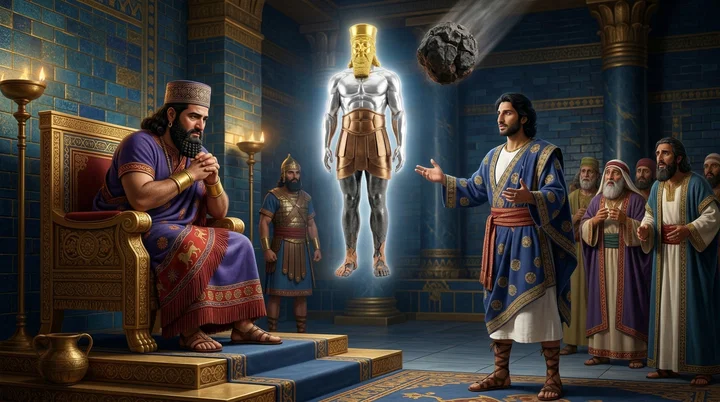
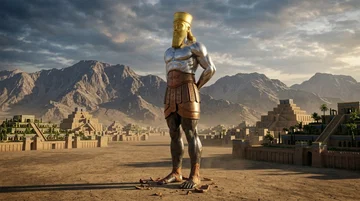
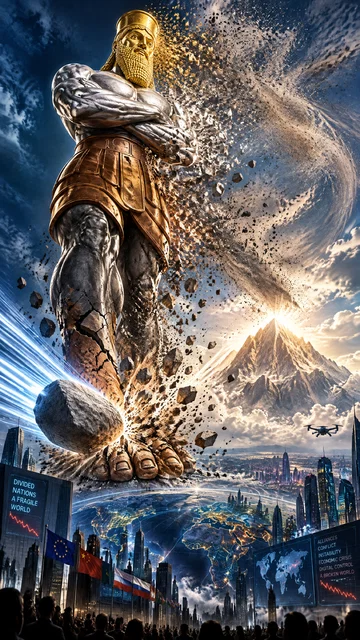
Cross-references 20 of 44
- Daniel 7:3-7
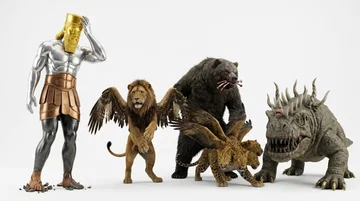
And four great beasts came up from the sea, diverse one from another.
The lion, bear, and leopard depict kingdoms in the same prophecy of empire succession.
- Daniel 2:44
And in the days of these kings shall the God of heaven set up a kingdom, which shall never be destroyed: and the kingdom shall not be left to other people, but it shall break in pieces and consume all these kingdoms, and it shall stand for ever.
God’s everlasting kingdom succeeds the earthly kingdoms.
- Daniel 8:20-22
The ram which thou sawest having two horns are the kings of Media and Persia.
Identifies Media-Persia and Greece as successive kingdoms in the prophetic sequence.
- Daniel 7:17
These great beasts, which are four, are four kings, which shall arise out of the earth.
The beasts represent the same four kingdoms shown in Daniel 2.
- Daniel 2:34-35
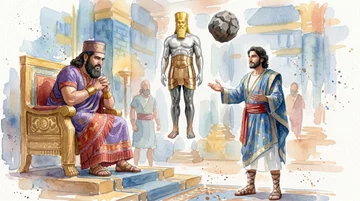
Thou sawest till that a stone was cut out without hands, which smote the image upon his feet that were of iron and clay, and brake them to pieces.
The stone destroys the image’s successive kingdoms and fills the earth.
- Daniel 8:5-7
And as I was considering, behold, an he goat came from the west on the face of the whole earth, and touched not the ground: and the goat had a notable horn between his eyes.
The swift goat represents Greece conquering the Medo-Persian kingdom.
- Daniel 2:32
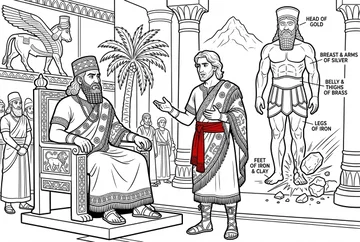
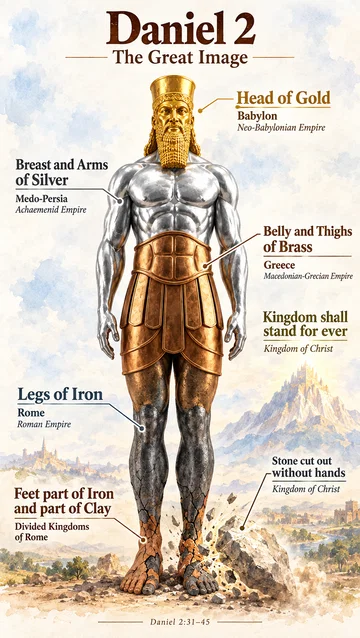
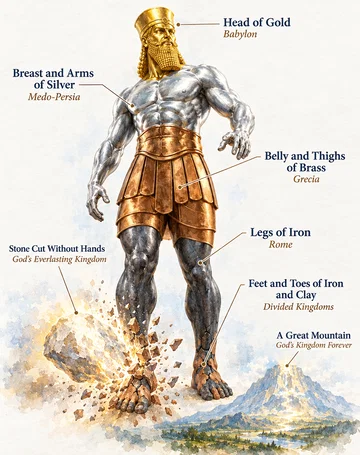
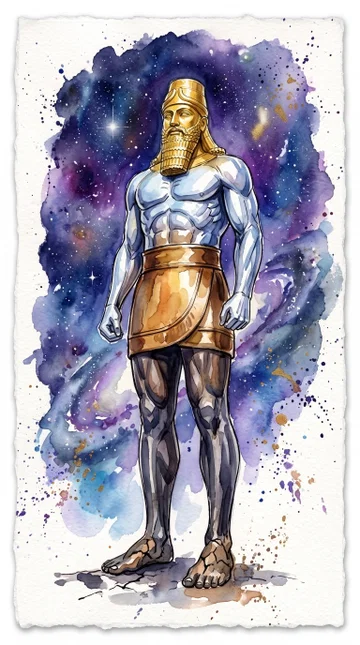
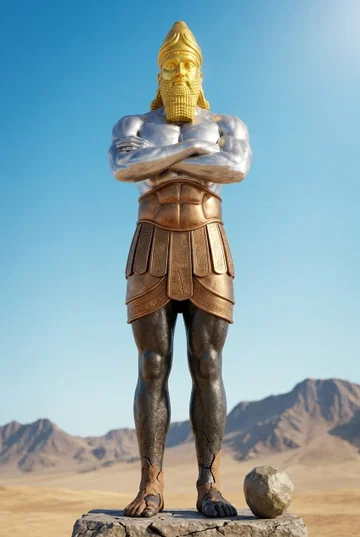
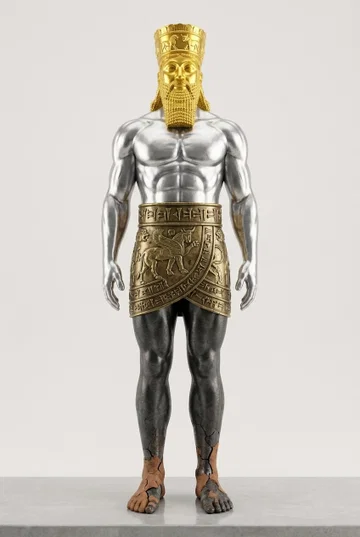
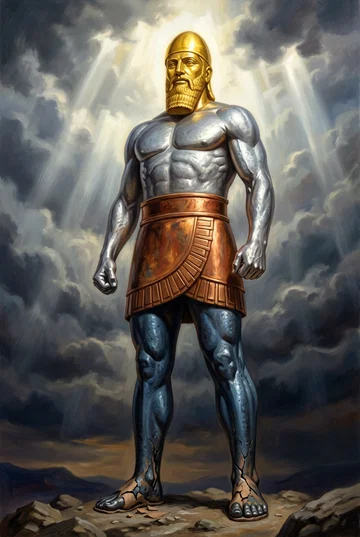
This image’s head was of fine gold, his breast and his arms of silver, his belly and his thighs of brass,
The silver and brass parts represent the second and third successive kingdoms.
- Daniel 5:30-31
In that night was Belshazzar the king of the Chaldeans slain.
Belshazzar’s death marks Babylon’s fall and the rise of Medo-Persia.
- Daniel 7:3
And four great beasts came up from the sea, diverse one from another.
The four beasts portray the same succession of kingdoms as the statue.
- Daniel 11
Also I in the first year of Darius the Mede, even I, stood to confirm and to strengthen him.
Daniel 11 further develops the prophetic history outlined in Daniel 2.
- Daniel 7:5
And behold another beast, a second, like to a bear, and it raised up itself on one side, and it had three ribs in the mouth of it between the teeth of it: and they said thus unto it, Arise, devour much flesh.
The bear represents the second kingdom, Medo-Persia, succeeding Babylon.
- Daniel 7:7
After this I saw in the night visions, and behold a fourth beast, dreadful and terrible, and strong exceedingly; and it had great iron teeth: it devoured and brake in pieces, and stamped the residue with the feet of it: and it was diverse from all the beasts that were before it; and it had ten horns.
The fourth beast corresponds to the image’s iron kingdom, representing Rome.
- Daniel 7:23-24
Thus he said, The fourth beast shall be the fourth kingdom upon earth, which shall be diverse from all kingdoms, and shall devour the whole earth, and shall tread it down, and break it in pieces.
Identifies the fourth kingdom and describes its division into ten kings.
- Daniel 7:27
And the kingdom and dominion, and the greatness of the kingdom under the whole heaven, shall be given to the people of the saints of the most High, whose kingdom is an everlasting kingdom, and all dominions shall serve and obey him.
The saints receive the everlasting kingdom that Daniel 2 foretells will rule under heaven.
- Daniel 5:28
PERES; Thy kingdom is divided, and given to the Medes and Persians.
Names the Medes and Persians as the kingdom that succeeded Babylon.
- Daniel 2:28
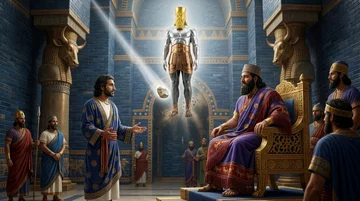
But there is a God in heaven that revealeth secrets, and maketh known to the king Nebuchadnezzar what shall be in the latter days. Thy dream, and the visions of thy head upon thy bed, are these;
The dream reveals events to come in the latter days.
- Daniel 8:3-4
Then I lifted up mine eyes, and saw, and, behold, there stood before the river a ram which had two horns: and the two horns were high; but one was higher than the other, and the higher came up last.
The two-horned ram represents the Medo-Persian kingdom, with Persia rising to prominence.
- Daniel 7:13-14
I saw in the night visions, and, behold, one like the Son of man came with the clouds of heaven, and came to the Ancient of days, and they brought him near before him.
The Son of man receives everlasting dominion and a kingdom over all peoples.
- Revelation 11:15
And the seventh angel sounded; and there were great voices in heaven, saying, The kingdoms of this world are become the kingdoms of our Lord, and of his Christ; and he shall reign for ever and ever.
The kingdoms of the world become Christ’s kingdom, and he reigns forever.
- Daniel 2:45
Forasmuch as thou sawest that the stone was cut out of the mountain without hands, and that it brake in pieces the iron, the brass, the clay, the silver, and the gold; the great God hath made known to the king what shall come to pass hereafter: and the dream is certain, and the interpretation thereof sure.
The stone's destruction of the image completes the sequence of earthly kingdoms.
Commentary part 1 of 2
Each commentary is drawn from primary sources: the writings of Ellen G. White and Adventist pioneers and periodicals. Each commentary is separate. Its own words are not a quotation; follow the references to read the source passages.
Ellen G. White
51 sources
After Babylon the head of gold, another kingdom inferior to it would arise to take its place, symbolized by silver, and then a third kingdom of brass that would bear rule over all the earth.PK 498.1–499.1ST Apr 29, 1897Ms 39, 1899, par. 5–8PK 495.3–496.2PK 496.4 The second is Medo-Persia which held world rule for 207 years, and the third is Greece, which under Alexander won power at Arbela in 331 B.C. and became the world's ruler before breaking apart after his death in 323 B.C.Ms 39, 1899, par. 5–8PK 496.5PK 496.4 The metals growing less pure and valuable show decrease in power and glory and sinking in religion and morality as the kingdoms moved farther from God, rejected His law and grew base and corrupt.Ms 39, 1899, par. 5–8RH Feb 6, 1900Ms 15, 1896, par. 4–61MR 50.4 Each kingdom was given its place and period of trial to prove whether it would exalt the one true Ruler, and failing in obedience its glory faded and it passed away to be replaced by another, until God sets up a kingdom which will never be destroyed but will break and consume them all and stand forever.ST Apr 29, 1897PK 501.11MR 49.1–2PK 495.3–496.2Ms 36, 1896, par. 3 This succession has been fulfilled with wonderful exactness as the historian's record confirms, bearing witness to the inspiration of Scripture and warning that those who refuse God's law and exalt themselves will be weighed and found wanting as Babylon was in the hour of its sacrilegious feasting.GC88 364.2GC 364.2–3Lt 109a, 1898, par. 5–8Ms 168, 1898, par. 1–3GC88 364.3–365.1
Dream and Its Setting
Nebuchadnezzar had a troubling dream he could not recall after waking, and the events surrounding it revealed to an idolatrous nation the power and faithfulness of Israel's God.PK 491.1PK 495.1 No wise men, astrologers, magicians or soothsayers could make the dream known, for only God in heaven who reveals secrets could make known what shall be in the latter days.PK 495.1ST Apr 29, 1897 The dream belonged to the prophecy of the kingdoms of men, making known what would happen in the future though no human could interpret it, as part of the interpretation of the great, bright, terrible image.PK 495.1ST Apr 29, 1897
The interpretation was made known through Daniel to help the king out of his difficulty.16MR 336.2PK 527.2 This revelation saved Daniel and the other wise men from execution.Ms 85, 1910, par. 41–44 Its giving first silenced the wise men of Babylon by forcing them to acknowledge they could not bring back the king's forgotten dream, showing human wisdom to be folly and scientific power to be inefficient in order to display the superior wisdom of those who worship God.Lt 151, 1904, par. 3–5 In making known the forgotten dream of successive kingdoms, Daniel was established as God's prophet.CTBH 20.1–21.2
The revelation was opened to the Hebrew captives who felt themselves exiles in a strange land with God as their only dependence, and was not shown to those charmed with the splendor of Babylon.Lt 151, 1904, par. 3–5 The precious lessons of heaven, the treasures of eternity, and the glories of the eternal world are revealed to those who refuse to be charmed by things of time and sense and who come out from the world and stand separate in faithful duty.Lt 151, 1904, par. 3–5 God used pictures and symbols appealing to sight so the lessons could be understood, and the prophecy was to be set out plainly for readers.HSFM 211.5–212.4 The inability of the wise men to tell the dream represents the failure of learned people without discernment and knowledge from God to understand prophecy.FE 412.1
Its lessons were given for people living in the present day, with light given especially for the last days whose foretold events are reaching fulfillment.FE 412.1Lt 57, 1896, par. 4–7 The verse belongs to the interpretation of Nebuchadnezzar's dream, which shows remarkable events that would unfold in prophetic history.FE 410.1–411.1 In it God revealed through Daniel the future course of world history in figures and symbols, extending to the close of time.PK 484.3 Its events were fulfilled in historical order as a figurative outline of events leading toward the close of earth's history, whose waymarks must not be displaced by mistaken interpretations.Ms 31, 1896, par. 1–2
Kingdoms in Succession
After thee means after Nebuchadnezzar's Babylon, the head of gold and first and preeminent of the world-moulding empires, to whom the God of heaven gave kingdom and power and strength and glory and made ruler over the children of men and the beasts of the field and the fowls of heaven wherever they dwell.ST Apr 29, 1897PK 495.3–496.213MR 63.1–3 A second kingdom inferior to Babylon would arise to supersede it, symbolized by the breast and arms of silver, identified as Medo-Persia, which held world rule for 207 years.PK 498.1–499.1Ms 39, 1899, par. 5–8PK 496.4ST Oct 19, 1882
It would in turn be succeeded by another third kingdom of brass, symbolized by the sides, which would bear rule over all the earth.PK 498.1–499.1Ms 39, 1899, par. 5–8ST Oct 19, 1882 That third kingdom is Greece, for Alexander the Great won power from Darius Codomannus at Arbela in 331 B.C. and became the world's ruler.PK 496.5PK 496.4 After Alexander died in 323 B.C. his kingdom quickly broke into divisions and became vulnerable to the rising power of Rome.PK 496.5PK 496.4
These kingdoms stand within four great empires before the close of human rule, to be followed by a fourth kingdom strong as iron.ST Apr 29, 1897PK 495.3–496.2 In the days of these kings the God of heaven will set up a kingdom which will never be destroyed and will not be left to other people but will break in pieces and consume all these kingdoms and stand forever.ST Apr 29, 1897 Daniel declared this succession while standing in the Babylonian empire when it seemed so strong and far-reaching that no foe could take its scepter, prophesying that notwithstanding its magnificence it would pass away.Ms 39, 1899, par. 5–8
Decline in Metallic Worth
The move from gold to silver to brass to still baser metals is a steady loss of purity and worth, marking how each kingdom after Babylon was inferior and deteriorated in value, power and glory as nations moved farther from God and became more separated from Him.Ms 39, 1899, par. 5–8RH Feb 6, 1900Ms 15, 1896, par. 4–613MR 60.1–61.2 That deterioration came from making void the law of God, and its evidence was seen in the immorality of these kingdoms.Ms 39, 1899, par. 5–8RH Feb 6, 1900 Had they kept the fear of the Lord ever before them they would have been given wisdom and power that would have bound them together and kept them strong, but their rulers made God their strength only when harassed and perplexed.Ms 39, 1899, par. 5–8RH Feb 6, 1900 This succession was declared while the hearers stood in the Babylonian empire when it seemed so strong and far-reaching that no foe could take its scepter, foretelling that notwithstanding its magnificence it would pass away.Ms 39, 1899, par. 5–8
The image sets forth not only decline in power and glory but decline in religion and morality.1MR 50.41MR 50.1 By making void God's law, rejecting allegiance to Him, casting Him off and forgetting Him, the kingdoms grew increasingly immoral, base, corrupt and morally weak, sinking lower in moral value.Ms 39, 1899, par. 5–8RH Feb 6, 19001MR 50.41MR 50.1 Babylon passed away because in prosperity she forgot God and ascribed the honor and glory of her prosperity to human achievements.Ms 39, 1899, par. 9–11 The Medo-Persian kingdom was visited by the wrath of God because in it His law was trampled underfoot, the fear of God had no power among the people, and wickedness, blasphemy and corruption prevailed.Ms 39, 1899, par. 9–11RH Feb 6, 1900
The kingdoms that followed were even more base and corrupt, each morally lower than the one before.Ms 39, 1899, par. 9–11RH Feb 6, 1900 They deteriorated because they cast off God, and by forgetting Him they sank lower and lower in the scale until the vast empire of Rome crumbled into pieces.Ms 39, 1899, par. 9–11RH Feb 6, 1900 In history Babylon passed away, the Medo-Persian realm followed, and later kingdoms sank further in moral worth, showing the increasing wickedness and corruption of the kingdoms that followed.PK 501.3Ms 39, 1899, par. 9–11RH Feb 6, 1900 The same succession also pictures deterioration of religion.Ms 39, 1899, par. 9–11
God's Rule and Testing
The interpretation foretold Babylon and the kingdoms that would follow it to show that God rules over earthly kingdoms, directs their course, and is more powerful than their rulers and above them.7T 161.1Lt 57, 1896, par. 4–7Ms 8, 1896, par. 22–23 Human rulers and powers rise and fall, but He is the true Ruler over all monarchs and kings of earth, humbling human pride and laying human glory in the dust.Lt 57, 1896, par. 4–7Ms 142, 1901, par. 5Lt 32, 1899, par. 6–11 Babylon itself, the first kingdom and head of gold, was a kingdom given to Nebuchadnezzar for God's glory.13MR 63.1–3
After Babylon a second universal kingdom would arise to supersede it and have its own period of trial, and then a third kingdom would take its place and have its own period of testing.PK 501.11MR 49.1–2Ms 36, 1896, par. 3 Each kingdom was given a period of trial to prove by obedience or disobedience whether it would exalt the one Ruler, the only true God, and its continuance depended on obedience.1MR 49.1–2Ms 36, 1896, par. 3 Failing to exalt Him, its glory faded, it failed and lost its glory and power and passed away to be replaced by another, with the third in turn passing away and giving way to the fourth kingdom strong as iron.PK 501.11MR 49.1–2Ms 36, 1896, par. 3PK 535.1ED 176.4 Medo-Persia and Greece came after Babylon in this tracing of the rise and progress of world empires, and like Rome and other nations each was permitted its place to show whether it would fulfill God's purposes.PK 535.1ED 176.4
This succession was predicted hundreds of years beforehand to demonstrate that God is the ruling power in the affairs of this world, changing times and seasons and removing kings and setting up kings to fulfill His own purpose.1MR 49.1–2 Nations arise at the predicted time to fill their appointed place, are permitted their place to show whether they will fulfill His purposes, and God foretells their rise and fall through His prophets while rulers fulfill His word as events unfold.1MR 49.1–2PK 535.1RH Feb 6, 1900 Earthly kingdoms are temporary and must pass away; Babylon would not stand forever though universal, and the kingdoms that followed it would also give way until God set up an everlasting kingdom that would never be destroyed.PK 495.2PK 514.112MR 218.2–220.1 Those successive earthly kingdoms rule by ascendancy of physical power, while the only kingdom that will never pass away or be destroyed is Christ's kingdom, the Living Stone, which will fill the whole earth, banish every carnal weapon and every instrument of coercion, and be established to uplift and ennoble fallen humanity, with the lamb as its ensign.PK 495.2Lt 32, 1899, par. 6–11
Fulfillment Confirms Scripture
The succession of kingdoms foretold here has been fulfilled with wonderful exactness, as confirmed and verified by the historian's record of ancient history.GC88 364.2GC 364.2–3GC88 364.3–365.1 That exact fulfillment bears witness to the inspiration of Scripture and anchors faith amid doubt, rationalism and skepticism.GC88 364.2GC 364.2–3GC88 364.3–365.1
Contrary to the popular belief that the prophecies of Daniel are mysteries and cannot be understood, this prophecy can be presented in familiar form.GC88 364.3–365.1 Even children can listen with pleasure and interest, understand it and explain it.GC88 364.3–365.1 Through them grown people can be led to study it.GC88 364.3–365.1 Its exact fulfillment impresses the solemnity and importance of the truth that the coming of the Lord is at hand and must be brought before the people.GC88 364.3–365.1 Light upon it was given especially for the last days, whose foretold events are reaching fulfillment.Lt 57, 1896, par. 4–7GC88 364.3–365.1
Through this symbolic prophecy God revealed His purpose for the nations and important events to come.PK 505.1Lt 109a, 1898, par. 5–8Ms 168, 1898, par. 1–3 Its interpretation was meant to spread knowledge of God.PK 505.1 Yet the image and its meaning could be rejected, distorted and misused to glorify human power and advance human plans.PK 505.1Lt 109a, 1898, par. 5–8Ms 168, 1898, par. 1–3 It was to be understood in the light of Scripture and the living Oracles, not reshaped to fit idolatrous ideas.Lt 109a, 1898, par. 5–8Ms 168, 1898, par. 1–3
Rejection and Present Warning
Daniel 2:39 foretold other kingdoms to arise after Babylon, but Nebuchadnezzar read that light through his own idolatrous mind, ambition and pride instead of in the light of the living Oracles.Lt 109a, 1898, par. 5–8Ms 47a, 1898, par. 2–5 He refused the succession of inferior kingdoms of less value pointing toward the end, fastened on being the gold head, and wished his own rule were more extensive and powerful.Ms 47a, 1898, par. 2–5Ms 163, 1898, par. 5–11Ms 15, 1896, par. 10–12 God's providence had incessantly brought the idolatrous king into reasoning relation with Daniel concerning prophecies against Babylon and other kingdoms, giving him light and exalting Jehovah as more powerful than any earthly kingdom or king.Lt 109a, 1898, par. 5–8Ms 47a, 1898, par. 2–5
He perverted the prophecy by setting up a golden image in the plain of Dura, made all gold as a defiant imitation of the dream image.12MR 218.2–220.1Lt 109a, 1898, par. 5–8Ms 168, 1898, par. 1–3 That image represented the kingdom of Babylon and more particularly himself in glory and excellency, and was raised to convert all nations to its worship and draw them to bow to it.Lt 109a, 1898, par. 5–8Ms 47a, 1898, par. 2–5Ms 163, 1898, par. 5–11 When three faithful servants would not bow the knee, Christ walked with them in the fiery furnace, and Nebuchadnezzar's heart was wrought upon to believe in God and His superior power.Lt 109a, 1898, par. 5–8
The prophecy stood, and Babylon fell in an hour of feasting and revelry.Lt 109a, 1898, par. 5–8Ms 168, 1898, par. 1–3Ms 47a, 1898, par. 2–5 The word that another kingdom inferior to Babylon would arise was fulfilled at Belshazzar's sacrilegious feast of wine-drinking from the sacred vessels of the temple while praising gods of silver and gold.CTBH 20.1–21.2 Then Babylon was numbered and finished, weighed in the balances and found wanting, and divided and given to the Medes and Persians.CTBH 20.1–21.2
The same unseen Watcher who heard every blasphemy and beheld every impious action at that feast watches every scene of feasting, revelry, unrestrained indulgence and contempt for sacred things.CTBH 20.1–21.2 The same verdict of being weighed and found wanting is written against such sacrilegious mirth.CTBH 20.1–21.2 The inability of Babylon's learned wise men to bring back the forgotten dream showed human wisdom to be folly and scientific power to be inefficient beside the superior wisdom of those who worship God.FE 412.1Lt 151, 1904, par. 3–5
The lesson is that today when men refuse to obey the law of God they are humiliated and God tests them, and if they do not humble their hearts and confess their sins they receive the penalty of transgression.Ms 39, 1899, par. 9–11 The precious lessons of heaven, the treasures of eternity and the glories of the eternal world are revealed to those who refuse to be charmed by things of time and sense and by the splendor of Babylon, who feel themselves exiles with God as their only dependence and who come out and stand separate in faithful duty.FE 412.1Lt 151, 1904, par. 3–5
Sources
Pioneers and periodicals
308 sources
After Babylon would arise Medo-Persia as the second kingdom of silver and then Greece as the third kingdom of brass, followed by Rome as the fourth kingdom of iron and then divided Rome and then God's everlasting kingdom.ST Dec 3, 1912ST Oct 11, 1905ST Jan 8, 1880 Inferior means lower in value, wealth, splendor and glory as silver is to gold, not inferior in power or extent, since Medo-Persia under Cyrus became the largest empire yet seen and exceeded Babylon in strength.ST Aug 13, 1902RH Jun 24, 1873RH Feb 23, 1869 Brass fittingly pictures the Greeks, famed as brazen-coated warriors in bronze armor, stronger and more brilliant than silver but less valuable and glorious.ST Apr 2, 1894RH May 20, 1915RH Mar 8, 1915 Bearing rule over all the earth does not mean occupying all the earth, but that none could cope with each power so all yielded, because dominion was given by the Most High, and each became universal only by overturning its predecessor through conquest.ST Sep 21, 1882RH Dec 23, 1852ST Sep 17, 1885ST Jan 27, 1898RH Jul 15, 1858 The succession of Babylon, Medo-Persia, Grecia and Rome has been fulfilled exactly in order and confirmed by history, proving divine foreknowledge and omniscience, so the remaining promise is certain that human governments will all end and give place to Christ's everlasting righteous kingdom that will never be destroyed.RH Apr 27, 1905ST Jun 13, 1878RH Apr 20, 1876ST Nov 1, 1910
Dream Setting and Symbols
Daniel 2:39 belongs to the interpretation in Daniel 2:31-45 of Nebuchadnezzar's dream of the great metallic image, seen in the second year of his reign after he ascended Babylon's throne in 605 B.C., with the prophecy dated to 603 B.C. at the beginning of the seventy years captivity and extending about 2,500 years from Nebuchadnezzar onward.ST Feb 15, 1883ST Apr 30, 1894 The silver, brass and iron divisions are three universal empires arising after Babylon, with the last of the four to be divided into ten distinct parts as indicated by the ten toes.ST Feb 15, 1883 The dream made a deep impression on the king's mind, and Daniel was brought before him to make known both the hidden dream and its interpretation.ST Oct 11, 1905 The then-existing universal empire of Babylon would be followed by three universal kingdoms bearing rule over all the world, and the fourth would be divided, and earth would never again be under one government until after these earthly kingdoms the God of heaven establishes His kingdom of eternity.ST Feb 15, 1883 Where the succeeding kingdom would come from, what nations would come against Babylon, who would lead the armies, and how the city would be taken were all known beforehand because God mustered the forces and directed the siege, revealing His plans to His prophets sixty to one hundred seventy-five years before Babylon fell.
God revealed both the dream and its true interpretation to Daniel after Daniel and his three associates fasted and earnestly prayed and sought wisdom from above, giving them implicit faith, increased confidence and great joy.ST Oct 11, 1905ST Jun 3, 1913 This exposed the inability and false claims of the wise men, astrologers, magicians and soothsayers, revealed the true God, and taught that heaven's kingdom is infinitely superior to earthly governments.RH Apr 25, 1912ST Jun 3, 1913 Daniel delivered it fearlessly without softening, as an example of prophetic revelation giving knowledge of times and events that God has made known through prophets and disciples, and of God teaching people through dreams.ST Jun 3, 1913RH Apr 21, 1851 Daniel is a prophet with understanding in all visions and dreams, and the same things revealed in Daniel 2 are revealed again and again by different visions in different figures and parables in Daniel 7 and Daniel 8, which must all be combined to understand them.ST Jan 20, 1898RH Feb 18, 1873
The vision stands in the Chaldee or Aramaic portion beginning at Daniel 2:4 and continuing through the close of Daniel 7, written in the language spoken at court and understood by the Jews generally to give speeches at court and relate proceedings there for the common people during the Babylonian captivity, and its subject is greatly similar to the subject of Daniel 7.RH Nov 25, 1873 It belongs to the first great line of prophecy, given nearly seventy years before Daniel's last vision in the third year of Cyrus about B.C. 536, two years after Medo-Persia had succeeded Babylon.ST Apr 9, 1912 Its meaning cannot be understood apart from the history of Babylon, beginning with Nimrod and the tower of Babel, and the prophecies about Babylon spoken in earlier years.RH Jul 30, 1908 Its historical fulfillment is described as accurate from Daniel's time onward, with Babylon dated 625-538 B.C. represented by the golden head, and the wealth and grandeur of its capital confirming that identification.ST Jun 16, 1914
The prophecy is symbolic rather than literal history, using metals to picture empires, the first great symbolic prophecy in the word of God spanning all history from Babylon to the everlasting kingdom of God.ST May 1, 1907ST Apr 9, 1896 Its divine expression is wonderfully comprehensive, contained in less than one hundred and fifty words with its interpretation composed of about three hundred words, and in its simple and clear outlines the history of the world is given in a most remarkable manner.ST Apr 9, 1896 It is the alphabet of all prophecies, tracing the rise and fall and deterioration of human kingdoms until they give place to the everlasting kingdom of Christ, a clearly interpreted symbolic prophecy outlining the whole prophetic field whose divinely explained symbols provide a sound basis for understanding other prophecies.ST May 1, 1907RH Sep 2, 1909 Its symbolic language is taken in the most obvious meaning, its symbols explained within itself, and unlike Daniel 11 which is mostly plain language it would have been unintelligible if written in advance as literal history; the kingdom symbols are represented by the materials, not by the anatomical parts.ST Dec 29, 1909RH Sep 2, 1909 It outlines world history for thousands of years, written nearly six hundred years before Christ, extending to the end of the world's career and Christ's second coming, and with Daniel 7, Daniel 8-9 and Daniel 10-12 traces the perishable world kingdoms to God's eternal kingdom, with Rome ending at Christ's second coming and the resurrection.ST Nov 17, 1914ST Apr 9, 1912
The splendid and magnificent image was given to Nebuchadnezzar a heathen idolater anxious about his dynasty in a form suited to impress him, while the same powers were shown to Daniel as wild beasts to reveal cruel character and attitude toward God, His law and His people.ST Nov 28, 1895RH Jan 16, 1900 The metallic divisions represent the great powers of earth simply as successive world empires or ruling dynasties regardless of character, especially those that shaped the world's religion and civilization, with different metals representing changes from one empire to another.ST Nov 28, 1895 The same sequence shown to Daniel as beasts that devour and break in pieces brings out new features and additional information concerning those kingdoms, since metals are little adapted to express many important movements running along with this line of history.ST Nov 28, 1895RH Jan 16, 1900 More was thus made known to believing people than to the king, for Daniel 2 is introductory to the next dream given to Daniel, and Daniel 7 repeats the outline covering the same period to add characteristics not given in Daniel 2.ST Jun 17, 1913 The second and third kingdoms cover the same general field later covered in Daniel 7 and given with additional particulars in Daniel 8, where Media and Persia are the ram and Grecia the rough goat.
Nebuchadnezzar was gratified to be gold but displeased to be succeeded and resisted the prediction that his Babylonian kingdom would be superseded by another kingdom.ST Jun 3, 1913RH Aug 6, 1908 He made the image on the plain of Dura all of gold to assert that his rule would endure perpetually, invincible and never replaced, demanding worship and arrogating all world and time.ST Aug 24, 1904ST Sep 6, 1899ST Feb 3, 1904 That all-gold image ignored and contradicted the revealed outline in which silver, brass, iron and clay represented successive kingdoms after Babylon's fall, rejecting both the prediction of successive empires and their declining greatness and asserting that Babylon's glory would last forever and remain the world's kingdom with no successor.RH Oct 22, 1901RH Aug 6, 1908ST Feb 3, 1904 The verse's prediction was confirmed when Babylon fell and Medo-Persia succeeded it, connecting the kingdoms' eventual ruin with the intemperance fostered by imperial wealth and idleness.ST Feb 3, 1904
The dream was given not for that king alone but to make known what shall be in the latter days and hereafter, so its meaning concerns future events beyond Nebuchadnezzar's own time and belongs far more to those living then than to him.ST Feb 15, 1883ST Jul 14, 1887ST Oct 11, 1883 It permitted the king to see in outline all the leading nations that would arise on earth clear down to the close of time, presenting future history and world history as an orderly movement under God's providence toward the work of redemption and the final kingdom of Christ.RH Aug 19, 1902ST Aug 5, 1913 The rise and fall of nations is not arbitrary or determined merely by a calendar but is shaped by their attitude toward God's purpose to make known and establish His kingdom on earth, with God interested in all affairs of men as well as nations and with a message for the last days as in Daniel's day.ST Aug 9, 1910RH Aug 19, 1902 Its divine interpretation can be compared with historical events, whose fulfillment confirms reliability, and it is for learning, patience, comfort and hope in every generation.ST May 27, 1913RH Mar 8, 1915 Not every part of the image has to exist in the latter days in order for the dream to make known what shall be in the latter days, since Nebuchadnezzar himself was part of the image and the kingdoms after him belong to the same revelation whose interpretation came from the God of Heaven leading to the closing scene in which God sets up a kingdom which shall never be destroyed.ST Feb 15, 1883ST Oct 11, 1883
God gave Nebuchadnezzar this symbol of earthly governments and their succession, and gave Daniel the interpretation, so that the kingdoms' rise and fall would serve His purposes for His people.RH Mar 14, 1865RH Aug 26, 1902 The dream exposed the error of Babylon's belief that humanity could save and preserve itself, and revealed God's power, authority and willingness to transform people, a message that could have brought healing to Babylon if received.ST Nov 26, 1912 It was given to preach the gospel of the kingdom in Babylon in a way that would make an impression on that idolatrous nation, since Nebuchadnezzar and his subjects did not believe the inspired writings of the law, prophets and psalms so that reading from the sacred rolls would have been of no use.RH Aug 26, 1902 The truth had to be revealed as fact and not merely talked about, by a living epistle and living sermon in Babylon, for the gospel is Christ revealed, not an argument about God's existence but proof by actual revelation of His presence, not speculative philosophy but actual experience in seeing and dealing with the invisible, establishing real fellowship and union between God and man and making known that things seen are temporal but things unseen are eternal.RH Aug 26, 1902
Four Kingdoms Identified Together
After Babylon the second kingdom is Medo-Persia, represented by the breast and arms of silver, and the third kingdom of brass, represented by the belly and thighs or sides, is Greece, also called Grecia or the Macedonian empire.ST Dec 3, 1912ST Jan 8, 1880ST Apr 2, 1894RH Apr 7, 1863ST Jun 6, 1916 The silver kingdom of the Medes and Persians captured Babylon in 538 B.C. and lasted until 331 B.C., when Alexander completed its overthrow at Arbela and world power passed to Greece, which continued until 161 B.C.ST Oct 11, 1905ST Apr 2, 1894ST Jun 6, 1916 Rome follows as the fourth iron kingdom, then divided Rome, and then God's everlasting kingdom which replaces earthly rule when the stone strikes the image.ST Dec 3, 1912ST Jan 8, 1880ST Jun 6, 1916 Medo-Persia inherited Babylon's dominion and expanded it east and west, and Greece in turn took Medo-Persia's territory and extended power farther west, their defining feature being succession to world domination rather than any particular capital or precise territory.ST Dec 3, 1912ST Jun 6, 1916 The brass is linked with the armor of Greek soldiers, who were called brazen-coated, and these kingdoms form successive stages of Gentile dominion beginning with Nebuchadnezzar's reign until Christ establishes his enduring kingdom.ST Apr 2, 1894RH Apr 7, 1863
The verse describes the second and third of four great universal monarchies ending with God's kingdom, forming successive steps from the old Assyrian empire to Rome's division.RH May 12, 1874RH Nov 3, 1874RH Mar 14, 1912ST Mar 4, 1880 Babylon is before and Rome after, each with its own territory and history from rise to fall, and the historical succession of those kingdoms verifies prophecy and the fulfillment of God's word.RH Nov 3, 1874ST Mar 4, 1880RH Oct 13, 1874 The course of empire moves westward around the earth with the sun, beginning in Asia, the cradle of the race, with the four kingdoms as the four first acts already past, and the progression reaches the last days and the establishment of Christ's kingdom of peace under the whole heaven.RH May 12, 1874RH Nov 3, 1874 The great-image prophecy carries the history forward from Babylon to the setting up of God's kingdom but does not describe particular events between the completion of Rome's divisions in A.D. 483 and God's kingdom, while the four-beast prophecy supplies details about that intervening period.RH Oct 13, 1874 The outline of four universal empires shows by sacred history the sureness of the prophetic Word over futile human efforts to read the future.RH Mar 14, 1912
These are successive world-dominating universal empires, not every smaller kingdom, for the symbolic metals represent major dynasties that succeed one another in world rule.ST Dec 3, 1912ST Feb 15, 1883ST Sep 12, 1916ST May 27, 1908 Only Babylon, Medo-Persia, Grecia and Rome were worldwide powers until the eternal kingdom, and the prophecy limits human history to four universal empires, so that after Rome comes a divided Roman Empire represented by Europe's kingdoms and no later nation will dominate the world before God establishes His everlasting kingdom.ST Sep 12, 1916 None of them refers to the United States, since the last of the four is to be divided into ten distinct parts as indicated by the ten toes, and the earth would never again be under one government until after these kingdoms God establishes His kingdom of eternity.ST Feb 15, 1883 In the setting described, ruling Asia meant ruling the world, for the then-existing universal empire of Babylon would be followed by three universal kingdoms bearing rule over all the world, with the fourth afterward divided.ST Sep 17, 1885 The dream was given to make known what shall be in the latter days, belonging far more to those living then than to Nebuchadnezzar, leading to the closing scene in which the God of heaven sets up a kingdom which shall never be destroyed but shall break in pieces and consume all these kingdoms and stand forever.ST Feb 15, 1883
The parts of the image are kingdoms not individual kings, so calling Nebuchadnezzar the head of gold refers to his Babylonian kingdom.RH Feb 23, 1869ST Mar 1, 1877ST Jan 8, 1880RH Apr 18, 1912ST Jan 14, 1889 King and kingdom are used interchangeably to mean a dynasty collectively through its duration, and the metals represent successive dynasties in the kingdom of man, with the image as a whole symbolizing that kingdom and its changes.ST Dec 3, 1912ST Jan 2, 1912ST Jan 14, 1889 The breast and arms of silver represent Medo-Persia, which followed Babylon and conquered it, with Cyrus's empire stretching from the Aegean Sea to the Indus as the largest and most extensive empire known up to that time.RH Feb 23, 1869ST Mar 1, 1877 Medo-Persia was inferior to Babylon in wealth, luxury and magnificence, though not in power or extent.RH Feb 23, 1869ST Mar 1, 1877 The image represents what occupies the earth in downward sequence from more precious to baser materials marking change and decline, ultimately replaced by an eternal condition represented by the stone becoming a mountain that fills the earth.ST May 3, 1877
The metals represent literal physical kingdoms with rulers, territory and subjects ruling the earth, and their sequence supports reading Daniel 2 literally.ST Jan 14, 1886RH Sep 22, 1874 After Babylon arose the literal kingdom of the Medes and Persians that succeeded Babylon when Babylon was divided and given to the Medes and Persians, subjugating Babylon in 538 B.C., followed by Grecia succeeding Medo-Persia in 331 B.C. and Rome about 168 B.C., showing two of four literal earthly universal kingdoms on this literal earth now all in the past.RH Sep 22, 1874RH Apr 18, 1912 Because they were physical literal kingdoms, the fifth universal kingdom that follows them must be physically like them, not a spiritual kingdom in the hearts of men that could exist without interfering with earthly governments.ST Jan 14, 1886RH Apr 15, 1858 The fifth kingdom must also be a literal future kingdom that dashes all earthly governments in pieces and then succeeds to their rule and absorbs their territory, not a spiritual kingdom in believers' hearts established at Christ's first advent, preaching, or Pentecost.ST Jan 14, 1886RH Apr 15, 1858 The succession descending from gold through silver and brass to iron and clay is a continued degeneracy ending in weakness, since Babylon was the golden city, the beauty of the Chaldees' excellency, the glory of kingdoms.RH Apr 18, 1912
Daniel 2 gives only brief mention of the second and third kingdoms chiefly to connect the first with the fourth, without separate explanation of their inferiority or details.RH Mar 5, 1867RH May 10, 1860ST Oct 8, 1896 The chapter's symbolic outline of world empires begins with successive kingdoms and extends to Christ's everlasting, universal reign, tracing the course of empire to show that the God of heaven is about to set up His kingdom.RH Mar 5, 1867ST Oct 8, 1896 It is treated alongside the prophecy of the four symbolic beasts, Christ's second coming, and the fifth universal kingdom, belonging to the prophecy that the Rock will bring human history to its end by smiting the remnant of the nations.RH May 10, 1860 Daniel 7 and 11 expand the second and third kingdoms and foreground the fourth and the Messiah rather than God's people, supplying the intervening detail the image omits.RH May 10, 1860RH Oct 13, 1874
Meaning of Inferior and Brass
“Inferior” means lower in worth, wealth, luxury, magnificence, splendor, glory, brilliance, dignity and character, as silver is to gold, not lesser in power or extent.RH Feb 23, 1869ST Mar 1, 1877RH Mar 8, 1915ST Jan 2, 1912ST Jun 16, 1914 Medo-Persia conquered Babylon and under Cyrus stretched from the Aegean Sea to the Indus, the largest and most extensive empire yet seen, exceeding Babylon in strength.RH Feb 23, 1869ST Mar 1, 1877ST Aug 18, 1881 The succession of materials decreases in value while increasing in strength, marking stages of earthly history toward the final kingdom of the stone.RH Jul 9, 1908ST Nov 28, 1895ST Jan 2, 1912 Though Babylon fell as a world empire, its principles of putting humanity in God’s place, corrupting His ways, claiming His authority and rebelling against His rule continued in the later kingdoms.ST Aug 13, 1902ST Aug 13, 1902
Brass fittingly pictures the Greeks, famed as brazen-coated warriors clad in bronze armor, associated with that metal in mythology and history.ST Apr 2, 1894RH May 20, 1915RH Mar 8, 1915 It was stronger and more brilliant than silver but less valuable, superior in strength yet inferior in glory, unity, magnificence and splendor.ST Nov 28, 1895ST Jan 2, 1912ST Jun 16, 1914 The silver kingdom of Medo-Persia captured Babylon in 538 B.C. and lasted 207 years, and the brass kingdom of Greece completed its overthrow in 331 B.C. and continued until 161 B.C.ST Apr 2, 1894ST Jan 2, 1912ST Jun 16, 1914 Greece under Alexander became a world-ruling empire of wider reach, its name known across the nations, ruling over all the then-known earth.RH May 20, 1915ST Nov 28, 1895
The descending scale from gold to silver to brass to iron to iron mixed with clay marks decline, deterioration, degeneracy and increasing brittleness, with less pure and valuable metals signifying physical, mental and moral degeneration of human government and the race until ripe for final doom.RH Feb 6, 1900ST Aug 13, 1902ST Sep 6, 1899ST Feb 3, 1904ST Jan 29, 1880 Kingdoms grew increasingly immoral as they made void God’s law and cast off God, whereas obedience and reverence would have given wisdom, strength and unity, and imperial wealth and idleness fostered the intemperance connected with their ruin.RH Feb 6, 1900ST Feb 3, 1904 Nebuchadnezzar’s all-gold image rejected both successive empires and their declining greatness by asserting Babylon’s glory would last forever, but the prediction was confirmed when Babylon fell and Medo-Persia succeeded it.ST Sep 6, 1899ST Feb 3, 1904 Sinners are thus more easily held in rebellion through succeeding generations, and the world will never all be converted to God.ST Jan 29, 1880
The golden age was therefore in the past in Babylon’s days at the beginning of the image, not at the end, with Persia of less value and Grecia of still less value and no hope of future earthly glory.RH Jun 24, 1873ST Dec 24, 1912ST Dec 16, 1880 To call the present time of worldwide union, peace and progress the golden age, or to put iron first and gold last, turns the image topsy-turvy, stands it on its head, and inverts and mutilates its symbols.RH Dec 28, 1869ST Dec 17, 1874RH Aug 15, 1865 That downward order contradicts the claim that history gradually evolves upward into a converted world or millennium of peace.ST Mar 17, 1887ST Dec 16, 1880ST Dec 17, 1874 Like the rest of the image, these kingdoms will not be converted but will be smitten by the stone upon the feet and broken to pieces together, iron, clay, brass, silver and gold becoming like chaff of the summer threshing-floors carried away by wind with no place found, which is utter destruction and wrath upon the wicked who corrupt the earth, followed in the days of the divided kingdoms by God’s fifth, glorious, everlasting kingdom set up at Christ’s coming to stand forever with reward to the saints.ST Mar 17, 1887ST Dec 16, 1880
The empires are distinguished by the different metals, not by special features of the anatomical parts.STST May 8, 1907ST Oct 2, 1901 The image as a whole represents the kingdom of man and naturally has head, breast, arms, sides, thighs, legs, feet and toes, so the two thighs of the belly and thighs of brass reaching to the knees carry no separate prophetic meaning and do not signify Greece’s divisions or two ruling powers.STST Oct 2, 1901 Just so the two arms do not mean Medes and Persians, and the two legs do not mean Eastern and Western Rome, which was a unit through most of its glorious career rather than divided from the knees down.STST May 8, 1907
Second Kingdom Medo-Persia
The kingdom inferior to Babylon is the dual kingdom of the Medes and Persians formed by Darius the Mede and Cyrus the Persian in the conquest and overthrow of Babylon, pictured by the breast and two arms of silver.RH Nov 26, 1857ST Dec 30, 1903ST Dec 30, 1903ST May 29, 1884ST Mar 1, 1877 Rulership was first given to Darius while Cyrus commanded the combined armies and subdued Babylon, then Cyrus succeeded by inheritance and marriage to become absolute monarch of the whole, so that Media was at first dominant and Persia rising last became the ruling element.RH Nov 26, 1857ST Dec 30, 1903ST Dec 30, 1903ST Mar 1, 1877ST Sep 17, 1902 Its conquests pushed westward, northward and southward from Persia in the east until it erected the greatest Asian empire to that time, extending dominion chiefly westward, and it subdued and grievously oppressed Babylon, Lydia and Egypt.RH Nov 26, 1857ST Dec 30, 1903 It followed Babylon not by ordinary succession but by conquest, with accessions from the hereditary dominions of the conquerors, occupying substantially the same territory as Babylon.ST May 29, 1884
The same power is the second beast the bear in the four-beast series and the ram with two horns in Daniel 8, the two arms and two horns showing its two parts as Medes and Persians.RH Nov 26, 1857ST May 29, 1884ST Mar 1, 1877ST Sep 17, 1902 The ram's higher horn came up last because Persian power under Cyrus rose after and above Median power under Darius, and the bear raised up on one side expresses dominion extended chiefly in one direction westward, with three ribs in its mouth as Babylon, Lydia and Egypt.RH Nov 26, 1857 Its nature is strength, ferocity, robbery and spoil like the Syrian bear scarcely yielding to the lion, cruel, fierce and ravenous in character and despotic and oppressive in administration.RH Nov 26, 1857RH Nov 21, 1854 Its national emblem was the ram, worn by its kings as a gold ram's-head diadem, and the goat of Daniel 8 representing Grecia overthrows this ram.RH Nov 26, 1857ST Jul 7, 1887
After thee means after the Babylonian dynasty headed by Nebuchadnezzar, not immediately after his personal reign, for Babylon continued through Belshazzar with successors until about sixty-four years after the prophecy.ST Dec 9, 1897RH Jan 16, 1908ST Jan 23, 1912RH Feb 9, 1869 After Nebuchadnezzar who reigned forty-three years came his son Evilmerodach for two years, then Neriglissar his son-in-law for four years, then Laborosoarchod son of Neriglissar for nine months which being less than one year is not counted in Ptolemy's canon, and lastly Nabonadius the Belshazzar of Daniel, son of Evilmerodach and grandson of Nebuchadnezzar, with whom that kingdom comes to an end.STST Feb 22, 1877 The fall of Belshazzar and the taking of the kingdom by Darius marked the fulfillment of the first installment of the prophetic dream, showing how brief human glory is despite ardent patriotism that Babylon should stand forever.ST Jan 23, 1912RH Feb 9, 1869 In prophecy king stands for kingdom, meaning a dynasty or succession of rulers collectively representing the empire through its whole duration while each ruler individually represents it for his own time.RH Jan 16, 1908
The war began in the first year of Neriglissar, only two years after the death of Nebuchadnezzar, when Cyaxeres king of the Medes, the Darius of Daniel, called his nephew Cyrus of Persia to aid him against Babylon.ST Feb 22, 1877 The Medes and Persians pressed the war with uninterrupted success until in the sixteenth year of Belshazzar Cyrus laid regular siege to Babylon, the only city in all the East still holding out.ST Feb 22, 1877 Babylon appeared humanly impregnable with lofty walls, provisions on hand for twenty years, and land inside the city to grow food indefinitely, so its people scoffed and felt secure, but security could not save it because God had decreed the proud city must come down and no mortal arm can hinder His decree.ST Feb 22, 1877 Babylon's kingdom was given to the Medes and Persians when it was weighed in the balances and found wanting, receiving Babylon as spoil and reward after God numbered and finished and divided it.ST Dec 29, 1887RH Nov 21, 1854RH Feb 27, 1900
On the night Belshazzar drank wine in the sacred vessels of the Lord's house with his lords, wives and concubines and praised gods of silver and gold, God's limit of mercy was reached.ST May 20, 1913 Cyrus's soldiers entered by stratagem, slew the guards and Belshazzar fighting for his life, and Darius the Median about sixty-two took the kingdom, properly beginning the Medo-Persian Empire when Cyrus captured Babylon in B.C. 538 and ending the Chaldean Empire.ST May 20, 1913ST Dec 20, 1910ST May 29, 1884RH Mar 10, 1904 The dream had been given about sixty years before Belshazzar's feast and its interpretation known in Babylon, but the nobles had forgotten it and failed to heed the lesson of God's power and the kingdom's fall.ST Oct 23, 1901 These kingdoms arose in succession, and their rise and fall fulfill the prophecy.ST Dec 20, 1910
Babylon, raised to a pinnacle of splendor, fell into downfall and desolation because the Chaldeans were oppressors of God's people and guilty of iniquities that challenged retribution from Heaven.STST Feb 22, 1877RH Feb 9, 1869 When seventy years were accomplished the king of Babylon and that nation and the land of the Chaldeans were punished for iniquity and made perpetual desolations.ST Feb 22, 1877 Babylon fell because it was weighed in the balances of God's righteous purposes and found wanting after Nebuchadnezzar and Belshazzar took all glory to themselves, to teach that the Most High rules in the kingdom of men and gives it to whomever He wills, putting down kings and raising up kings, humbling one and exalting another.ST Apr 9, 1896RH Jun 12, 1900ST May 15, 1907 Proud Babylon had outlived her usefulness so God cast her down, and when His own people become willing captives to sin He permits cruel nations to humble them so they may learn wisdom and turn to Him.ST May 15, 1907
Medo-Persia conquered Babylon in 538 B.C. and ruled 207 years to 331 B.C. as the most extensive empire to that time, with Ahasuerus ruling 127 provinces, inferior in wealth, magnificence, splendor and character of rulers yet not in strength since it overthrew Babylon.ST Dec 20, 1910ST Jan 2, 1912ST Jun 16, 1914ST Apr 9, 1896 Its line ran Cyrus, then Cambyses, then false Smerdis, then Darius Hystaspes, then Xerxes whose expedition against Greece remotely caused Alexander's later invasion of Asia, then Artabanus usurping power for seven months after inciting the murder of Xerxes, then Artaxerxes Longimanus beginning in 464 B.C., continuing until Darius Codomannus came to the throne in 336 B.C. and closed his career at Arbela in B.C. 331 by Alexander's victory.ST Apr 9, 1896RH Jul 9, 1908 Media began at the same time as Babylon in rebellion against Assyria, was at first allied with Babylon, then that alliance dissolved and Media and Persia united.RH Jul 9, 1908
Viewed from Scripture its principal work was the restoration of Israel to their own land.ST Mar 1, 1877 Two years after the taking of Babylon Darius the uncle of Cyrus died, with Cambyses king of Persia and father of Cyrus also dying, leaving Cyrus sole monarch in B.C. 536.RH Jul 9, 1908ST Mar 1, 1877 That year closed the seventy years captivity begun in 606 B.C. with Nebuchadnezzar's first expedition against Jerusalem and brought the decree of Cyrus for the return of the Jews and rebuilding of the temple, the first installment of the great decree for restoration completed in the seventh year of Artaxerxes in B.C. 457.RH Jul 9, 1908ST Mar 1, 1877 Decrees under Cyrus, Darius and Artaxerxes enabled Jerusalem and the temple to be rebuilt and Jewish rule partly restored, with Artaxerxes' 457 B.C. decree marking the beginning of the longest and most important prophetic period in the Word of God, the 2,300 days-years of Daniel 8:14 connected with the monarchies and sanctuary.RH Jul 9, 1908ST Mar 1, 1877ST May 20, 1897RH Jan 8, 1857
Prophetic dates count not from earlier political origin but from connection with God's people, because the Bible takes no account of any nation till then.RH Apr 22, 1862RH Apr 22, 1862 Babylon arose out of the old Assyrian empire founded by Nimrod, great grandson of Noah, about 3000 years before Christ, which governed Asia nearly 1300 years, and stood as a distinctive empire from B.C. 747 when on the death of Sardanapalus the empire was divided by Arbaces and Belesis, Belesis receiving Babylon, Chaldea and Arabia.RH Apr 22, 1862 Yet its date as the head of gold is B.C. 677 when Manasseh was taken captive by Esarhaddon and the Jews became tributary to the Babylonians, just as Rome founded in 754 B.C. did not enter prophetic history until 161 B.C., and the kingdoms may exist and develop long before prophecy brings them onto the stage.RH Apr 22, 1862RH Jul 30, 1908ST Jun 16, 1914RH Apr 22, 1862
The prediction looked ahead to the future and was fulfilled as Babylon swiftly declined after Nebuchadnezzar's death, its power waning until within a quarter century the Medo-Persian army under Cyrus stood before the city.RH May 20, 1915RH May 29, 1900 The brief prediction of overthrow teaches that even a mighty empire and its possessions are fleeting and can pass away suddenly.ST Sep 17, 1885RH Aug 11, 1904 The man who brought about the fall, Cyrus, had been named by God's prophet nearly two hundred years earlier.ST Jul 7, 1887 Babylon's city and political power would fall, though its principles and false teachings would continue.ST May 20, 1897
Sources