Daniel 6:11
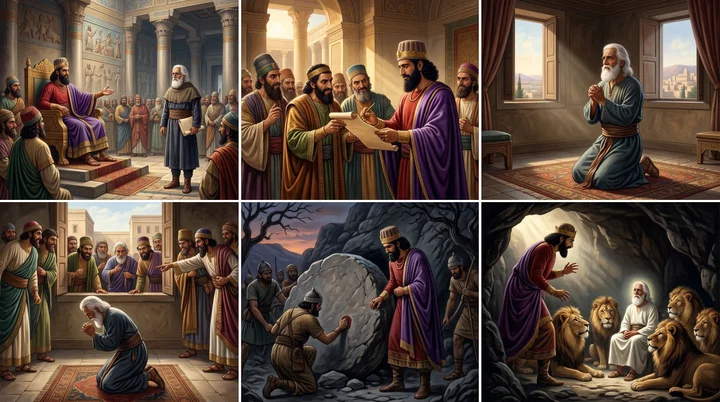
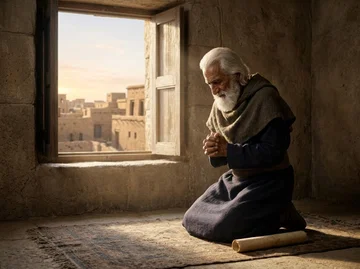
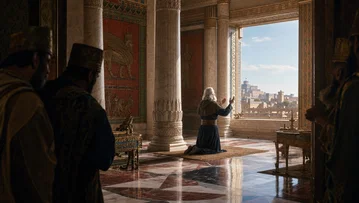
Then these men assembled, and found Daniel praying and making supplication before his God.
Translations
American King James Version, King James Version, KJV Cambridge Paragraph Bible, Webster Bible
Then these men assembled, and found Daniel praying and making supplication before his God.
Revised Version, American Standard Version, World English Bible
Then these men assembled together, and found Daniel making petition and supplication before his God.
Then these men have assembled, and found Daniel praying and entreating grace before his God;
But those men came in a body, and found Daniel praying and making supplication before his God.
Then, these men, crowded together, and found Daniel,—praying and making supplication, before his God.
Berean Standard Bible, Majority Standard Bible
Then these men went as a group and found Daniel petitioning and imploring his God.
Then these men were watching and saw Daniel making prayers and requesting grace before his God.
Then these men assembled, and founde Daniel praying, and making supplication vnto his God.
Douay-Rheims (Challoner revision)
Wherefore those men carefully watching him, found Daniel praying and making supplication to his God.
Pictures


Cross-references
- Daniel 6:22-23
My God hath sent his angel, and hath shut the lions’ mouths, that they have not hurt me: forasmuch as before him innocency was found in me; and also before thee, O king, have I done no hurt.
God answers Daniel’s prayer by delivering him unharmed from the lions.
- Daniel 3:18
But if not, be it known unto thee, O king, that we will not serve thy gods, nor worship the golden image which thou hast set up.
The three Hebrews refuse the king’s command to worship the image, remaining loyal to God.
- Acts 5:29
Then Peter and the other apostles answered and said, We ought to obey God rather than men.
Both affirm obeying God when human demands conflict with his commands.
- Daniel 6:16
Then the king commanded, and they brought Daniel, and cast him into the den of lions. Now the king spake and said unto Daniel, Thy God whom thou servest continually, he will deliver thee.
Daniel is cast into the lions’ den for praying, while Darius trusts God to deliver him.
- Daniel 6:4-5
Then the presidents and princes sought to find occasion against Daniel concerning the kingdom; but they could find none occasion nor fault; forasmuch as he was faithful, neither was there any error or fault found in him.
Daniel’s blameless conduct leaves only a charge concerning God’s law.
- Acts 4:19
But Peter and John answered and said unto them, Whether it be right in the sight of God to hearken unto you more than unto God, judge ye.
Both show obedience to God when human authorities oppose it.
- Daniel 6:23
Then was the king exceeding glad for him, and commanded that they should take Daniel up out of the den. So Daniel was taken up out of the den, and no manner of hurt was found upon him, because he believed in his God.
Daniel is unharmed because he believed in God.
- Hebrews 11:33
Who through faith subdued kingdoms, wrought righteousness, obtained promises, stopped the mouths of lions,
Faith is credited with stopping the lions’ mouths.
- Acts 16:25
And at midnight Paul and Silas prayed, and sang praises unto God: and the prisoners heard them.
Both prayed and sang praises while imprisoned.
- Daniel 6:7
All the presidents of the kingdom, the governors, and the princes, the counsellors, and the captains, have consulted together to establish a royal statute, and to make a firm decree, that whosoever shall ask a petition of any God or man for thirty days, save of thee, O king, he shall be cast into the den of lions.
the thirty-day worship ban Daniel defied
- Daniel 6:5
Then said these men, We shall not find any occasion against this Daniel, except we find it against him concerning the law of his God.
The only charge against Daniel concerned his obedience to God's law.
- Daniel 6:1-3
It pleased Darius to set over the kingdom an hundred and twenty princes, which should be over the whole kingdom;
Sets the government context for Daniel’s prayer.
- Daniel 6:20
And when he came to the den, he cried with a lamentable voice unto Daniel: and the king spake and said to Daniel, O Daniel, servant of the living God, is thy God, whom thou servest continually, able to deliver thee from the lions?
Darius calls Daniel God’s servant and asks whether God has delivered him.
- Daniel 9:20-23
And whiles I was speaking, and praying, and confessing my sin and the sin of my people Israel, and presenting my supplication before the LORD my God for the holy mountain of my God;
Daniel’s prayer is answered with the revelation of the seventy weeks.
- Daniel 6:15
Then these men assembled unto the king, and said unto the king, Know, O king, that the law of the Medes and Persians is, That no decree nor statute which the king establisheth may be changed.
An unchangeable law is used to punish Daniel for praying.
- 1 Peter 3:12
For the eyes of the Lord are over the righteous, and his ears are open unto their prayers: but the face of the Lord is against them that do evil.
God hears righteous prayers
- Daniel 3:1
Nebuchadnezzar the king made an image of gold, whose height was threescore cubits, and the breadth thereof six cubits: he set it up in the plain of Dura, in the province of Babylon.
Both accounts show faithfulness to God despite the king’s demands.
Commentary
Each commentary is drawn from primary sources: the writings of Ellen G. White and Adventist pioneers and periodicals. Each commentary is separate. Its own words are not a quotation; follow the references to read the source passages.
Ellen G. White
21 sources
The conspirators watched Daniel for a whole day and three times saw him go to his chamber and heard him pleading earnestly with God, openly disregarding the known thirty-day decree that made asking any petition except of the king punishable by the lions' den.BS 38.1–2PK 542.2–4ST Nov 18, 1886ST Oct 26, 1882 He calmly continued his accustomed practice without change in a single particular, going at the hour of prayer to his chamber with windows open toward Jerusalem and offering petitions with all his heart three times that day, without concealment.ST Apr 18, 1911ST Nov 18, 1886ST Oct 26, 1882 He made the law of God his rule above the king's law, fearlessly holding that no earthly power has a right to come between him and his God, and choosing to lose his life rather than dishonor God by praying in secret or accommodating for convenience.10MR 90.1–91.2MYP 27.4–28.1 That courage to stand true with the den open before him had grown from his decision at the very beginning of his captive career and from steadfastness amid lesser daily trials, showing that prayer of faith and meditation give strength to stand firm while neglecting prayer leaves one without needed divine strength.ST Nov 4, 1886SLP 297.35T 42.2–43.2 His faithfulness gave him opportunity to testify that the God of heaven alone deserves worship, whom he served continually and who delivered him from the lions by angels present in the den, and the same strict integrity is required now when the test is whether to keep God's commandments and honor before them or make faith convenient to serve the powers that be.ST Apr 18, 19115T 453.1–4DA 28.310MR 90.1–91.26MR 268.1–269.3
Setting and Discovery
Darius the Median had taken the throne formerly held by the Babylonian rulers and reorganized the government by setting one hundred and twenty princes over the kingdom and three presidents over them, with Daniel first so the princes would give account and the king would have no damage.PK 539.1 Daniel was preferred above the presidents and princes because an excellent spirit was in him, and the king thought to set him over the whole realm.PK 539.1 The honors bestowed upon him excited the jealousy of the leading men of the kingdom, who sought occasion of complaint against him but could find none, for he was faithful and neither error nor fault was found in him.PK 539.2 Being thus forced by his blameless conduct, his enemies had to admit they could find no occasion against him except concerning the law of his God.PK 539.3
What was found in the verse presupposes a decree signed in the courts of Babylon, known to Daniel, that for thirty days no one could ask a petition of any God or man except Darius the king.ST Nov 18, 1886ST Oct 26, 1882 The decree forbade asking anything of God and made prayer to God punishable by death, for violation meant being cast into the den of lions.ST Nov 18, 1886ST Oct 26, 1882 Daniel knew the thirty-day prohibition and knew death was the penalty for devotion, yet did not change his course in a single particular.ST Oct 26, 1882
The princes watched Daniel for an entire day and found him praying and pleading with God, continuing his regular devotion despite the decree.BS 38.1–2PK 542.2–4 Three times they saw him go to his chamber and three times they heard his voice lifted in earnest intercession to God.PK 542.2–4 This open, repeated prayer in disregard of the royal decree gave them grounds to accuse him before the king, and the next morning they complained to the king that Daniel had set the decree at defiance.BS 38.1–2PK 542.2–4
Steadfast Prayer and Witness
Daniel did not change his course in a single particular when prayer was made punishable by death, but calmly performed his accustomed duties and at the hour of prayer went to his chamber with windows open toward Jerusalem to offer petitions to the God of heaven with all his heart and earnest intercession three times that day.ST Apr 18, 1911ST Nov 18, 1886ST Oct 26, 1882Ms 40, 1890, par. 92–94 He prayed openly and without concealment, continuing just as he had done before the decree was made, and he did not conceal or abandon his purpose despite the threat of the lions' den.ST Nov 18, 1886ST Oct 26, 1882Ms 40, 1890, par. 92–94 He made the law of God his rule of action above the king's law and determined to honor God above human authority, standing true to principle and to God even with the den of lions open before him.MYP 27.4–28.1 By this course he fearlessly declared that no earthly power has the right to come between him and his God and tell him to whom he should or should not pray, and his open devotion was a confession of faith sustained by strength from heaven.ST Oct 26, 1882MYP 27.4–28.1
His ability to stand true in this great obstacle to fidelity came from a decision made at the very beginning of his career as a Hebrew captive, and his courage to remain true with the lions' den awaiting him had grown through steadfastness amid the lesser daily trials of a heathen king's court.SLP 297.3 By that daily faithfulness his faith, courage, and firmness grew stronger, preparing him for the great trial.SLP 297.3 He refused to treat praying in secret or praying openly as a small matter or to accommodate himself to circumstances for convenience, but stood firm to principle for the honor of God whatever the result.10MR 90.1–91.2 With the gaping lion's den open before him he chose to lose his life rather than dishonor the God of heaven in any way, and as God's representative he kept the living God exalted above all as the One who gives wisdom and power, showing all from whence came his strength and letting no man come between him and his God.10MR 90.1–91.2
His daily prayers illustrate firmness of religious principle that fear and threats could not turn from loyalty to God, and his prayer and adherence to right principles enabled him to stand firm against temptation.ST Nov 4, 18865T 42.2–43.2 Prayer of faith gives strength to resist Satan's devices, and prayer and meditation keep followers alert to those devices, while neglecting prayer leaves them without the divine strength they need.ST Nov 4, 1886 His faithfulness brought the rulers' attention to him and gave him opportunity to testify that the God of heaven alone deserves worship and praise.5T 453.1–4 His faithfulness placed him where a king could witness and proclaim the supremacy of his God, and his deliverance showed that the God he worshiped was the true and living God, so that God's vindication of His servants helped spread knowledge of the true God throughout Babylon.5T 453.1–4DA 28.3Ms 2b, 1895, par. 25–26
The God whom he served continually delivered him out of the power of the lions, proving the value of continued communion with God and that earnest prayer is answered.ST Apr 18, 1911ST Nov 18, 1886Ms 40, 1890, par. 92–94 God's angels were there in the den after he was cast in for continuing to pray and ask help from God when his enemies had arranged a decree against it and could find no other fault in his conduct.ST Nov 18, 1886Ms 14, 1894, par. 24–25 When trial is met in the path of duty God's protection is sure, in contrast to placing oneself under temptation by associating with the servants of Satan, which leads to falling sooner or later.GC 509.1 Because he did not yield, God let His blessing rest upon him in remarkable degree and honored him with wisdom and understanding more than all the astrologers and magicians, and God works the same way for others who stand the same way.10MR 90.1–91.2 The same strict integrity is required now, for the test coming to all who will enter the city of God is whether they will keep God's commandments and His honor before them or make faith convenient and serve the powers that be.10MR 90.1–91.2
His steadfast prayer under opposing pressure condemns yielding to pressure to receive and publish literature that unsettles faith in Christianity, introduces sophistry, and gives a wrong tendency to minds, and requires refusing work of that character because it is work that God condemns.6MR 268.1–269.3 Daring to be a Daniel means daring to stand alone in Jesus Christ as a channel through which God can impart His grace to enrich poverty-stricken souls starving for righteousness and for an example of righteousness.Lt 2, 1901, par. 12–14 The treasure of God's love is poured into the heart so that those who impart heaven's riches are themselves enriched, while ministering angels wait longing to communicate heavenly treasures through such men and women.Lt 2, 1901, par. 12–14 Only by cooperating with Christ, learning His methods, accepting His Holy Spirit, and laboring together with Him is the highest stage of mental and moral development reached and a full complement of influence gained in self-denial and cross-bearing.Lt 2, 1901, par. 12–14
Sources
Pioneers and periodicals
109 sources
Daniel's rivals secured a thirty-day royal decree forbidding petition to any god or man but the king, yet he continued his customary open prayer toward Jerusalem three times a day, and the conspirators who assembled expecting to catch him at his regular hour found him kneeling in supplication to his God.ST Jul 12, 1899RH Jan 9, 1900RH Jan 9, 1900 He would not pause, hide, or alter his worship for fear or safety, valuing unbroken fellowship with God above position, honor, and life itself.ST Oct 25, 1899ST Oct 30, 1901 When human law forbids prayer or commands what God forbids, God's law is paramount and must be obeyed rather than men, for civil rulers have no right to intrude into conscience, worship, and religion.ST Oct 3, 1895RH Feb 1, 1906ST Sep 5, 1895RH Sep 8, 1910 He meekly suffered the penalty without resistance, and God vindicated and delivered His faithful servant by sending His angel to shut the lions' mouths.ST May 21, 1912ST Jul 16, 1912RH Aug 7, 1916RH Mar 30, 1916 His refusal to refrain from worship at man's bidding is the pattern for God's people in the last days when they will face persecution and a death sentence for keeping the seventh-day Sabbath and refusing a Sunday law enforced by civil power.ST Sep 6, 1899ST Sep 8, 1914RH Feb 9, 1860ST Sep 5, 1895
Setting and Narrative
The account belongs at the beginning of the rule of Darius the Mede, when Daniel, a Hebrew captive of Judah, stood as premier and as president placed alone over the princes.ST Jan 30, 1912ST Dec 1, 1909RH Dec 3, 1901 He had held high positions at the courts of Nebuchadnezzar, Darius, and Cyrus and had become prominent in the new Medo-Persian kingdom, and his faithful witness there helped Cyrus recognize the true God and issue the proclamation enabling the Jews to return to Jerusalem.ST Dec 1, 1909ST Dec 19, 1892 The chapter presents personal responsibility to God as central to his example.ST Jan 30, 1912
Envious presidents and princes plotted against him because they could find no fault except concerning the law of his God, and acknowledged him as servant of the living God.RH Jan 9, 1900RH Sep 3, 1872 By flattery and fraud they secured a thirty-day decree, signed under the unchangeable law of the Medes and Persians that altereth not, that no one ask petition of any God or man save the king only.RH Dec 3, 1901RH Jan 8, 1861 They told the king all officers agreed when Daniel had not been consulted, aimed the law at Daniel alone as hostile to the Hebrew faith, and by it exalted the king to the place of Deity and required worship of the king as God.ST May 19, 1914 When Daniel knew the writing was signed he still prayed openly as aforetime, going into his house where his windows were open toward Jerusalem.ST Jul 12, 1899ST Jan 30, 1912RH Dec 3, 1901 Kneeling three times a day, including morning and evening worship, he prayed and gave thanks and made petition and supplication before his God, without hiding or changing his customary posture even for the law's limited thirty days.ST Jul 12, 1899ST Jun 6, 1916ST Dec 20, 1899ST Jan 30, 1912 Stopping would have conceded that rulers could regulate or forbid worship.ST Jun 6, 1916
The conspirators assembled together expecting to find him at his regular time of prayer, because they knew when he prayed, and found him praying and pleading before his God just as they had intended and hoped.RH May 18, 1869ST Jul 12, 1899 He did not conceal his devotion but continued his usual prayer despite the decree, which gave them grounds to accuse him of disobeying it and made his faithfulness a trap.RH Jan 9, 1900RH May 18, 1869ST Jan 30, 1912ST Jul 12, 1899RH Aug 27, 1861 They hastened exultingly to the king with tidings that he prayed in defiance of the decree, and the king then for the first time understood the real import of the decree he had been decoyed into signing.RH Dec 3, 1901ST May 19, 1914 He submitted to the penalty without resistance and was cast into the den of lions for refusing to submit.RH Mar 30, 1916ST Apr 19, 1910 There God sent His angel to shut the lions' mouths and delivered His faithful servant, showing approval of his course and proving the value of communion with God.ST Nov 18, 1886RH Aug 7, 1916RH Mar 30, 1916ST Apr 19, 1910
The events of Daniel 6 follow the vision of Daniel 8 in chronological order, the vision being given in the third and last year of Belshazzar at the beginning of Darius the Median, and this order reveals their relation.RH Nov 25, 1902 Daniel had just seen that a power would rise which would take away the continual service, so that for a time the continual service would cease in the temple of God, the Shekinah glory would depart, and the house would be desolate.RH Nov 25, 1902 Daniel's praying is the concrete revelation of that continual service in the temple of God centered in Jesus Christ.RH Nov 25, 1902
Prayer and Faithfulness
Daniel kept on praying and asking God for help exactly as he had always done after the royal decree forbade petition to anyone but the king.ST Oct 25, 1899ST May 21, 1912 He valued fidelity to God and unbroken fellowship with Him above position, honor, life, and safety.RH Oct 7, 1902ST May 21, 1912 He trusted his case to God rather than yield to a law that would dishonor Him. He knew separation from God would be worse than the lions' den.RH Oct 7, 1902
He did not pause, alter, hide, or interrupt his established habits of goodness out of fear or concern for personal safety.ST Oct 25, 1899ST Dec 20, 1899RH Oct 29, 1914 He continued calmly and openly without defiance or fear, promptly following conscience.ST Oct 25, 1899ST Oct 30, 1901 This shows the importance of not interrupting goodness and of doing right and standing alone without being governed by fear of other people.ST Oct 25, 1899 He would not hide his worship or change his customary posture even for the law's limited thirty days.ST Dec 20, 1899
His prayer was continual worship and service as inseparable expressions of fellowship with God.RH Oct 7, 1902 It included secret and personal prayer alone in his chamber.ST Nov 24, 1887 The den itself could serve as his place of personal communion where he earnestly waited on God and God met him.ST Nov 24, 1887ST Nov 24, 1887 He did not change his course in a single particular but with all his heart and earnest intercession fearlessly declared that no earthly power has the right to come between him and his God.ST Oct 26, 1882 His praying is the concrete revelation of continual service in the temple of God centered in Jesus Christ.RH Nov 25, 1902
He gave thanks confident that God heard him and that all would be well whatever happened.ST Oct 30, 1901 His petitions included concern for the people and city of his captivity in keeping with the command to seek its peace, and he likely prayed even for those plotting against him.ST Oct 30, 1901 His prayer was connected with the hoped-for deliverance of his people from Babylon.RH Jul 3, 1900 By praying to God he upheld God's supreme authority without seeking to defy the king or slight his proper claims.RH Jul 3, 1900
His steadfastness in this later and severe trial at the end of life was prepared for by principles followed from youth, including obedience to God and control of appetite.ST Sep 10, 1894ST Sep 10, 1894 It came from a decision made at the very beginning of his career as captive and prime minister, and from faithfulness amid lesser daily trials in a heathen court by which faith, courage, and firmness grew stronger. Strength in the crisis came from faithful prayer practiced aforetime, for when the crisis arrived there was no time to prepare.RH May 31, 1906 A steady daily life of trust prepares a person to stand firm.RH May 31, 1906
He dared to pray before his open window in the face of enemies, fearing neither counselors nor lions' jaws because he trusted the living God.RH Nov 11, 1873 He prayed three times a day with his windows open toward Jerusalem, as he had done before the decree.ST Apr 18, 1911 He would not kneel to the ruler of earthly kingdoms but revealed faith in the Lord of heaven.RH Sep 11, 1913 He accepted the legal penalty trusting God whether or not he was delivered, and counted prayer of such importance that rather than compromise it he went into the den, showing the value of continued communion even under threat.ST Apr 18, 1911ST Oct 26, 1904
Prayer joined with faith moves nations and is a shield to the believer.ST Nov 11, 1886 God heard Daniel, sent His angel to shut the lions' mouths, and muzzled the lions.ST Nov 11, 1886ST Sep 5, 1900RH Aug 7, 1855 The nation was moved by it.ST Nov 11, 1886 The God whom he served continually delivered him out of the power of the lions, proving that earnest prayer is answered.ST Nov 18, 1886ST Nov 11, 1886
God Vindicates and Delivers
The chapter sets forth God as the Vindicator of His people and the Deliverer and Preserver of all who are willing to do His will whatever the consequences may be.ST Jan 30, 1912ST Jul 16, 1912 Personal responsibility to God stands at the center of the example given when the men assembled and found Daniel praying and making supplication before his God at the beginning of the rule of Darius the Mede.ST Jan 30, 1912 In that deliverance God was revealed as a Deliverer to the Persian rulers as He had been to the Babylonians.ST Jul 16, 1912 The finding of Daniel in prayer in a time of persecution teaches His care for His children in persecution, and the account belongs to His vindication of Daniel's faith under the Medo-Persian dynasty when Daniel continued to worship despite an unchangeable decree.ST Aug 26, 1913ST Dec 1, 1914
By providence Daniel was made prominent in the new kingdom after his enemies' scheme arose from envy, and through that prominence the true God was made known to its rulers.RH Jan 9, 1900 Through such loyalty in refusing to refrain from open worship when church and state united to forbid it, the knowledge of the true God was carried throughout the Babylonian and Medo-Persian Empires.ST Sep 6, 1899 Loyalty to truth in even a little thing can therefore accomplish much, for God honors and preserves the loyal.ST Sep 6, 1899 His faithful witness as a prominent man at the Persian court helped Cyrus recognize the true God and issue the proclamation that enabled the Jews to return to Jerusalem.ST Dec 19, 1892 In this God made the truth known through Gentile rulers when Israel failed to carry it to the nations, with Daniel's faithfulness serving as a witness beyond Israel.RH Nov 11, 1902
Daniel's deliverance illustrates the promised deliverance amid opposition arising from envy when he continued to pray despite the decree that interfered with his religious convictions.RH Jan 9, 1900 His continuing to pray and plead before God even when exposed to danger was linked to a mighty victory, for God delivered him from the lions.RH Jan 19, 1911 By continuing his daily practice despite a law forbidding prayer for a specified time, he upheld the individual right to follow God rather than an intolerant human law, and God stood by him through the resulting threat of the lions' den and sustained him in that course.ST May 21, 1912ST May 14, 1896 When found praying despite the king's decree he accepted condemnation to the lions' den while leaving his vindication to God.ST Mar 19, 1896 So God upheld His aged servant against his accusers and delivered him.ST Dec 1, 1914
The deliverance from the lions is set forth as an example of angelic protection, for angels protected him there after his prayer in the center of the events led to his being cast into the den.RH Aug 7, 1916RH Mar 30, 1916 As a servant who trusted in Him, Daniel's deliverance shows that God is able and willing to deliver those who trust Him, including deliverance from sin.RH Aug 15, 1907
Obedience, Sin, and Authority
Daniel, a man of God in high office and a Christian prophet speaking by the Spirit of Christ, kept praying to the God of heaven as usual after the king signed a decree to the contrary, obeying the law of God in preference to the law of the land and keeping the commandment to have no other gods before Him.ST Oct 3, 1895ST Jul 17, 1907 When the laws of God and the laws of the state collide, the law of God is paramount to every contravening authority, and a plain enactment of heaven may not be disobeyed at man's bidding, so prayer must not be restrained because a human decree inhibits it.ST Oct 3, 1895RH Sep 8, 1910ST Jul 17, 1907 The thirty-day decree forbidding petition of any God or man save the king only was secured by flattery toward the king and by misrepresentation that all officers agreed when Daniel had not been consulted, exalting the king to the place of Deity, and Daniel's obedience to God rather than that conflicting state law was not a wrong against the king.RH Sep 8, 1910ST Jan 23, 1901 He was soon reported to the king, submitted to the penalty without resistance, and was cast into the den of lions, where God showed approval of his course by sending His angel and delivering His faithful servant.ST Jan 23, 1901
His continued worship violated human law and made him guilty and a criminal under Medo-Persian law for thirty days, treated as a criminal in human courts for praying three times a day, but it was not sin against God and he remained innocent in God's sight.ST Jan 23, 1912ST Jun 11, 1912ST Jan 20, 1898ST Aug 6, 1896ST Jun 24, 1897 Obeying the ban that put human authority in place of God would have been sin, while obeying God rather than a conflicting human command was right.ST Jan 23, 1912ST Jun 11, 1912ST Jan 20, 1898 Christians for conscience' sake ought therefore to obey the law of the land only when it does not conflict with the law of God, and when it does must obey God rather than men.ST Oct 3, 1895
Civil rulers have a limited, defined sphere ordained of God only to regulate outward civil acts to keep men civil, bearing the sword even to the death penalty, but they remain responsible to the King of heaven who ordained civil government and cannot touch conscience, soul, faith, worship, and religion where God's authority is supreme.RH Feb 1, 1906ST Sep 5, 1895ST May 14, 1896 When the earthly king forbade prayer to God he disregarded his responsibility to the heavenly King, left his own realm, and intruded into spiritual affairs and religious conviction, and God made him know that the power that ordained civil government must be reckoned with in administering it.RH Feb 1, 1906ST Sep 5, 1895 Politics and religion are two distinct ideas each with its own sphere, and God limits civil government to civil matters alone, so when government commands in religion it invades the relation between God and the individual where God alone has authority.ST Sep 5, 1895ST Nov 24, 1898ST Jul 17, 1907 Daniel's prayer was an act of worship and conscience beyond the civil ruler's rightful authority, and God's children must not obey civil powers when those powers act contrary to His will.ST May 14, 1896 God vindicates the right of those who disobey such laws to stay loyal to Him.ST Nov 24, 1898
Subjection to civil government does not mean actively doing all that pagan governments require and abstaining from all they forbid, for subjection to earthly powers is limited the same as their jurisdiction, namely to civil things.ST Jul 24, 1884ST Jul 17, 1907 When human statutes are in open conflict with the sacred rights of conscience and the plain laws of God, passive violation is justified while meekly suffering the penalty and suffering wrong without doing wrong, showing the king all due respect, with no violent rebellion, mob violence, political machination, or despair.ST Jul 24, 1884ST Sep 10, 1885 Daniel did not seek release by political machinations or work to revise or overturn the law of the land, but worshiped his God and trusted His power where he could not see the outcome, honoring the mistaken earthly law by meekly bearing its penalty and seeking its amendment and repeal by constitutional means while still obeying God rather than man, accepting condemnation and leaving vindication to God.RH Sep 8, 1910ST Mar 19, 1896
His conduct upheld the individual and God-given right to follow God rather than obey an intolerant human law, proving that human rule must not take the place of conscience or obedience to God.ST May 21, 1912ST Apr 23, 1912 It illustrates the duty to worship God regardless of the king's will, that obedience to conscience and God may require disobeying civil authority, and that obedience to human laws is not required when they oppose God.RH Feb 20, 1900ST Aug 31, 1882RH Aug 13, 1908 Human laws and the danger or inconvenience they bring, even the threat of the lions' den, give no excuse for disobedience to God, and God stood by him through the resulting threat.ST May 21, 1912ST Feb 26, 1880
His continued prayer is a shining example of maintaining religious liberty against religious tyranny, with the added feature that the religious coercionists secured the aid of the civil power. After church and state united to forbid open worship of the true God, and heathen religion was united to Medo-Persian government, his being openly found praying and supplicating his God and persecuted for it proves that union of church and state in principle always brings persecution, regardless of what church and state are united.ST Sep 6, 1899ST Dec 12, 1895 In this the incident exemplifies Medo-Persia's use as a power opposing God's people, exposing the state's use in religious intolerance and the hostility of the Babylonian religious system to worship of God, and through such loyalty the knowledge of the true God was carried throughout the Babylonian and Medo-Persian empires, proving loyalty to truth in a little thing can accomplish much.ST Sep 6, 1899ST Nov 19, 1896ST Nov 8, 1905
As the second head of the beast, the abnormal satanic church-and-state system of government, Medo-Persia under Satan's perversion persuaded Darius to put himself in the place of God and by law exalted the ruler to divine status demanding service and obedience even when contrary to God's laws, on pain of death in the lions' den.ST Jun 27, 1911ST Oct 7, 1913 Daniel praying and making supplication before his God was refusal to submit to that beast-power, that wicked system of satanic government.ST Jun 27, 1911 The lions' den test of the power of Babylon's gods against the Creator worshiped by the Hebrews shows how religious domination served the state's ambition for world rule, while the persecution was justified as a matter of state security because Daniel defied the ruler's word, not simply as a matter of religion.ST Oct 1, 1896ST Dec 12, 1911
The conspirators got his prayer and service to God fixed in the law and then caught him praying in disobedience to it, so they could shift the issue from religion to law and demand obedience to the law as such.ST Sep 13, 1899 They branded dissent as lawlessness and disrespect for constituted authority while posing as champions of law and order, conservators of the state, and the stay of society, the same course followed when Sunday, a purely religious and church institution only, is fixed and more firmly fixed in law with penalties and enforced as mere regard for law.ST Sep 13, 1899 The government had no right to enact or enforce a law that invaded his liberty of conscience, for no religious or ecclesiastical institution or rite has any right to any place in law, and when against right it is put into law it gains no force whatever from that and is to receive no respect nor recognition whatever, teaching total separation of religion and the state to all kings and all people unto the end of the world.RH Sep 27, 1906ST Sep 13, 1899
Daniel did right in disobeying the thirty-day law to pray to no other god save the king of Persia, because obeying the law would have meant disobeying God, and God vindicated him by delivering him from the lions, rebuking the power that attempted authority over conscience.ST Feb 25, 1889ST Sep 5, 1895ST Jul 17, 1907ST Jan 23, 1901 His disobedience does not encourage violation of law in general, but was because the king interfered with religion and religious conviction, and the case shows that people are not bound to abandon God's law in order to obey conflicting human laws.ST Sep 5, 1895 The same stand must be taken by Christ's followers in all ages when governments legislate on religious questions and coerce conscience, supplying a precedent for obeying God when civil law conflicts with His commands.ST Nov 24, 1898ST Jan 23, 1901
Prophecy and Last Days
The uniting of church and state to forbid open worship of the true God is met in Daniel openly praying and making supplication before his God.ST Sep 6, 1899 Refusal to refrain from worshiping God in obedience to human law is the meaning of the verse, the counterpart to being commanded to give outward deference to a false god, and both tests will come to God's people in the last days.ST Sep 6, 1899 God honors and preserves the loyal, keeping Daniel alive in the lions' den, and through such loyalty the knowledge of the true God was carried throughout the Babylonian and Medo-Persian empires, proving that loyalty to truth in a little thing can accomplish much.ST Sep 6, 1899
The finding of Daniel at prayer belongs to persecution of God's people under Medo-Persia following persecution under Babylon, as part of a sevenfold pattern of opposition by antagonistic world powers from Babylon down to the time of the end.ST Sep 8, 1914 The historical account of the attempt to destroy Daniel serves as a pattern of persecution against God's people by ancient Babylon and foreshadows similar persecution by modern Babylon.ST Sep 8, 1914RH Oct 11, 1915
His enemies assembled and found him praying and pleading with God despite the decree forbidding petitions to anyone but King Darius, for he continued his usual practice of praying three times a day with his windows open toward Jerusalem, and his enemies treated this obedience to God as breaking the law of the land.RH Feb 9, 1860 He chose to obey God and refuse an evil law that interfered with religion after the king commanded prayer to no one but himself, and the king punished him by casting him to the lions, yet Daniel's God delivered him.RH Feb 9, 1860ST Sep 5, 1895 The same course applies to those who will face a death sentence for refusing to obey laws that oppose their duty to God, for those who obey God by keeping the seventh day of the week as the Sabbath of the Lord and refuse the Sunday enforced by civil power in the name of good citizenship will be sought to be exterminated with the sword instead of being given to the lions.RH Feb 9, 1860ST Sep 5, 1895
Daniel was under a test from God that tried his real character, in which he was not ashamed to own his faith openly before a scoffing multitude and persecuting kings.RH Nov 26, 1861 This kind of testing of faith reveals true character and comes before Christ comes quickly, and latter-day believers must be tested in the same way, even unto blood if prior trials are not sufficient.RH Nov 26, 1861
Witness and Christian Example
Daniel's life shows steadfast devotion to God amid the demands of public life and in an adverse environment.RH Jan 9, 1913RH May 18, 1905 His trust, loyalty and fortitude were genuine, not merely the result of having no opportunity to do wrong.RH Jan 9, 1913 His example teaches steadfastness in private and social duties even when faithfulness brings danger, and devotion and steadfastness in principle even when doing so puts him in apparent danger. Courage like his, praying to his God when it took courage, teaches courage better than any treatise on the subject.RH Jul 21, 1874 Faithfulness amid the hostility of presidents and princes shows that those faithful to God may be misunderstood, mistreated and endangered because of faithfulness to duty.ST Oct 20, 1914
His calm trust in God amid deadly danger, continuing to pray and plead while enemies watched for a chance to destroy him, illustrates the faith for which he was rescued from the lions.RH Dec 29, 1859 He continued to pray and ask God for help despite the danger created by the decree, being found doing what he would not give up, which teaches that God can give strength when facing danger for doing right.ST Nov 19, 1894 He did not let danger or convenience keep him from praying, refusing to decide duty by circumstances, and that faithfulness led to deliverance from the den.ST Feb 3, 1881 Daring to obey God despite risk rather than shrinking back is the faith needed to face danger.ST Mar 7, 1878 Remaining faithful under a test that could lead to death exemplifies the strong faith required to act on God's truth even when treated as foolish or mad, and faithfulness under threat exemplifies the power that sustains God's people through persecution.RH Feb 15, 1912ST Sep 10, 1894
Prayer and adherence to right principles enabled him to stand firm against temptation in his hour of trial when praying and seeking God's help.ST Nov 4, 1886 Prayer of faith gives strength to resist Satan's devices, and prayer and meditation keep followers alert to those devices, while neglecting prayer leaves them without the divine strength they need.ST Nov 4, 1886 He did not seek release by political machination nor work to revise or overturn the law of the land, nor despair because God's law was contrary to the land's law, but worshiped God and trusted His power where he could not see the outcome his obedience compelled him to face. That course of faith and fortitude preserved the opportunity for heralding the name of Jehovah throughout the realm of the Median king and exerting influence upon those who witnessed it.
Hating princes set a trap for him over his prayer to God, yet he was delivered as if resurrected from death and lived while his haters died, proving how short is the triumph of haters and persecutors. His life was sought because he would not worship Baal, and though cast into the lions' den God sustained him.RH Mar 10, 1868 Standing alone for God, his faithfulness made kings tremble before the word of the Lord.RH Mar 6, 1900
His example is a model for acting on duty and trusting God to care for the consequences despite obstacles.RH Jan 10, 1871 Preserving integrity by continuing to pray amid shrewd, designing politicians shows that difficult circumstances provide opportunity to develop character.ST Jun 20, 1906 Continuing to pray and make supplication despite a law that put him at risk teaches that loyalty to God means standing bravely and fearlessly for what is right whatever the consequences, and God honors the true and loyal by being with them.RH Nov 24, 1910 Continuing to pray despite a forbidding law and threat of death was a conscientious stand for sacred principle, not childish stubbornness.RH Feb 28, 1907 Standing alone in faith and trusting God with the consequences even when exposed to danger is the required course. Remaining faithful in Babylon even when unpopular, his life separate from the world around him, God could still use him for important work there, and he outlived the other men of his time.ST Oct 22, 1896
The chapter gives a lesson on religious liberty applicable in every age, belonging to another deliverance and showing faithfulness in prayer amid a religious-liberty crisis.ST Aug 9, 1910ST Aug 9, 1910 His stand was right even though Persia was against him, illustrating that religious truth held by a minority is not made wrong and that God's work is accomplished by His Spirit, not by numbers or earthly power.ST Jun 25, 1912 In Babylon he exemplifies what God wants His workers to be in the world in its closing act, with God fulfilling the new covenant promise to lead each one individually, including medical missionary workers laboring outside institutions to reach the perishing spiritually and physically.RH Dec 20, 1906 Praying and making supplication before his God while captive in Babel under hostile power, with God with him in the den to comfort, sustain and uphold him, his prayer becomes a song and example for believers imprisoned for faith to remember and trust the same divine presence.RH Dec 19, 1907
The wider account proves faithful service to God and keeping of His law, since enemies could find no fault except concerning the law of his God and acknowledged him as servant of the living God, with the finding of him praying and making supplication recording that fidelity.RH Sep 3, 1872 The unchangeable laws of the Medes and Persians illustrate that an established law remains binding unless superseded, in contrast with God's law which Jesus did not abolish and which no later law replaced, including the fourth commandment.RH Jan 8, 1861
He is seen seated among lions in prayer, and he will be among the finally faithful in the Father's kingdom through the merits of God's Son.RH Jul 28, 1863 The redeemed will know him there and hear him tell his own sensations while seated among the lions, just as Abraham, Isaac and Jacob will be known when the redeemed come from east and west to sit with them.RH Jul 28, 1863
Sources