Daniel 6:5
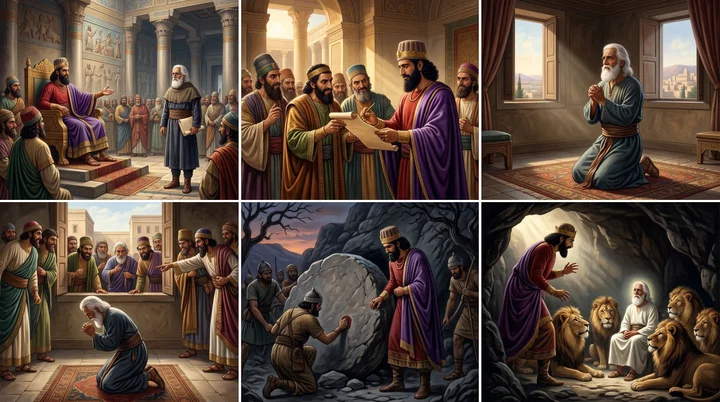
Then said these men, We shall not find any occasion against this Daniel, except we find it against him concerning the law of his God.
Translations
American King James Version, King James Version, KJV Cambridge Paragraph Bible, Webster Bible, Revised Version, American Standard Version
Then said these men, We shall not find any occasion against this Daniel, except we find it against him concerning the law of his God.
Then these men are saying, 'We do not find against this Daniel any cause of complaint, except we have found [it] against him in the law of his God.'
Then said these men, We shall not find any pretext against this Daniel, unless we find [ it] against him touching the law of his God.
Then, these men, were saying, We shall not find against this Daniel, any occasion; unless we find it against him in respect of the law of his God.
Finally these men said, “ We will never find any charge against this Daniel, unless we find something against him concerning the law of his God.”
Finally these men said, “ We will never find any charge against this Daniel unless we find something against him concerning the law of his God.”
Then these men said, “ We won’t find any occasion against this Daniel, unless we find it against him concerning the law of his God.”
Then these men said, We will only get a reason for attacking Daniel in connection with the law of his God.
Then sayd these men, We shall not finde an occasion against this Daniel, except we finde it against him concerning the Law of his God.
Douay-Rheims (Challoner revision)
Then these men said: We shall not find any occasion against this Daniel, unless perhaps concerning the law of his God.
Pictures
Cross-references
- Daniel 6:10
Now when Daniel knew that the writing was signed, he went into his house; and his windows being open in his chamber toward Jerusalem, he kneeled upon his knees three times a day, and prayed, and gave thanks before his God, as he did aforetime.
Daniel continues his customary prayers despite the decree.
- Daniel 3:16-18
Shadrach, Meshach, and Abed-nego, answered and said to the king, O Nebuchadnezzar, we are not careful to answer thee in this matter.
The three Hebrews refuse the king’s command to worship an image, remaining loyal to God.
- Acts 5:29
Then Peter and the other apostles answered and said, We ought to obey God rather than men.
Both affirm obedience to God over human authorities when they conflict.
- Daniel 6:22
My God hath sent his angel, and hath shut the lions’ mouths, that they have not hurt me: forasmuch as before him innocency was found in me; and also before thee, O king, have I done no hurt.
God sends an angel to protect Daniel in the lions’ den.
- Daniel 1:8
But Daniel purposed in his heart that he would not defile himself with the portion of the king’s meat, nor with the wine which he drank: therefore he requested of the prince of the eunuchs that he might not defile himself.
Daniel’s early resolve to obey God underlies the integrity he later maintains.
- Daniel 6:16
Then the king commanded, and they brought Daniel, and cast him into the den of lions. Now the king spake and said unto Daniel, Thy God whom thou servest continually, he will deliver thee.
Daniel is cast into the lions’ den after the plot against his worship.
- Hebrews 11:33
Who through faith subdued kingdoms, wrought righteousness, obtained promises, stopped the mouths of lions,
Faith is credited with stopping the lions’ mouths, recalling Daniel’s deliverance.
- Ezekiel 14:20
Though Noah, Daniel, and Job, were in it, as I live, saith the Lord GOD, they shall deliver neither son nor daughter; they shall but deliver their own souls by their righteousness.
Daniel is named as an example of righteousness.
- Acts 4:19
But Peter and John answered and said unto them, Whether it be right in the sight of God to hearken unto you more than unto God, judge ye.
Both show obedience to God taking precedence over human commands.
- Daniel 6:24
And the king commanded, and they brought those men which had accused Daniel, and they cast them into the den of lions, them, their children, and their wives; and the lions had the mastery of them, and brake all their bones in pieces or ever they came at the bottom of the den.
Daniel’s plotting enemies suffer the fate they intended for him.
- Matthew 26:59-60
Now the chief priests, and elders, and all the council, sought false witness against Jesus, to put him to death;
Both innocent men are pursued with false charges.
- Daniel 6:28
So this Daniel prospered in the reign of Darius, and in the reign of Cyrus the Persian.
Daniel prospered under Persian rule.
- Revelation 14:12
Here is the patience of the saints: here are they that keep the commandments of God, and the faith of Jesus.
Both describe God’s people as blameless except concerning God’s law.
- Acts 24:14
But this I confess unto thee, that after the way which they call heresy, so worship I the God of my fathers, believing all things which are written in the law and in the prophets:
Paul worships God according to the law and the prophets, prompting accusations against him.
Commentary
Each commentary is drawn from primary sources: the writings of Ellen G. White and Adventist pioneers and periodicals. Each commentary is separate. Its own words are not a quotation; follow the references to read the source passages.
Ellen G. White
19 sources
Under Darius the Median, Daniel stood first among three presidents over one hundred twenty princes, and because an excellent spirit was in him the king intended to place him over the whole realm.PK 539.1 Moved by jealousy at his honors, the leading men watched him day after day, and though they were the very wise men whose lives he had once saved by pleading for them, they schemed in secret to bring him down.PK 539.3PK 539.2ST Oct 26, 1882 After examining his conduct and administration they found no error or fault because he was faithful, so they admitted they could trap him only by turning his obedience to God's law and his worship of God into an accusation against him.BS 36.3Ms 83, 1886, par. 12–14PK 539.3 His character and public service were blameless, pure and true as steel, with the single exception that he put God first and last and best, praying three times a day and refusing any work against God without compromising principle.BS 36.3Ms 83, 1886, par. 12–14ST Oct 26, 18827T 161.1 That steadfast faithfulness, gained not at once but by continually seeking wisdom and knowledge of God while living in a heathen court yet not of the world, stands as a bright example that a blameless life leaves opposition no ground except loyalty to God and that God honors such witness to make Himself known to kings and great men.ST Oct 26, 18827T 161.14T 368.1ST Apr 11, 1911
Context and Hostile Plot
The setting is the reign of Darius the Median after the fall of the Babylonian rulers, when 120 princes were set over the kingdom and three presidents over them, with Daniel first among the three.PK 539.1 Because an excellent spirit was in him, Daniel was preferred above the presidents and princes, and the king thought to set him over the whole realm.PK 539.1
The plot against him grew out of jealousy among the leading men over the honors and favor bestowed upon him as the greatest man in Babylon.PK 539.3PK 539.2ST Oct 26, 1882ST Nov 4, 18892MR 319.5 Jealous eyes watched him day after day, and the more blameless his conduct the greater their hatred became.PK 539.3ST Oct 26, 1882 The secret, underhanded scheming was laid by the very Babylonian wise men whose lives Daniel had earlier saved by pleading that they should not be destroyed.2MR 319.5 In contrast to their vengeful work to put an end to his life, he had been imbued with the Spirit of Christ and had pleaded most earnestly for their lives instead of using their failure to have them destroyed.2MR 319.5
His enemies searched for complaint against his conduct, management, and work, surrounding him with distrust and suspicion, and found no error or fault in him because he was faithful.BS 36.3Ms 83, 1886, par. 12–14PK 539.3PK 539.2ST Oct 26, 1882 They admitted they could find no occasion against him and concluded they could accuse him only by making his obedience to God's law and his worship of God the ground of accusation.Ms 83, 1886, par. 12–14PK 539.3PK 539.2ST Oct 26, 1882ST Nov 4, 1889 They therefore laid a snare for his life concerning the law of his God, seeking to make his devotion to God and his practice of praying three times a day to the God of Heaven the sole basis for bringing him down and destroying him.BS 36.3Ms 83, 1886, par. 12–14PK 539.3ST Oct 26, 1882ST Nov 4, 1889
Blameless Faithfulness Described
Daniel's moral character, conduct, integrity, and discharge of his duties as a statesman were blameless, pure, holy, and faithful, with no error or fault to be found in him.BS 36.3Ms 83, 1886, par. 12–14ST Oct 26, 1882Ms 14, 1894, par. 24–25PK 540.3 He was true as steel to principle, a man who would not fail nor be discouraged, full of reverence, zeal, purpose, industry, and toil.ST Apr 11, 1911Ms 123, 1898, par. 20 Though a man of like passions with others, he stands as a faultless character and a moral and intellectual giant who stood in the integrity of his soul.ST Apr 11, 1911Ms 123, 1898, par. 20 His enemies could find no occasion against his conduct, management, and work because he was faithful, and they could accuse him only by making his obedience to God's law and worship of God the ground of accusation.Ms 83, 1886, par. 12–14ST Oct 26, 1882Ms 14, 1894, par. 24–25PK 540.37T 161.1
The sole exception to that faultlessness was loyalty to God's law, specifically his practice of praying three times a day to the God of Heaven.BS 36.3ST Oct 26, 1882 He put God first and last and best in everything and lived with God first, steadfastly refusing any work against God.7T 161.1SLP 22.1Ms 123, 1898, par. 20 His public work as a statesman did not compromise his religious faith or principles.7T 161.1Lt 2, 1898, par. 8–10
He met the trial when surrounded with distrust and suspicion and a snare laid for his life with a humble and prayerful spirit, maintaining a serene and cheerful trust in God and never once deviating from principle.4T 368.1ST Apr 11, 1911 This steadfastness came because he loved, feared, and obeyed God and put his whole dependence in God, though as weak and helpless in himself as any worker now.ST Apr 11, 1911Ms 123, 1898, par. 20 He counted mind and soul culture as his wealth.Ms 123, 1898, par. 20
He did not reach this pre-eminence all at once and without effort but by continually seeking greater knowledge and higher attainments, bending all his energies to seek wisdom and the knowledge of God as revealed in His Word and in His works and wisely improving the privileges and opportunities within his reach.ST Apr 11, 1911 Brought as a youth into a heathen court in service to the king of Babylon and exposed to all the temptations and fascinations of Eastern court life, he nobly resisted wrong and steadfastly adhered to the right throughout his long career.ST Apr 11, 1911 He remained in the world by the providence of God yet not of the world, and he was not forsaken of God in his hour of greatest need.ST Apr 11, 1911
True sanctification is not claimed but lived as daily faithfulness and consecration.ST Oct 26, 1882 In the Medo-Persian realm trampling God's law brought divine judgment.PK 501.3
Example and Witness
A blameless life leaves opposition no ground except obedience to God, for jealousy at the honors given because an excellent spirit was in him set jealous eyes to watch day after day with hatred sharpened by watching, yet no occasion nor fault could be found in moral character or in discharge of duties because he was faithful with no error in him, and the more blameless his conduct the greater their hatred until the only possible accusation concluded upon was concerning the law of his God, namely his praying three times a day to the God of Heaven.ST Oct 26, 18824T 368.1ST Apr 11, 1911 True sanctification is therefore not claimed but lived as daily faithfulness and consecration.ST Oct 26, 1882 Surrounded with distrust and suspicion while enemies laid a snare for his life concerning the law of his God, he met it with a humble and prayerful spirit, never once deviating from principle and maintaining a serene and cheerful trust in God, and he overcame in that strength and was not forsaken of God in his hour of greatest need.ST Oct 26, 18824T 368.1ST Apr 11, 1911 His course teaches steadfastness under reproach and provocation, with the soul riveted to the eternal Rock so that neither joy nor sorrow can sway from the right, learning that meek, non-retaliating endurance is necessary to enter heaven.4T 368.1 Though a man of like passions with others, he is presented as a faultless character, a moral and intellectual giant who loved, feared, and obeyed God and stood in the integrity of his soul.ST Apr 11, 1911
He did not reach this pre-eminence all at once and without effort but by continually seeking greater knowledge and higher attainments, bending all his energies to seek wisdom and the knowledge of God as revealed in His Word and in His works, making God his strength and wisely improving the privileges and opportunities within his reach.ST Apr 11, 1911 Brought as a youth into a heathen court in service to the king of Babylon and exposed to all the temptations and fascinations of Eastern court life, he nobly resisted wrong and steadfastly adhered to the right throughout his long career, remaining in the world by the providence of God yet not of the world.ST Apr 11, 1911 His life is thus given as a bright example of what man may become even in this life, and should be a source of strength to the tried and tempted even at the present day.ST Apr 11, 1911
God placed Daniel and his fellows among the great men of Babylon so those men might learn the religion of the Hebrews and know that God rules over all kingdoms.7T 161.1 Daniel faithfully performed his duties as a statesman while steadfastly refusing any work against God, so no fault could be found in him except concerning the law of his God, and his course provoked discussion that brought his faith to the attention of the king.7T 161.1 That opened the way for light to be given to Nebuchadnezzar through things foretold about Babylon and other kingdoms and through the interpretation of Nebuchadnezzar's dream, which exalted Jehovah as more powerful than earthly rulers, so God was honored through Daniel's faithfulness in the same way publishing houses are to witness for Him.7T 161.1
Daniel is a loyal, steadfast servant of the Lord of hosts whom young men should copy by elevating their souls to his standard, made strong by the word of God abiding in them to overcome the wicked one in sober-mindedness, pondering well the path of their feet because they stand on holy ground with the angels of God about them.MYP 176.1 As a noble statesman he worked among worldlings and schemers in the wicked courts of Babylon yet remained a bright light from heaven shining amid moral darkness, because God gave him grace to associate with them without letting the world influence him.Lt 2, 1898, par. 8–1020MR 284.1Ms 123, 1898, par. 20 His work as a statesman did not compromise his religious faith or principles, showing that connection with outside parties need not harm a person's faith, and that same grace is given to others whose work requires them to associate with worldly people.Lt 2, 1898, par. 8–1020MR 284.1 He was true as steel to principle, a man who would not fail nor be discouraged, full of reverence and zeal for God and full of purpose, industry, and toil, yet as weak and helpless in himself as any worker now, putting his whole dependence in God and making God first and last and best in everything, with mind and soul culture as his wealth, and his example shows that even those destitute of wisdom, knowledge, virtue, and power can learn from Christ the lessons it is their privilege to learn.Ms 123, 1898, par. 20
Sources
Pioneers and periodicals
84 sources
Daniel was an aged captive made chief over the presidents under Darius the Mede, and because he was faithful in all the business of the kingdom his rivals could find no fault or error against him.ST Oct 25, 1899ST Jan 30, 1912RH Jan 9, 1900 Envious that a captive Israelite should be preferred over them, they concluded they could accuse him only concerning the law of his God, and by flattery got the king to sign an unchangeable thirty-day decree forbidding prayer to any god or man except the king on pain of the lions' den.ST Jan 30, 1912 Knowing the writing was signed, Daniel still kneeled three times a day and prayed with thanks toward Jerusalem as he had always done, choosing obedience to God rather than men when human law forbade worship of God.ST May 21, 1912ST Jan 23, 1912RH Sep 26, 1907 God vindicated that course by sending His angel to shut the lions' mouths and bringing Daniel forth alive, making Himself known as Deliverer to the Persian rulers.ST Aug 9, 1910ST Aug 26, 1913RH Aug 15, 1907RH Aug 7, 1916 The same resolve to find fault only concerning the law of God will meet the faithful at the end, especially over the seventh-day Sabbath, calling them now to live so blameless in prayer and daily duty that no occasion can be found against them except for obedience to God.ST Dec 5, 1895RH Jun 24, 1902ST Oct 18, 1905ST Sep 10, 1894ST Aug 16, 1883
Setting and Conspiracy
Daniel was an aged captive made prime minister under Darius the Mede after Babylon gave place to Medo-Persia, set as chief over three presidents and above the satraps as the king's representative.ST Nov 24, 1898ST Oct 30, 1901 He had held high place also under Nebuchadnezzar uncontaminated by court life, and kept his place at the court of Darius as also under Cyrus, being prominent there in the first year of Cyrus through whom God worked for His people.ST Dec 1, 1909ST Dec 19, 1892
Because an excellent spirit was in him he was faithful in the business of the kingdom without rival, untouched by bribery and uncontaminated by its corruptions in eating and drinking and in all his life, with knowledge and wisdom from God exceeding the wise men.ST Nov 24, 1898 Darius distinguished him above the presidents and satraps for sterling character, honesty and discernment, and planned to prefer him over the whole realm.ST Nov 24, 1898ST Jul 12, 1899 This aroused the envy and jealousy of the native presidents, princes, governors and captains that a captive Israelite should be set over them and preferred before them, so that envy turned his blameless faithfulness into the ground of a political plot.RH Jan 9, 1900ST Nov 24, 1898ST Jul 12, 1899ST Oct 30, 1901
Unable to find any fault, occasion or error against him concerning the kingdom in his conduct, administration or service to the king, his rivals concluded they could accuse him only concerning the law of his God.ST Jan 30, 1912ST Dec 5, 1895ST Jul 12, 1899ST Oct 30, 1901 By flattery they persuaded Darius to be worshiped as God and by misrepresentation assured him that all his officers agreed, without consulting Daniel at all and without Darius understanding the real design against Daniel.ST Oct 30, 1901 So tricked, Darius signed an unchangeable royal statute under the law of the Medes and Persians forbidding petition to any god or man except the king for thirty days, on pain of being cast into the den of lions.ST Jan 30, 1912ST Dec 5, 1895ST Dec 20, 1899
The law was deliberately made under a pretext altogether different from its designed purpose, after the custom of the persecuting system in laying its foundation for persecution, its sole purpose being to entrap Daniel.ST Jul 13, 1915ST Sep 13, 1899 Even where no charge existed concerning the law of his God, one had to be created by a statute personally targeted to require disobedience to God.ST Jul 13, 1915ST Sep 13, 1899RH Oct 21, 1862 A decree of that kind, aimed personally at him in direct opposition to the law of his God, stands in widest contrast with a general requirement such as a military draft to put down rebellion, which is not directed to establish idolatry or any system opposed to God's law.RH Oct 21, 1862
Daniel knew the writing was signed yet kneeled three times a day and prayed and gave thanks before his God as he did aforetime, counting this daily privilege of such importance that he would not abandon it for thirty days or change its manner.RH Sep 26, 1907ST Dec 20, 1899ST Sep 13, 1899 He prayed with his windows open and his face toward Jerusalem, refusing to compromise his customary worship.RH Sep 26, 1907ST Dec 20, 1899 When reported he submitted to the penalty of the den without resistance and refused to escape the danger through political maneuvering, though the king was sore displeased at being used as a tool for persecution.
Daniel's Blameless Faithfulness
His enemies themselves admitted they could find no occasion, fault, or error against him concerning the kingdom, in his conduct, character, administration, and business dealings, because he was faithful and blameless.ST Oct 25, 1899ST Jan 30, 1912RH Jan 9, 1900RH Jan 9, 1900 His conduct was so blameless that envy led his rivals to make his religious convictions the basis of a political plot, concluding they could accuse him only by turning his faithfulness to God's law into conflict with the king's law.ST Oct 25, 1899ST Jan 30, 1912RH Jan 9, 1900ST Jan 30, 1912RH Jan 9, 1900 To do this they proposed a decree forbidding petition to any god or man except the king for thirty days on pain of the lions' den.ST Jan 30, 1912ST Dec 20, 1899ST Jan 30, 1912
His blamelessness was lifelong and tested, for brought as a youth into a heathen court he purposed through all the years not to be defiled by Babylon's corruptions in eating and drinking and in all his life.ST Apr 11, 1911ST Sep 10, 1894 He refused the king's food, stood as prime minister under Nebuchadnezzar uncontaminated by court life and untouched by bribery, and remained in the world by providence yet not of the world.ST Apr 11, 1911ST Sep 10, 1894 That earlier stand for principle in unswerving obedience made him steadfast and prepared him for the severer trial at the close of his life.ST Apr 11, 1911ST Sep 10, 1894ST Sep 10, 1894 He overcame as one of like passions with others by a humble and prayerful spirit with serene and cheerful trust, never once deviating from principle, not reaching pre-eminence at once but by continually seeking greater knowledge and higher attainments, bending all his energies to seek wisdom in the Word and works of God, making God his strength and wisely improving privileges and opportunities within reach, and he was not forsaken in his hour of greatest need.ST Oct 26, 1882ST Apr 11, 1911 His life is thus a faultless example of what man may become and a source of strength to the tried and tempted, illustrating the tested faith that will face the lions' den rather than give up obedience.ST Apr 11, 1911ST Mar 7, 1878
His fidelity centered on regular prayer three times a day with his face toward Jerusalem, an established practice, right, and privilege he counted of such importance that he chose the den rather than compromise it.ST Jun 6, 1916RH Sep 26, 1907ST Dec 20, 1899RH May 14, 1914 Though no law commanded him to pray in that manner with windows open, to abandon it for thirty days or to change how he prayed in order to obey the decree would have been unfaithfulness to God and concession to rulers of power to restrict worship.ST Jun 6, 1916ST Dec 20, 1899 He therefore continued as aforetime when obedience brought danger of death, and his regular prayer and spiritual nourishment gave him grace to do right and wisdom in his duties even as a busy statesman, strengthening him to do God's will with the den awaiting him.RH Sep 26, 1907RH May 14, 1914RH Jun 22, 1916 God approved and blessed him in it and gave heaven's protection in the den.RH Sep 26, 1907ST Dec 20, 1899RH May 14, 1914
His knowledge and wisdom from God exceeded the wise men, his education far excelled his fellows, and in the business of the kingdom he was without rival because an excellent spirit was in him.ST Dec 1, 1909 His character of wisdom and righteousness is ranked with Noah and Job, a moral and intellectual giant who loved, feared, and obeyed God and stood in integrity of soul.ST Apr 11, 1911ST Dec 1, 1909 Even at ninety as prime minister of the Medo-Persian empire, chief over the three and representative of the king, distinguished above presidents and satraps by Darius, he did his work so accurately and well that he was intellectually at his best instead of dependent or an object of charity, keeping his high place under Nebuchadnezzar and Cyrus and Darius in spite of plots.ST Dec 1, 1909ST May 25, 1915 That blameless efficiency in old age came from building a healthy and enduring body from the best and cleanest food rather than royal delicacies and wine, making his body a temple in which God dwelt and through which He revealed His presence.ST May 25, 1915
The more blameless his conduct under jealous eyes watching day after day, the greater their hatred, sharpened by watching until they concluded accusation was possible only concerning the law of his God, namely his praying three times a day to the God of heaven.ST Oct 26, 1882ST Jan 30, 1912 His worship did not weaken his service to the king but made him more faithful and accurate, so that even enemies had to acknowledge and approve the law he obeyed.ST Jan 30, 1912 True sanctification is therefore not claimed but lived as daily faithfulness and consecration, leaving opposition no ground except obedience to God.ST Oct 26, 1882
Obeying God Above Kings
Loyalty to God takes precedence over an intolerant human law, and when human statutes stand in open conflict with conscience and the plain laws of God the duty is to obey God rather than men.ST May 21, 1912ST Jun 11, 1912ST Jul 24, 1884ST Oct 3, 1895 The right at stake is the individual right to follow faith and conscience, and Daniel showed it by rejecting the law that forbade him to pray to the true God for a set time and continuing his daily practice even when obedience brought him to the lions' den.ST May 21, 1912RH Feb 20, 1900ST Oct 3, 1895 His enemies could attack him only through his obedience to the law of God, and by flattery they persuaded the king to be worshiped as God for thirty days, by misrepresentation assuring him that all his officers agreed when Daniel had not been consulted at all.ST Sep 13, 1899 After the king signed the unchangeable decree Daniel kept praying to the God of heaven as usual despite the contrary order, choosing obedience to the law of God in preference to the law of the land, specifically the commandment to have no other gods before Him.ST Oct 3, 1895 He was reported, the king was sore displeased at being used as a tool, yet Daniel had to be cast into the den and submitted to the penalty without resistance.ST Jul 24, 1884
His continued worship violated the decree and was crime under human law but not sin, since sin is transgression of God's law.ST Jan 23, 1912ST Jun 11, 1912ST Jan 20, 1898ST Aug 6, 1896ST Jun 24, 1897 Obeying the decree would have been sin, and he could avoid the charge of crime only by disobeying God.ST Jan 23, 1912ST Jun 11, 1912ST Jan 20, 1898 The human law forbade public worship of anyone but Darius for thirty days and put itself in God's place, so loyalty to God required disobeying it.ST Jan 23, 1912ST Jun 11, 1912ST Jan 20, 1898 His regular prayer three times a day with windows open toward Jerusalem was a right and an established practice, though no law specifically commanded that manner, and abandoning it for thirty days to obey the king would have conceded to human rulers power to restrict worship and would have meant unfaithfulness to God.ST Jun 6, 1916ST Oct 3, 1895 An act therefore can be guilty under civil law only because of obedience to God's law, and men may be punished by civil authorities for obeying God yet should obey God rather than human commands.ST Jun 11, 1912ST Aug 6, 1896ST Jun 24, 1897
His course proves Christians are not to do all that pagan governments require and abstain from all they forbid.ST Jul 24, 1884ST Oct 3, 1895 When the conflict is plain, passive violation while meekly suffering the penalty is justified, suffering wrong without doing wrong, with no violent rebellion or mob violence against civil authorities.ST Jul 24, 1884ST Dec 10, 1885 The example is to live meekly and quietly, avoid giving offense, and accept suffering that comes solely from obeying God.ST Dec 10, 1885ST Jun 24, 1913ST Oct 30, 1901 Christians who obey God's requirements can likewise be peaceable, law-abiding citizens, yet remain faithful even when obedience brings death, imprisonment, or forced labor.ST Jun 24, 1913ST Oct 30, 1901 Principled worship need not make a person disloyal to the state, for the decree was used as a pretext from jealousy rather than respect for law, and Daniel accepted its penalty but could not obey a statute that would make him betray God.ST Dec 10, 1885ST Jun 24, 1913
No law of earthly power, Medo-Persian or any other, can of right have anything to say or do with any man's service to God, and such a law counts as no law at all.ST Sep 13, 1899ST Sep 13, 1899ST Jun 18, 1912 Daniel knew the writing was signed yet kneeled three times a day and prayed and gave thanks before his God as he did aforetime, because his firm principle would not dodge or compromise or swerve a hair's breadth.ST Sep 13, 1899 No religious or ecclesiastical institution or rite has any right to any place in civil law, and when wrongly put there it gains no force from that and is to receive no respect nor recognition, because religion and the state are totally separate.ST Sep 13, 1899ST Jun 18, 1912 The conspirators posed as champions of law and order and conservators of the state and threw upon the dissenter the odium of lawlessness, claiming it was not religion but simply regard for the law of the land, the same course followed where Sunday, which is only a religious institution and church affair, is crowded into law with penalties.ST Sep 13, 1899 Civil government must not direct or control religious faith and worship, and individuals are responsible to God in matters of conscience.ST Apr 23, 1912ST Jun 18, 1912
Daniel is a shining example of maintaining religious liberty against religious tyranny when persecutors secure the aid of civil power.ST Aug 9, 1910ST Aug 9, 1910 The lesson of his deliverance applies in every age, showing how civil power can be turned into religious persecution by targeting obedience to God.ST Aug 9, 1910RH Jun 8, 1916ST Aug 9, 1910 Human rulers must not usurp conscience or God's authority nor direct worship.ST Apr 23, 1912ST Jun 18, 1912 His loyalty to God was also his highest loyalty to the king, and he would not compromise the principles of God's kingdom though the show of loyalty to Darius concealed an attempt to destroy him.RH Jul 3, 1900ST Jun 24, 1913 God showed approval by sending His angel and delivering His faithful servant.
Deliverance by God
God showed His approval of Daniel's course by sending His angel to shut the lions' mouths and delivering His faithful servant alive from the den, vindicating the one who kept worshiping despite an unchangeable decree.RH Aug 7, 1916RH Mar 30, 1916ST Dec 1, 1914ST Dec 20, 1899 The deliverance proved God still able and willing to deliver all who trust Him, both from danger and from sin.RH Aug 15, 1907ST Dec 20, 1899 Daniel's blamelessness left his enemies no charge except his faithfulness to God's law, and because he would not compromise that obedience for thirty days or change its manner, God delivered him from his enemies.RH Aug 7, 1916ST Dec 1, 1914ST Dec 20, 1899
The chapter reveals God as Deliverer, Preserver, Vindicator, and caretaker of His children in persecution.ST Jul 16, 1912ST Aug 9, 1910ST Aug 26, 1913ST Aug 9, 1910 He was so revealed to the Persian rulers as He had been to the Babylonians, in another deliverance that teaches religious liberty in a way applicable in every age.ST Jul 16, 1912ST Aug 9, 1910ST Aug 9, 1910 His wonderful deliverance of servants who trusted in Him shows He still delivers from sin those who trust Him.RH Aug 15, 1907
Through that deliverance God made truth known through Gentile kings when Israel would not fulfill its mission to carry the gospel of the kingdom to the whole world, having become perverted by the heathen.RH Nov 11, 1902 It was part of His ancient missionary effort through the chosen seed of Abraham to save the world and reach the Gentiles.RH Nov 11, 1902 Daniel, prominent at the Persian court in the first year of Cyrus, served so that God's work for His people through him helped Cyrus recognize God, and his faithful worship and trust without political maneuvering became opportunity to make Jehovah known throughout the Median realm.ST Dec 19, 1892
The account contrasts fallible human rulers with God who alone can rightly make infallible laws.ST Jan 30, 1912 Darius the Mede after Babylon's fall was a ruler of mixed strength and weakness who yielded to flattery from men seeking favors, was used as a tool for persecution, and brought discomfiture and disgrace upon himself.ST Oct 30, 1901 Fallible rulers who make harmful laws should be willing to change them, unlike the Medes and Persians who treated their irrevocable thirty-day decree of exclusive petition to the king as unchangeable.ST Jan 30, 1912
The triumph of the conspirators was very short, for the Babylonian princes who hated Daniel and trapped him concerning the law of his God died, while Daniel came forth alive as one resurrected from death.
Prophecy of Final Persecution
The presidents and princes could find no occasion nor fault against Daniel concerning the kingdom because he was faithful, so they concluded they could trap him only concerning the law of his God.ST Dec 5, 1895ST Sep 10, 1894 They assembled to King Darius and had him sign an unchangeable royal statute under the law of the Medes and Persians that no one should ask a petition of any god or man for thirty days except the king, on pain of being cast into the den of lions.ST Dec 5, 1895 This history is a parallel to the end-time prohibition against keeping the Sabbath, when opposition against God's people will likewise be brought only concerning the law of God, especially the seventh-day Sabbath, and they will remain faithful without compromise.ST Dec 5, 1895ST Sep 10, 1894
Satan was working through Medo-Persia, the second head of the beast, perverting that government to his own ends and warring against God and His people.ST Jun 27, 1911 Darius was persuaded to put himself in the place of God, setting his own decree against the law of Daniel's God so that no fault could be found in Daniel except concerning that law.ST Jun 27, 1911 Medo-Persia demanded worship of the king exalted by law to the throne of Deity, requiring service and obedience to its laws even though those laws were contrary to God's laws, with refusal punished by death in the lions' den.ST Oct 7, 1913 This is an example of the beast power's demand for false worship, which Daniel would not submit to, and for his faithfulness to the law of his God he was cast under Darius into the den of lions.ST Jun 27, 1911ST Oct 7, 1913
The persecution of God's people under Medo-Persia, following persecution under Babylon, is the second phase of a sevenfold apostasy by antagonistic world powers beginning with Babylon and continuing to the time of the end.ST Sep 8, 1914 Daniel's attempted destruction as part of ancient Babylon serves as prophecy of the persecution of God's people by modern Babylon.ST Sep 8, 1914RH Oct 11, 1915 The verse is fulfilled when the storm cloud of persecution obscures liberty and legislative enactments and court decisions forge chains of slavery under religious despotism.ST Jul 24, 1893 It is fulfilled in America when fathers and mothers, wives and children, and loyal and true hearts suffer for conscience' sake and are subjected to fines and imprisonment, with fidelity to God and conscientious discharge of religious duty as their only offense, and dormant Sunday laws though apparently harmless can be enforced as a pretext to persecute those whose practice offends others or who are targets of personal revenge, even while authorities recognize the injustice of the use.ST Oct 18, 1905ST Jul 24, 1893
The resolve to find fault only concerning the law of God is the concrete working of the sanctuary principle of continual service.RH Nov 25, 1902 The vision of Daniel 8 was given in the third and last year of Belshazzar at the beginning of Darius the Median and showed a power would rise that would take away the continual service, so that for a time the continual service would cease in the temple of God, the shekinah glory would depart, and the house would be desolate.RH Nov 25, 1902 The events of Daniel 6 follow in chronological order after that vision and give the lived revelation of that same conflict over uninterrupted worship and service to God.RH Nov 25, 1902 Heathen religion united to the Medo-Persian government persecuted Daniel, turning faithfulness to God's law into a civil offense and proving that union of church and state is wrong in principle and always results in persecution, whether by Babylonian and Medo-Persian powers or by any other church established by law.ST Nov 8, 1905ST Dec 12, 1911ST Dec 12, 1895 His punishment in the den was therefore an act of religious intolerance carried out by the state as agent of the Babylonian religious system, showing how religious domination uses state power to test and challenge the worship of the Creator, and Christ in delivering Daniel rebuked both that system and the state's misuse of authority.ST Nov 8, 1905ST Dec 12, 1911ST Dec 12, 1895
Doctrine and Christian Living
True sanctification is not a claim but a life of daily faithfulness and consecration, and the admission that no occasion or fault could be found in moral character or discharge of duty because of faithfulness with no error proves it.ST Oct 26, 1882 Jealous eyes watched day after day with hatred sharpened by watching, and the more blameless the conduct the greater the hatred, until the only possible accusation left was concerning the law of God, namely praying three times a day to the God of heaven.ST Oct 26, 1882 The victory came through a humble and prayerful spirit that maintained serene and cheerful trust and never once deviated from principle, presenting even a man of like passions as a faultless character and a moral and intellectual giant who loved, feared, and obeyed God and stood in integrity of soul.ST Apr 11, 1911 Such pre-eminence was not reached all at once and without effort but by continually seeking greater knowledge and higher attainments, bending all energies to seek wisdom and the knowledge of God as revealed in His Word and in His works, making God the strength and wisely improving privileges and opportunities within reach.ST Apr 11, 1911 Brought as a youth into a heathen court in service to the king of Babylon and exposed to all the temptations and fascinations of Eastern court life, nobly resisting wrong and steadfastly adhering to the right through a long career, remaining in the world by providence yet not of the world and not forsaken in the hour of greatest need, the life stands as a bright example of what man may become even in this life and a source of strength to the tried and tempted even now.ST Apr 11, 1911
The case shows God's law to be just and inexorable, requiring the transgressor's death, so that the law cannot justify or save the sinner and an atonement is needed.RH Aug 27, 1861 Loyalty to that law evidenced learning and knowledge in harmony with God, for breaking the law is sin whose penalty is death.ST May 2, 1916
That loyalty was well known, for after failing to find any fault in administration the envious rulers refused to give up and decided to trap through fidelity to truth, just as the enemies of Christ pursued Him until they found a pretext for condemnation sustained only by false witnesses.ST Oct 12, 1904 They would not have conceived such a plan unless the loyalty was openly known, understanding that refusal to join schemes for private gain was because the law of God restrained, which one so richly endowed would not hide as a silent witness in the very country where his people had been sent to proclaim and exemplify truth.ST Oct 12, 1904 Faithful representatives of truth therefore bring trouble on themselves only by righteousness, and Gospel work would be greatly advanced if all professed believers were so faithful to principles of truth and righteousness that all their troubles in this world came for that reason alone.ST Oct 12, 1904 No fault could be found except concerning the law of God, and this was met by suffering as a Christian and not as a murderer, thief, evildoer, or busybody in other men's matters, so that reproached for the name of Christ there was happiness, the Spirit of glory and of God resting upon him, without shame and glorifying God on this behalf, with fidelity bringing a trial of faith.ST Oct 12, 1904
Regular prayer and spiritual nourishment strengthened to do God's will even with the lions' den awaiting, and God approved and blessed the one who prayed three times a day.RH Sep 26, 1907 Continuing to pray after the king's decree made prayer dangerous rested on knowing God as the only strength and knowing that obeying the decree would cost more than life itself.RH Sep 23, 1909 Faithful conduct that left enemies unable to find fault except where obedience to God's law was concerned was sustained because regular prayer gave grace to do right and wisdom in duties even as a busy statesman.RH Jun 22, 1916 At ninety years old holding the position of prime minister of the Medo-Persian empire, intellectually at best instead of a dependent or an object of charity and doing work so accurately and well that enemies admitted no fault apart from loyalty to God's law, such blameless efficiency in old age came from building a healthy and enduring body from the best and cleanest food rather than royal delicacies and wine, making the body a temple in which God dwelt and through which God revealed His presence.ST May 25, 1915
Opponents could find no fault in conduct and could identify loyalty to God's law as the only possible ground for accusation, and that integrity included accuracy in business affairs whether serving God or an earthly government, providing an example of faithful, careful work.RH Jun 24, 1902 Living so blamelessly that enemies could find no fault except where faithfulness to God's law brought conflict calls Christians likewise to faithfulness to God even when that makes them unpopular.ST Aug 16, 1883 The same standard applies to Adventist families, whose conduct should give others no valid occasion for criticism except that they obey their God.RH Jun 4, 1914 Integrity so clear that enemies could find no fault except in matters involving loyalty calls God's people to do what is right for truth's sake even when others act wrongly and obedience brings loss or persecution, and such steadfastness can influence others and stand against sin.ST Nov 24, 1898 Living so blameless and orderly a life that enemies could find no fault or charge except in obedience to the law of God means those who keep the commandments of God and the faith of Jesus must live the same blameless life with character so orderly that enemies find no occasion except concerning the law of God.ST Nov 21, 1895 The record in business dealings was blameless, so even envious opponents could find no occasion or fault except where obedience might bring conflict with their demands.RH Sep 10, 1901
Duty is not decided by convenience or by pressure to conform, for prayer was not stopped because circumstances made obedience dangerous, as shown by conduct giving adversaries no grounds except faithfulness and by the lions' den.ST Feb 3, 1881 Universal praise from the world is cause for caution, since faithfulness may bring unpopularity.ST Aug 16, 1883 Daniel was right while Persia was wrong, showing religious truth is not made right or wrong by the majority.ST Jun 25, 1912
Devotion to God can become the basis for persecution when opponents have no other charge, for enemies finding no wrongdoing could accuse only on account of faithfulness to God's law, making obedience the ground for persecution, a pattern echoed when faithful people suffer for allegiance to God.RH Mar 19, 1914RH Jul 12, 1906 Enemies could find no fault except faithfulness to the law of God, and that devotion made a target of opposition, a pattern also applied to people who keep God's commandments and suffer for the truth.RH Mar 22, 1864 The faithful may be misunderstood, mistreated, and endangered because they faithfully do their duty.ST Oct 20, 1914 Trusting God and obeying Him even when doing so brings difficulty encourages obedience to God's commandments without fear.RH Jan 10, 1871
Daniel in Babylon is an example of what God would have His workers be in the closing act of the world, with God fulfilling the new covenant promise to lead each worker individually in medical missionary work beyond institutions to reach those perishing spiritually and physically.RH Dec 20, 1906 That unflinching loyalty concerning the law of God, leaving no fault except on that ground, is still seen today.ST Jan 30, 1901 Faithfulness that brought danger through willingness to face the den rather than give up obedience illustrates the tested faith required to act on a solemn message despite ridicule and risk of death.ST Mar 7, 1878
Sources