Deuteronomy 1:27
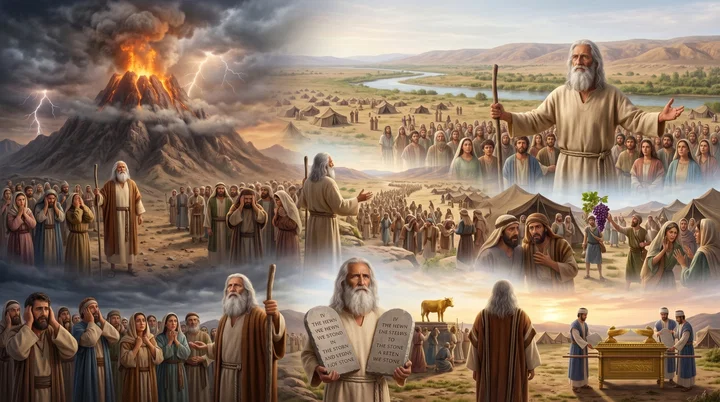
And ye murmured in your tents, and said, Because the LORD hated us, he hath brought us forth out of the land of Egypt, to deliver us into the hand of the Amorites, to destroy us.
Translations
And you murmured in your tents, and said, Because the LORD hated us, he has brought us forth out of the land of Egypt, to deliver us into the hand of the Amorites, to destroy us.
And ye murmured in your tents, and said, Because the LORD hated us, he hath brought us forth out of the land of Egypt, to deliver us into the hand of the Amorites, to destroy us.
and ye murmured in your tents, and said, Because the Lord hated us, he hath brought us forth out of the land of Egypt, to deliver us into the hand of the Amorites, to destroy us.
And ye murmured in your tents, and said, Because the LORD hated us, he hath brought us forth from the land of Egypt, to deliver us into the hand of the Amorites, to destroy us.
and ye murmured in your tents, and said, Because the LORD hated us, he hath brought us forth out of the land of Egypt, to deliver us into the hand of the Amorites, to destroy us.
American Standard Version, Darby Translation
and ye murmured in your tents, and said, Because Jehovah hated us, he hath brought us forth out of the land of Egypt, to deliver us into the hand of the Amorites, to destroy us.
and murmur in your tents, and say, In Jehovah's hating us He hath brought us out of the land of Egypt, to give us into the hand of the Amorite — to destroy us;
and murmured in your tents and said, Because Yahweh hated us, hath he brought us forth out of the land of Egypt,—to deliver us into the hand of the Amorites, to destroy us.
Berean Standard Bible, Majority Standard Bible
You grumbled in your tents and said, “ Because the LORD hates us, He has brought us out of the land of Egypt to deliver us into the hand of the Amorites to be annihilated.
You murmured in your tents, and said, “ Because the LORD hated us, he has brought us out of the land of Egypt, to deliver us into the hand of the Amorites to destroy us.
And you made an angry outcry in your tents, and said, In his hate for us the Lord has taken us out of the land of Egypt, to give us up into the hands of the Amorites for our destruction.
And murmured in your tentes, and sayd, Because the Lord hated vs, therefore hath hee brought vs out of the land of Egypt, to deliuer vs into the hand of the Amorites, and to destroy vs.
Douay-Rheims (Challoner revision)
You murmured in your tents, and said: The Lord hateth us, and therefore he hath brought us out of the land of Egypt, that he might deliver us into the hand of the Amorrhite, and destroy us.
Pictures
Cross-references
- Numbers 14:3-4
And wherefore hath the LORD brought us unto this land, to fall by the sword, that our wives and our children should be a prey? were it not better for us to return into Egypt?
Israel’s fear of destruction turns into a plan to return to Egypt.
- Numbers 13
And the LORD spake unto Moses, saying,
The spies’ report from Canaan helped provoke Israel’s rebellion.
- Numbers 14:22-23
Because all those men which have seen my glory, and my miracles, which I did in Egypt and in the wilderness, and have tempted me now these ten times, and have not hearkened to my voice;
God excludes the unbelieving generation from Canaan.
- Numbers 20:3-5
And the people chode with Moses, and spake, saying, Would God that we had died when our brethren died before the LORD!
The people again complain that God and their leaders brought them from Egypt to die in the wilderness.
- Numbers 32:8-13
Thus did your fathers, when I sent them from Kadesh-barnea to see the land.
Recalls Israel’s discouragement at Kadesh-barnea and the resulting forty-year wandering.
- Numbers 14:43-45
For the Amalekites and the Canaanites are there before you, and ye shall fall by the sword: because ye are turned away from the LORD, therefore the LORD will not be with you.
Israel’s defeat by the Amorites’ neighbors follows its turning away from the LORD.
- Exodus 32:11-13
And Moses besought the LORD his God, and said, LORD, why doth thy wrath wax hot against thy people, which thou hast brought forth out of the land of Egypt with great power, and with a mighty hand?
Moses pleads for Israel’s pardon, invoking God’s covenant with Abraham.
- Deuteronomy 2:14
And the space in which we came from Kadesh-barnea, until we were come over the brook Zered, was thirty and eight years; until all the generation of the men of war were wasted out from among the host, as the LORD sware unto them.
Both describe the wilderness wandering and its thirty-eight-year punishment.
- Deuteronomy 1:2
( There are eleven days’ journey from Horeb by the way of mount Seir unto Kadesh-barnea.)
The eleven-day journey contrasts with the delay following Israel’s refusal.
- Numbers 14:34
After the number of the days in which ye searched the land, even forty days, each day for a year, shall ye bear your iniquities, even forty years, and ye shall know my breach of promise.
God’s purpose is altered by Israel’s disobedience.
Commentary
Each commentary is drawn from primary sources: the writings of Ellen G. White and Adventist pioneers and periodicals. Each commentary is separate. Its own words are not a quotation; follow the references to read the source passages.
Ellen G. White
10 sources
Israel stood at the very border of the promised land when, after the spies returned from Canaan, fear and unbelief turned into rebellion against the command to enter.Ms 9, 1903, par. 7–9RH Dec 31, 1903 The spies' unbelieving report stirred the people to that rebellion at the very edge of the land they were to possess.Ms 9, 1903, par. 7–9RH Dec 31, 1903
This complaint belongs to the rehearsal of Israel's forty years of failures and victories contained in Deuteronomy.Lt 204, 1908, par. 2–3 That rehearsal was given just before the possession of Jericho to strengthen faith and keep God's dealings before the people.Lt 204, 1908, par. 2–3 It was to be repeated over and over, with every new move carrying out the principles given.Lt 204, 1908, par. 2–3
What the people did was murmur in their tents, charging that because the Lord hated them He had brought them out of the land of Egypt to deliver them into the hand of the Amorites to destroy them.Ms 9, 1903, par. 7–915MR 292.3Lt 106, 1897, par. 21–24RH Dec 31, 1903ST Mar 3, 1881 Their fathers are described in the same terms, murmuring in their tents and charging God with hatred and with bringing them out of Egypt to deliver them to destruction.ST Mar 3, 1881PP 464.2
Their words and complaints expressed unbelief in God's promise.Ms 9, 1903, par. 7–9RH Dec 31, 1903 That unbelief was distrust joined with pride, impatience, dissatisfaction and rebellion.ST Mar 3, 1881PP 464.2 Their murmuring was rebellious and willfully disobedient, despite their earlier agreement to follow God's directions and despite efforts to make their wilderness journey a time of preparation and training.Ms 9, 1903, par. 6 Such disaffection takes root quickly in unsanctified hearts.Ms 9, 1903, par. 7–9 Their conduct opposed plans essential to their present good and eternal welfare, for which obedience to God and cooperation with Him were necessary.Ms 9, 1903, par. 6
God was in no way chargeable for their misfortunes and long delay in possessing Canaan.ST Mar 3, 1881PP 464.2 He had been faithful to His promises, loving and compassionate like a father rather than a stern relentless judge, pardoning their transgressions and retaining them as His people.ST Mar 3, 1881 He grieved more than they did that He could not bring them into immediate possession of the land to display His mighty power in their deliverance before all nations.ST Mar 3, 1881PP 464.2 Their perversity of spirit made it impossible for Him to manifest His power in protecting them from the opposing nations, and His wrath was kindled against them again and again.ST Mar 3, 1881
The fault lay with Israel and their fathers, who broke their solemn pledge and transgressed His holy requirements.ST Mar 3, 1881 By murmuring, unbelief and refusal to wholly follow Him they did not bear His character of purity, goodness and benevolence and were not prepared to enter Canaan and represent a people whose God is the Lord.Lt 106, 1897, par. 21–24ST Mar 3, 1881PP 464.2 God's promises, being upon condition of obedience, were forfeited, His purpose toward them was altered, and the adults of the army that left Egypt were refused entrance into the promised land.15MR 292.3Lt 106, 1897, par. 21–24ST Mar 3, 1881
Had they yielded in faith to His direction as a nation governed by His judgments and as individuals walking in His ordinances, they would long before have been settled in Canaan as a prosperous, holy, happy people.ST Mar 3, 1881PP 464.2 Their delay to enter the goodly land dishonored God and detracted from His glory in the sight of surrounding nations.ST Mar 3, 1881PP 464.2 Yet true sorrow for sin and heartfelt repentance would still bring pardon.ST Mar 3, 1881
The verse is presented as the Lord's words and is written for the admonition of those living at the end of the world.STMW9 52.320MR 111.2–112.2 It calls them to learn God's word and appreciate and obey His voice instead of holding fast to their own ideas and judgment and refusing to be molded after His similitude.20MR 111.2–112.2
Sources
Pioneers and periodicals
10 sources
This verse stands in Moses' first of three addresses given just before his death, spoken in Moab east of the Jordan in the fortieth year after the exodus while the new generation waited to cross into the promised land.RH Feb 24, 1916ST May 23, 1911 As part of the second law, the repetition of the law at the close of the forty years' wandering, it belongs to a reckoning of God's dealings among His children before they passed over into the promised land.ST Mar 11, 1913 Within Deuteronomy 1 to 4:40 it rehearses God's goodness, laws and warnings to Israel, set against a recounting of Israel's earlier unbelief and stumbling.RH Feb 24, 1916ST May 23, 1911 That rehearsal of law and earlier experience was meant to revive the people's resolve to cross the Jordan and enter.RH Aug 20, 1903
The chapter records that only two of those who left Egypt entered the promised land, which does not mean only two were obedient when they left Egypt, because those under twenty years old are not included in the account. The verse describes the rebellion at Kadesh-barnea at the very border of the promised land after the spies returned from Canaan, when the people rejected the opportunity God gave them to enter.RH Dec 31, 1903ST Mar 1, 1910 Their fear and unbelief turned into murmuring in their tents, beginning in the home where many lost sight of the journey's purpose.RH Dec 31, 1903ST Feb 11, 1903 The spies' unbelieving report stirred them to rebel against God's command to enter.RH Dec 31, 1903
In their tents they falsely accused God of bringing them out of Egypt because He hated them and intended their destruction by the hand of the Amorites.RH Dec 31, 1903ST Mar 1, 1910 This was want of confidence in God's ability and willingness to lead Israel safely into Canaan, and trust instead in the wisdom of returning to Egypt under a chosen captain.ST Nov 24, 1887 It shows distrust and unbelief as Israel's great sin in the wilderness.ST Mar 3, 1881 Unbelief is sin with moral bearing on character and destiny, for which man is responsible because he is under obligation to trust God.ST Nov 24, 1887
God was in no way chargeable for Israel's misfortunes and long delay in possessing Canaan.ST Mar 3, 1881 He had been faithful to His promises, loving and compassionate like a father rather than a stern relentless judge, pardoning their transgressions and retaining them as His people.ST Mar 3, 1881 He grieved more than they did that He could not bring them into immediate possession of the land to display His mighty power in their deliverance before all nations.ST Mar 3, 1881 The fault lay with Israel and their fathers: they broke their solemn pledge, transgressed His holy requirements, and were dissatisfied, impatient, rebellious, proud and unbelieving, not bearing His character of purity, goodness and benevolence, so they were not prepared to enter Canaan and represent a people whose God is the Lord.ST Mar 3, 1881 Had they submitted as a nation governed by His judgments and as individuals walking in His ordinances, they would long ago have been settled in Canaan as a prosperous, holy, happy people, but their perversity of spirit made it impossible for God to manifest His power in protecting them from the nations that opposed their passage.ST Mar 3, 1881
Such unbelief produces restlessness, distrust, alarm and terror, provokes God to anger and incurs His displeasure, gives direction and character to actions, and fixes destiny, and His wrath was kindled against them again and again.ST Mar 3, 1881ST Nov 24, 1887 It caused rebellion and brought terrible defeat in battle with the Amalekites and Canaanites, turned an eleven-day journey into thirty-eight years longer wandering in the wilderness, and deprived the whole unbelieving generation of entering the land of promise.ST Nov 24, 1887ST Mar 1, 1910 By delay it dishonored God and detracted from His glory in the sight of surrounding nations, while true sorrow for sin and heart-felt repentance would still bring pardon.ST Mar 3, 1881 The verse warns against murmuring in the home when the promised inheritance is near, after many have disbelieved the promise of an inheritance.ST Feb 11, 1903 Refusing to take the land when God first wants it taken makes God's appointed work cost far greater hardship than prompt obedience would have, but delay does not relieve duty and God's purpose is still carried out even under hardship, which is also true of giving this gospel message to the world through the printed page: it is harder now because the easier time was neglected, yet it must and will be done despite the hardships.RH Oct 19, 1905ST Feb 11, 1903
Sources