Deuteronomy 16:6
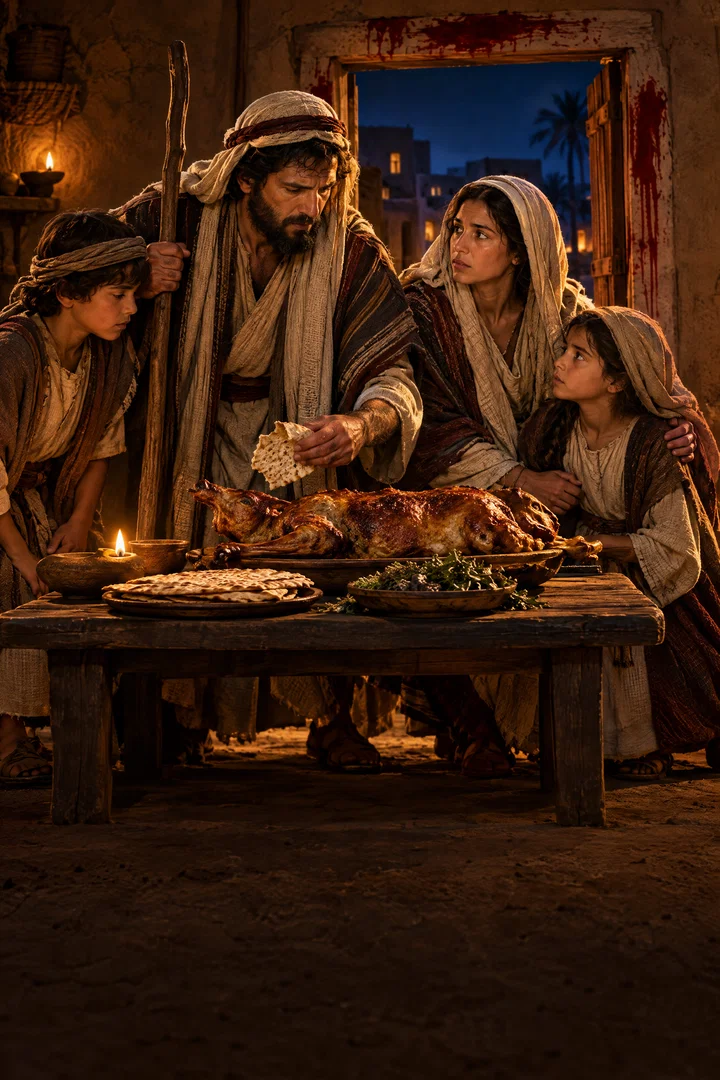
But at the place which the LORD thy God shall choose to place his name in, there thou shalt sacrifice the passover at even, at the going down of the sun, at the season that thou camest forth out of Egypt.
Translations
But at the place which the LORD your God shall choose to place his name in, there you shall sacrifice the passover at even, at the going down of the sun, at the season that you came forth out of Egypt.
But at the place which the LORD thy God shall choose to place his name in, there thou shalt sacrifice the passover at even, at the going down of the sun, at the season that thou camest forth out of Egypt.
but at the place which the Lord thy God shall choose to place his name in, there thou shalt sacrifice the passover at even, at the going down of the sun, at the season that thou camest forth out of Egypt.
But at the place which the LORD thy God shall choose to place his name in, there thou shalt sacrifice the passover at evening, at the setting of the sun, at the time of thy departure from Egypt.
but at the place which the LORD thy God shall choose to cause his name to dwell in, there thou shalt sacrifice the passover at even, at the going down of the sun, at the season that thou camest forth out of Egypt.
but at the place which Jehovah thy God shall choose, to cause his name to dwell in, there thou shalt sacrifice the passover at even, at the going down of the sun, at the season that thou camest forth out of Egypt.
except at the place which Jehovah thy God doth choose to cause His name to tabernacle — there thou dost sacrifice the passover in the evening, at the going in of the sun, the season of thy coming out of Egypt;
but at the place that Jehovah thy God will choose, to cause his name to dwell in, there thou shalt sacrifice the passover at even, at the going down of the sun, at the time that thou camest forth out of Egypt.
but in the place which Yahweh thy God shall choose to make a habitation for his name, there, shalt thou sacrifice the passover in the evening,—at the going in of the sun, at the very time thou camest forth out of Egypt.
Berean Standard Bible, Majority Standard Bible
You must only offer the Passover sacrifice at the place the LORD your God will choose as a dwelling for His Name. Do this in the evening as the sun sets, at the same time you departed from Egypt.
but at the place which the LORD your God shall choose to cause his name to dwell in, there you shall sacrifice the Passover at evening, at the going down of the sun, at the season that you came out of Egypt.
But in the place marked out by the Lord your God as the resting-place of his name, there you are to put the Passover to death in the evening, at sundown, at that time of the year when you came out of Egypt.
But in the place which the Lord thy God shall choose to place his Name, there thou shalt offer the Passeouer at euen, about the going downe of the sunne, in the season that thou camest out of Egypt.
Douay-Rheims (Challoner revision)
But in the place which the Lord thy God shall choose, that his name may dwell there: thou shalt immolate the phase in the evening, at the going down of the sun, at which time thou camest out of Egypt.
Pictures
Cross-references 20 of 27
- Mark 1:32
And at even, when the sun did set, they brought unto him all that were diseased, and them that were possessed with devils.
Both identify evening with sunset, marking the beginning of a new day.
- Exodus 12:6
And ye shall keep it up until the fourteenth day of the same month: and the whole assembly of the congregation of Israel shall kill it in the evening.
The Passover lamb is kept until the fourteenth day and killed in the evening.
- Leviticus 23:5
In the fourteenth day of the first month at even is the LORD’s passover.
Both identify Passover on the fourteenth day of the first month at even.
- Joshua 10:27
And it came to pass at the time of the going down of the sun, that Joshua commanded, and they took them down off the trees, and cast them into the cave wherein they had been hid, and laid great stones in the cave’s mouth, which remain until this very day.
Both identify evening with the going down of the sun.
- Numbers 28:16-17
And in the fourteenth day of the first month is the passover of the LORD.
Both identify Passover and the feast beginning on the fifteenth day.
- Exodus 12:42
It is a night to be much observed unto the LORD for bringing them out from the land of Egypt: this is that night of the LORD to be observed of all the children of Israel in their generations.
Israel was brought out of Egypt on the Passover night.
- Leviticus 23:6
And on the fifteenth day of the same month is the feast of unleavened bread unto the LORD: seven days ye must eat unleavened bread.
The feast begins on the fifteenth, following the Passover sacrifice on the fourteenth.
- Leviticus 22:7
And when the sun is down, he shall be clean, and shall afterward eat of the holy things; because it is his food.
Both mark sunset as the transition to the next day.
- 1 Corinthians 5:7
Purge out therefore the old leaven, that ye may be a new lump, as ye are unleavened. For even Christ our passover is sacrificed for us:
Christ is identified as the Passover sacrifice.
- Deuteronomy 16:2
Thou shalt therefore sacrifice the passover unto the LORD thy God, of the flock and the herd, in the place which the LORD shall choose to place his name there.
Requires the Passover sacrifice at the place the LORD chooses.
- Deuteronomy 16:1
Observe the month of Abib, and keep the passover unto the LORD thy God: for in the month of Abib the LORD thy God brought thee forth out of Egypt by night.
Identifies the Passover season and its appointed time.
- 2 Chronicles 30:1-5
And Hezekiah sent to all Israel and Judah, and wrote letters also to Ephraim and Manasseh, that they should come to the house of the LORD at Jerusalem, to keep the passover unto the LORD God of Israel.
Describes the restored Passover observance at Jerusalem.
- Exodus 12:14
And this day shall be unto you for a memorial; and ye shall keep it a feast to the LORD throughout your generations; ye shall keep it a feast by an ordinance for ever.
The Passover is kept as a yearly memorial.
- Numbers 9:1-5
And the LORD spake unto Moses in the wilderness of Sinai, in the first month of the second year after they were come out of the land of Egypt, saying,
Records the Passover observed in the wilderness.
- Joshua 5:10-11
And the children of Israel encamped in Gilgal, and kept the passover on the fourteenth day of the month at even in the plains of Jericho.
Records Passover after Israel entered Canaan.
- Exodus 12:8-10
And they shall eat the flesh in that night, roast with fire, and unleavened bread; and with bitter herbs they shall eat it.
The Passover lamb was roasted for the meal.
- Exodus 12:17
And ye shall observe the feast of unleavened bread; for in this selfsame day have I brought your armies out of the land of Egypt: therefore shall ye observe this day in your generations by an ordinance for ever.
The feast recalls Israel’s departure from Egypt.
- Exodus 12:18
In the first month, on the fourteenth day of the month at even, ye shall eat unleavened bread, until the one and twentieth day of the month at even.
Its evening-to-evening dates explain when the seven-day feast began.
- John 19:30
When Jesus therefore had received the vinegar, he said, It is finished: and he bowed his head, and gave up the ghost.
Jesus’ death at the appointed time links him with the Passover lamb.
- Luke 22:17-20
And he took the cup, and gave thanks, and said, Take this, and divide it among yourselves:
Jesus shares the Passover cup and bread at his final Passover service.
Commentary
Each commentary is drawn from primary sources: the writings of Ellen G. White and Adventist pioneers and periodicals. Each commentary is separate. Its own words are not a quotation; follow the references to read the source passages.
Ellen G. White
1 source
The Passover sacrifice was to be offered only at the place chosen for God's name, at evening at the going down of the sun, in the season of Israel's coming out of Egypt.RH Aug 2, 1870 That yearly observance commemorated deliverance from bondage.RH Aug 2, 1870 The appointed religious seasons were set apart from unnecessary work for remembering God's blessings and rejoicing together.RH Aug 2, 1870
At those seasons worshipers were to bring gifts and thank-offerings in proportion to the blessings they had received.RH Aug 2, 1870 The measure of their offerings showed whether they truly valued God's gifts.RH Aug 2, 1870 It likewise revealed whether they loved their Benefactor.RH Aug 2, 1870
Sources
Pioneers and periodicals
38 sources
The sacrifice was to be offered only at the place the Lord would choose to place His name, at evening at the going down of the sun, at the anniversary season of the departure from Egypt.RH Dec 4, 1855ST Jun 30, 1881ST Oct 7, 1930RH Jan 7, 1862 That evening is sunset, which begins the next day reckoned from evening to evening, though those who held the other reading placed it in the late afternoon at about three o'clock before night begins.RH Dec 4, 1855ST Jun 30, 1881RH Feb 28, 1871ST Sep 21, 1915RH Apr 7, 1851 The lamb was therefore slain at sunset at the close of the fourteenth day of Abib and eaten that night, which is really the fifteenth day.RH Jan 17, 1856RH Feb 5, 1914RH Sep 3, 1857RH Mar 1, 1906ST Sep 2, 1886 The place for His name is the sanctuary whose holiest apartment held the ark containing the Ten Commandments, and the fourth commandment contains His name as Creator and is the seal of His law.RH Sep 9, 1862RH May 1, 1856ST May 8, 1879ST Feb 22, 1899RH Nov 12, 1908 The lamb represented Christ the true Passover, who ate the Passover that night and was crucified on the day following, on the day the Passover was eaten.RH Feb 5, 1914RH Apr 7, 1851ST May 12, 1898
Time Place and Context
The Passover sacrifice was to occur at evening, which is the going down of the sun at sunset, with evening and sunset identical.RH Dec 4, 1855ST Jun 30, 1881RH Feb 28, 1871RH Oct 14, 1915ST Jul 18, 1916 Evening therefore begins at sunset, and since the day begins and ends at evening, the day begins and ends at sunset.RH Dec 4, 1855ST Jun 30, 1881RH Feb 28, 1871RH Oct 14, 1915ST Oct 23, 1884 The Sabbath, which begins with the evening of the sixth day and continues until the evening of the seventh day, therefore begins at sunset and closes at sunset by divine order.RH Dec 4, 1855ST Jun 30, 1881RH Oct 14, 1915 Those who held a different reading distinguished at even from evening and placed it in the late afternoon at about three o'clock, before night begins.RH Apr 7, 1851 On that reading the killing of the Passover lamb fell on the fourteenth day and connected with Jesus' death at the same hour.RH Apr 7, 1851 Against that reading, the biblical evening begins at sunset, not at three o'clock, because the verse places the sacrifice at evening, described as the going down of the sun.RH Dec 4, 1855ST Jun 30, 1881RH Feb 28, 1871ST Sep 21, 1915ST Jul 18, 1916
The sacrifice was to be made only at the place the Lord chooses to place his name, not in any other place.ST Oct 7, 1930RH Jan 7, 1862ST Feb 22, 1899 The instruction required Israel to observe the feast in the land God had chosen after entering the promised land, observed regularly there in the evening after the fourteenth day of the first month.ST Oct 7, 1930RH Jan 7, 1862ST Feb 22, 1899 The lamb was roasted, so its observance could require a fire on the Sabbath when the date fell on that day, which shows the wilderness prohibition on kindling fires was temporary and not a rule for the promised land.RH Jan 7, 1862 These directions distinguish the later temple-centered observance from the first Passover in Egypt and the wilderness practice.ST Feb 22, 1899
The season that thou camest forth out of Egypt fixes the observance to the anniversary season of Israel's departure, which was in the night.RH Aug 2, 1870ST May 12, 1898 The lamb was slain on the fourteenth day of Abib and eaten that night, which is really the fifteenth day, the first part of the fifteenth day of Abib, because days were reckoned from evening to evening.ST May 12, 1898 A night observance fittingly memorializes a night deliverance, and the Passover is the true memorial of Israel's flight from Egypt.ST May 12, 1898 The yearly Passover commemorated Israel's deliverance from bondage at the chosen place of worship at evening as the sun set.RH Aug 2, 1870ST May 12, 1898
The chapter describes a later form of the Passover observance, changed after the temple was built from the original observance in Egypt and the wilderness.ST Feb 22, 1899ST Feb 22, 1899 Its requirements included observances that could not have been carried out during the wilderness journey.ST Feb 22, 1899 The verse belongs to these later instructions for celebrating Passover after Israel entered the land.ST Feb 22, 1899ST Feb 22, 1899 It is part of the law Moses recalled to Israel before they crossed the Jordan into the promised land.ST Mar 1, 1910ST Mar 18, 1913ST Mar 11, 1908 It gives instructions about yearly feasts and Sabbaths that repeat regulations for that people and time and parallel Leviticus 23 on the yearly feasts.ST Mar 1, 1910ST Mar 18, 1913ST Mar 11, 1908
Day Begins at Sunset
The day begins and ends in the evening at sunset, reckoned from evening to evening and from sunset to sunset.RH Dec 4, 1855ST Jun 30, 1881RH Feb 5, 1914ST Oct 23, 1884RH Aug 4, 1868 Evening is identical with the going down of the sun, and evening commences at sunset.RH Dec 4, 1855ST Jun 30, 1881ST Oct 23, 1884ST Aug 19, 1875ST Sep 2, 1886 The twenty-four-hour day embraces both night and day, with evening or night as its first division and morning or day as its last, from the beginning of the world to the present.RH Aug 17, 1869ST Mar 18, 1903 Evening begins the dark part of the day, followed by the morning.RH Aug 17, 1869ST Sep 2, 1886ST Mar 18, 1903
When the sun is not visible, the day is reckoned as beginning at the appearance of the first three stars, reckoned when fowls go to roost.RH Jan 15, 1914 A day is reckoned from sunset to sunset, so a day that lasts unusually long still counts as one day when the sun sets only once.RH Jun 11, 1872
The Sabbath therefore commences at sunset and closes at sunset by divine order, beginning with the evening of the sixth day at sunset and continuing until the evening of the seventh day at sunset.ST Jun 30, 1881RH Oct 14, 1915RH Aug 4, 1868 A day, including the Sabbath, begins at sunset rather than after dark.RH Jan 21, 1862 The tenth day of the month therefore began on the evening of the ninth.ST Nov 25, 1886
The first day of the week begins on Saturday evening at sunset and ends at sunset Sunday evening.ST Oct 23, 1884ST Dec 11, 1884ST Jul 13, 1882ST Feb 10, 1887 The Troas meeting on the evening of the first day with many lights lasting all night was therefore on what is now called Saturday night, the evening preceding Sunday, by an order reaching back to creation.ST Oct 23, 1884ST Feb 10, 1887 After that night meeting Paul departed on foot when it was light.ST Feb 10, 1887 The sunset after the lamb was slain marks the beginning of the next biblical day, so the evening after the sacrifice began the first day of the feast.RH Mar 1, 1906
Passover Timing and Observance
Between the two evenings means the going down of the sun at sunset, which is the time appointed for sacrificing the Passover lamb.RH Jan 17, 1856RH Sep 3, 1857 The lamb was killed at sunset at the close of the fourteenth day of Abib, the first month, and eaten that night, which is really the fifteenth day, the first part of the fifteenth day of Abib, because days were reckoned from evening to evening.RH Jan 17, 1856RH Feb 5, 1914RH Sep 3, 1857ST May 12, 1898 The sacrifice on the fourteenth day of the first month commemorated Israel's departure from Egypt, and the barley harvest and its first-fruits offering helped determine when that sacred month began.RH Sep 3, 1857 The Passover recalled the night Israel left Egypt.ST May 12, 1898
The paschal lamb was to be eaten with unleavened bread, and the feast of unleavened bread was to be kept seven days with no leavened bread seen in all the coast. Jesus and His disciples therefore used unleavened bread at the Passover as required by law, which shows Christians are right to insist on unleavened bread at communion. The Passover lamb was roasted, so its observance could require a fire on the Sabbath when the date fell on that day.RH Jan 7, 1862 This supports the conclusion that the wilderness prohibition on kindling fires was temporary and not a rule for the promised land, where the Passover was to be observed regularly after Israel entered, at the place God chose, in the evening after the fourteenth day of the first month.RH Jan 7, 1862
The Passover belongs to the first of the three feasts ordained in the law of Moses and is fixed to a definite point in the first month, at evening at the season of the coming forth out of Egypt.RH Sep 3, 1857ST Jul 3, 1879 Just so the third feast is fixed to a definite point in the seventh month.ST Jul 3, 1879 Unlike those, the feast of Pentecost has its precise point not thus marked but left to be determined by the ripening of the barley harvest.ST Jul 3, 1879
Sanctuary Seal and Law
The place where the Lord chooses to place his name, where the Passover was to be sacrificed, is the sanctuary.RH Sep 9, 1862RH May 1, 1856ST May 8, 1879 Its holiest apartment held the ark containing the Ten Commandments, and this is the only object to which that language can be applied.RH Sep 9, 1862RH May 1, 1856ST May 8, 1879 The fourth commandment declares the true God as Creator and contains His name, so wherever that ark and law and commandment were placed, there God's name was placed.RH Sep 9, 1862RH May 1, 1856ST May 8, 1879 This proves the fourth commandment contains God's name and is the seal of His law, so the Father's name and the Sabbath commandment are not competing ideas of the seal.RH May 1, 1856ST May 8, 1879
The verse belongs to church laws given to Israel regulating assembling and worship.RH Nov 12, 1908 As law those requirements were limited to Israel as a nation and as a church.RH Nov 12, 1908 They are not binding today.RH Nov 12, 1908 Their great underlying principle remains the same.RH Nov 12, 1908 That principle is morally binding.RH Nov 12, 1908
Christ as True Passover
The sacrifice was to be made only at the place chosen for the divine name, at evening as the sun went down.ST May 12, 1898 The lamb was slain on the fourteenth day of Abib and eaten that night, which is the beginning of the fifteenth, because days are reckoned from evening to evening.RH Feb 5, 1914ST May 12, 1898 The fourteenth ended at sunset, so the lamb slain on the fourteenth was eaten on the night that is really the fifteenth, the first part of the fifteenth day of Abib.RH Feb 5, 1914 That observance recalled the night Israel left Egypt, and its lamb represented Christ, the true Passover and true paschal lamb.RH Feb 5, 1914ST May 12, 1898 Since Christ ate the Passover that night and was crucified on the day following that night, He was crucified on the fifteenth day of the first month, on the day the Passover was eaten.RH Feb 5, 1914
On another understanding, at even is distinguished from evening and placed in the late afternoon at the going down of the sun, about three o'clock, before night begins.RH Apr 7, 1851 On that reckoning the killing of the Passover lamb on the fourteenth day connects with Jesus' death at the same hour.RH Apr 7, 1851
The Passover was to be sacrificed at evening in the night. It is the true memorial of Israel's flight from Egypt, not the Sabbath. The timing is fitting because Israel went out of Egypt in the night, so a night observance memorializes a night deliverance.
Worship Then and Now
The yearly Passover kept at the chosen place of worship at evening at sunset in the season of coming out of Egypt commemorated deliverance from bondage.RH Aug 2, 1870 The appointed religious seasons were times to lay aside unnecessary work and to remember divine blessings.RH Aug 2, 1870 They were times to rejoice together and to bring gifts and thank-offerings measured in proportion to the blessings received.RH Aug 2, 1870 Those offerings showed whether the gifts were valued and whether the Benefactor was loved.RH Aug 2, 1870
Sources