Exodus 1:18
And the king of Egypt called for the midwives, and said unto them, Why have ye done this thing, and have saved the men children alive?
Translations
And the king of Egypt called for the midwives, and said to them, Why have you done this thing, and have saved the men children alive?
King James Version, KJV Cambridge Paragraph Bible, Revised Version
And the king of Egypt called for the midwives, and said unto them, Why have ye done this thing, and have saved the men children alive?
And the king of Egypt called for the midwives, and said to them, Why have ye done this thing, and have saved the male-children alive?
And the king of Egypt called for the midwives, and said unto them, Why have ye done this thing, and have saved the men-children alive?
and the king of Egypt calleth for the midwives, and saith to them, 'Wherefore have ye done this thing, and keep the lads alive?'
And the king of Egypt called the midwives and said to them, Why have ye done this, and saved the male children alive?
Then called the king of Egypt for the midwives, and said to them—Wherefore have ye done this thing, that ye should let the male children live?
Berean Standard Bible, Majority Standard Bible
So the king of Egypt summoned the midwives and asked them, “ Why have you done this? Why have you let the boys live?”
The king of Egypt called for the midwives, and said to them, “ Why have you done this thing and saved the boys alive?”
And the king of Egypt sent for the women, and said to them, Why have you done this, and let the male children go on living?
Then the King of Egypt called for the midwiues, and sayde vnto them, Why haue yee done thus, and haue preserued aliue the men children?
Douay-Rheims (Challoner revision)
And the king called for them and said: What is that you meant to do, that you would save the men children?
Pictures
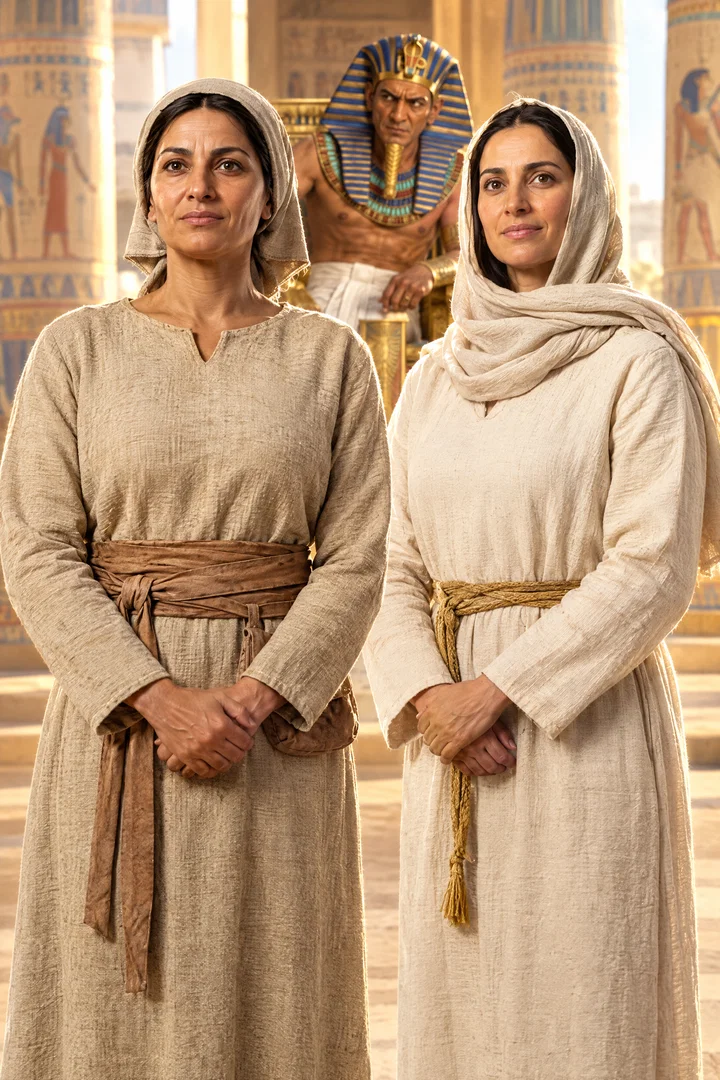
Cross-references
- Exodus 1:22
And Pharaoh charged all his people, saying, Every son that is born ye shall cast into the river, and every daughter ye shall save alive.
Pharaoh escalates the failed order by commanding the drowning of every son.
- Exodus 2:2-3
And the woman conceived, and bare a son: and when she saw him that he was a goodly child, she hid him three months.
Moses is hidden and preserved from Pharaoh’s decree.
- Exodus 1:7
And the children of Israel were fruitful, and increased abundantly, and multiplied, and waxed exceeding mighty; and the land was filled with them.
Israel’s mighty increase provoked Pharaoh despite oppression.
- Genesis 15:13-14
And he said unto Abram, Know of a surety that thy seed shall be a stranger in a land that is not theirs, and shall serve them; and they shall afflict them four hundred years;
God foretells Israel’s oppression in Egypt and their eventual deliverance.
- Matthew 2:16
Then Herod, when he saw that he was mocked of the wise men, was exceeding wroth, and sent forth, and slew all the children that were in Bethlehem, and in all the coasts thereof, from two years old and under, according to the time which he had diligently enquired of the wise men.
Herod’s decree against boys echoes Pharaoh’s order to the midwives.
- Exodus 1:8
Now there arose up a new king over Egypt, which knew not Joseph.
Identifies the new king who opposed Israel.
- Exodus 1:10-11
Come on, let us deal wisely with them; lest they multiply, and it come to pass, that, when there falleth out any war, they join also unto our enemies, and fight against us, and so get them up out of the land.
The plan to check Israel’s growth leads to oppression under taskmasters.
- Acts 7:18
Till another king arose, which knew not Joseph.
Stephen recounts the rise of a king who did not know Joseph.
- Acts 5:29
Then Peter and the other apostles answered and said, We ought to obey God rather than men.
The midwives obey God rather than the king.
- Deuteronomy 4:20
But the LORD hath taken you, and brought you forth out of the iron furnace, even out of Egypt, to be unto him a people of inheritance, as ye are this day.
calls Egypt the iron furnace
Commentary
Each commentary is drawn from primary sources: the writings of Ellen G. White and Adventist pioneers and periodicals. Each commentary is separate. Its own words are not a quotation; follow the references to read the source passages.
Ellen G. White
12 sources
The king of Egypt summoned the Hebrew midwives to demand why they had saved the newborn boys alive instead of killing them as he had ordered.PP 241.3–4SG3 179.1PP 242.1 This confrontation came from his failed plan to reduce Israel's numbers by commanding the midwives to put the male children to death at birth.PP 242.1 The midwives refused to carry out the command because they feared God, and God approved them and prospered them for preserving life.SG3 179.1PP 242.1 In his anger at their resistance the king extended the order and commanded all his people to kill every Hebrew boy.PP 242.1 The account shows women in Bible times serving as midwives with appointed work caring for women and for mothers and children in childbirth, an arrangement that belongs to God's plan in which the Lord worked with them.STB 639.5–640.2CH 395.2–3Ms 53, 1907, par. 2013MR 115.2Ms 2, 1911, par. 3–5
Pharaoh's Order Defied
The king of Egypt summoned the Hebrew midwives and demanded why they had done this thing and saved the male children alive instead of killing them as ordered.PP 241.3–4SG3 179.1PP 242.1STB 639.5–640.2CH 395.2–3 He questioned them because they had kept the Hebrew boys alive and let the male infants live, requiring an explanation for refusing to kill the newborn boys and choosing to preserve them.PP 241.3–4SG3 179.1STB 639.5–640.2CH 395.2–3Ms 53, 1907, par. 20 This confrontation belonged to his failed effort to reduce Israel's numbers by ordering the Hebrew midwives to kill the male children at birth.PP 242.1
The midwives refused to carry out the command because they feared God, choosing disobedience to the king from reverence for Him rather than taking life.SG3 179.1PP 242.1 God approved of them for preserving life and prospered them for it.SG3 179.1PP 242.1 The king's anger at their resistance led him to extend the order, commanding all his people to kill every Hebrew boy.PP 242.1
Women Midwives Pattern
Pharaoh's questioning of the Hebrew midwives for saving the male children alive belongs to a Bible-times account in which women served as midwives with appointed work in childbirth.STB 639.5–640.2CH 395.2–3Ms 53, 1907, par. 20Lt 22, 1911, par. 6–89T 176.2–3 In that account under Pharaoh's rule, women attended women, caring for women and for mothers and children at birth.CH 395.2–3Ms 53, 1907, par. 20Lt 22, 1911, par. 6–89T 176.2–3Lt 34, 1911, par. 7 That work of attending childbirth and caring for women's health was carried out by women.STB 639.5–640.2Ms 53, 1907, par. 20Lt 34, 1911, par. 7
This arrangement of women taking responsibility for women was part of God's plan.13MR 115.213MR 114.2 It was appointed work caring for women in childbirth, a work in which the Lord worked with them.13MR 115.2Ms 2, 1911, par. 3–513MR 114.2
The account stands as a Bible pattern for women to receive medical training and take responsibility for attending women in childbirth.STB 639.5–640.2CH 395.2–3Ms 53, 1907, par. 20Lt 22, 1911, par. 6–89T 176.2–3 It supports the work of women as midwives and as physicians to care for women's health and diseases and for mothers and children.STB 639.5–640.2CH 395.2–3Ms 53, 1907, par. 20Lt 22, 1911, par. 6–89T 176.2–3 Women are to be trained as thoroughly as men for this care, and to take charge and responsibility for the work.Lt 22, 1911, par. 6–89T 176.2–3Lt 34, 1911, par. 7
Sources
Pioneers and periodicals
24 sources
Pharaoh confronted the Hebrew midwives for refusing his order to kill the newborn boys and keeping them alive.ST Nov 13, 1901ST Mar 21, 1878 His questioning pressed the decree after they would not become executioners, aiming to decimate enslaved Israel by destroying its male children.RH Jan 20, 1916ST Mar 30, 1904RH Nov 28, 1912 The command was Satan's attempt to wipe out the promised people, prevent the birth of a deliverer, and kill Moses the type of Christ who would lead them to the promised land.ST Apr 30, 1894ST Mar 30, 1904ST Nov 7, 1906 God overruled the plan, preserved His people and multiplied them under oppression, and raised up Moses to lead them out of Egypt.ST Apr 30, 1894ST Aug 3, 1915 The midwives feared God and rightly disobeyed a human command that violated duty to God.ST Mar 21, 1878RH May 12, 1868
Egyptian Bondage and History
Exodus 1-18 forms the history portion of Exodus, continuing the story of Joseph and God's providential preservation of his relatives through him.RH Jan 20, 1916ST Jan 23, 1912 Within that history this verse records Egypt's change from a place of refuge and brief prosperity to a place of harsh slavery, bitter bondage, and cruel oppression after Egypt forgot Joseph and his service.RH Mar 9, 1869ST Jul 21, 1881RH Dec 17, 1861 Under a new dynasty Israel was treated as despised slaves and faced persecution.
The king who called the midwives to account is the new king who knew not Joseph, whose account was also related by Stephen.ST Apr 13, 1904 He belongs to the time after the death of Khu-n-Aten, about a century before the Exodus, when a new nineteenth dynasty rose with the national cry of Egypt for the Egyptians. He is identified as Rameses II, the Pharaoh of the oppression who built the treasure cities including Rameses and reigned from 1564 to 1497 B.C., to within six years of the exodus.ST Aug 9, 1910
He had seen Israel become fruitful and increase abundantly and multiply and wax exceeding mighty until the land was filled with them, and they grew more and mightier than the Egyptians, growing from seventy-five who entered Egypt to about three million who departed.RH May 14, 1901RH Jan 20, 1916ST Aug 9, 1910 In jealousy he reasoned they would become more powerful than the Egyptians unless their increase was checked, feared their growth and escape, and took counsel to deal wisely with them.RH May 14, 1901ST Jul 21, 1881 His questioning of the midwives for saving the Hebrew boys alive belonged to that counsel, carried out by setting taskmasters over them to afflict them with burdens, making them serve with vigor and making their lives bitter with hard bondage.RH May 14, 1901
They were principally employed in brick-making and to some extent in mortar while building store-cities for Pharaoh, and he further charged that every son that is born be cast into the river and every daughter be saved alive.RH Apr 23, 1908RH May 14, 1901 This cruel oppression stands in dreadful contrast to the earlier time when Joseph nourished Israel through the seven-year famine that left the Egyptians in slavery to Pharaoh, and when the king welcomed them and gave them a possession in the best of the land.RH May 14, 1901 It was the bitter servitude and iron furnace foreshadowed to Abraham by the horror of great darkness and the smoking furnace, showing that Abraham's family had to go down into Egypt for this oppression before possessing the promised land.RH Dec 17, 1861
The store-city Pithom, called Pa-Tum, built in part by Rameses II and uncovered at Tel-el-Maskoutah, is a square enclosed by a thick brick wall with solid square chambers divided by thick brick walls laid with mortar in regular tiers and entered by trap-door from an upper story, answering to the description of a store-city.RH Apr 23, 1908 The city is built almost entirely of brick, and its bricks generally contain straw but in some instances are destitute of it, matching the making of bricks with straw until no straw was given.RH Apr 23, 1908 That the series of events in Exodus 1-14 has no direct mention in the historical records of Egypt is because Egyptian public monuments registered only successes and triumphs, and the court historians and the king omitted failures and disasters such as the year of plagues and the Red Sea.RH Apr 23, 1908
Yet the history of Israel's oppression in which the Israelites built the city of Raamses for Pharaoh is true.ST Oct 21, 1930 It is confirmed by the engraved stone monument of Rameses II recording that he collected Semites and made them build Raamses-Mera-Amen on the eastern delta of the Nile, by bricks stamped with the name Raamses found in ancient Pithom, and by pictures of slaves mixing straw and mud.ST Oct 21, 1930 It is further confirmed by houses in Pithom built with strawless bricks showing Pharaoh making the oppression still more rigorous by compelling Israel to make bricks without straw.ST Oct 21, 1930
Satanic Attack and Divine Preservation
The king of Egypt called the midwives to account and demanded why they had done this thing and saved the male children alive, because they had disobeyed his decree to kill the Hebrew boys at birth and had kept them alive.ST Nov 13, 1901ST Mar 21, 1878 When they refused to become executioners he repeated and pressed his decree, demanding why they saved the children alive and then ordering that every son be cast into the river.ST Mar 30, 1904RH Nov 28, 1912 That questioning enforced a policy of decimation against the enslaved Israelites in Goshen, after foreigners had been driven out or massacred and those who remained had been reduced to the condition of public slaves.
The confrontation belonged to the oppression and attempted destruction of the male children, in which Egyptian malice and hatred went so far as to murder infant sons and destroy all the male children in hope of destroying Israel.RH Jan 20, 1916ST Apr 30, 1894 It was part of Egypt's attempt to destroy or permanently enslave Israel.ST Nov 7, 1906 The order to kill the boys was Satan's plan to destroy the promised seed and so delay the plan of salvation.ST Apr 30, 1894 It was shrewd and wicked but not wise, an attempt to fight against God to destroy the nation through whom the promised Seed would come, to keep Israel forever in Egyptian bondage by preventing the birth of a deliverer, and to kill Moses, the type of Christ who was to lead God's people into the typical land of promise; it was an effort to prevent God's promised people from becoming a distinct nation.ST Apr 30, 1894ST Mar 30, 1904ST Nov 7, 1906ST
God overruled this effort to preserve the seed, was with His people, and used the hardship and tribulation to make them stronger physically, to increase their numbers, and to work out salvation for them.ST Apr 30, 1894 Despite hard oppression they multiplied and grew, and God preserved the people and raised up Moses as a deliverer, so that Pharaoh's plan could not defeat God's purpose, but He called them out of Egypt to fulfill His promises.ST Apr 30, 1894ST Aug 3, 1915ST Nov 7, 1906 The decree threatened the survival of Israel and the future deliverer, and threatened the survival of Abraham's descendants as a distinct godly line, since if the boys were killed the Hebrew women would be driven to marry outside that line.RH Nov 28, 1912ST Aug 3, 1915 The order was actually carried out, forcing the mother of Moses to hide him three months at home and then to place him in a watertight basket among the reeds of the Nile, but God preserved Moses.ST Mar 30, 1904
His life was spared at birth because the decree was disregarded, and he was rescued in infancy to become the chosen leader through whom Israel received great deliverance and became a nation with organization, leadership, laws, and worship, so he could lead the people out of Egypt.RH Jan 20, 1916RH Nov 28, 1912ST Nov 27, 1901 The decree that all Hebrew male children must be put to death was an affliction that made it impossible for Israel to remain in Egypt, since their race must run out if they stayed and flight became the only alternative.RH Aug 11, 1863 Without that pressure Israel would have lived in ease and worldly prosperity, with all in Egypt that Canaan could offer, and Moses could hardly have persuaded them to undertake a perilous wilderness journey to a land flowing with milk and honey.RH Aug 11, 1863 If they had stayed they would have so mingled with the Egyptians that by the Saviour's advent none could determine who were Hebrews and who were not, so there would have been no Messiah, or Christ would have been unable to trace His pedigree back to Abraham and prove His Messiahship.RH Aug 11, 1863
Faithful Disobedience and Lessons
The king of Egypt called the midwives to answer for letting the boys live, because their fear of God had led them to refuse to kill the children.ST Mar 21, 1878 When questioned, they stated a fact to excuse themselves before him, and there is no evidence in the account that they lied.ST Mar 21, 1878
Their refusal to obey his command to keep the Hebrew boys from staying alive was right, for they disobeyed the king's command when obeying it would have violated their duty to God.RH May 12, 1868 Their example in Exodus 1:15-20 establishes that people must disobey a human command when it conflicts with God's law, and that obedience to human rulers is wrong when it conflicts with God's law.RH May 12, 1868 The questioning belongs to the oppression described in the first five chapters of Exodus, which shows that Israel's bondage left them unable to keep the Sabbath even if they had wanted to.RH May 16, 1854 It was the act of idolatrous Egyptians persecuting the Hebrews, who worshiped the true God.RH Jun 8, 1916
Sources