Exodus 12:35
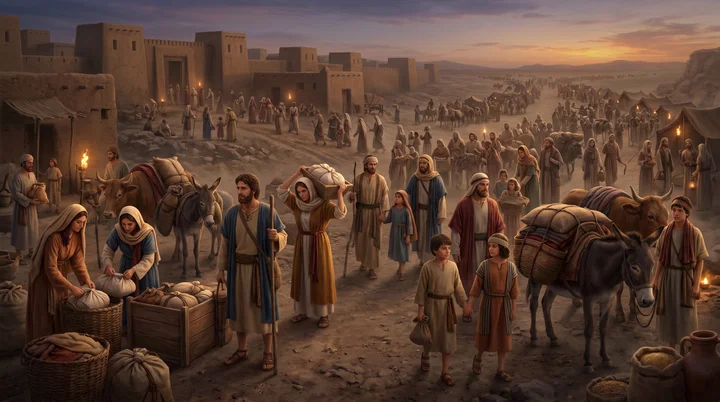
And the children of Israel did according to the word of Moses; and they borrowed of the Egyptians jewels of silver, and jewels of gold, and raiment:
Translations
American King James Version, King James Version, KJV Cambridge Paragraph Bible
And the children of Israel did according to the word of Moses; and they borrowed of the Egyptians jewels of silver, and jewels of gold, and raiment:
And the children of Israel did according to the word of Moses: and they borrowed of the Egyptians jewels of silver, and jewels of gold, and raiment.
Revised Version, American Standard Version
And the children of Israel did according to the word of Moses; and they asked of the Egyptians jewels of silver, and jewels of gold, and raiment:
And the sons of Israel have done according to the word of Moses, and they ask from the Egyptians vessels of silver and vessels of gold, and garments;
And the children of Israel had done according to the word of Moses, and they had asked of the Egyptians utensils of silver, and utensils of gold, and clothing.
And the sons of Israel, did according to the word of Moses,—and asked of the Egyptians, articles of silver and articles of gold and mantles.
Berean Standard Bible, Majority Standard Bible
Furthermore, the Israelites acted on Moses’ word and asked the Egyptians for articles of silver and gold, and for clothing.
The children of Israel did according to the word of Moses; and they asked of the Egyptians jewels of silver, and jewels of gold, and clothing.
And the children of Israel had done as Moses had said; and they got from the Egyptians ornaments of silver and of gold, and clothing:
And the children of Israel did according to the saying of Moses, and they asked of ye Egyptians iewels of siluer and iewels of gold, and raiment.
Douay-Rheims (Challoner revision)
And the children of Israel did as Moses had commanded: and they asked of the Egyptians vessels of silver and gold, and very much raiment.
Pictures
Cross-references
- Genesis 15:14
And also that nation, whom they shall serve, will I judge: and afterward shall they come out with great substance.
God promised Israel would leave Egypt with great substance.
- Exodus 3:22
But every woman shall borrow of her neighbour, and of her that sojourneth in her house, jewels of silver, and jewels of gold, and raiment: and ye shall put them upon your sons, and upon your daughters; and ye shall spoil the Egyptians.
The command to ask Egyptians for valuables is fulfilled as Israel takes their goods.
- Exodus 11:2
Speak now in the ears of the people, and let every man borrow of his neighbour, and every woman of her neighbour, jewels of silver, and jewels of gold.
Moses instructs the Israelites to ask the Egyptians for silver and gold before leaving.
- Psalms 105:37
He brought them forth also with silver and gold: and there was not one feeble person among their tribes.
Israel’s departure from Egypt included silver and gold.
- Exodus 12:12
For I will pass through the land of Egypt this night, and will smite all the firstborn in the land of Egypt, both man and beast; and against all the gods of Egypt I will execute judgment: I am the LORD.
same passing through Egypt striking man and beast
- Exodus 12:29
And it came to pass, that at midnight the LORD smote all the firstborn in the land of Egypt, from the firstborn of Pharaoh that sat on his throne unto the firstborn of the captive that was in the dungeon; and all the firstborn of cattle.
The firstborn were smitten at midnight, the night Israel borrowed from the Egyptians.
- Exodus 35:22-24
And they came, both men and women, as many as were willing hearted, and brought bracelets, and earrings, and rings, and tablets, all jewels of gold: and every man that offered offered an offering of gold unto the LORD.
Valuables taken from Egypt were later contributed for the sanctuary.
- Exodus 12:42
It is a night to be much observed unto the LORD for bringing them out from the land of Egypt: this is that night of the LORD to be observed of all the children of Israel in their generations.
The night of deliverance from Egypt is to be observed by Israel in every generation.
- Hosea 11:1
When Israel was a child, then I loved him, and called my son out of Egypt.
Israel is called out of Egypt during the exodus.
- Exodus 12:31
And he called for Moses and Aaron by night, and said, Rise up, and get you forth from among my people, both ye and the children of Israel; and go, serve the LORD, as ye have said.
Pharaoh urgently tells Israel to leave and take their flocks and herds.
- Exodus 12:30
And Pharaoh rose up in the night, he, and all his servants, and all the Egyptians; and there was a great cry in Egypt; for there was not a house where there was not one dead.
death in every house breaks Pharaoh
- Exodus 25:1-8
And the LORD spake unto Moses, saying,
The wealth obtained from the Egyptians helped furnish Israel’s offerings for the sanctuary.
- Colossians 2:15
And having spoiled principalities and powers, he made a shew of them openly, triumphing over them in it.
Christ’s triumph over evil echoes Israel’s spoiling of the Egyptians.
- Psalms 114
When Israel went out of Egypt, the house of Jacob from a people of strange language;
Hallel sung though not originally required
- Exodus 12:51
And it came to pass the selfsame day, that the LORD did bring the children of Israel out of the land of Egypt by their armies.
Records the Lord bringing Israel out of Egypt.
- Ezra 1:6
And all they that were about them strengthened their hands with vessels of silver, with gold, with goods, and with beasts, and with precious things, beside all that was willingly offered.
both show neighbors giving silver and gold
- Exodus 12:40-41
Now the sojourning of the children of Israel, who dwelt in Egypt, was four hundred and thirty years.
Records the completion of the appointed years and Israel’s departure.
- Ezra 1:4
And whosoever remaineth in any place where he sojourneth, let the men of his place help him with silver, and with gold, and with goods, and with beasts, beside the freewill offering for the house of God that is in Jerusalem.
both command neighbors to fund departure
- Hebrews 11:28-29
Through faith he kept the passover, and the sprinkling of blood, lest he that destroyed the firstborn should touch them.
Israel’s departure from Egypt exemplifies faith and obedience.
- Genesis 12:10-20
And there was a famine in the land: and Abram went down into Egypt to sojourn there; for the famine was grievous in the land.
Abraham went to Egypt during a famine and left enriched after God intervened.
Commentary
Each commentary is drawn from primary sources: the writings of Ellen G. White and Adventist pioneers and periodicals. Each commentary is separate. Its own words are not a quotation; follow the references to read the source passages.
Ellen G. White
13 sources
On the night the firstborn were struck, while Israel stood ready and the Egyptians pressed them to leave in haste, they asked at Moses' word for silver and gold ornaments and clothing, and the Lord gave them favor so the Egyptians lent whatever was required and they left enriched with their spoils.SG3 228.2ST Apr 1, 1880 What they carried out was just recompense for unpaid labor, and it was rightfully theirs, including the flocks and herds brought in by Jacob and his sons which had greatly increased as the people grew exceedingly numerous.1SP 205.2SG3 230.1PP 281.3 In this coming out with great substance was fulfilled what God had revealed to Abraham four hundred years before, that his seed would serve as strangers in a foreign land and be afflicted, that He would judge that nation, and that afterward they would come out with abundant possessions.ST Apr 1, 1880PP 281.4 With them went Egyptians who by the signs had learned that the God of the Hebrews alone was true, and who on that night entreated shelter in Israelite homes, pledged themselves to Him, and chose to leave Egypt to worship Him.SG3 223.1 God's bringing them out was to separate a people from the ways of the world to reveal His goodness, mercy, justice and love to the world, a deliverance to be remembered with gratitude, firm faith and courage on the way to the heavenly Canaan instead of distrust and murmuring.STB 834.1STBk 53.2–54.1STA 53.2–54.1
Departure From Egypt
The borrowing of silver jewels and gold jewels and clothing took place on Passover night after the firstborn were struck down at midnight.SG3 228.2 At that hour Israel stood ready for the journey while the Egyptians pressed them to leave the land in haste, fearing that they were all dead men.SG3 228.2 In obedience to the word of Moses the children of Israel asked the Egyptians for what they required.SG3 228.2
During the plagues the people had gathered in Goshen and had been organized into companies before setting out.PP 281.1 Their going out ended their dwelling in the country round about Goshen, where they had lived since Joseph settled them there.SG3 169.1 God brought His people out of Egypt at that time with power and mighty signs and wonders.SG3 169.1
In pity for their slavery God broke the yoke of their bondage and placed Moses at their head to lead them through the wilderness to the promised land.Ms 55, 1901, par. 22–23 The departure also included Egyptians who had come to believe.SG3 223.1 By the manifestations of signs and wonders shown in Egypt quite a number of Egyptians had been led to acknowledge that the God of the Hebrews was the only true God, and they were convinced that the gods they had worshiped were without knowledge and had no power to save or to destroy.SG3 223.1
On the fearful night when the firstborn of the Egyptians were slain, those believing Egyptians entreated to be permitted to come with their families into the houses of the Israelites.SG3 223.1 They pledged themselves henceforth to choose the God of Israel as their God and decided to leave Egypt and go with the children of Israel to worship Him.SG3 223.1 The Israelites welcomed the believing Egyptians to their houses.SG3 223.1
Enriched With Egyptian Spoils
At the word of Moses the children of Israel asked the Egyptians for jewels of silver and jewels of gold and raiment, and the Lord gave the people favor in the sight of the Egyptians so that they lent whatever was required, and in this way Israel spoiled the Egyptians.SG3 228.2ST Apr 1, 1880 This asking and lending took place on the Passover night after the firstborn were smitten at midnight, while Israel stood ready for the journey and the Egyptians urged them to leave the land in haste for fear that they were all dead men.SG3 228.2 What they took in silver and gold and clothing by Moses' direction was recompense for their unpaid labor.PP 281.3 The Egyptians were eager to be rid of them and did not refuse, so Israel left laden with the wealth of their oppressors.PP 281.3
What Israel carried out did not belong to Pharaoh, for they had never sold it to him.SG3 230.1 It included the flocks and herds, the flocks and cattle, that Jacob and his sons had brought with them into Egypt.1SP 205.2SG3 230.1 Those herds had greatly increased as the children of Israel had become exceedingly numerous.1SP 205.2SG3 230.1 God judged the Egyptians by sending the plagues upon them, and by that judgment made them hasten His people out of Egypt with all that they possessed.SG3 230.1
This coming out with great substance fulfilled what God had revealed to Abraham about four hundred years before.ST Apr 1, 1880 His seed would be strangers in a land not theirs and would serve and be afflicted four hundred years, God would judge the nation they served, and afterward they would come out with great substance, with abundant possessions after the appointed period of bondage.ST Apr 1, 1880PP 281.4
Purpose and Remembrance Today
God's bringing of Israel out of Egypt was the carrying out of His purpose to manifest the principles of His kingdom through His people.STB 834.1 He separated them from the customs and habits and practices of the world and brought them nearer to Himself that He might make known to them His will.STB 834.1 In life and character they were to reveal goodness and mercy and justice and love and thus give the world a representation of His character.STB 834.1 When the law of God was exemplified in their life even the world would recognize the superiority of those who love and fear and serve God above every other people, and that purpose remains the same for His people today.STB 834.1
That deliverance from Egyptian bondage, together with opening the Red Sea before them and destroying their pursuing foes, is one of God's mighty works proving His power and care.STBk 53.2–54.1STA 53.2–54.1 Forgetting it leads to feeling abused and to mourning and lamenting, to distrust of God and to discouragement and desperation when discouraged by false reports.STBk 53.2–54.1STA 53.2–54.1 Remembering it must be done with gratitude and must produce firm faith and courage and hopeful speech on the way to the heavenly Canaan.STBk 53.2–54.1STA 53.2–54.1 It calls for refusal to repeat the sin of murmuring, rebellious Israel under the false report of the unfaithful spies.STBk 53.2–54.1STA 53.2–54.1
The same pity that broke the yoke of Israel's bondage and placed Moses at their head to lead them through the wilderness to the promised land lives toward the colored people in America.Ms 55, 1901, par. 22–23 Though in one sense freed from slavery, they remain in the slavery of ignorance, living in sin and degradation in the shadow of Christian doors.Ms 55, 1901, par. 22–23 God is not indifferent to their suffering but calls those who name His name to lift them by earnest medical missionary work.Ms 55, 1901, par. 22–23 That work follows Christ's example of going about doing good, feeding the hungry and healing the sick.Ms 55, 1901, par. 22–23
Sources
Pioneers and periodicals
89 sources
The children of Israel acted according to the word spoken through Moses in asking the Egyptians for vessels and ornaments of silver and gold and for clothing, including costly plate.ST Apr 28, 1909ST Mar 18, 1880ST Apr 26, 1877 The word rendered borrowed is mistranslated, for the Hebrew means to ask, beg, demand and require, with gave in answer to asking rather than lent in answer to borrowing, since there was no loan to be returned.ST Apr 28, 1909ST Mar 18, 1880ST Apr 26, 1877RH Mar 17, 1874 The asking took place the morning after the Passover night when the firstborn were struck, at the hurried midnight departure from Rameses toward Succoth with unleavened dough and flocks and herds.ST Jul 17, 1879RH Apr 7, 1851RH Apr 14, 1874 What was received was outright gifts and justly required spoil as pay and compensation for long bitter unpaid bondage that had enriched Egypt, which God in righteous judgment constrained Egypt to refund by giving Israel favor in their eyes.ST Mar 18, 1880ST Apr 26, 1877RH Aug 15, 1865 The receiving fulfilled what God had revealed to Abraham that his afflicted seed would come out of bondage with great substance, and it put silver and gold into their hands for the work He required besides sheep and goats, afterward given as free-will offerings for building the sanctuary in the wilderness.ST Apr 1, 1880ST Jun 10, 1908ST Mar 25, 1889RH Oct 7, 1858 That temporal deliverance in a single night by lamb's blood, enriched without ransom, was only a type of the far greater redemption by Christ, who delivers from Satan, spoils principalities and powers, and brings His people to the heavenly Canaan.RH Feb 19, 1861ST Feb 15, 1905
Meaning of Borrowed
The children of Israel acted according to the word of Moses in asking the Egyptians for jewels of silver and jewels of gold and raiment.ST Apr 28, 1909ST Mar 18, 1880RH Mar 5, 1861 Those things were vessels or ornaments and jewelry of silver and gold and clothing, including costly plate.ST Apr 26, 1877RH Mar 5, 1861ST Oct 10, 1911ST Mar 18, 1880 What they took they never returned.ST Mar 18, 1880
The word rendered borrowed is a mistranslation, obsolete and inaccurate in the common version.ST Apr 28, 1909ST Apr 26, 1877RH Aug 15, 1865 The Hebrew means to ask, beg, demand, request, and require, and is best rendered asked.ST Apr 28, 1909ST Mar 18, 1880RH Aug 15, 1865ST Feb 4, 1889RH Mar 5, 1861 Gave in answer to asking is the true sense, rather than lent in answer to borrowing.ST Apr 28, 1909ST Mar 18, 1880ST Apr 26, 1877 What was received was outright gifts and required spoil really given, not borrowing or lending to be returned, since borrowing makes no sense when finally departing forever.ST Apr 26, 1877RH Aug 15, 1865RH Mar 5, 1861
The sense of demand is confirmed by the Greek rendering she shall ask and the Latin rendering she shall demand.ST Mar 18, 1880RH Mar 17, 1874 The same Hebrew word is used where God requires of Israel, where Caleb's daughter asks for a field, where Sisera asks for water, and where David recovers taken property.RH Mar 17, 1874 In none of those places does it mean a loan to be returned.ST Mar 18, 1880RH Mar 17, 1874
Exodus Departure Setting
Exodus 12:35 stands in the mainly historical first division of Exodus in chapters 1-18, in the account in chapters 11 to 13:16 of the tenth plague and the death of the firstborn, the giving of the ordinance for the Passover and the claiming of the firstborn as the Lord's, and the hurried departure of Israel from Egypt. It belongs to the directions for preparing and keeping the Passover festival, whose first form was given in Egypt at Rameses on the night Israel was led out of bondage and afterward observed in the wilderness on the journey toward Palestine before the form of celebration was materially changed after the building of the temple.ST Oct 8, 1894ST May 22, 1907ST Feb 22, 1899 The name Passover recalls the angel passing over homes marked with blood and sparing their oldest children, commemorating the night the firstborn of Egypt died and the Israelites were spared, with the time of the feast marking the anniversary of their departure and serving as a shadow of good to be done for the human race.ST May 22, 1907ST Aug 13, 1885ST May 12, 1898 The directions meant that nothing leavened or fermented was permitted at that sacred memorial feast under the heaviest penalty, with eating implying both eating and drinking so that drink was required through a seven-day feast but left to circumstances and common sense except that it could not be leavened.ST Oct 8, 1894
The asking took place the morning after the Passover, when the destroying angel passed over the blood-sprinkled houses and struck the firstborn in houses without blood, sparing not even the firstlings of the flock.ST Feb 4, 1889ST May 28, 1894 It was the midnight flight on the fifteenth day of the first month of Abib, when Israel was thrust out of Egypt just after midnight and started in the night from Rameses toward Succoth, taking what they could carry upon their shoulders, some three million people in all marching with flocks and herds, a day of heavy travel and burden-bearing wholly unlike the rest of the weekly Sabbath.ST Jul 17, 1879RH Apr 14, 1874 They left in haste with their dough before it was leavened, baking unleavened cakes from it for breakfast the next morning, while they had waited with girded loins, sandals on feet and staff in hand, with unbaked bread in the kneading-trough and flocks gathered in the fold, all betokening plans for hasty flight.RH Apr 7, 1851ST Feb 4, 1889 Their leaving through that dark night chosen for smiting every loved firstborn was marked by thrilling silence and a quiet joy mingled with regret at leaving their birthplace, though a house of bondage, for the promised land, and the deliverance is commemorated by the Passover on the fourteenth day and the feast of unleavened bread on the fifteenth, while the Sabbath points back to creation and the Creator's rest.RH Apr 14, 1874ST Feb 4, 1889
The departure came when Pharaoh called for Moses and ordered the Hebrews to leave so Egypt would be freed from its miseries, after astounding displays of God's power in sore punishments inflicted upon Pharaoh's family, people, and country that laid waste the land, broke the oppressor's resistance, and showed that Jehovah was above the gods of Egypt.RH Aug 15, 1865ST Nov 1, 1899 God smote Egypt through Moses by turning rivers into blood and striking the land with plagues until Israel went out with silver, gold, and clothing, with the power not in Moses himself but in God's word spoken through him, working by the message he bore as it was received or rejected.ST Apr 4, 1911 The Egyptians urged Israel to go and honored them with gifts upon their asking, some to get them to depart quickly and secure departure, and others because of neighborhood and friendship, following divine judgments that caused the Egyptians to fear them.ST Jul 31, 1901RH Aug 15, 1865ST May 28, 1894 In that compulsory release from Pharaoh's hand the oppressed nation was set free from grievous bondage and went out free to begin the wilderness journey, rich in cattle, in jewels, and in other spoils asked of oppressors, in a movement toward Palestine, the land promised to Abraham, Isaac, and Jacob, of momentous influence upon the human race and the most impressive migratory journey in human annals.ST Nov 4, 1880
The oppression in Egypt was not merely physical bondage but denial of the right to worship and to rest, with Moses and Aaron teaching the people to keep the Sabbath and Pharaoh charging them with hindering the people from work, making them rest from burdens, and ordering more work laid upon them to make them not regard vain words in contempt for God and His law.RH Mar 25, 1909 Pharaoh refused to let Israel go until his land was laid waste, so deliverance came only through terrible plagues and the direct miraculous intervention of God that broke the power of the oppressor.RH Mar 25, 1909 God led Israel out of Egyptian slavery with order as an ordered host, bringing them out of the confusion of a distracted oppressive and slave power, proving He is not the author of confusion but of harmony and order.ST Aug 18, 1881ST Mar 24, 1887 That deliverance marks the end of the 430 years from the promise to Abraham and the beginning of Israel's life as God's people, with Israel leaving Egypt about 1491 years before Christ.RH Dec 17, 1861ST Jan 28, 1886
The exodus is true history and not myth, with Moses a real man and not an idealized epitome, under whose direct supervision Israel acted according to his word in carrying out instructions and taking silver and gold ornaments and clothing from the Egyptians, an event no less historically certain than the account of creation.RH Feb 3, 1910ST Jul 28, 1881 The events of the exodus are said not to receive direct mention in Egyptian historical records, which gives no explanation of the verse's specific details about receiving goods from the Egyptians.RH Apr 23, 1908ST Nov 1, 1899 The burdens imposed in making bricks and erecting buildings in Exodus 1 belong with the ruins of the store cities, and the slaying of the firstborn belongs with the unfinished tomb for Meneptah's son set against that slaying.ST Dec 14, 1915 The verse is part of Israel's deliverance from bondage in Egypt, the beginning of the journey that Moses led through the wilderness toward freedom and the promised homeland.ST May 27, 1908
Wages Justly Claimed
What Israel received was outright gifts and required spoil really given, not borrowing or lending to be returned with principal and interest.ST Apr 26, 1877RH Aug 15, 1865ST Jan 20, 1909 There was no sense in borrowing or lending when Israel was finally departing out of the land forever to begin the wilderness journey free from bondage.ST Apr 26, 1877RH Aug 15, 1865ST Nov 4, 1880 They came out with its spoil, with the Egyptians' silver and gold and clothing and costly plate taken and never returned.ST Mar 18, 1880RH Dec 31, 1861ST Nov 4, 1880
God commanded Israel to demand these things, and in righteous judgment constrained Egypt to refund what was justly due as wages.ST Mar 18, 1880ST Feb 4, 1889RH Mar 17, 1874 It was pay and reward and compensation for long and bitter and lifelong cruel bondage and unpaid labor that had greatly enriched Egypt and greatly increased its wealth.ST Apr 26, 1877RH Aug 15, 1865ST Feb 4, 1889RH Mar 17, 1874ST Dec 20, 1883 It was atonement for the lives of the Egyptians, and the condition of Israel's departure and of the Egyptians' deliverance from terrible judgments that would otherwise soon have left them all dead men.ST Apr 26, 1877RH Aug 15, 1865 These goods were all they received for a lifetime of cruel bondage.ST Dec 20, 1883
The Lord gave the people favor in the sight of the Egyptians so they paid willingly and were anxious to give.ST Mar 18, 1880RH Mar 17, 1874ST Jan 20, 1909 Some honored the Hebrews with gifts to get them to depart quickly, counting full settlement a good bargain in forlorn hope to secure Israel's departure.RH Aug 15, 1865ST Mar 18, 1880ST Apr 26, 1877RH Nov 14, 1871 Others gave on account of neighborhood and friendship, inviting and honoring the Hebrews with gifts.RH Aug 15, 1865ST Apr 26, 1877RH Nov 14, 1871
The act was right and lawful because after centuries of service that had enriched Egypt they were only asking for what belonged to them.ST Apr 28, 1909 It was not lying and deception and dishonesty, and brings no dishonor upon God's character.ST Apr 26, 1877RH Aug 15, 1865 Moses allowed the despoiling as wealth rightfully belonging to Israel, and the spoil was their rightful due for years of service, like gifts due returning captives for fields left behind and public service rendered.ST Oct 4, 1910RH Nov 7, 1912ST Oct 4, 1905
Israel was in Egypt 215 years giving labor and service and receiving only bread, with no lands or cities.ST Mar 18, 1880RH Mar 17, 1874 Egypt owed its existence, laws, policy, and opulence to Joseph and did not even furnish him a grave.ST Mar 18, 1880RH Mar 17, 1874 The just account values the cattle, flocks, herds, wealth, and goods Jacob brought down, counts wages at very low rates with interest, doubles the sum for the time of double work, and adds the materials Pharaoh refused to furnish.ST Mar 18, 1880RH Mar 17, 1874 That total far exceeds at even very low wages the small amount taken at departure as a small installment of wages long due, leaving Egypt immensely in debt to Israel.ST Mar 18, 1880RH Mar 17, 1874
Egypt later treated the taking as a borrowing of principal owed with interest.ST Mar 18, 1880 Soon after the conquest of Syria an Egyptian prince brought this claim before Alexander the Great as one who pays all just debts of his poor subjects and of those he has conquered, demanding payment in behalf of his nation.ST Mar 18, 1880 He offered the Jewish Scriptures and Egyptian records as evidence.ST Mar 18, 1880 Alexander took three days to examine the evidence through his secretary and treasurer, the learned Jew Mordecai, who required the prince to take those records as the only evidence for or against the claim, to answer whether Egyptian law allowed servants a just and equitable compensation for services rendered and how much, and to pay the balance if it was due on the other side.ST Mar 18, 1880
Promise and Provision
The receiving of silver and gold and clothing from the Egyptians fulfilled what had been revealed to Abraham about four hundred years before, that his seed would be strangers in a land not theirs and would serve and be afflicted four hundred years, that the nation they served would be judged, and that afterward they would come out with great substance.ST Apr 1, 1880ST Jun 10, 1908 The departure that supplied that substance marked the end of the 430 years from the promise to Abraham and the beginning of Israel's life as God's people.RH Dec 17, 1861 It was part of the promised departure from affliction which no human opposition could prevent.RH Mar 20, 1913
After long bondage Israel had little besides herds and flocks, but there was work before them requiring silver and gold besides sheep and goats, so means were put into their hands by telling them to ask the Egyptians for jewels of silver and gold.ST Jun 10, 1908RH Jul 4, 1907 The children acted according to the word of Moses in asking for jewels of silver and jewels of gold and raiment, and the Lord gave the people favor in the sight of the Egyptians so that they supplied what was asked and Israel spoiled the Egyptians.ST Apr 1, 1880ST Mar 25, 1889 The word rendered borrow means to ask or demand rather than a deceptive loan to be returned, and the Egyptians gave what was requested as payment for years of unpaid labor, not as evidence that wearing jewelry was intended.RH Oct 7, 1858 These valuables were all that was received for a lifetime of cruel bondage, yet with all silver and gold belonging to the Lord they supplied abundant materials later available and contributed as free-will offerings for building the sanctuary and tabernacle in the wilderness.ST Jun 10, 1908ST Mar 25, 1889RH Oct 7, 1858ST Dec 20, 1883 Just before leaving, the hearts of the Egyptians were turned to favor the people so that much gold was given into their hands for instituting God's worship in the wilderness, the Israelites going to their neighbors and inviting them to render this assistance, showing that the wealth of the nations comes to supply God's work.RH Sep 12, 1912
God arranged financial help for the departure through the surrounding heathen, so Israel did not leave Egypt empty-handed but carried wealth supplied by neighbors.RH Feb 7, 1907 The same pattern applied when Cyrus decreed the return from Babylon, for that decree commanded the neighbors of the Jews everywhere to give financial help, so that those who went up to Jerusalem also went with treasure.RH Feb 7, 1907 Provision was made to take all Israel from Babylon, and had the millions responded it would have been a far greater object lesson to the whole world than coming out of Egypt.RH Feb 7, 1907 Even while Israel was unmindful of the providence opening the way, the heathen fulfilled their part and gave silver and gold and other treasures wherever a Jew arose to return.RH Feb 7, 1907
Types and Memorials
The whole nation was brought out in a single night with the firstborn preserved from the destroyer by the blood of a lamb, and enriched with the spoil of enemies without shedding blood or paying ransom.RH Feb 19, 1861 That deliverance was wonderful and unparalleled in the history of nations, followed by the drowning of Pharaoh's host in the Red Sea and guidance through the wilderness to the borders of the promised land, yet it was only temporal, a mere type of the far greater redemption by Jesus Christ accomplished not by outstretched power but by perfect obedience and suffering even to the painful death of the cross.RH Feb 19, 1861 The paschal lamb slain on the fourteenth day of the first month was fulfilled by the death of Christ the Lamb of God on that day. As Israel was enriched temporally, Christ delivers His people from the tyranny of Satan and the sword of divine justice, spoils principalities and powers, enriches with spiritual blessings in heavenly places, feeds with manna from heaven and the water of life through the wilderness, and will bring them to the heavenly Canaan.RH Feb 19, 1861 That deliverance signifies salvation, redemption, and recreation, and the homeward going up of about fifty thousand captives of Judah with the longer captives of Israel to Jerusalem as a second going up out of Egypt to the promised land shows both deliverances typify the final deliverance of all believers from bondage to sin and death, when mouths are filled with laughter.ST Feb 15, 1905ST Dec 19, 1892
Its Deliverer is Christ the Creator, the divine Lord who personally led His ancient people toward the earthly Canaan even as He will lead the saved of every age into the heavenly land, though long slavery had left them unready to understand the full meaning of salvation and the character required.ST Feb 15, 1905ST Mar 24, 1887 Upon that fact of deliverance the Ten-Commandment covenant was made with Israel, signifying the only possibility of entering into and receiving the benefits of the everlasting covenant made with Abraham, Isaac, and Jacob.ST Feb 15, 1905 The immediate basis differed from that of the fathers because deliverance from Egypt was then a fact in history for the first time, but the underlying principles were old, returning at once to the everlasting or new covenant and its promises.ST Feb 15, 1905 With it a special work of education and revelation in the unfolding of redemption was introduced, the everlasting covenant was re-established with special features of that dispensation, because through Israel the Lord was bringing in the promised Seed, the Redeemer.ST Feb 15, 1905 This exodus is the Old Testament fulfillment of the words calling God's Son out of Egypt, and by it Israel gained personal knowledge of Him as the living Lord, grounding the introduction of the law as spoken by the Lord who brought them out of Egypt.ST Nov 27, 1901RH Aug 24, 1916
The houses marked with the blood of the paschal lamb and spared as the destroying angel slew the firstborn of the Egyptians provide the pattern for the sealing of God's servants before the winds of war and trouble blow.ST May 8, 1879 The seal of God is a distinguishing mark or religious characteristic found in the fourth commandment and its seventh-day Sabbath, through which its keepers will be exempted from the judgments falling on the wicked around them.ST May 8, 1879 Israel remaining in Egypt while calamities fell around them, yet protected until deliverance, is the historical parallel for God's people during the last plagues, to whom God's judgments at the last day will be joyful tokens that freedom is coming and hopes will be fulfilled.ST Jul 18, 1878RH Sep 10, 1901 The ten plagues preceding Israel's deliverance are the pattern for the seven plagues preceding the deliverance of God's people, and the going out from Egypt to Canaan shows the deliverance from earth's dark Egypt among literal visitations showing the last plagues of Revelation 16.STST Oct 28, 1930
God gave two fit memorials of that work, not three.ST Sep 13, 1877 The Passover on the fourteenth day of the first month preserves remembrance of the passing over Israelite dwellings when judgment brought deliverance near and Egypt's firstborn were doomed to die, and the feast of unleavened bread declares the hasty departure with unbaked bread when fearful Egyptians hurried Israel away with hastening hand.RH Jan 7, 1862RH Nov 15, 1853ST Sep 13, 1877 When sons asked what the service meant, the answer was that with mighty hand Jehovah brought them up from Egypt's land.RH Nov 15, 1853ST Sep 13, 1877 The weekly seventh-day Sabbath is not one of those yearly memorials, since resting on the seventh day of each week contains nothing commemorating a midnight flight on the fifteenth day of the first month; a weekly rest cannot fitly memorialize a once-a-year deliverance and rush, while the Sabbath points back to creation and the Creator's rest after making heaven and earth in six days.ST May 31, 1905RH Jan 7, 1862RH Apr 14, 1874
The Exodus directions for preparing and keeping the Passover, which Christ and His disciples obeyed as consistent Israelites at the Last Supper, permitted nothing leavened or fermented at that sacred memorial feast under the heaviest penalty known.ST Oct 8, 1894 The word eat implies both to eat and to drink so that drink was optional in wording, yet a seven-day festival made drink a necessity, what that drink was to be was left to force of circumstances and common sense, and the one absolute requirement was that it could not be leavened, so the drink used at the institution of the Supper was unfermented.ST Oct 8, 1894 The preparation of the Passover meant preparing to eat the lamb rather than merely naming the season, associated with the events of deliverance from Egypt.RH Jun 24, 1873 That first form given in Egypt and observed in the wilderness on the journey to Palestine was materially changed after the building of the temple.ST Feb 22, 1899
Leaving Egypt without leaven was a type, for leaven is a sign of corruption, so keeping the Passover with unleavened bread meant putting away everything indicating corruption and coming clean before God.ST Oct 29, 1912 It meant cutting loose from all the sins of Egypt and of the flesh and worshiping with sincerity of heart, keeping the feast not with old leaven nor with malice and wickedness but with sincerity and truth, without retaining old sins in the heart.ST Oct 29, 1912 Bodily freeing from Egyptian oppression did not free from slavery to sin and Satan, as the wilderness proved.ST Apr 21, 1909 Only those who gained that other liberty, having a different spirit like Caleb, entered Canaan, just as only those who attain the glorious liberty of the children of God will enter the heavenly Canaan, the eternal kingdom of God.ST Apr 21, 1909
Faith and Application
The deliverance from Egypt displays divine wisdom, love, power, and right to rule, and with it the obligation to obey.ST Mar 7, 1906RH Apr 20, 1916ST Jan 16, 1896 With the thunders of Sinai, the revelation of divine love, and the planting of Israel in Canaan as a center after centuries of servitude following the choice of Abraham and his posterity, it stands among the most wonderful events on record and proves that God lives and reigns, saving His people and punishing the wicked.RH Apr 20, 1916ST Jan 16, 1896 About three million souls left with only two or three days of food, and were then led for about sixteen months toward the promised inheritance with power manifested every day for their preservation.RH Apr 20, 1916ST Aug 31, 1888 That release came by promise and power beyond human wisdom or strength, trusted by faith, and it gives Bible history new significance and beauty as an illustration of the controversy between good and evil and the plan of salvation learned from the experience of holy men of old.ST Jan 16, 1896
Just before the departure God turned Egyptian hearts to favor Israel, so that neighbors gave much gold and silver and clothing into their hands, afterward used in instituting worship and building the sanctuary in the wilderness.RH Sep 12, 1912RH Oct 29, 1908 All silver and gold belong to the Lord, and He put means into their hands because He had work requiring more than sheep and goats.RH Sep 12, 1912RH Oct 29, 1908 The wealth of the nations thus comes to supply His work, giving warrant to expect the same favor now.RH Sep 12, 1912RH Oct 29, 1908 None need feel timid about asking strangers, friends, and neighbors to give, since the God of Israel is not dead but goes before His people for the closing work and eternal release from the bondage of sin, impressing those not of the faith to give money for His work, especially foreign missionary work, as easily as He impresses His people to go forth and ask, as seen in going out to solicit help for sending missionaries to waiting fields in the Ingathering campaign.RH Sep 12, 1912RH Oct 29, 1908
Israel waited and stood all night for the departure, trusting warning and venturing forward despite hardship, uncertainty, opposition, and the risk of ridicule.RH Feb 15, 1912ST Mar 7, 1878RH Oct 6, 1904 That waiting is the tested faith required to obey God in a severe test and to meet the coming Saviour.RH Feb 15, 1912ST Mar 7, 1878RH Oct 6, 1904 It is the same strong faith that built the ark with Noah, left Sodom with Lot, offered Isaac with Abraham, entered the lions’ den with Daniel, and entered the furnace with the three Hebrews, believing truth, venturing upon it to glorify God, and gaining an individual experience.LDT 173.1–174.1RH Aug 27, 1914 It demands entire consecration to God and deadness to the world, in the state of mind of one ready to die that day, such as only those willing to be counted fools and madmen will meet.LDT 173.1–174.1RH Aug 27, 1914 That earnestness was required in giving the midnight cry as the 2300 days neared termination, and it prepares to meet the Lord, while the release under the midnight cry also warns that not all who came out would enter the promised land.RH May 29, 1856LDT 173.1–174.1RH Aug 27, 1914
The midnight escape from service to a cruel king came through blood into singing praise, with Jesus leading the way and the cloud ever present to guide night and day.ST Jul 4, 1906ST Sep 9, 1913 The departure opens a pathway to the prize in which God is ever present and His Spirit satisfies, with grace sufficient to keep day by day through a crooked, murmuring, thorny desert way until passing through the river into rest, and the same open door, guiding cloud, and guide remain for others to enter and follow.ST Jul 4, 1906 Every person passes through such bondage in Egypt, and God can and does give such sudden release in a single night.ST Jul 4, 1906ST Sep 9, 1913 Yet the one-night deliverance does not complete the work, because Egypt remains in the blood of the delivered, so getting Egypt out of them and bringing them to Palestine is a longer matter requiring the discipline of defeat, deferred hope, faith, and perseverance to teach dependence on God.ST Sep 9, 1913
Obeying and receiving silver, gold, and clothing on leaving teaches that hardship endured patiently may be followed by good.ST Mar 20, 1884RH Jun 11, 1901 The time to depart came surely after preparation.ST Mar 20, 1884RH Jun 11, 1901 Israel went out as an army of fugitive slaves from a servile condition as serfs, a condition only allowed for a time and never sanctioned, for God demanded instant release, and on refusal struck the oppressors with terrible judgments, led Israel forth Himself, and drowned pursuers in the Red Sea.RH Oct 1, 1861ST Sep 28, 1904 That deliverance was accompanied by darkness, plagues, and storm.RH Oct 1, 1861ST Sep 28, 1904 The exodus from Pharaoh’s oppression likewise serves as the comparison for the Huguenots’ mass flight from religious persecution in France.ST May 17, 1905
After association with heathen worship Israel had largely lost knowledge of God and Christ and the meaning of the early offerings.ST Mar 3, 1898 Deliverance therefore came before they were taught again the principles of the atonement by which they could know God and be reconciled to Him.ST Mar 3, 1898 The deliverance remains a lasting object lesson in Israel’s history among visitations that were literal.ST Mar 3, 1898
Sources