Hebrews 11:28
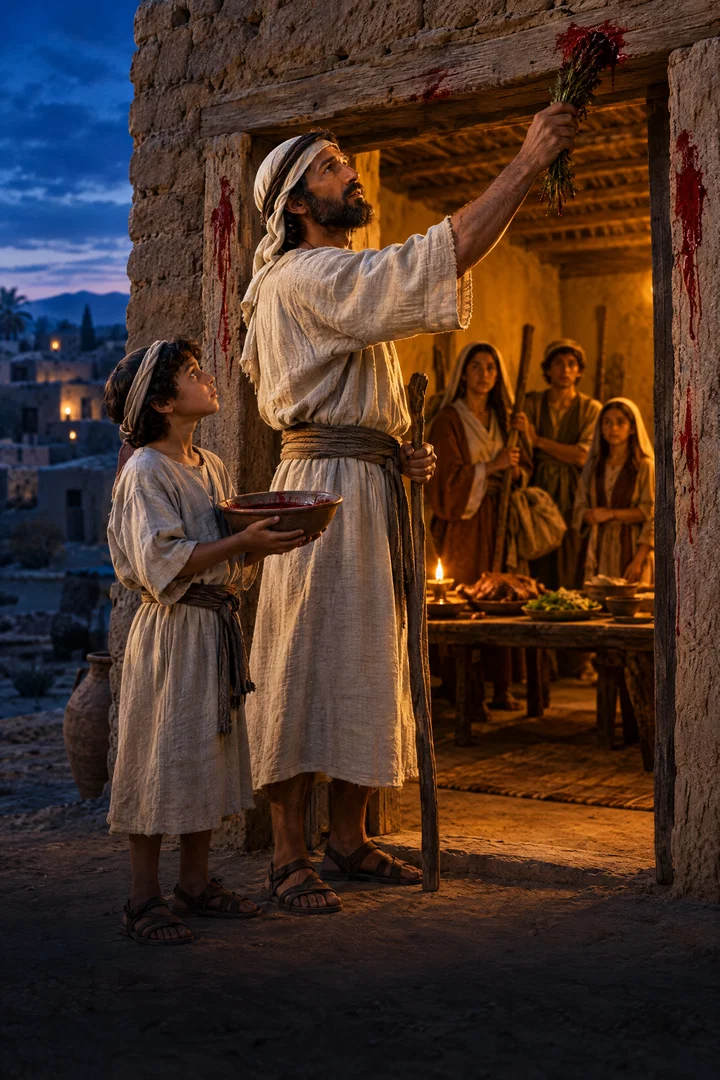
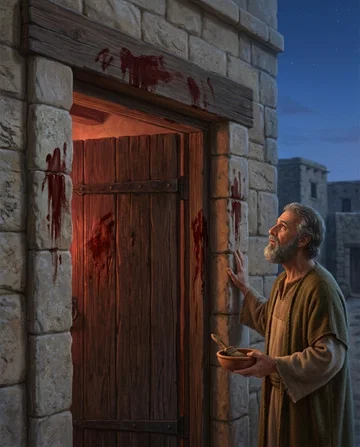
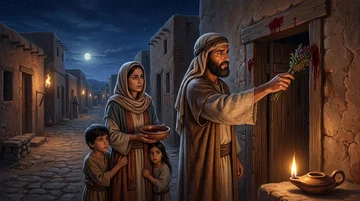
Through faith he kept the passover, and the sprinkling of blood, lest he that destroyed the firstborn should touch them.
Translations
American King James Version, King James Version, KJV Cambridge Paragraph Bible
Through faith he kept the passover, and the sprinkling of blood, lest he that destroyed the firstborn should touch them.
Through faith he kept the passover, and the sprinkling of blood, lest he that destroyed the first-born should touch them.
Revised Version, American Standard Version
By faith he kept the passover, and the sprinkling of the blood, that the destroyer of the firstborn should not touch them.
by faith he kept the passover, and the sprinkling of the blood, that He who is destroying the first-born might not touch them.
By faith he celebrated the passover and the sprinkling of the blood, that the destroyer of the firstborn might not touch them.
By faith, he hath kept the passover and the besmearing of the blood, lest, he that was destroying the first-born, should be touching them.
Berean Standard Bible, Majority Standard Bible
By faith he kept the Passover and the sprinkling of blood, so that the destroyer of the firstborn would not touch Israel’s own firstborn.
By faith he kept the Passover and the sprinkling of the blood, that the destroyer of the firstborn should not touch them.
By faith he kept the Passover, and put the sign of the blood on the houses, so that the angel of destruction might not put their oldest sons to death.
Through faith he ordeined the Passeouer and the effusion of blood, least he that destroyed the first borne, should touche them.
Douay-Rheims (Challoner revision)
By faith he celebrated the pasch, and the shedding of the blood; that he, who destroyed the firstborn, might not touch them.
Pictures
Cross-references
- Exodus 12:21-23
Then Moses called for all the elders of Israel, and said unto them, Draw out and take you a lamb according to your families, and kill the passover.
The Passover blood marks Israelite homes so the destroyer will pass over them.
- Hebrews 11:1
Now faith is the substance of things hoped for, the evidence of things not seen.
Defines the faith Moses exercised in keeping the Passover.
- Exodus 12:13
And the blood shall be to you for a token upon the houses where ye are: and when I see the blood, I will pass over you, and the plague shall not be upon you to destroy you, when I smite the land of Egypt.
The blood marked the houses spared when the Lord passed over.
- Hebrews 11:6
But without faith it is impossible to please him: for he that cometh to God must believe that he is, and that he is a rewarder of them that diligently seek him.
Moses’ faith is the pleasing faith described here.
- 1 Corinthians 5:7
Purge out therefore the old leaven, that ye may be a new lump, as ye are unleavened. For even Christ our passover is sacrificed for us:
Christ is identified as the Passover sacrifice that brings deliverance from sin.
- Romans 3:25
Whom God hath set forth to be a propitiation through faith in his blood, to declare his righteousness for the remission of sins that are past, through the forbearance of God;
Faith in Jesus’ blood brings forgiveness and the passing over of past sins.
- Exodus 12:7
And they shall take of the blood, and strike it on the two side posts and on the upper door post of the houses, wherein they shall eat it.
Blood on the doorposts marked the houses spared.
- Exodus 12:28
And the children of Israel went away, and did as the LORD had commanded Moses and Aaron, so did they.
Israel did as the Lord commanded.
- 1 Peter 1:19
But with the precious blood of Christ, as of a lamb without blemish and without spot:
Christ’s precious blood is the price of redemption.
- Revelation 7:14
And I said unto him, Sir, thou knowest. And he said to me, These are they which came out of great tribulation, and have washed their robes, and made them white in the blood of the Lamb.
The saved are cleansed through the Lamb’s blood.
- Revelation 13:8
And all that dwell upon the earth shall worship him, whose names are not written in the book of life of the Lamb slain from the foundation of the world.
Lamb slain in purpose passover looked to
- Acts 7:22
And Moses was learned in all the wisdom of the Egyptians, and was mighty in words and in deeds.
Moses’ Egyptian learning failed to deliver.
- 2 Corinthians 5:7
( For we walk by faith, not by sight:)
Walking by faith rather than sight describes the trust shown in Hebrews 11.
Commentary
Each commentary is drawn from primary sources: the writings of Ellen G. White and Adventist pioneers and periodicals. Each commentary is separate. Its own words are not a quotation; follow the references to read the source passages.
Ellen G. White
9 sources
The eleventh chapter of Hebrews is the chapter on faith, naming Moses among its witnesses to how people live by faith.CTBH 238.1Ms 63, 1893, par. 26–27Ms 61, 1907, par. 1–3 It calls minds away from visible, discouraging things to dwell on the unseen, and keeping the Passover belongs to that call.Ms 63, 1893, par. 26–27Ms 61, 1907, par. 1–3 Through faith Moses kept the Passover and had the blood sprinkled, trusting God's command that the destroyer of the firstborn should not touch them.Ms 63, 1893, par. 26–27ST Jul 12, 1905ED 256.1
That obedience was complete, according to all that the Lord commanded him, so did he.OEWP 14.1–16.2Ms 10a, 1895, par. 33–35 When God commanded anything he did it without stopping to consider consequences, and without stopping to ask whether it seemed proper or reasonable to human judgment.OEWP 14.1–16.2ST Jul 12, 1905Ms 10a, 1895, par. 33–35 He gave God credit for wisdom to know what He meant and for firmness of purpose to mean what He said, and acted as seeing the Invisible.OEWP 14.1–16.2 His faith moved forward in trust and obedience even when God's instructions seemed unreasonable to human judgment.ST Jul 12, 1905
It was simple, implicit, ever-abiding, constant and unflinching faith, acting in God's strength and wisdom rather than in the ways of men.OEWP 14.1–16.2Ms 10a, 1895, par. 33–35 It was constant faith in the power and loving intentions of the Deliverer.OEWP 14.1–16.2Ms 10a, 1895, par. 33–35 Such faith required simplicity of character, loss of self-confidence, and a sense of utter helplessness and inefficiency apart from the Lord Jesus.Ms 10a, 1895, par. 33–35 The rash slaying of the Egyptian was not this faith but a presumptuous spirit, the opposite of it.Ms 10a, 1895, par. 33–35
By that faith Moses pressed through difficulties and overcame obstacles that seemed almost insurmountable.OEWP 14.1–16.2Ms 10a, 1895, par. 33–35 He stood against evil in the Lord's name and was sustained and strengthened by Him.OEWP 14.1–16.2Ms 10a, 1895, par. 33–35Ms 61, 1907, par. 1–3 Because he worked in co-partnership with the Lord, God could manifest His great power through him and make him a sanctified channel through which God could work.OEWP 14.1–16.2Ms 10a, 1895, par. 33–35 The mighty General of armies delivered Israel from difficulties they never could have escaped if left to themselves and relying on their own power, and it is the same faith through which God still works and protects.PK 175.2Ms 10a, 1895, par. 33–35ED 256.1
Moses serves as a pattern for Christians, for the faith seen in sacred history can work in believers now.CTBH 238.1PK 175.2 It calls them to turn from visible, discouraging things to the unseen, to endure trials, and to serve as channels of God's power.Ms 63, 1893, par. 26–27PK 175.2 The heroes of faith obeyed God in fidelity, and their faithfulness made their light shine before the world and led others to glorify God.20MR 41.4–5
Sources
Pioneers and periodicals
78 sources
Through faith Moses kept the Passover and applied the sprinkled blood to the doorposts, trusting God's warning and command so that the destroyer of the firstborn would not touch Israel sheltered inside.ST May 12, 1890RH May 29, 1855ST Feb 4, 1889 That keeping was faith proved by obedient work, doing what God commanded and trusting Him for the result.RH Oct 15, 1857ST Aug 30, 1877 The Passover and sprinkling of blood pointed forward to Christ, the real Passover and promised sacrifice, commemorating deliverance from Egypt and pointing to greater deliverance from the bondage of sin.ST May 12, 1890ST Jun 11, 1894ST May 21, 1896 The blood on the doorposts protected not because of its visible substance but because faith saw in it the blood of Jesus, for the ordinance had no saving power in itself.ST Mar 7, 1906RH Sep 8, 1904RH Sep 8, 1904 So the Israelites were made righteous and justified by faith and not by law, under the one system of salvation through Christ provided from the beginning, the same faith by which Abel, Enoch, Noah, Abraham and the prophets always lived.RH Apr 23, 1908ST Feb 19, 1894ST Mar 7, 1906ST Aug 3, 1882RH Mar 14, 1854
Words and Historical Setting
The term rendered sprinkling stands apart from every other New Testament occurrence of sprinkling language, employing proschusis rather than rhantizo or rhantismos.ST Jan 10, 1906 Where the other texts use rhantizo meaning to sprinkle and rhantismos meaning sprinkling, this verse uses proschusis meaning to pour, a shedding forth.ST Jan 10, 1906 That word denotes a pouring or shedding forth which can signify pouring upon as well as sprinkling, and it is the word used for the blood applied at the Passover.ST Jan 10, 1906
Firstborn carries its ordinary sense of the firstborn children who were protected when the Passover was kept and the blood was sprinkled.RH Aug 10, 1876 Through faith Moses kept the Passover and arranged the sprinkling of blood, trusting that the blood would shield Israel's firstborn from the destroyer.ST May 12, 1890RH May 29, 1855ST Feb 4, 1889ST Jun 11, 1894RH Dec 30, 1915 He applied the blood to the doorposts as protection so the destroyer of the firstborn would not strike those inside, acting in trust of God's warning, command, and promised protection.ST May 12, 1890ST Feb 4, 1889ST Jun 11, 1894RH Dec 30, 1915ST Jan 27, 1904 That faith sustained him through the contest with Pharaoh and the departure from Egypt, as Israel remained under its protection.RH May 29, 1855ST Feb 4, 1889
The Passover commemorated God's deliverance of Israel from Egyptian bondage and pointed forward to a greater deliverance from the bondage of sin, since Christ is the real Passover seen in the ordinance.ST May 12, 1890ST Jun 11, 1894 It is an example of the faith by which God's people live in every age.RH May 29, 1855 Although the record in Exodus makes no mention of faith, Hebrews reveals that the keeping of the Passover and the sprinkling of blood was done through faith.RH Apr 23, 1908 That act belonged to one whole experience of faith that also includes forsaking Egypt, the passage of the Red Sea, and the capture of Jericho, teaching salvation by grace through faith and not of works wherever faith in action is exhibited and holding a place in the teaching of the last gospel message as present truth.RH Apr 23, 1908
Moses was learned in all the wisdom of the Egyptians, yet when he tried in his own wisdom to deliver Israel he failed and fled fearing the wrath of the king.ST Sep 24, 1902 Forty years later by faith he forsook Egypt with Israel not fearing the wrath of the king, keeping the Passover and the sprinkling of blood through faith and not through wisdom.ST Sep 24, 1902 Faith is the one righteous quality in man, and every other quality that commends a person to God is built upon it.ST Sep 24, 1902
Nature of Active Faith
Through faith the Passover was kept and the blood was sprinkled as faith proved by obedient work, faith at work and perfected and evidenced by doing what God commands and trusting Him for the result.RH Oct 15, 1857ST Aug 30, 1877RH Dec 9, 1915 The ancient worthies stand as a cloud of witnesses and a pattern for those who live after them, obtaining the eternal reward not by the easy doctrine of doing nothing but believing into heaven, but by taking hold and working, so that a man's works are the measure of his faith as when Abel offered the accepted sacrifice and when Noah, warned of the flood, moved with fear and prepared the ark to the saving of his house.RH Oct 15, 1857ST Aug 30, 1877 Moses kept the Passover and arranged the sprinkling of blood because he trusted God's warning and instruction, his work for God being the result of faith grown through preparation and the revelation of the gospel, and his obedience itself the evidence of faith resting on God's word and leading to obedience.RH Feb 6, 1900RH Dec 9, 1915 The ordinances pointed forward to Christ and benefited those who observed them only when they trusted in Him, showing that faith in God was essential in the time of Moses just as in the Christian era.ST Mar 7, 1906
Faith is taking God at His word by doing the certain thing He commands because He told it, not merely believing strongly that something will happen apart from a promise.RH Feb 6, 1900 It is at once the substance of things hoped for and the evidence of things not seen, and mere belief that God will carry out His plans is not faith without that hoping obedience, which devils do not have.RH Feb 6, 1900 It comes by hearing the word of God and does not properly ask for things like sycamore trees or mountains to be removed unless the word of God or the providence of God brings the need for it.RH Feb 6, 1900 It is firm confidence that makes what is hoped for and unseen as certain and influential as what is present and visible, receiving God's word and trusting His warning, instruction, and promised protection before it is seen.RH Feb 27, 1900ST Nov 8, 1883RH Dec 6, 1906ST Apr 30, 1894 The Old Testament faithful thus trusted God and lived by faith rather than sight, acting on the invisible, and the benefit promised in the Word was obtained as a present reality though not yet seen, proving trust in God reliable and not an experiment or walk in ignorance.ST Nov 8, 1883ST Apr 30, 1894ST Apr 23, 1902 God's word promised Israel's deliverance, and faith led to the Passover and the visible deliverance that followed, even when human reason could not see how it would be fulfilled.RH Dec 6, 1906ST Apr 30, 1894
Faith in this act produces courage and action, giving Moses courage to keep the Passover and apply the blood, trusting the destroyer would spare the firstborn of Israel.RH Feb 27, 1900RH Apr 5, 1870 It creates heroes out of the glorious galaxy of the cloud of witnesses, giving fearless trust that brings angels to deliver as when Daniel was kept from the lions, and intrepid trust that faces death rather than serve false gods as when Shadrach, Meshach and Abednego stood before the flames, the same faith robbing fire of its power to burn. It led them to act with courage and resolve as the source of heroic deeds. Such faith is exercised amid opposition, difficulty, danger, and loss, relying on sure promises and obeying God despite danger or loss with courage and sacrifice, remaining firm through trials as the faith of Moses did.ST Jun 20, 1906ST Aug 31, 1888RH Jul 31, 1866 It is living faith made strong only in adversity and not by smooth sailing, brawny muscle built by grappling with hard conditions and adverse winds at every step, and living faith of that kind can conquer everything, so believers must walk the same way by faith and expect nothing less.
Moses is commended for acting in faith when he kept the Passover and applied the blood, trusting this would protect Israel's firstborn from the destroyer, and the commendation is for faith and not for sin.ST Apr 11, 1906ST Apr 11, 1906 His mention with the others does not approve their faults or sins.ST Apr 11, 1906ST Apr 11, 1906 The chapter shows two kinds of faith, conquering faith before Hebrews 11:35 that is delivered from suffering and death, and enduring faith after Hebrews 11:35 that suffers hardships, affliction, and excruciating deaths, yet both die in faith and give Christians new inspiration.ST Jan 16, 1907 Enduring a trial takes as much faith as being saved from it, enduring faith is as necessary as conquering faith, and what is often needed and to be prayed for is submissive grace to endure trouble saying Nevertheless not what I will but what Thou wilt rather than deliverance, for such faith with the faith of Jesus does not always bring deliverance from sickness, suffering and death in this world, since not all stopped the mouths of lions or quenched the violence of fire but some were sawn asunder and slain with the sword.ST Jan 16, 1907ST Aug 24, 1904
Faith is confidence in another acknowledged as superior, giving up one's own ideas and will in trust like a child in its parents' word, which touches the heart of God with tenderness since whatever good is in man is from above and exists far more strongly in God, as when Abraham with child-like trust believed God's promise which to all human appearances could never be accomplished and it was counted unto him for righteousness.ST Dec 8, 1887 Faith and humility are inseparable, the greater the faith the lower the opinion of self, with perfect willingness to do whatever God requires, and perfect faith implies perfect worship.ST Dec 8, 1887 Such faith is as powerful today as ever, sufficing to secure pardon for sin and cleansing from defilement, the greatest of all miracles daily performed in response to faith, so that nothing asked with such trust and submission can be denied.ST Dec 8, 1887 It joined God's servants to His power to do what He called them to do, for the great works recorded in Scripture were accomplished through faith in God's promises, accompanied by supernatural signs of divine favor and miraculous interpositions, with faith that the act was the Lord's will as the warrant for what they did.RH Jan 29, 1861RH Aug 3, 1869RH Dec 25, 1900 It was living, personal, active power rather than passivity, evidenced by enduring persecution, suffering, and even death, and its actions helped shape history.RH Feb 16, 1905ST Jun 7, 1883 Moses' example shows it moves forward in trust and obedience even when God's instructions seem unreasonable to human judgment, keeping the Passover and arranging for the blood to be sprinkled in trust in God's command to protect the firstborn.ST Jul 12, 1905
Salvation Through Christ Alone
Through faith in keeping the Passover and the sprinkling of blood Moses was made righteous and justified by faith and not by law or works, for salvation is by grace through faith under the one system of salvation through Christ provided from the beginning, since human weakness makes obedience imperfect.RH Apr 23, 1908ST Feb 19, 1894RH Mar 14, 1854RH Nov 8, 1864RH Jan 13, 1852 The patriarchs were justified by faith through the promised Redeemer whose work was represented in the sacrifices, for the ritual service and prophecies gave them foundation to believe they would be made right with God through Him.RH Mar 14, 1854RH Jan 13, 1852 This faith shown in the Passover is present truth with its place in the teaching of the last gospel message.RH Apr 23, 1908
The Passover and sprinkling of blood were a visible representation of future truth pointing forward to Christ, the real Passover, the promised Saviour and sacrifice, the Lamb slain from the foundation of the world in will and purpose and accepted as effectual from the beginning though He did not die till 4,000 years after creation.ST May 12, 1890ST May 21, 1896ST Apr 23, 1912ST Jul 3, 1893ST Mar 25, 1913 The ordinance commemorated God's deliverance of Israel from Egyptian bondage and pointed to Christ's greater deliverance of His people from the bondage of sin and to the cross of Calvary.ST Jun 11, 1894ST Mar 25, 1913 Moses kept it through faith in the Redeemer to come, showing faith in His redeeming blood by a ceremony looking forward to the cross before He came in the flesh, and saw Christ in the Passover.ST May 12, 1890ST May 21, 1896 Keeping it stands with the sacrifices of Abel and the patriarchs and the whole sacrificial system elaborated at the Exodus as outward expression of never-failing faith in the Seed who would bruise the serpent's head and by His death atone for sin, witnessing that salvation in Old Testament times was obtained through faith in the gospel of Christ.ST Apr 23, 1912
The ordinances pointed to Christ and benefited those who observed them only when they trusted in Him, for the ordinance had no saving power in itself and its value depended on faith in Christ.ST Mar 7, 1906RH Sep 8, 1904RH Sep 8, 1904ST Feb 17, 1890 The blood on the doorposts protected Israel from the destroyer not because of its visible substance but because faith saw in it the blood of Jesus, which has power to protect from the destroyer and bring forgiveness of sin.RH Sep 8, 1904RH Sep 8, 1904 Moses exercised faith in Christ long before Christ came, together with Abel, Enoch, Noah, Abraham, Isaac, Jacob, Joseph and the prophets as representatives of all ages, and that faith brought him to Christ just as fully as faith brings people to Christ today.ST Sep 4, 1901ST Oct 25, 1877ST Mar 1, 1899 He did not keep it as bare ceremony but comprehended spiritually the import of the law, seeing Christ and His day afar off by prophecy and by the typical blood, believing on the name of Christ, cleansed by His blood and quickened by His Spirit under the same immutable law of pardon and life that saves since Christ and since Pentecost.RH Sep 18, 1900
Faith comes whenever a man receives the Word of God, the Word of promise, and no longer fights against it but yields to it, and the only time fixed for faith to come is now, today, when he hears His voice, so faith came from the beginning and not only after the manifestation of Christ on earth.ST Aug 3, 1882ST Mar 27, 1893ST Mar 1, 1899 The just living by faith was no new doctrine but the way the just always lived, from Abel onward finding freedom by faith, and only by faith in Christ has any sinner ever been pardoned or saved.ST Oct 25, 1877ST Mar 1, 1899 That faith was the same in ancient believers as in those who trust in Christ, resting on God's promise of salvation, and was essential in the time of Moses just as it is in the Christian era, showing the religion of Christ is the same in every age.ST Mar 7, 1906ST Aug 3, 1882ST Aug 10, 1882 Through the faith thus expressed in the sacrificial types Moses obtained witness that he was righteous, because there is salvation in no other name.ST Mar 25, 1913
That faith is the only condition of salvation since man was created, connecting with God's power, submitting to God's will, bringing the soul into agreement with God, working by love and issuing in perfect willing obedience to all God's commands in harmony with the moral law of Ten Commandments wrought out in living character in Jesus Christ, proving the power of faith to keep God's commandments through the Spirit of Christ.ST May 21, 1896ST Sep 4, 1901ST Aug 13, 1885 After exercising it he was no longer under the tutor, the law, and was under no condemnation while walking after the Spirit, for to him the law was a schoolmaster leading to Christ.ST Sep 4, 1901RH Sep 18, 1900 The patriarchs were justified through the promised Redeemer represented in sacrifices, ritual, and prophecy, though they did not yet understand the plan of salvation fully.RH Mar 14, 1854RH Jan 13, 1852 People then had faith and some knowledge of Christ, but their knowledge and faith differed in degree and kind from faith under the fuller gospel era, and this verse does not establish that the later, fuller era of faith had already begun.
As Israel was spared by faith that night in Egypt, the Passover pictured God passing over sins committed before through His forbearance, and faith in Christ's blood brings that passing over and forgiveness of sin, while without faith there is no passing over of past sins.RH Sep 8, 1904RH Sep 8, 1904 Moses kept the Passover and the sprinkling of blood because by faith he understood that the ages were adjusted by God's declaration (Hebrews 11:3), even though what God was working out could not be seen in present appearances.ST Jan 16, 1896 The natural eye could not see in that deliverance the more glorious development of future ages, but faith perceived it, and his act stands with all the acts in Hebrews 11 illustrating progression in the manifestation of God's one plan of saving men, the gathering into one of all things in heaven and earth through Christ Jesus, with unity in principle and purpose through different manifestations.ST Jan 16, 1896 Keeping the Passover through faith stands among the many examples of faith in Hebrews 11 set against unbelief, for the sin which easily besets all is unbelief, contrasted with the doubting unbelief by which Israel fell and failed to enter God's rest, warning against letting unbelief sink the soul in perdition.RH Aug 5, 1873
Place in Hebrews Eleven
Hebrews 11:28 belongs to the chapter's story of faith and its great cloud of witnesses showing what faith really is and what it can accomplish.ST Aug 30, 1877RH Apr 29, 1902 That record was written for learning so that through patience and comfort of the Scriptures there may be hope, and its examples testify to lives transformed by God's power and to the truth of Christianity.ST Aug 30, 1877ST Nov 18, 1889RH Jun 2, 1904 It is rich in spiritual instruction including priesthood types centering in Jesus, and keeping the Passover and sprinkling the blood was faith proved by obedient work set forth as a pattern for those who live afterward.ST Aug 30, 1877 The men there obtain the eternal reward not by holding the easy doctrine of doing nothing but believing themselves into heaven, but by taking hold and working, for a man's works are the measure of his faith, as when Abel offered the accepted sacrifice and when Noah, warned of the flood, moved with fear and prepared the ark to the saving of his house.ST Aug 30, 1877 Faith there creates heroes, giving fearless trust that brings angels to deliver, as when Daniel was kept from the lions, and intrepid trust that faces death rather than serve false gods, as when Shadrach, Meshach and Abednego stood before the flames.
God's people trusted His promises without receiving fulfillment in their lifetime and will be made perfect together when all Israel is gathered.RH Apr 17, 1900 Their faith was founded on the promise of life as a reward, seeing the promises afar off even to the resurrection, when life would be given to possess the heavenly country and the city which hath foundations.RH Feb 23, 1860 Moses esteemed the reproach of Christ greater riches than the treasures of Egypt because he had respect to the recompense of reward, which is a better resurrection, a resurrection unto life.RH Feb 23, 1860 That reward is connected with an inheritance incorruptible and undefiled that fadeth not away, and with being like Jesus at His appearing when He shall change the vile body to fashion it like unto His glorious body, for which believers groan within themselves waiting for the adoption, the redemption of the body.RH Feb 23, 1860
Those recorded are those of whom the world was not worthy, who now rest unconsciously sleeping and waiting for the last trumpet to wake the righteous dead and assemble the good of all ages for the feast that is prepared.RH May 30, 1865RH Jun 10, 1862 Moses is among the ancient faithful whose faith and suffering were sustained by hope of resurrection, not by hope of going to heaven at death.RH Apr 14, 1874 He will not be made perfect without the faithful now living, and when Jesus comes again as He promised to receive His people to Himself, His angels will gather the company who come up through great tribulation together with all those recorded in Hebrews 11, so keeping the Passover in faith places Moses among that company to be met at the coming meeting.RH May 30, 1865 The living must therefore be diligent to be found of Him in peace without spot and blameless in order to join them.RH May 30, 1865 God saves His people in all ages and loves the lowly and the good, who would not let the blood of righteous Abel go unavenged, would not let earth cover just Enoch, nor the angry waves overflow righteous Noah, who gave wisdom with many gifts to Abraham, to Joseph, to Moses, to Daniel, to Ezra, and who under John the Baptist began to unfold the meridian glories of the new covenant, continuing through the mighty Deliverer and His apostles, until tyrant death is subdued and the lawful captive is lawfully triumphantly delivered.RH Jun 10, 1862
The promise made to the fathers is the foundation of hope still awaiting fulfillment, so inheritance comes by faith and not by birth or national distinction or by a sign only males could receive.ST Dec 19, 1878 Moses' life shows what faith can accomplish in a man subject to like passions as others, but looking to him does not give the experience and copying him does not impart it.RH Apr 29, 1902 The same experience comes the same way he had it, because Jesus is the leader and perfecter of faith, who for the joy set before Him endured the cross despising shame and now sits at the right hand of God, and whose life dwelling within becomes faith's leader and perfecter in others.RH Apr 29, 1902RH Apr 29, 1902 Together with Abel, Enoch, Noah, Abraham, Isaac, Jacob, and Joseph, Moses keeping the Passover forms a great cloud of witnesses showing what faith does and revealing the secret of victory, that through faith kingdoms are subdued and righteousness is wrought.RH Apr 29, 1902
The verse belongs to the long list reaching back to Abel of those who saw Jesus by faith and were willing to submit to all manner of trials and persecutions in defense of the faith.ST Oct 17, 1895 Those named obtained a good report through faith and will eventually see their Lord in the everlasting kingdom.ST Oct 17, 1895 From Abel onward their great object in life was to form a good upright character, which is greatness in the highest sense, obtaining evidence that their ways pleased God. These experiences were acts of faith recorded as types of individual Christian experience for instruction, and the chapter presents them as faith's experience and applies its lesson in view of the near coming of the Lord.RH Sep 1, 1904 They belong to the few examples of faith pictured as stars shining through Israel's spiritual gloom, showing that faithful lives still gave light during a time when the nation largely lost sight of its calling.ST Apr 2, 1902
Their examples strengthen faith to venture out alone to obey unpopular truth without waiting for it to become respectable or for others' approval, as Noah did when he walked with God in an age of great wickedness and built the ark in the face of jeering, and as Abraham did when he left his country and kindred and idolatrous father's house without knowing where he was going.ST Nov 18, 1889 Their faith is given for the encouragement of others and shows that faith may require obeying God despite opposition and without waiting for others' approval.ST Nov 18, 1889ST Apr 20, 1882 The chapter's list includes many who did not enjoy worldly wealth but instead lived destitute and afflicted, showing faithfulness does not guarantee riches or abundant silver and gold.ST Sep 21, 1904
Example for Believers Today
Moses stands among the moral heroes honored by God whom believers today can copy.ST Nov 18, 1889 He was a man with the same weaknesses and temptations as people now, living in the world among other people and doing business just as men do now.ST Nov 18, 1889 He became honored because he was willing to be regarded as peculiar and thought more of God's approval than of the applause of men.ST Nov 18, 1889 His keeping of the Passover through faith is worthy of honor and of desire to imitate, and its record gives encouragement that anyone can be like him and share his reward.ST Nov 18, 1889
He belongs with those of old who knew and obeyed God, lived righteously, and serve as witnesses.ST May 21, 1885ST Nov 15, 1899 They trusted God's word, humbled themselves, and gave God the honor rather than exalting themselves.ST May 21, 1885ST Nov 15, 1899 Their faith brought victory in time of crisis, as part of the same enduring cause and everlasting gospel carried forward by faithful people in every age.ST May 21, 1885
Faith means being prepared to enter heaven, and that preparation takes much.RH Jun 22, 1916 Mere outward change does not save, just as merely listening to Noah's warnings did not save those who heard.RH Jun 22, 1916 The word heard must be mixed with faith, believed and acted on without any visible evidence of its fulfillment, as Noah entered the ark at God's command seven days before the rain began.RH Jun 22, 1916 When the storm came the people believed and begged to enter, but then it was too late, and so it will be now.RH Jun 22, 1916 Of all the vast throng that left Egypt only two entered the Promised Land, and even Moses did not enter but only saw it from the mountain top.RH Jun 22, 1916
Moses choosing the Lord as protector and leader brought the Lord's presence with the children of Israel by the hand of Moses and deliverance from Pharaoh.RH Aug 7, 1860 Choosing God brings His presence and deliverance, and forsaking that choice is leaving the Lord.RH Aug 7, 1860 The deliverance from Egypt, including the Passover, was an act of faith in God's saving power and teaches that human strength cannot free people from sin.RH Aug 7, 1860RH May 21, 1908 Salvation comes only through God's power, and deliverance by faith is central to the gospel.RH May 21, 1908 The chapter's examples further show that faith can sustain religious devotion and obedience without support from human law, so that Christian worship need not be enforced by the state.ST Apr 5, 1883
Sources